
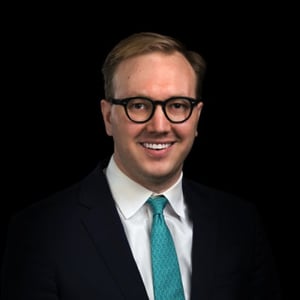
Partner, Cooper & Kirk
William V. Bergstrom joined Cooper & Kirk in 2021. Before joining the firm, he clerked for Judge Jonathan A. Kobes of the U.S. Court of Appeals for the Eighth Circuit and was an associate in the Washington, D.C. office of Sullivan & Cromwell, LLP. Mr. Bergstrom received his J.D. cum laude from Harvard Law School in 2017. He earned his undergraduate degree magna cum laude from Harvard College in 2013, where he was chairman of the editorial board of The Harvard Crimson. Between college and law school, Mr. Bergstrom was the Annenberg Fellow at Eton College in Windsor, U.K.
Mr. Bergstrom is admitted to the bars of the State of Nebraska and the District of Columbia.
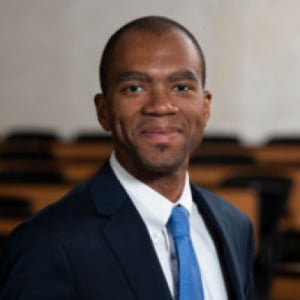
Associate Professor, Widener Law Commonwealth

Associate, Wiley Rein LLP
Joel S. Nolette is an associate at Wiley Rein LLP, where he advocates on behalf of corporate and individual clients in a broad spectrum of complex litigation matters. In 2017, Joel graduated cum laude from the Georgetown University Law Center, where he served as the Editor in Chief of Volume 15 of the Georgetown Journal of Law and Public Policy. From 2019 to 2021, Joel clerked for the Honorable Raymond W. Gruender of the U.S. Court of Appeals for the Eighth Circuit; and from 2021 to 2022, he clerked for the Honorable Timothy J. Kelly of the U.S. District Court for the District of Columbia. Before attending law school, Joel graduated summa cum laude from Gordon College in Wenham, MA, with his Bachelor of Arts in Biblical Studies and worked as a letter carrier with the U.S. Postal Service.
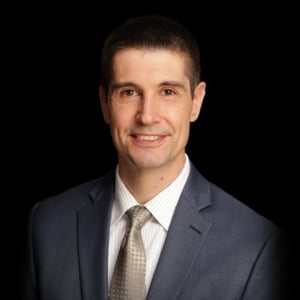
Partner, Cooper & Kirk, PLLC
Pete Patterson is a partner at Cooper & Kirk. His practice includes appellate litigation, constitutional litigation, commercial litigation, and administrative law. In addition, Mr. Patterson for a number of years taught an appellate litigation clinic at the University of Cincinnati College of Law. Mr. Patterson has argued in the U.S. Supreme Court and in nearly every regional federal circuit court of appeals.
Mr. Patterson has extensive experience in complex matters involving important questions of constitutional, statutory, and administrative law. He frequently has represented plaintiffs in cases alleging constitutional or statutory violations by federal, state, and local government officials. He also has represented plaintiffs in class action litigation against corporations and the federal government.
Mr. Patterson joined the firm in 2009. Prior to arriving at Cooper & Kirk, he served as a law clerk to Judge Jeffrey S. Sutton of the United States Court of Appeals for the Sixth Circuit. Mr. Patterson typically works from Cincinnati, Ohio.
Mr. Patterson received his J.D. from Stanford Law School in 2006, earning Order of the Coif honors for finishing in the top 10% of his class. There, he was a member of the Stanford Law Review, serving as an Articles Editor. He also participated in litigation before the United States Supreme Court through the Stanford Supreme Court Litigation Clinic.
Mr. Patterson graduated with University Honors from Carnegie Mellon University in 2000 with a B.S. in Information and Decision Systems. While at Carnegie Mellon, he wrote a regular column for the student newspaper and was a member of the football team.
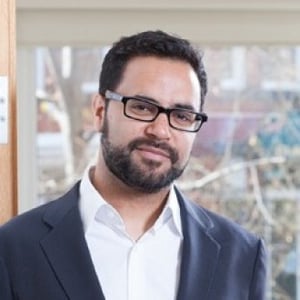
Founding Principal, Gupta Wessler PLLC
Deepak Gupta is the founding principal of Gupta Wessler PLLC. He focuses on Supreme Court, appellate, and complex litigation on a wide range of issues, including constitutional law, class actions, and consumers’ and workers’ rights.
Deepak is “known as a skilled appellate lawyer” (New York Times), “one of the emerging giants of the appellate and the Supreme Court bar,” a “heavy hitter,” and a “principled” and “incredibly talented lawyer” (Law 360). He is described in Chambers and Partners USA as “an excellent lawyer” with a “vibrant appellate practice focused on public interest cases and plaintiff-side representations.” Fastcase recently recognized him as “one of the country’s top litigators,” noting that “what sets him apart” is his legal creativity. The National Law Journal has singled out Deepak’s “calm, comfortable manner that conveys confidence” in oral argument.
Deepak regularly appears in the U.S. Supreme Court and appellate courts nationwide. In the 2016-2017 U.S. Supreme Court term, Deepak’s firm was counsel of record for parties in three merits cases; he was lead counsel in two, prevailing in both. Beyond the Supreme Court, Deepak has handled appeals in every federal circuit and seven state supreme courts. He is frequently sought out by trial lawyers to defend their most consequential victories or resurrect worthy claims on appeal—often after years of hard-fought litigation. He also works with co-counsel to design cases from the ground up—focusing on class actions and administrative and constitutional challenges. In one class action, Deepak represented all of the nation’s federal bankruptcy judges, recovering more than $50 million in back pay for the judges over Congress’s violation of the Constitution’s Judicial Compensation Clause. As the American Lawyer observed, “it’s hard to imagine a higher compliment than being hired to represent federal judges.”
Deepak’s clients have included national nonprofits, state and local governments, members of Congress, retail merchants, tech companies, and classes of consumers and workers harmed by corporate wrongdoing. He currently represents the American Association for Justice (on forced arbitration and civil justice issues), Everytown for Gun Safety (in Second Amendment litigation), and Citizens for Responsibility and Ethics in Washington (in litigation over the Emoluments Clauses).
Before founding the firm in 2012, Deepak served as Senior Counsel for Litigation and Senior Counsel for Enforcement Strategy at the Consumer Financial Protection Bureau. As the first appellate litigator hired under Elizabeth Warren’s leadership, he launched the Bureau’s amicus program, defended its regulations, and worked with the Solicitor General’s office on Supreme Court matters. For seven years previously, he was an attorney at Public Citizen Litigation Group, where he founded and directed the Consumer Justice Project and was the Alan Morrison Supreme Court Project Fellow. Before that, he worked on voting rights litigation at the Civil Rights Division of the U.S. Department of Justice, prisoners’ rights litigation at the ACLU, and religion clause litigation at Americans United for Separation of Church and State.
Deepak frequently engages in public advocacy and speaking, has testified multiple times before the U.S. House of Representatives and U.S. Senate, and appears frequently in the national print and broadcast media. He is currently a 2018-2019 Wasserstein Public Interest Fellow at Harvard Law School and has previously taught courses on public interest law and appellate advocacy as an Adjunct Professor of Law at Georgetown and American universities. He served as a law clerk to Judge Lawrence K. Karlton of the U.S. District Court for the Eastern District of California and studied law at Georgetown, Sanskrit at Oxford, and philosophy at Fordham.
Deepak is an elected member of the American Law Institute and sits on the boards of directors of the National Consumer Law Center, The Impact Fund, and the Alliance for Justice, and the advisory boards of the University of California’s Civil Justice Research Initiative, the Biden Institute, and the Institute for Consumer Antitrust Studies.

Judge, United States Court of Appeals, Third Circuit
Judge Hardiman was appointed to the United States Court of Appeals for the Third Circuit on January 9, 2007 and was confirmed by the Senate (95-0) on March 15, 2007. Prior to becoming an appellate judge, Judge Hardiman served as a trial judge on the United States District Court for the Western District of Pennsylvania as of November 1, 2003. In 2008, Chief Justice John Roberts appointed Judge Hardiman to the Information Technology Committee of the Judicial Conference of the United States. Judge Hardiman was appointed Chairman of the IT Committee in 2013 and served in that capacity until September 2021. In 2021 he was appointed by the Director of the Administrative Office of the United States Courts to serve as Chair of the Judiciary IT Security Task Force, which completed its work in fall 2023. Chief Justice Roberts appointed Judge Hardiman to the Board of the Federal Judicial Center to serve from March 2020 until March 2024. As part of his work with the Center, Judge Hardiman now serves as Editor in Chief for the Manual for Complex Civil Litigation, Fifth.
Before entering judicial service, Judge Hardiman handled a wide variety of litigation matters in state and federal trial and appellate courts as a partner at Reed Smith LLP (1999-2003), a partner at Titus & McConomy LLP (1996-1999), and as an associate with its predecessor firm, Cindrich & Titus (1992-1996). Judge Hardiman began his legal career as an associate in the Washington, D.C. office of Skadden, Arps, Slate, Meagher & Flom (1990-1992).
A 1987 honors graduate of the University of Notre Dame, Judge Hardiman received his law degree in 1990 from the Georgetown University Law Center, where he served as a Notes and Comments Editor on the Georgetown Law Journal. In 2012, Judge Hardiman was elected as a member of the American Law Institute and was elected to its Council in 2019 and its Executive Committee in 2025. Judge Hardiman regularly teaches a seminar on Advanced Constitutional Law at Duquesne University School of Law and a one-week course entitled “Constitutional Law: the First and Second Amendments” at Georgetown University Law Center.
A native of Waltham, Massachusetts, Judge Hardiman has chambers in Pittsburgh, Pennsylvania. He and his wife Lori married in 1992 and have three children.
Partner, Cooper & Kirk PLLC
John Ohlendorf has extensive experience with every aspect of litigation, from arguing discovery disputes and cross-examining trial witnesses to working on appeals at all levels of the state and federal judicial systems. Mr. Ohlendorf has written dozens of briefs in the United States Supreme Court and has argued numerous cases, including appeals in both state and federal court. While much of his career has focused on appellate advocacy, he has also developed deep experience litigating at the trial-court level, consistent with the Firm’s frequent approach of handling a matter over its entire lifespan, from the filing of the complaint to proceedings in the Supreme Court.
Mr. Ohlendorf’s litigation experience is wide-ranging, but it includes a particular focus on constitutional law and suits against the government. He has litigated multiple claims involving the separation of powers, the Appointments Clause, freedom of speech, the Second Amendment, the Due Process Clause, the Equal Protection Clause, and the Takings Clause. He has been heavily involved in over thirty matters defending the right to keep and bear arms, and he was Counsel of Record on an amicus brief in New York State Rifle & Pistol Association v. Bruen, a recent Supreme Court case involving the Second Amendment right to carry a firearm, that was singled out by Justice Kavanaugh during the oral argument as very helpful to his consideration of the case. Mr. Ohlendorf has also litigated many cases involving administrative law and government contracts.
Before coming to Cooper & Kirk, Mr. Ohlendorf clerked for Judge Raymond Gruender of the United States Court of Appeals for the Eighth Circuit, taught at Northwestern University School of Law as an Olin-Searle-Smith Fellow, and then at Georgetown University Law Center as a Visiting Lecturer and Fellow at the Georgetown Center for the Constitution. His articles have been published in the Notre Dame Law Review, the Harvard Journal of Law and Public Policy, National Affairs (with Joel Alicea), the Georgia Law Review, and the Maine Law Review. He received a J.D. from Harvard Law School, magna cum laude, in 2010, where he was an Editor for the Harvard Journal of Law and Public Policy, and graduated with a B.A. from Bethany Lutheran College, summa cum laude, in 2007.

Executive Vice President, The Federalist Society
Dean Reuter is Executive Vice President at the Federalist Society for Law and Public Policy Studies. He has served in two federal government agency Offices of the Inspector General, as Counsel to the Inspector General and Deputy Inspector General, responsible for policing the use of federal funds granted and contracted through those agencies. As such, he helped conduct and oversee criminal investigations across the country. He is the principal author of the non-fiction book, The Hidden Nazi: The Untold Story of America's Deal with the Devil, and editor of Liberty’s Nemesis: The Unchecked Expansion of the State and Confronting Terror: 9/11 and the Future of American National Security. He was appointed by the President and served as Vice-Chairman of the Board of Directors of the Corporation for National and Community Service, and recently served as an appointee on the U.S. Commission on Presidential Scholars. He is a graduate of Hood College (BA with Honors) and the University of Maryland School of Law.
Senior Fellow, Ave Maria School of Law and Host of the Four Boxes Diner Second Amendment Channel
Mark W. Smith is a visiting member of the Senior Common Room, New College, Oxford University and a Visiting Fellow in Pharmaceutical Public Policy and Law in the Department of Pharmacology, Oxford University. Mark is also a Distinguished Scholar and Senior Fellow of Law and Public Policy at the Ave Maria School of Law. He hosts the Four Boxes Diner YouTube Channel (youtube.com/TheFourBoxesDiner), which addresses Second Amendment scholarship, cases, history and related issues, and whose videos have received almost 90 million views. Mark's scholarship has been cited by federal courts and by parties before the United States Supreme Court in Viramontes v. Cook County, New York State Rifle & Pistol Ass’n v. Bruen and in United States v. Rahimi. He is a graduate of the NYU School of Law. Mark is also a New York Times bestselling author who appears frequently in the national media including on the Fox News Channel.

Donald Phillip Rothschild Research Professor, George Washington University Law School
Renée Lettow Lerner is Donald Phillip Rothschild Research Professor of Law at George Washington University Law School.
Professor Lerner works in the fields of U.S. and English legal history, civil and criminal procedure, and comparative law. She advises judges, lawyers, and government officials from the United States and countries in Europe, Latin America, and Asia about the differences between adversarial and nonadversarial legal systems.
She writes extensively about the history of American juries. Her work includes not only scholarly articles, but also online publications intended for a broader audience of legal professionals and the public. In many different settings, she has debated the role of juries with other academics and with lawyers. She has a book forthcoming with Oxford University Press in the Very Short Introduction Series entitled “The Jury.” She is also working on a book about the American civil jury, from the colonial period to the present.
She is the author, with John Langbein and Bruce Smith, of the book History of the Common Law: The Development of Anglo-American Legal Institutions (2009).
Her recent writings include a book review of Amalia D. Kessler’s Inventing American Exceptionalism: The Origins of American Adversarial Legal Culture, 1800-1877, 67 J. Legal Ed. 888 (2018); “How the Creation of Appellate Courts in England and the United States Limited Judicial Comment on Evidence to the Jury,” 40 Journal of the Legal Profession 215 (2016); “The Troublesome Inheritance of Americans in Magna Carta and Trial by Jury,” in Magna Carta and its Modern Legacy 77-98 (Robert Hazell and James Melton eds., Cambridge University Press 2015); and “The Failure of Originalism in Preserving Constitutional Rights to Civil Jury Trial,” 22 William & Mary Bill of Rights Journal 811 (2014).
Professor Lerner received an A.B. summa cum laude in history from Princeton University. She was a Rhodes Scholar at Oxford University, where she studied English legal history. At Yale Law School, she was Articles Editor of the Yale Law Journal. She served as a law clerk to Justice Anthony M. Kennedy of the U.S. Supreme Court and to Judge Stephen F. Williams of the U.S. Court of Appeals for the District of Columbia Circuit. From 2003 to 2005, she served as Deputy Assistant Attorney General in the Office of Legal Counsel at the U.S. Department of Justice.
Vice President, Legal & Chief Counsel, Legal, Brady
Jonathan E. Lowy is the Vice President, Legal and Chief Counsel at Brady. Since 1997 Jon has argued in courts across the country to reduce gun violence, providing pro bono legal representation to victims of gun violence in lawsuits to reform dangerous gun industry practices, and assisting governments and public officials in defense of reasonable gun laws. Jon has litigated in over 40 states, successfully arguing several precedent-setting cases in appellate and trial courts establishing gun industry liability and Second Amendment law, obtaining several multi-million dollar settlements, and reforming gun industry practices. Jon has been named one of the 500 Leading Lawyers in America by Lawdragon magazine for the past 10 years, and has published numerous articles on gun litigation and policy including, The Right Not To Be Shot: Public Safety, Private Guns, and the Constellation of Constitutional Liberties in the Georgetown Journal of Law and Policy. He graduated from Harvard College and the University of Virginia School of Law.
Judge, United States Court of Appeals, Fifth Circuit
Andrew Oldham is a Circuit Judge on the United States Court of Appeals for the Fifth Circuit. Before ascending to the bench, Judge Oldham served as General Counsel to Texas Governor Greg Abbott, where he advised the Governor on a range of issues under federal and state law and managed litigation in which the Governor was an interested party. Before that he served as Deputy Solicitor General for the State of Texas, where he represented Texas in federal courts across the country, including twice before the United States Supreme Court. Before moving to Texas, Judge Oldham was an attorney at Kellogg Hansen Todd Figel & Frederick in Washington, D.C. His practice focused on appellate litigation in federal courts of appeals throughout the country. Before entering private practice, Judge Oldham served as a law clerk to Justice Samuel A. Alito, Jr., at the Supreme Court of the United States and to Judge David B. Sentelle of the U.S. Court of Appeals for the District of Columbia Circuit. He also worked as an attorney-adviser in the Office of Legal Counsel at the U.S. Department of Justice from 2006 to 2008. Judge Oldham earned a B.A. from the University of Virginia with highest honors, a Truman Scholarship for graduate school, an M. Phil., first class (with distinction), from Cambridge University, and a J.D., magna cum laude, from Harvard Law School.
Senior Fellow, Ave Maria School of Law and Host of the Four Boxes Diner Second Amendment Channel
Mark W. Smith is a visiting member of the Senior Common Room, New College, Oxford University and a Visiting Fellow in Pharmaceutical Public Policy and Law in the Department of Pharmacology, Oxford University. Mark is also a Distinguished Scholar and Senior Fellow of Law and Public Policy at the Ave Maria School of Law. He hosts the Four Boxes Diner YouTube Channel (youtube.com/TheFourBoxesDiner), which addresses Second Amendment scholarship, cases, history and related issues, and whose videos have received almost 90 million views. Mark's scholarship has been cited by federal courts and by parties before the United States Supreme Court in Viramontes v. Cook County, New York State Rifle & Pistol Ass’n v. Bruen and in United States v. Rahimi. He is a graduate of the NYU School of Law. Mark is also a New York Times bestselling author who appears frequently in the national media including on the Fox News Channel.
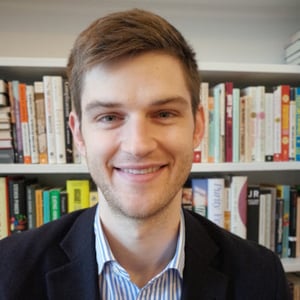
Principal, Gupta Wessler PLLC
Jonathan E. Taylor is a principal at Gupta Wessler PLLC in Washington, DC, where he focuses on representing plaintiffs and public-interest clients in Supreme Court, appellate, and constitutional litigation.
Since joining the firm in 2012, Jon has presented argument before the U.S. Courts of Appeals for the First, Eighth, Ninth, Eleventh, and District of Columbia Circuits, as well as the Supreme Court of Alaska. He has also been a principal author of dozens of briefs filed in the U.S. Supreme Court and all levels of the state and federal judiciaries. His work has spanned a wide range of topics, including the First Amendment, Second Amendment, Fourth Amendment, Article III standing, class certification, civil rights, administrative law, and a broad array of issues involving consumers’ and workers’ rights.
Of particular relevance here, Jon presented argument in the First Circuit for the Town of Brookline, Massachusetts, successfully defending against a Second Amendment challenge to its restrictions on the public carry of firearms. He now serves as counsel to both Brookline and Boston in opposing a petition for certiorari to the Supreme Court.
Jon has also represented Everytown for Gun Safety, the nation’s largest gun-violence-prevention organization. In that capacity, he has written over a dozen briefs in important Second Amendment cases, including New York State Rifle & Pistol Ass’n v. New York (U.S. Supreme Court), Worman v. Healy (First Circuit), Wilson v. Cook County (Seventh Circuit), Malpasso v. Pallozzi (Fourth Circuit), Wrenn v. District of Columbia (D.C. Circuit), Kolbe v. Hogan (en banc Fourth Circuit), Peruta v. San Diego (Ninth Circuit), Silvester v. Harris (Ninth Circuit), and Peña v. Lindley (Ninth Circuit). The briefs in these cases opposed constitutional challenges to state public-carry regulations, state prohibitions on assault weapons and large-capacity magazines, and a state waiting period and “microstamping” law.
Donald Phillip Rothschild Research Professor, George Washington University Law School
Renée Lettow Lerner is Donald Phillip Rothschild Research Professor of Law at George Washington University Law School.
Professor Lerner works in the fields of U.S. and English legal history, civil and criminal procedure, and comparative law. She advises judges, lawyers, and government officials from the United States and countries in Europe, Latin America, and Asia about the differences between adversarial and nonadversarial legal systems.
She writes extensively about the history of American juries. Her work includes not only scholarly articles, but also online publications intended for a broader audience of legal professionals and the public. In many different settings, she has debated the role of juries with other academics and with lawyers. She has a book forthcoming with Oxford University Press in the Very Short Introduction Series entitled “The Jury.” She is also working on a book about the American civil jury, from the colonial period to the present.
She is the author, with John Langbein and Bruce Smith, of the book History of the Common Law: The Development of Anglo-American Legal Institutions (2009).
Her recent writings include a book review of Amalia D. Kessler’s Inventing American Exceptionalism: The Origins of American Adversarial Legal Culture, 1800-1877, 67 J. Legal Ed. 888 (2018); “How the Creation of Appellate Courts in England and the United States Limited Judicial Comment on Evidence to the Jury,” 40 Journal of the Legal Profession 215 (2016); “The Troublesome Inheritance of Americans in Magna Carta and Trial by Jury,” in Magna Carta and its Modern Legacy 77-98 (Robert Hazell and James Melton eds., Cambridge University Press 2015); and “The Failure of Originalism in Preserving Constitutional Rights to Civil Jury Trial,” 22 William & Mary Bill of Rights Journal 811 (2014).
Professor Lerner received an A.B. summa cum laude in history from Princeton University. She was a Rhodes Scholar at Oxford University, where she studied English legal history. At Yale Law School, she was Articles Editor of the Yale Law Journal. She served as a law clerk to Justice Anthony M. Kennedy of the U.S. Supreme Court and to Judge Stephen F. Williams of the U.S. Court of Appeals for the District of Columbia Circuit. From 2003 to 2005, she served as Deputy Assistant Attorney General in the Office of Legal Counsel at the U.S. Department of Justice.
Vice President, Legal & Chief Counsel, Legal, Brady
Jonathan E. Lowy is the Vice President, Legal and Chief Counsel at Brady. Since 1997 Jon has argued in courts across the country to reduce gun violence, providing pro bono legal representation to victims of gun violence in lawsuits to reform dangerous gun industry practices, and assisting governments and public officials in defense of reasonable gun laws. Jon has litigated in over 40 states, successfully arguing several precedent-setting cases in appellate and trial courts establishing gun industry liability and Second Amendment law, obtaining several multi-million dollar settlements, and reforming gun industry practices. Jon has been named one of the 500 Leading Lawyers in America by Lawdragon magazine for the past 10 years, and has published numerous articles on gun litigation and policy including, The Right Not To Be Shot: Public Safety, Private Guns, and the Constellation of Constitutional Liberties in the Georgetown Journal of Law and Policy. He graduated from Harvard College and the University of Virginia School of Law.
Judge, United States Court of Appeals, Fifth Circuit
Andrew Oldham is a Circuit Judge on the United States Court of Appeals for the Fifth Circuit. Before ascending to the bench, Judge Oldham served as General Counsel to Texas Governor Greg Abbott, where he advised the Governor on a range of issues under federal and state law and managed litigation in which the Governor was an interested party. Before that he served as Deputy Solicitor General for the State of Texas, where he represented Texas in federal courts across the country, including twice before the United States Supreme Court. Before moving to Texas, Judge Oldham was an attorney at Kellogg Hansen Todd Figel & Frederick in Washington, D.C. His practice focused on appellate litigation in federal courts of appeals throughout the country. Before entering private practice, Judge Oldham served as a law clerk to Justice Samuel A. Alito, Jr., at the Supreme Court of the United States and to Judge David B. Sentelle of the U.S. Court of Appeals for the District of Columbia Circuit. He also worked as an attorney-adviser in the Office of Legal Counsel at the U.S. Department of Justice from 2006 to 2008. Judge Oldham earned a B.A. from the University of Virginia with highest honors, a Truman Scholarship for graduate school, an M. Phil., first class (with distinction), from Cambridge University, and a J.D., magna cum laude, from Harvard Law School.
Senior Fellow, Ave Maria School of Law and Host of the Four Boxes Diner Second Amendment Channel
Mark W. Smith is a visiting member of the Senior Common Room, New College, Oxford University and a Visiting Fellow in Pharmaceutical Public Policy and Law in the Department of Pharmacology, Oxford University. Mark is also a Distinguished Scholar and Senior Fellow of Law and Public Policy at the Ave Maria School of Law. He hosts the Four Boxes Diner YouTube Channel (youtube.com/TheFourBoxesDiner), which addresses Second Amendment scholarship, cases, history and related issues, and whose videos have received almost 90 million views. Mark's scholarship has been cited by federal courts and by parties before the United States Supreme Court in Viramontes v. Cook County, New York State Rifle & Pistol Ass’n v. Bruen and in United States v. Rahimi. He is a graduate of the NYU School of Law. Mark is also a New York Times bestselling author who appears frequently in the national media including on the Fox News Channel.
Principal, Gupta Wessler PLLC
Jonathan E. Taylor is a principal at Gupta Wessler PLLC in Washington, DC, where he focuses on representing plaintiffs and public-interest clients in Supreme Court, appellate, and constitutional litigation.
Since joining the firm in 2012, Jon has presented argument before the U.S. Courts of Appeals for the First, Eighth, Ninth, Eleventh, and District of Columbia Circuits, as well as the Supreme Court of Alaska. He has also been a principal author of dozens of briefs filed in the U.S. Supreme Court and all levels of the state and federal judiciaries. His work has spanned a wide range of topics, including the First Amendment, Second Amendment, Fourth Amendment, Article III standing, class certification, civil rights, administrative law, and a broad array of issues involving consumers’ and workers’ rights.
Of particular relevance here, Jon presented argument in the First Circuit for the Town of Brookline, Massachusetts, successfully defending against a Second Amendment challenge to its restrictions on the public carry of firearms. He now serves as counsel to both Brookline and Boston in opposing a petition for certiorari to the Supreme Court.
Jon has also represented Everytown for Gun Safety, the nation’s largest gun-violence-prevention organization. In that capacity, he has written over a dozen briefs in important Second Amendment cases, including New York State Rifle & Pistol Ass’n v. New York (U.S. Supreme Court), Worman v. Healy (First Circuit), Wilson v. Cook County (Seventh Circuit), Malpasso v. Pallozzi (Fourth Circuit), Wrenn v. District of Columbia (D.C. Circuit), Kolbe v. Hogan (en banc Fourth Circuit), Peruta v. San Diego (Ninth Circuit), Silvester v. Harris (Ninth Circuit), and Peña v. Lindley (Ninth Circuit). The briefs in these cases opposed constitutional challenges to state public-carry regulations, state prohibitions on assault weapons and large-capacity magazines, and a state waiting period and “microstamping” law.
Vice President, Legal & Chief Counsel, Legal, Brady
Jonathan E. Lowy is the Vice President, Legal and Chief Counsel at Brady. Since 1997 Jon has argued in courts across the country to reduce gun violence, providing pro bono legal representation to victims of gun violence in lawsuits to reform dangerous gun industry practices, and assisting governments and public officials in defense of reasonable gun laws. Jon has litigated in over 40 states, successfully arguing several precedent-setting cases in appellate and trial courts establishing gun industry liability and Second Amendment law, obtaining several multi-million dollar settlements, and reforming gun industry practices. Jon has been named one of the 500 Leading Lawyers in America by Lawdragon magazine for the past 10 years, and has published numerous articles on gun litigation and policy including, The Right Not To Be Shot: Public Safety, Private Guns, and the Constellation of Constitutional Liberties in the Georgetown Journal of Law and Policy. He graduated from Harvard College and the University of Virginia School of Law.
Executive Vice President, The Federalist Society
Dean Reuter is Executive Vice President at the Federalist Society for Law and Public Policy Studies. He has served in two federal government agency Offices of the Inspector General, as Counsel to the Inspector General and Deputy Inspector General, responsible for policing the use of federal funds granted and contracted through those agencies. As such, he helped conduct and oversee criminal investigations across the country. He is the principal author of the non-fiction book, The Hidden Nazi: The Untold Story of America's Deal with the Devil, and editor of Liberty’s Nemesis: The Unchecked Expansion of the State and Confronting Terror: 9/11 and the Future of American National Security. He was appointed by the President and served as Vice-Chairman of the Board of Directors of the Corporation for National and Community Service, and recently served as an appointee on the U.S. Commission on Presidential Scholars. He is a graduate of Hood College (BA with Honors) and the University of Maryland School of Law.
Senior Fellow, Ave Maria School of Law and Host of the Four Boxes Diner Second Amendment Channel
Mark W. Smith is a visiting member of the Senior Common Room, New College, Oxford University and a Visiting Fellow in Pharmaceutical Public Policy and Law in the Department of Pharmacology, Oxford University. Mark is also a Distinguished Scholar and Senior Fellow of Law and Public Policy at the Ave Maria School of Law. He hosts the Four Boxes Diner YouTube Channel (youtube.com/TheFourBoxesDiner), which addresses Second Amendment scholarship, cases, history and related issues, and whose videos have received almost 90 million views. Mark's scholarship has been cited by federal courts and by parties before the United States Supreme Court in Viramontes v. Cook County, New York State Rifle & Pistol Ass’n v. Bruen and in United States v. Rahimi. He is a graduate of the NYU School of Law. Mark is also a New York Times bestselling author who appears frequently in the national media including on the Fox News Channel.
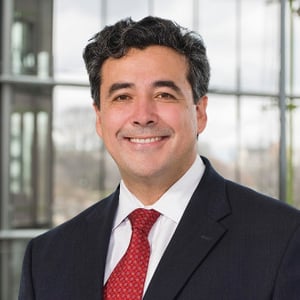
Partner-in-Charge Washington, Jones Day
Noel Francisco served as the 47th Solicitor General of the United States in the Trump Administration, from 2017 to 2020. He has argued some of the most important cases the Supreme Court has heard in recent years on a wide array of issues.
For example, as Solicitor General, he argued Trump v. Hawaii, where he successfully defended the president's orders restricting travel from countries deemed to present security risks; Janus v. AFSCME, which upheld the First Amendment rights of public employees who decline to join labor unions; Kisor v. Wilkie, which adopted his argument that the "Auer deference doctrine" should be significantly curtailed but retained in its core applications; Apple Inc. v. Pepper, which addressed whether Apple's App Store customers had standing to sue the company for antitrust violations; Knick v. Township of Scott, which held that property owners could sue state and local governments in federal court to vindicate Fifth Amendment takings claims; and Seila Law LLC v. CFPB, which invalidated restrictions on the president's authority to remove the director of the Consumer Financial Protection Bureau.
He also spearheaded the government's general strategy to seek emergency relief in the appellate courts and the Supreme Court when lower courts issued nationwide injunctions against important government programs.
Noel's service as Solicitor General built on his previous tenure at Jones Day, during which he argued McDonnell v. United States, which reversed the federal bribery conviction of the governor of Virginia; NLRB v. Noel Canning, which limited the president's constitutional recess appointments power; and Zubik v. Burwell, which challenged federal insurance coverage regulations that violated Catholic organizations' religious beliefs.
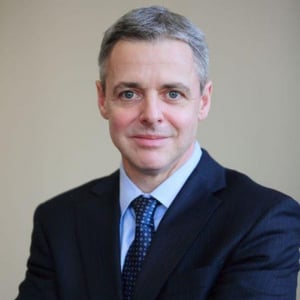
Judge, United States Court of Appeals, Sixth Circuit
Raymond M. Kethledge is a Circuit Judge on the United States Court of Appeals for the Sixth Circuit, to which he was appointed on July 8, 2008. He received his BA in history from the University of Michigan in 1989, and his JD from the University of Michigan Law School in 1993. He clerked for Justice Anthony Kennedy of the United States Supreme Court and Judge Ralph B. Guy, Jr. of the United States Court of Appeals for the Sixth Circuit. He also worked in the United States Senate and later, with two partners, founded a boutique litigation firm, now known as Bush Seyferth PLLC, in Troy, Michigan. His practice there included a broad mix of trial-court, appellate, and class-action litigation.
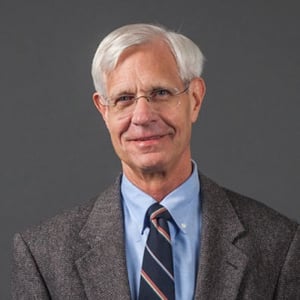
Distinguished University Professor, Antonin Scalia Law School, George Mason University
University Professor Nelson Lund is the author of Rousseau’s Rejuvenation of Political Philosophy: A New Introduction. He has also written widely in the field of constitutional law, including articles on constitutional interpretation, federalism, separation of powers, the Second Amendment, the Commerce Clause, the Speech or Debate Clause, the Equal Protection Clause, and the Uniformity Clause. In addition, he has published articles in the fields of employment discrimination and civil rights, the legal regulation of medical ethics, and the application of economic analysis to legal institutions and legal ethics.
Professor Lund graduated from St. John's College in Annapolis, Maryland, after which he received an MA in philosophy from the Catholic University of America and a PhD in political science from Harvard University. He left the faculty of the University of Chicago to attend its law school, where he served as executive editor of the University of Chicago Law Review and chapter chairman of the Federalist Society for Law and Public Policy Studies. After law school, he held positions at the United States Department of Justice in the Office of the Solicitor General and the Office of Legal Counsel. He also served as a law clerk to the Honorable Patrick E. Higginbotham of the United States Court of Appeals for the Fifth Circuit and to the Honorable Sandra Day O'Connor of the United States Supreme Court. Following his clerkship with Justice O'Connor, Professor Lund served in the White House as associate counsel to the president from 1989 to 1992.
Since joining the faculty at George Mason University's Antonin Scalia Law School, Professor Lund has taught Constitutional Law, Legislation, Federal Election Law, Employment Discrimination, State and Local Government, and seminars on the Second Amendment and on a variety of topics in Jurisprudence.
Professor of Law, Oklahoma City University School of Law
Professor O’Shea is a nationally recognized expert on firearms law and the Second Amendment. He is a co-author of the first law school casebook on the subject, Firearms Law and the Second Amendment: Regulation, Rights, and Policy, published in 2012. He serves as the Associate Director of OCU Law’s Center for State Constitutional Law and Government.
Professor O’Shea is an honors graduate of Harvard College and Harvard Law School. He also holds a master’s degree in philosophy from the University of Pittsburgh. Before coming to Oklahoma City University School of Law in 2006, he practiced commercial litigation in Chicago and in his hometown of Kansas City, Missouri. He also served as a law clerk to Chief Judge Danny J. Boggs of the U.S. Court of Appeals for the Sixth Circuit and to Judge John R. Gibson of the U.S. Court of Appeals for the Eighth Circuit.

Associate Dean of Students; William R. Jacques Constitutional La, University of Missouri-Kansas City School of Law
Allen Rostron, who joined the faculty in 2003, teaches and writes in the areas of constitutional law, tort law, products liability, and conflict of laws.
Before becoming a teacher, Rostron worked in Washington, D.C. as a Senior Staff Attorney at the Brady Center to Prevent Gun Violence, where he was part of a nationwide litigation effort that included lawsuits brought against gun manufacturers by several dozen major cities and counties. Rostron began his career working as a law clerk for Judge Thomas S. Ellis III of the U.S. District Court for the Eastern District of Virginia, and then as a litigation associate at the Cravath Swaine & Moore law firm in New York City.
Professor Rostron’s research and writing has had a significant impact on several areas of law. The Supreme Court of Wisconsin relied on one of his articles in a decision in which it became the first court in the nation to impose proportional or “market share” liability on manufacturers of lead paint. In another article, Professor Rostron suggested a new approach to regulation of high-powered sniper rifles, and that approach was subsequently enacted into law in the District of Columbia and incorporated into proposed federal legislation introduced in the U.S. Senate.

Senior Scholar, Manhattan Institute; Professor of Law Emerita, University of San Diego
Gail Heriot is a Senior Scholar at the Manhattan Institute, a Professor of Law Emerita at the University of San Diego and the Chairman of the Board of the American Civil Rights Project. She served on the U.S. Commission on Civil Rights for 18 years. Her new book is entitled “Why We Walk on Eggshells: How Our Civil Rights Laws Stifle Our Public Discourse.”

Vice President, Edwin Meese III Institute for the Rule of Law, Advancing American Freedom
John G. Malcolm oversees Advancing American Freedom’s work to increase understanding of the Constitution and the rule of law as Vice President of the organization’s Edwin Meese III Institute for the Rule of Law. Malcolm brings to the challenge a wealth of legal expertise and experience in both the public and private sectors.
Prior to joining Advancing American Freedom in 2025, Malcolm was the Vice President of the Institute for Constitutional Government and the Director of the Meese Center for Legal and Judicial Studies at the Heritage Foundation. Prior to joining Heritage in 2012, Malcolm was general counsel at the U.S. Commission on International Religious Freedom, as well as a distinguished practitioner in residence at Pepperdine Law School. From 2004 to 2009, Malcolm was executive vice president and director of worldwide anti-piracy operations for the Motion Picture Association.
Malcolm served as a deputy assistant attorney general in the Department of Justice’s Criminal Division from 2001 to 2004, where he oversaw sections on computer crime and intellectual property, domestic security, child exploitation and obscenity, and special investigations. Immediately prior to that, he was a founding partner in the Atlanta law firm of Malcolm & Schroeder, LLP.
From 1990 to 1997, Malcolm was an assistant U.S. attorney in Atlanta, assigned to the fraud and public corruption section, and also an associate independent counsel, investigating fraud and abuse in the Department of Housing and Urban Development. He was honored with the Director’s Award for Superior Performance for his work in connection with the successful prosecution of Walter Leroy Moody Jr., who assassinated an 11th Circuit judge and the head of the Savannah chapter of the NAACP.
A graduate of Harvard Law School and Columbia College, Malcolm began his career as a law clerk to a federal district court judge and a federal appellate court judge, and as an associate at the Atlanta-based law firm of Sutherland, Asbill & Brennan (new Eversheds Sutherland).
Malcolm, who resides in Washington, D.C., serves on the Board of Trustees of the Washington National Opera and is a Senate-confirmed member of the Board of Directors of the Legal Services Corporation, the largest funder of civil legal aid in the United States.
Vice President, Legal & Chief Counsel, Legal, Brady
Jonathan E. Lowy is the Vice President, Legal and Chief Counsel at Brady. Since 1997 Jon has argued in courts across the country to reduce gun violence, providing pro bono legal representation to victims of gun violence in lawsuits to reform dangerous gun industry practices, and assisting governments and public officials in defense of reasonable gun laws. Jon has litigated in over 40 states, successfully arguing several precedent-setting cases in appellate and trial courts establishing gun industry liability and Second Amendment law, obtaining several multi-million dollar settlements, and reforming gun industry practices. Jon has been named one of the 500 Leading Lawyers in America by Lawdragon magazine for the past 10 years, and has published numerous articles on gun litigation and policy including, The Right Not To Be Shot: Public Safety, Private Guns, and the Constellation of Constitutional Liberties in the Georgetown Journal of Law and Policy. He graduated from Harvard College and the University of Virginia School of Law.
Executive Vice President, The Federalist Society
Dean Reuter is Executive Vice President at the Federalist Society for Law and Public Policy Studies. He has served in two federal government agency Offices of the Inspector General, as Counsel to the Inspector General and Deputy Inspector General, responsible for policing the use of federal funds granted and contracted through those agencies. As such, he helped conduct and oversee criminal investigations across the country. He is the principal author of the non-fiction book, The Hidden Nazi: The Untold Story of America's Deal with the Devil, and editor of Liberty’s Nemesis: The Unchecked Expansion of the State and Confronting Terror: 9/11 and the Future of American National Security. He was appointed by the President and served as Vice-Chairman of the Board of Directors of the Corporation for National and Community Service, and recently served as an appointee on the U.S. Commission on Presidential Scholars. He is a graduate of Hood College (BA with Honors) and the University of Maryland School of Law.

From the Courthouse Steps: United States v. Hemani
William V. Bergstrom, F. Lee Francis
In United States v. Hemani, the Supreme Court unanimously affirmed the dismissal of an indictment...
Courthouse Steps Decision: Smith & Wesson Brands, Inc. v. Estados Unidos Mexicanos
Joel S. Nolette
In Smith & Wesson Brands, Inc. v. Estados Unidos Mexicanos, Mexico brought suit against several...
Litigation Update: Koons v. Platkin
Peter A. Patterson
Koons v. Platkin is a challenge to certain provisions of New Jersey Bill A4769/S3214 –...
Special Session: The Future of the Second Amendment's Right to Keep and Bear Arms: From the Supreme Court to Social Unrest in the Streets
Deepak Gupta, Thomas M. Hardiman, John Ohlendorf, Dean Reuter, Mark W. Smith
On November 13, 2020, The Federalist Society hosted a virtual panel for the 2020 National...
Originalism, Populism, and the Second Amendment Right to Keep and Bear Arms
Renée Lettow Lerner, Jonathan Lowy, Andrew Oldham, Mark W. Smith, Jonathan E. Taylor
On November 15, 2019, the Federalist Society's practice groups hosted a special session for the...
Originalism, Populism, and the Second Amendment Right to Keep and Bear Arms
Renée Lettow Lerner, Jonathan Lowy, Andrew Oldham, Mark W. Smith, Jonathan E. Taylor
On November 15, 2019, the Federalist Society's practice groups hosted a special session for the...
Panel 2: Are Semiautomatic Rifles, aka “Assault Weapons,” Protected by the Second Amendment?
Jonathan Lowy, Dean Reuter, Mark W. Smith
On January 15, 2019, the Federalist Society's Civil Rights and Criminal Law & Procedure Practice...
Civil Rights: The Second Amendment: Enforcing the Heller Decision
Noel J. Francisco, Raymond Kethledge, Nelson Lund, Michael O'Shea, Allan Rostron, Gail L. Heriot
The Supreme Court's 2008 decision in District of Columbia v. Heller recognized for the first time...
Topics
State Court Docket Watch News Clips: 9/8/2015
The Washington Supreme Court ruled that the state's charter school voter initiative is unconstitutional. Since...
Gun Control: Assessing Constitutionality and Effectiveness - Podcast
John G. Malcolm, Jonathan Lowy, Dean Reuter
President Obama has proposed, and Congress is currently debating, various gun control measures in reaction...