
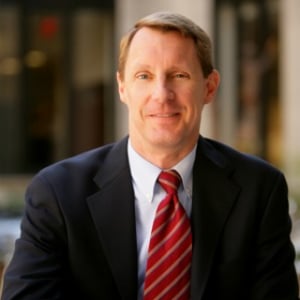
Director, International Legal Studies Program, Vanderbilt Law School
Michael Newton is an expert on terrorism, accountability, transnational justice, and conduct of hostilities issues. Over the course of his career, he has published more than 90 books, articles, op-eds and book chapters. He has been an expert witness in terrorism related trials and is admitted to the counsel list of the International Criminal Court, where, in 2018, he helped prepare the appeal of Jean-Pierre Bemba and participated in oral arguments in the Appeals Chamber. At Vanderbilt, he developed and teaches the innovative International Law Practice Lab, which provides expert assistance to judges, lawyers, legislatures, governments, and policy makers around the world. Professor Newton is most recently the editor of The United States Department of Defense Law of War Manual: Commentary and Critique, forthcoming from Cambridge University Press.
An authority on the law of armed conflict, Professor Newton served as the senior adviser to the Ambassador-at-Large for War Crimes Issues in the U.S. State Department from January 1999 to August 2002, during which he implemented a wide range of policy positions, including U.S. support to accountability mechanisms worldwide. He negotiated the “Elements of Crimes” for the International Criminal Court, and was the senior member of the team teaching international law to the first group of Iraqis who began to think about accountability mechanisms and a constitutional structure in November 2000. He shuttled to Baghdad repeatedly to aid international and Iraqi lawyers and jurists in drafting the Statute of the Iraqi High Tribunal while serving as the International Law Adviser to the Judicial Chambers from 2006 to 2008. He began assisting Iraqi officials, victims and civil society groups on legal issues associated with documentation and investigation of crimes committed by Da’esh on Iraqi soil days after Yazidi victims fled towards Mount Sinjar. He was the U.S. representative on the U.N. Planning Mission for the Sierra Leone Special Court and a founding member of its academic consortium. He is an elected member of the International Institute of Humanitarian Law and on the expert roster of Justice Rapid Response. In addition to teaching the Practice Lab, he develops and coordinates externships and educational opportunities for students interested in international legal issues, having supervised more than 150 such opportunities.
Professor Newton has served on the executive council of the American Society of International Law and as an invited expert for the Genocide Prevention Task Force established by the U.S. Holocaust Memorial Museum and the U.S. Institute of Peace. He is currently on the Advisory Board of the ABA International Criminal Court Project.
Professor Newton served in the U.S. Army more than 21 years, beginning with his commission from the U.S. Military Academy in May 1984 as an armor officer in the 4th Battalion, 68th Armor at Fort Carson, Colorado. After his selection for the Funded Legal Education Program, Newton served as chief of operational law with the Army Special Forces Command (Airborne) during Operation Desert Storm, and as the group judge advocate for the 7th Special Forces Group (Airborne). His deployments include Northern Iraq on Operation Provide Comfort to assist Kurdish civilians, and Haiti with 194th Armored Brigade (Separate), where he organized and led human rights and rules of engagement education for multinational forces, including police. He has taught international and operational law at the Judge Advocate General's School and Center in Charlottesville, Virginia, and taught international law at the United States Military Academy at West Point.

Professor Emeritus of Law, Antonin Scalia Law School, George Mason University
Jeremy A. Rabkin is a Professor Emeritus of Law at the Antonin Scalia Law School, George Mason University. Before joining the faculty in June 2007, he was for over two decades a professor in the Department of Government at Cornell University. Professor Rabkin serves on the board of directors of the Center for Individual Rights, a public interest law firm based in Washington, D.C. Previously he was a board member of the U.S. Institute of Peace and the board of academic advisors of the American Enterprise Institute.
Professor Rabkin’s books include Law Without Nations? (Princeton University Press, 2005). He authored “If You Need a Friend, Don’t Call a Cosmopolitan,” a chapter in Varieties of Sovereignty and Citizenship (Sigal R. Ben-Porath & Rogers M. Smith eds., University of Pennsylvania Press, 2012). His articles have appeared in major law reviews and political science journals and his journalistic contributions in a range of magazines and newspapers, including the Washington Post and the Wall Street Journal.
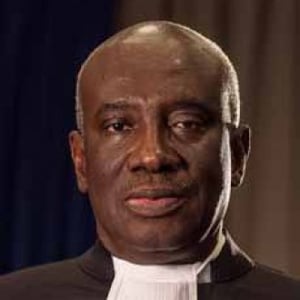
Chief Justice of The Gambia
Hassan Bubacar Jallow was sworn-in as the Chief Justice of The Gambia on 15 February 2017, Jallow after his appointment by newly-elected President of The Gambia, Adama Barrow. He is also the former Chief Prosecutor of the International Criminal Tribunal for Rwanda (ICTR) (2013-2015), the former Prosecutor of the United Nations Mechanism for International Criminal Tribunals (MICT) and Under Secretary-General of the United Nations (2012-2016).
He studied law in Tanzania, Nigeria and Great Britain and previously worked as Attorney General and Minister of Justice in The Gambia (1984-1994) and as Justice of the Gambian Supreme Court (1998-2002), Judge of the Appeals Chamber, UN Special Court for Sierra Leone (2002), Judge Ad Litem of the International Criminal Tribunal for the former Yugoslavia (2001), and Judge of the Commonwealth Arbitral Tribunal.
He has served the UN, the Organisation of African Unity, the African Union and Commonwealth as a Legal Consultant on various matters, including governance, human rights, public law, international law and international criminal justice. He has published various books and papers on his subject of expertise and is the author of Journey for Justice (2012). He was made Commander of the National Order of the Republic of The Gambia (CRG) in 1985.
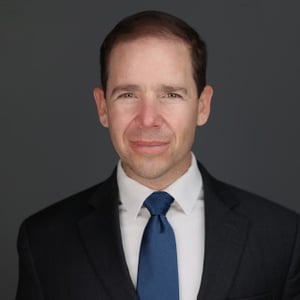
Founder and CEO, Lexpat Global Services
Adam Pearlman is the Founder and Chief Executive Officer of Lexpat Global Services. He is a National Security Law expert and a proven senior leader with experience across the U.S. Departments of Justice, Defense, and State, in the White House, and with the U.S. Federal Judiciary.
Before founding Lexpat, Mr. Pearlman served as the Senior Advisor for Legal Policy in the State Department’s Bureau of Counterterrorism. There, he counseled senior officials on matters covering the entire spectrum of programs and operations to counter terrorism and violent extremism. While participating in sensitive diplomatic engagements and helping to coordinate military operations, he also advised in the development of sanctions policy and initiatives to build legal and operational capacity in partner nations. Mr. Pearlman also managed the Bureau’s participation in federal litigation and led U.S. delegations in multilateral forums concerning criminal justice and rule of law. Separately, Mr. Pearlman supported the State Department’s Bureau of International Narcotics and Law Enforcement Affairs (INL) as the contracted Senior Justice and Rule of Law Advisor in Cabo Verde, Africa. There he was the chief implementer of a Foreign Assistance program that grew eight-fold during his tenure, building host nation capacity across the law enforcement, justice sector, rule of law, anti-money laundering, and corrections disciplines.
A former Associate Deputy General Counsel of the Department of Defense, Mr. Pearlman was agency counsel for complex civil and criminal national security matters in federal and military courts. He also led the Supreme Court and appellate unit of the team dedicated to litigating classified counterterrorism cases. His earlier service in the Department of Justice spanned four litigating divisions and the Office of the Deputy Attorney General. His diverse experience included reviewing complex international transactions and mergers, and advising on immigration removal proceedings, human rights abuses, and terrorist financing investigations. Mr. Pearlman also served with distinction in Iraq as an early advisor to the Iraqi High Tribunal’s prosecution of Saddam Hussein. He was a law clerk for The Honorable Royce C. Lamberth of the U.S. District Court for the District of Columbia, and during law school interned in the White House Counsel’s Office.
Mr. Pearlman is a Senior Fellow at the National Security Institute at George Mason University’s Antonin Scalia Law School, a member of the American Bar Association’s Advisory Committee on Law and National Security, and the Editor-in-Chief of the U.S. Intelligence Community Law Sourcebook. Previously, he has been a Term Member of the Council on Foreign Relations, National Security Fellow at the Foundation for Defense of Democracies, member of the ABA’s Africa Law Initiative Council and of the Center for Strategic & International Studies’ (CSIS) Project on Nuclear Issues, vice chairman of the ABA Section of International Law’s committees on national security, and aerospace and defense, and a liaison to the Board of Directors of the ABA’s Rule of Law Initiative. He has published articles in the Harvard National Security Journal, Stanford Law & Policy Review, Intelligence & National Security, The Foreign Service Journal, Lawfare, and many other outlets.
Mr. Pearlman earned his B.A., with honors, from UCLA, and his J.D., with honors, from The George Washington University Law School, where he was a member of the International Law Review. He also earned a Master of Science of Strategic Intelligence degree from the National Intelligence University, where he was the inaugural recipient of the Kornblum Award for national security law and ethics. Mr. Pearlman is a Certified Financial Crime Specialist and holds certificates in international human rights law from the University of Oxford and in anti-corruption law from American University’s Washington College of Law. He is admitted to the State Bars of California and Virginia, as well as to the Bar of the United States Supreme Court. He speaks and reads Portuguese at the intermediate level.
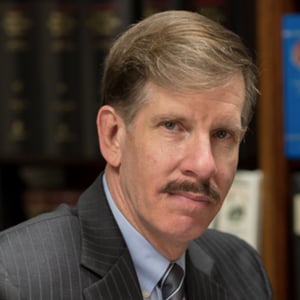
Director, Human Rights Enforcement Policy and Strategy, Human Rights and Special Prosecutions Section, U.S. Department of Justice
Eli Rosenbaum is the longest-serving prosecutor and investigator of Nazi criminals and other perpetrators of human rights violations in world history, having worked on these cases at the U.S. Department of Justice for more than thirty years. A graduate of the Wharton School of the University of Pennsylvania (B.S. and MBA, Finance) and of the Harvard Law School, he served from 1994 to 2010 as Director of the Justice Department's Office of Special Investigations (OSI), where he had previously served as a trial attorney and then as Deputy Director. OSI was created by Attorney General order to investigate and prosecute WWII-era Nazi criminals and, following the December 2004 expansion of its mission by the Intelligence Reform and Terrorism Prevention Act of 2004, also investigated and prosecuted criminal and civil cases involving participants in post-World War II crimes of genocide, extrajudicial killing and torture committed abroad under color of foreign law. Under his leadership, OSI also performed crucial work for the federal government’s inter-agency efforts to trace gold, artwork and other assets looted by the Nazis from Holocaust victims and also to locate, declassify and disclose millions of pages of documents under the Nazi War Crimes Disclosure Act of 1998. Rosenbaum has also worked as a corporate litigator in Manhattan with the law firm of Simpson Thacher & Bartlett, and as General Counsel of the World Jewish Congress, where he directed the investigation that resulted in the worldwide exposure of the Nazi past of former United Nations Secretary General Kurt Waldheim.
In March 2010, OSI was merged with another Criminal Division section to form the Human Rights and Special Prosecutions Section (HRSP), and Rosenbaum was named Director of Human Rights Enforcement Strategy and Policy in the new unit. In that position, he remains in charge of the Justice Department’s continuing enforcement efforts in the World War II Nazi cases and he also directs the development of the new section’s strategic and policy initiatives in the “modern” (i.e., post-WWII) human rights cases. Under Mr. Rosenbaum's leadership, OSI won major awards from Jewish organizations and Holocaust survivor groups, and it has been called “the most successful government Nazi-hunting organization on earth” (ABC News, 3/25/95) and “the world's most aggressive and effective Nazi-hunting operation” (The Washington Post, 8/27/95), possessing “a tremendous success record, [having] uncovered and won more cases than any other Nazi-hunting operation in the world” (USA Today, 1/29/97). In 2014, the Simon Wiesenthal Center again gave the U.S. Justice Department it’s “A” rating, which it reserves for “highly successful proactive prosecution programs.” The United States is the only country in the world to have earned the Center’s “A” rating in each year since the annual ratings were first issued (2001). In November 2008, Rosenbaum received the Assistant Attorney General’s first-ever Award for Human Rights Law Enforcement. He has also received the Assistant Attorney General’s Award for Special Initiative (2008), the Anti-Defamation League’s “Heroes in Blue” award (2000), the Virginia Law Foundation’s Rule of Law Award (2008), and in the Florida Holocaust Museum’s annual Loebenberg Humanitarian Award (2015). In 1997, he was selected by the faculty of the University of Pennsylvania Law School to be the recipient of the school's Honorary Fellowship Award, presented during commencement ceremonies to one attorney "who has distinguished himself or herself in commitment to public service" by "making significant contributions to the ends of justice at the cost of great personal risk and sacrifice."
Rosenbaum’s published works include Betrayal: The Untold Story of the Kurt Waldheim Investigation and Cover-Up (St. Martin's Press), which was selected for "Notable Books of 1993" by The New York Times Book Review and "Best Books of 1993" by The San Francisco Chronicle.
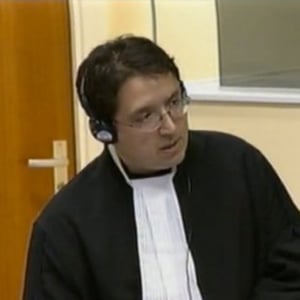
Former war crimes prosecutor for the International Criminal Tribunal for the Former Yugoslavia and ICTR
Arthur Traldi is a litigator and provides consulting services on legal capacity-building, rule of law, investigations and litigation to public and private sector clients. He has extensive experience in international justice and rule of law issues, including the investigation, litigation and adjudication of crimes against humanity, war crimes, and genocide.
Most prominently, Arthur served as a prosecutor at the International Criminal Tribunal for the former Yugoslavia from 2010 to 2017. Among his other responsibilities, he led the component of the Ratko Mladic prosecution related to mass ethnic cleansing in Bosnia and Herzegovina in 1992 and secured convictions for mass murder, persecution, and other crimes - as well as serving on the trial and appeal teams in the case against Vojislav Seselj and advising the teams conducting the cases against Radovan Karadzic, Jovica Stanisic and Franko Simatovic. His work, along with the work of other senior attorneys on the Mladic case, was featured in the documentary The trial of Ratko Mladic. His work has also been featured in Diplomatic Courier, The Pittsburgh Tribune-Review, The Comparative Jurist, William and Mary Law News, Georgetown Law News, Bota Sot, and Where Genius Grows.
Arthur has served on teams making submissions to the International Criminal Court, United States Supreme Court, and other courts in the US and abroad. He has also served in Chambers at the International Criminal Tribunal for Rwanda; led workshops for staff in the War Crimes Department of the Prosecutor's Office of Bosnia and Herzegovina and the Attorney General's Office of Ethiopia; served as an election observer in Arizona, Pennsylvania, Virginia, Albania, Azerbaijan, Georgia and Ukraine; served as a consultant for the OSCE mission to Bosnia and Herzegovina, working to analyze and improve the functioning of the War Crimes Department of the Bosnian prosecutor's office; provided technical legal assistance to the American Bar Association's Centre for Human Rights; and served as a senior adviser to candidates for city, county, state and federal elected office in the United States. He has twice served as an elected member of the Northampton County (Pennsylvania) Democratic Committee.
Arthur received his J.D. from Georgetown University Law Center and his undergraduate degree from the College of William and Mary. He is a member of the American Bar Association, the International Association of Prosecutors, the International Network to Promote the Rule of Law, and the Truman National Security Project and certified to practice law before the state courts of Pennsylvania, the Kosovo Specialist Chambers, and the United States Supreme Court. He serves as a Co-Chair of the American Bar Association's International Criminal Law Committee and as a member of the Kosovo Specialist Chambers Independent Representative Body of Counsel's Executive Committee. He has taught three continuing legal education classes on the investigation and prosecution of mass atrocities and regularly speaks and gives trainings on international law. He has spoken to audiences in Austria, Bosnia and Herzegovina, Ethiopia, Germany, Hungary, Israel, Jordan, Kosovo, Malta, South Africa, the United Kingdom, and the United States.
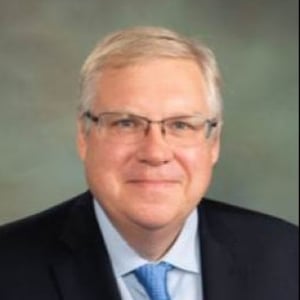
President and General Counsel, Public Interest Legal Foundation
J. Christian Adams is the President and General Counsel of the Public Interest Legal Foundation. He served from 2005 to 2010 in the Voting Section at the United States Department of Justice Voting Section. President Trump appointed Adams to the Presidential Advisory Commission on Election Integrity. President Trump also appointed Adams as a Commissioner to the United States Commission on Civil Rights where he also now serves with a term through 2025. He has been involved in election law lawsuits in 33 states and the territory of Guam. He has represented multiple presidential campaigns in election litigation. He has a law degree from the University of South Carolina School of Law. He is a member of the South Carolina and Virginia Bars.
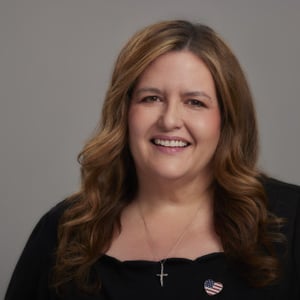
Attorney, Law Offices of Linda A. Kerns, LLC

Wayne A. Abernathy, Wild Bells
Wayne A. Abernathy is a former U.S. Treasury Assistant Secretary for Financial Institutions under President George W. Bush, receiving the Alexander Hamilton Award in recognition of his service. In that office he was also a member of the Board of Directors of the Securities Investor Protection Corporation. Prior to his work at the Treasury, Mr. Abernathy served as Staff Director of the Senate Banking Committee, under Chairman Phil Gramm.
Following his service at the Treasury, Mr. Abernathy worked for 15 years on the staff of the American Bankers Association, as Executive Vice President for Financial Institutions Policy and Regulatory Affairs.
Previous experience with the Senate Banking Committee includes serving as Staff Director of the Subcommittee on Securities during 1995-1998. From 1989 until 1994, Mr. Abernathy was a Republican economist for the committee. He previously worked as a senior legislative assistant for Senator Gramm during 1987-1989 and as an economist for the Banking Committee’s Subcommittee on International Finance and Monetary Policy during 1981-1986, under Chairman Jake Garn.
Mr. Abernathy earned his bachelor’s degree in International Studies from The Johns Hopkins University in 1978. In 1980, he received a master’s degree in International Studies from the School of Advanced International Studies of The Johns Hopkins University.

George Mason University Foundation Professor of Law, Antonin Scalia Law School, George Mason University
TODD J. ZYWICKI is George Mason University Foundation Professor of Law at Antonin Scalia Law School at George Mason University and Research Fellow of the George Mason Law and Economics Center. During the Fall 2023 semester he served as the Visiting Scholar in Conservative Thought and Policy for the Bruce Benson Center for the Study of Western Civilization at the University of Colorado-Boulder. From 2020-2021 he was Chair of the Consumer Financial Protection Bureau Taskforce on Federal Consumer Financial Law. In 2021 he was inducted to the American College of Consumer Financial Services Lawyers. He is also a Senior Fellow of the F.A. Hayek Program for the Advanced Study of Politics, Philosophy, and Economics at George Mason University and a former Senior Fellow of the Cato Institute. From 2015-2017 he was Executive Director of the George Mason Law and Economics Center. He served as Co-Editor of the Supreme Court Economic Review from 2006-2017. From 2003-2004, Professor Zywicki served as the Director of the Office of Policy Planning at the Federal Trade Commission. He has also taught at Vanderbilt University Law School, Georgetown University Law Center, Boston College Law School, Mississippi College School of Law, and China University of Political Science and Law.
Professor Zywicki clerked for Judge Jerry E. Smith of the U.S. Court of Appeals for the Fifth Circuit and worked as an associate at Alston & Bird in Atlanta, Georgia, where he practiced bankruptcy and commercial law. He received his J.D. from the University of Virginia, where he was executive editor of the Virginia Tax Review and John M. Olin Scholar in Law and Economics. Professor Zywicki also received an M.A. in Economics from Clemson University and an A.B. cum Laude with high honors in his major from Dartmouth College.
Professor Zywicki is also a Lone Mountain Fellow of the Property and Environment Research Center, a Fellow of the International Centre for Economic Research in Turin, Italy, and a former Senior Fellow of the Goldwater Institute. During the Fall 2008 Semester Professor Zywicki was the Searle Fellow of the George Mason University School of Law and was a 2008-09 W. Glenn Campbell and Rita Ricardo-Campbell National Fellow and the Arch W. Shaw National Fellow at the Hoover Institution on War, Revolution and Peace. He has lectured and consulted with government officials around the world, including Iceland, Italy, Japan, and Guatemala. In 2006 Professor Zywicki served as a Member of the United States Department of Justice Study Group on “Identifying Fraud, Abuse and Errors in the United States Bankruptcy System.”
Professor Zywicki is the author of more than 130 articles in leading law reviews and peer-reviewed economics journals. He is one of the Top 10 most-cited law professors in the field of Commercial Law and one of the Top 25 law professors on Twitter as measured by engagement levels. He is one of the Top 50 Most Downloaded Law Authors at the Social Science Research Network. He has testified multiple times before Congress on issues of consumer bankruptcy law and consumer credit and is a frequent commentator on legal issues in the print and broadcast media, including the Wall Street Journal, New York Times, The Washington Post, The Washington Times, Nightline, The Newshour with Jim Lehrer, Neil Cavuto Show, Fox & Friends, Smerconish, Fox News @ Night with Shannon Bream, Fox Business, CNN, CNBC, Bloomberg News, BBC, The Diane Rehm Show, Lou Dobbs Show, Jerry Doyle Show, and The Laura Ingraham Show.
Professor Zywicki is former Chairman and a current member of the Board of Directors of the Competitive Enterprise Institute, and is a member of the Board of Directors of the Institute for Humane Studies, Bill of Rights Institute, the Executive Committee for the Federalist Society's Financial Institutions and E-Commerce Practice Group, the Board of Trustees of the Foundation for Research on Economics and the Environment. He formerly served on the Governing Board and the Advisory Council for the Financial Services Research Program at George Washington University School of Business. He is currently the Chair of the Academic Advisory Council for the following organizations: The Bill of Rights Institute, the film “We the People in IMAX,” and the McCormick-Tribune Foundation “Freedom Museum” in Chicago, Illinois. He is a member of the Board of Visitors of Ralston College and was a member of the Board of Trustees of Yorktown University. From 2005-2009 he served as an elected Alumni Trustee of the Dartmouth College Board of Trustees.
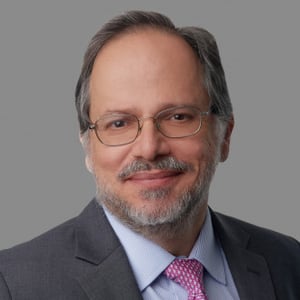
Director of Law & Policy, Environmental Integrity Project
Following Princeton and the University of Chicago Law School, David began practicing law at Paul, Weiss, Rifkind, Wharton & Garrison. Eventually tiring of litigation where the result was a wire transfer from Entity A to Entity B, in the early 1990’s David began his environmental law career at the Massachusetts Attorney General’s Office. Since then, he has litigated dozens of cases under all of the major environmental statutes including, as Sierra Club’s Chief Climate Counsel, initiating and managing Massachusetts v. EPA. Most recently, he has been busy challenging FERC’s permitting of natural gas pipelines and LNG export terminals. Apart from litigation, David has helped lead efforts on both greenhouse gas regulation and global warming legislation (and may be the only person ever invited to testify by both Barbara Boxer and James Inhofe).
He has drafted a range of federal climate legislation, advised states as to their greenhouse gas regulatory authority (and for many years has represented environmental groups defending state GHG regulations from dormant Commerce Clause challenges). David has designed and taught courses on “Environmental Litigation” at Georgetown University Law Center and “Environmental Law and Science” at the William and Mary Law School/Virginia Institute of Marine Science.
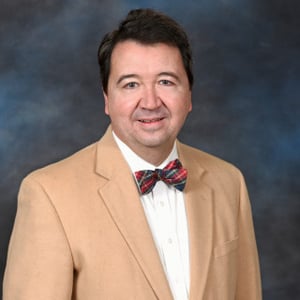
Judge, United States Court of Appeals, Sixth Circuit
John K. Bush is a Circuit Judge on the United States Court of Appeals for the Sixth Circuit.
His chambers are in Louisville, Kentucky. Prior to joining the court, Judge Bush was a partner in the
Louisville office of the firm Bingham Greenebaum Doll (now Dentons Bingham Greenebaum),
where he also was co-chair of the firm’s litigation department. He began his legal practice in the
Washington, D.C. office of Gibson Dunn & Crutcher.
Judge Bush served as a law clerk for Judge J. Smith Henley of the United States Court of
Appeals for the Eighth Circuit. He was graduated summa cum laude from Vanderbilt University,
and cum laude from Harvard Law School. He is an adjunct lecturer at The George Washington
University Law School and the Brandeis School of Law at the University of Louisville.
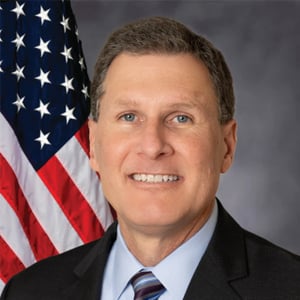
United States Attorney, Eastern District of California
Mr. Grant was appointed by Attorney General Pam Bondi to serve as the United States Attorney for the Eastern District of California beginning on August 11, 2025. Pursuant to 28 U.S.C. § 546(d), he was further appointed by the district court effective December 9, 2025.
Mr. Grant is a veteran of the Department of Justice, having served twice in Washington, D.C.: from 1991 to 1993 as an Attorney-Adviser in the Office of Legal Counsel, and from 2017 to 2021 as a Deputy Assistant Attorney General in the Environment and Natural Resources Division (ENRD). During his tenure at ENRD, he supervised more than a hundred Department litigators advancing the interests of the United States and its agencies in both enforcement and defensive matters, both civil and criminal.
In addition to his service in the Department, Mr. Grant has decades of experience in private practice in Washington, D.C. and Sacramento. That experience includes arguments in the U.S. Supreme Court, the California Supreme Court, and numerous other federal and state courts.
Mr. Grant served as a law clerk to Chief Justice Warren E. Burger (retired) and Associate Justice Clarence Thomas during the Supreme Court’s October 1994 Term. Earlier he served as a law clerk to Judge Edith H. Jones of the U.S. Court of Appeals for the Fifth Circuit in Houston, Texas.
Mr. Grant grew up in Modesto, California and raised his family in Sacramento County. He attended the University of California, Berkeley, from which he earned a bachelor’s degree in economics (1986) and a law degree (1990).
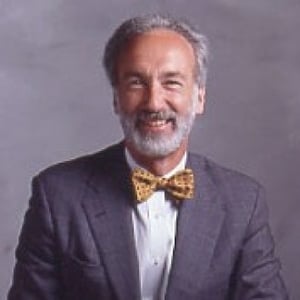
Emeritus Dean and Professor of Law, Lewis & Clark Law School
Professor Huffman joined the law school faculty in 1973, was appointed Acting Dean in 1993 and Dean in 1994, and returned to full time teaching in 2006. Born in Fort Benton, Montana, Jim graduated from Montana State University, the Fletcher School of Law and Diplomacy at Tufts University, and the University of Chicago Law School. He has been a visiting professor at Auckland University in New Zealand, the University of Oregon, the University of Athens in Greece and Universidad Francisco Marroquin in Guatemala. He was also a fellow at the Humane Studies Institute and a Distinguished Bradley Scholar at the Heritage Foundation. Jim serves on the boards of the National Crime Victims Law Institute, the Foundation for Research on Economics and the Environment, the Classroom Law Project, and the Rocky Mountain Mineral Law Foundation. He is a member and former Chair of the Executive Committee of the Environment and Property Rights Practice Group of the Federalist Society. He is a member of the Montana Bar Association and is admitted to practice before the United States Court of Appeals for the Federal Circuit and the United States Supreme Court. He is the author of more than 100 articles and chapters on a wide array of legal topics.
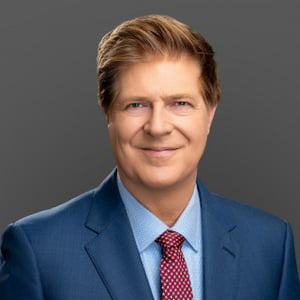
Senior Fellow, Ave Maria School of Law and Host of the Four Boxes Diner Second Amendment Channel
Mark W. Smith is a visiting member of the Senior Common Room, New College, Oxford University and a Visiting Fellow in Pharmaceutical Public Policy and Law in the Department of Pharmacology, Oxford University. Mark is also a Distinguished Scholar and Senior Fellow of Law and Public Policy at the Ave Maria School of Law. He hosts the Four Boxes Diner YouTube Channel (youtube.com/TheFourBoxesDiner), which addresses Second Amendment scholarship, cases, history and related issues, and whose videos have received almost 90 million views. Mark's scholarship has been cited by federal courts and by parties before the United States Supreme Court in Viramontes v. Cook County, New York State Rifle & Pistol Ass’n v. Bruen and in United States v. Rahimi. He is a graduate of the NYU School of Law. Mark is also a New York Times bestselling author who appears frequently in the national media including on the Fox News Channel.
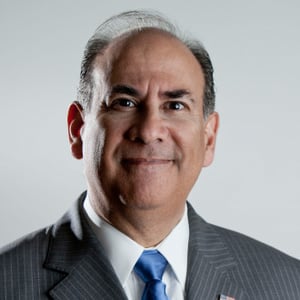
Visiting Fellow, American Enterprise Institute
Ambassador Roger F. Noriega has more than two decades of public policy experience focusing on U.S. interests in the Western Hemisphere. Twice appointed by President George W. Bush (and confirmed by the U.S. Senate) and with 10-year career on Capitol Hill, Ambassador Noriega's breadth of experience and contacts offer strategic vision and practical insight on U.S. foreign policy and aid programs. Noriega is the founder and managing director of VisiónAméricas LLC, which advises U.S. and foreign clients on international business issues, and also is a visiting fellow at the prestigious American Enterprise Institute for Public Policy Research. He serves as Vice Chairman of the Board of Directors of the Congressional Award Foundation and as a member of the advisory boards of the Canadian American Border Trade Partnership and The Americano, an online forum reaching out to Latino voters.
As Assistant Secretary of State for Western Hemisphere Affairs (July 2003 to October 2005), Ambassador Noriega managed a 3,000-person team of professionals in Washington and 50 diplomatic posts to design and implement political and economic strategies in Canada, Latin America, and the Caribbean. He was a leader in an inter-agency team that actively expanded trade and investment opportunities to spur economic growth and to create opportunities for U.S. companies and consumers. He also helped design and execute an annual plan for the effective use of $1.7 billion in U.S. economic assistance in two dozen countries.
As U.S. Ambassador to the Organization of American States (OAS) (August 2001 to July 2003), Noriega coordinated complex and sensitive multilateral diplomacy in a 34-member international organization to bolster OAS efforts to promote trade, fight illicit drugs, and defend democracy.
On Capitol Hill, Noriega counseled powerful Congressional leaders on all aspects of U.S. interests in the Americas, drafted historic legislation, and oversaw U.S. aid programs, the Peace Corps, and international narcotics affairs. From July 1997 to August 2001, he was a member of the Senate Foreign Relations Committee staff of Chairman Jesse A. Helms (R-NC), and from July 1994 to July 1997, he served on the House International Relations Committee staff of Chairman Benjamin A. Gilman (R-NY).
Other experiences include: senior advisor, OAS (July 1993 to July 1994); senior policy advisor, U.S. Mission to the OAS (August 1990 to January 1993); various program management and public affairs positions, U.S. Agency for International Development and U.S. Department of State (November 1986 to July 1990); press secretary and foreign policy advisor, U.S. Representative Robert Whittaker (R-KS) (May 1983 to October 1986); and research assistant, Kansas Secretary of State (December 1981 to April 1983). He has a Bachelor of Arts degree from Washburn University of Topeka, Kansas. Ambassador Noriega has been decorated by Governments of Nicaragua and of Peru and has received numerous awards for public service from organizations committed to the promotion of democracy in the Americas. He serves as Vice Chairman of the Board of Directors of the Congressional Award Foundation and as a member of the advisory boards of the Hispanic Community for Policy, the Canadian American Border Trade Partnership, and the Hispanic American Civics Foundation.

Executive Vice President, The Federalist Society
Dean Reuter is Executive Vice President at the Federalist Society for Law and Public Policy Studies. He has served in two federal government agency Offices of the Inspector General, as Counsel to the Inspector General and Deputy Inspector General, responsible for policing the use of federal funds granted and contracted through those agencies. As such, he helped conduct and oversee criminal investigations across the country. He is the principal author of the non-fiction book, The Hidden Nazi: The Untold Story of America's Deal with the Devil, and editor of Liberty’s Nemesis: The Unchecked Expansion of the State and Confronting Terror: 9/11 and the Future of American National Security. He was appointed by the President and served as Vice-Chairman of the Board of Directors of the Corporation for National and Community Service, and recently served as an appointee on the U.S. Commission on Presidential Scholars. He is a graduate of Hood College (BA with Honors) and the University of Maryland School of Law.
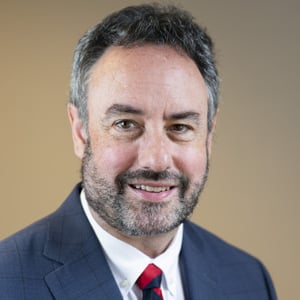
Research Director, Independence Institute
David B. Kopel is Research Director at the Independence Institute; Adjunct Scholar at the Cato Institute; and Senior Fellow at the University of Wyoming College of Law, Firearms Research Center. He received his B.A. in history with Highest Honors from Brown University and his J.D. magna cum laude from the University of Michigan Law School.
He is the author of over 20 books, including the textbook Firearm Law and the Second Amendment: Regulation, Rights, and Policy (Aspen Pubs. 4th ed. forthcoming 2026). His scholarship and briefs have been cited 7 Supreme Court cases--including Heller, McDonald, and Bruen--and in 140 lower courts opinions. He is the author of 120 scholarly articles. His shorter articles often appear on The Volokh Conspiracy blog, hosted by Reason magazine. His topics of interest include the right to arms throughout history, the Colorado Constitution, and law enforcement policy.
Assistant Professor, Savannah Law School
Professor D’Agostino is an Assistant Professor teaching Torts and Evidence. He also has interests in contracts, international business law, law and philosophy, and law and science, particularly the effects of modern science on law. Formerly a Legal Fellow in the D.C. office of Congressman Tom Price of Georgia, a Researcher at Georgetown University Law Center, and a Visiting Scholar at the Southeastern Legal Foundation, he also served as a U.S. Senate Judiciary Committee Law Clerk for Senator Tom Coburn of Oklahoma and as a Legal Intern for the U.S. Attorney’s Office for the District of Columbia, Civil Division.
Professor D’Agostino was a member of the Editorial Board of the Virginia Law Review and Executive Editor of the Virginia Journal of International Law. In 2010, he served on the National Symposium Editorial Board of the Harvard Journal of Law & Public Policy and as a pro bono researcher for the U.N. Special Rapporteur on Violence Against Women. He helped to organize the Federalist Society’s 2011 National Student Symposium held at the University of Virginia School of Law and keynoted by U.S. Supreme Court Justice Clarence Thomas, a Savannah area native.

David and Mary Harrison Distinguished Professor of Law, University of Virginia School of Law
Paul G. Mahoney is a David and Mary Harrison Distinguished Professor and served as dean of the Law School from 2008-16. Mahoney's teaching and research areas are securities regulation, law and economic development, corporate finance, financial derivatives and contracts. He has published widely in law reviews and peer-reviewed finance and law and economics journals. His book, “Wasting a Crisis: Why Securities Regulation Fails,” was published by the University of Chicago Press in 2015.
Mahoney joined the Law School faculty in 1990 after practicing law with the New York firm of Sullivan & Cromwell and clerking for Judge Ralph K. Winter, Jr. of the U.S. Court of Appeals for the Second Circuit and Justice Thurgood Marshall of the U.S. Supreme Court. He served as academic associate dean at the Law School from 1999 to 2004 and has held the Albert C. BeVier Research Chair and the Brokaw Chair in Corporate Law. He has been a visiting professor at the University of Chicago Law School, the University of Southern California Law School and the University of Toronto Faculty of Law. He has also worked on legal reform projects in Kazakhstan, Kyrgyzstan, Mongolia and Nepal.
Mahoney is a member of the Council on Foreign Relations and a fellow of the American Academy of Arts and Sciences. In 2018 he joined Securities and Exchange Commission’s Investor Advisory Committee. He served as an associate editor of the Journal of Economic Perspectives from 2004 to 2007 and as a director of the American Law and Economics Association from 2002 to 2004. He is a past recipient of the All-University Outstanding Teacher Award and the Law School's Traynor Award for excellence in faculty scholarship.
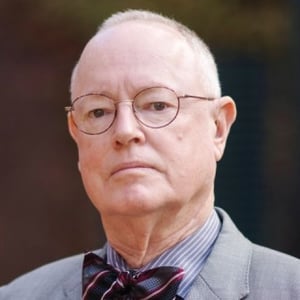
John C. Jeffries, Jr., Distinguished Professor of Law, University of Virginia School of Law
Paul B. Stephan is an expert on international business, international dispute resolution and comparative law, with an emphasis on Soviet and post-Soviet legal systems. In addition to writing prolifically in these fields, Stephan has advised governments and international organizations, taken part in cases in the Supreme Court of the United States, the federal courts, and various foreign judicial and arbitral proceedings, and lectured to professionals and scholarly groups around the world on issues raised by the globalization of the world economy. During 2006-07, he served as counselor on international law in the U.S. Department of State, and in 2020-21 as special counsel to the general counsel in the Department of Defense. He was a coordinating reporter for the American Law Institute’s Restatement (Fourth) of the Foreign Relations Law of the United States.
Stephan received his B.A. and M.A. from Yale University in 1973 and 1974, respectively, and his J.D. from the University of Virginia in 1977. Before returning to Virginia, he clerked for Judge Levin Campbell of the U.S. Court of Appeals for the First Circuit and for U.S. Supreme Court Justice Lewis F. Powell Jr. He has taught as a visiting professor at the Moscow State Institute for International Relations, the University of Vienna, Münster University, Lausanne University, Melbourne University, University of Pantheon-Assas (Paris II), Sciences Po, Paris I, the Interdisciplinary Centre Herzliya, Sydney University, the Peking University School of Transnational Law in Shenzhen, China, the University of Tartu’s Pärna College, and Liverpool University. He also has visited at Columbia Law School and Duke Law School, and served as a scholar in residence in the London office of Wilmer Hale.
After the collapse of the Soviet Union, Stephan took part in a variety of projects involving law reform in former socialist states. He worked in Russia, Georgia, Ukraine, Albania and Slovakia on behalf of the U.S. Treasury and in Kazakhstan and Azerbaijan on behalf of the International Monetary Fund. He also organized training programs for tax administrators and judges from all of the formerly socialist countries under the auspices of the Organization for Economic Cooperation and Development. His casebooks on international business, international trade and investment, and Doing Business in Emerging Markets are used at law schools both in the United States and abroad. He is the co-author, with Robert Scott, of The Limits of Leviathan: Contract Theory and the Enforcement of International Law (Cambridge University Press, 2006), and the author of The World Crisis and International Law: The Knowledge Economy and the Battle for the Future (2023). His current research focuses on the legal issues related to the Russian invasion of Ukraine and legal responses to the rise of big data.

Judge, United States Court of Appeals, Seventh Circuit
Judge Sykes was nominated to the Seventh Circuit by President George W. Bush and confirmed by the Senate in 2004. Prior to her appointment to the federal bench, Judge Sykes served as a justice on the Wisconsin Supreme Court. Governor Tommy G. Thompson appointed her in September 1999 to fill a mid-term vacancy on the state supreme court, and she was elected to a full ten-year term in April 2000. From 1992-1999, Judge Sykes served on the state trial bench in Milwaukee County (elected in 1992 and re-elected in 1998). From 1985-1992, Judge Sykes practiced law with the Milwaukee firm of Whyte & Hirschboeck, S.C., and from 1984-1985, was a law clerk to Federal Judge Terence T. Evans.
Born and raised in the Milwaukee area, Judge Sykes earned a bachelor’s degree in journalism from Northwestern University in 1980 and a law degree from Marquette University Law School in 1984. Between college and law school, Judge Sykes worked as a reporter for The Milwaukee Journal.
Judge Sykes has two sons.
George Mason University Foundation Professor of Law, Antonin Scalia Law School, George Mason University
TODD J. ZYWICKI is George Mason University Foundation Professor of Law at Antonin Scalia Law School at George Mason University and Research Fellow of the George Mason Law and Economics Center. During the Fall 2023 semester he served as the Visiting Scholar in Conservative Thought and Policy for the Bruce Benson Center for the Study of Western Civilization at the University of Colorado-Boulder. From 2020-2021 he was Chair of the Consumer Financial Protection Bureau Taskforce on Federal Consumer Financial Law. In 2021 he was inducted to the American College of Consumer Financial Services Lawyers. He is also a Senior Fellow of the F.A. Hayek Program for the Advanced Study of Politics, Philosophy, and Economics at George Mason University and a former Senior Fellow of the Cato Institute. From 2015-2017 he was Executive Director of the George Mason Law and Economics Center. He served as Co-Editor of the Supreme Court Economic Review from 2006-2017. From 2003-2004, Professor Zywicki served as the Director of the Office of Policy Planning at the Federal Trade Commission. He has also taught at Vanderbilt University Law School, Georgetown University Law Center, Boston College Law School, Mississippi College School of Law, and China University of Political Science and Law.
Professor Zywicki clerked for Judge Jerry E. Smith of the U.S. Court of Appeals for the Fifth Circuit and worked as an associate at Alston & Bird in Atlanta, Georgia, where he practiced bankruptcy and commercial law. He received his J.D. from the University of Virginia, where he was executive editor of the Virginia Tax Review and John M. Olin Scholar in Law and Economics. Professor Zywicki also received an M.A. in Economics from Clemson University and an A.B. cum Laude with high honors in his major from Dartmouth College.
Professor Zywicki is also a Lone Mountain Fellow of the Property and Environment Research Center, a Fellow of the International Centre for Economic Research in Turin, Italy, and a former Senior Fellow of the Goldwater Institute. During the Fall 2008 Semester Professor Zywicki was the Searle Fellow of the George Mason University School of Law and was a 2008-09 W. Glenn Campbell and Rita Ricardo-Campbell National Fellow and the Arch W. Shaw National Fellow at the Hoover Institution on War, Revolution and Peace. He has lectured and consulted with government officials around the world, including Iceland, Italy, Japan, and Guatemala. In 2006 Professor Zywicki served as a Member of the United States Department of Justice Study Group on “Identifying Fraud, Abuse and Errors in the United States Bankruptcy System.”
Professor Zywicki is the author of more than 130 articles in leading law reviews and peer-reviewed economics journals. He is one of the Top 10 most-cited law professors in the field of Commercial Law and one of the Top 25 law professors on Twitter as measured by engagement levels. He is one of the Top 50 Most Downloaded Law Authors at the Social Science Research Network. He has testified multiple times before Congress on issues of consumer bankruptcy law and consumer credit and is a frequent commentator on legal issues in the print and broadcast media, including the Wall Street Journal, New York Times, The Washington Post, The Washington Times, Nightline, The Newshour with Jim Lehrer, Neil Cavuto Show, Fox & Friends, Smerconish, Fox News @ Night with Shannon Bream, Fox Business, CNN, CNBC, Bloomberg News, BBC, The Diane Rehm Show, Lou Dobbs Show, Jerry Doyle Show, and The Laura Ingraham Show.
Professor Zywicki is former Chairman and a current member of the Board of Directors of the Competitive Enterprise Institute, and is a member of the Board of Directors of the Institute for Humane Studies, Bill of Rights Institute, the Executive Committee for the Federalist Society's Financial Institutions and E-Commerce Practice Group, the Board of Trustees of the Foundation for Research on Economics and the Environment. He formerly served on the Governing Board and the Advisory Council for the Financial Services Research Program at George Washington University School of Business. He is currently the Chair of the Academic Advisory Council for the following organizations: The Bill of Rights Institute, the film “We the People in IMAX,” and the McCormick-Tribune Foundation “Freedom Museum” in Chicago, Illinois. He is a member of the Board of Visitors of Ralston College and was a member of the Board of Trustees of Yorktown University. From 2005-2009 he served as an elected Alumni Trustee of the Dartmouth College Board of Trustees.
Berkley Center for Religion, Peace, and World Affairs, Georgetown University
Thomas Farr, Ph.D. is cofounder of the Religious Freedom Institute (RFI), and served as its President from its founding until January 2023. RFI is a non-profit that works to advance religious freedom for everyone, both as a source of individual human dignity and flourishing, and as a source of political stability, economic development, and international security.
A leading authority on international religious freedom, Dr. Farr served for 28 years in the U.S. Army and the U.S. Foreign Service. In 1999 he became the first director of the State Department's Office of International Religious Freedom. He subsequently directed the Witherspoon Institute's International Religious Freedom (IRF) Task Force, was a member of the Chicago World Affairs Council’s Task Force on Religion and U.S. Foreign Policy, taught at the National Defense University, and served on the Secretary of State’s IRF working group.
From 2008 – 2018 Dr. Farr was Associate Professor of the Practice of Religion and World Affairs at Georgetown University’s Edmund A. Walsh School of Foreign Service. He also founded and directed the Religious Freedom Project at Georgetown’s Berkley Center. Farr’s early work on religious freedom can be found here.
A Ph.D. in History from the University of North Carolina, Farr is a senior fellow at the Institute for Studies of Religion at Baylor University. He serves as a consultant to the U.S. Catholic Bishops Conference, and as a member of the advisory councils for the Human Rights Program at Catholic University, the international division of Alliance Defending Freedom, the Alexander Hamilton Society, and the National Museum of American Religion.
His many published works include World of Faith and Freedom: Why International Religious Liberty is Vital to American National Security (Oxford University Press, 2008), a book that has shaped U.S. religious freedom legislation and foreign policy. His later work can be found here.
Farr has been recognized for his contributions to religious freedom for all, as well as to U.S. policy, including the Defender of Religious Freedom Award, Religious Freedom Institute, 2024, the Edwin Meese III Originalism and Religious Liberty Award, Alliance Defending Freedom, 2024, the 15th Annual Religious Liberty Dinner International Award, June 1, 2017. a Lifetime Achievement Recognition, In Defense of Christians, September 2015, and the Jan Karski Wellspring of Freedom Award, Institute on Religion and Public Policy, 2003.

Paul J. Schierl Professor of Law, University of Notre Dame Law School
Professor Richard W. Garnett teaches and writes in the areas of constitutional law, criminal law, the First Amendment, and law and religion. He is a leading authority on questions and debates regarding religious freedom and church-state relations, and is the founding director of Notre Dame Law School’s Program on Church, State, and Society.
Garnett clerked for the late Chief Justice of the United States, William H. Rehnquist, and also for the late Chief Judge of the United States Court of Appeals for the Eighth Circuit, Richard S. Arnold. He earned his J.D. from Yale Law School in 1995 and his B.A., summa cum laude, from Duke University in 1990. He joined the faculty in 1999 after practicing law in Washington, D.C. with Miller, Cassidy, Larroca & Lewin.
Professor of Law and Political Science, International University of Rabat, Emory University School of Law
Gunn specializes in the study of human rights and the separation of church and state. He has written and edited more than 50 books and articles, including No Establishment of Religion: America’s Original Contribution to Religious Liberty (Oxford University Press, 2002), which he co-edited with CSLR Director John Witte, Jr., A Standard for Repair: The Establishment Clause, Equality, and Natural Rights (Routledge, 1992), and Spiritual Weapons: The Cold War and the Forging of an American National Religion (Praeger, 2008).
Gunn was previously Associate Professor in the School of Humanities and Social Sciences at Al Akhawayn University and served as a visiting professor at many institutions, including Franklin College, Peking University, and Université Aix-Marseille III. He served as a member of the Advisory Council on Freedom of Religion and Belief of the Office of Democratic Institutions and Human Rights of the Organization for Security and Cooperation in Europe (OSCE). He was also the executive director of the JFK Assassination Records Review Board and a senior fellow at the United States Institute of Peace.
Gunn holds a doctorate from Harvard University, a juris doctor from Boston University School of Law, a master of arts in humanities from the University of Chicago, and a bachelor of arts in international relations and humanities from Brigham Young University.
Director of the Program in Human Rights, Catholic University of America
William L. Saunders is Chair Emeritus of the Religious Liberties Practice Group of the Federalist Society. He is also a religious liberty and human rights scholar as well as director of the Center for Human rights at The Catholic University of America. He is Law Fellow with the Institute for Human Ecology, Professor and Director of the Program in Human Rights in the School of Arts & Sciences and Co-director of the Center for Religious Liberty at the Columbus School of Law. Before joining The Catholic University of America, Mr. Saunders served as Senior Vice President and Senior Counsel with Americans United for Life for ten years. From 1999 to 2009, he was Senior Fellow in Bioethics and Human Rights Counsel at the Family Research Council.
Mr. Saunders attended the University of North Carolina at Chapel Hill on a Morehead scholarship. He obtained his degree in law from the Harvard Law School.
Mr. Saunders was featured in Harvard’s first Guide to Conservative Public Interest Law in 2003 and again in the 2008 edition. He served on Harvard’s Advisory Committee for its 2008 celebration of public interest law. A member of the Supreme Court bar, he has authored numerous legal briefs in state, federal, foreign, and international courts.
Mr. Saunders’ book, Unborn Human Life and Fundamental Rights: Leading Constitutional Cases Under Scrutiny, was published in 2019. His articles and book chapters have been published by the university presses of Harvard, Villanova, Brigham Young, Fordham, Georgetown, Houston, Scranton, and the Catholic University of America, as well as by the Intercollegiate Studies Institute, Freedom House, Greenhaven Press, Rowan & Littlefield, Praeger, St. Augustine’s, and Intervarsity press. He has given lectures and participated in debates at many colleges, universities, and law schools, including Princeton, Harvard, Georgetown, and Notre Dame. He delivered the annual J. Michael Miller Lecture at the University of St. Thomas (on international law) in February 2007, the annual R. Wayne Kraft Memorial Lecture (on bioethics) at DeSales University in February 2004 and the annual James Moore Lecture (on human rights violations in Sudan) at Millikin University in 1999. He has also lectured, and/or has been published, in many foreign countries, including Italy, Germany, Poland, Austria, Spain, Greece, Slovakia, Mexico, Qatar, Malaysia, Romania, the Philippines, Hong Kong, and the United Kingdom.
In addition to speaking and writing frequently on bioethics topics, Mr. Saunders has submitted testimony to the President’s Council on Bioethics, as well as to UNESCO’s Committee on Bioethics, and has briefed Congressional staff and state legislatures. He is a regular columnist for the National Catholic Bioethics Quarterly.
Mr. Saunders has appeared often in the media, including BBC World News, CNN, Fox News, Vatican Radio, and National Public Radio. His articles on issues have appeared in a variety of journals, such as First Things, Human Events, Human Life Review, The Legal Times, Communio, The Family in America: A Journal of Public Policy, Ethics & Medics, and Touchstone.
Mr. Saunders served on the official United States delegation to the UN Special Session on Children in 2001/02. In 2011, he was a speaker at an official briefing at the UN, addressing the topic, why euthanasia is not a human right.
In 2004, he served on the NGO Working Committee in connection with the Doha Intergovernmental Conference for the Family.
Mr. Saunders is Senior Fellow with the Religious Freedom Institute, and Affiliated Scholar with the Pellegrino Center for Clinical Ethics at the Georgetown University School of Medicine. He is President of the Fellowship of Catholic Scholars and a member of the boards of the International Association of Catholic Bioethicists, the International Right to Life Federation, the Institute on Religion and Democracy, and the Society of Catholic Social Scientists.
In 1999, Mr. Saunders founded Sudan Relief and Rescue, Inc., to aid the persecuted church in Sudan. He has worked for and written on behalf of the persecuted church for many years.
Andrew P. Morriss is Dean and Anthony G. Buzbee Dean's Endowed Chairholder at Texas A&M School of Law and a member of the Board of Advisors for the Center on Culture and Civil Society at the Independent Institute. He is also a Research Fellow at the Center for Labor and Employment Law at New York University; Senior Fellow at the Property & Environment Research Center; Senior Scholar at the Mercatus Center at George Mason University; and a regular Visiting Professor at Universidad Francisco Marroquín, in Guatemala. Prior to coming to the University of Illinois, he served as Galen J. Roush Professor of Business Law and Regulation at Case Western Reserve University.
He received his A.B. degree from Princeton University, his J.D. and a masters degree in public affairs from the University of Texas at Austin, and his Ph.D. (economics) from the Massachusetts Institute of Technology. After law school he clerked for U.S. District Judge Barefoot Sanders in the Northern District of Texas and worked for two years at Texas Rural Legal Aid in Hereford and Plainview, Texas.
Professor Morriss is the author or coauthor of more than forty book chapters and scholarly articles, and he is the co-editor of Cross-Border Human Resources, Labor and Employment Issues: Proceedings of the New York University 54th Annual Conference on Labor (with Samuel Estreicher); Property Stories (with Gerald Korngold); and The Common Law and the Environment (with Roger Meiners). He is the author of the book, Regulation by Litigation (with Bruce Yandle and Andrew Dorchak), and he also regularly writes for The Freeman: Ideas on Liberty and Books & Culture: A Christian Review.
Professor Morriss was recently named one of the Reporters for the Restatement of Employment Law by the American Law Institute (ALI), Senior Fellow for the Institute for Energy Research, and a Reporter for the Restatement of Employment Law by the American Law Institute.

The Annual Mike Lewis Memorial Teleforum: The Identity Crisis at the International Criminal Court
Michael A. Newton, Jeremy A. Rabkin
We are pleased to present the annual Mike Lewis Memorial teleforum. Professor Lewis was a...
International Criminal Justice
Hassan Bubacar Jallow, Adam R. Pearlman, Eli Rosenbaum, Arthur Traldi
In May, French authorities arrested Felicien Kabuga after a 26-year manhunt for his alleged role...
Litigation Update: Non-citizen Voting
J. Christian Adams, Linda A. Kerns
The Public Interest Legal Foundation (“PILF”) filed a lawsuit against the Commonwealth of Pennsylvania’s Department...
Loan Shark Prevention Act
Wayne A. Abernathy, Todd J. Zywicki
Recently, members of the United States Senate and United States House of Representatives have introduced...
Climate Change Nuisance Suits
David Bookbinder, John K. Bush, Eric Grant, James L. Huffman, Mark W. Smith
Should climate change responsibility be evaluated in the courts or by the elected policymaking branches?...
The Role of Offshore Financial Centers in the World Economy
Denver, ColoradoAfter Chávez: Restoring the Rule of Law in Venezuela - Podcast
Roger F. Noriega, Dean Reuter
After his election as Venezuela’s President in 1999, the late Hugo Chávez oversaw a gradual,...
Mexico's Federal Law of Firearms and Explosives
David B. Kopel
In recent years, gun control has become an important international issue. For example, some persons...
Panel IV: Economic Uncertainty and the Role of the Courts
Joseph D'Agostino, Paul G. Mahoney, Paul B. Stephan, Diane S. Sykes, Todd J. Zywicki
This panel will assess the role of the courts in an uncertain economic climate. Given...
Religious Liberties: The International Religious Freedom Act
Thomas F. Farr, Richard W. Garnett, T. Jeremy Gunn, William L. Saunders
Ten years ago the Congress passed the International Religious Freedom Act. The Act made the...