
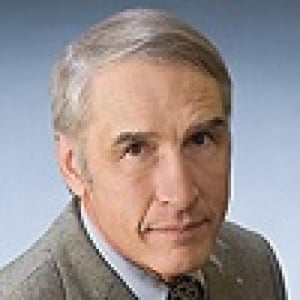
Professor of Legal Rhetoric, American University Washington College of Law
Professor Paul Figley is a Professor of Legal Rhetoric at the Washington College of Law where he first joined the faculty in 2006. Professor Figley has taught Legal Rhetoric, first year Torts, and upper level Advanced Lawyering Skills: Tort Litigation. He serves on the Advisory Board of the Administrative Law Review and the American University Law Review. The Student Bar Association named Washington College of Law Professor of the Year for 2012-13 and Faculty Member of the Year for 2014-15.
Professor Figley has testified before Congress, presented at scholarly symposia and conferences of national organizations and government agencies. He has written for national legal writing publications and has published articles in scholarly journals. His book, A Guide to the Federal Tort Claims Act (ABA, 2018), is now in its second edition.
Professor Figley served three decades as a litigator for the U.S. Department of Justice where he was Deputy Director of the Torts Branch for fifteen years. At Justice, Professor Figley represented the United States and its agencies in appellate and district court litigation involving torts, national security, and information law.
Professor Figley is a graduate of Franklin & Marshall College and Southern Methodist University School of Law, where he was Leading Articles Editor for the Journal of Air Law & Commerce.

Professor of Law, Southern Illinois University School of Law
Professor Mark F. Schultz joined the faculty in 2003. He teaches and writes primarily in the area of intellectual property.
Professor Schultz is a frequent author and speaker known for his work on the law and economics of the global intellectual property system. In one of his most influential projects, he worked with the Organization for Economic Cooperation and Development (OECD) to construct a groundbreaking global trade secret protection index (the TSPI). The TSPI is influencing policy discussions on this cutting-edge topic in capitals around the world. Other recent projects have included an empirical study that quantified for the first time the backlogs in patent offices worldwide, a report on how patented innovation is meeting global health challenges, and the construction of a new global index of copyright strength.
Professor Schultz is an influential voice in public policy debates regarding intellectual property. He has testified before the U.S. Congress on copyright law at the invitation of the House Judiciary Committee and has briefed the staff of the U.S. Senate Judiciary Committee on trade secret legislation. He speaks frequently around the world about the connection between secure and effective intellectual property rights and flourishing national economies and individual lives, with invitations from the U.S. Patent and Trademark Office, the U.S. Trade Representative, and the U.S. Copyright Office, as well as numerous academic institutions, think tanks, and industry groups. He served as an NGO delegate to the World Intellectual Property Organization (WIPO) for several years during the WIPO Development Agenda talks. He is also one of the organizers of an ongoing multilateral diplomatic dialogue on best practices in national trade secret laws, and is co-founder of the Center for Protection of Intellectual Property (CPIP) at George Mason University in Washington, D.C.
Among the awards and recognition he has received for his scholarship was the School of Law's Outstanding Scholar of the Year award in 2008. He has been a distinguished visiting scholar at the University of Botswana and a visiting professor at DePaul University College of Law.
Professor Schultz graduated with honors from the George Washington University School of Law. Following law school, he was a judicial clerk for the Hon. Daniel M. Friedman of the United States Court of Appeals for the Federal Circuit in Washington, D.C., and the Hon. Eric G. Bruggink of the United States Court of Federal Claims. Prior to joining academia, he practiced law for a decade, serving as outside general counsel to several tech startups and helping technology companies to expand their businesses and commercialize their intellectual property in dozens of countries. He holds a B.A. in International Economics from George Washington University and has done PhD level coursework in development economics at Southern Illinois University.
He is active in leadership roles in local and national organizations. He has served as chair of the Federalist Society's Intellectual Property Practice Group and the AALS Section on Internet and Computer Law. He is an officer of the American Bar Association's International IP Committee of the International Law Section and the American Intellectual Property Law Association’s Trade Secret Law Committee. He currently is chair of the Academic Advisory Board of the Copyright Alliance.
Professor Schultz teaches Copyright Law, Trade Secret Law, Trademark Law, and a senior seminar on Intellectual Property and Global Development. He established and directs both the Specialization in Intellectual Property Law and the IP Semester in Practice Externship Program. He also co-founded a Legal Globalization Class, offered every other year, that takes students to South Africa and Botswana after spending a semester learning about the legal system, culture, history, and politics of southern Africa. The popular course is a once-in-a-lifetime experience that introduces students to leading lawyers, judges, government officials, and human rights advocates, taking them from Cape Town to Johannesburg to Gaborone as well as many popular destinations including game reserves, national parks, the Cape of Good Hope, and the Cradle of Humankind.
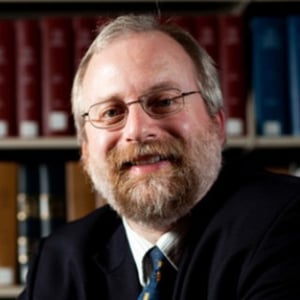
Pio Cardinal Laghi Distinguished Chair in Law, Professor and Co-director of the Terrence J. Murphy Institute for Catholic Thought, Law, and Public Policy, University of St. Thomas School of Law - Minnesota
Professor Gregory Sisk is the Pio Cardinal Laghi Distinguished Chair in Law at the University of St. Thomas School of Law in Minneapolis, Minnesota.
He received his B.A. from Montana State University and his J.D. from the University of Washington School of Law, where he graduated first in his class, was an editor on the law review, and president of the moot court board. Prior to joining the legal academy, he served as a legal advisor in all three branches of the federal government: as a legislative assistant to a U.S. Senator, as a law clerk to a U.S. Court of Appeals judge, and as an appellate attorney with the U.S. Department of Justice representing the United States in the courts of appeals and the Supreme Court. Subsequent to his government service, he was in private practice as the head of the appellate department of a Seattle law firm.
Professor Sisk joined the University of St. Thomas law faculty in 2003, after teaching for twelve years at the Drake University Law School, where he had also been named as the Richard M. & Anita Calkins Distinguished Professor. He teaches Professional Responsibility and Civil Procedure, as well as a new course with original materials on Litigation with the Federal Government. His casebook, "Litigation With the Federal Government: Cases and Materials," was published by Foundation Press in 2000 and has been adopted at several law schools, including Georgetown University, George Washington University, Catholic University, New York University, the University of Pittsburgh, and McGeorge School of Law.
Professor Sisk also is author of the leading treatise on the subject, "Litigation With the Federal Government," published as the fourth edition by ALI-ABA in 2006. He has published nearly three dozen articles on litigation with the federal government, judicial decisionmaking, awards of attorney's fees, professional responsibility, constitutional interpretation, law and religion, and tort reform. His articles have been cited by the United States Supreme Court, several federal courts of appeals, and the supreme courts of several states. His empirical study of judicial decisionmaking and the influence of judicial background, co-authored with Professors Michael Heise and Andrew Morriss, was published in the New York University Law Review and received the 1999 Article Prize from the Law and Society Association.
Professor Sisk has remained active as a member of the legal profession. He served as reporter for the Iowa Rules of Professional Conduct Drafting Committee appointed by the Iowa Supreme Court to draft the new set of ethics rules to govern lawyers in Iowa. He is a member of the American Law Institute, the nation's premier law reform organization. He maintains a limited practice, primarily as an appellate attorney and as an expert witness on professional ethics and conduct. For example, he briefed a leading environmental/federal-common-law case as counsel for amicus curiae and then was invited to argue the central issue before the U.S. Court of Appeals for the Ninth Circuit. More important than success on the merits, however, was the testament that the court gave to the attorneys in the case: "Litigation often produces criticism for its participants. This case, however, was extraordinarily well briefed and argued by consummate professionals on both sides and we are grateful for that." Atchison, Topeka & Santa Fe Railway Co. v. Brown & Bryant, Inc., 132 F.3d 1295, 1303 n.5 (9th Cir. 1997), amended, 159 F.3d 358, 365 n.6 (9th Cir. 1998).
Professor Sisk is also active with the Conference on Catholic Legal Thought, writing and speaking about religion and public life and the role of faith in professional life. He occasionally participates as a member of the Mirror of Justice blog, which present a diverse array of Catholic perspectives on the law, public life, and social justice.
J.D., University of Washington Law School
B.A., Montana State University

United States v. Wong and United States v. June - Post-Argument SCOTUScast
Paul Figley
On December 10, 2014, the Supreme Court heard oral argument in two related cases: United...
Gunn v. Minton - Post-Argument SCOTUScast
Mark F. Schultz
On January 16, 2013, the Supreme Court heard oral argument in Gunn v. Minton. The question...
SCOTUScast 1-16-08 featuring Gregory Sisk
Gregory Sisk
On January 8th, 2008, the Supreme Court handed down a decision in the John R....
SCOTUScast 11-6-07 featuring Gregory Sisk
Gregory Sisk
On November 6th, 2007, the Supreme Court heard oral arguments in the John R. Sand...