

Head of U.S. Policy and Strategic Advocacy, Electric Coin Company
Paul Brigner is the Head of U.S. Policy and Strategic Advocacy at the Electric Coin Company. He has served in senior level technology policy and government relations roles for the last eighteen years with another ten years of hands-on technical experience at the beginning his career after serving in the United States Army.
He holds an MBA from the McDonough School of Business at Georgetown University and a JD from the Georgetown University Law Center. He received a Bachelors degree from Stephen F. Austin State University where he was named the Outstanding Computer Science Graduate.
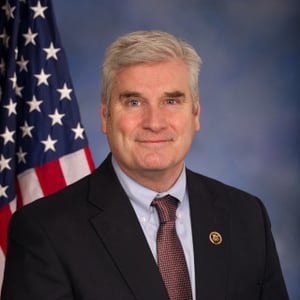
Congressman, U.S. House of Representatives
Congressman Tom Emmer was sworn in for his first term in the U.S. House of Representatives on January 6, 2015. He is currently serving his fifth term.
After serving as the Chairman of the National Republican Congressional Committee for the 116th Congress and again for the 117th Congress, Tom was elected by his fellow Republican colleagues to be the House Majority Whip. Currently, he sits on the House Financial Services Committee.
Born in 1961, Tom grew up in Minnesota and attended St. Thomas Academy. He received his BA in Political Science from the University of Alaska-Fairbanks and his JD from William Mitchell College of Law.
After practicing law for several years, he opened his own law firm. The next 20 years were spent balancing family, business, coaching hockey, and serving on the city councils in Independence and Delano.
Before coming to Congress, he served in the Minnesota House of Representatives from 2004-2008.
He and his wife Jacquie have been married for over 30 years and have seven children. They reside in Delano.
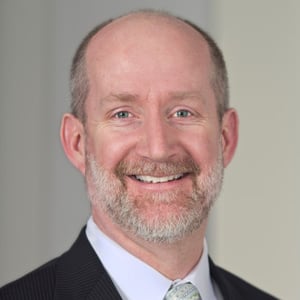
Nonresident Senior Fellow, American Enterprise Institute
Jim Harper is a nonresident senior fellow at the American Enterprise Institute (AEI), where he focuses on privacy issues, and select legal and constitutional law issues.
A lawyer by training, Mr. Harper has served as counsel for the Subcommittee on Commercial, and Administrative Law of the US House Committee on the Judiciary and as counsel for the Senate Committee on Government Affairs. More recently, he worked at the Competitive Enterprise Institute and the Cato Institute, where he wrote on the intersection of business, technology, and public policy, including privacy, surveillance, data security, telecommunications, and cryptocurrencies. He also served as global policy counsel for the Bitcoin Foundation. Mr. Harper was a founding member of the Department of Homeland Security’s Data Privacy and Integrity Advisory Committee. Early in his post-Hill career, he represented companies such as PayPal and Verisign before Congress.
Mr. Harper is the co-editor of “Terrorizing Ourselves: Why U.S. Counterterrorism Policy Is Failing and How to Fix It” (Cato Institute, 2010) and the author of “Identity Crisis: How Identification Is Overused and Misunderstood” (Cato Institute, 2006). He has written several amicus briefs in Fourth Amendment cases before the U.S. Supreme Court and has published scholarly articles in a variety of law journals. In the popular press, Mr. Harper has been published in The New York Times and The Wall Street Journal, among many other publications.
Mr. Harper has a law degree from the U.C. Hastings College of the Law, where he was editor-in-chief of the Hastings Constitutional Law Quarterly, and a BA from the University of California, Santa Barbara.

General Counsel, Espresso Systems
Michael Mosier is General Counsel at Espresso Systems, which is developing configurable privacy for digital assets with decentralized private computation. He served as Acting Director, Deputy Director, and the first Digital Innovation Officer of the U.S. Treasury’s Financial Crimes Enforcement Network (FinCEN). He also was Counselor (for Cybersecurity & Emerging Technology) to the Deputy Secretary of the Treasury.
Previously, Michael was Chief Technical Counsel at Chainalysis; an Associate Director of Treasury’s Office of Foreign Assets Control; a Deputy Chief at the Department of Justice’s Money Laundering Section; and White House National Security Council Director for Transnational Organized Crime. He began his public service with the Manhattan District Attorney’s Office and has been an adjunct professor at Georgetown University Law Center.
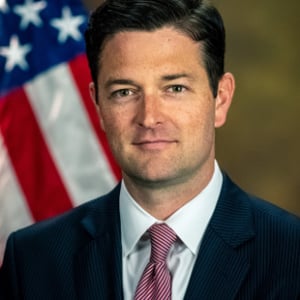
Senior Counsel and Director of Global Regulatory Matters, ConsenSys Software
Bill Hughes is senior counsel and director of global regulatory matters for ConsenSys Software, the leading Ethereum blockchain software company. Bill focuses on the diverse and ever evolving crypto global regulatory landscape, and the legal and public policy issues with which ConsenSys and the broader crypto ecosystem is grappling.
Bill joined ConsenSys after serving as an Associate Deputy Attorney General at the Department of Justice, where he managed, among other things, the Department’s work on prospective regulations, legislative proposals, and policies across a broad spectrum of legal and operational issues. He worked closely with the White House and other federal agencies on regulatory and policy initiatives and coordinated DOJ’s law enforcement response to COVID-19-related consumer fraud and money laundering. Bill also has served at the White House, where he oversaw various operational components. Bill began his career by clerking for a federal judge in New York and litigating with the firm of Sullivan & Cromwell LLP. Bill received his JD from the University of Virginia School of Law and his BA from Vanderbilt University.
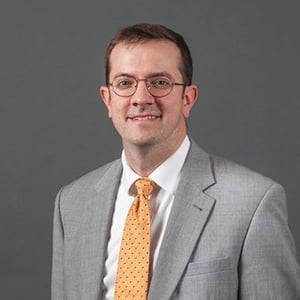
Associate Professor of Law, Antonin Scalia Law School, George Mason University
Associate Professor of Law J.W. Verret joined the Antonin Scalia Law School, George Mason University faculty in 2008. In 2013, he took leave for two years to serve as the Chief Economist and Senior Counsel for the U.S. House Committee on Financial Services. He received his JD and MA in Public Policy from Harvard Law School and the Harvard Kennedy School of Government, respectively, in 2006. While in law school, Professor Verret served an Olin Fellowship in Law and Economics at the Harvard Program on Corporate Governance under the guidance of Prof. Lucian Bebchuk.
Professor Verret then served as a law clerk for Vice-Chancellor John W. Noble of the Delaware Court of Chancery. Prior to joining the faculty at Scalia Law, Professor Verret was an associate in the SEC Enforcement Defense Practice Group at Skadden, Arps in Washington, D.C. He has written extensively on corporate law topics, including Delaware's Guidance, co-written with Chief Justice Myron T. Steele of the Delaware Supreme Court. His academic work has been featured in the Yale Journal on Regulation, The Business Lawyer, the Delaware Journal of Corporate Law, the Stanford Law Review, the University of Pennsylvania Journal of Business Law, and the Virginia Law and Business Review. Professor Verret was selected by the Northwestern Law School Searle Center on Law, Regulation, and Economic Growth for a 2009-2010 Searle-Kaufmann Research Fellowship.
Professor Verret is also a Senior Scholar at the Mercatus Center Working Group on Financial Markets, where he regularly briefs Congressional staff, members of Congress, SEC Commissioners and other financial regulatory agencies on financial regulation topics. He also directs the Corporate Federalism Initiative, where he obtains research grants for a network of students and faculty scholars who study the division between states and the federal government as sources of corporate law. Professor Verret has been invited to testify before various House and Senate Committees four times during the financial crisis of 2009 regarding all of the central provisions of the Obama Administration's 2009 financial regulatory reform proposals. For a full list of Professor Verret's C-Span appearances, including testimony before the U.S. House of Representatives and the U.S. Senate, see http://www.c-spanvideo.org/jwverret.
Professor Verret has been an invited panelist for various television appearances, including an interview on The NewsHour with Jim Lehrer. Professor Verret has been quoted in various media on financial regulation and corporate law topics, including the New York Times, CNN Money, the CNN Political Ticker, CNBC, ABC News, Investor's Business Daily, ESPN.com, The American Banker, The American Lawyer, The Huffington Post, CBS.com, and AP News. Professor Verret's op-eds have been featured in Forbes, The Chicago Tribune, The Orange County Register, and The Wall Street Journal. Professor Verret is also a regular guest contributor to three of the most noted corporate law and financial regulation law blogs: the Harvard Law School Corporate Governance and Financial Regulation Forum, Deallawyers.com, and The Conglomerate.

Managing Partner - Washington, D.C., Lewis Brisbois Bisgaard & Smith LLP
Jane Luxton is the Managing Partner of Lewis Brisbois’ Washington, D.C. office, co-chair of the Government Investigations & White Collar Defense Practice, co-chair of the Government Relations Group Leadership, co-chair of the Environmental and Administrative Law Practice, and vice-chair of the Consumer Financial Services Practice. Jane has extensive experience in environmental as well as other federal regulatory, policy, and litigation matters. She advises businesses, associations, and coalitions in navigating all levels of the federal regulatory process, including appellate advocacy.
Recent matters include:
Jane’s knowledge of environmental and administrative law gained key insights from her experience serving in several prominent positions in the U.S. government. From 2007-2009, she served as general counsel of the National Oceanic and Atmospheric Administration, advising the Undersecretary of Commerce for Oceans and Atmosphere on legal and policy issues related to natural resource damages, coastal zone and fisheries management, endangered species and marine mammal protection, and weather and climate change science. In this role, in which she held a top secret/SCI security clearance, Jane was appointed by the President to head the U.S. delegation to the 2008 Western and Central Pacific Fisheries Commission. She also received the U.S. Department of Commerce Gold Medal Award in 2008 and 2009.
Jane’s experience includes “first chair” prosecution of antitrust and other criminal cases at the U.S. Department of Justice and U.S. Attorneys office, Eastern District of Virginia. In private practice, Jane has represented clients in grand jury and other government investigations.
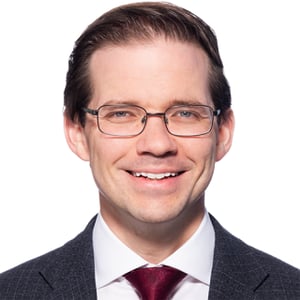
Of Counsel, Covington & Burling LLP
The Honorable Paul J. Ray is currently Of Counsel at Covington & Burling LLP where he advises clients on regulatory opportunities and challenges and helps them formulate and execute advocacy strategies for their regulatory policy priorities before the executive branch and Congress.
During the first Trump Administration, Paul held various senior positions at the Office of Information and Regulatory Affairs (OIRA) within the White House’s Office of Management and Budget, including as acting, and then Senate-confirmed, head of the office. As OIRA Administrator (the "regulations czar"), Paul supervised the review of hundreds of regulations from across the government, drafted numerous executive orders governing the regulatory process, and led the Administration’s regulatory reform effort. As a result of this experience, Paul is well-positioned to help clients understand and achieve regulatory policy priorities in the context of the government’s regulatory agenda and ongoing reform efforts.
Most recently, Paul was also the Director of the Roe Institute for Economic Policy Studies at The Heritage Foundation. In that role, he supervised the formulation of the Foundation’s economic and regulatory policy recommendations and provided technical assistance to congressional committees and staff regarding legislative changes to the regulatory process. In addition to his role at The Heritage Foundation, Paul also served as a Senior Advisor at a strategic advisory firm. Before his time in government, Paul practiced law at a law firm in Washington, specializing in administrative law matters.
Prior to his role at the White House, Paul was Counselor to the Secretary at the U.S. Department of Labor. There he led departmental efforts in high-profile rulemakings and helped formulate the Department’s legal positions and strategy.
Paul served as a law clerk to Supreme Court Justice Samuel Alito and as a law clerk to the Honorable Debra Livingston of the U.S. Court of Appeals for the Second Circuit.
Paul is a thought leader in the conservative legal movement and is a frequent commentator and speaker on regulatory policy and reform matters, including at law schools, professional gatherings, and other venues. He is the Chairman of Innovations in Peacebuilding International and the Regulatory Process Working Group of the Federalist Society’s Regulatory Transparency Project and a public member of the Administrative Conference of the United States. Paul is also an adjunct lecturer at the Hillsdale College School of Government.
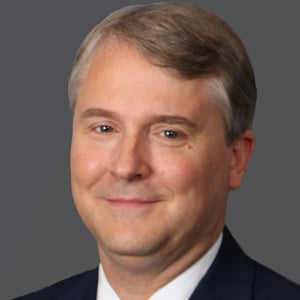
Partner, Mayer Brown
Andrew Olmem is a partner in Mayer Brown’s Washington DC office and a member of its Public Policy, Regulatory & Government Affairs, and Financial Services Regulatory & Enforcement practices. His practice focuses on complex financial services regulatory and public policy matters.
Andrew previously served as the Deputy Assistant to the President for Economic Policy and Deputy Director of the National Economic Council (NEC), where he oversaw the development and coordination of the administrations’ domestic economic policies, including for financial services, technology, telecom, energy, and infrastructure.
Earlier, he also served as the Republican Chief Counsel and Deputy Staff Director at the U.S. Senate Committee on Banking, Housing and Urban Affairs. Andrew began his legal career practicing corporate and securities law at Mayer Brown in New York City. Prior to attending law school, he served as an Assistant Economist at the Federal Reserve Bank of Richmond.

Principal, Clark Hill Public Strategies & Attorney, Clark Hill PLC
Anthony P. Campau is Principal at Clark Hill Public Strategies and an Attorney at Clark Hill PLC, two related Clark Hill firm entities. Mr. Campau previously served as chief of staff and counselor at the Office of Information and Regulatory Affairs (OIRA) within the U.S. Office of Management and Budget (OMB), which oversees the development of most new federal regulations and guidance, sets and enforces federal privacy and statistical policy, and plays a leading role in new initiatives like the regulation of artificial intelligence and the development of bilateral regulatory cooperation agreements. He clerked for the Hon. Neomi Rao, Circuit Judge, U.S. Court of Appeals for the D.C. Circuit, was in-house counsel and assistant secretary of the board for a large university, and served as a regulatory fellow at a major think tank in Washington, D.C.

Director, GW Regulatory Studies Center & Distinguished Professor of Practice, Trachtenberg School of Public Policy & Public Administration, The George Washington University
Susan Dudley is the Founder and Director of the George Washington University Regulatory Studies Center, established in 2009 to raise awareness of regulations’ effects and improve regulatory policy through research, education, and outreach. She is also a distinguished professor of practice in the Trachtenberg School of Public Policy and Public Administration. She is past-president of the Society for Benefit Cost Analysis, a senior fellow of the Administrative Conference of the United States, and on the Regulatory Transparency Project Regulatory Practice Working Group. Her book, Regulation: A Primer, with Jerry Brito, is available on Amazon.com.
From April 2007 through January 2009, Professor Dudley served as the Presidentially-appointed Administrator of the Office of Information and Regulatory Affairs in the U.S. Office of Management and Budget and was responsible for the review of draft executive branch regulations under Executive Order 12866, the collection of federal-government-wide information under the Paperwork Reduction Act, the development and implementation of government-wide policies in the areas of information policy, privacy, and statistical policy, and international regulatory cooperation efforts.
Prior to OIRA, she directed the Regulatory Studies Program at the Mercatus Center at George Mason University, and taught courses on regulation at the George Mason University School of Law. Earlier in her career, Professor Dudley served as an economist at OIRA, as well as the Environmental Protection Agency and the Commodity Futures Trading Commission. She was also a consultant to government and private clients at Economists Incorporated. She holds a Master of Science degree from the Sloan School of Management at MIT and a Bachelor of Science degree (summa cum laude) in Resource Economics from the University of Massachusetts, Amherst.
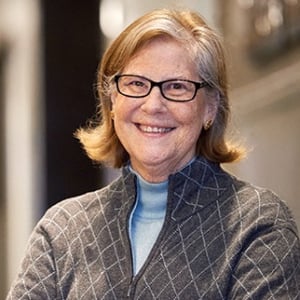
Professor of Practice and Distinguished Scholar in Residence; Co-Director of the Legislative and Regulatory Process Clinic, New York University School of Law
Sally Katzen served in the Clinton administration as administrator of the Office of Information and Regulatory Affairs in the Office of Management and Budget (OMB), as deputy assistant to the president for economic policy and deputy director of the National Economic Council in the White House, and then as the deputy director for management at OMB. She served as the head of the Agency Review Group for the Obama/Biden transition with responsibility for the Executive Office of the President and all government-wide agencies. She has taught both undergraduates and at various law schools. She is a member of the American Law Institute and the National Academy of Public Administration, has served on multiple panels for the National Academy of Sciences, testified frequently before Congress, and is on the board of several non-profit organizations. Before joining the Clinton administration, Katzen was a partner in the Washington, DC, law firm of Wilmer, Cutler & Pickering, specializing in regulatory and legislative matters, while serving in leadership roles in the American Bar Association (including chair of the Section on Administrative Law and Regulatory Practice and as DC delegate to the ABA’s House of Delegates), as president of the Federal Communications Bar Association and as president of the Women’s Legal Defense Fund. She graduated from Smith College and the University of Michigan Law School, where she was the first woman editor-in-chief of the Law Review. She clerked for Judge J. Skelly Wright of the United States Court of Appeals for the District of Columbia Circuit and served in the Carter administration as the general counsel of the Council on Wage and Price Stability in the Executive Office of the President.

Director, International Center for Food Industry Excellence, Texas Tech University
Dr. Mindy Brashears is the former Under Secretary of Agriculture in Food Safety where she served the USDA as a political appointee from 2019-2021. She is currently the Associate Vice President of Research at Texas Tech University and a Professor of Food Safety and Public Health holding the Roth and Letch family Endowed Chair of Food Safety. She also serves as the Director of the International Center for Food Industry Excellence at Texas Tech University.
She is a fellow of the National Academy of Inventors and has 3 spinoff companies based on her work. She holds a B.S. in food technology from Texas Tech (magna cum laude) and M.S. and Ph.D. degrees in food science from Oklahoma State University. She is married to Dr. Todd Brashears, who is a professor of agricultural education, and has three daughters, Bailey, Reagan (Jimenez) and Presley and one son-in-law, Eli Jimenez. Her research focuses on mitigation strategies in pre-and post-harvest environments and on the emergence of antimicrobial drug resistance in agricultural ecosystems. Her interests are primarily in meat, poultry and vegetable products.
She also has a passion for food security and has led international research teams to numerous places across Latin America and the Caribbean to improve food safety and security in those sectors and to set up sustainable agriculture systems in developing areas. She teaches courses in food microbiology and food safety and offers industry training in food safety and security. She has received multiple awards including the IAFP Laboratorian Award, The AMSA Research and Industry/Extension Award and was named as a Future Icon in the Meat Industry by the National Provisioner Magazine.
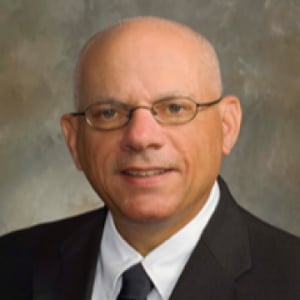
MD
Dr. Ostroff retired from the US Food and Drug Administration (FDA) in early 2019.
During his 7 years at FDA, he served as Deputy Commissioner for Foods and
Veterinary Medicine, where he oversaw the agency’s food and animal health
activities of FDA, including responsibilities in the areas of food safety and
nutrition, food labeling, food and color additives, cosmetics, dietary supplements,
animal drugs and animal feed, and research to support the food and veterinary
medicine mission of FDA. Dr. Ostroff also served as FDA’s Chief Scientist and as
the agency’s Acting Commissioner on two occasions in both the Obama and
Trump administrations.
Before joining the FDA, Dr. Ostroff worked at the Centers for Disease Control and
Prevention (CDC) in Atlanta for more than 20 years on infectious disease
surveillance and outbreak investigations, especially management and
coordination of complex emerging infectious disease threats such as anthrax,
Ebola, West Nile virus, SARS, and avian influenza. He was in the US Public Health
Service Commissioned Corps, attaining the rank of Assistant Surgeon General
(Rear Admiral). He also worked at the Pennsylvania Department of Health as
Director of the Bureau of Epidemiology and the Commonwealth’s Acting Physician
General.
Dr. Ostroff received his undergraduate and medical degrees from the University
of Pennsylvania. He currently holds adjunct professor appointments at Penn
State College of Medicine’s Department of Public Health Sciences and the
University of Pittsburgh School of Public Health’s Department of Epidemiology.

Deputy Secretary of Agriculture, U.S. Department of Agriculture
Judge Stephen Alexander Vaden was appointed as the Deputy Secretary of the U.S. Department of Agriculture on July 7, 2025. Alongside Secretary Brooke L. Rollins, Deputy Secretary Vaden leads the Department’s operations and implements policies that support America’s food and farm systems. A native of Union City, Tennessee, Deputy Secretary Vaden brings expertise in agricultural policy, law, and rural development. Previously, he served as a judge on the U.S. Court of International Trade and as General Counsel of USDA. Throughout Deputy Secretary Vaden’s time as General Counsel, he led successful Supreme Court litigation, advanced regulatory reform, and supported the implementation of the 2018 Farm Bill. He is a graduate of Yale Law School and Vanderbilt University. A public servant with strong agricultural roots, Deputy Secretary Vaden is committed to revitalizing rural America and ensuring an abundant, affordable, and safe U.S. food supply.
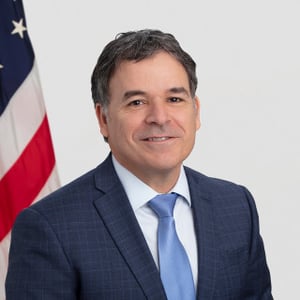
Former Deputy Commissioner for Food Policy and Response, FDA
Frank Yiannas is a former Deputy Commissioner for Food Policy and Response, a position he assumed in December of 2018. In that role he was the principal advisor to the FDA Commissioner in the development and execution of policies related to food safety, including implementation of the FDA Food Safety Modernization Act (FSMA). His leadership role within the Agency covered a broad spectrum of food safety priorities, such as outbreak response, traceback investigations, product recall activities, and supply chain innovation across the full spectrum of FDA-regulated products.
Prior to his time at FDA, Mr. Yiannas held leadership roles with two industry giants: Walmart and the Walt Disney Company. At Walmart, which he joined in 2008 and served for over a decade, Mr. Yiannas was the Vice President for Food Safety. In this role, he led the effort to make Walmart the first U.S. retailer to require suppliers to achieve certification against one of the Global Food Safety Initiative (GFSI) benchmarked food safety schemes.
At Disney, where he worked for 19 years, he was the Director of Safety and Health. During his tenure, Disney received the prestigious Black Pearl Award for corporate excellence in food safety from the International Association for Food Protection. The recipient of numerous awards, in 2007, he received the National Science Foundation’s International Lifetime Achievement Award for Leadership in Food Safety. He is also the recipient of the Collaboration Award by FDA in 2008 and he was named the 2015 Industry Professional Food Safety Hero Award by STOP Foodborne Illness, a consumer advocacy group.
Mr. Yiannas is a past president of the International Association for Food Protection and a past vice-chairman of the Global Food Safety Initiative. He was also an adjunct Professor in the Food Safety Program at Michigan State University, and in 2017 was awarded the MSU Outstanding Faculty Award.
A microbiologist, Mr. Yiannas received a B.S. in microbiology from the University of Central Florida and a Master of Public Health degree from the University of South Florida.

Professor of Law, Antonin Scalia Law School, George Mason University
ILYA SOMIN is Professor of Law at George Mason University and the B. Kenneth Simon Chair in Constitutional Studies at the Cato Institute. His research focuses on constitutional law, property law, democratic theory, federalism, and migration rights. He is the author of Free to Move: Foot Voting, Migration, and Political Freedom (Oxford University Press, revised and expanded edition, 2022), Democracy and Political Ignorance: Why Smaller Government is Smarter (Stanford University Press, revised and expanded second edition, 2016), and The Grasping Hand: Kelo v. City of New London and the Limits of Eminent Domain (University of Chicago Press, 2015, rev. paperback ed., 2016), coauthor of A Conspiracy Against Obamacare: The Volokh Conspiracy and the Health Care Case (Palgrave Macmillan, 2013), and co-editor of Eminent Domain: A Comparative Perspective (Cambridge University Press, 2017). Democracy and Political Ignorance has been translated into Italian and Japanese.
Somin’s work has appeared in numerous scholarly journals, including the Yale Law Journal, Stanford Law Review, Northwestern University Law Review, Georgetown Law Journal, Critical Review, and others. Somin has also published articles in a variety of popular press outlets, including the New York Times, Washington Post, Wall Street Journal, Los Angeles Times, CNN, NBC, The Atlantic, USA Today, Boston Globe, US News and World Report, South China Morning Post, National Law Journal and Reason. He has been quoted or interviewed by the New York Times, Washington Post, Wall Street Journal, Time, Newsweek, The Economist, the Christian Science Monitor, the Financial Times, The Guardian, the Associated Press, CBS, MSNBC, NPR, BBC, Reuters, the Canadian Broadcasting Corporation, the Australian Broadcasting Corporation, Radio Free Europe/Radio Liberty, Al Jazeera, and the Voice of America, among other media.
Somin’s writings have been cited in decisions by the United States Supreme Court, multiple state supreme courts and lower federal courts, and the Supreme Court of Israel. He is co-counsel for the plaintiffs in VOS Selections, Inc. v. Trump, a case challenging the constitutionality of President Trump’s “Liberation Day” tariffs. Somin has testified on the use of drones for targeted killing in the War on Terror before the US Senate Judiciary Subcommittee on the Constitution, Civil Rights, and Human Rights. In 2009, he testified on property rights issues at the United States Senate Judiciary Committee confirmation hearings for Supreme Court Justice Sonia Sotomayor. Somin writes regularly for the popular Volokh Conspiracy law and politics blog, now affiliated with Reason magazine (previously affiliated with the Washington Post from 2014 to 2017). From 2006 to 2013, he served as Co-Editor of the Supreme Court Economic Review, one of the country’s top-rated law and economics journals.
Somin has served as a visiting professor at the University of Pennsylvania Law School. He has also been a visiting professor or scholar at the Georgetown University Law Center, the University of Hamburg, Germany, the University of Torcuato Di Tella in Buenos Aires, Argentina, Uriel Reichman University in Israel, and Zhengzhou University in China. He is a University Affiliate of the Schar School of Policy and Government at George Mason University, and an affiliated faculty member of the George Mason University Institute for Immigration Research. Before joining the faculty at George Mason, Somin was the John M. Olin Fellow in Law at Northwestern University Law School in 2002-2003. In 2001-2002, he clerked for the Hon. Judge Jerry E. Smith of the U.S. Court of Appeals for the Fifth Circuit. Professor Somin earned his B.A., Summa Cum Laude, at Amherst College, M.A. in Political Science from Harvard University, and J.D. from Yale Law School.

Director of the Center for Energy and Environment and Senior Fellow, Competitive Enterprise Institute
Daren Bakst is Director of the Competitive Enterprise Institute’s Center for Energy and Environment and a Senior Fellow. In this role, he manages, develops, and leads the coalition, advocacy, and research activities of the Center, which is one of the most effective advocates for Free Market Environmentalism.
Before joining CEI as Deputy Director in March, 2023, Daren was a Senior Research Fellow in Environmental Policy and Regulation at the Heritage Foundation, where he played a leading role in the launch of the organization’s new energy and environment center, and created and hosted the Heritage Foundation’s energy and environment podcast the “PowerCast.” During his decade at Heritage, Daren wrote about energy and environmental policy, food and agricultural policy (including editing and co-authoring the book Farms and Free Enterprise), regulation, and trade among other topics.
Daren also worked on environmental policy and regulation at the U.S. Chamber of Commerce, where he was a policy counsel and served as the executive to the association’s Government Oversight, Operations & Consumer Affairs committee, which was responsible for issues such as regulatory process reform. Daren has significant state level experience, working for seven years at the Raleigh, N.C.-based John Locke Foundation, one of the largest state-based, free-market think tanks. As director of legal and regulatory studies, his broad portfolio included energy and environmental policy, regulatory reform, and property rights.
Daren has testified numerous times before Congress, regularly submits comments to federal agencies and has appeared in or been quoted by a wide range of media outlets such as The Wall Street Journal, USA Today, The Washington Times, CNN, Fox Business News, Al-Jazeera America, and U.S. News and World Report. He is a member of the Federalist Society’s Environmental Law and Property Rights Executive Committee and serves on the College Level Advisory Board for Constituting America, an organization that informs and educates about the importance of the U.S. Constitution.
Daren, who hails from Florida, received his bachelor’s and master’s degrees from George Washington University. A licensed attorney, he holds a law degree from the University of Miami and a master of laws degree from American University.

Former Acting Assistant Attorney General, United States Department of Justice; Partner, Winston & Strawn LLP
Jonathan “Jon” Brightbill is a trial and appellate lawyer in Winston’s Washington, D.C. office, and a partner in the firm’s Litigation and White Collar, Regulatory Defense, and Investigations Practices. He represents public and private companies, corporate officers, and other individuals across white collar, regulatory defense, and government and internal investigation matters and rulemaking challenges, as well as complex commercial disputes, citizen suits, and class actions. His commercial litigation experience encompasses business disputes, false advertising, consumer protection and fraud, FCA, and extensive class action defense work; antitrust and unfair competition matters; and intellectual property litigation, such as trademarks, patents, and trade secrets.
Jon served as the Nation’s lead environmental civil and criminal enforcement official and litigator, as Acting Assistant Attorney General for the Environment & Natural Resources Division (“ENRD”) of the U.S. Department of Justice (DOJ). Jon led ENRD’s 425 lawyers, overseeing 6,500 active matters and managing an annual budget of more than $150 million. Jon brings highly experienced executive leadership from among the most senior level of DOJ on white collar and regulatory enforcement, as well as on federal policymaking and rulemaking development and challenges. He speaks with authority on government decision-making processes, and the arguments and perspectives that move regulators and enforcers, best advising and positioning clients to deal with challenges.
Jon argued many of the government’s most significant cases during his time with the DOJ. This included the Navigable Waters Protection Rule and Clean Water Rule Repeal (10th Cir., district courts), the Affordable Clean Energy Rule and Clean Power Plan Repeal (D.C. Cir), defense of EPA actions on pesticide tolerances under FIFRA and the FDCA (9th Cir. en banc), among numerous others. Jon represented the United States in trial courts in both enforcement and defensive cases, including federal enforcement action against Jeffrey Lowe and the Tiger King Park, of Netflix fame, securing a first-of-its-kind injunction for violations of the Endangered Species Act and Animal Welfare Act. Jon directed the litigation and briefing of scores of additional federal cases nationwide, covering all of the major environmental and natural resources statutes, such as the Clean Air Act, the Clean Water Act, FIFRA (pesticides), FDCA (food safety), TSCA (toxics), CERCLA (land remediation), RCRA (waste), National Environmental Policy Act, Federal Land Policy and Management Act, and numerous other land- and resource-management statutes.
Jon has unmatched experience litigating legal and technical issues relating to climate change. He argued in the courts of appeals, including the D.C. Circuit, regarding the most significant climate change regulations by EPA, as well as the preemptive scope of the Clean Air Act. Jon also litigated climate change-related credit and trading schemes and international agreements in district court. During Jon’s time in leadership at ENRD, it successfully defeated one of the most wide-ranging lawsuits regarding climate change to date—obtaining a stay pending interlocutory appeal and dismissal just weeks before a scheduled three-month trial on federal government liability for climate change.
An accomplished trial lawyer, prior to working at DOJ, Jon was a partner in the Washington, D.C. office of another global law firm. He not only represents clients in court, but creatively counsels corporations on balancing business needs and realities with a broad range of litigation risks and compliance obligations. Jon is also an Adjunct Professor at Georgetown University Law Center. He served on the American Bar Association’s E-Discovery Working Group for Bankruptcy Practice, and was a frequent lecturer for District of Columbia Bar Association Continuing Legal Education Programs.
Jon served as an appellate clerk for the Honorable D. Brooks Smith, U.S. Court of Appeals for the Third Circuit, after graduating magna cum laude from the Georgetown University Law Center. He worked in state government as an Executive Policy Specialist for air, waste, land remediation, and radiation matters at the Pennsylvania Department of Environmental Protection.
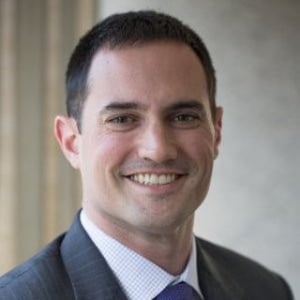
Vice President, Government Relations, PBF Energy
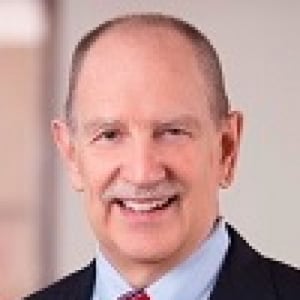
Retired
Tom Gede retired in 2023 as a principal in Morgan Lewis Consulting LLC and of counsel to the firm. He currently consults on a variety of legal and policy matters for both public and private clients. Tom has a national reputation and distinguished background in federal Indian law. Prior to retirement, he represented clients in complex governmental matters in litigation, administrative and regulatory proceedings, including high-profile matters involving state governments. A former senior deputy in the California Attorney General’s office, Tom was amicus coordinator and Supreme Court counsel, and argued cases in the US Supreme Court, the California Supreme Court, and numerous state and federal appellate courts.
Tom also served as executive director of the Conference of Western Attorneys General (CWAG), coordinating activities on key legal and policy issues, such as federal Indian law, energy, environmental, public lands, financial services, and telecommunications, for the attorneys general of 18 western states and territories. In 2016, Tom was elected as a Member of the American Law Institute (ALI), and served as an Adviser on the Restatement of the Law Third - The Law of American Indians. Tom also taught federal Indian law as an adjunct law professor at the University of the Pacific - McGeorge School of Law. He served as an assistant editor for and the author of the Indian gaming chapter in CWAG’s American Indian Law Deskbook (2d & 3d eds.). He has been engaged in Indian gaming and Indian law matters for more than three decades, having focused on the gaming compacts with Indian tribes, as well as complex civil and criminal jurisdiction, land, natural resources, water and law enforcement issues in Indian country. He has testified before Congress on American Indian and Native Alaskan issues. In 2012 he was appointed by Speaker John Boehner to serve on the United States Indian Law and Order Commission, where he examined criminal justice issues in Indian country and Alaska, resulting in the issuance of an important report to the President and Congress.
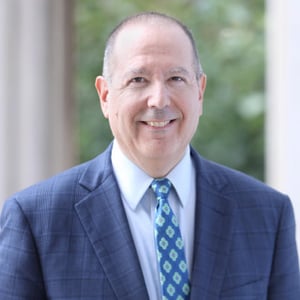
Dean Emeritus and Harvey R. Miller Professor of Law & Economics, Columbia Law School
David Schizer is Dean Emeritus and Harvey R. Miller Professor of Law & Economics at Columbia Law School. He served as Dean from 2004 to 2014, and as CEO of the American Jewish Joint Distribution Committee, a global Jewish humanitarian organization, from 2017 to 2019. He is the author of How to Save the World in Six (Not So Easy) Steps: Bringing Out the Best in Nonprofits. Schizer serves on the Board of Visitors of the Federalist Society. He is Second Vice Chair of the Tax Section of the New York State Bar Association, a co-founder and co-chair of the Richman Center for Law, Business, and Public Policy at Columbia University, and a co-founder and co-chair of the Center for Israeli Legal Studies at Columbia Law School. Schizer served as a law clerk to Justice Ruth Bader Ginsburg on the U.S. Supreme Court and Judge Alex Kozinski on the U.S. Court of Appeals for the Ninth Circuit.
Partner, Gibson, Dunn & Crutcher LLP
Russell Balikian is a partner in the Washington, D.C. office of Gibson, Dunn & Crutcher. He practices in the firm’s Appellate & Constitutional Law Group and Administrative Law & Regulatory Practice Group. He represents clients in high-stakes litigation before the Supreme Court of the United States and other federal and state courts across the country, as well as in major proceedings before administrative agencies. Russell was named “One to Watch” in Appellate Practice by Best Lawyers in 2023 and a “Rising Star” in Telecommunications by Law360 in 2024.
Russell has extensive experience in administrative law, especially in the telecom and technology sectors. He regularly represents clients challenging or supporting agency rules and orders, and he defends companies against enforcement actions by federal regulators, such as the Federal Communications Commission (FCC) and the Consumer Financial Protection Bureau (CFPB). Russell brings the capabilities of an appellate attorney to all stages of the case, from building the record before the agency to litigating the case in court.
Russell also has nationwide experience litigating appeals and dispositive motions in high-profile matters, including putative class actions, major commercial disputes, and mass-tort cases. He has represented clients at every level of the federal and state judiciary. Russell also advises clients on appellate strategy and critical legal issues.
Russell clerked for Justice Clarence Thomas on the Supreme Court of the United States, Judge Gregory G. Katsas of the U.S. Court of Appeals for the D.C. Circuit, and Judge Diane S. Sykes of the U.S. Court of Appeals for the Seventh Circuit. He received his law degree from Yale Law School, where he was Co-Editor-in-Chief of the Yale Law & Policy Review. He graduated summa cum laude from Taylor University with a bachelor’s degree in both Political Science and Biblical Literature.
Russell is admitted to practice law in the District of Columbia.
Senior Litigation Counsel, New Civil Liberties Alliance
Peggy Little, Senior Counsel at New Civil Liberties Alliance, a new public interest law firm challenging the administrative state founded in 2017 by Professor Philip Hamburger, has over three decades of experience as a trial and appellate litigator in complex, high-stakes regulatory, mass-tort, class-action, products liability, securities, commercial and civil rights litigation representing individuals and high-profile litigants including Fortune 50 companies, financial institutions, public companies, and universities in state and federal courts, including the United States Supreme Court.
Peggy is a graduate of Yale College and Yale Law School, where she was awarded the Potter Stewart Prize. She was a law clerk to the Hon. Ralph K. Winter on the U.S. Court of Appeals for the Second Circuit. Prior to starting her own trial and appellate law firm in 1997, where she was appellate consulting counsel to the New Haven firefighters in Ricci v.DeStefano, a landmark 2009 United States Supreme Court decision, Peggy was a partner at Tyler, Cooper & Alcorn in New Haven, Connecticut. From 2004 to early 2018, Peggy directed, part-time, the Federalist Society Pro Bono Center.
Peggy has participated in many national conferences and symposia addressing issues of current importance in constitutional law – specifically state and federal constitutional questions regarding the separation of powers and the first amendment – and regularly speaks, blogs and publishes on the topic of the unconstitutional exercise of governmental power. In May of 2017, she presented her paper, Pirates at the Parchment Gates, to a conference of state and federal judges at the Law and Economics Center at the Antonin Scalia Law School. Her work has been published by law reviews, legal publications, the Federalist Society, the Wall Street Journal, Law and Liberty and the Manhattan Institute.
Recent publications include: How the SEC silences its critics, The SEC should listen to Sen. Cotton, Lucia v. SEC, Opening Salvos in the Opioid Litigation Wars, Straight Dope on the Opioid Crisis

Program Director and Faculty, National Institute for Trial Advocacy
Henry Su is a seasoned trial lawyer, teacher, and thought leader whose legal work has focused on what he calls the “three A’s”—Antitrust, Advocacy, and Access to Justice.
Based in Washington, DC, he has spent the bulk of his career practicing in the fields of antitrust, consumer protection, intellectual property, and technology law, which are critical to ensuring that we all continue to enjoy the benefits of competition and innovation. He provides a unique combination of experience and expertise in (1) law enforcement, regulation, legislation, and policymaking—as a former senior official with the U.S. Federal Trade Commission (FTC) for nearly seven years, and (2) technology, innovation, business strategy, and startup activity—as a Silicon Valley-based senior litigator for nearly ten years.
His government service at the FTC included two stints as a senior trial lawyer in the agency’s Bureau of Competition (January 2013 to February 2015, February 2017 to August 2017), litigating merger and conduct cases (e.g., St. Luke’s/Saltzer, 1-800 Contacts) and participating in the investigation of several others. Additionally, he served as an attorney advisor to Commissioner J. Thomas Rosch (January 2011 to January 2013) and Chairwoman Edith Ramirez (February 2015 to February 2017), providing advice and counsel to each Commissioner on a wide range of antitrust and competition matters, topics, and issues.
A veteran member of the American Bar Association (ABA) Antitrust Law Section’s leadership, he currently serves as a member of the governing Council and as co-chair of the Antitrust Fall Forum. He is also a member of the U.S. Advisory Board of the Institute for Consumer Antitrust Studies at the Loyola University Chicago School of Law.
He is a longtime program director and faculty member with the National Institute for Trial Advocacy (NITA), a nonprofit organization that has been dedicated since 1971 to the training and development of effective and ethical courtroom advocates, who are essential to preserving and improving our adversarial system of justice. His teaching runs the gamut of NITA’s programming—from trainings on trial, motion, and deposition practice to webcasts and podcasts on topics like evidentiary foundations and lawyer well-being. In 2021 he was recognized by NITA for his outstanding service as faculty with the 2020 Hon. Robert E. Keeton Award. He is also a Senior Fellow of the Litigation Counsel of America.
When it comes to trial and appellate work, he deeply appreciates the value of “learning by doing.” Some skills cannot be effectively acquired or developed except through practice, as he found out when he cut his teeth handling criminal and civil cases pending in the United States District Court for the Eastern District of Virginia—the original “Rocket Docket.” He wishes he had known some of the NITA techniques and drills when he was a junior lawyer. That is a big reason why nowadays he does his part to make NITA training widely available to upcoming generations of lawyers through programs, including public service courses, offered around the country.
Last but not least, he chairs the ABA Standing Committee on Pro Bono and Public Service, whose mission is to ensure access to justice through the expansion and enhancement of the delivery of legal and other law-related services to the underserved through volunteer efforts of legal professionals nationwide. He strives to lead by example, participating for instance as a volunteer attorney with ABA Free Legal Answers. In 2021 he was recognized as an ABA Free Legal Answers 2020 Pro Bono Leader for his pro bono service. He also serves on the Virginia State Bar’s Access to Legal Services Committee, and he is a Patron Fellow of the American Bar Foundation.
He graduated cum laude from Yale University with a B.S. degree in Biology, and then attended the University of Virginia School of Law, where he earned a J.D. degree and received the John M. Olin Prize in Law and Economics. He is a member of the California, District of Columbia, and Virginia bars.

A Discussion on Central Bank Digital Currencies and the Future of Financial Privacy
Paul Brigner, Tom Emmer, Jim Harper, Michael Mosier, William C. Hughes, J.W. Verret
This webinar will explore central bank digital currencies (CBDCs) and the ongoing debates over financial...
New York v. New Jersey - Post-Decision SCOTUScast
Daniel Barnhizer
On April 18, 2023, the Supreme Court issued its ruling in New York v. New...
The SEC’s ESG Reporting Rule: Understanding the Debate over Climate-Risk Disclosure Requirements
Jane Luxton, Paul J. Ray
In March 2022, the Securities and Exchange Commission proposed a new rule that would establish...
Deep Dive Episode 277 - Welcome & Plenary Session: Regulatory Review Reset?
Andrew Olmem, Anthony Philip Campau, Susan E. Dudley, Sally Katzen
Eleventh Annual Executive Branch Review Conference — EBRXITheme: Transparency, Accountability, and the Administrative State The White...
Food Safety: When Regulatory Jurisdictional Battles and Public Safety Collide
Mindy Brashears, Stephen Ostroff, Stephen Alexander Vaden, Frank Yiannas
Food is a necessity for life. It should therefore surprise few that the federal government...
Wilkins v. United States - Post-Decision SCOTUScast
Ilya Somin
On March 28, 2023, the Supreme Court issued its ruling in Wilkins v. United States....
Analyzing the EPA’s Proposed Renewable Fuel Standard Rule
Daren Bakst, Jonathan Brightbill, Brendan Williams
On December 30, 2022, the Environmental Protection Agency (EPA) published an updated rule on the...
Lac du Flambeau Band of Lake Superior Chippewa Indians v. Coughlin - Post-Argument SCOTUScast
Thomas F. Gede
On April 24, 2023, the Supreme Court heard oral argument in Lac du Flambeau Band of...
Polselli v. Internal Revenue Service - Post-Argument SCOTUScast
David M. Schizer
On March 29, 2023, the Supreme Court heard oral argument in Polselli v. Internal Revenue Service....
Navigating the Axon Decision: Understanding its Implications for Federal Agencies and Administrative Law
Russell Balikian, Margaret A. Little, Henry Su
In a highly anticipated decision, the Supreme Court held in Axon Enterprise, Inc. v. FTC...