
Professor, Gonzaga University School of Law
Law clerk for Justice Stephen Bistline, Idaho Supreme Court, 1979-80; in private practice with Lukins & Annis, P.S., Spokane, (1980-84); assistant professor, Oklahoma City University (1984-87); Senior Fellow, Discovery Institute, Seattle, Washington.
Justice, Washington State Supreme Court
Senior Fellow, Cato Institute
Doug Bandow is a senior fellow at the Cato Institute, specializing in foreign policy and civil liberties. He worked as special assistant to President Reagan and editor of the political magazine Inquiry. He writes regularly for leading publications such as Fortune magazine, National Interest, Wall Street Journal, and Washington Times. Bandow speaks frequently at academic conferences, on college campuses, and to business groups. Bandow has been a regular commentator on ABC, CBS, NBC, CNN, Fox News Channel, and MSNBC. He holds a J.D. from Stanford University.
Professor, Gonzaga University School of Law
Law clerk for Justice Stephen Bistline, Idaho Supreme Court, 1979-80; in private practice with Lukins & Annis, P.S., Spokane, (1980-84); assistant professor, Oklahoma City University (1984-87); Senior Fellow, Discovery Institute, Seattle, Washington.
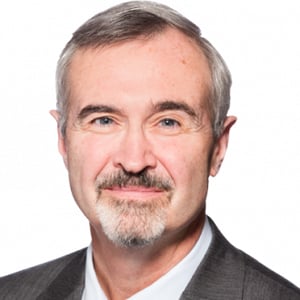
Vice President, Edwin Meese III Institute for the Rule of Law, Advancing American Freedom
John G. Malcolm oversees Advancing American Freedom’s work to increase understanding of the Constitution and the rule of law as Vice President of the organization’s Edwin Meese III Institute for the Rule of Law. Malcolm brings to the challenge a wealth of legal expertise and experience in both the public and private sectors.
Prior to joining Advancing American Freedom in 2025, Malcolm was the Vice President of the Institute for Constitutional Government and the Director of the Meese Center for Legal and Judicial Studies at the Heritage Foundation. Prior to joining Heritage in 2012, Malcolm was general counsel at the U.S. Commission on International Religious Freedom, as well as a distinguished practitioner in residence at Pepperdine Law School. From 2004 to 2009, Malcolm was executive vice president and director of worldwide anti-piracy operations for the Motion Picture Association.
Malcolm served as a deputy assistant attorney general in the Department of Justice’s Criminal Division from 2001 to 2004, where he oversaw sections on computer crime and intellectual property, domestic security, child exploitation and obscenity, and special investigations. Immediately prior to that, he was a founding partner in the Atlanta law firm of Malcolm & Schroeder, LLP.
From 1990 to 1997, Malcolm was an assistant U.S. attorney in Atlanta, assigned to the fraud and public corruption section, and also an associate independent counsel, investigating fraud and abuse in the Department of Housing and Urban Development. He was honored with the Director’s Award for Superior Performance for his work in connection with the successful prosecution of Walter Leroy Moody Jr., who assassinated an 11th Circuit judge and the head of the Savannah chapter of the NAACP.
A graduate of Harvard Law School and Columbia College, Malcolm began his career as a law clerk to a federal district court judge and a federal appellate court judge, and as an associate at the Atlanta-based law firm of Sutherland, Asbill & Brennan (new Eversheds Sutherland).
Malcolm, who resides in Washington, D.C., serves on the Board of Trustees of the Washington National Opera and is a Senate-confirmed member of the Board of Directors of the Legal Services Corporation, the largest funder of civil legal aid in the United States.
Co-Founder, Trustee, and Legal Advisor, Reason Foundation and Ge, Individual Rights Foundation
Manuel "Manny" Klausner was one of the founding partners in Reason Enterprises, which began publishing Reason magazine in 1971, three years after the publication's creation. He became editor in the summer of 1972 and a senior editor in June 1978. In 1978 he co-founded the Reason Foundation with Tibor Machan and Bob Poole. He remains on the board of the Reason Foundation today, is a stalwart supporter of the Federalist Society, and a libertarian lawyer extraordinaire.
Professor, Gonzaga University School of Law
Law clerk for Justice Stephen Bistline, Idaho Supreme Court, 1979-80; in private practice with Lukins & Annis, P.S., Spokane, (1980-84); assistant professor, Oklahoma City University (1984-87); Senior Fellow, Discovery Institute, Seattle, Washington.
University of Washington School of Law
Professor Jay has taught at the UW law school since 1980. Prior to coming to Washington he taught at the University of North Carolina for two years. Before entering teaching, Professor Jay clerked for two years, first with the U.S. District Court for the District of Columbia and then for U.S. Supreme Court Justice Warren E. Burger. His teaching and research interests include constitutional law and constitutional history. Professor Jay is the author of Most Humble Servants: The Advisory Role of Early Judges (Yale 1997). He has worked extensively to assure the reproductive rights of women, particularly access to safe and legal abortions. During 1984-85 he was a visiting professor at Georgetown University Law Center.
Washington State Supreme Court
Richard B. Sanders was elected to the Washington Supreme Court in 1995. During his 26 years of legal practice prior to becoming a Justice of the Supreme Court, Justice Sanders litigated more than 100 appeals (no fewer than 60 of which resulted in published opinions). Since coming to the Supreme Court he has become one of its most prolific authors and is recognized nationally for his published opinions and other writings. See www.JusticeSanders.com.
As a private practitioner he championed the civil rights of his clients and as a Justice he regards protecting our constitutionally guaranteed liberties as the first duty of our highest court. Justice Sanders believes the court must protect all the legal rights of all the citizens who come before it all the time. "We have no second class citizens," he adds. His special interest is the Washington State Constitution, and he often quotes his favorite passage: "[G]overnments . . . are established to protect and maintain individual rights." Const. art. I, § 1.
Justice Sanders is a native of Tacoma and spent the best years of his childhood there. He moved to Seattle where he graduated from Highline High School. While at Highline High he was elected president of the school's debate club, and he earned the rank of Eagle Scout. Justice Sanders received his Bachelor of Arts degree from the University of Washington after participating in the political science honors program and playing[1] in the Rose Bowl. He thereafter earned his J.D. in 1969 from the University of Washington School of Law. During his years at the University, Justice Sanders wrote "The Devil's Advocate," a weekly column of opinion in The Daily, the student newspaper.
Since taking his seat on the Supreme Court, Justice Sanders has served as an adjunct professor teaching appellate advocacy at the UW School of Law; has written articles for professional journals and texts; and has presented lectures to local, state, and national organizations on diverse topics including civil liberties, land use, the Washington State Constitution, legal ethics, and Abraham Lincoln, among others.
Justice Sanders enjoys inviting students and community groups to tour the Temple of Justice to visit with him. He is the father of Laura Sanders, a 2009 summa cum laude graduate of the University of San Francisco. Laura is enthusiastic in all her endeavors and is the light of her daddy's life.
Senior Fellow, Cato Institute
Doug Bandow is a senior fellow at the Cato Institute, specializing in foreign policy and civil liberties. He worked as special assistant to President Reagan and editor of the political magazine Inquiry. He writes regularly for leading publications such as Fortune magazine, National Interest, Wall Street Journal, and Washington Times. Bandow speaks frequently at academic conferences, on college campuses, and to business groups. Bandow has been a regular commentator on ABC, CBS, NBC, CNN, Fox News Channel, and MSNBC. He holds a J.D. from Stanford University.
Professor, Gonzaga University School of Law
Law clerk for Justice Stephen Bistline, Idaho Supreme Court, 1979-80; in private practice with Lukins & Annis, P.S., Spokane, (1980-84); assistant professor, Oklahoma City University (1984-87); Senior Fellow, Discovery Institute, Seattle, Washington.
Vice President for Litigation, Institute for Free Speech
Alan joined the Institute for Free Speech as Vice President for Litigation in February 2021. In this role, Alan directs the Institute’s litigation and legal advocacy, leads our in-house legal team, and manages and works to expand our network of volunteer attorneys.
Prior to joining the Institute, Alan litigated complex federal matters for twenty years, in his own practice and as a partner in various Washington-area firms. He argued and won landmark constitutional cases in the United States Supreme Court and has appeared before numerous appellate and district courts throughout the country. Alan often speaks at law schools and continuing legal education seminars. He also teaches strategic/public interest litigation as an adjunct professor at the Georgetown University Law Center.
Alan began his career clerking for the Hon. Terrence W. Boyle, United States District Judge for the Eastern District of North Carolina. He has also served as a Deputy Attorney General for the State of California, a litigation associate at the Washington office of Sidley Austin, and as counsel to the United States Senate Judiciary Committee.
Alan earned his J.D. at Georgetown (1995) and his B.A. at Cornell University (1992). He is an active member in good standing of the Virginia, District of Columbia, and California bars, the Bar of the United States Supreme Court, and various federal appellate and district court bars.
Professor, Gonzaga University School of Law
Law clerk for Justice Stephen Bistline, Idaho Supreme Court, 1979-80; in private practice with Lukins & Annis, P.S., Spokane, (1980-84); assistant professor, Oklahoma City University (1984-87); Senior Fellow, Discovery Institute, Seattle, Washington.
University of Washington School of Law
Professor Jay has taught at the UW law school since 1980. Prior to coming to Washington he taught at the University of North Carolina for two years. Before entering teaching, Professor Jay clerked for two years, first with the U.S. District Court for the District of Columbia and then for U.S. Supreme Court Justice Warren E. Burger. His teaching and research interests include constitutional law and constitutional history. Professor Jay is the author of Most Humble Servants: The Advisory Role of Early Judges (Yale 1997). He has worked extensively to assure the reproductive rights of women, particularly access to safe and legal abortions. During 1984-85 he was a visiting professor at Georgetown University Law Center.
Washington State Supreme Court
Richard B. Sanders was elected to the Washington Supreme Court in 1995. During his 26 years of legal practice prior to becoming a Justice of the Supreme Court, Justice Sanders litigated more than 100 appeals (no fewer than 60 of which resulted in published opinions). Since coming to the Supreme Court he has become one of its most prolific authors and is recognized nationally for his published opinions and other writings. See www.JusticeSanders.com.
As a private practitioner he championed the civil rights of his clients and as a Justice he regards protecting our constitutionally guaranteed liberties as the first duty of our highest court. Justice Sanders believes the court must protect all the legal rights of all the citizens who come before it all the time. "We have no second class citizens," he adds. His special interest is the Washington State Constitution, and he often quotes his favorite passage: "[G]overnments . . . are established to protect and maintain individual rights." Const. art. I, § 1.
Justice Sanders is a native of Tacoma and spent the best years of his childhood there. He moved to Seattle where he graduated from Highline High School. While at Highline High he was elected president of the school's debate club, and he earned the rank of Eagle Scout. Justice Sanders received his Bachelor of Arts degree from the University of Washington after participating in the political science honors program and playing[1] in the Rose Bowl. He thereafter earned his J.D. in 1969 from the University of Washington School of Law. During his years at the University, Justice Sanders wrote "The Devil's Advocate," a weekly column of opinion in The Daily, the student newspaper.
Since taking his seat on the Supreme Court, Justice Sanders has served as an adjunct professor teaching appellate advocacy at the UW School of Law; has written articles for professional journals and texts; and has presented lectures to local, state, and national organizations on diverse topics including civil liberties, land use, the Washington State Constitution, legal ethics, and Abraham Lincoln, among others.
Justice Sanders enjoys inviting students and community groups to tour the Temple of Justice to visit with him. He is the father of Laura Sanders, a 2009 summa cum laude graduate of the University of San Francisco. Laura is enthusiastic in all her endeavors and is the light of her daddy's life.
Professor, Gonzaga University School of Law
Law clerk for Justice Stephen Bistline, Idaho Supreme Court, 1979-80; in private practice with Lukins & Annis, P.S., Spokane, (1980-84); assistant professor, Oklahoma City University (1984-87); Senior Fellow, Discovery Institute, Seattle, Washington.
University of Washington School of Law
Professor Jay has taught at the UW law school since 1980. Prior to coming to Washington he taught at the University of North Carolina for two years. Before entering teaching, Professor Jay clerked for two years, first with the U.S. District Court for the District of Columbia and then for U.S. Supreme Court Justice Warren E. Burger. His teaching and research interests include constitutional law and constitutional history. Professor Jay is the author of Most Humble Servants: The Advisory Role of Early Judges (Yale 1997). He has worked extensively to assure the reproductive rights of women, particularly access to safe and legal abortions. During 1984-85 he was a visiting professor at Georgetown University Law Center.
Washington State Supreme Court
Richard B. Sanders was elected to the Washington Supreme Court in 1995. During his 26 years of legal practice prior to becoming a Justice of the Supreme Court, Justice Sanders litigated more than 100 appeals (no fewer than 60 of which resulted in published opinions). Since coming to the Supreme Court he has become one of its most prolific authors and is recognized nationally for his published opinions and other writings. See www.JusticeSanders.com.
As a private practitioner he championed the civil rights of his clients and as a Justice he regards protecting our constitutionally guaranteed liberties as the first duty of our highest court. Justice Sanders believes the court must protect all the legal rights of all the citizens who come before it all the time. "We have no second class citizens," he adds. His special interest is the Washington State Constitution, and he often quotes his favorite passage: "[G]overnments . . . are established to protect and maintain individual rights." Const. art. I, § 1.
Justice Sanders is a native of Tacoma and spent the best years of his childhood there. He moved to Seattle where he graduated from Highline High School. While at Highline High he was elected president of the school's debate club, and he earned the rank of Eagle Scout. Justice Sanders received his Bachelor of Arts degree from the University of Washington after participating in the political science honors program and playing[1] in the Rose Bowl. He thereafter earned his J.D. in 1969 from the University of Washington School of Law. During his years at the University, Justice Sanders wrote "The Devil's Advocate," a weekly column of opinion in The Daily, the student newspaper.
Since taking his seat on the Supreme Court, Justice Sanders has served as an adjunct professor teaching appellate advocacy at the UW School of Law; has written articles for professional journals and texts; and has presented lectures to local, state, and national organizations on diverse topics including civil liberties, land use, the Washington State Constitution, legal ethics, and Abraham Lincoln, among others.
Justice Sanders enjoys inviting students and community groups to tour the Temple of Justice to visit with him. He is the father of Laura Sanders, a 2009 summa cum laude graduate of the University of San Francisco. Laura is enthusiastic in all her endeavors and is the light of her daddy's life.

Choosing Who Decides: Perspectives on the Pros and Cons of an Elected vs. Appointed State Judiciary
Puget Sound Lawyers Chapter
Olympia, WAAmerica's Foreign Policy
The Death Penalty
Libertarianism
Washington Supreme Court Position 6: A Debate
Peter Callaghan, David K. DeWolf, Stewart Jay, Richard B. Sanders, Charlie Wiggins
Candidates for the Washington State Supreme Court answered questions from a panel of experts and the...
Washington Supreme Court Position 6: A Debate
Peter Callaghan, David K. DeWolf, Stewart Jay, Richard B. Sanders, Charlie Wiggins
Candidates for the Washington State Supreme Court answered questions from a panel of experts and the...
Washington Supreme Court Position 6: A Debate
Puget Sound Lawyers Chapter
Seattle, WAGovernment Health Care Reform and the Effect on IP
Affirmative Action: How and Why It All Went Wrong?
The Future of the Second Ammendment