
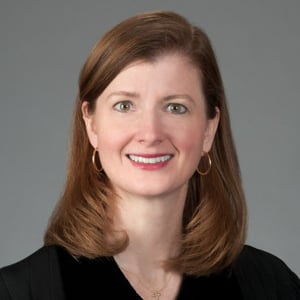
Judge, United States Court of Appeals, Eleventh Circuit
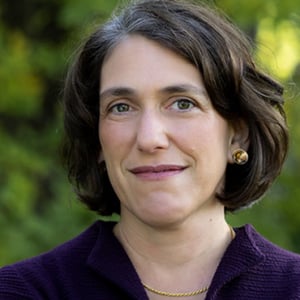
On March 20, 2018, Judge Elizabeth L. Branch (Lisa) was sworn in as a United States Circuit Judge for the Eleventh Circuit.
Judge Branch attended and graduated from Davidson College in North Carolina (B.A., cum laude, 1990), and Emory University School of Law (J.D., with distinction, 1994).
After graduating from law school, Judge Branch served as a federal law clerk to The Honorable J. Owen Forrester of the U.S. District Court for the Northern District of Georgia from 1994 to 1996. Following her clerkship, Judge Branch joined the litigation department of Smith, Gambrell & Russell, LLP in Atlanta as an associate and then a partner.
From 2004 to 2008, Judge Branch was a senior official in the Administration of President George W. Bush in Washington, D.C. She served first as the Associate General Counsel for Rules and Legislation at the U.S. Department of Homeland Security and then as the Counselor to the Administrator of the Office of Information and Regulatory Affairs at the U. S. Office of Management and Budget.
She returned to Smith Gambrell in 2008 as a litigation partner. Judge Branch then was appointed to the Court of Appeals of Georgia by Governor Nathan Deal, taking office on September 4, 2012, where she served until March 19, 2018.
Judge Branch is a member of the Board of Advisors of the Atlanta Lawyers Chapter for the Federalist Society for Law and Public Policy Studies.
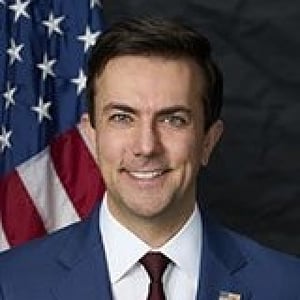
Deputy Administrator, United States Environmental Protection Agency
David Fotouhi was sworn in as Deputy Administrator of the United States Environmental Protection Agency on June 16, 2025.
Fotouhi is an experienced environmental attorney who previously served in senior roles at EPA. During the first term of the Trump Administration, Fotouhi served as EPA’s Acting General Counsel and Principal Deputy General Counsel. Prior to rejoining the agency, Fotouhi was a partner in the Washington, D.C. office of Gibson, Dunn & Crutcher LLP practicing environmental law.
Fotouhi grew up in Oklahoma and holds a B.A. from Vanderbilt University and a J.D. from Harvard Law School. Before entering private legal practice, Fotouhi served as a law clerk to the Honorable Raymond W. Gruender of the U.S. Court of Appeals for the Eighth Circuit.
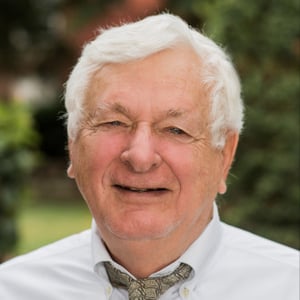
Lyle T. Alverson Professor of Law, George Washington University Law School
Professor Pierce is author of over twenty books and 130 articles on administrative law, government regulation, and the effects of various forms of government intervention on the performance of markets. His books and articles have been cited in hundreds of judicial opinions, including over a dozen opinions of the U.S. Supreme Court.
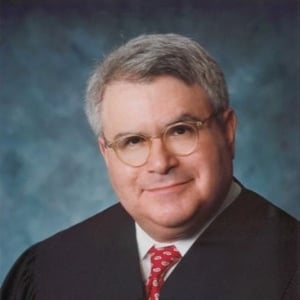
United States District Judge, Eastern District of Pennsylvania
Paul S. Diamond is a District Judge for the Eastern District of Pennsylvania, where he has served since 2004. He was nominated by President Bush to serve on the Third Circuit Court of Appeals in 2008, but no hearings were held in that election year. He graduated from the University of Pennsylvania Law School in 1977 and served as a state prosecutor in Philadelphia from 1977-1979 and then again from 1981 to 1983. From 1993 until 1995, he worked as treasurer and as counsel for the 1996 presidential campaign of United States Senator Arlen Specter. Paul is the author of Federal Grand Jury Practice and Procedure, Fifth Edition (2012).
Partner, Gibson Dunn & Crutcher LLP
Theodore B. Olson is a Partner in Gibson, Dunn & Crutcher’s Washington, D.C. office; a founder of the Firm’s Crisis Management, Sports Law, and Appellate and Constitutional Law Practice Groups.
Mr. Olson was Solicitor General of the United States during the period 2001-2004. From 1981-1984, he was Assistant Attorney General in charge of the Office of Legal Counsel in the U.S. Department of Justice. Except for those two intervals, he has been a lawyer with Gibson, Dunn & Crutcher in Los Angeles and Washington, D.C. since 1965.
Selected by Time magazine in 2010 as one of the 100 most influential people in the world, Mr. Olson is one of the nation’s premier appellate and United States Supreme Court advocates. He has argued 65 cases in the Supreme Court and has prevailed in over 75% of those cases. These include the two Bush v Gore cases arising out of the 2000 presidential election; Citizens United v Federal Election Commission; Hollingsworth v Perry, the case affirming the overturning of California’s Proposition 8, banning same-sex marriages; Murphy v NCAA, overturning a federal law prohibiting states from authorizing sports betting; and U.S. Dept. of Homeland Security v Regents of the Univ. of Calif., challenging the Trump Administration’s rescission of the Deferred Action for Childhood Arrivals (“DACA”). Mr. Olson’s practice is concentrated on appellate and constitutional law, federal legislation, media and commercial disputes, and assisting clients with strategies for the containment, management and resolution of major legal crises. He has handled cases at all levels of state and federal court systems throughout the United States. Mr. Olson co-authored “Redeeming the Dream, the Case for Marriage Equality” with David Boies. Both were featured in HBO’s award-winning documentary, “The Case Against 8.”
Mr. Olson's Supreme Court arguments have included cases involving separation of powers; federalism; voting rights; the Tenth Amendment; the First Amendment; the Equal Protection and Due Process Clauses; jury trial rights; punitive damages; takings of property; the Commerce Clause; administrative law; taxation; criminal law; sports wagering; copyright, patent and antitrust; securities; campaign finance; foreign sovereign immunities; telecommunications; the environment; the internet; the Supremacy Clause; and other federal constitutional and statutory questions. As Solicitor General, during the presidency of George W. Bush, Mr. Olson was the Government's principal advocate in the United States Supreme Court, responsible for supervising and coordinating all appellate litigation of the United States, and a legal adviser to the President and the Attorney General. As Assistant Attorney General for the Office of Legal Counsel during the Reagan Administration, Mr. Olson was the Executive Branch's principal legal adviser, rendering legal guidance to the President and to the heads of the Executive Branch departments on a wide range of constitutional and federal statutory questions, and assisting in formulating and articulating the Executive Branch's position on constitutional issues.
Mr. Olson has served as private counsel to two Presidents, Ronald W. Reagan and George W. Bush, in addition to serving those two Presidents in high-level positions in the Department of Justice. He has twice been awarded the United States Department of Justice's Edmund J. Randolph Award, its highest award for public service and leadership, and also received the Department of Defense's Distinguished Public Service Award, its highest civilian award, for his advocacy in the courts of the United States, including the Supreme Court. He also received the American Bar Association Medal, its highest award for “exceptionally distinguished service by a lawyer or lawyers to the cause of American jurisprudence.” Mr. Olson is to receive the 2021 Jack Valenti Friend of the White House Fellows Award in the Fall of 2021 to be presented by the White House Fellows Foundation and Association.
Mr. Olson is a member of the Commission on White House Fellowships; a member of the Board of Trustees of the Ronald Reagan Presidential Foundation; a member of the Board of Visitors of the Federalist Society; the Board of Directors of the Knight First Amendment Institute at Columbia University; and the 9/11 Pentagon Memorial Foundation. He was a visiting scholar at the National Constitution Center in 2007. He served on the President's Privacy and Civil Liberties Oversight Board from 2006 to 2008; and of the Council of the Administrative Conference of the United States from 2010 to 2020. He was Co-Chair of the Knight Commission on the Information Needs of Communities in a Democracy from 2008-2009, and served two terms on the Board of Directors of the National Center for State Courts.
Mr. Olson is a Fellow of both the American College of Trial Lawyers and the American Academy of Appellate Lawyers. He has been repeatedly listed in legal publications as one of the nation’s leading appellate lawyers. The late New York Times columnist William Safire described Mr. Olson as his generation's "most persuasive advocate" before the Supreme Court and "the most effective Solicitor General in decades.”
Mr. Olson received his law degree in 1965 from the University of California at Berkeley (Boalt Hall) where he was a member of the California Law Review and Order of the Coif. He received his bachelor's degree from the University of the Pacific, where he was recognized as the outstanding graduating student in both forensics and journalism. He has written and lectured extensively on appellate advocacy, oral communication in the courtroom, civil justice reform, and constitutional and administrative law.
Wallace and Beverley Woodbury University Professor of Law; Co-director of the Litigation and Dispute Resolution Program, The George Washington University Law School
Stephen A. Saltzburg joined GW Law in 1990. Before that, he taught at the University of Virginia School of Law, and was named the first incumbent of the Class of 1962 Endowed Chair. In 1996, he founded and directed the master’s program in Litigation and Dispute Resolution at GW. He was named University Professor, the highest title a University can confer upon a faculty member, in 2004. The Chief Justice of the United States appointed him as reporter for, and then as a member of, the Advisory Committee on the Federal Rules of Criminal Procedure and as a member of the Advisory Committee on the Federal Rules of Evidence. He was the reporter for the Civil Justice Reform Act Committee for the D.C. District Court before he became chair. He has served as a special master in two class action cases in the D.C. District Court, and continues to serve as a mediator for the U.S. Court of Appeals for D.C. He has mediated a variety of disputes involving public agencies and private litigants; served as a sole arbitrator, panel chair, and panel member in domestic arbitrations; and served as an arbitrator for the International Chamber of Commerce.
Professor Saltzburg held the following governmental positions: associate independent counsel in the Iran-Contra investigation; deputy assistant attorney general in the Criminal Division of the U.S. Department of Justice, the Attorney General’s ex-officio representative on the U.S. Sentencing Commission; and director of the U.S. Treasury Department Tax Refund Fraud Task Force. He was chair of the ABA Criminal Justice Section from 2007 to 2008, and represents the section in the ABA House of Delegates. He was appointed to the ABA Task Force on Terrorism and the Law and to the ABA Task Force on Gatekeeper Regulation and the Profession in 2001, and to the ABA President’s Advisory Group on Citizen Detention and Enemy Combatant Issues in 2002. In 2001 he was appointed by Chief Judge Edward R. Becker of the U.S. Court of Appeals for the Third Circuit as co-chair of the Task Force on the Selection of Lead Counsel in Class Actions, which published its final report in 2002. Professor Saltzburg is the author of numerous books and articles on evidence, procedure, and litigation.
Author of "The Nixon Conspiracy" (2021) and "The Real Watergate Scandal" (2015)
Geoff Shepard worked on President Nixon’s White House staff for five years, including serving as deputy counsel on his Watergate defense team. He testified as a government chain-of-custody witness in the Plumbers Trial and was subpoenaed for the same purpose in the Cover-up Trial. He possesses a “clearance letter” from the special prosecutor, stating he was never the object of an investigation by that office. Geoff has spent much of the past fifteen year researching and writing about the Watergate scandal. He has published three books, authored dozens of essays and made over fifty presentations challenging Watergate’s conventional narrative. Much of his work is based on recently uncovered internal files of the Watergate Special Prosecution Force, including their infamous “Road Map” that was the basis for the grand jury naming Nixon a cover-up co-conspirator and for the House Judiciary Committee urging his impeachment.
Judge, United States Court of Appeals, District of Columbia Circuit
LAURENCE HIRSCH SILBERMAN, senior circuit judge; recipient of the Presidential Medal of Freedom, June 19, 2008; born in York, PA, October 12, 1935; son of William Silberman and Anna (Hirsch); married to Rosalie G. Gaull on April 28, 1957 (deceased), married Patricia Winn on January 5, 2008; children: Robert Steven Silberman, Katherine DeBoer Fischer, and Anne Gaull Otis; B.A., Dartmouth College, 1957; LL.B., Harvard Law School, 1961; admitted to Hawaii Bar, 1962; District of Columbia Bar, 1973; associate, Moore, Torkildson and Rice, 1961–64; partner (Moore, Silberman and Schulze), Honolulu, 1964–67; attorney, National Labor Relations Board, Office of General Counsel, Appellate Division, 1967–69; Solicitor, Department of Labor, 1969–70; Under Secretary of Labor, 1970–73; partner, Steptoe and Johnson, 1973–74; Deputy Attorney General of the United States, 1974–75; Ambassador to Yugoslavia, 1975–77; President’s Special Envoy on ILO Affairs, 1976; senior fellow, American Enterprise Institute, 1977–78; visiting fellow, 1978–85; managing partner, Morrison and Foerster, 1978–79 and 1983–85; executive vice president, Crocker National Bank, 1979–83; lecturer, University of Hawaii, 1962–63; board of directors, Commission on Present Danger, 1978–85, Institute for Educational Affairs, New York, NY, 1981–85, member: General Advisory Committee on Arms Control and Disarmament, 1981–85; Defense Policy Board, 1981–85; vice chairman, State Department’s Commission on Security and Economic Assistance, 1983–84; American Bar Association (Labor Law Committee, 1965–72, Corporations and Banking Committee, 1973, Law and National Security Advisory Committee, 1981–85); Hawaii Bar Association Ethics Committee, 1965–67; Council on Foreign Relations, 1977–present; Judicial Conference Committee on Court Administration and Case Management, 1994; member, U.S. Foreign Intelligence Surveillance Act Court of Review, 1996–2003; Adjunct Professor of Law (Administrative Law and Labor Law) Georgetown Law Center, 1987–94; 1997; Adjunct Professor of Law, Harvard Law School, 1994-95, Adjunct Professor of Law, New York University Law School, 1995–96; Distinguished Visitor from the Judiciary, Georgetown Law Center, 2003–2019; co-chairman of the President’s Commission on The Intelligence Capabilities of the United States Regarding Weapons of Mass Destruction, 2004–05; appointed to the U.S. Court of Appeals for the District of Columbia Circuit by President Reagan on October 28, 1985.
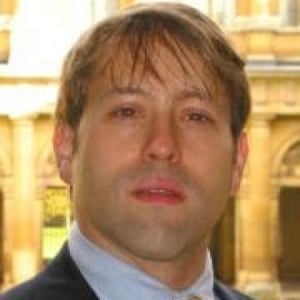
Senior Research Fellow (Wolfson College); Fellow (Lauterpacht Centre for International Law), Faculty of Law, University of Cambridge
Over twenty years' experience as legal adviser, advocate, and strategist in complex multi-jurisdiction matters across several substantive fields, including public international law, international investment protection, trade law, and law of the sea. Academic writings on international arbitration, international organizations, use of force, State immunity, State succession, recognition of States, artificial intelligence, law & technology.
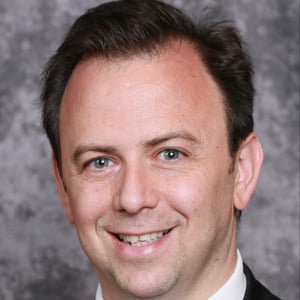
Stevenson Bernard Professor, George Washington University Law School
The Honorable F. Scott Kieff is the Stevenson Bernard Professor at George Washington University Law School and a Visiting Fellow at Stanford University’s Hoover Institution.
He served as Commissioner of the U.S. International Trade Commission from 2013-2017. He also served during the Bush, Obama, and Trump Administrations in the part-time leadership of the national security defense-intelligence community.
He was previously a professor of law and medicine at Washington University in Saint Louis and a Senior Fellow at Hoover. A former law clerk to U.S. Circuit Judge Giles S. Rich, he is a graduate of Penn Law School and MIT, where he studied molecular biology and microeconomics. He was elected to the European Academy of Sciences and Arts in 2012 and the Academia Europaea in 2024.
His private sector work through Kieff Strategies LLC (www.kieffstrategies.com) provides neutral services including mediation and compliance, and expert services including crisis management, advising, and testimony.
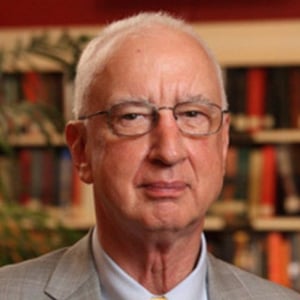
Former Chief Judge, United States Court of Appeals for the Federal Circuit
Judge Michel served for more than 22 years on the Federal Circuit, retiring on May 31, 2010. From December 25, 2004 until his retirement, he also discharged the duties of Chief Judge of this national court, serving simultaneously on the U.S. Judicial Conference -- the Judiciary's governing body -- and by appointment of the Chief Justice on its seven-judge Executive Committee.
He judged several thousand appeals and authored more than 800 opinions, one third concerning intellectual property law. Intellectual Asset Management magazine inducted him into its Hall of Fame and he was designated one of the 50 most influential leaders in intellectual property law in the world. His contributions were also recognized by lifetime achievement and similar awards by the American Intellectual Property Law Association (AIPLA); Intellectual Property Owners Education Foundation (IPO); the American Bar Association's Intellectual Property Section; Managing Intellectual Property magazine; the Sedona Conference; the Patent and Trademark Office Society (PTOS); the New York, Chicago, Philadelphia, and Los Angeles Intellectual Property Law Associations; and the William C. Connor, the Giles S. Rich, and the Richard Linn Intellectual Property American Inns of Court. In 2010 the Los Angeles IP Inn was renamed in his honor as the Paul R. Michel IP Inn.
Judge Michel received the Jefferson Medal, the Eli Whitney Award, and the Katz-Kiley Prize as well as Honorary Doctor of Law degrees from the Catholic University of America and the John Marshall Law School. He is a lifetime Member of Honore of FICPI, the international association of private practitioners of intellectual property law. Williams College granted him the Kellogg Award for "outstanding leadership in law and public service."
Judge Michel has written numerous articles on patent law and advocacy, taught related courses and master classes at George Washington University, the University of Akron, and John Marshall law schools, serving as well on their IP advisory boards and on counterpart boards at the universities of California (Berkley), Washington, and Maryland. He co-authored a casebook, Patent Litigation and Strategy (West, 1999) and an August 2010 editorial in the New York Times on strengthening the patent system to promote prosperity and create new jobs.
A frequent speaker at conferences and law schools during his judicial tenure and since, he retired from a lifetime appointment to be free to speak out on the national need for better patent policy and protection of intellectual property and the vital, unmet resource needs of the courts, the PTO, the International Trade Commission, and other IP-related agencies. He was appointed Distinguished Scholar in Residence by IPO, following his retirement. Judge Michel also consults for law firms and their clients in intellectual property litigations, conducting moot courts, mock trials, case evaluations, editing briefs, advising on strategy and providing mediation and arbitration services.
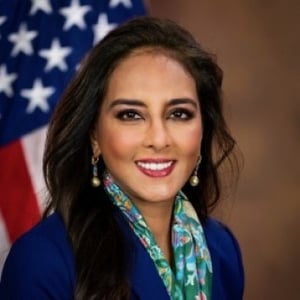
Assistant Attorney General for Civil Rights, U.S. Department of Justice
Harmeet K. Dhillon is the Assistant Attorney General for Civil Rights at the U.S. Department of Justice. She was nominated by President Donald Trump in December 2024. She was confirmed by the U.S. Senate on April 3, 2025, and sworn in as AAG by Attorney General Pam Bondi on April 7, 2025.
Prior to joining the Division, Ms. Dhillon founded both the Dhillon Law Group, Inc., a successful legal practice with offices in California, Florida, Virginia, and New Jersey; and the Center for American Liberty, a nonprofit organization dedicated to pursuing civil liberties legal claims. Her law practice focused on First Amendment / free speech, civil rights, and campaign and election law issues. Among her many notable cases, Ms. Dhillon brought legal challenges against the University of California, Berkeley over its free speech policy, against an Antifa organization for an assault on a conservative journalist, against several states for their restrictive responses to Covid-19, and against various large tech companies for a host of civil rights issues.
Assistant Attorney General Dhillon was born in Chandigarh, India, and lived in London before moving to The Bronx, New York. Her family ultimately settled in rural Smithfield, North Carolina. After graduating high school at age 16, Ms. Dhillon attended Dartmouth College where she became editor-in-chief of The Dartmouth Review. After earning her bachelor’s degree in Classical Studies, she attended the University of Virginia School of Law and served on the editorial board of the Virginia Law Review. She later clerked for the Honorable Paul V. Niemeyer of the United States Court of Appeals for the Fourth Circuit in Baltimore, Maryland.
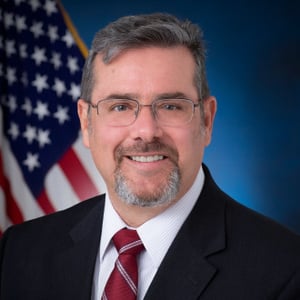
Commissioner, U.S. Election Assistance Commission
Donald Palmer was nominated by President Donald J. Trump and confirmed by unanimous consent of the United States Senate on January 2, 2019 to serve on the U.S. Election Assistance Commission (EAC). Commissioner Palmer is a former Bipartisan Policy Center Fellow where he advanced the recommendations of the Presidential Commission on Election Administration to resolve the voting technology crisis, find ways to reduce lines of voters, and improve the voting experience. He provided testimony to state legislatures on election administration and voting reforms and partnered with state election officials and state legislators in support of election modernization across the country.
Commissioner Palmer is a member of the Federalist Society's Free Speech and Election Law Practice Group Executive Committee.
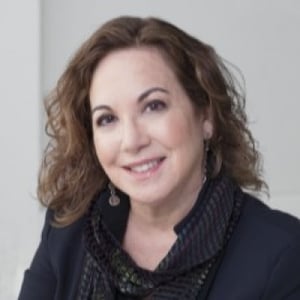
Lyle T. Alverson Professor of Law, the George Washington University
Professor Catherine Ross is Lyle T. Alverson Professor of Law at the George Washington University Law School. She specializes in constitutional law (with particular emphasis on the First Amendment) and family law. Professor Ross' book A Right to Lie? Presidents, Other Liars, and the First Amendment (University of Pennsylvania Press) was published in November 2021 and has been featured at events at the Cato Institute, the National Constitution Center and other venues. Her last book, Lessons in Censorship: How Schools and Courts Subvert Students' First Amendment Rights (Harvard University Press, 2015) was named the Best Book on the First Amendment by Concurring Opinions’ First Amendment News; it also won the Critics’ Choice Book Award from the American Education Studies Association.
In 2015-2016, she was a Member of the School of Social Science at the Institute for Advanced Study at Princeton from 2008-2009. In 2015-2016 Professor Ross was a Visiting Scholar at the Harvard Graduate School of Education. She has been a visiting professor at the University of Pennsylvania, Boston College (where she held joint appointments in the School of Education and the History Department) and St. John’s School of Law in New York.
An elected Fellow of the American Bar Foundation, Professor Ross was the primary author of the ABA’s landmark report on America’s Children at Risk (1993) (with the Hon. A. Leon Higginbotham, Jr.) and is former chair of the ABA’s Steering Committee on the Unmet Legal Needs of Children. She has served on a wide variety of ABA committees. Professor Ross is a former chair of the Section on Law and Communitarianism of the Association of American Law Schools.
She holds her BA, PhD (in History), and JD from Yale University where Professor Ross was a member of the first class of women to graduate from Yale College.
Before attending Yale Law School, she was on the faculty of the Yale Child Study Center (Medical School) and the Bush Center on Child Development and Social Policy at Yale.
Prior to entering legal academia, Professor Ross was a litigator at Paul, Weiss, Rifkind, Wharton & Garrison in New York, where she won major impact litigation on behalf of the city’s homeless population.

Thomas M. Siebel Senior Fellow, The Hoover Institution, Stanford University; Gary T. Schwartz Distinguished Professor of Law Emeritus, UCLA School of Law
Eugene Volokh is the Thomas M. Siebel Senior Fellow at the Hoover Institution (Stanford), as well as the Gary T. Schwartz Distinguished Professor of Law Emeritus and Distinguished Research Professor at UCLA School of Law. He recently retired from teaching at UCLA, after 30 years there, and is now focusing on research.
Volokh is the author of the textbooks The First Amendment and Related Statutes (8th ed. 2023), and Academic Legal Writing (5th ed. 2016), as well as over 100 academic law journal articles, mostly on First Amendment law. He is a member of The American Law Institute; the editor-in-chief of the Journal of Free Speech Law; and the creator and coauthor of The Volokh Conspiracy, a leading legal blog founded in 2002 (hosted at the Washington Post from 2014 to 2017 and now at Reason Magazine).
Assistant Attorney General for Civil Rights, U.S. Department of Justice
Harmeet K. Dhillon is the Assistant Attorney General for Civil Rights at the U.S. Department of Justice. She was nominated by President Donald Trump in December 2024. She was confirmed by the U.S. Senate on April 3, 2025, and sworn in as AAG by Attorney General Pam Bondi on April 7, 2025.
Prior to joining the Division, Ms. Dhillon founded both the Dhillon Law Group, Inc., a successful legal practice with offices in California, Florida, Virginia, and New Jersey; and the Center for American Liberty, a nonprofit organization dedicated to pursuing civil liberties legal claims. Her law practice focused on First Amendment / free speech, civil rights, and campaign and election law issues. Among her many notable cases, Ms. Dhillon brought legal challenges against the University of California, Berkeley over its free speech policy, against an Antifa organization for an assault on a conservative journalist, against several states for their restrictive responses to Covid-19, and against various large tech companies for a host of civil rights issues.
Assistant Attorney General Dhillon was born in Chandigarh, India, and lived in London before moving to The Bronx, New York. Her family ultimately settled in rural Smithfield, North Carolina. After graduating high school at age 16, Ms. Dhillon attended Dartmouth College where she became editor-in-chief of The Dartmouth Review. After earning her bachelor’s degree in Classical Studies, she attended the University of Virginia School of Law and served on the editorial board of the Virginia Law Review. She later clerked for the Honorable Paul V. Niemeyer of the United States Court of Appeals for the Fourth Circuit in Baltimore, Maryland.
Commissioner, U.S. Election Assistance Commission
Donald Palmer was nominated by President Donald J. Trump and confirmed by unanimous consent of the United States Senate on January 2, 2019 to serve on the U.S. Election Assistance Commission (EAC). Commissioner Palmer is a former Bipartisan Policy Center Fellow where he advanced the recommendations of the Presidential Commission on Election Administration to resolve the voting technology crisis, find ways to reduce lines of voters, and improve the voting experience. He provided testimony to state legislatures on election administration and voting reforms and partnered with state election officials and state legislators in support of election modernization across the country.
Commissioner Palmer is a member of the Federalist Society's Free Speech and Election Law Practice Group Executive Committee.
Lyle T. Alverson Professor of Law, the George Washington University
Professor Catherine Ross is Lyle T. Alverson Professor of Law at the George Washington University Law School. She specializes in constitutional law (with particular emphasis on the First Amendment) and family law. Professor Ross' book A Right to Lie? Presidents, Other Liars, and the First Amendment (University of Pennsylvania Press) was published in November 2021 and has been featured at events at the Cato Institute, the National Constitution Center and other venues. Her last book, Lessons in Censorship: How Schools and Courts Subvert Students' First Amendment Rights (Harvard University Press, 2015) was named the Best Book on the First Amendment by Concurring Opinions’ First Amendment News; it also won the Critics’ Choice Book Award from the American Education Studies Association.
In 2015-2016, she was a Member of the School of Social Science at the Institute for Advanced Study at Princeton from 2008-2009. In 2015-2016 Professor Ross was a Visiting Scholar at the Harvard Graduate School of Education. She has been a visiting professor at the University of Pennsylvania, Boston College (where she held joint appointments in the School of Education and the History Department) and St. John’s School of Law in New York.
An elected Fellow of the American Bar Foundation, Professor Ross was the primary author of the ABA’s landmark report on America’s Children at Risk (1993) (with the Hon. A. Leon Higginbotham, Jr.) and is former chair of the ABA’s Steering Committee on the Unmet Legal Needs of Children. She has served on a wide variety of ABA committees. Professor Ross is a former chair of the Section on Law and Communitarianism of the Association of American Law Schools.
She holds her BA, PhD (in History), and JD from Yale University where Professor Ross was a member of the first class of women to graduate from Yale College.
Before attending Yale Law School, she was on the faculty of the Yale Child Study Center (Medical School) and the Bush Center on Child Development and Social Policy at Yale.
Prior to entering legal academia, Professor Ross was a litigator at Paul, Weiss, Rifkind, Wharton & Garrison in New York, where she won major impact litigation on behalf of the city’s homeless population.
Thomas M. Siebel Senior Fellow, The Hoover Institution, Stanford University; Gary T. Schwartz Distinguished Professor of Law Emeritus, UCLA School of Law
Eugene Volokh is the Thomas M. Siebel Senior Fellow at the Hoover Institution (Stanford), as well as the Gary T. Schwartz Distinguished Professor of Law Emeritus and Distinguished Research Professor at UCLA School of Law. He recently retired from teaching at UCLA, after 30 years there, and is now focusing on research.
Volokh is the author of the textbooks The First Amendment and Related Statutes (8th ed. 2023), and Academic Legal Writing (5th ed. 2016), as well as over 100 academic law journal articles, mostly on First Amendment law. He is a member of The American Law Institute; the editor-in-chief of the Journal of Free Speech Law; and the creator and coauthor of The Volokh Conspiracy, a leading legal blog founded in 2002 (hosted at the Washington Post from 2014 to 2017 and now at Reason Magazine).
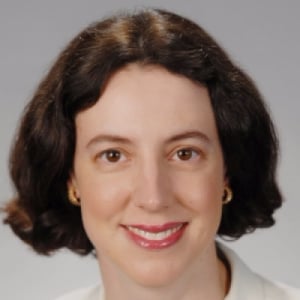
Donald Phillip Rothschild Research Professor, George Washington University Law School
Renée Lettow Lerner is Donald Phillip Rothschild Research Professor of Law at George Washington University Law School.
Professor Lerner works in the fields of U.S. and English legal history, civil and criminal procedure, and comparative law. She advises judges, lawyers, and government officials from the United States and countries in Europe, Latin America, and Asia about the differences between adversarial and nonadversarial legal systems.
She writes extensively about the history of American juries. Her work includes not only scholarly articles, but also online publications intended for a broader audience of legal professionals and the public. In many different settings, she has debated the role of juries with other academics and with lawyers. She has a book forthcoming with Oxford University Press in the Very Short Introduction Series entitled “The Jury.” She is also working on a book about the American civil jury, from the colonial period to the present.
She is the author, with John Langbein and Bruce Smith, of the book History of the Common Law: The Development of Anglo-American Legal Institutions (2009).
Her recent writings include a book review of Amalia D. Kessler’s Inventing American Exceptionalism: The Origins of American Adversarial Legal Culture, 1800-1877, 67 J. Legal Ed. 888 (2018); “How the Creation of Appellate Courts in England and the United States Limited Judicial Comment on Evidence to the Jury,” 40 Journal of the Legal Profession 215 (2016); “The Troublesome Inheritance of Americans in Magna Carta and Trial by Jury,” in Magna Carta and its Modern Legacy 77-98 (Robert Hazell and James Melton eds., Cambridge University Press 2015); and “The Failure of Originalism in Preserving Constitutional Rights to Civil Jury Trial,” 22 William & Mary Bill of Rights Journal 811 (2014).
Professor Lerner received an A.B. summa cum laude in history from Princeton University. She was a Rhodes Scholar at Oxford University, where she studied English legal history. At Yale Law School, she was Articles Editor of the Yale Law Journal. She served as a law clerk to Justice Anthony M. Kennedy of the U.S. Supreme Court and to Judge Stephen F. Williams of the U.S. Court of Appeals for the District of Columbia Circuit. From 2003 to 2005, she served as Deputy Assistant Attorney General in the Office of Legal Counsel at the U.S. Department of Justice.
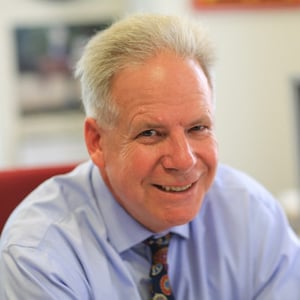
Professor & Chair, History, Language & Global Culture, Suffolk University
Judge, United States Court of Appeals, Eleventh Circuit
On March 20, 2018, Judge Elizabeth L. Branch (Lisa) was sworn in as a United States Circuit Judge for the Eleventh Circuit.
Judge Branch attended and graduated from Davidson College in North Carolina (B.A., cum laude, 1990), and Emory University School of Law (J.D., with distinction, 1994).
After graduating from law school, Judge Branch served as a federal law clerk to The Honorable J. Owen Forrester of the U.S. District Court for the Northern District of Georgia from 1994 to 1996. Following her clerkship, Judge Branch joined the litigation department of Smith, Gambrell & Russell, LLP in Atlanta as an associate and then a partner.
From 2004 to 2008, Judge Branch was a senior official in the Administration of President George W. Bush in Washington, D.C. She served first as the Associate General Counsel for Rules and Legislation at the U.S. Department of Homeland Security and then as the Counselor to the Administrator of the Office of Information and Regulatory Affairs at the U. S. Office of Management and Budget.
She returned to Smith Gambrell in 2008 as a litigation partner. Judge Branch then was appointed to the Court of Appeals of Georgia by Governor Nathan Deal, taking office on September 4, 2012, where she served until March 19, 2018.
Judge Branch is a member of the Board of Advisors of the Atlanta Lawyers Chapter for the Federalist Society for Law and Public Policy Studies.
Deputy Administrator, United States Environmental Protection Agency
David Fotouhi was sworn in as Deputy Administrator of the United States Environmental Protection Agency on June 16, 2025.
Fotouhi is an experienced environmental attorney who previously served in senior roles at EPA. During the first term of the Trump Administration, Fotouhi served as EPA’s Acting General Counsel and Principal Deputy General Counsel. Prior to rejoining the agency, Fotouhi was a partner in the Washington, D.C. office of Gibson, Dunn & Crutcher LLP practicing environmental law.
Fotouhi grew up in Oklahoma and holds a B.A. from Vanderbilt University and a J.D. from Harvard Law School. Before entering private legal practice, Fotouhi served as a law clerk to the Honorable Raymond W. Gruender of the U.S. Court of Appeals for the Eighth Circuit.
Lyle T. Alverson Professor of Law, George Washington University Law School
Professor Pierce is author of over twenty books and 130 articles on administrative law, government regulation, and the effects of various forms of government intervention on the performance of markets. His books and articles have been cited in hundreds of judicial opinions, including over a dozen opinions of the U.S. Supreme Court.
United States District Judge, Eastern District of Pennsylvania
Paul S. Diamond is a District Judge for the Eastern District of Pennsylvania, where he has served since 2004. He was nominated by President Bush to serve on the Third Circuit Court of Appeals in 2008, but no hearings were held in that election year. He graduated from the University of Pennsylvania Law School in 1977 and served as a state prosecutor in Philadelphia from 1977-1979 and then again from 1981 to 1983. From 1993 until 1995, he worked as treasurer and as counsel for the 1996 presidential campaign of United States Senator Arlen Specter. Paul is the author of Federal Grand Jury Practice and Procedure, Fifth Edition (2012).
Partner, Gibson Dunn & Crutcher LLP
Theodore B. Olson is a Partner in Gibson, Dunn & Crutcher’s Washington, D.C. office; a founder of the Firm’s Crisis Management, Sports Law, and Appellate and Constitutional Law Practice Groups.
Mr. Olson was Solicitor General of the United States during the period 2001-2004. From 1981-1984, he was Assistant Attorney General in charge of the Office of Legal Counsel in the U.S. Department of Justice. Except for those two intervals, he has been a lawyer with Gibson, Dunn & Crutcher in Los Angeles and Washington, D.C. since 1965.
Selected by Time magazine in 2010 as one of the 100 most influential people in the world, Mr. Olson is one of the nation’s premier appellate and United States Supreme Court advocates. He has argued 65 cases in the Supreme Court and has prevailed in over 75% of those cases. These include the two Bush v Gore cases arising out of the 2000 presidential election; Citizens United v Federal Election Commission; Hollingsworth v Perry, the case affirming the overturning of California’s Proposition 8, banning same-sex marriages; Murphy v NCAA, overturning a federal law prohibiting states from authorizing sports betting; and U.S. Dept. of Homeland Security v Regents of the Univ. of Calif., challenging the Trump Administration’s rescission of the Deferred Action for Childhood Arrivals (“DACA”). Mr. Olson’s practice is concentrated on appellate and constitutional law, federal legislation, media and commercial disputes, and assisting clients with strategies for the containment, management and resolution of major legal crises. He has handled cases at all levels of state and federal court systems throughout the United States. Mr. Olson co-authored “Redeeming the Dream, the Case for Marriage Equality” with David Boies. Both were featured in HBO’s award-winning documentary, “The Case Against 8.”
Mr. Olson's Supreme Court arguments have included cases involving separation of powers; federalism; voting rights; the Tenth Amendment; the First Amendment; the Equal Protection and Due Process Clauses; jury trial rights; punitive damages; takings of property; the Commerce Clause; administrative law; taxation; criminal law; sports wagering; copyright, patent and antitrust; securities; campaign finance; foreign sovereign immunities; telecommunications; the environment; the internet; the Supremacy Clause; and other federal constitutional and statutory questions. As Solicitor General, during the presidency of George W. Bush, Mr. Olson was the Government's principal advocate in the United States Supreme Court, responsible for supervising and coordinating all appellate litigation of the United States, and a legal adviser to the President and the Attorney General. As Assistant Attorney General for the Office of Legal Counsel during the Reagan Administration, Mr. Olson was the Executive Branch's principal legal adviser, rendering legal guidance to the President and to the heads of the Executive Branch departments on a wide range of constitutional and federal statutory questions, and assisting in formulating and articulating the Executive Branch's position on constitutional issues.
Mr. Olson has served as private counsel to two Presidents, Ronald W. Reagan and George W. Bush, in addition to serving those two Presidents in high-level positions in the Department of Justice. He has twice been awarded the United States Department of Justice's Edmund J. Randolph Award, its highest award for public service and leadership, and also received the Department of Defense's Distinguished Public Service Award, its highest civilian award, for his advocacy in the courts of the United States, including the Supreme Court. He also received the American Bar Association Medal, its highest award for “exceptionally distinguished service by a lawyer or lawyers to the cause of American jurisprudence.” Mr. Olson is to receive the 2021 Jack Valenti Friend of the White House Fellows Award in the Fall of 2021 to be presented by the White House Fellows Foundation and Association.
Mr. Olson is a member of the Commission on White House Fellowships; a member of the Board of Trustees of the Ronald Reagan Presidential Foundation; a member of the Board of Visitors of the Federalist Society; the Board of Directors of the Knight First Amendment Institute at Columbia University; and the 9/11 Pentagon Memorial Foundation. He was a visiting scholar at the National Constitution Center in 2007. He served on the President's Privacy and Civil Liberties Oversight Board from 2006 to 2008; and of the Council of the Administrative Conference of the United States from 2010 to 2020. He was Co-Chair of the Knight Commission on the Information Needs of Communities in a Democracy from 2008-2009, and served two terms on the Board of Directors of the National Center for State Courts.
Mr. Olson is a Fellow of both the American College of Trial Lawyers and the American Academy of Appellate Lawyers. He has been repeatedly listed in legal publications as one of the nation’s leading appellate lawyers. The late New York Times columnist William Safire described Mr. Olson as his generation's "most persuasive advocate" before the Supreme Court and "the most effective Solicitor General in decades.”
Mr. Olson received his law degree in 1965 from the University of California at Berkeley (Boalt Hall) where he was a member of the California Law Review and Order of the Coif. He received his bachelor's degree from the University of the Pacific, where he was recognized as the outstanding graduating student in both forensics and journalism. He has written and lectured extensively on appellate advocacy, oral communication in the courtroom, civil justice reform, and constitutional and administrative law.
Wallace and Beverley Woodbury University Professor of Law; Co-director of the Litigation and Dispute Resolution Program, The George Washington University Law School
Stephen A. Saltzburg joined GW Law in 1990. Before that, he taught at the University of Virginia School of Law, and was named the first incumbent of the Class of 1962 Endowed Chair. In 1996, he founded and directed the master’s program in Litigation and Dispute Resolution at GW. He was named University Professor, the highest title a University can confer upon a faculty member, in 2004. The Chief Justice of the United States appointed him as reporter for, and then as a member of, the Advisory Committee on the Federal Rules of Criminal Procedure and as a member of the Advisory Committee on the Federal Rules of Evidence. He was the reporter for the Civil Justice Reform Act Committee for the D.C. District Court before he became chair. He has served as a special master in two class action cases in the D.C. District Court, and continues to serve as a mediator for the U.S. Court of Appeals for D.C. He has mediated a variety of disputes involving public agencies and private litigants; served as a sole arbitrator, panel chair, and panel member in domestic arbitrations; and served as an arbitrator for the International Chamber of Commerce.
Professor Saltzburg held the following governmental positions: associate independent counsel in the Iran-Contra investigation; deputy assistant attorney general in the Criminal Division of the U.S. Department of Justice, the Attorney General’s ex-officio representative on the U.S. Sentencing Commission; and director of the U.S. Treasury Department Tax Refund Fraud Task Force. He was chair of the ABA Criminal Justice Section from 2007 to 2008, and represents the section in the ABA House of Delegates. He was appointed to the ABA Task Force on Terrorism and the Law and to the ABA Task Force on Gatekeeper Regulation and the Profession in 2001, and to the ABA President’s Advisory Group on Citizen Detention and Enemy Combatant Issues in 2002. In 2001 he was appointed by Chief Judge Edward R. Becker of the U.S. Court of Appeals for the Third Circuit as co-chair of the Task Force on the Selection of Lead Counsel in Class Actions, which published its final report in 2002. Professor Saltzburg is the author of numerous books and articles on evidence, procedure, and litigation.
Author of "The Nixon Conspiracy" (2021) and "The Real Watergate Scandal" (2015)
Geoff Shepard worked on President Nixon’s White House staff for five years, including serving as deputy counsel on his Watergate defense team. He testified as a government chain-of-custody witness in the Plumbers Trial and was subpoenaed for the same purpose in the Cover-up Trial. He possesses a “clearance letter” from the special prosecutor, stating he was never the object of an investigation by that office. Geoff has spent much of the past fifteen year researching and writing about the Watergate scandal. He has published three books, authored dozens of essays and made over fifty presentations challenging Watergate’s conventional narrative. Much of his work is based on recently uncovered internal files of the Watergate Special Prosecution Force, including their infamous “Road Map” that was the basis for the grand jury naming Nixon a cover-up co-conspirator and for the House Judiciary Committee urging his impeachment.
Judge, United States Court of Appeals, District of Columbia Circuit
LAURENCE HIRSCH SILBERMAN, senior circuit judge; recipient of the Presidential Medal of Freedom, June 19, 2008; born in York, PA, October 12, 1935; son of William Silberman and Anna (Hirsch); married to Rosalie G. Gaull on April 28, 1957 (deceased), married Patricia Winn on January 5, 2008; children: Robert Steven Silberman, Katherine DeBoer Fischer, and Anne Gaull Otis; B.A., Dartmouth College, 1957; LL.B., Harvard Law School, 1961; admitted to Hawaii Bar, 1962; District of Columbia Bar, 1973; associate, Moore, Torkildson and Rice, 1961–64; partner (Moore, Silberman and Schulze), Honolulu, 1964–67; attorney, National Labor Relations Board, Office of General Counsel, Appellate Division, 1967–69; Solicitor, Department of Labor, 1969–70; Under Secretary of Labor, 1970–73; partner, Steptoe and Johnson, 1973–74; Deputy Attorney General of the United States, 1974–75; Ambassador to Yugoslavia, 1975–77; President’s Special Envoy on ILO Affairs, 1976; senior fellow, American Enterprise Institute, 1977–78; visiting fellow, 1978–85; managing partner, Morrison and Foerster, 1978–79 and 1983–85; executive vice president, Crocker National Bank, 1979–83; lecturer, University of Hawaii, 1962–63; board of directors, Commission on Present Danger, 1978–85, Institute for Educational Affairs, New York, NY, 1981–85, member: General Advisory Committee on Arms Control and Disarmament, 1981–85; Defense Policy Board, 1981–85; vice chairman, State Department’s Commission on Security and Economic Assistance, 1983–84; American Bar Association (Labor Law Committee, 1965–72, Corporations and Banking Committee, 1973, Law and National Security Advisory Committee, 1981–85); Hawaii Bar Association Ethics Committee, 1965–67; Council on Foreign Relations, 1977–present; Judicial Conference Committee on Court Administration and Case Management, 1994; member, U.S. Foreign Intelligence Surveillance Act Court of Review, 1996–2003; Adjunct Professor of Law (Administrative Law and Labor Law) Georgetown Law Center, 1987–94; 1997; Adjunct Professor of Law, Harvard Law School, 1994-95, Adjunct Professor of Law, New York University Law School, 1995–96; Distinguished Visitor from the Judiciary, Georgetown Law Center, 2003–2019; co-chairman of the President’s Commission on The Intelligence Capabilities of the United States Regarding Weapons of Mass Destruction, 2004–05; appointed to the U.S. Court of Appeals for the District of Columbia Circuit by President Reagan on October 28, 1985.
Senior Research Fellow (Wolfson College); Fellow (Lauterpacht Centre for International Law), Faculty of Law, University of Cambridge
Over twenty years' experience as legal adviser, advocate, and strategist in complex multi-jurisdiction matters across several substantive fields, including public international law, international investment protection, trade law, and law of the sea. Academic writings on international arbitration, international organizations, use of force, State immunity, State succession, recognition of States, artificial intelligence, law & technology.
Stevenson Bernard Professor, George Washington University Law School
The Honorable F. Scott Kieff is the Stevenson Bernard Professor at George Washington University Law School and a Visiting Fellow at Stanford University’s Hoover Institution.
He served as Commissioner of the U.S. International Trade Commission from 2013-2017. He also served during the Bush, Obama, and Trump Administrations in the part-time leadership of the national security defense-intelligence community.
He was previously a professor of law and medicine at Washington University in Saint Louis and a Senior Fellow at Hoover. A former law clerk to U.S. Circuit Judge Giles S. Rich, he is a graduate of Penn Law School and MIT, where he studied molecular biology and microeconomics. He was elected to the European Academy of Sciences and Arts in 2012 and the Academia Europaea in 2024.
His private sector work through Kieff Strategies LLC (www.kieffstrategies.com) provides neutral services including mediation and compliance, and expert services including crisis management, advising, and testimony.
Former Chief Judge, United States Court of Appeals for the Federal Circuit
Judge Michel served for more than 22 years on the Federal Circuit, retiring on May 31, 2010. From December 25, 2004 until his retirement, he also discharged the duties of Chief Judge of this national court, serving simultaneously on the U.S. Judicial Conference -- the Judiciary's governing body -- and by appointment of the Chief Justice on its seven-judge Executive Committee.
He judged several thousand appeals and authored more than 800 opinions, one third concerning intellectual property law. Intellectual Asset Management magazine inducted him into its Hall of Fame and he was designated one of the 50 most influential leaders in intellectual property law in the world. His contributions were also recognized by lifetime achievement and similar awards by the American Intellectual Property Law Association (AIPLA); Intellectual Property Owners Education Foundation (IPO); the American Bar Association's Intellectual Property Section; Managing Intellectual Property magazine; the Sedona Conference; the Patent and Trademark Office Society (PTOS); the New York, Chicago, Philadelphia, and Los Angeles Intellectual Property Law Associations; and the William C. Connor, the Giles S. Rich, and the Richard Linn Intellectual Property American Inns of Court. In 2010 the Los Angeles IP Inn was renamed in his honor as the Paul R. Michel IP Inn.
Judge Michel received the Jefferson Medal, the Eli Whitney Award, and the Katz-Kiley Prize as well as Honorary Doctor of Law degrees from the Catholic University of America and the John Marshall Law School. He is a lifetime Member of Honore of FICPI, the international association of private practitioners of intellectual property law. Williams College granted him the Kellogg Award for "outstanding leadership in law and public service."
Judge Michel has written numerous articles on patent law and advocacy, taught related courses and master classes at George Washington University, the University of Akron, and John Marshall law schools, serving as well on their IP advisory boards and on counterpart boards at the universities of California (Berkley), Washington, and Maryland. He co-authored a casebook, Patent Litigation and Strategy (West, 1999) and an August 2010 editorial in the New York Times on strengthening the patent system to promote prosperity and create new jobs.
A frequent speaker at conferences and law schools during his judicial tenure and since, he retired from a lifetime appointment to be free to speak out on the national need for better patent policy and protection of intellectual property and the vital, unmet resource needs of the courts, the PTO, the International Trade Commission, and other IP-related agencies. He was appointed Distinguished Scholar in Residence by IPO, following his retirement. Judge Michel also consults for law firms and their clients in intellectual property litigations, conducting moot courts, mock trials, case evaluations, editing briefs, advising on strategy and providing mediation and arbitration services.
Assistant Attorney General for Civil Rights, U.S. Department of Justice
Harmeet K. Dhillon is the Assistant Attorney General for Civil Rights at the U.S. Department of Justice. She was nominated by President Donald Trump in December 2024. She was confirmed by the U.S. Senate on April 3, 2025, and sworn in as AAG by Attorney General Pam Bondi on April 7, 2025.
Prior to joining the Division, Ms. Dhillon founded both the Dhillon Law Group, Inc., a successful legal practice with offices in California, Florida, Virginia, and New Jersey; and the Center for American Liberty, a nonprofit organization dedicated to pursuing civil liberties legal claims. Her law practice focused on First Amendment / free speech, civil rights, and campaign and election law issues. Among her many notable cases, Ms. Dhillon brought legal challenges against the University of California, Berkeley over its free speech policy, against an Antifa organization for an assault on a conservative journalist, against several states for their restrictive responses to Covid-19, and against various large tech companies for a host of civil rights issues.
Assistant Attorney General Dhillon was born in Chandigarh, India, and lived in London before moving to The Bronx, New York. Her family ultimately settled in rural Smithfield, North Carolina. After graduating high school at age 16, Ms. Dhillon attended Dartmouth College where she became editor-in-chief of The Dartmouth Review. After earning her bachelor’s degree in Classical Studies, she attended the University of Virginia School of Law and served on the editorial board of the Virginia Law Review. She later clerked for the Honorable Paul V. Niemeyer of the United States Court of Appeals for the Fourth Circuit in Baltimore, Maryland.
Commissioner, U.S. Election Assistance Commission
Donald Palmer was nominated by President Donald J. Trump and confirmed by unanimous consent of the United States Senate on January 2, 2019 to serve on the U.S. Election Assistance Commission (EAC). Commissioner Palmer is a former Bipartisan Policy Center Fellow where he advanced the recommendations of the Presidential Commission on Election Administration to resolve the voting technology crisis, find ways to reduce lines of voters, and improve the voting experience. He provided testimony to state legislatures on election administration and voting reforms and partnered with state election officials and state legislators in support of election modernization across the country.
Commissioner Palmer is a member of the Federalist Society's Free Speech and Election Law Practice Group Executive Committee.
Lyle T. Alverson Professor of Law, the George Washington University
Professor Catherine Ross is Lyle T. Alverson Professor of Law at the George Washington University Law School. She specializes in constitutional law (with particular emphasis on the First Amendment) and family law. Professor Ross' book A Right to Lie? Presidents, Other Liars, and the First Amendment (University of Pennsylvania Press) was published in November 2021 and has been featured at events at the Cato Institute, the National Constitution Center and other venues. Her last book, Lessons in Censorship: How Schools and Courts Subvert Students' First Amendment Rights (Harvard University Press, 2015) was named the Best Book on the First Amendment by Concurring Opinions’ First Amendment News; it also won the Critics’ Choice Book Award from the American Education Studies Association.
In 2015-2016, she was a Member of the School of Social Science at the Institute for Advanced Study at Princeton from 2008-2009. In 2015-2016 Professor Ross was a Visiting Scholar at the Harvard Graduate School of Education. She has been a visiting professor at the University of Pennsylvania, Boston College (where she held joint appointments in the School of Education and the History Department) and St. John’s School of Law in New York.
An elected Fellow of the American Bar Foundation, Professor Ross was the primary author of the ABA’s landmark report on America’s Children at Risk (1993) (with the Hon. A. Leon Higginbotham, Jr.) and is former chair of the ABA’s Steering Committee on the Unmet Legal Needs of Children. She has served on a wide variety of ABA committees. Professor Ross is a former chair of the Section on Law and Communitarianism of the Association of American Law Schools.
She holds her BA, PhD (in History), and JD from Yale University where Professor Ross was a member of the first class of women to graduate from Yale College.
Before attending Yale Law School, she was on the faculty of the Yale Child Study Center (Medical School) and the Bush Center on Child Development and Social Policy at Yale.
Prior to entering legal academia, Professor Ross was a litigator at Paul, Weiss, Rifkind, Wharton & Garrison in New York, where she won major impact litigation on behalf of the city’s homeless population.
Thomas M. Siebel Senior Fellow, The Hoover Institution, Stanford University; Gary T. Schwartz Distinguished Professor of Law Emeritus, UCLA School of Law
Eugene Volokh is the Thomas M. Siebel Senior Fellow at the Hoover Institution (Stanford), as well as the Gary T. Schwartz Distinguished Professor of Law Emeritus and Distinguished Research Professor at UCLA School of Law. He recently retired from teaching at UCLA, after 30 years there, and is now focusing on research.
Volokh is the author of the textbooks The First Amendment and Related Statutes (8th ed. 2023), and Academic Legal Writing (5th ed. 2016), as well as over 100 academic law journal articles, mostly on First Amendment law. He is a member of The American Law Institute; the editor-in-chief of the Journal of Free Speech Law; and the creator and coauthor of The Volokh Conspiracy, a leading legal blog founded in 2002 (hosted at the Washington Post from 2014 to 2017 and now at Reason Magazine).

Creatures of Statute II: Administrative Agencies and Policymaking
Lisa Branch, David Fotouhi, Richard J. Pierce
Join the Federalist Society’s Regulatory Transparency Project and Capitol Hill Chapter for the second in...
Creatures of Statute II: Administrative Agencies and Policymaking
Washington, DCRevealing Documents from the Watergate Prosecutions
Paul S. Diamond, Theodore B. Olson, Stephen A. Saltzburg, Geoff Shepard, Laurence H. Silberman
The Watergate scandal culminated in the resignation of President Richard Nixon and the conviction of...
Revealing Documents from the Watergate Prosecutions
A Practice Groups Virtual Symposium
A Response to: Ten Years On: The America Invents Act and the role of the Patent Trial and Appeal Board in resolving patent disputes
Thomas D. Grant, F. Scott Kieff, Paul Redmond Michel
Join us on July 27 to hear three experts give a response to our April...
Liar, Liar: False Statements and the Freedom of Speech
Harmeet K. Dhillon, Donald Palmer, Catherine Ross, Eugene Volokh
What can the government do to counter "disinformation" or other statements that it believes to...
Liar, Liar: False Statements and the Freedom of Speech
Harmeet K. Dhillon, Donald Palmer, Catherine Ross, Eugene Volokh
What can the government do to counter "disinformation" or other statements that it believes to...
A Response to: Ten Years On: The America Invents Act and the role of the Patent Trial and Appeal Board in resolving patent disputes
TeleforumLiar, Liar: False Statements and the Freedom of Speech
TeleforumSon of Liberty, Man of Law: John Adams and the Boston Massacre Trial
Renée Lettow Lerner, Serena Zabin, Robert Allison
Watch our newest film “Son of Liberty, Man of Law: John Adams and the Boston...