

Judge, U.S. Court of Appeals for the Third Circuit
Hon. Jennifer Mascott served as Associate Professor of Law and Director of the Separation of Powers Institute at The Catholic University of America’s Columbus School of Law before her appointment to the federal bench. On July 16, 2025, President Donald J. Trump nominated her to the U.S. Court of Appeals for the Third Circuit (Delaware), and she was confirmed on October 9, 2025.
Prior to her confirmation, Judge Mascott wrote extensively in administrative and constitutional law, statutory interpretation, and the separation of powers. Her scholarship—published in leading journals including the Stanford Law Review, Notre Dame Law Review, and Supreme Court Review—was cited by the U.S. Supreme Court and multiple federal courts. She also contributed Supreme Court commentary for NBC Universal.
Before joining Catholic Law, she was an Assistant Professor and Co-Director of The C. Boyden Gray Center at George Mason University’s Antonin Scalia Law School. In 2022 she became co-author of Beermann, Cass & Diver’s Administrative Law: Cases and Materials (9th ed.). In 2023 she received the Justice Joseph Story Award for excellence in scholarship, teaching, and advancing the rule of law.
Judge Mascott also served as a Council Member of the ABA’s Administrative Law Section and as a Public Member of the Administrative Conference of the United States. She frequently testified before Congress on executive power, regulatory reform, and judicial jurisdiction, and participated in multiple Supreme Court confirmation hearings.
From 2019 to 2021, she took leave from academia to serve as Deputy Assistant Attorney General in the Department of Justice’s Office of Legal Counsel and later as Associate Deputy Attorney General, where she argued federal cases and assisted with Justice Amy Coney Barrett’s confirmation. Earlier in her career, she clerked for Justice Clarence Thomas and for then-Judge Brett M. Kavanaugh on the D.C. Circuit.
Judge Mascott earned her J.D. summa cum laude from the George Washington University Law School and her B.A. from the same institution.

Judge, United States Court of Appeals, Third Circuit
Judge Paul Matey was appointed to the United States Court of Appeals for the Third Circuit in 2019 by President Trump.
Before his judicial service, Judge Matey was a partner at Lowenstein Sandler in New Jersey where he practiced complex commercial litigation and criminal defense. Earlier, Judge Matey was the Senior Vice President, General Counsel and Secretary for University Hospital Newark, an academic medical center and teaching hospital.
He also served as the Deputy Chief Counsel to Governor Chris Christie, and as an Assistant United States Attorney in the District of New Jersey, where he was awarded the Justice Department’s Director’s Award for Superior Performance. He also practiced at the Washington D.C. firm of Kellogg, Hansen, Todd, Figel & Frederick, and served as a law clerk to judges on the United States Court of Appeals for the Third Circuit and the United States District Court for the District of New Jersey.
He earned his bachelor’s degree from the University of Scranton, a Jesuit University, in 1993, and his juris doctorate, summa cum laude, from Seton Hall University School of Law in 2001, where he served as Editor-in-Chief of the Seton Hall Law Review.
In 2019, Judge Matey was elected to membership in the American Law Institute and, since 2020, has lectured on administrative law and the American legal history at Seton Hall.
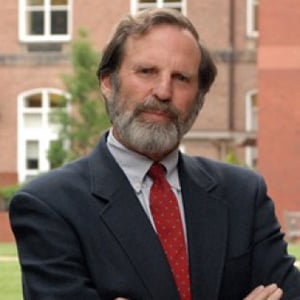
Adjunct Professor, George Washington University Law School
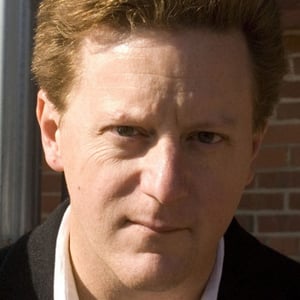
J.C. Hallman grew up in Southern California. He studied creative writing at the University of Pittsburgh, the Writing Seminars at Johns Hopkins, and the Iowa Writers’ Workshop.
Hallman’s nonfiction combines memoir, history, journalism, and travelogue. His first book, The Chess Artist, tells the story of Hallman’s friendship with chess player Glenn Umstead. His second, The Devil is a Gentleman, is an intellectual apprenticeship with philosopher William James. In Utopia explores the history of utopian literature in the context of visits to six modern utopias in various stages of realization. Wm & H’ry examines the copious correspondence of William and Henry James. And B & Me is an account of Hallman’s literary relationship with Nicholson Baker.
Hallman has also published a book of short stories, The Hospital for Bad Poets, and edited two anthologies of “creative criticism,” The Story About the Story and The Story About the Story II.
Among other honors, Hallman was a recipient of a 2010 McKnight Artist Fellowship in fiction, and a 2013 Fellowship from the John Simon Guggenheim Foundation in the general non-fiction category.
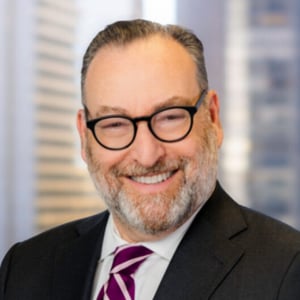
Founder, Chairman, and CEO, Louis D. Brandeis Center for Human Rights Under Law
Hon. Kenneth L. Marcus is an internationally recognized expert in civil and human rights, as well as a leader in the fight against anti-Semitism on and off university campuses. He is the Founder, Chairman, and CEO of The Louis D. Brandeis Center for Human Rights Under Law, the leading civil rights legal organization fighting against anti-Semitism. The New York Times has called him “The Man Who Helped Redefine Campus Anti-Semitism.” He been described, in that paper, as “the single most effective and respected force” to combat anti-Semitism.
During his public service career, Marcus served as Assistant U.S. Secretary of Education for Civil Rights; Staff Director at the U.S. Commission on Civil Rights; and General Deputy Assistant U.S. Secretary of Housing and Urban Development for Fair Housing and Equal Opportunity.
In academia, he serves as Professorial Lecturer in Law at George Washington University. He formerly held the Lillie and Nathan Ackerman Chair in Equality and Justice in America at the City University of New York’s Bernard M. Baruch College, served as Visiting Research Professor of Political Science at Yeshiva University, and was a Board of Visitors member George Mason University and Distinguished Senior Fellow at that university’s law school. He is a member of the editorial board of the Journal of Contemporary Antisemitism and previously served as Associate Editor of the Journal for the Study of Anti-Semitism.
Marcus is also author of The Definition of Anti-Semitism (Oxford University Press) and Jewish Identity and Civil Rights in America (Cambridge University Press). He has published widely in academic journals as well as in more popular venues such as The Wall Street Journal, Washington Post, Newsweek, USA Today, and Politico. He is a graduate of Williams College and the University of California at Berkeley School of Law.
Earlier in his career, he was a litigation partner in two major law firms, where he conducted complex commercial and constitutional litigation. He also serves as Chairman emeritus of the Executive Committee of the Federalist Society for Law & Public Policy Civil Rights Practice Group.
W. H. Brady Scholar, American Enterprise Institute
Charles Murray is a political scientist, author, and libertarian. He first came to national attention in 1984 with the publication of Losing Ground, which has been credited as the intellectual foundation for the Welfare Reform Act of 1996. His 1994 New York Times bestseller, The Bell Curve (Free Press, 1994), coauthored with the late Richard J. Herrnstein, sparked heated controversy for its analysis of the role of IQ in shaping America’s class structure. Murray's other books include What It Means to Be a Libertarian (1997), Human Accomplishment (2003), In Our Hands (2006), and Real Education (2008). His most recent book, Coming Apart (Crown Forum, 2012), describes an unprecedented divergence in American classes over the last half century.

Professor Emeritus, Paul M. Hebert Law Center, Louisiana State University
In memoriam
Dr. John Baker is Professor Emeritus of Law, and previously the Dale E. Bennett Professor of Law, at Louisiana State University Law School. He is currently Visiting Professor at Peking University School of Transnational Law (via Zoom) and has been Visiting Professor at The Center for the Constitution, Georgetown Law School (2013-2020). He has also been a Visiting Fellow at Oriel College, the University of Oxford (2012-2014) and taught at Blackfriars Hall, Oxford in 2014. Dr. Baker has also been an adjunct Fellow at the Heritage Foundation (Spring, 2008) and a Distinguished Scholar at the Catholic University of America Law School (2011-12). He has taught at Tulane Law School, George Mason Law School, Pepperdine Law School, New York Law School, Hong Kong University, and the University of Dallas, School of Management and also taught and/or lectured in 17 foreign countries. Notable among his foreign visits are the
following: Visiting Professor at the University of Lyon III (France) (1999-2011); Visiting Professor at the Universidad de los Andes, Chile (2012), as a Fulbright Specialist (2006); and a Fulbright Scholar at various universities in the Philippines. Dr. Baker received his J.D., with honors, from the University of Michigan Law School and his B.A., magna cum laude, from the University of Dallas. He also earned a Ph.D. in Political Thought from the University of London. Baker has taught over a dozen different subjects, mostly courses in public law. His main areas of interest are Constitutional Law (particularly federalism and separation of powers), Criminal Law, Anti-Terrorism Law, International Law, Health Care Law, Mediation, and Comparative Law.
In addition to law review articles and book chapters, Dr. Baker’s academic publications include Hall's Criminal Law: Cases and Materials (with Benson, Force and George; 5th ed. Michie, 1993); An Introduction to the Law of the United States (ed. with Levasseur; University Press of America, 1992). He has also published on Forbes.com, FoxNews.com, in The Washington Times, and a number of times in The Wall Street Journal. He argues in federal court, including two oral arguments in the U.S. Supreme Court. For many years, he co-taught courses for the Federalist Society on separation of powers with the late Supreme Court Justice Antonin Scalia. In September 2016, he co-taught a Supreme Court seminar in China with Justice Samuel Alito. Following law school, he served as a law clerk in federal district court and as an assistant district attorney in New Orleans before joining LSU in 1975. While a professor, he has been as a consultant to USAID, USIA (since rolled into the State Department), the Justice Department, the U.S. Senate Judiciary Subcommittee on Separation of Powers, and the Office of Planning in the White House. He served on an ABA Task Force which issued the report, The Federalization of Crime (1998) and later as a consultant to the “Bi-Partisan Task Force on the Over- federalization of Crime” (2012-2014) created by the U.S. House Judiciary Subcommittee on Crime. Dr. Baker was a co-founder of the first iteration (1995) of Stratfor Inc., a global intelligence agency. He co-authored its first book: The Intelligence Edge (with Friedman, Friedman and Chapman; Crown Books/Random House 1997). In 2022, he began a short, weekly video podcast available on YouTube and Rumble, The Baker Brief.
Raoul Berger Professor of Legal History at Northwestern University School of Law
Stephen Presser is a leading American legal historian and expert on shareholder liability for corporate debts. He is frequently an invited witness before committees of the U.S. Senate and House of Representatives on issues of constitutional law. He holds a joint appointment with the J. L. Kellogg Graduate School of Management and also teaches in Northwestern's history department.
UC Foundation Assistant Professor, U.T. Chattanooga
Professor, Christopher Newport University
Dr. Jeffry Morrison is Professor of American Studies at Christopher Newport University in Newport News, Virginia, and Director of Academics at the federal government’s James Madison Foundation in Alexandria, Virginia. He graduated with distinction from Boston College and from Georgetown University, where he earned the M.A. and Ph.D. in Government. Dr. Morrison has also held faculty positions at Princeton University, the U.S. Air Force Academy, Georgetown University, and Regent University. He has published as author or editor five books on American political culture, including The Political Philosophy of George Washington (Johns Hopkins University Press, 2009), and chapters, articles, and reviews in numerous scholarly publications in fields including history, political science, and religion. He has lectured at colleges and historic sites throughout the United States and in England (Hertford College, Oxford), and made media appearances on radio, in journalism, and on television (C-SPAN and the BBC).

Judge, United States Court of Appeals, Fifth Circuit
Andrew Oldham is a Circuit Judge on the United States Court of Appeals for the Fifth Circuit. Before ascending to the bench, Judge Oldham served as General Counsel to Texas Governor Greg Abbott, where he advised the Governor on a range of issues under federal and state law and managed litigation in which the Governor was an interested party. Before that he served as Deputy Solicitor General for the State of Texas, where he represented Texas in federal courts across the country, including twice before the United States Supreme Court. Before moving to Texas, Judge Oldham was an attorney at Kellogg Hansen Todd Figel & Frederick in Washington, D.C. His practice focused on appellate litigation in federal courts of appeals throughout the country. Before entering private practice, Judge Oldham served as a law clerk to Justice Samuel A. Alito, Jr., at the Supreme Court of the United States and to Judge David B. Sentelle of the U.S. Court of Appeals for the District of Columbia Circuit. He also worked as an attorney-adviser in the Office of Legal Counsel at the U.S. Department of Justice from 2006 to 2008. Judge Oldham earned a B.A. from the University of Virginia with highest honors, a Truman Scholarship for graduate school, an M. Phil., first class (with distinction), from Cambridge University, and a J.D., magna cum laude, from Harvard Law School.
Vice President of Washington Operations and Dean of the Van Andel Graduate School of Government, Hillsdale College
Matthew Spalding is the Kirby Professor in Constitutional Government at Hillsdale College and the Dean of the Van Andel Graduate School of Government at Hillsdale College’s Washington, D.C., campus. As Vice President for Washington Operations, he also oversees the Allan P. Kirby, Jr. Center for Constitutional Studies and Citizenship and the academic and educational programs of Hillsdale in the nation’s capital.
He is the best-selling author of We Still Hold These Truths: Rediscovering Our Principles, Reclaiming Our Future, which details America’s core principles, shows how they have come under assault by modern progressive-liberalism, and lays out a strategy to recover them. Spalding is also executive editor of The Heritage Guide to the Constitution, a line-by-line analysis of each clause of the U.S. Constitution. His other books include A Sacred Union of Citizens: Washington’s Farewell Address and the American Character; Patriot Sage: George Washington and the American Political Tradition; and The Founders’ Almanac: A Practical Guide to the Notable Events, Greatest Leaders & Most Eloquent Words of the American Founding.
Prior to joining Hillsdale, Dr. Spalding was vice president of American Studies at The Heritage Foundation and founding director of its B. Kenneth Simon Center for Principles and Politics. He is a Fellow at the Claremont Institute for the Study of Statesmanship and Political Philosophy, and serves on the boards of the Steamboat Institute and the Philadelphia Society.
He received his B.A. from Claremont McKenna College and his M.A. and Ph.D. in government from the Claremont Graduate School. In addition to teaching at Hillsdale, he has taught at George Mason University, the Catholic University of America, and Claremont McKenna College. He and his wife Elizabeth, a Hillsdale alumna, reside with their two children in Arlington, Virginia.
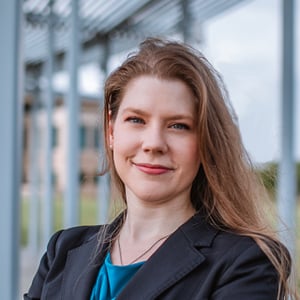
Senior Litigation Counsel, The Heritage Foundation
Lea Patterson is co-founder of Butterfield & Patterson. Prior to co-founding Butterfield & Patterson, Lea served as Senior Counsel and Practice Group Chair at First Liberty Institute. There, she focused on religious liberty litigation, including landmark school choice case Carson v. Makin. Lea also clerked for the Honorable Raymond W. Gruender of the United States Court of Appeals for the Eighth Circuit in St. Louis, Missouri.
Lea received the full tuition Dillard Scholarship at the University of Virginia School of Law, where she served as an executive editor for the Virginia Law Review and as president of the UVA chapter of Advocates for Life, a national association of pro-life law students. During law school, Lea interned at the Texas Attorney General’s Office and Senator Ted Cruz’s office, focusing on the Judiciary Committee.
Lea graduated summa cum laude from Texas Christian University in 2013 with a Bachelors of Science in Political Science.
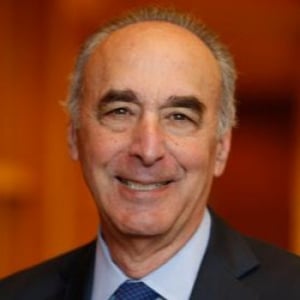
David and Mary Harrison Distinguished Professor of Law, University of Virginia School of Law
Kenneth Abraham is one of the nation’s leading scholars and teachers in the fields of torts and insurance law. He is a fellow of the American Academy of Arts and Sciences and a life member of the American Law Institute. For 20 years he served on the Council of the ALI — the board of lawyers, judges and academics that governs the Institute. He is also an adviser to the ALI’s Restatement of Torts (Third) and Restatement of the Law of Liability Insurance. He has served on a number of other boards and commissions concerned with tort law and insurance reform.
Abraham is a recipient of the All-University of Virginia Outstanding Teacher Award, the Distinguished Faculty Achievement Certificate from the State Council of Higher Education for Virginia for "outstanding achievement in teaching, research and public service,” and the American Bar Association's Robert B. McKay Law Professor Award, given for "outstanding contributions to tort and insurance law." He has been a visiting professor at Harvard Law School and Case Western Reserve Law School.
Abraham is the author of more than 60 law review articles and five books. His first book, "Distributing Risk: Insurance, Legal Theory, and Public Policy" (1986), brought modern legal theory to the study of insurance law. His torts treatise, "The Forms and Functions of Tort Law" (5th ed. 2017), has become a basic text for first-year law students across the country. And his casebook, "Insurance Law and Regulation" (6th ed. 2015) has been used as the principal text in courses on insurance law in more than 100 American law schools.
Abraham has been a consulting counsel and an expert witness in a variety of major insurance coverage cases, involving commercial general liability, directors and officers liability, environmental cleanup liability, toxic tort and products liability, and property insurance claims. He has also served as an arbitrator for the Dalkon Shield Claimants Trust, resolving over 100 claims by women seeking damages for injuries caused by the Dalkon Shield intrauterine device, both in the United States and Europe.
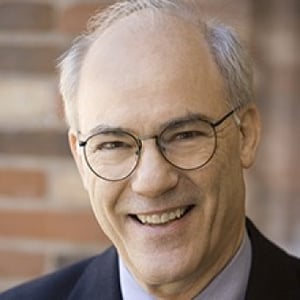
Walter E. Meyer Professor Emeritus of Property and Urban Law and Professorial Lecturer in Law, Yale Law School
Robert C. Ellickson was appointed Walter E. Meyer Professor of Property and Urban Law at Yale Law School in 1988. He has published numerous articles in legal and public policy journals on topics such as land use and housing policy, land tenure systems, social norms, homelessness, and the organization of households, community associations, and cities. Professor Ellickson’s books include Order Without Law: How Neighbors Settle Disputes (1991) (awarded the Order of the Coif Triennial Book Award in 1996), The Household: Informal Order Around the Hearth (2008), Land Use Controls: Cases and Materials (4th edition 2013, with Vicki Been, Roderick M. Hills, Jr. and Christopher Serkin), and Perspectives on Property Law (4th edition 2014, with Carol M. Rose and Henry E. Smith). He has written about ancient systems of land tenure and also periodically teaches a seminar on the history of development of the City of New Haven. Robert Ellickson was a member of the USC Law Faculty in 1970–1981, and the Stanford Law Faculty in 1981–88. He also has been a visiting professor at the Harvard and University of Chicago Law Schools. He was a founding member and later a director of the American Law and Economics Association, and served as its President in 2000–01. In 2016, the Association awarded him the Ronald H. Coase Medal in recognition of his scholarly contributions. Professor Ellickson served as an adviser during the American Law Institute’s preparation of the Restatement, Third, Property—Servitudes, and currently serves in the same capacity for the Restatement (Fourth) of Property. He is a fellow of the American Academy of Arts and Sciences, and, in 2008, received the William & Mary Law School’s Brigham-Kanner Property Rights Prize for Property Scholarship. At Yale Law School he has served as Deputy Dean (1991–92) and, during the reconstruction of the Sterling Law buildings, as chairman of the Building Committee. Prior to entering teaching in 1970, he worked for a Presidential commission on housing policy and then for Levitt & Sons, the homebuilding firm. Professor Ellickson is married to Lynn Hammer and has two children. For many decades he competed in competitive Scrabble tournaments and, during intervals when fortune smiled, was ranked as one of the top 20 players in the United States.
Former Executive Vice President of Academics, Atlas Network
Leonard P. Liggio was the Executive Vice President of Academics at the Atlas Network for the last two decades of his life. He was born July 5, 1933 and died Oct. 14, 2014, at the age of 81.
Leonard’s career advancing liberty spanned seven decades, during which time he served as the President of the Mont Pelerin Society, the Philadelphia Society, and the Institute for Humane Studies, where he later continued to serve as its Distinguished Senior Scholar. He was a professor at George Mason University, a visiting professor at the Universidad Francisco Marroquín, a board member of the Competitive Enterprise Institute, and a Trustee of Liberty Fund.
Leonard’s lifelong work for liberty won him acclaim among diverse audiences. In 2007, he was recognized with the Adam Smith Award, the highest prize bestowed by the Association of Private Enterprise Education. In 2011, he received a Lifetime Achievement Award from the Society for the Development of Austrian Economics. That same year, the then-nascent organization Students for Liberty published an interview with Leonard that called him “The Original Student for Liberty.”
Edward J. Phelps Professor of Law and Economics and Kauffman Distinguished Research Scholar in Law, Economics, and Entrepreneurship, Yale Law School
Professor George L. Priest passed away on Dec. 17, 2024. Please read his obituary here.
George L. Priest is the Edward J. Phelps Professor of Law and Economics and Kauffman Distinguished Research Scholar in Law, Economics, and Entrepreneurship at Yale Law School. An internationally recognized expert, Professor Priest has focused his research over the past two decades on antitrust, the operation of private and public insurance, and the role of the legal system in promoting economic growth. He joined Yale Law School in 1981 and is co-director of the John M. Olin Center for Law, Economics and Public Policy, which facilitates the scholarly work of the Yale law and economics faculty and supports student interest and research in the field. Before coming to Yale, Professor Priest taught law at the University of Chicago, SUNY/Buffalo, and UCLA. His subject areas are antitrust; capitalism; regulated industries; torts; and insurance and public policy. Professor Priest holds a B.A. from Yale and a J.D. from the University of Chicago.

Plenary Session 1: Congressional Primacy at the Founding and Today
Featuring: Dr. Nicholas P. Cole, Senior Research Fellow, University of Oxford Mr. Yuval Levin, Senior Fellow, American Enterprise Institute...
DC-Wide FedSoc Rupe Debate - Crossing the Line: Are Agencies Defying the Constitution?
Jenn L. Mascott, Paul B. Matey, Alan B. Morrison
Please join each of The Federalist Society’s local DC-area Student Chapters, Lawyers Chapters and Practice...
Topics
How Fifth Circuit Affirmed George Washington’s Vision of Fundamental Justice
The recent ruling by the U.S. Court of Appeals for the Fifth Circuit in Jarkesy v. SEC is...
Cancel Culture and Higher Education
J.C. Hallman, Kenneth L. Marcus, Charles Murray
Has American higher education gone too far — or in the wrong direction — in...
Reasoned Argument Book Club: Rights, Ratification, and Revolution [Session 6]
John S. Baker
REASONED ARGUMENT: THE COUNTER TO CANCEL CULTURE American Argument Prior to, During, and Following theFederalist-Antifederalist...
If the Framers Despaired, Should We?
Stephen B. Presser
A review of Fears of a Setting Sun: The Disillusionment of America’s Founders, by Dennis...
How the Founders’ Natural Law Theory Illuminates the Original Meaning of Free Exercise
Kody Cooper
In Fulton v. City of Philadelphia, the Supreme Court will consider whether Philadelphia’s 2018 policy...
American Cincinnatus: George Washington Lays Down His Sword
Jeffry Morrison, Andrew Oldham, Matthew Spalding
Can you imagine Julius Caesar willingly turning back power? History is littered with examples of...
Prayer and Jury Service: United States v. Brown
Lea Patterson
This teleforum will address the upcoming Eleventh Circuit en banc argument in United States v. Brown, which concerns...
Panel V: The Public and Private Realms: The Privatization Movement and Other Developments [Archive Collection]
Kenneth S. Abraham, Robert C. Ellickson, Leonard Liggio, George L. Priest
On October 16-17, 1987, the Federalist Society hosted a symposium in celebration of the bicentennial...