
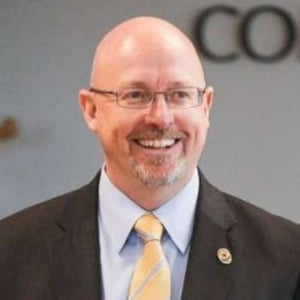
First Assistant District Attorney, Montgomery County District Attorney’s Office, Conroe Texas
Mike Holley is the First Assistant District Attorney at the Montgomery County District Attorney’s Office in Conroe, Texas. Mike a graduate of Abilene Christian University where he graduated summa cum laude. Mike received his J.D. from Texas Tech University School of Law where he also graduated summa cum laude, and he received his L.L.M. from the Judge Advocate General’s Legal Center and School in Charlottesville, Virginia.
As First Assistant, Mike is responsible for the day-to-day management of the office, supervision, and training of employees, trying cases, and the preparation of the annual office budget.
Before joining the Montgomery County District Attorney’s Office, Mike served in the United States Army. Mike’s Army career began as a Military Police Officer before The Army sent him to law school. Mike would go on to serve as both a prosecutor and a defense attorney in the Army and, in 2004, would serve as the Chief Prosecutor in the Abu Ghraib Detainee Abuse cases in Baghdad, Iraq.
Mike left the Army as a Major after 13 years of service and spent the next six years in private practice with the Lanier Law Firm. After joining the Montgomery County District Attorney’s Office in 2012, Mike served as a felony prosecutor and Chief of the Misdemeanor Division. Mike assisted in creating the Montgomery County Veterans Court and has prosecuted a wide variety of cases. Mike spends a substantial amount of his time training attorneys in his offices as well as speaking to prospective attorneys about the profession of prosecution. He has also made professional presentations at various conferences across the state and the country.
Mike was promoted to his current position as First Assistant in 2016. Mike is Board Certified in Criminal Law by the Texas Board of Legal Specialization. He has been married for 33 years and has four children.

Chief Policy Counsel, Council on Criminal Justice and Senior Advisor, Right on Crime
Marc A. Levin is the Chief Policy Counsel for the Council on Criminal Justice (counciloncj.org) and Senior Advisor for Right on Crime.
An attorney and accomplished author on legal and public policy issues, Marc began the Foundation’s criminal justice program in 2005. This work contributed to nationally praised policy changes that have been followed by dramatic declines in crime and incarceration in Texas. Building on this success, in 2010, Levin developed the concept for the Right on Crime initiative, a TPPF project in partnership with Prison Fellowship and the American Conservative Union Foundation. Right on Crime has become the national clearinghouse for conservative criminal justice reforms and has contributed to the adoption of policies in dozens of states that fight crime, support victims, and protect taxpayers.
In 2014, Levin was named one of the “Politico 50” in the magazine’s annual “list of thinkers, doers, and dreamers who really matter in this age of gridlock and dysfunction.”
Marc has testified on criminal justice policy on four occasions before Congress and has testified before legislatures in states including Texas, Nevada, Kansas, Wisconsin, and California. He also has met personally with leaders such as U.S. Presidents, Speakers of the House, and the Justice Commtitee of the United Kingdom Parliament to share his ideas on criminal justice reform. In 2007, he was honored in a resolution unanimously passed by the Texas House of Representatives that stated, “Mr. Levin’s intellect is unparalleled and his research is impeccable.”
Since 2005, Marc has published dozens of policy papers on topics such as sentencing, probation, parole, reentry, and overcriminalization which are available on the TPPF website. Levin’s articles on law and public policy have been featured in publications such as the Wall Street Journal, USA Today, Texas Review of Law & Politics, National Law Journal, New York Daily News, Jerusalem Post, Toronto Star, Atlanta Journal-Constitution, Philadelphia Inquirer, San Francisco Chronicle, Washington Times, Los Angeles Daily Journal, Charlotte Observer, Dallas Morning News, Houston Chronicle, Austin American-Statesman, San Antonio Express-News and Reason Magazine.
In 1999, Marc graduated with honors from the University of Texas with a B.A. in Plan II Honors and Government. In 2002, Marc received his J.D. with honors from the University of Texas School of Law. Marc was a Charles G. Koch Summer Fellow in 1996. He served as a law clerk to Judge Will Garwood on the U.S. Court of Appeals for the Fifth Circuit and Staff Attorney at the Texas Supreme Court.

Owner, VSV Leadership
Patrick Robinson is the owner of VSV Leadership and president of the board of Kid C.A.T.. Before starting VSV Leadership, Mr. Robinson worked at the Chan Zuckerberg Initiative as both a member of the strategic initiatives team and as a Transforming Prosecution Lead.
He is a graduate of Stanford University, where he got his Masters of Business Administration, and he received his J.D. from the University of Virginia School of Law.
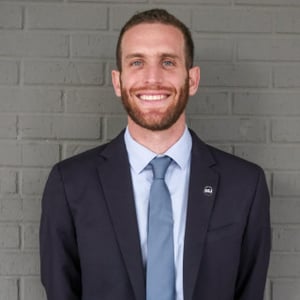
Senior Fellow, Council on Criminal Justice
Rothman has worked as a researcher, educator, communications specialist, policy analyst, and funder across the criminal justice system and emerging technology landscape. Throughout his career, he has focused on supporting and implementing programs that aim to enable public policy that is effective, safe, and dependable for all. Rothman holds an M.T.S from Harvard University in religion, ethics, and politics and a B.A. in political science from Carleton College.
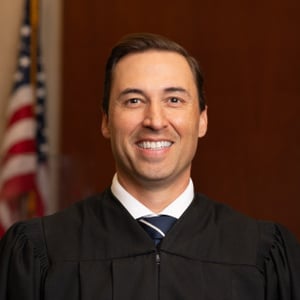
Judge, Fifth Circuit Court of Appeal, State of Louisiana
Judge Schlegel, a recent inductee into the Louisiana Justice Hall of Fame, was elected to the Fifth Circuit Court of Appeal in 2023. During Judge Schlegel’s decade on the trial court, he “designed and managed what may be one of the most advanced courts in the country for delivering justice online,” according to one legal tech journalist.
Judge Schlegel currently serves on the ABA & LSBA Task Forces on the Law and Artificial Intelligence, among others. He is the immediate past Chair of the Louisiana Supreme Court Technology Commission and has served as President of the Louisiana District Judges Association. Judge Schlegel has received numerous awards including the National Center for State Courts’ 26th Annual William H. Rehnquist Award for Judicial Excellence, one of the highest judicial honors in the country. Judge Schlegel was also featured on the cover of the American Bar Association Journal and is a nationally recognized speaker on legal tech and the modernization of the justice system.
Judge Schlegel has been equally innovative in the criminal justice system. While on the trial court, Judge Schlegel established the Reentry Court and Swift & Certain Probation programs in Jefferson Parish, aimed at reducing recidivism and enhancing community safety.
Prior to his election to the bench, Judge Schlegel was one of the top felony prosecutors in the Jefferson Parish District Attorney’s Office. He practiced civil law with an emphasis in products liability before becoming a prosecutor. Judge Schlegel graduated with honors from Loyola University New Orleans College of Law, where he served as the President of the Student Bar Association. He has been married to his high school sweetheart, Representative Laurie Schlegel, for 25 years and has one son in college.
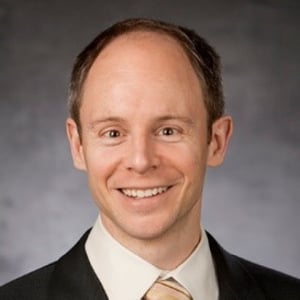
Professor of Computer Science & Director, Foundations of Cooperative AI Lab (FOCAL), Carnegie Mellon University
Vincent Conitzer is the Director of the Foundations of Cooperative AI Lab (FOCAL) and a Professor of Computer Science with affiliate appointments in Machine Learning and Philosophy. Prior to this he was the Kimberly J. Jenkins Distinguished University Professor of New Technologies and Professor of Computer Science, Professor of Economics, and Professor of Philosophy at Duke University. He is also Head of Technical AI Engagement at the Institute for Ethics in AI, and Professor of Computer Science and Philosophy, at the University of Oxford. He received Ph.D. (2006) and M.S. (2003) degrees in Computer Science from Carnegie Mellon University, and an A.B. (2001) degree in Applied Mathematics from Harvard University. Conitzer works on artificial intelligence (AI). Much of his work has focused on AI and game theory, for example designing algorithms for the optimal strategic placement of defensive resources. More recently, he has started to work on AI and ethics: how should we determine the objectives that AI systems pursue, when these objectives have complex effects on various stakeholders?
Conitzer has received the 2021 ACM/SIGAI Autonomous Agents Research Award, the Social Choice and Welfare Prize, a Presidential Early Career Award for Scientists and Engineers (PECASE), the IJCAI Computers and Thought Award, an NSF CAREER award, the inaugural Victor Lesser dissertation award, an honorable mention for the ACM dissertation award, and several awards for papers and service at the AAAI and AAMAS conferences. He has also been named a Guggenheim Fellow, a Sloan Fellow, a Kavli Fellow, a Bass Fellow, an ACM Fellow, a AAAI Fellow, and one of AI's Ten to Watch. He has served as program and/or general chair of the AAAI, AAMAS, AIES, COMSOC, and EC conferences. Conitzer and Preston McAfee were the founding Editors-in-Chief of the ACM Transactions on Economics and Computation (TEAC).
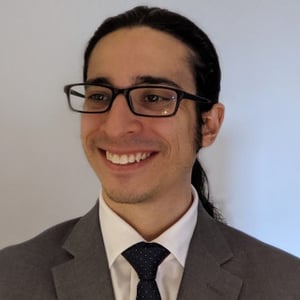
Senior Policy Counsel, Public Knowledge
Nicholas P. Garcia is a Senior Policy Counsel at Public Knowledge, focusing on emerging technologies, intellectual property, and closing the digital divide.
Before joining Public Knowledge, Nick served as an Assistant District Attorney in the Investigations Division of the Bronx County District Attorney’s Office, where he investigated and prosecuted cybercrime, fraud, grand larceny, and organized crime. He previously worked as a Legal Intern at Public Knowledge and as a Student Attorney for the Communications & Technology Law Clinic at Georgetown University Law Center’s Institute for Public Representation.
Nick received his J.D. from Georgetown University Law Center, his M.A. in Ethics and Society from Fordham University’s Center for Ethics Education, and his B.A. in cursu honorum in Philosophy from Fordham University, where he was a member of the Phi Sigma Tau Honor Society.
Nick is a native New Yorker, and an unabashed nerd who loves video games, science fiction, and tabletop RPGs.
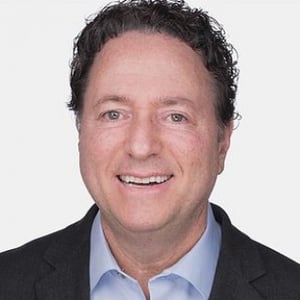
President, Committee for Justice
Curt Levey is President of the Committee For Justice, an organization devoted to advancing constitutionally limited government and individual liberty. He is a veteran of Supreme Court and other judicial confirmation battles and serves on the executive committee of the Federalist Society's Civil Rights Practice Group.
After graduating Harvard Law School with honors and clerking for the U.S. Court of Appeals for the Sixth Circuit, Mr. Levey served as Director of Legal & Public Affairs at the Center for Individual Rights (CIR). There he worked on landmark Supreme Court cases, including the University of Michigan affirmative action cases and the successful constitutional challenge to the Violence Against Women Act. After CIR, Mr. Levey headed the Title IX policy group at the U.S. Department of Education.
Before attending law school, Mr. Levey earned an M.S. and B.A. in computer science from Brown University and worked in the field of artificial intelligence (AI). He invented a new type of AI technology, for which he wrote a successful patent application.

Founder, Chairman, and CEO, Louis D. Brandeis Center for Human Rights Under Law
Hon. Kenneth L. Marcus is an internationally recognized expert in civil and human rights, as well as a leader in the fight against anti-Semitism on and off university campuses. He is the Founder, Chairman, and CEO of The Louis D. Brandeis Center for Human Rights Under Law, the leading civil rights legal organization fighting against anti-Semitism. The New York Times has called him “The Man Who Helped Redefine Campus Anti-Semitism.” He been described, in that paper, as “the single most effective and respected force” to combat anti-Semitism.
During his public service career, Marcus served as Assistant U.S. Secretary of Education for Civil Rights; Staff Director at the U.S. Commission on Civil Rights; and General Deputy Assistant U.S. Secretary of Housing and Urban Development for Fair Housing and Equal Opportunity.
In academia, he serves as Professorial Lecturer in Law at George Washington University. He formerly held the Lillie and Nathan Ackerman Chair in Equality and Justice in America at the City University of New York’s Bernard M. Baruch College, served as Visiting Research Professor of Political Science at Yeshiva University, and was a Board of Visitors member George Mason University and Distinguished Senior Fellow at that university’s law school. He is a member of the editorial board of the Journal of Contemporary Antisemitism and previously served as Associate Editor of the Journal for the Study of Anti-Semitism.
Marcus is also author of The Definition of Anti-Semitism (Oxford University Press) and Jewish Identity and Civil Rights in America (Cambridge University Press). He has published widely in academic journals as well as in more popular venues such as The Wall Street Journal, Washington Post, Newsweek, USA Today, and Politico. He is a graduate of Williams College and the University of California at Berkeley School of Law.
Earlier in his career, he was a litigation partner in two major law firms, where he conducted complex commercial and constitutional litigation. He also serves as Chairman emeritus of the Executive Committee of the Federalist Society for Law & Public Policy Civil Rights Practice Group.

Head of AI Policy, Abundance Institute
Neil Chilson is the Head of AI Policy at the Abundance Institute. Prior to this position, he served as a Senior Research Fellow at the Center for Growth and Opportunity. Chilson is a lawyer, computer scientist, and author of the book “Getting Out of Control: Emergent Leadership in a Complex World.”
Chilson was previously the senior research fellow for Technology and Innovation at Stand Together, where he guided efforts to understand and promote the legal and cultural paradigms that best enable people to discover, innovate, and improve all our lives.
Before Stand Together, Chilson was the Chief Technologist at the Federal Trade Commission, where he focused on the economics of privacy and blockchain-related issues. Previously, he was an attorney advisor to Acting FTC Chairman Maureen K. Ohlhausen. In both roles he advised Chairman Ohlhausen and worked with staff on nearly every major technology-related case, report, workshop, or other FTC proceeding since January 2014. Neil joined the FTC from telecom firm Wilkinson Barker Knauer. Neil is frequently quoted by the press and his work has appeared in numerous news outlets, including The Wall Street Journal, The Washington Post, USAToday, and Newsweek. Neil has a J.D. from The George Washington Law School, a M.S. in computer science from University of Illinois, Urbana-Champaign, and a B.S. in computer science from Harding University.

Senior Legal Fellow, The Future of Free Speech, Vanderbilt University
Ashkhen Kazaryan is a renowned expert in First Amendment law and technology policy, specializing in digital free speech, artificial intelligence, and the intersection of constitutional rights with emerging technologies. As a Senior Legal Fellow at the Future of Free Speech at Vanderbilt University, she leads initiatives to protect free expression and shape policies that uphold the First Amendment in the digital age.
Previously, Ashkhen was the lead for North and Latin America on the content regulation team at Meta, where she also served as the company’s policy lead on Section 230. She has also been a Senior Fellow at Stand Together and the Director of Civil Liberties at TechFreedom, where she worked extensively on platform liability, free speech, and internet governance. She is currently Fellow for the First Amendment at the Freedom Forum.
Ashkhen earned her specialist in law degree summa cum laude from Lomonosov Moscow State University in 2012 and later received a master of law degree from Yale Law School in 2016. During her time at Yale, she contributed as an articles editor for the Yale Journal of Law and Feminism, a senior editor for the Yale Law and Policy Review, and an editor for the Yale Journal of Law and Technology, while also serving as co-chair of the Public Interest Fellowship.
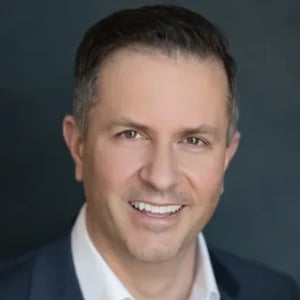
Founder and CEO, Chamber of Progress
Adam Kovacevich (Kuh-VACK-uh-VITCH) is the Founder and CEO of Chamber of Progress, a center-left tech industry policy coalition promoting technology’s progressive future.
Chamber of Progress – which Adam founded in March 2021 – works to ensure that all Americans benefit from technological leaps, and that the tech industry operates responsibly and fairly. It has been called “one of the most powerful tech lobby groups,” (New York Times), “one of the tech industry’s most prominent allies in Washington,” (Washington Post) and “a significant voice in the progressive movement” (Washingtonian).
Adam is a veteran Democratic tech industry leader who has had a front row seat for more than 20 years in the tech industry’s political maturation. He is an expert in helping lead technology companies through today’s challenging political environment.

Senior Fellow, R Street Institute
Prior to R Street, Adam spent 12 years as a senior fellow at the Mercatus Center at George Mason University. Before the Mercatus Center, he served as the president of the Progress and Freedom Foundation. Adam has also worked for the Adam Smith Institute, the Heritage Foundation and the Cato Institute.
Adam has published 10 books on a wide range of topics, including online child safety, internet governance, intellectual property, telecommunications policy, media regulation and federalism.
In 2008, Adam received the Family Online Safety Institute’s “Award for Outstanding Achievement.”

Assistant Professor of Law, American University Washington College of Law
Charles Duan is an assistant professor at American University Washington College of Law. His research focuses on how intellectual property and technology law interact with public policy and the public interest. He has written about patent law and drug pricing, copyright protection in legal texts, government use of patents, consumer interests in technology, and conflicts between regulation and intellectual property.
Duan previously was a postdoctoral fellow at Cornell Tech and a research fellow at Colorado Law School, working on National Science Foundation–funded Internet law research. He was also the director of technology and innovation policy at the R Street Institute, the director of the patent reform project at Public Knowledge, and a patent attorney at the law firm Knobbe Martens. In addition to his academic publications, he has authored over two hundred amicus curiae briefs, policy papers, administrative comments, and media articles, which have been cited in the Supreme Court and federal courts of appeals. He received an A.B. degree in Computer Science from Harvard College, and his J.D. from Harvard Law School.

Of-Counsel, Holland & Knight
John Moran is a litigation attorney in Holland & Knight's Washington, D.C. office. Mr. Moran focuses his practice on intellectual property matters.
Mr. Moran has experience litigating many patent, trademark and trade secret cases in federal district court and argues appeals at the U.S. Court of Appeals for the Federal Circuit and U.S. Court of Appeals for the Fourth Circuit. He also has experience representing clients in Section 337 investigations before the International Trade Commission. His significant knowledge has led him to be called upon to testify as an expert witness on patent issues.
Mr. Moran has prosecuted or directly supervised the prosecution of hundreds of patent applications in many different technologies, including telecommunications systems and equipment, robotics, artificial intelligence (AI), imaging technology, nuclear reactor instrumentation, semiconductor devices and manufacturing processes and medical devices.
Prior to entering private practice, Mr. Moran worked as an electrical engineer for six years in the fields of semiconductor design, microprocessor design and software, microprocessor-controlled products, process control and telecommunications. His engineering career included four years with RCA at its solid state division and at its David Sarnoff Research Center.

Associate Professor, UNH Franklin Pierce School of Law
Zvi S. Rosen is an Associate Professor at UNH Franklin Pierce School of Law and the Faculty Director of the Franklin Pierce Society for Intellectual Property. He has served as a Assistant Professor at the Southern Illinois University School of Law, as a Visiting Assistant Professor at the Maurice A. Deane School of Law at Hofstra University, and as a Visiting Scholar and Professorial Lecturer in Law at George Washington University School of Law.
In 2015-2016, he was the Abraham L. Kaminstein Scholar in Residence at the U.S. Copyright Office. Mr. Rosen received his J.D. from Northwestern University School of Law in 2005 and LLM in Intellectual Property in 2006 from the George Washington University Law School. He has practiced at Fried, Frank, Harris, Shriver & Jacobson LLP as well as smaller firms and his own practice, and clerked for the Hon. Thomas B. Bennett of the U.S. Bankruptcy Court for the Northern District of Alabama. He has written extensively on the development of modern copyright and trademark law, as well as on bankruptcy law.

CoFounder, RightsClick
Steven’s extensive background in IP law and policy began as an attorney for the U.S. Senate Judiciary Committee, after which, he served as senior counsel for Policy and International Affairs at the U.S. Copyright Office and then as Chief Intellectual Property Counsel for the Global Intellectual Property Center of the U.S. Chamber of Commerce. Before co-founding RightsClick, he started the IP consultancy Sentinel Worldwide, and teaches copyright law at George Washington University Law School.

Understanding AI
Timothy Lee is a reporter who has written about technology, economics, and public policy for more than a decade. Before he launched Understanding AI, he wrote for the Washington Post, Vox.com, and Ars Technica. Lee has a master’s degree in computer science from Princeton.
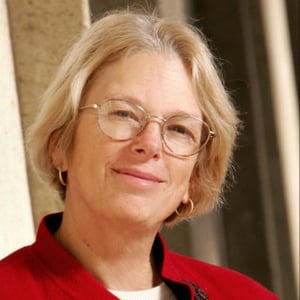
Richard M. Sherman Distinguished Professor of Law Professor of School Information Co-Director, Berkeley Center for Law & Technology
Pamela Samuelson is the Richard M. Sherman Distinguished Professor of Law and Information at the University of California, Berkeley. She is recognized as a pioneer in digital copyright law, intellectual property, cyberlaw and information policy. Since 1996, she has held a joint appointment at Berkeley Law School and UC Berkeley’s School of Information. Samuelson is a director of the internationally-renowned Berkeley Center for Law & Technology. She is co-founder and chair of the board of Authors Alliance, a nonprofit organization that promotes the public interest in access to knowledge. She also serves on the board of directors of the Electronic Frontier Foundation, as well as on the advisory boards for the Electronic Privacy Information Center, the Center for Democracy & Technology, and Public Knowledge.
Samuelson began her legal career as an associate with Willkie Farr & Gallagher in New York. She began her career as a legal academic at the University of Pittsburgh School of Law, from which she visited at Columbia, Cornell, and Emory Law Schools. While on the Berkeley faculty, she has been a distinguished visiting professor at University of Toronto Law School as well as a visiting professor at the University of Melbourne and Harvard Law Schools. She was named an honorary professor at the University of Amsterdam in 2002.
Director of Innovation Policy, International Center for Law & Economics
Kristian Stout, ICLE’s Director of Innovation Policy is an expert in intellectual property, antitrust, telecommunications, and Internet governance. Kristian has been a Fellow at the Internet Law & Policy Foundry, as well as the Eagleton Institute of Politics. Before practicing law, Kristian worked as a technology entrepreneur and a lecturer in the Computer Science Department at Rutgers University. Kristian served on the board of the New Jersey Leadership Program, and wasthe Chair of the Asset Forfeiture Working Group for the NJ State Advisory Committee to the United States Commission on Civil Rights. He has previously served on the Broadband Deployment Advisory Committee for the Federal Communications Commission. Kristian graduated magna cum laude from the Rutgers University School of law, and served on the editorial board of the Rutgers Journal of Law and Public Policy.
Legal Fellow, Center for Constitutional Studies, Cato Institute
Brent Skorup is a legal fellow in the Cato Institute’s Robert A. Levy Center for Constitutional Studies.
Before joining Cato, he was a senior research fellow at the Mercatus Center at the George Mason University. His research areas include free speech, technology law, Fourth Amendment protections, regulation, and property law. Skorup has published pieces in economics and law journals and in popular media, including The Wall Street Journal, The New York Times, Bloomberg Law, Reuters, and Wired. He’s appeared as a TV and radio interview guest for news outlets like C‑SPAN, NPR, CBS News, ABC News, and CNBC Asia.
The Pennsylvania Supreme Court, a dissenting opinion at the Illinois Supreme Court, and the ALI's Restatement of the Law of Property have cited his legal research and he has testified as a technology and legal expert in legislative hearings in several states. Skorup has been appointed to several federal and state advisory bodies and he is currently a member of the Texas Advanced Air Mobility Advisory Committee.
Skorup has a BA in economics from Wheaton College and a law degree from the George Mason University School of Law, where he was articles editor for the Civil Rights Law Journal. He was a legal clerk at the FCC’s wireless bureau and Office of General Counsel and at the Energy and Commerce Committee in the U.S. House of Representatives.

Topics
AI Guardrails Will Shape Society. Here’s How They Work.
You will be hearing a lot about AI guardrails. There will be intense political battles...
The Perils and Promise of A.I. in Criminal Justice
Michael R. Holley, Marc Levin, Patrick Robinson, Jesse Rothman, Scott U. Schlegel
Our liberty, safety, and prosperity are based on the rule of law, not the rule...
Is AI Woke, in What Ways, and Should We Worry?
Vincent Conitzer, Nicholas P. Garcia, Curt Levey, Kenneth L. Marcus
Discussions of the dangers of Artificial Intelligence (AI) have long included concerns about AI systems’...
What Should the Next Administration Do About AI?
Neil Chilson, Ashkhen Kazaryan, Adam Kovacevich, Adam Thierer
This virtual event explored the potential trajectories of AI policy under the upcoming shift in presidential...
AI Meets Copyright: Understanding New York Times v. OpenAI
Charles Duan, John P. Moran, Zvi Rosen, Steven M. Tepp
Artificial intelligence is the most important technological tool being developed today, but the use of...
Topics
Biden’s Executive Order on Artificial Intelligence: An Ill-Advised Departure from Light-Touch Regulation
As promised, just in time for Halloween, late on October 30, the Biden White House...
Tech Roundup Episode 22 - Training Artificial Intelligence & Copyright Law
Timothy B. Lee, Pamela Samuelson, Kristian Stout, Brent Skorup
Moderated by Brent Skorup, experts Timothy B. Lee, Professor Pamela Samuelson, and Kristian Stout discuss...