
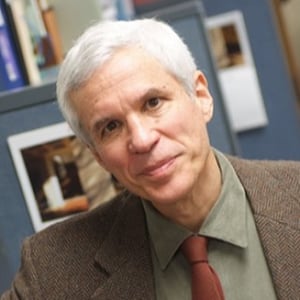
Professor of Law, Emeritus, Washington and Lee University School of Law
David Bruck directed Washington and Lee's death penalty defense clinic, the Virginia Capital Case Clearinghouse, from 2004 to 2020. Prior to coming to W&L, Bruck practiced criminal law in South Carolina for 28 years, and specialized in the defense of capital cases at the trial, appellate and post-conviction stages. Over the course of his career, he has served as Richland County (Columbia, S.C.) Public Defender, as Chief Attorney of the South Carolina Office of Appellate Defense, and since 1992 as Federal Death Penalty Resource Counsel to the federal defender system nationwide.
Bruck has argued seven death penalty cases in the United States Supreme Court, including Skipper v. South Carolina, 476 U.S. 1 (1986), and Simmons v. South Carolina, 512 U.S. 154 (1994), and over 70 capital appeals in state and lower federal courts. He has represented capital defendants at trial in more than 20 cases, including State v. Susan Smith (1995), in which he and co-counsel Judy Clarke obtained a life sentence after their client was convicted of drowning her two small children.
Bruck has testified before U.S. Congressional committees on death penalty-related legislation on nine occasions, has presented CLE trainings and federal judicial workshops on capital litigation in more than thirty states and U.S. territories, and since 2005 has served as Chair of the National Consortium for Capital Defense Training. In 1996 the ABA Section of Litigation selected Bruck to receive the John Minor Wisdom Public Service & Professionalism Award, and in 2001 he received the Significant Contributions to Criminal Justice Award from the California Attorneys for Criminal Justice.
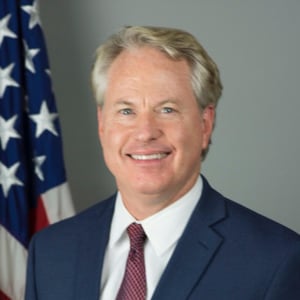
Retired Assistant United States Attorney
Steve Mellin is a recently retired federal prosecutor. He worked for the Department of Justice for over 30 years in offices all over the United States. His career focused on prosecuting violent criminals, including terrorism and death penalty homicide cases. While working in Alexandria, Virginia, Mr. Mellin was involved in the 9-11 terrorism investigations and prosecutions. While at Main Justice, he worked on numerous death penalty cases across the US, culminated his terrorism work with the successful prosecution of the Boston Marathon bomber.
Steve is a graduate of the University of Texas and George Mason University School of Law.
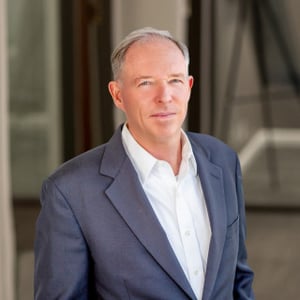
Partner, Ashcroft Law Firm
With more than 20 years government experience, Johnny Sutton has acquired expertise as a front-line trial prosecutor and a top policy advisor to a Governor and a President. Mr. Sutton runs the Austin office of the Ashcroft Law Firm which specializes in internal investigations, white-collar criminal defense and helping companies comply with federal law.
From November 2001 to April 2009, Sutton led one of the largest and busiest United States Attorney’s Offices in the nation. The Western District of Texas covers 93,000 square miles, 68 counties and 660 miles of U.S.-Mexico border. As U.S. Attorney, Mr. Sutton managed more than 300 employees, a $28 million annual budget and directed 43,000 federal prosecutions and thousands of civil cases. Under Mr. Sutton’s leadership, the office led the nation in drug convictions, was second in illegal alien prosecutions, won more than 105 public corruption convictions and sent nearly 400 violent criminal gang members to prison.
In 2003, then-United States Attorney General John Ashcroft appointed Mr. Sutton to the Attorney General’s Advisory Committee—a panel of 17 U.S. Attorneys that advise the General and help carry out the President’s national goals. Sutton served from 2003 until 2009 and was chairman for nearly two years.
After leading the Bush-Cheney Department of Justice Transition Team in 2000, Mr. Sutton was named Associate Deputy Attorney General. He held the position until becoming U.S. Attorney.
From 1995 to 2000, Mr. Sutton served as the Criminal Justice Policy Director for then-Governor George W. Bush. Mr. Sutton was the chief policy advisor to the Governor on all criminal justice issues.
From 1988 to 1995, Mr. Sutton was a prosecutor in the Harris County District Attorney’s Office (Houston, TX) where he tried more than 60 first chair felony jury trials and had only three acquittals. He also successfully tried 17 murder jury trials, including seven for capital murder.
Mr. Sutton attended the University of Texas at Austin on a baseball scholarship where he was a two year lettermen and the starting left fielder for the 1983 University of Texas National Championship baseball team. Mr. Sutton was voted the Most Valuable Player of the NCAA Central Regional Baseball Tournament in 1983. Mr. Sutton is fluent in Spanish and conversant in Portuguese.
Mr. Sutton has dedicated his career to defending the innocent and standing up for the rule of law.
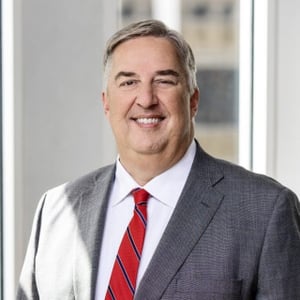
Member, Ifrah Law
After 27 years as a prosecutor, James (“Jim”) Trusty brings to Ifrah Law extensive experience in complex, multi-district white collar litigation, especially in matters involving RICO, The Computer Fraud and Abuse Act, and The Money Laundering Control Act of 1986.
Jim has represented a wide variety of individuals and corporations in the white-collar space. He regularly represents professional athletes, both criminally and civilly, and during 2022 and 2023 he represented President Trump during pre-indictment litigation relating to the Mar-a-Lago and January 6 cases.
Prior to joining Ifrah Law, Jim had a long career in public service, most recently as Chief of the Organized Crime Section at the United States Department of Justice. For seven years, Jim was ultimately responsible for investigating and prosecuting regional, national, and international cases, supervising significant pleadings, and providing strategic and tactical guidance in investigations and multi-defendant trials. In addition to running the RICO Review Unit, which reviewed and approved all criminal RICO cases brought by federal prosecutors, he also was in charge of establishing and promoting policies focused on immigration reform, firearms trafficking, proposed Congressional testimony for DOJ officials, and internet gambling. Significant and sensitive matters on which he worked include the post-conviction review of the Alaska corruption case related to U.S. v. Theodore Stevens and the investigation into allegations of misconduct by a sitting U.S. Attorney and one of her subordinates.
Prior to his work at DOJ, Jim acted as Assistant U.S. Attorney in Greenbelt, Maryland, where he investigated and prosecuted a wide variety of white-collar and other criminal cases, including The Washington area Sniper investigation. He also prosecuted three death penalty cases and was a member of the Attorney General’s Capital Review Committee, responsible for assessing capital-eligible cases such as the Boston Marathon Bomber and the Charleston Church massacre.
In 2018, Jim was appointed by the Governor of Maryland to serve on The Task Force to Study Maryland’s Criminal Gang Statutes. The Task Force assessed the efficacy of existing state laws as they apply to gang-related criminal activity in the state and presented its findings and recommendations to the Governor.

AI Innovation and Law Fellow, University of Texas School of Law
Kevin Frazier is an AI Innovation and Law Fellow with University of Texas School of Law.

Head of AI Policy, Abundance Institute
Neil Chilson is the Head of AI Policy at the Abundance Institute. Prior to this position, he served as a Senior Research Fellow at the Center for Growth and Opportunity. Chilson is a lawyer, computer scientist, and author of the book “Getting Out of Control: Emergent Leadership in a Complex World.”
Chilson was previously the senior research fellow for Technology and Innovation at Stand Together, where he guided efforts to understand and promote the legal and cultural paradigms that best enable people to discover, innovate, and improve all our lives.
Before Stand Together, Chilson was the Chief Technologist at the Federal Trade Commission, where he focused on the economics of privacy and blockchain-related issues. Previously, he was an attorney advisor to Acting FTC Chairman Maureen K. Ohlhausen. In both roles he advised Chairman Ohlhausen and worked with staff on nearly every major technology-related case, report, workshop, or other FTC proceeding since January 2014. Neil joined the FTC from telecom firm Wilkinson Barker Knauer. Neil is frequently quoted by the press and his work has appeared in numerous news outlets, including The Wall Street Journal, The Washington Post, USAToday, and Newsweek. Neil has a J.D. from The George Washington Law School, a M.S. in computer science from University of Illinois, Urbana-Champaign, and a B.S. in computer science from Harding University.
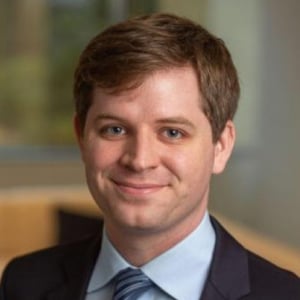
Senior Research Fellow, Institute for Law & AI
Charlie is a Senior Research Fellow on LawAI's U.S. Law and Policy team. He advises state and federal policy makers on AI governance topics and publishes research on legal questions with significant practical relevance to U.S. AI policy. His recent research examines issues including federal preemption of state AI laws, federal and state AI whistleblower protection legislation, and the likely consequences of the end of Chevron deference for the future of AI regulation. Charlie received his J.D. from Yale Law School, where he was an Editor for the Yale Journal on Regulation.
Head of AI Policy, Abundance Institute
Neil Chilson is the Head of AI Policy at the Abundance Institute. Prior to this position, he served as a Senior Research Fellow at the Center for Growth and Opportunity. Chilson is a lawyer, computer scientist, and author of the book “Getting Out of Control: Emergent Leadership in a Complex World.”
Chilson was previously the senior research fellow for Technology and Innovation at Stand Together, where he guided efforts to understand and promote the legal and cultural paradigms that best enable people to discover, innovate, and improve all our lives.
Before Stand Together, Chilson was the Chief Technologist at the Federal Trade Commission, where he focused on the economics of privacy and blockchain-related issues. Previously, he was an attorney advisor to Acting FTC Chairman Maureen K. Ohlhausen. In both roles he advised Chairman Ohlhausen and worked with staff on nearly every major technology-related case, report, workshop, or other FTC proceeding since January 2014. Neil joined the FTC from telecom firm Wilkinson Barker Knauer. Neil is frequently quoted by the press and his work has appeared in numerous news outlets, including The Wall Street Journal, The Washington Post, USAToday, and Newsweek. Neil has a J.D. from The George Washington Law School, a M.S. in computer science from University of Illinois, Urbana-Champaign, and a B.S. in computer science from Harding University.
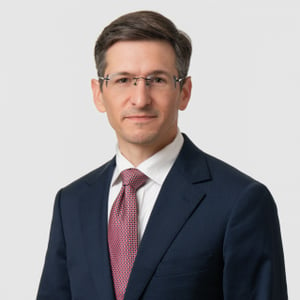
Senior Fellow, American Enterprise Institute
Zack Cooper is a senior fellow at the American Enterprise Institute, where he studies US strategy in Asia, including alliance dynamics and US-China competition. He also teaches at Princeton University, serves as chair of the board of the Open Technology Fund, and co-hosts the Net Assessment podcast.
Before joining AEI, Dr. Cooper was the senior fellow for Asian security at the Center for Strategic and International Studies. He previously worked as codirector of the Alliance for Securing Democracy and senior fellow at the German Marshall Fund of the United States and research fellow at the Center for Strategic and Budgetary Assessments. He also served on staff at the National Security Council and in the Office of the Secretary of Defense.
Dr. Cooper is the author of Tides of Fortune: The Rise and Decline of Great Militaries from Yale University Press. He has also co-authored books, reports, and articles on US strategy and alliances in Asia. His writing has appeared in academic journals and popular press, including International Security, Security Studies, Foreign Affairs, the New York Times, the Washington Post, and the Wall Street Journal, among other outlets. Dr. Cooper graduated from Princeton University with a PhD and an MA in security studies and an MPA in international relations. He received a BA in public policy from Stanford University.
AI Innovation and Law Fellow, University of Texas School of Law
Kevin Frazier is an AI Innovation and Law Fellow with University of Texas School of Law.
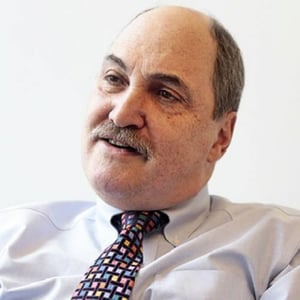
Senior Adviser (Non-resident), CSIS
James Lewis writes on technology and strategy at the Center for Strategic and International Studies (CSIS). Before joining CSIS, he was a diplomat and a member of the Senior Executive Service. Lewis has a track record of being among the first to identify new tech and security issues and devise polices to address them. He developed groundbreaking policies on cybersecurity, remote sensing, encryption, spectrum management, and high-tech exports to China, including 5G, software, and semiconductors. He also helped create the Wassenaar Arrangement. Lewis was a senior adviser for four UN Groups of Governmental Experts on Information Security, and his work on norms to build stability in cyberspace is foundational. He leads a long-running track 2 dialogue with the China Institutes of Contemporary International Relations. His current work looks at how countries innovate and at digitalization and its political, economic, and security effects. Early in his career, Lewis was a political adviser to two combatant commanders. Lewis has authored numerous publications since coming to CSIS (see the full list here). He is frequently quoted in the media, has served on several federal advisory committees, and has testified numerous times before Congress. He received his PhD from the University of Chicago.

Senior Policy Director, Americans for Responsible Innovation

President and Executive Director, Electronic Privacy Information Center
Marc Rotenberg is President and Executive Director of the Electronic Privacy Information Center (EPIC) in Washington, DC. He teaches information privacy law at Georgetown University Law Center and frequently testifies before Congress on emerging privacy and civil liberties issues. He testified before the 9-11 Commission on "Security and Liberty: Protecting Privacy, Preventing Terrorism." He has served on several national and international advisory panels, including the expert panels on Cryptography Policy and Computer Security for the OECD, the Legal Experts on Cyberspace Law for UNESCO, and the Countering Spam program of the ITU. He chairs the ABA Committee on Privacy and Information Protection. He is a founding board member and former Chair of the Public Interest Registry, which manages the .ORG domain. He is editor of "The Privacy Law Sourcebook," and co-editor of "Information Privacy Law" (Aspen Publishing 2006) and "Litigation Under the Federal Open Government Laws" (EPIC 2010). He is a graduate of Harvard College and Stanford Law School. He served as Counsel to Senator Patrick J. Leahy on the Senate Judiciary Committee after graduation from law school. He is the recipient of several awards, including the World Technology Award in Law, the American Lawyer Award for Top Lawyers Under 45, the Norbert Weiner Award for Social and Professional Responsibility, and the Vicennial medal from Georgetown University.
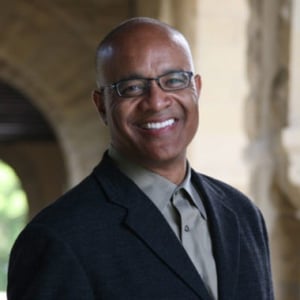
Jackson Eli Reynolds Professor of Law, Stanford Law School
Ralph Richard Banks is the Jackson Eli Reynolds Professor of Law at Stanford Law School and a professor, by courtesy, at the Stanford Graduate School of Education. He is the Founder and Faculty Director of the Stanford Center for Racial Justice, an initiative that aims to confront and counter the polarization that plagues American society through an analysis of contentious racial issues free from the orthodoxies of Left and Right.
Professor Banks is the co-author of two leading law school casebooks, Racial Justice and the Law: Cases and Materials (2016) (with co-editors Kim Forde-Mazrui, Guy Uriel Charles and Cristina Rodriguez) and Family Law in a Changing America (2nd ed. 2024) (with co-editors Douglas NeJaime, Joanna Grossman, and Suzanne Kim). He is also the author of the trade book Is Marriage for White People? How the African American Marriage Decline affects Everyone (2011; paperback 2012), described by the Los Angeles Times as a “must read,” by the New York Times as “important” and by the Wilson Quarterly (the official publication of the Woodrow Wilson International Center for Scholars) as one of the Top Ten Books of 2011. The book has been featured by a wide range of media outlets, including The Wall Street Journal, The Economist, Essence magazine, The Village Voice, Time, Newsweek/The Daily Beast, and also NPR (local and national) CNN, ABC News/Nightline, The View, and Fox News, among many others. His forthcoming book, The Big Sort: How College Can Make or Break the American Dream, will be published in 2025.
At Stanford, Professor Banks teaches Constitutional Law, Family Law and a variety of courses related to race, law and inequality. He joined the Stanford faculty in 1998 after clerking for federal judge Barrington D. Parker, serving as the Reginald F. Lewis Fellow at Harvard Law School and practicing law at the law firm O’Melveny & Myers. He graduated from Harvard Law School with honors and received Bachelor’s and Master’s degrees from Stanford University.

Partner, Consovoy McCarthy PLLC
Thomas R. McCarthy is a partner at Consovoy McCarthy Park PLLC. Mr. McCarthy assists clients with a wide array of issues in federal district and appellate courts across the country. He frequently represents clients in complex litigation involving diverse legal issues arising under the First Amendment, the Equal Protection Clause, the Commerce Clause, and other provisions of the U.S. Constitution. Mr. McCarthy also represents clients in litigation matters involving numerous federal statutes such as the Administrative Procedure Act, the Federal Arbitration Act, the Sherman Act, the Communications Act, the Voting Rights Act, and the Patent Act. He also represents clients with regulatory matters before the Federal Communications Commission, the Federal Trade Commission, and various other federal agencies.
Mr. McCarthy is a former law clerk to Judge David B. Sentelle of the United States Court of Appeals for the D.C. Circuit, and Judge Frank W. Bullock, Jr. of the United States District Court for the Middle District of North Carolina. Since 2011, McCarthy has been the co-director of the George Mason University School of Law Supreme Court Clinic. He previously taught an advanced constitutional law seminar at Mason Law.
Mr. McCarthy earned his BS from the University of Notre Dame, where he was a Notre Dame Scholar, and his JD magna cum laude from George Mason University School of Law. Mr. McCarthy is a member of the Virginia and District of Columbia bars.
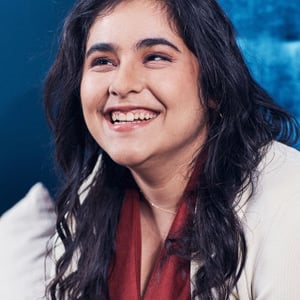
Aditi Juneja is the Executive Director of Democracy 2076, an organization founded in 2023 working long-term to change our Constitution, political culture, and political parties. She was most recently Chief of Staff at the Movement Voter Project and previously spent 4 years at Protect Democracy where she led the work of the National Task Force on Election Crises. Her writing has been featured in Vox, NPR, and Talking Points Memo. She received her J.D. from NYU Law School and a B.A. from Connecticut College
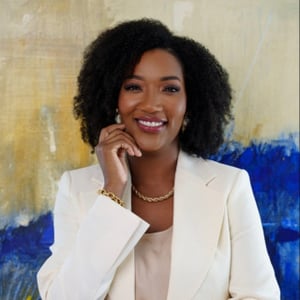
Managing Partner, AKP Management
Ayana Parsons is an award-winning leadership expert who founded and runs AKP Management LLC, a business and leadership consultancy for purpose-driven changemakers. In 2024, Ayana was named one of the 100 Most Influential African-Americans by The Root and one of 18 experts closing the racial wealth gap in America by Time Magazine.
In addition to AKP Management, Ayana is Co-Founder of the Fearless Fund, the first venture capital fund created for women of color by women of color. The fund was formed in 2019 to eradicate the racial and gender disparities that exist in venture capital.
Prior to AKP Management and Fearless Fund, Ayana co-founded Yardstick Management alongside her husband, Dr. Ebbie Parsons. Yardstick eventually became the best consulting firm in America (Inc. Magazine), providing organizational strategy support to hundreds of notable clients.
As part of her efforts to advance equity and inclusion at the highest levels, Ayana formerly led Board & CEO Inclusion at Korn Ferry. During her time as a Principal at Heidrick & Struggles, she served as a cabinet member for Stanford University’s Clayman Institute for Gender Research where she provided thought leadership on closing the gender gap in corporate boardrooms and in the executive suite. Prior to Korn Ferry and Heidrick & Struggles, Ayana served as the Global Head of Retail, Consumer Goods, and Lifestyle Industries at the World Economic Forum.
A seasoned corporate executive, Ayana’s industry career spans sales, marketing, strategy and general management roles at several of the world’s most admired companies including Philips, Pfizer, Kimberly-Clark and Procter & Gamble.
With 20+ years of experience as a venture capitalist, organizational consultant, corporate executive and entrepreneur, Ayana leverages her deep expertise in consumer markets, business strategy, general management, enterprise leadership, top team effectiveness, board effectiveness and inclusive talent management to help fuel personal and professional growth and transformation.
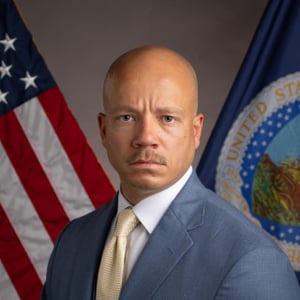
Assistant Secretary for Civil Rights, U.S. Department of Agriculture
Devon Westhill is the Assistant Secretary for Civil Rights at the U.S. Department of Agriculture. The U.S. Senate confirmed President Donald Trump’s nomination of Westhill on October 7, 2025.
Westhill returns to the USDA where he previously headed the civil rights office as Deputy Assistant Secretary in President Trump’s first term. His previous government appointments also include service at the U.S. Department of Labor, liaison to the Administrative Conference of the U.S., and liaison to the White House Initiative on Historically Black Colleges and Universities. Prior to returning to government service, Westhill was President and General Counsel of a nonprofit civil rights organization.
Westhill has testified on civil rights matters before Congress, federal agencies, and as an expert witness in federal court. He has spoken hundreds of times at college campuses, conferences, and on radio and TV programs, and he is frequently quoted in print publications, and his writing has appeared in numerous national outlets. A U.S. Navy veteran, Westhill earned his BA from the University of North Carolina at Chapel Hill and his JD from the University of Florida.
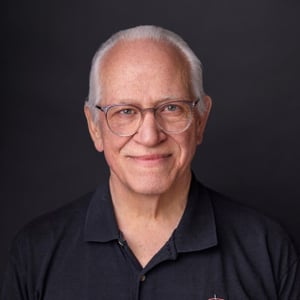
Chief Counsel, FIRE
Robert Corn-Revere joined FIRE from the law firm of Davis Wright Tremaine where he was a partner for 20 years specializing in freedom of expression and communications law. Before his time at DWT, he was a partner at Hogan & Hartson and served as legal advisor and later chief counsel to Federal Communications Commission Chairman James H. Quello.
Corn-Revere is a prominent writer, thinker, and advocate on free expression issues. In 2021, Cambridge University Press published his book, “The Mind of the Censor and the Eye of the Beholder: The First Amendment and the Censor’s Dilemma,” which explores how free expression became a part of America’s identity. He also co-authored the three-volume treatise, “Modern Communication Law,” published by West Group. In 2003, he successfully petitioned Governor George E. Pataki to grant the first posthumous pardon in New York history to the late comedian Lenny Bruce, who was convicted for “obscene” comedy routines.
Before joining FIRE full-time, Corn-Revere was a volunteer on FIRE’s Advisory Council. He also served as outside counsel for FIRE’s Stand Up For Speech Litigation Project, successfully litigating on behalf of college students and faculty whose First Amendment rights were violated.
He is regularly listed as a leading First Amendment and media law practitioner by The Best Lawyers in America, SuperLawyers Washington, D.C., and by Chambers USA. Best Lawyers in America named him as Washington, D.C.’s 2017 “Lawyer of the Year” in the areas of First Amendment Law and Litigation – First Amendment. He was again named as Best Lawyers’ “Lawyer of the Year” for First Amendment Law for 2019 and 2021, and in Media Law for 2022.
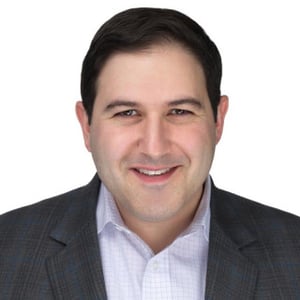
Executive Vice President/Chief Legal Officer, Sinclair Broadcast Group
David Gibber has served as Executive Vice President/Chief Legal Officer since March 2024. Prior to that, since joining Sinclair in 2011, he has served as Vice President/Deputy General Counsel, Deputy General Counsel/Director of Legal Services and Legal Counsel. Prior to joining Sinclair, he was an associate at Gordon Feinblatt, LLC in Baltimore, Maryland. Mr. Gibber received his J.D. degree from the University of Maryland School of Law, where he graduated magna cum laude, Order of the Coif. Mr. Gibber also sits on the board of directors of various charitable and community organizations.

Partner, HWG LLP
Patricia Paoletta is a partner with the law firm of HWG LLP, where she specializes in telecommunications, trade and technology policy. Ms. Paoletta provides advice on regulatory, trade and legislative policy to clients before the FCC, Congress and the Administration. Her clients include providers of content, cloud, mobile broadband, VoIP, international telecommunications, small cells, cognitive radio, public safety and homeland security solutions. She serves on Advisory Boards for several entities engaged in information services, communications and technology.
Ms. Paoletta has accrued considerable experience with telecommunications trade and policy in the public sector. From 1990 to 1995, she was senior advisor to the International Bureau Chief and Office Director at the Federal Communications Commission. In the mid 1990s, Ms. Paoletta served as Director of Telecommunications Trade Policy in the Office of the U.S. Trade Representative, Executive Office of the President, where she worked on the WTO Information Technology Agreement (ITA) and the Basic Telecommunications Agreement. After USTR, Ms. Paoletta served as Majority Counsel to the House Energy and Commerce Committee. She then moved to Level 3 Communications, as Vice President, Government Relations.
Ms. Paoletta is on the Steering Committee of the Transatlantic Roundtable on Telecommunications and Information Technology of the European Institute. She is a member of the USTR Alumni Association, Washington International Trade Association, the Federal Communications Bar Association (FCBA), and Women in Technology. Ms. Paoletta has served on the Board of Advisors for the Inter-American Dialogue's Latin America Telecom Advisor, Co-Chairman of the American Bar Association International Communications Committee, and as a member of the U.S. Chamber of Commerce's Technology Policy Committee.
Ms. Paoletta served as a delegate in 2012 to the ITU-R's Study Group 6 Working Party 6A Meeting and in 2009 and 2010 to the ITU-R's Study Group I Working Party IB Meetings; the 2009 meetings of CITEL (the Committee on International Telecommunications at the Organization of American States) PCC-II; the International Telecommunication Union (ITU) World Telecommunications Standards Assembly (2000); the ITU Internet Protocol Telephony Experts Group and the ITU World Telecommunications Policy Forum in 2001; as Chairman of the National Reliability and Interoperability Council (NRIC) Steering Committee (2000-2001); as Board Member for the Voice on the Net Coalition (2001); as Co-Chairman of the FCBA's Annual Seminar Committee (2009-2011); as a member of the FCBA's Ad Hoc Speakers Committee (2006-2007); as Co-Chairman for the FCBA International Practice Committee (2001-2002 and 2005-2006); and as a Co-Chairman of the FCBA Legislative Practice Committee (1999-2000).
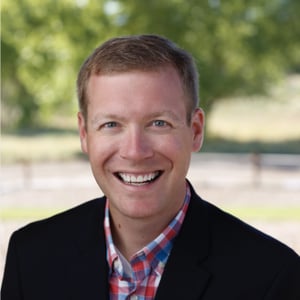
President, Center for American Rights
Daniel Suhr serves as president of the Center for American Rights, where he spends every day on the front lines of the fight to preserve our rights and liberties. The Center's mission is to advance free speech, free enterprise, and parental freedom in education through strategic, precedent-setting litigation.
Daniel formerly worked as policy director for Wisconsin Governor Scott Walker, as chief of staff for Wisconsin Lieutenant Governor Rebecca Kleefisch, and as a law clerk for Judge Diane Sykes of the U.S. Court of Appeals for the Seventh Circuit. He holds a B.A. and J.D. from Marquette University, and master’s degrees from Georgetown and the University of Missouri.
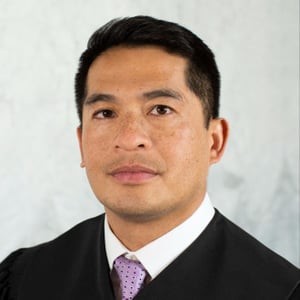
Judge, United States Court of Appeals, Ninth Circuit
Patrick J. Bumatay was confirmed as a U.S. Circuit Judge for the U.S. Court of Appeals for the Ninth Circuit in December 2019. He is based in San Diego, California.
Prior to his appointment, Judge Bumatay served as an Assistant United States Attorney in the U.S. Attorney’s Office for the Southern District of California, where he was a member of the Appellate and Narcotics Sections. He also served as a Counselor to the Attorney General on criminal law issues, including on national opioid strategy and combating transnational organized crime.
Judge Bumatay has also worked in the Office of the Deputy Attorney General, the Office of the Associate Attorney General, and the Office of Legal Policy at the U.S. Department of Justice. Judge Bumatay has twice received the Attorney General’s Distinguished Service Award.
Judge Bumatay previously worked as an associate at Morvillo, Abramowitz, Grand, Iason, and Bohrer in New York, New York. Judge Bumatay clerked for the Honorable Timothy M. Tymkovich of the U.S. Court of Appeals for the Tenth Circuit and the Honorable Sandra L. Townes of the U.S. District Court for the Eastern District of New York. Judge Bumatay earned his B.A., cum laude, from Yale University and his J.D. from Harvard Law School.

Dean, Widener University Commonwealth Law School
André Douglas Pond Cummings is the incoming Dean of Widener University Commonwealth Law School. Dean cummings currently serves as associate dean for faculty development and the Charles C. Baum distinguished professor of law at the University of Arkansas at Little Rock’s William H. Bowen School of Law. During his time at the Bowen School of Law, cummings served for five years on the university Diversity Counsel and three years on the chancellor’s race and ethnicity advisory committee. Prior to joining the Bowen School of Law, cummings taught at the West Virginia University College of Law and clerked for Associate Chief Justice Christine M. Durham of the Utah Supreme Court and Chief Judge Joseph W. Hatchett of the United States Court of Appeals for the Eleventh Circuit. Dean cummings is a graduate of Brigham Young University and Howard University School of Law.
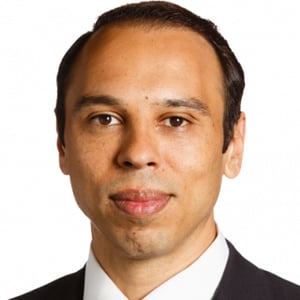
Vice President of Domestic and Economic Policy, The Heritage Foundation
Roger Severino is Vice President of Economic and Domestic Policy, and the Joseph C. and Elizabeth A. Anderlik Fellow at The Heritage Foundation.
Severino is a national authority on civil rights, conscience and religious freedom, the administrative state, and information privacy, particularly as applied to health care law and policy. Find his tweets at @RogerSeverino_.
Severino spearheaded the HHS Accountability Project while a Senior Fellow at EPPC from 2021 to 2023. Previously, Severino was Director of HHS’ Office for Civil Rights, where he led a team of over 250 staff enforcing our nation’s civil rights, conscience and religious freedom, and health information privacy laws. He served from 2017 to 2021 and was the longest-serving OCR director of the past three decades.
Prior to joining HHS, Severino served for two years as Director of the DeVos Center for Religion and Civil Society at Heritage, advocating for life, family, and religious-freedom policies. Before that, he was a trial attorney for seven years at the U.S. Department of Justice’s Civil Rights Division where he enforced the Fair Housing Act and the Civil Rights Act of 1964. Severino started his legal career at the Becket Fund for Religious Liberty, where he was Legal Counsel and Chief Operations Officer and defended the rights of people of all faiths under federal and international law.
Severino has been profiled in The New York Times, The Atlantic, The Wall Street Journal, and The Hill and has appeared on Fox News, CNN, MSNBC, NPR, and PBS, among others. In 2020, The New York Times dubbed him and his wife Carrie, “a conservative power couple” to be reckoned with.
Severino holds a JD from Harvard Law School, a master’s degree in public policy, with highest distinction, from Carnegie Mellon University, and a bachelor’s degree in business from the University of Southern California. He was appointed by President Trump to the Administrative Conference of the United States and is a member of the District of Columbia and the Commonwealth of Virginia bars.
As OCR director, Severino founded the federal government’s first division dedicated exclusively to conscience and religious freedom compliance and enforcement. He enforced the Weldon Amendment for the first time against a state (California) after it coerced families and religious organizations into paying for abortion insurance coverage, leading to a $200 million federal funding disallowance. He also enforced laws protecting pro-life pregnancy resource centers from discrimination by states hostile to their message and enforced laws prohibiting forced participation in abortions by medical professionals.
With respect to civil rights, Severino protected older persons and people with disabilities from being denied life-saving care due to discriminatory “quality of life” judgments, especially during the COVID-19 pandemic. He also achieved a landmark sexual harassment resolution with Michigan State University in the wake of the Larry Nassar sexual assault scandal and protected the rights of non-English speakers to have equal access to health and human services.
In the area of health privacy, he secured the largest HIPAA monetary settlement in history and achieved the largest number of enforcement resolutions both in a single year and across four years. He also facilitated the transformational use of Skype, Zoom, and Facetime for delivery of telehealth during the COVID-19 pandemic and beyond.
His regulatory reform activities resulted in a comprehensive conscience protection regulation and proposed a life-affirming disability rights regulation. He achieved regulatory savings of $3.6 billion in health care industry costs over five years and identified and proposed an additional $3.2 billion in cost savings from the repeal of ineffective and unnecessary regulatory burdens.
Severino is a Spanish speaker who teaches salsa and west coast swing in his spare time.
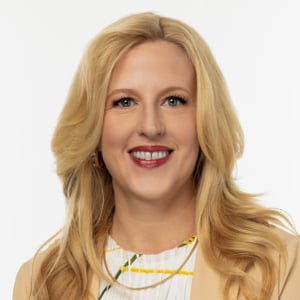
General Counsel, Saronic Technologies
Tobi Young is the General Counsel of Saronic Technologies. Her responsibilities include managing global legal affairs, regulatory compliance, litigation, risk management, and government security, and corporate governance.
Tobi brings over 20 years of experience with sophisticated legal, regulatory, and compliance issues through leadership roles in all three branches of the federal government and in Fortune 500 companies. Among other governmental positions, she has been an attorney in the U.S. Department of Justice and in the Office of the White House Counsel; a law clerk to U.S. Supreme Court Justice Neil M. Gorsuch; and a press secretary for Congressman J.C. Watts. Tobi also currently serves as the Chair of the Nominating and Governance Committee on the Halliburton Board of Directors (NYSE: HAL).
Tobi grew up in Oklahoma and is a proud member of the Chickasaw Nation. She recently became the youngest inductee into the Chickasaw Hall of Fame. Tobi now lives in Austin with her husband Evan, a Justice on the Texas Supreme Court, and their daughter Romilly.

Professor of Law, Northwestern University Pritzker School of Law
Joshua Kleinfeld teaches and writes about political, legal, and moral philosophy, criminal law, and criminal procedure. He also practices law in Northwestern's Juvenile Criminal Defense Clinic. He is a full professor with tenure at the Northwestern Pritzker School of the Law and (by courtesy) in Northwestern’s philosophy department. In 2017-18, he was a visiting professor at Harvard and Stanford Law Schools. He is the recipient of the Bator Award, given annually to one American law professor under the age of 40 who has demonstrated "excellence in legal scholarship, a commitment to teaching, a concern for students, and who has made a significant public impact."
In philosophy, Kleinfeld's research focuses on the idea of "embodied ethical life," as developed in the socio-theoretic tradition of Hegel, Weber, and Durkheim. This tradition aims to understand and critique social life by bringing to light the normative ideas implicit in social practices and institutions. In law, this means that the most interesting philosophical concepts are often those reflected or actualized in legal practice – in the law as judges and lawyers think of it and wield it.
In criminal law and procedure, Kleinfeld has developed a theory known as "reconstructivism," which holds that the chief office of criminal law is not to dole out retributive justice, nor to optimize crime and cost control, but to reconstruct a violated normative order in the wake of a crime. This work, which draws on the thought of Hegel, Durkheim, Jean Hampton, and Antony Duff, develops an alternative to retributive and utilitarian theories of criminal law by focusing on the distinctive social function and sense of justice at work in the criminal system.
Kleinfeld is also involved in practical criminal justice reform. In this vein, he defends children accused of homicide in the Northwestern Juvenile Criminal Defense clinic and assists in litigation efforts meant to reform American criminal law through the courts. He has also developed a view of criminal justice reform known as "democratization," which holds that the root of the American criminal justice crisis is a set of bureaucratic attitudes, structures, and incentives divorced from the American public’s concerns and sense of justice, and that the primary solution is to make criminal justice more community-focused and responsive to lay influences. Working with others, he has developed a number of policy proposals meant to reform American criminal justice in a democratic direction.
Kleinfeld holds a JD from Yale Law School, a PhD in philosophy from the Goethe University of Frankfurt (supervised by Axel Honneth, Klaus Günther, and Rainer Forst), and a BA in philosophy from Yale College. He clerked for Judge J. Harvie Wilkinson on the United States Court of Appeals for the Fourth Circuit; Judge Janice Rogers Brown on the United States Court of Appeals for the D.C. Circuit; and President (chief justice) Aharon Barak of the Supreme Court of Israel. He worked as an Associate at Debevoise & Plimpton LLP in Frankfurt, Germany, in the area of corporate criminal law. Before law school, he worked as a Senior Research Analyst at the White House’s Council on Bioethics.

John S. Battle Professor of Law, University of Virginia School of Law
Julia D. Mahoney teaches courses in property, government finance, constitutional law and nonprofit organizations. A graduate of Yale Law School, she joined the University of Virginia faculty as an associate professor in 1999 and is now John S. Battle Professor of Law. She has also taught at the University of Southern California Law School and the University of Chicago Law School, and before entering the legal academy, practiced law at the New York firm Wachtell, Lipton, Rosen & Katz. Her scholarly articles include works on land preservation, eminent domain, health care reform and property rights in human biological materials.
Eric Criss is an independent scholar who recently published The Boss of New Orleans: Martin Behrman and Machine Politics in the Crescent City with the LSU Press. He taught advanced public policy at Florida State University, where he earned his PhD in history. Eric earned his MA in Government at John's Hopkins University and BA in Political Science at the University of Florida. Eric began his career with U.S. Senators Don Nickles of Oklahoma and Phil Gramm of Texas at the National Republican Senatorial Committee in Washington, D.C. He later served as staff member or consultant to Fortune 500 corporations, political parties, and presidential, congressional, and gubernatorial campaigns.

Emerging Issues in Federal Death Penalty Litigation
David Bruck, Steve Mellin, Johnny Sutton, James Trusty
Recent federal prosecutions have renewed attention on the administration and future of the federal death...
Tech Roundup Episode 29 - An AI Roundup of 2025 and What Lies Ahead for 2026
Kevin Frazier, Neil Chilson, Charlie Bullock
Join tech and legal experts Prof. Kevin Frazier (University of Texas School of Law), Neil...
Panel IV: AI, Information Warfare, and the Battle for Truth
Neil Chilson, Zack Cooper, Kevin Frazier, James Andrew Lewis, Morgan C. Plummer, Marc Rotenberg
Featuring: Dr. Zack Cooper, Senior Fellow, American Enterprise Institute Prof. Kevin Frazier, AI Innovation & Law...
The Future of DEI: The Case of the Fearless Fund
Ralph Richard Banks, Thomas R. McCarthy, Aditi Juneja, Ayana Parsons, Devon Westhill
In March 2025, President Trump issued an Executive Order scaling back federal DEI initiatives, signaling...
Disinformation in Broadcasting and the Public Interest Standard
Robert Corn-Revere, David Gibber, Patricia J. Paoletta, Daniel Suhr
The Communications Act of 1934 requires that licensees operate consistent with the “public interest convenience...
Litigation Practice Group: Diversity and Modern Litigation
Patrick J. Bumatay, andré douglas pond cummings, Roger Severino, Tobi Young
CLE credit for this event is available at On-Demand CLE. In recent years, the legal profession...
Topics
The Judiciary Is Not Just Another Political Branch
There has been a relentless campaign on the Left to politicize—and therefore delegitimize—the Supreme Court...
Open Minds with Prof. Julia Mahoney and Prof. Joshua Kleinfeld - Part II
Joshua Kleinfeld, Julia D. Mahoney
In Part 2, Professor Julia Mahoney joins Professor Joshua Kleinfeld to discuss freedom of thought...
Integrity or Interference?: Evaluating the Constitutionality of Georgia's Election Integrity Act
Eric Criss
Recent political earthquakes such as the assassination attempt against former president Donald Trump and President...
Topics
The Invisible American Founding
Five years ago, the 1619 Project opened a new battle over how our children learn...