
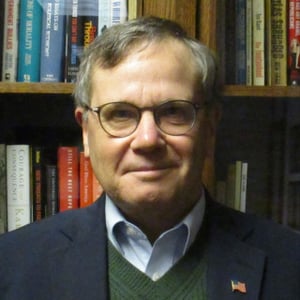
Senior Fellow in Constitutional Jurisprudence, Independence Institute
Professor Robert G. Natelson is a constitutional scholar and author.
Rob’s constitutional scholarship has been cited repeatedly by justices and parties at the U.S. Supreme Court—as well as by federal appeals courts, and at least 18 state supreme courts.
Rob’s research into the Constitution’s original meaning has carried him to libraries throughout the United States and in Britain, including four months at Oxford University. His books and articles span many different parts of the Constitution, including groundbreaking studies of the Necessary and Proper Clause, the Indian Commerce Clause, federalism, Founding-Era interpretation, regulation of elections, and the amendment process of Article V. He created the first-ever online bibliography for 18th century materials used in constitutional research. He is a contributing author to the Encyclopedia of the Supreme Court of the United States (on Magna Carta). He contributed eight essays to the third edition of the Heritage Guide to the Constitution: five on the amendment procedure and one each on the Guarantee Clause, the Postal Clause, and the Recess Appointments Clause.
U.S. Supreme Court justices have relied explicitly on Rob’s research in 41 citations in 13 separate cases.
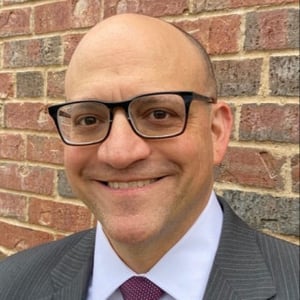
Executive Director & Secretary, American Civil Rights Project
Dan Morenoff is the executive director at the American Civil Rights Project and an adjunct fellow at the Manhattan Institute.
His work focuses on protecting and, where necessary, restoring the primacy of all Americans' shared civil rights against the identitarian alternative.
Before practicing law, Morenoff served on the legislative staff of Sen. Phil Gramm (R-TX). Morenoff holds a B.A. from Columbia College of Columbia University in the City of New York and a J.D. from the University of Chicago Law School. He has also served as an officer or director of several community organizations in Dallas, Texas.

Of Counsel, Spencer Fane LLP
Anthony J. “A.J.” Ferate has built a multi-faceted background in the areas of the law, policy, energy, campaigns and elections, and defense over the last 20 years.
Through recent representation as Vice President of Regulatory Affairs for the Oklahoma Independent Petroleum Association (“OIPA”), A.J. held responsibilities over government efforts outside of the legislative branch on matters as broad as water, electric generation, commodity marketing, land matters, and seismicity. A.J. also maintained responsibility for legal matters at OIPA, including amicus briefing in appellate matters. A.J.’s extensive experience also includes management of public policy strategy for a Fortune 500 company.
For the past eleven years, A.J. has volunteered as General Counsel and spokesman for the Oklahoma Republican Party and has represented a number of elected officials, including U.S. Senator James Lankford, former statewide elected officials, a number of state legislators, and members of Congress.
Additionally, A.J. has assisted elected officials serve their constituents in all branches of government. Early in his career, A.J. held legislative aide duties in the Nebraska Legislature, then went on to work for former Nebraska Treasurer David Heineman. A.J. gained experience in the judiciary while serving Judge Gary L. Lumpkin at the Oklahoma Court of Criminal Appeals, the highest criminal appellate court in Oklahoma. Following this service, A.J. began work with Denise A. Bode of the Oklahoma Corporation Commission, assisting her in her duties regulating 70 percent of Oklahoma’s economy, including oil and gas and electric utilities.
A.J. honorably served ten years as an intelligence analyst for the United States Naval Reserve, including time at the Office of Naval Intelligence in the greater Washington DC area.
Opinion pieces authored or ghostwritten by A.J. have been published in the Seattle Times, Politico, Law360, The Oklahoman, Tulsa World and The Journal Record. A.J. has also been interviewed by national and international newspapers, and has also appeared on national radio programs including NPR’s The Diane Rehm Show and On Point with Tom Ashbrook.
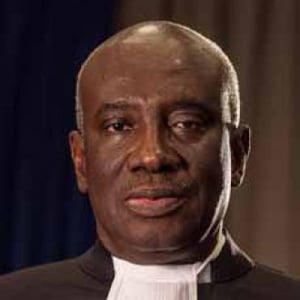
Chief Justice of The Gambia
Hassan Bubacar Jallow was sworn-in as the Chief Justice of The Gambia on 15 February 2017, Jallow after his appointment by newly-elected President of The Gambia, Adama Barrow. He is also the former Chief Prosecutor of the International Criminal Tribunal for Rwanda (ICTR) (2013-2015), the former Prosecutor of the United Nations Mechanism for International Criminal Tribunals (MICT) and Under Secretary-General of the United Nations (2012-2016).
He studied law in Tanzania, Nigeria and Great Britain and previously worked as Attorney General and Minister of Justice in The Gambia (1984-1994) and as Justice of the Gambian Supreme Court (1998-2002), Judge of the Appeals Chamber, UN Special Court for Sierra Leone (2002), Judge Ad Litem of the International Criminal Tribunal for the former Yugoslavia (2001), and Judge of the Commonwealth Arbitral Tribunal.
He has served the UN, the Organisation of African Unity, the African Union and Commonwealth as a Legal Consultant on various matters, including governance, human rights, public law, international law and international criminal justice. He has published various books and papers on his subject of expertise and is the author of Journey for Justice (2012). He was made Commander of the National Order of the Republic of The Gambia (CRG) in 1985.
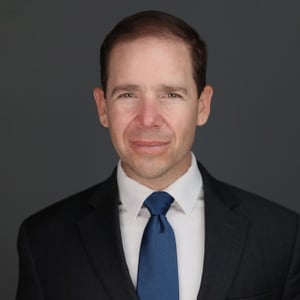
Founder and CEO, Lexpat Global Services
Adam Pearlman is the Founder and Chief Executive Officer of Lexpat Global Services. He is a National Security Law expert and a proven senior leader with experience across the U.S. Departments of Justice, Defense, and State, in the White House, and with the U.S. Federal Judiciary.
Before founding Lexpat, Mr. Pearlman served as the Senior Advisor for Legal Policy in the State Department’s Bureau of Counterterrorism. There, he counseled senior officials on matters covering the entire spectrum of programs and operations to counter terrorism and violent extremism. While participating in sensitive diplomatic engagements and helping to coordinate military operations, he also advised in the development of sanctions policy and initiatives to build legal and operational capacity in partner nations. Mr. Pearlman also managed the Bureau’s participation in federal litigation and led U.S. delegations in multilateral forums concerning criminal justice and rule of law. Separately, Mr. Pearlman supported the State Department’s Bureau of International Narcotics and Law Enforcement Affairs (INL) as the contracted Senior Justice and Rule of Law Advisor in Cabo Verde, Africa. There he was the chief implementer of a Foreign Assistance program that grew eight-fold during his tenure, building host nation capacity across the law enforcement, justice sector, rule of law, anti-money laundering, and corrections disciplines.
A former Associate Deputy General Counsel of the Department of Defense, Mr. Pearlman was agency counsel for complex civil and criminal national security matters in federal and military courts. He also led the Supreme Court and appellate unit of the team dedicated to litigating classified counterterrorism cases. His earlier service in the Department of Justice spanned four litigating divisions and the Office of the Deputy Attorney General. His diverse experience included reviewing complex international transactions and mergers, and advising on immigration removal proceedings, human rights abuses, and terrorist financing investigations. Mr. Pearlman also served with distinction in Iraq as an early advisor to the Iraqi High Tribunal’s prosecution of Saddam Hussein. He was a law clerk for The Honorable Royce C. Lamberth of the U.S. District Court for the District of Columbia, and during law school interned in the White House Counsel’s Office.
Mr. Pearlman is a Senior Fellow at the National Security Institute at George Mason University’s Antonin Scalia Law School, a member of the American Bar Association’s Advisory Committee on Law and National Security, and the Editor-in-Chief of the U.S. Intelligence Community Law Sourcebook. Previously, he has been a Term Member of the Council on Foreign Relations, National Security Fellow at the Foundation for Defense of Democracies, member of the ABA’s Africa Law Initiative Council and of the Center for Strategic & International Studies’ (CSIS) Project on Nuclear Issues, vice chairman of the ABA Section of International Law’s committees on national security, and aerospace and defense, and a liaison to the Board of Directors of the ABA’s Rule of Law Initiative. He has published articles in the Harvard National Security Journal, Stanford Law & Policy Review, Intelligence & National Security, The Foreign Service Journal, Lawfare, and many other outlets.
Mr. Pearlman earned his B.A., with honors, from UCLA, and his J.D., with honors, from The George Washington University Law School, where he was a member of the International Law Review. He also earned a Master of Science of Strategic Intelligence degree from the National Intelligence University, where he was the inaugural recipient of the Kornblum Award for national security law and ethics. Mr. Pearlman is a Certified Financial Crime Specialist and holds certificates in international human rights law from the University of Oxford and in anti-corruption law from American University’s Washington College of Law. He is admitted to the State Bars of California and Virginia, as well as to the Bar of the United States Supreme Court. He speaks and reads Portuguese at the intermediate level.
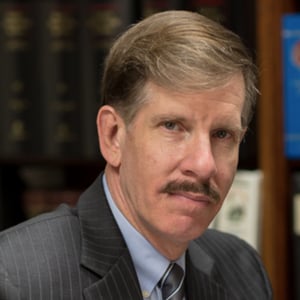
Director, Human Rights Enforcement Policy and Strategy, Human Rights and Special Prosecutions Section, U.S. Department of Justice
Eli Rosenbaum is the longest-serving prosecutor and investigator of Nazi criminals and other perpetrators of human rights violations in world history, having worked on these cases at the U.S. Department of Justice for more than thirty years. A graduate of the Wharton School of the University of Pennsylvania (B.S. and MBA, Finance) and of the Harvard Law School, he served from 1994 to 2010 as Director of the Justice Department's Office of Special Investigations (OSI), where he had previously served as a trial attorney and then as Deputy Director. OSI was created by Attorney General order to investigate and prosecute WWII-era Nazi criminals and, following the December 2004 expansion of its mission by the Intelligence Reform and Terrorism Prevention Act of 2004, also investigated and prosecuted criminal and civil cases involving participants in post-World War II crimes of genocide, extrajudicial killing and torture committed abroad under color of foreign law. Under his leadership, OSI also performed crucial work for the federal government’s inter-agency efforts to trace gold, artwork and other assets looted by the Nazis from Holocaust victims and also to locate, declassify and disclose millions of pages of documents under the Nazi War Crimes Disclosure Act of 1998. Rosenbaum has also worked as a corporate litigator in Manhattan with the law firm of Simpson Thacher & Bartlett, and as General Counsel of the World Jewish Congress, where he directed the investigation that resulted in the worldwide exposure of the Nazi past of former United Nations Secretary General Kurt Waldheim.
In March 2010, OSI was merged with another Criminal Division section to form the Human Rights and Special Prosecutions Section (HRSP), and Rosenbaum was named Director of Human Rights Enforcement Strategy and Policy in the new unit. In that position, he remains in charge of the Justice Department’s continuing enforcement efforts in the World War II Nazi cases and he also directs the development of the new section’s strategic and policy initiatives in the “modern” (i.e., post-WWII) human rights cases. Under Mr. Rosenbaum's leadership, OSI won major awards from Jewish organizations and Holocaust survivor groups, and it has been called “the most successful government Nazi-hunting organization on earth” (ABC News, 3/25/95) and “the world's most aggressive and effective Nazi-hunting operation” (The Washington Post, 8/27/95), possessing “a tremendous success record, [having] uncovered and won more cases than any other Nazi-hunting operation in the world” (USA Today, 1/29/97). In 2014, the Simon Wiesenthal Center again gave the U.S. Justice Department it’s “A” rating, which it reserves for “highly successful proactive prosecution programs.” The United States is the only country in the world to have earned the Center’s “A” rating in each year since the annual ratings were first issued (2001). In November 2008, Rosenbaum received the Assistant Attorney General’s first-ever Award for Human Rights Law Enforcement. He has also received the Assistant Attorney General’s Award for Special Initiative (2008), the Anti-Defamation League’s “Heroes in Blue” award (2000), the Virginia Law Foundation’s Rule of Law Award (2008), and in the Florida Holocaust Museum’s annual Loebenberg Humanitarian Award (2015). In 1997, he was selected by the faculty of the University of Pennsylvania Law School to be the recipient of the school's Honorary Fellowship Award, presented during commencement ceremonies to one attorney "who has distinguished himself or herself in commitment to public service" by "making significant contributions to the ends of justice at the cost of great personal risk and sacrifice."
Rosenbaum’s published works include Betrayal: The Untold Story of the Kurt Waldheim Investigation and Cover-Up (St. Martin's Press), which was selected for "Notable Books of 1993" by The New York Times Book Review and "Best Books of 1993" by The San Francisco Chronicle.
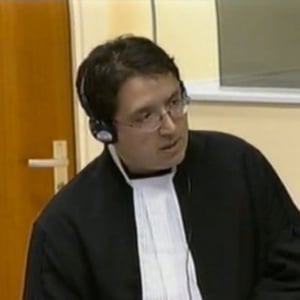
Former war crimes prosecutor for the International Criminal Tribunal for the Former Yugoslavia and ICTR
Arthur Traldi is a litigator and provides consulting services on legal capacity-building, rule of law, investigations and litigation to public and private sector clients. He has extensive experience in international justice and rule of law issues, including the investigation, litigation and adjudication of crimes against humanity, war crimes, and genocide.
Most prominently, Arthur served as a prosecutor at the International Criminal Tribunal for the former Yugoslavia from 2010 to 2017. Among his other responsibilities, he led the component of the Ratko Mladic prosecution related to mass ethnic cleansing in Bosnia and Herzegovina in 1992 and secured convictions for mass murder, persecution, and other crimes - as well as serving on the trial and appeal teams in the case against Vojislav Seselj and advising the teams conducting the cases against Radovan Karadzic, Jovica Stanisic and Franko Simatovic. His work, along with the work of other senior attorneys on the Mladic case, was featured in the documentary The trial of Ratko Mladic. His work has also been featured in Diplomatic Courier, The Pittsburgh Tribune-Review, The Comparative Jurist, William and Mary Law News, Georgetown Law News, Bota Sot, and Where Genius Grows.
Arthur has served on teams making submissions to the International Criminal Court, United States Supreme Court, and other courts in the US and abroad. He has also served in Chambers at the International Criminal Tribunal for Rwanda; led workshops for staff in the War Crimes Department of the Prosecutor's Office of Bosnia and Herzegovina and the Attorney General's Office of Ethiopia; served as an election observer in Arizona, Pennsylvania, Virginia, Albania, Azerbaijan, Georgia and Ukraine; served as a consultant for the OSCE mission to Bosnia and Herzegovina, working to analyze and improve the functioning of the War Crimes Department of the Bosnian prosecutor's office; provided technical legal assistance to the American Bar Association's Centre for Human Rights; and served as a senior adviser to candidates for city, county, state and federal elected office in the United States. He has twice served as an elected member of the Northampton County (Pennsylvania) Democratic Committee.
Arthur received his J.D. from Georgetown University Law Center and his undergraduate degree from the College of William and Mary. He is a member of the American Bar Association, the International Association of Prosecutors, the International Network to Promote the Rule of Law, and the Truman National Security Project and certified to practice law before the state courts of Pennsylvania, the Kosovo Specialist Chambers, and the United States Supreme Court. He serves as a Co-Chair of the American Bar Association's International Criminal Law Committee and as a member of the Kosovo Specialist Chambers Independent Representative Body of Counsel's Executive Committee. He has taught three continuing legal education classes on the investigation and prosecution of mass atrocities and regularly speaks and gives trainings on international law. He has spoken to audiences in Austria, Bosnia and Herzegovina, Ethiopia, Germany, Hungary, Israel, Jordan, Kosovo, Malta, South Africa, the United Kingdom, and the United States.
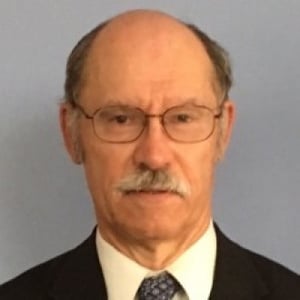
Professorial Lecturer in Law, George Washington University Law School
Theodore C. (Ted) Hirt was an attorney in the Department of Justice's Civil Division from August 1979 to March 2016. He was in its Federal Programs Branch from 1979 to 2008 (trial attorney, senior trial counsel, assistant director), and then in its Office of Immigration Litigation from 2008 to 2016 (trial attorney and senior litigation counsel). Among his responsibilities (September 2001 to March 2016) was being an advisor to the Assistant Attorneys General for the Civil Division, who serve ex officio on the Civil Rules Advisory Committee. Mr. Hirt’s areas of specialization include First Amendment issues, internet and telecommunications law, and electronic discovery. From 1976 to 1979, he was an associate at Fried, Frank, Harris, Shriver & Kampelman. From 1975 to 1976 he was an attorney in the Prehearing Division of the Michigan Court of Appeals.

Milton R. Underwood Chair in Free Enterprise, Vanderbilt University Law School
Brian Fitzpatrick is the Milton R. Underwood Chair in Free Enterprise and Professor of Law at Vanderbilt Law School, where his research focuses on class action litigation, federal courts, judicial selection, and constitutional law. He is best known for his empirical studies of class action settlements as well as his book The Conservative Case for Class Actions (University of Chicago Press, 2019). Professor Fitzpatrick joined Vanderbilt's law faculty in 2007 after serving as the John M. Olin Fellow at New York University School of Law. He graduated first in his class from Harvard Law School and went on to clerk for Judge Diarmuid O'Scannlain on the U.S. Court of Appeals for the Ninth Circuit and Justice Antonin Scalia on the U.S. Supreme Court. After his clerkships, Professor Fitzpatrick practiced commercial and appellate litigation for several years at Sidley Austin in Washington, D.C., and served as Special Counsel for Supreme Court Nominations to U.S. Senator John Cornyn. Before earning his law degree, Fitzpatrick graduated summa cum laude with a bachelor's of science in chemical engineering from the University of Notre Dame. He has received the Hall-Hartman Outstanding Professor Award, which recognizes excellence in classroom teaching, for his Civil Procedure and Federal Courts courses.

Assistant Professor in the Communication, Culture & Technology Program, Georgetown University
Prof. Meg Leta (previously Ambrose) Jones is an Assistant Professor in the Communication, Culture & Technology program at Georgetown University where she researches rules and technological change with a focus on privacy, data protection, and automation in information and communication technologies. She is also an affiliate faculty member of the Science, Technology, and International Affairs program in Georgetown's School of Foreign Service, the Center for Privacy & Technology at Georgetown Law Center, and the Brussels Privacy Hub at Vrije Universiteit Brussel. Dr. Jones's research interests cover issues including comparative information and communication technology law, engineering and information ethics, critical information and data studies, robotics law and policy, and the legal history of technology. She engages with interdisciplinary fields like cyberlaw, science and technology studies, and communication and information policy using comparative, interpretive, legal, and historical methods. Ctrl+Z: The Right to be Forgotten, her first book, is about the social, legal, and technical issues surrounding digital oblivion. Advised by Paul Ohm, Dr. Jones earned a Ph.D. in Technology, Media & Society from the University of Colorado, Engineering and Applied Science (ATLAS). Prior to pursuing a Ph.D., she earned a J.D. from the University of Illinois College of Law in 2008, where she focused on technology and information issues. She has held fellowships and research positions with the NSF funded eCSite project in the University of Colorado Department of Computer Science, the Silicon Flatirons Center at the University of Colorado School of Law, the Harvard Berkman Center for Internet & Society, and CableLabs. Since 2013, Dr. Jones has been teaching and researching in Washington, DC at Georgetown University.

Professor of Law and Journalism, University of Florida
Professor Jane Bambauer is the Brechner Eminent Scholar at the Levin College of Law and at the College of Journalism and Communications. She teaches Torts, First Amendment, Media Law, Criminal Procedure, and Privacy Law.
Professor Bambauer’s research assesses the social costs and benefits of Big Data, AI, and predictive algorithms. Her work analyzes how the regulation of these new information technologies will affect free speech, privacy, law enforcement, health and safety, competitive markets, and government accountability. Professor Bambauer’s research has been featured in over 20 scholarly publications, including the Stanford Law Review, the Michigan Law Review, the California Law Review, and the Journal of Empirical Legal Studies. Her work has also been featured in media outlets, including the Washington Post, the New York Times, Fox News, and Lawfare, where she is a contributing editor.
Professor Bambauer currently serves as the Chair of the National AI Advisory Committee Subcommittee on Law Enforcement, and she has previously served as the deputy director of the Center for Quantum Networks, a multi-institutional engineering research center funded by the National Science Foundation. She holds a B.S. in Mathematics from Yale College and a J.D. from Yale Law School.
Milton R. Underwood Chair in Free Enterprise, Vanderbilt University Law School
Brian Fitzpatrick is the Milton R. Underwood Chair in Free Enterprise and Professor of Law at Vanderbilt Law School, where his research focuses on class action litigation, federal courts, judicial selection, and constitutional law. He is best known for his empirical studies of class action settlements as well as his book The Conservative Case for Class Actions (University of Chicago Press, 2019). Professor Fitzpatrick joined Vanderbilt's law faculty in 2007 after serving as the John M. Olin Fellow at New York University School of Law. He graduated first in his class from Harvard Law School and went on to clerk for Judge Diarmuid O'Scannlain on the U.S. Court of Appeals for the Ninth Circuit and Justice Antonin Scalia on the U.S. Supreme Court. After his clerkships, Professor Fitzpatrick practiced commercial and appellate litigation for several years at Sidley Austin in Washington, D.C., and served as Special Counsel for Supreme Court Nominations to U.S. Senator John Cornyn. Before earning his law degree, Fitzpatrick graduated summa cum laude with a bachelor's of science in chemical engineering from the University of Notre Dame. He has received the Hall-Hartman Outstanding Professor Award, which recognizes excellence in classroom teaching, for his Civil Procedure and Federal Courts courses.
Professor of Law and Journalism, University of Florida
Professor Jane Bambauer is the Brechner Eminent Scholar at the Levin College of Law and at the College of Journalism and Communications. She teaches Torts, First Amendment, Media Law, Criminal Procedure, and Privacy Law.
Professor Bambauer’s research assesses the social costs and benefits of Big Data, AI, and predictive algorithms. Her work analyzes how the regulation of these new information technologies will affect free speech, privacy, law enforcement, health and safety, competitive markets, and government accountability. Professor Bambauer’s research has been featured in over 20 scholarly publications, including the Stanford Law Review, the Michigan Law Review, the California Law Review, and the Journal of Empirical Legal Studies. Her work has also been featured in media outlets, including the Washington Post, the New York Times, Fox News, and Lawfare, where she is a contributing editor.
Professor Bambauer currently serves as the Chair of the National AI Advisory Committee Subcommittee on Law Enforcement, and she has previously served as the deputy director of the Center for Quantum Networks, a multi-institutional engineering research center funded by the National Science Foundation. She holds a B.S. in Mathematics from Yale College and a J.D. from Yale Law School.
Assistant Professor in the Communication, Culture & Technology Program, Georgetown University
Prof. Meg Leta (previously Ambrose) Jones is an Assistant Professor in the Communication, Culture & Technology program at Georgetown University where she researches rules and technological change with a focus on privacy, data protection, and automation in information and communication technologies. She is also an affiliate faculty member of the Science, Technology, and International Affairs program in Georgetown's School of Foreign Service, the Center for Privacy & Technology at Georgetown Law Center, and the Brussels Privacy Hub at Vrije Universiteit Brussel. Dr. Jones's research interests cover issues including comparative information and communication technology law, engineering and information ethics, critical information and data studies, robotics law and policy, and the legal history of technology. She engages with interdisciplinary fields like cyberlaw, science and technology studies, and communication and information policy using comparative, interpretive, legal, and historical methods. Ctrl+Z: The Right to be Forgotten, her first book, is about the social, legal, and technical issues surrounding digital oblivion. Advised by Paul Ohm, Dr. Jones earned a Ph.D. in Technology, Media & Society from the University of Colorado, Engineering and Applied Science (ATLAS). Prior to pursuing a Ph.D., she earned a J.D. from the University of Illinois College of Law in 2008, where she focused on technology and information issues. She has held fellowships and research positions with the NSF funded eCSite project in the University of Colorado Department of Computer Science, the Silicon Flatirons Center at the University of Colorado School of Law, the Harvard Berkman Center for Internet & Society, and CableLabs. Since 2013, Dr. Jones has been teaching and researching in Washington, DC at Georgetown University.

The Original Understanding of the Indian Commerce Clause: An Update
Robert G. Natelson
The Congress shall have Power . . . To regulate Commerce with foreign Nations, and...
Topics
Eight Hundred and Seven Years of Liberty
June 15 marks an enormously important anniversary in our legal and political history. On this...
Mistaken Heritage: How a Statutory Misreading Has Denied Congress’ Intended Beneficiaries Protection for Half a Century
Dan Morenoff
When the Voting Rights Act (VRA) came up for renewal of its pre-clearance mechanism for...
What is En Banc? [Legal Terms]
Anthony J. Ferate
AJ Ferate, Of Counsel at Spencer Fane LLP, defines "en banc" in this episode of...
International Criminal Justice
Hassan Bubacar Jallow, Adam R. Pearlman, Eli Rosenbaum, Arthur Traldi
In May, French authorities arrested Felicien Kabuga after a 26-year manhunt for his alleged role...
Have the American People Irrevocably Ceded Control of Their Government to the Modern Administrative State?
Ted Hirt
A review of Unmasking the Administrative State: The Crisis of American Politics in the Twenty-First...
Courthouse Steps: Frank v. Gaos Oral Arguments
Brian T. Fitzpatrick
The case of Frank v. Gaos presents the question of whether and in what circumstances courts...
Courthouse Steps: Frank v. Gaos Oral Arguments
TeleforumThe Right To Be Forgotten
Meg Leta Jones, Jane Bambauer
The “right to be forgotten” refers to the right of individuals to have a company...
The Right To Be Forgotten
Criminal Law & Procedure Practice Group Teleforum
Teleforum