
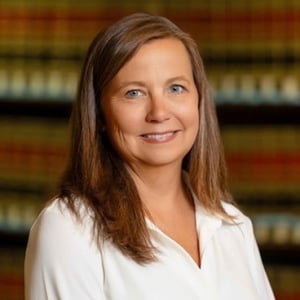
John P. Murphy Foundation Professor of Law and Associate Dean for External Engagement, University of Notre Dame Law School
Nicole Stelle Garnett is the John P. Murphy Foundation Professor of Law at Notre Dame Law School, where she also serves as the Associate Dean for External Engagement and directs the Notre Dame Education Law Project. Her teaching and research focus on education law and policy, religious liberty, and topics related to property law (especially land use and urban development policies). In addition to dozens of articles on these subjects, she is the author of Lost Classroom, Lost Community: Catholic Schools' Importance in Urban America (University of Chicago Press, 2014) and Ordering the City: Land Use, Policing and the Restoration of Urban America (Yale University Press, 2009).
Garnett received her B.A. with distinction in Political Science from Stanford University and her J.D. from Yale Law School. After law school, she clerked for the Honorable Morris S. Arnold of the United States Court of Appeals for the Eighth Circuit and for Associate Justice Clarence Thomas of the Supreme Court of the United States. Before joining the law school faculty in 1999, she worked for two years as a staff attorney at the Institute for Justice, a non-profit public-interest law firm in Washington, D.C., where she helped to defend the constitutionality of the nation's first private-school-choice programs.
At Notre Dame, Garnett is a faculty fellow in the Institute for Educational Initiatives, Kellogg Institute for International Studies, Fitzgerald Institute for Real Estate, and deNicola Center for Ethics and Culture. She also is an elected member of the American Law Institute and a Senior Fellow at the Manhattan Institute.
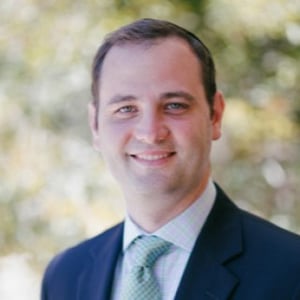
Brenden Mann Foundation Chair in Law and Religion and Co-Director of the Nootbaar Institute for Law, Pepperdine Caruso School of Law
Professor Michael Helfand is the Brenden Mann Foundation Chair in Law and Religion and Co-Director of the Nootbaar Institute for Law, Religion and Ethics at Pepperdine Caruso School of Law. During the Spring, he serves as the Florence Rogatz Visiting Professor at Yale Law School. In addition to his academic appointments, Professor Helfand serves as the Senior Legal Advisor to the Orthodox Union’s Teach Coalition and a Senior Fellow at the Shalom Hartman Institute.
An expert on questions of church and state, Professor Helfand’s work considers how U.S. law treats religious law, custom and practice. His academic articles have appeared in numerous law journals, including the Yale Law Journal, New York University Law Review, Duke Law Journal, Minnesota Law Review, Washington University Law Review, and Southern California Law Review. In addition, Professor Helfand often provides commentary on clashes between law and religion, writing for various public audience publications, including the Wall Street Journal, the Los Angeles Times, and the Forward.
Professor Helfand joined the Pepperdine Caruso Law faculty in 2010 where he has taught Contracts, Arbitration Law, Jewish Law and seminars in Law and Religion as well as Multiculturalism and the Law. Prior to joining the Pepperdine Caruso Law faculty, Professor Helfand was an associate at Davis Polk & Wardwell LLP, where his practice focused on complex commercial litigation. Before entering private practice, Professor Helfand clerked for the Honorable Julia Smith Gibbons of the U.S. Court of Appeals for the Sixth Circuit.
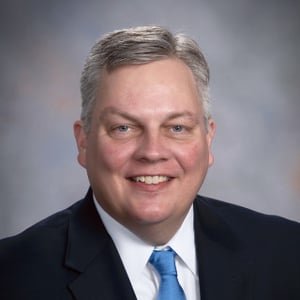
University Professor of Law and Religion and Director of the Eleanor H. McCullen Center for Law, Religion and Public Policy, Villanova University Charles Widger School of Law
Michael P. Moreland was appointed University Professor of Law and Religion and Director of the Eleanor H. McCullen Center for Law, Religion and Public Policy at Villanova University in 2017. Professor Moreland joined the Villanova faculty in 2006 and served as Vice Dean from 2012 to 2015. His research is primarily in the areas of torts, law and religion, constitutional law, and Catholic social thought, and he regularly teaches Torts, First Amendment, seminars in law and religion, and undergraduate courses in ethics.
Professor Moreland is the co-editor of Christianity and Private Law (Routledge, 2021), and his most recent publications include: “The Authority of Tradition: John Henry Newman and Legal Theory” in Christianity and the Making of Irish Law (Routledge, 2025); “Christianity and Torts” in The Oxford Handbook on Christianity and Law, (Oxford University Press, 2023); “Germaneness and Religious Liberty” in the Notre Dame Law Review (2023); “Contingency and Contestation in Christianity and Liberalism” in the Notre Dame Law Review (2023); “Friendship as the Primary Purpose of Law” in The American Journal of Jurisprudence 279 (2022); and “The Moral of Torts” (with Jeffrey Pojanowski) in Christianity and Private Law (Routledge, 2021).
Professor Moreland was a Visiting Professor of Law at the University of Notre Dame and the Mary Ann Remick Senior Visiting Fellow at the Notre Dame Center for Ethics and Culture from 2015 to 2017. He was the Forbes Visiting Fellow at Princeton University in the James Madison Program during academic year 2010-11. He has served as the project leader for grants from the John Templeton Foundation and the Charles Koch Foundation. He serves as the Chair of the Federalist Society’s Religious Liberties Practice Group Executive Committee and the Chair of the Board of Trustees of the Institute for Advanced Catholic Studies at the University of Southern California.
Professor Moreland received his BA in philosophy from the University of Notre Dame, his MA and PhD in theological ethics from Boston College, and his JD from the University of Michigan Law School. Following law school, Professor Moreland clerked for the Honorable Paul J. Kelly Jr., of the United States Court of Appeals for the Tenth Circuit and was an associate at Williams & Connolly LLP in Washington, DC, where he represented clients in First Amendment, professional liability, and products liability matters. Before coming to Villanova, he served as Associate Director for Domestic Policy at the White House under President George W. Bush, where he worked on a range of legal policy issues, including criminal justice, immigration, civil rights, and liability reform.
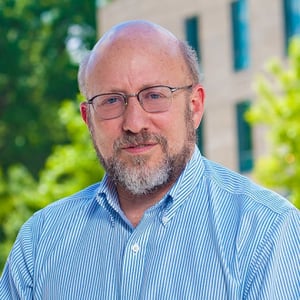
Professor of Law, American University; Washington College of Law
Robert Dinerstein is professor of law and director of the Disability Rights Law Clinic at American University Washington College of Law (AUWCL), where he has taught since 1983. His previous positions include serving as the law school's acting dean (2020-2021), associate dean for academic affairs from (1997-2004), associate dean for experiential education (2012-2018), and director of the clinical program (1988-96 and 2008-2018). He specializes in the fields of clinical education and disability law, especially mental disabilities law (including issues of consent/choice, capacity and supported decision-making and other alternatives to guardianship), the Americans with Disabilities Act, the UN Convention on the Rights of Persons with Disabilities, legal representation of clients with mental disabilities, and disability and international human rights.
Dinerstein has made numerous presentations on clinical legal education and disability law, among other topics, and has published a number of books, articles, chapters and other writing on these subjects.
He is the author/editor of two books. He is co-editor and co-author, with the late Stanley Herr and Joan O’Sullivan, of A Guide to Consent (AAMR, 1999). He is co-author, with the late Stephen Ellmann, Isabelle Gunning, Kate Kruse and Ann Shalleck, of Lawyers and Clients: Critical Issues in Interviewing and Counseling (Thomson West 2009) and the accompanying Teacher’s Manual.
Among Dinerstein’s recent publications in the disability law area, he is the author of:
In the area of legal education and lawyering, his recent articles include “New Wine and New Bottles (on experiential legal education),” 44 Syllabus 2 (Winter 2012-13), Publication of ABA Section on Legal Education and Admissions to the Bar; as co-author (with Margaret Barry, Phyllis Goldfarb, Peggy Maisel and Linda Morton) “Exploring the Meaning of Experiential Deaning,” 67(3) Journal of Legal Education 660 (2018); and ‘The Clinical Law Review at 25: What Hath We Wrought?, 26(1) Clinical Law Review 147 (2019) (25th Anniversary Symposium Issue). He has written extensively on issues of clinical pedagogy and lawyering, in particular, client-centered counseling [especially in his article, “Client-Centered Counseling: Reappraisal and Refinement,” 32 Arizona L. Rev. 501 (1990).] He has also written and presented on the US Department of Justice’s record of enforcement of the rights of persons with disabilities under several administrations.
Dinerstein was appointed by President Clinton in 1994 to serve on the President's Committee on Mental Retardation (now called the President’s Committee on People with Intellectual Disabilities), on which he served until 2001. From 2018-2021, he was a commissioner on the ABA Commission on Disability Rights, and from 2021-present serves as the ABA Section on Civil Rights and Social Justice’s liaison to the Commission. Internationally, he has consulted for the World Health Organization (Ghana and Malawi) and the Open Society Foundations (Ghana and Zambia) regarding the revision of mental health laws and was a signatory to the Montreal Declaration on Intellectual Disabilities, adopted in Montreal, Canada in October 2004. He also has consulted with the Open Society Foundations regarding disability rights clinics and disability rights curricula in Latin America and Southern Africa. Domestically, he has consulted for the Ford Foundation, Public Welfare Foundation and the US Department of Health and Human Services and the US Department of Education on issues related to legal services, disability law and poverty law. He is the principal investigator for the Disability and Human Rights Fellows program, which receives support from the Open Society Foundations.
Prior to joining AUWCL, Dinerstein worked as an attorney in the U.S. Department of Justice's Civil Rights Division, Special Litigation Section, where he handled federal court cases on the rights of people in institutions for people with psychosocial disabilities, people with intellectual disabilities and juveniles. In addition to the Disability Rights Law Clinic, which he founded (and which handles special education, supported decision making, advance mental health directives, Titles I-III of the ADA, and other cases), he teaches a seminar on law and disability and has taught interviewing and counseling, legal ethics, the supervised externship seminar, and the criminal justice clinic (which he directed from 1989-1996).
Dinerstein is actively involved in organizations related to legal education nationally. He was a member (elected) of the Council of the American Bar Association Section on Legal Education and Admissions to the Bar (2006-2011), and previously was on the section’s Standards Review Committee, where he was vice chair. He has been a member of 17 ABA-AALS joint site inspection teams, chairing four teams. Within the Association of American Law Schools, he was a member of the membership review committee and has, among other things, chaired the sections on clinical legal education, law and community, disability law and law and mental disability law, as well as the committees on clinical legal education, sections and the annual meeting, and the planning committee for the 2006 clinical teachers’ conference. He has been a member of a number of other planning committees, including for the AALS New Teachers’ Conference.
Dinerstein currently sits on the boards of directors of the Equal Rights Center (president), and the New Hope Community, Inc. and Foundation, and in the past has served on the boards of the Quality Trust for Individuals with Disabilities, Inc. (founding board member & president, 2001-2016), Washington Legal Clinic for the Homeless, Inc. (founding board member and long-term treasurer, 1986-2015), Advocates for Justice and Education (treasurer), the District of Columbia Bar Board of Governors (elected; 2002-05), Society of American Law Teachers (elected), Mental Disability Rights International (founding board member; now called Disability Rights International), Legal Counsel for the Elderly, and the Maryland Disability Law Center; and the steering committee for the Jacobus tenBroek annual disability law symposium sponsored by the National Federation of the Blind (founding member, and member until 2019).
Among his many awards and honors, Dinerstein has received the WCL Outstanding Service Award (2017-18); been named a Fellow of the American Association on Intellectual and Developmental Disabilities (2016) and received the Paul G. Hearne Award for Disability Rights (ABA, 2013); (with Ann Shalleck) the Egon Guttman Casebook Award (2011-12) for Lawyers and Clients; the William Pincus Award for his contributions to clinical legal education (2010); American University Awards for Scholar-Teacher of the Year (2013), Outstanding Teaching in a Full-Time Appointment (2009) and Faculty-Administrator Award for Outstanding Service to the University Community (2002); and the Pro Bono Service Award from the International Human Rights Law Group (1988).
He has an A.B. degree from Cornell University and a J.D. degree from Yale Law School. He is listed in Who's Who in America).

Founder, Chairman, and CEO, Louis D. Brandeis Center for Human Rights Under Law
Hon. Kenneth L. Marcus is an internationally recognized expert in civil and human rights, as well as a leader in the fight against anti-Semitism on and off university campuses. He is the Founder, Chairman, and CEO of The Louis D. Brandeis Center for Human Rights Under Law, the leading civil rights legal organization fighting against anti-Semitism. The New York Times has called him “The Man Who Helped Redefine Campus Anti-Semitism.” He been described, in that paper, as “the single most effective and respected force” to combat anti-Semitism.
During his public service career, Marcus served as Assistant U.S. Secretary of Education for Civil Rights; Staff Director at the U.S. Commission on Civil Rights; and General Deputy Assistant U.S. Secretary of Housing and Urban Development for Fair Housing and Equal Opportunity.
In academia, he serves as Professorial Lecturer in Law at George Washington University. He formerly held the Lillie and Nathan Ackerman Chair in Equality and Justice in America at the City University of New York’s Bernard M. Baruch College, served as Visiting Research Professor of Political Science at Yeshiva University, and was a Board of Visitors member George Mason University and Distinguished Senior Fellow at that university’s law school. He is a member of the editorial board of the Journal of Contemporary Antisemitism and previously served as Associate Editor of the Journal for the Study of Anti-Semitism.
Marcus is also author of The Definition of Anti-Semitism (Oxford University Press) and Jewish Identity and Civil Rights in America (Cambridge University Press). He has published widely in academic journals as well as in more popular venues such as The Wall Street Journal, Washington Post, Newsweek, USA Today, and Politico. He is a graduate of Williams College and the University of California at Berkeley School of Law.
Earlier in his career, he was a litigation partner in two major law firms, where he conducted complex commercial and constitutional litigation. He also serves as Chairman emeritus of the Executive Committee of the Federalist Society for Law & Public Policy Civil Rights Practice Group.
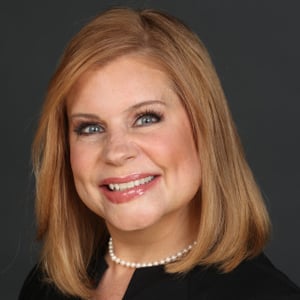
Vice President & Senior Legal Fellow, Defending Education
Sarah Parshall Perry is vice president and senior legal fellow at Defending Education.
Before coming to Defending Education, Sarah served as a Senior Legal Fellow for the Edwin Meese III Center for Legal and Judicial Studies, part of the Institute for Constitutional Government at Heritage, where her work centered on civil rights and the proper role of the courts.
Sarah joined Heritage after serving as Senior Counsel to the Assistant Secretary for Civil Rights at the U.S. Department of Education where she focused on policy reform, technical guidance, and the Office for Civil Rights’ (OCR) annual report to Congress. While at OCR, she was appointed by the Acting Assistant Secretary to co-chair the Employment Engagement, Diversity, & Inclusion Council and, in coordination with the Deputy Assistant Secretary for Enforcement oversee the hiring of dozens of attorneys for OCR’s 12 regional offices nationwide. Prior to her tenure at the Department of Education, she spent six years at the Family Research Council in Washington, D.C. where she was Senior Fellow for Education Reform and later, became the regular substitute host for the “Washington Watch” radio show. Her work at the Family Research Council also included the building and oversight of multiple policy coalitions geared toward the fight against antisemitism in academia, curbing tech censorship, and protecting religious liberty.
Before joining FRC, Sarah was in-house counsel and director of development for a Baltimore advertising agency, providing management of all new business transactions from pitch to contract execution for the multi-million-dollar enterprise. She began her practice at the litigation firm of Simms Showers, LLP where her work included Title VII employment discrimination, maritime/admiralty, and False Claims Act (“Qui Tam”) law. Sarah has a law degree from the University of Virginia School of Law, where she was an editor of the Virginia Journal of International Law, a recipient of the American Jurisprudence award, a Phi Delta Phi honor society member, and a student practitioner in the appellate litigation clinic where she argued before the 4th Circuit Court of Appeals. She holds a B.S. in Journalism with honors from Liberty University.
Her commentary and analysis have appeared in media outlets across the country, including the AP, BBC, Fox News, NPR, The Hill, Washington Post, Washington Times, and the New York Times. She is the mother of three children, and the author of just as many books on the trials and triumphs of parenting children on the autism spectrum. Sarah is a member of the Kirkpatrick Society at the American Enterprise Institute, and makes her home north of Baltimore, Maryland.
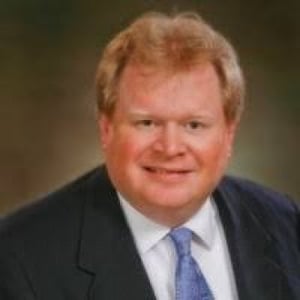
Principal Attorney, Woodring Law Firm
Mr. Daniel Woodring has lived in Florida for almost 30 years, but was born in Philadelphia, Pennsylvania. In Florida, he has lived and worked in Pensacola, Clearwater, Jacksonville, Gainesville and Tallahassee. His wife Jean, who is also an attorney, was born in Miami, and grew up in Ft. Myers. They have a son and a daughter.
Mr. Woodring is recognized as a Florida Super Lawyer, an honor given to fewer than 5% of Florida Attorneys, and holds an Avvo “Superb” rating. Mr. Woodring also has an AV Preeminent® Peer Reviewrating. AV®, AV Preeminent® are registered certification marks of Reed Elsevier Properties Inc., used in accordance with the Martindale-Hubbell certification procedures, standards and policies, and the ratings are explained at www.martindale.com/ratings.
Mr. Woodring is a member of the Florida and Georgia Bars, and is admitted to practice before the Florida Federal Southern, Middle and Northern District Courts, the Eleventh Circuit Court of Appeals and the U.S. Supreme Court. He has worked at the trial level on cases in many of Florida’s 20 judicial circuits, in addition to cases in state administrative tribunals. He has argued cases at the Florida Supreme Court and Florida District Courts of Appeal, and has briefed cases at the U.S. Supreme Court.
He graduated from the University of Florida, College of Law with a Juris Doctorate, Cum Laude, and received his B.A. degree from Clearwater Christian College, Summa Cum Laude.
After law school, Mr. Woodring was in private practice doing general civil and appellate work. He then left for a two year appellate clerkship at the First District Court of Appeal. During his time at the court, he worked on cases including, but not limited to: criminal; family law; administrative law; workers’ compensation; business and civil law; constitutional law.
Mr. Woodring next worked as a counsel in the Executive Office of the Governor, Office of the General Counsel. During his time in Governor Bush’s Legal Office he had diverse responsibilities, including oversight and strategic litigation management of significant legal matters at numerous Governor’s agencies, including the Department of Education, Department of Management Services, Department of Business and Professional Regulation, Department of Health, Agency for Health Care Administration, Department of Children and Families, Department of Community Affairs, Department of Elder affairs, Agency for Workforce Innovation, Department of Transportation, and the Department of State.
He was also legally responsible for topics as disparate as emergency operations; advising the Governor on the selection of judges; implementation of civil service reform; reform of workers’ compensation; budget and appropriation matters; Indian gaming law; and legally advising the Florida Cabinet sitting in its many capacities, such as the Florida Land and Water Adjudicatory Commission.
Mr. Daniel Woodring was then offered the opportunity to be General Counsel for the Florida Department of Education, which encompassed Pre-K though 12th grade, community colleges(now State colleges) and the Florida University System. He was also the first General Counsel for the Florida Board of Governors, when that Board was constitutionally created to manage the State University System.
During almost five years at the Department of Education, Mr. Woodring advised and litigated on matters including, but not limited to: constitutional challenges to Florida’s education programs, including Opportunity Scholarships and the charter school approval and appeal process; doing away with race as a preference in university admissions and state contracting; teacher and professional discipline cases; union, labor and employment matters; state procurement and bid protest proceedings; administrative rule challenges and rule making proceedings; IDEA and Section 504 proceedings; public records, government in the sunshine and ethical matters; contract negotiations and disputes.
Since 2007, Mr. Woodring has been back in private practice as the principal of the Woodring Law Firm, located in Tallahassee, Florida, but with a statewide practice, including Pensacola, Jacksonville, Gainesville, Tampa Bay, Orlando, West Palm Beach, Ft. Myers, Ft. Lauderdale, and Miami. He concentrates his practice on appeals; constitutional cases in both state and federal court; education law matters, including charter school represention; Business litigation; and state administrative matters, including state procurement, regulation and licensing, rule challenges and proposed rule making, although he also handles cases in many other areas.
Please look at the individual practice areas on the left menu for more information.
Mr. Woodring is a member of the Appellate, Administrative, and Governmental Lawyer sections of the Florida Bar and served as Chair of the Education Law Committee of the Florida Bar.
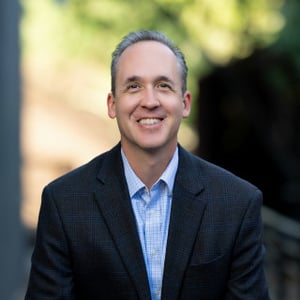
Legal Director, The Center for the Rights of Abused Children
Tim Keller is a lawyer who works to ensure all abused and abandoned children are safe and have access to their constitutionally guaranteed rights.
As senior vice president and legal director at the Center for the Rights of Abused Children, Tim’s public interest legal work seeks to defend the constitutional rights of children to be safe from abuse, to prompt timely placement with permanent parents, and to assure a child’s representation by legal counsel. In addition to constitutional litigation, Tim oversees the lawyers in the Center for the Rights of Abused Children’s one-of-a-kind pro bono Children’s Law Clinic and guides its policy initiatives.
When he and his wife, Lisa, hosted a teenage exchange student from Brazil several years ago, they realized how much they enjoyed helping a child thrive. The two felt called to help more kids. Over the following years, Tim and Lisa would become foster parents. Today, they enjoy offering respite care for children in foster care.
Intensely motivated by his time fostering children who’d been abused and neglected, Tim sees his work to ensure children have a constitutional right to counsel as a matter of life and death. As such, he’s particularly proud that in 2021 the Center for the Rights of Abused Children secured the rights of all children in Arizona’s foster system to be represented by legal counsel.
Before joining the Center for the Rights of Abused Children, Tim worked for nearly 20 years at the Institute for Justice. He served as lead counsel in Arizona Christian School Tuition Organization v. Winn, a U.S. Supreme Court victory that protected Arizona’s pioneering school scholarship program. Tim also led the team that secured a U.S. Supreme Court victory in Espinoza v. Montana Department of Revenue, which prevents states from discriminating against religious families and schools in educational choice programs. He has also litigated economic liberty and property rights cases in state and federal courts.
Tim earned his bachelor’s and law degrees from Arizona State University. He clerked for Robert D. Myers, at the time the presiding judge of the Maricopa County Superior Court, and for Ann A. Scott Timmer on the Arizona Court of Appeals.
Tim and Lisa live in Chandler, Ariz., with their four sons, Daniel, Benjamin, Ethan and Noah, and a miniature schnauzer named Gus who has more than 12,000 Instagram followers. The Kellers have traveled to 49 of the 50 United States, and are always looking for recommendations for new card or board games for family game nights.

Tracking and Ending Religious Discrimination
Nicole Stelle Garnett, Michael A. Helfand, Michael P. Moreland
A new project sponsored by a coalition of organizations seeks to track the various ways...
Topics
Civil Rights Inquiry into States Banning Mask Mandates Hints at Political Motive at the Education Department
America has been beleaguered with a wealth of public health mandates during the COVID pandemic,...
Discussion: The OCR's Investigation of State Mask Mandate Bans
Robert Dinerstein, Kenneth L. Marcus, Sarah Parshall Perry
The U.S. Department of Education’s Office for Civil Rights has launched an investigation into the...
Endrew F. v. Douglas County School District - Post-Decision SCOTUScast
Daniel Woodring
On March 22, 2017, the Supreme Court decided Endrew F. v. Douglas County School District,...
Federal Special Education Law and State School Choice Programs
Timothy Keller, Nat Malkus
Note from the Editor: In this article, Nat Malkus and Tim Keller outline the federal...