
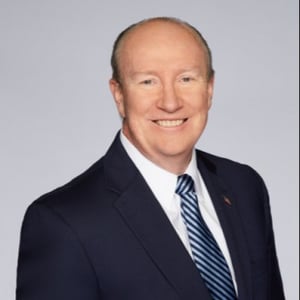
Senior Fellow, National Review
Bestselling author Andrew C. McCarthy is a contributing editor at National Review, a senior fellow at National Review Institute, and a Fox News contributor. He is a former Chief Assistant United States Attorney in the Southern District of New York and led the terrorism prosecution against the “Blind Sheikh” (Omar Abdel Rahman) and eleven other jihadists for conducting a war of urban terrorism against the United States that included the 1993 World Trade Center bombing and a plot to bomb New York City landmarks. During is 20-year career as a prosecutor, he received numerous honors, including the Justice Department’s highest awards. Andy speaks and writes widely on law and national security, radical Islam, politics, and culture. He has testified before Congress as an expert on issues of constitutional law, counterterrorism, and law-enforcement. He is a columnist for The Hill, and his essays and book reviews appear frequently at The New Criterion. His most recent New York Times bestselling book is Ball of Collusion (Encounter Books, 2019), about the Russiagate controversy (an updated version was published in 2020). His other books include Willful Blindness (2008), The Grand Jihad (2010), Spring Fever: The Illusion of Islamic Democracy (2012), and Faithless Execution (2014). He has also written several pamphlets in the Broadside series published by Encounter Books, most recently Islam and Free Speech (2015).
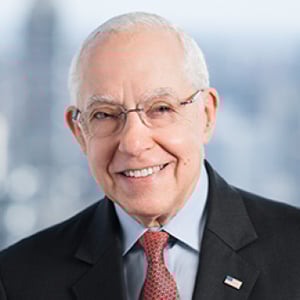
Former United States Attorney General
Michael B. Mukasey is the former Attorney General of the United States, the nation’s chief law enforcement officer. As Attorney General from November 2007 to January 2009, he oversaw the U.S. Department of Justice and advised on critical issues of domestic and international law.
From 1988 to 2006, Judge Mukasey served as a district judge in the United States District Court for the Southern District of New York, becoming Chief Judge in 2000.
From 1972 to 1976, Judge Mukasey served as an Assistant United States Attorney for the Southern District of New York, and as Chief of the Official Corruption Unit from 1975 to 1976. His practice consisted of criminal litigation on behalf of the government, including investigation and prosecution of narcotics, bank robbery, interstate theft, securities fraud, fraud on the government and bribery. From 1976 to 1987 and from 2006 to 2007 he was in private practice.
Judge Mukasey has received numerous honors, including the Federal Bar Council’s Learned Hand Medal for Excellence in Federal Jurisprudence. He served as Chairman of the Committee on Public Access to Information and Proceedings of the New York Bar Association from 1984 to 1987. He served on the Federal Courts Committee of the Association of the Bar of the City of New York from 1979 to 1982 and its Communications Law Committee from 1983 to 1986. Judge Mukasey was also a part-time lecturer at Columbia School of Law from January 1993 to May 2007, teaching trial advocacy.
He received his LL.B. from Yale Law School in 1967 and his B.A. from Columbia College in 1963.

Chief Judge, United States Court of Appeals, Eleventh Circuit
William H. Pryor Jr. serves as Chief Circuit Judge on the United States Court of Appeals for the Eleventh Circuit.
In 2013–18, he served on the United States Sentencing Commission and, in 2017–18, served as Acting Chair.
He has taught as a visiting professor at the University of Alabama School of Law and previously taught as an adjunct professor at the Cumberland School of Law of Samford University.
He served as the 45th Attorney General of Alabama from 1997 to 2004. When he took office, he was the youngest attorney general in the nation. In his reelection, he received the highest percentage of votes of any statewide candidate.
He graduated magna cum laude from Tulane Law School where he finished first in the common-law curriculum and was editor in chief of the Tulane Law Review. He then served as a law clerk for Judge John Minor Wisdom of the U.S. Court of Appeals for the Fifth Circuit.
He is a member of The American Law Institute and an Adviser for the RESTATEMENT OF THE LAW THIRD, CONFLICT OF LAWS. He is a coauthor with Bryan Garner, Justices Gorsuch and Kavanaugh, and several other judges of a treatise, THE LAW OF JUDICIAL PRECEDENT. He has published in the Yale Law Journal, Columbia Law Review, Virginia Law Review, Notre Dame Law Review, Harvard Journal of Law & Public Policy, Yale Law & Policy Review, George Mason Law Review, Florida Law Review, Alabama Law Review, Case Western Reserve Law Review, and Tulane Law Review. He has published op-eds in The Wall Street Journal, The New York Times, National Review, and USA Today. He has debated at National Lawyers’ Conventions of the Federalist Society (including on National Public Radio) and at the Oxford Union in the United Kingdom. And he is listed among several “widely admired judicial writers” in Bryan Garner’s The Redbook: A Manual on Legal Style.
He is a member of the Tulane Law School Hall of Fame and has received the Defender of the Constitution Award from the Heritage Foundation, the Jurist of the Year Award from the Texas Review of Law & Politics, and the St. Thomas More Award from the St. Thomas More Society of Atlanta. Judge Pryor is also a proud member of the National Society of the Sons of the American Revolution.
Garwood Visiting Professor and Visiting Fellow, James Madison Pr, Cleveland-Marshall College of Law
David F. Forte is Professor of Law at Cleveland State University, where he was the inaugural holder of the Charles R. Emrick, Jr.- Calfee Halter & Griswold Endowed Chair. This fall, Professor Forte will be the Garwood Visiting Professor at Princeton University in the Department of Politics, and Visiting Fellow at the James Madison Program in American Ideals and Institutions. He holds degrees from Harvard College, Manchester University, England, the University of Toronto and Columbia University.
During the Reagan administration, Professor Forte served as chief counsel to the United States delegation to the United Nations and alternate delegate to the Security Council. He has authored a number of briefs before the United States Supreme Court, and has frequently testified before the United States Congress and consulted with the Department of State on human rights and international affairs issues. His advice was specifically sought on the approval of the Genocide Convention, on world-wide religious persecution, and Islamic extremism. He has appeared and spoken frequently on radio and television, both nationally and internationally. In 2002, the Department of State sponsored a speaking tour for Professor Forte in Amman, Jordan, and he was also a featured speaker to the Meeting of Peoples in Rimini, Italy, a meeting which gathers over 500,000 people from all over Europe. He has also been called to testify before the state legislatures of Ohio, Kansas, and Idaho as well as the New York City Council. He has assisted in drafting a number of pieces of legislation for the Ohio General Assembly dealing with abortion, international trade, and federalism. He has sat as acting judge on the municipal court of Lakewood Ohio and was chairman of Professional Ethics Committee of the Cleveland Bar Association. He has received a number of awards for his public service, including the Cleveland Bar Association’s President’s Award, the Cleveland State University Award for Distinguished Service, the Cleveland State University Distinguished Teaching Award, and the Cleveland-Marshall College of Law Alumni Award for Faculty Excellence. He served as Consultor to the Pontifical Council for the Family under Pope St. John Paul II and Pope Benedict XVI. In 2003, Dr. Forte was a Distinguished Fulbright Chair at the University of Trento and returned there in 2004 as a Visiting Professor. For the academic year, 2008-2009, Professor Forte was Senior Visiting Scholar at the Center for the Study of Religion and the Constitution in at the Witherspoon Institute in Princeton, New Jersey. He was the Robert E. Henderson Constitution Day Lecturer at the Ashbrook Center at Ashland University, and he has given over 300 invited addresses and papers at more than 100 academic institutions. His work has been cited by the U.S. Supreme Court.
Professor Forte was a Bradley Scholar at the Heritage Foundation, and Visiting Scholar at the Liberty Fund. He has been President of the Ohio Association of Scholars, was on the Board of Directors of the Philadelphia Society, and is also adjunct Scholar at the Ashbrook Center. He has been appointed to the Ohio State Advisory Committee to the U.S. Commission on Civil Rights. He has also been a Civil War re-enactor and a Merit Badge Counselor for the Boy Scouts.
He writes and speaks nationally on topics such as constitutional law, religious liberty, Islamic law, the rights of families, and international affairs. He served as book review editor for the American Journal of Jurisprudence and has edited a volume entitled, Natural Law and Contemporary Public Policy, published by Georgetown University Press. His book, Islamic Law Studies: Classical and Contemporary Applications, has been published by Austin & Winfield. He is Senior Editor of The Heritage Guide to the Constitution (2006), 2d edition (2014), published by Regnery & Co, a clause by clause analysis of the Constitution of the United States.
His teaching competencies include Constitutional Law, the First Amendment, Islamic Law, Jurisprudence, Natural Law, International Law, International Human Rights, the Presidency, and Constitutional History.
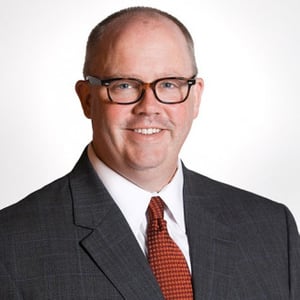
Professor of Law and Assistant Director, Criminal Justice Center, University of Florida Levin College of Law
Professor Stinneford teaches and writes about legal ethics, criminal law, criminal procedure, and constitutional law. His work has been cited by the United States Supreme Court, several state supreme courts and federal courts of appeal, and numerous scholars. It has published in numerous scholarly journals including the Georgetown Law Journal, the Northwestern University Law Review, the Virginia Law Review, the Notre Dame Law Review, and the William & Mary Law Review. The Stanford-Yale Junior faculty forum selected one of his articles as the best paper in the category of Constitutional History, and the AALS Criminal Justice Section named another article as the best paper in its Junior Scholars Paper Competition. In the fall of 2015, he was a Visiting Scholar at the Georgetown Law Center, Center for the Constitution.
Before joining the Florida faculty in 2009, Stinneford clerked for the Hon. James Moran of the United States District Court for the Northern District of Illinois, served as an Assistant United States Attorney, and practiced law with Winston & Strawn in Chicago. Stinneford teaches first-year courses in Criminal Law and Constitutional Law, and upper-level courses in Professional Responsibility, Criminal Procedure, Federal Criminal Law, Law & Literature, and White Collar Crime.
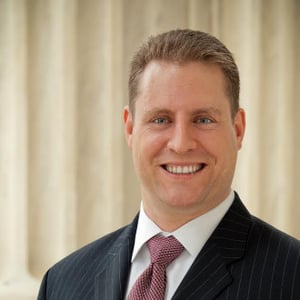
Senior Counsel, Schaerr Jaffe LLP
Ken Klukowski is senior counsel at the law firm Schaerr Jaffe, focusing on constitutional, administrative, and election law, and the federal courts. He has served in politically appointed positions in the U.S. government, including senior counsel in the Civil Division of the U.S. Department of Justice, and prior to that in the White House as special counsel in the Office of Management and Budget. He was also the constitutional rights advisor on the Presidential Transition Team of President Donald J. Trump. In the private sector, he has worked as a senior fellow of the American Constitutional Rights Union, senior counsel at First Liberty Institute, and a legal journalist. He litigates constitutional cases in the U.S. Supreme Court and lower federal courts, and contributes to media coverage of the nation’s highest court and legal issues. Earlier in his career, Klukowski served as special deputy attorney general of Indiana, and worked on faculty at Liberty University School of Law. His academic works have been published by journals such as the Federalist Society’s Harvard Journal of Law & Public Policy, and his columns have appeared in the Wall Street Journal and other national publications. His amicus briefs and nine law review articles have been cited by various federal courts and top legal journals. He has participated in numerous Supreme Court cases, and lectured and debated at 100 law school events nationwide. Klukowski received his bachelor’s degree from the University of Notre Dame, studied history at Arizona State University, earned his law degree from Scalia Law School at George Mason University, and served as a law clerk to Chief Judge Alice Batchelder on the U.S. Court of Appeals for the Sixth Circuit.
Justice, Florida Supreme Court
Ricky Polston is a justice on the Florida Supreme Court. He was appointed to the court on October 2, 2008, by Governor Charlie Crist. Polston was retained by voters on November 2, 2010, and again on November 8, 2016. His current term expires in 2023.
From 2012 to 2014, Polston served as the chief justice of the court.
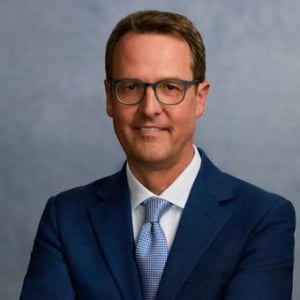
Partner, Orrick, Herrington & Sutcliffe LLP
Andy excels at solving complex problems for his clients using a variety of effective strategies. As former Chief Deputy Attorney General for the State of Wisconsin, Andy Cook has extensive experience representing businesses before state Attorneys General involving investigations and lawsuits. His strong relationships with Attorneys General and their senior staff frequently facilitate the successful resolution of client issues through diplomacy and negotiations. When litigation becomes necessary, Andy effectively advocates for clients throughout the litigation process.
Andy combines his legal expertise in numerous areas of law covered by state Attorneys General, an understanding of how state AG offices operate, and vast knowledge of legal and regulatory issues facing his clients. This substantive and comprehensive legal approach is crucial to effectively representing clients before state Attorneys General. Andy also has substantial experience drafting and enacting complex civil liability reforms before state legislatures to successfully address client goals.
Andy’s main practice focuses on advising Fortune 500 companies before state Attorneys General in the areas of antitrust, consumer protection, False Claims Act, environmental law, and cybersecurity and data privacy. Andy, in collaboration with a team of attorneys, successfully navigated a client through antitrust regulatory review by state Attorneys General in one of the nation’s largest mergers of two major telecommunication companies. Andy also worked with a team of lawyers representing a large corporation involving the multistate opioids litigation brought by state Attorneys General.
Andy gained valuable experience serving as Deputy Attorney General for the State of Wisconsin where he was the second in command of the 700-plus state agency. In his role as Chief Deputy Attorney General, Andy oversaw the day-to-day operations at the Wisconsin Department of Justice (DOJ); directed the State’s litigation strategy; negotiated, reviewed, and approved all settlements; drafted and reviewed attorney general opinions; managed the agency’s budget; oversaw civil and criminal investigations handled by DOJ; and managed DOJ’s legislative agenda.
Andy played college hockey and remains active by running, cross country skiing, and playing golf. On the weekends, Andy and his wife enjoy watching their kids’ sporting events, including soccer, baseball, gymnastics, and track. In his rare spare time, Andy reads history books.
Wisconsin State Representative
State Representative Jon Richards represents Milwaukee's East Side, Downtown, and Bay View neighborhoods in the Wisconsin State Assembly's 19th district. He was first elected to the Wisconsin State Assembly in 1998, and has been re-elected ever since.
Jon is an attorney in Milwaukee. He owns a home in the Brady Street neighborhood of Milwaukee. Before entering law school, Jon worked as an English teacher in Japan, volunteered with Mother Teresa in Calcutta, India and worked as a reporter for business newspapers in Milwaukee and San Francisco. He is a graduate of Lawrence University in Appleton, Wisconsin, the University of Wisconsin Law School, and attended Keio University in Tokyo.
Jon has been a champion of reforming healthcare in Wisconsin. As chair of the Assembly committee on Health and Healthcare Reform, he has led the effort in the Legislature to reduce health care costs, cover every Wisconsinite with health insurance and promote wellness-based health care. Jon was the Assembly author of the statewide smoking ban. Jon also led the effort for the largest investment ever in UWM from the State of Wisconsin.
Jon is very active in the Milwaukee community. He is a four-time winner of the "Milwaukee's Best Legislator" award from theShepherd Express. He is a volunteer Big Brother with Big Brothers, Big Sisters of Metro Milwaukee. He is a member of the Brady Street Area Association, Immanuel Presbyterian Church, and the Bay View Lions Club.

Professor of Law, Antonin Scalia Law School, George Mason University
ILYA SOMIN is Professor of Law at George Mason University and the B. Kenneth Simon Chair in Constitutional Studies at the Cato Institute. His research focuses on constitutional law, property law, democratic theory, federalism, and migration rights. He is the author of Free to Move: Foot Voting, Migration, and Political Freedom (Oxford University Press, revised and expanded edition, 2022), Democracy and Political Ignorance: Why Smaller Government is Smarter (Stanford University Press, revised and expanded second edition, 2016), and The Grasping Hand: Kelo v. City of New London and the Limits of Eminent Domain (University of Chicago Press, 2015, rev. paperback ed., 2016), coauthor of A Conspiracy Against Obamacare: The Volokh Conspiracy and the Health Care Case (Palgrave Macmillan, 2013), and co-editor of Eminent Domain: A Comparative Perspective (Cambridge University Press, 2017). Democracy and Political Ignorance has been translated into Italian and Japanese.
Somin’s work has appeared in numerous scholarly journals, including the Yale Law Journal, Stanford Law Review, Northwestern University Law Review, Georgetown Law Journal, Critical Review, and others. Somin has also published articles in a variety of popular press outlets, including the New York Times, Washington Post, Wall Street Journal, Los Angeles Times, CNN, NBC, The Atlantic, USA Today, Boston Globe, US News and World Report, South China Morning Post, National Law Journal and Reason. He has been quoted or interviewed by the New York Times, Washington Post, Wall Street Journal, Time, Newsweek, The Economist, the Christian Science Monitor, the Financial Times, The Guardian, the Associated Press, CBS, MSNBC, NPR, BBC, Reuters, the Canadian Broadcasting Corporation, the Australian Broadcasting Corporation, Radio Free Europe/Radio Liberty, Al Jazeera, and the Voice of America, among other media.
Somin’s writings have been cited in decisions by the United States Supreme Court, multiple state supreme courts and lower federal courts, and the Supreme Court of Israel. He is co-counsel for the plaintiffs in VOS Selections, Inc. v. Trump, a case challenging the constitutionality of President Trump’s “Liberation Day” tariffs. Somin has testified on the use of drones for targeted killing in the War on Terror before the US Senate Judiciary Subcommittee on the Constitution, Civil Rights, and Human Rights. In 2009, he testified on property rights issues at the United States Senate Judiciary Committee confirmation hearings for Supreme Court Justice Sonia Sotomayor. Somin writes regularly for the popular Volokh Conspiracy law and politics blog, now affiliated with Reason magazine (previously affiliated with the Washington Post from 2014 to 2017). From 2006 to 2013, he served as Co-Editor of the Supreme Court Economic Review, one of the country’s top-rated law and economics journals.
Somin has served as a visiting professor at the University of Pennsylvania Law School. He has also been a visiting professor or scholar at the Georgetown University Law Center, the University of Hamburg, Germany, the University of Torcuato Di Tella in Buenos Aires, Argentina, Uriel Reichman University in Israel, and Zhengzhou University in China. He is a University Affiliate of the Schar School of Policy and Government at George Mason University, and an affiliated faculty member of the George Mason University Institute for Immigration Research. Before joining the faculty at George Mason, Somin was the John M. Olin Fellow in Law at Northwestern University Law School in 2002-2003. In 2001-2002, he clerked for the Hon. Judge Jerry E. Smith of the U.S. Court of Appeals for the Fifth Circuit. Professor Somin earned his B.A., Summa Cum Laude, at Amherst College, M.A. in Political Science from Harvard University, and J.D. from Yale Law School.
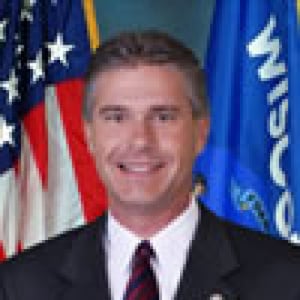
Wisconsin Attorney General
John Byron ("J.B.") Van Hollen, Wisconsin's 43rd Attorney General, was elected on November 7, 2006, and assuming office on January 1, 2007.
During his campaign for Attorney General, Van Hollen identified the backlog of forensic DNA evidence in the State Crime Lab as the single most important public safety issue facing the Department of Justice and Wisconsin's justice system. Within weeks of becoming Attorney General, General Van Hollen worked with members of both parties in the Legislature and Governor Jim Doyle to secure an unprecedented 31 positions to address the Wisconsin Crime Lab backlog. With efficiencies and the cooperation of partner agencies, the State Crime Lab is on track to eliminate the backlog by 2010.
As Wisconsin's "Top Cop," General Van Hollen identified Internet Crimes Against Children (ICAC) as another priority vital to protecting Wisconsin's children from on-line predators. By raising awareness and partnering with the Legislature and the Governor, General Van Hollen secured additional resources to educate parents and children, identify, stop, and prosecute these predators. Working in partnership with local law enforcement authorities, the Department offers education, resources, and its expertise in this fight for the safety of some of our most vulnerable victims: children.
General Van Hollen has also restored an emphasis on the rule of law to the Department of Justice. Professionally-reasoned legal advice and client representation is now a hallmark of the Department's work.
General Van Hollen has been clear that restoring integrity and fighting crime would define his work as Attorney General. A philosophy of first principles, limited government, and the Department's role as an "exist to assist" state agency has guided his tenure as Attorney General.
Van Hollen graduated from St. Olaf College in 1988 with an undergraduate degree in Political Science and Economics. He earned his law degree two years later from the University of Wisconsin Law School.
Van Hollen began his public service career as an Assistant State Public Defender in Spooner, Wisconsin. In 1991, he became a federal prosecutor, serving as an Assistant United States Attorney for the Western District of Wisconsin. Governor Tommy Thompson appointed Van Hollen as District Attorney in Ashland County, where he served for six years. He was subsequently appointed by Governor Thompson to serve as Bayfield County District Attorney. Van Hollen was later elected to the position, enjoying bi-partisan support as Bayfield County's only elected Republican.
Prior to becoming Attorney General, J.B. was appointed United States Attorney for Wisconsin's Western District in 2002 and served there until 2005.
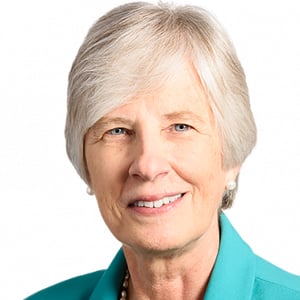
Ronald Reagan Distinguished Fellow, The Heritage Foundation
Becky Norton Dunlop, a prominent leader, strategist, and counselor in the conservative movement, is The Heritage Foundation’s Ronald Reagan Distinguished Fellow.
Dunlop, who joined the leading think tank in 1998, holds the only policy chair in the country to be officially named for the 40th president. She succeeds Ed Meese, the U.S. attorney general under Reagan, who assumed emeritus status.
Dunlop oversees special projects, travels as an ambassador for Heritage, and works tirelessly to assure that the legacy of principles, policies, and practices represented by the life and service of Ronald Reagan remain in the hearts and minds of Americans.
Previously, Dunlop was Heritage’s vice president for external relations from 1998 until May 2016. She served on the Trump Transition team.
Dunlop was a senior official in the Reagan administration from 1981-1989 inside the White House, at the Justice Department, and at the Interior Department.
She served from 1994-1998 as Secretary of Natural Resources for the Commonwealth of Virginia in the Cabinet of then-Virginia Gov. George Allen.
As political director for the American Conservative Union from 1973- 1977, she was instrumental in organizing grass-roots activists for Reagan’s unsuccessful 1976 race for the Republican nomination and advised his successful 1980 nomination and general election campaigns.
From Reagan’s first inauguration in 1981 to 1985, her White House posts included Deputy Assistant to the President for Presidential Personnel and Special Assistant to the President and Director of his Cabinet office. During Reagan’s second term, Dunlop served as senior special assistant to Meese, then attorney general, in charge of managing Cabinet-level domestic policy issues. She oversaw major policy reports on the environment, the family, federalism, tort reform, privatization, and welfare reform.
She completed her service in the Reagan administration as deputy undersecretary of the Interior Department and as assistant interior secretary for fish, wildlife, and parks.
Dunlop is one of the few of the insiders from the beginnings of the Reagan era who remain active in public policy leadership.
As Virginia’s natural resources chief, Dunlop worked to streamline, decentralize, and down-size agencies while protecting and improving the environment. She is one of the few “free-market environmentalists” to have headed a state agency and put ideas into action. Her book, “Clearing the Air” (Alexis de Tocqueville Institute, 2000), chronicles some of her experiences in advancing those principles.
In 2002, President George W. Bush appointed her to a part-time post as chairwoman of the Federal Service Impasses Panel. The seven-member panel resolves disputes between federal agencies management and labor unions. Under her leadership, it took on several hundred cases and eliminated backlogs.
Other current leadership roles include the boards of the Virginia Institute for Public Policy, the Reagan Ranch Board of Governors, the Reagan Alumni Association, the Association for American Educators and the AAE Foundation, the Council for National Policy and the American Conservative Union.
In addition to topics addressing conservative principles and their roots in the nation’s founding, Dunlop is a sought-after public speaker on the idea that personnel is policy; on energy, natural resources and the environment (including free market environmentalism); on federalism as a former member of a governor’s Cabinet; Capitalism and the Rule of Law, and on the Reagan administration (including the 40th president’s effective leadership style).
A graduate of Miami University in Ohio, she currently resides in Arlington, Virginia, with her husband, George S. Dunlop. The Dunlops are members of Oakland Baptist Church in Alexandria, Virginia.

Inside Governor Rick Scott’s General Counsel’s Office and the Governor's Philosphy on Selecting Judges
2011 James Madison Award Presentation - Prepared Remarks
Andrew McCarthy, Michael B. Mukasey
On April 25, 2011, the New York City Lawyers Chapter hosted its 25th Anniversary Dinner...
Marbury v. Madison: Real Lessons and Myths
MiamiShould We Ban Sharia Law?
Tampa, FloridaOriginalism & the Bill of Rights: Not Just for Conservatives Any More
Not Commerce, not Necessary, and not Severable? Striking Down Obamacare with a Single Case
202 S. Michigan Street Suite 1400 South Bend, IndianaJudicial Decision-Making
Tampa, FloridaThe Dirty Dozen: The 12 Worst Supreme Court Cases
The Constitutionality of the Federal Health Care Law
Madison Lawyers Chapter
Madison, WIReaganomics: A Lesson From History on How to Save Our Country
Tampa, Florida