Vice President and Deputy Chief Counsel, U.S. Chamber Litigation Center, U.S. Chamber of Commerce
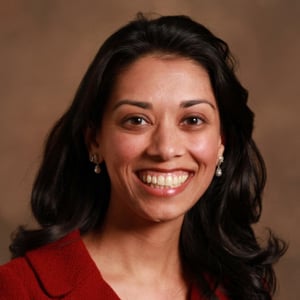
Jennifer B. Dickey is vice president and deputy chief counsel at the U.S. Chamber Litigation Center, the litigation arm of the U.S. Chamber of Commerce. Dickey handles a variety of litigation matters for the Chamber.
Dickey joined the Chamber following her service as Acting Assistant Attorney General and Principal Deputy Assistant Attorney General in the Civil Division at the U.S. Department of Justice. She also previously served as Deputy Associate Attorney General, providing strategic oversight of the Civil Division, Civil Rights Division, and Foreign Claims Settlement Commission, as well as Special Assistant to the President and Associate Counsel to the President. In the latter capacity, she provided legal advice on a wide array of executive actions and rulemakings, civil litigation, and judicial nominations.
Dickey also practiced law at Kirkland & Ellis LLP before her government service. She was a commercial and appellate litigator, representing businesses in federal and state courts.
Earlier in her career, Dickey served as a law clerk for the Honorable Clarence Thomas of the Supreme Court of the United States and the Honorable William H. Pryor Jr. of the United States Court of Appeals for the Eleventh Circuit.
Dickey earned her law degree magna cum laude from Duke University School of Law, where she was an Executive Editor of the Duke Law Journal, and her undergraduate degree magna cum laude from Dartmouth College.
Professor of Law, Widener University Commonwealth Law School
Counsel, Lehotsky Keller Cohn LLP
Shannon Grammel is a litigator with experience at all levels of federal and state courts.
Ms. Grammel has represented both private- and public-sector clients in a broad array of substantive legal areas, including constitutional law, administrative law, election law, and complex commercial litigation. Ms. Grammel has authored briefs before the Supreme Court of the United States, several federal courts of appeals, multiple state supreme courts, and federal and state trial courts. She has also argued in state appellate court and has participated in both federal- and state-court trials.
Before joining Lehotsky Keller Cohn LLP, Ms. Grammel served as Deputy Solicitor General of Kansas. Before that, she was a member of the Supreme Court & Appellate group in Latham & Watkins LLP’s Washington D.C. office.
Ms. Grammel served as a law clerk for Justice Brett M. Kavanaugh of the Supreme Court of the United States and Judge J. Harvie Wilkinson III of the U.S. Court of Appeals for the Fourth Circuit. Ms. Grammel earned her law degree from Stanford Law School, where she was President of the Stanford Law Review.
Senior Attorney, Institute for Free Speech
Brett Nolan is a Senior Attorney at the Institute for Free Speech, a public interest law firm that defends the First Amendment rights of those engaged in political speech and advocacy around the country.
Before joining the Institute, Brett served as the Principal Deputy Solicitor General of Kentucky, where he represented the Commonwealth in a wide variety of high-stakes litigation at every level of state and federal court. In that role, Brett led a successful challenge against the Department of Treasury over the constitutionality of a federal law limiting the ability of states to modify their tax codes, and he helped secure a U.S. Supreme Court victory that upheld a state’s constitutional right to defend its interests in federal court.
Prior to that, Brett served as the Deputy General Counsel to the former Governor of Kentucky, where he advised the governor and other executive branch officials on legal and policy issues and represented them in litigation. Brett clerked for Judge John Nalbandian of the U.S. Court of Appeals for the Sixth Circuit and Judge Karen K. Caldwell of the U.S. District Court for the Eastern District of Kentucky. Between clerkships, he worked in private practice. Brett received his law degree from the University of Chicago Law School, where he graduated with High Honors and was an editor of The University of Chicago Law Review.
Partner, Bailey Glasser LLP
Greg Porter has extensive trial and class action experience in complex pension, 401(k) plan, and employee stock ownership plan (ESOPs) lawsuits in federal court. Greg has led Bailey Glasser’s ERISA and trust practice to major trial and appellate victories, including seminal decisions in the Seventh and Fourth Circuit Courts of Appeal and a $30 million trial judgment that broke new ground for ESOPs. With co-counsel, the firm’s ERISA practice won a 9-0 decision in the Supreme Court, Intel Corp v. Sulyma, that established key statute of limitations rights for employees in ERISA cases.
Greg has recovered hundreds of millions of dollars on behalf of employees who lost retirement savings in 401(k) plans and ESOPs. He understands complex financial transactions, investments, and instruments.
Greg has also developed techniques for successfully investigating and prosecuting complex lawsuits involving business valuation, securities lending, hedge funds, and private equity. He has argued appeals in the Second, Fourth, Sixth and Eighth U.S. Circuit Courts of Appeal.
Senior Fellow, Stand Together Trust
Vikrant Reddy is a senior fellow at Stand Together Trust, specializing in the area of criminal justice reform. Reddy previously served as a senior policy analyst at the Texas Public Policy Foundation (TPPF), where he managed the launch of TPPF’s national Right on Crime initiative in 2010. He has worked as a research assistant at the Cato Institute, as a judicial clerk to the Hon. Gina M. Benavides in Texas, and as an attorney in private practice. He is a member of the State Bar of Texas, and he serves on the Executive Committee of the Criminal Law Practice Group of the Federalist Society. He is also an appointee to the U.S. Commission on Civil Rights Texas State Advisory Committee.
Reddy’s research and scholarly opinions have appeared in a range of national media outlets, including USA Today, National Review, The Federalist, and others.
Reddy earned his law degree from the Southern Methodist University School of Law. He received his undergraduate degree from the University of Texas at Austin.
Partner, Consovoy McCarthy PLLC
Mr. Weir is an experienced litigator who focuses on constitutional and regulatory matters. He has particular expertise in cases involving the First and Fourteenth Amendments, civil rights statutes, and challenges to federal agency actions. He has briefed and presented oral argument in state and federal courts across the country, including in the Supreme Court of the United States. He was trial counsel and part of the team that prevailed before the Supreme Court in the landmark case Students for Fair Admissions, Inc. v. Harvard College and University of North Carolina.
Since 2015, Mr. Weir has been an adjunct professor for the Administrative Law and Supreme court clinics at the Antonin Scalia Law School at George Mason University. He is a former law clerk to Judge Carlos T. Bea of the United States Court of Appeals for the Ninth Circuit and Judge Anthony J. Trenga of the United States District Court for the Eastern District of Virginia. He earned his A.B. cum laude from Georgetown University and his J.D. summa cum laude from George Mason University School of Law.
Law Clerk, U.S. District Court for the Northern District of Illinois
Tom Fogarty is currently a law clerk in the U.S. District Court for the Northern District of Illinois.
Tom received his J.D. from Duke University School of Law, where he was the VP of Internal Affairs of the Duke Law Federalist Society, the President of the Mock Trial Board, a member of the Moot Court Board, and an Online Editor of the Duke Law Journal. He also received his B.A. in History from the Ohio State University.
Deputy Solicitor General, Office of the Attorney General of Iowa
Patrick C. Valencia serves as Iowa’s Deputy Solicitor General in the Iowa Attorney General’s Office. In this role, he helps marshal Iowa’s appellate docket, and briefs and argues cases, before state and federal appellate courts, including the Iowa and U.S. Supreme Courts.
Before moving to Iowa, Patrick worked on appeals across all levels of state and federal courts, including the U.S. Supreme Court, as a senior associate in the Supreme Court and Appellate practice group at Hogan Lovells in Washington, D.C. Patrick has worked on cases involving a wide range of issues, including constitutional law, civil procedure, civil rights, employment law, and complex commercial litigation, across a variety of industries, including the automotive, energy, health care, and technology industries. Patrick has also served as appellate counsel in federal district courts, including on several antitrust cases.
Before Hogan Lovells, Patrick clerked for the Honorables Roger W. Titus and Paul W. Grimm of the U.S. District Court for the District of Maryland, and then for the Honorable Steven M. Colloton of the U.S. Court of Appeals for the Eighth Circuit.
Patrick graduated Order of the Coif with high honors from the George Washington University Law School. Patrick completed his undergraduate degree at the University of Notre Dame, where he studied political science and Irish history.
Founder, Chairman, and CEO, Louis D. Brandeis Center for Human Rights Under Law
Hon. Kenneth L. Marcus is an internationally recognized expert in civil and human rights, as well as a leader in the fight against anti-Semitism on and off university campuses. He is the Founder, Chairman, and CEO of The Louis D. Brandeis Center for Human Rights Under Law, the leading civil rights legal organization fighting against anti-Semitism. The New York Times has called him “The Man Who Helped Redefine Campus Anti-Semitism.” He been described, in that paper, as “the single most effective and respected force” to combat anti-Semitism.
During his public service career, Marcus served as Assistant U.S. Secretary of Education for Civil Rights; Staff Director at the U.S. Commission on Civil Rights; and General Deputy Assistant U.S. Secretary of Housing and Urban Development for Fair Housing and Equal Opportunity.
In academia, he serves as Professorial Lecturer in Law at George Washington University. He formerly held the Lillie and Nathan Ackerman Chair in Equality and Justice in America at the City University of New York’s Bernard M. Baruch College, served as Visiting Research Professor of Political Science at Yeshiva University, and was a Board of Visitors member George Mason University and Distinguished Senior Fellow at that university’s law school. He is a member of the editorial board of the Journal of Contemporary Antisemitism and previously served as Associate Editor of the Journal for the Study of Anti-Semitism.
Marcus is also author of The Definition of Anti-Semitism (Oxford University Press) and Jewish Identity and Civil Rights in America (Cambridge University Press). He has published widely in academic journals as well as in more popular venues such as The Wall Street Journal, Washington Post, Newsweek, USA Today, and Politico. He is a graduate of Williams College and the University of California at Berkeley School of Law.
Earlier in his career, he was a litigation partner in two major law firms, where he conducted complex commercial and constitutional litigation. He also serves as Chairman emeritus of the Executive Committee of the Federalist Society for Law & Public Policy Civil Rights Practice Group.
Dean & Clifton R. Musser Professor of Law and Economics, University of Chicago Law School
Thomas J. Miles is the Dean and Clifton R. Musser Professor of Law and Economics at the University of Chicago Law School. As its 14th Dean, Miles has deepened the Law School’s distinctive commitment to path-breaking scholarship and transformative education since 2015. Under his leadership, the Law School recruited more than a dozen academic and clinical faculty members and inaugurated the category of professor from practice. The scholarly ideas of the faculty have been supported and shared more widely through the launch of three new centers: the Center on Law and Finance, the Constitutional Law Institute, and the Malyi Center for the Study of Institutional and Legal Integrity. The clinical program expanded with the addition of three new clinics: the Innovation Clinic, the Jenner & Block Supreme Court and Appellate Clinic, and the Immigrants’ Rights Clinic. During Miles’s deanship, the Law School recruited highly talented and diverse cohorts of students. He steered the Law School through the COVID-19 pandemic. The Law School undertook the first significant revision to the 1L curriculum since 1977 and introduced the accelerated JD/MBA program. The Law School’s vibrant student life was enhanced with new programs in the areas of freedom of expression and diversity and inclusion, including the introduction of a pre-orientation program. The placement of graduates into clerkships nearly doubled. These activities have been supported by generous philanthropy, including a completion of the Inquiry & Impact Campaign with a record amount for the Law School and the highest participation rate within the University. Six new named professorships, including the first named clinical professorship, have been deployed, and financial aid for students reached a new high. As a scholar, Miles makes creative use of the methods of law and economics to investigate legal questions not conventionally thought to fall within that field. For example, he has written on judicial behavior and immigration enforcement. Miles has taught a wide variety of courses at the Law School, including securities regulation, torts, first-year criminal law, economic analysis of law, and federal criminal law. In 2009, he received the Graduating Students Award for Outstanding Teaching. Miles received a PhD in economics from the University of Chicago, a JD from Harvard Law School, and a BA from Tufts University. He clerked for the Hon. Jay S. Bybee of the U.S. Court of Appeals for the Ninth Circuit, and from 2005 to 2013, he was a Co-Editor of the Journal of Legal Studies.
Judge, United States Court of Appeals, Eighth Circuit
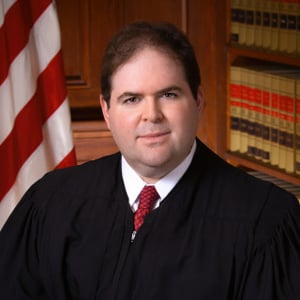
David Stras became a judge on the United States Court of Appeals for the Eighth Circuit on January 31, 2018. Before serving on the Eighth Circuit, Judge Stras was an Associate Justice of the Minnesota Supreme Court, a position he occupied from July 1, 2010 until his appointment to the Eighth Circuit.
Prior to becoming a judge, Stras was a member of the faculty of the University of Minnesota Law School from 2004 through 2010. He taught and wrote in the areas of federal courts and jurisdiction, constitutional law, criminal law, and law and politics.
Judge Stras received his Bachelor of Arts degree, with highest distinction, in 1995 and his Master of Business Administration in 1999, both from the University of Kansas. He also received his law degree from the University of Kansas School of Law in 1999, where he served as Editor-in-Chief of the Criminal Procedure Edition of the Kansas Law Review.
Following law school, Stras clerked for The Honorable Melvin Brunetti of the United States Court of Appeals for the Ninth Circuit and then for The Honorable J. Michael Luttig of the United States Court of Appeals for the Fourth Circuit.
From 2001 to 2002, he practiced white-collar criminal and appellate litigation with the Washington, D.C., office of Sidley Austin Brown & Wood. Following his year in practice, he clerked for The Honorable Clarence Thomas of the Supreme Court of the United States.
John Marshall Harlan II Professor of Law Emerita, New York Law School; Former President, American Civil Liberties Union
Nadine Strossen, New York Law School Professor Emerita and Senior Fellow at FIRE (the Foundation for Individual Rights and Expression), was national President of the American Civil Liberties Union from 1991 to 2008. An internationally acclaimed free speech scholar and advocate, who regularly addresses diverse audiences and provides media commentary around the world, Strossen is also the Host and Project Consultant for Free To Speak, a 3-hour documentary film series distributed on public television in 2023. Her books about free speech include: Free Speech: What Everyone Needs to Know® (Oxford University Press 2023); HATE: Why We Should Resist It with Free Speech, Not Censorship (Oxford University Press 2018); and Defending Pornography: Free Speech, Sex, and the Fight for Women’s Rights (Scribner 1995), which was republished with a new Preface in 2024 as part of the NYU Classics Series. Her many honors and awards include the National Coalition Against Censorship’s Judy Blume Lifetime Achievement Award for Free Speech. She serves on the Advisory Boards of several organizations that do free speech work, including: ACLU, Academic Freedom Alliance, Foundation Against Intolerance and Racism (FAIR), Heterodox Academy, National Coalition Against Censorship, and the University of Austin.
Thomas M. Siebel Senior Fellow, The Hoover Institution, Stanford University; Gary T. Schwartz Distinguished Professor of Law Emeritus, UCLA School of Law
Eugene Volokh is the Thomas M. Siebel Senior Fellow at the Hoover Institution (Stanford), as well as the Gary T. Schwartz Distinguished Professor of Law Emeritus and Distinguished Research Professor at UCLA School of Law. He recently retired from teaching at UCLA, after 30 years there, and is now focusing on research.
Volokh is the author of the textbooks The First Amendment and Related Statutes (8th ed. 2023), and Academic Legal Writing (5th ed. 2016), as well as over 100 academic law journal articles, mostly on First Amendment law. He is a member of The American Law Institute; the editor-in-chief of the Journal of Free Speech Law; and the creator and coauthor of The Volokh Conspiracy, a leading legal blog founded in 2002 (hosted at the Washington Post from 2014 to 2017 and now at Reason Magazine).
Founder, Chairman, and CEO, Louis D. Brandeis Center for Human Rights Under Law
Hon. Kenneth L. Marcus is an internationally recognized expert in civil and human rights, as well as a leader in the fight against anti-Semitism on and off university campuses. He is the Founder, Chairman, and CEO of The Louis D. Brandeis Center for Human Rights Under Law, the leading civil rights legal organization fighting against anti-Semitism. The New York Times has called him “The Man Who Helped Redefine Campus Anti-Semitism.” He been described, in that paper, as “the single most effective and respected force” to combat anti-Semitism.
During his public service career, Marcus served as Assistant U.S. Secretary of Education for Civil Rights; Staff Director at the U.S. Commission on Civil Rights; and General Deputy Assistant U.S. Secretary of Housing and Urban Development for Fair Housing and Equal Opportunity.
In academia, he serves as Professorial Lecturer in Law at George Washington University. He formerly held the Lillie and Nathan Ackerman Chair in Equality and Justice in America at the City University of New York’s Bernard M. Baruch College, served as Visiting Research Professor of Political Science at Yeshiva University, and was a Board of Visitors member George Mason University and Distinguished Senior Fellow at that university’s law school. He is a member of the editorial board of the Journal of Contemporary Antisemitism and previously served as Associate Editor of the Journal for the Study of Anti-Semitism.
Marcus is also author of The Definition of Anti-Semitism (Oxford University Press) and Jewish Identity and Civil Rights in America (Cambridge University Press). He has published widely in academic journals as well as in more popular venues such as The Wall Street Journal, Washington Post, Newsweek, USA Today, and Politico. He is a graduate of Williams College and the University of California at Berkeley School of Law.
Earlier in his career, he was a litigation partner in two major law firms, where he conducted complex commercial and constitutional litigation. He also serves as Chairman emeritus of the Executive Committee of the Federalist Society for Law & Public Policy Civil Rights Practice Group.
Dean & Clifton R. Musser Professor of Law and Economics, University of Chicago Law School
Thomas J. Miles is the Dean and Clifton R. Musser Professor of Law and Economics at the University of Chicago Law School. As its 14th Dean, Miles has deepened the Law School’s distinctive commitment to path-breaking scholarship and transformative education since 2015. Under his leadership, the Law School recruited more than a dozen academic and clinical faculty members and inaugurated the category of professor from practice. The scholarly ideas of the faculty have been supported and shared more widely through the launch of three new centers: the Center on Law and Finance, the Constitutional Law Institute, and the Malyi Center for the Study of Institutional and Legal Integrity. The clinical program expanded with the addition of three new clinics: the Innovation Clinic, the Jenner & Block Supreme Court and Appellate Clinic, and the Immigrants’ Rights Clinic. During Miles’s deanship, the Law School recruited highly talented and diverse cohorts of students. He steered the Law School through the COVID-19 pandemic. The Law School undertook the first significant revision to the 1L curriculum since 1977 and introduced the accelerated JD/MBA program. The Law School’s vibrant student life was enhanced with new programs in the areas of freedom of expression and diversity and inclusion, including the introduction of a pre-orientation program. The placement of graduates into clerkships nearly doubled. These activities have been supported by generous philanthropy, including a completion of the Inquiry & Impact Campaign with a record amount for the Law School and the highest participation rate within the University. Six new named professorships, including the first named clinical professorship, have been deployed, and financial aid for students reached a new high. As a scholar, Miles makes creative use of the methods of law and economics to investigate legal questions not conventionally thought to fall within that field. For example, he has written on judicial behavior and immigration enforcement. Miles has taught a wide variety of courses at the Law School, including securities regulation, torts, first-year criminal law, economic analysis of law, and federal criminal law. In 2009, he received the Graduating Students Award for Outstanding Teaching. Miles received a PhD in economics from the University of Chicago, a JD from Harvard Law School, and a BA from Tufts University. He clerked for the Hon. Jay S. Bybee of the U.S. Court of Appeals for the Ninth Circuit, and from 2005 to 2013, he was a Co-Editor of the Journal of Legal Studies.
Judge, United States Court of Appeals, Eighth Circuit
David Stras became a judge on the United States Court of Appeals for the Eighth Circuit on January 31, 2018. Before serving on the Eighth Circuit, Judge Stras was an Associate Justice of the Minnesota Supreme Court, a position he occupied from July 1, 2010 until his appointment to the Eighth Circuit.
Prior to becoming a judge, Stras was a member of the faculty of the University of Minnesota Law School from 2004 through 2010. He taught and wrote in the areas of federal courts and jurisdiction, constitutional law, criminal law, and law and politics.
Judge Stras received his Bachelor of Arts degree, with highest distinction, in 1995 and his Master of Business Administration in 1999, both from the University of Kansas. He also received his law degree from the University of Kansas School of Law in 1999, where he served as Editor-in-Chief of the Criminal Procedure Edition of the Kansas Law Review.
Following law school, Stras clerked for The Honorable Melvin Brunetti of the United States Court of Appeals for the Ninth Circuit and then for The Honorable J. Michael Luttig of the United States Court of Appeals for the Fourth Circuit.
From 2001 to 2002, he practiced white-collar criminal and appellate litigation with the Washington, D.C., office of Sidley Austin Brown & Wood. Following his year in practice, he clerked for The Honorable Clarence Thomas of the Supreme Court of the United States.
John Marshall Harlan II Professor of Law Emerita, New York Law School; Former President, American Civil Liberties Union
Nadine Strossen, New York Law School Professor Emerita and Senior Fellow at FIRE (the Foundation for Individual Rights and Expression), was national President of the American Civil Liberties Union from 1991 to 2008. An internationally acclaimed free speech scholar and advocate, who regularly addresses diverse audiences and provides media commentary around the world, Strossen is also the Host and Project Consultant for Free To Speak, a 3-hour documentary film series distributed on public television in 2023. Her books about free speech include: Free Speech: What Everyone Needs to Know® (Oxford University Press 2023); HATE: Why We Should Resist It with Free Speech, Not Censorship (Oxford University Press 2018); and Defending Pornography: Free Speech, Sex, and the Fight for Women’s Rights (Scribner 1995), which was republished with a new Preface in 2024 as part of the NYU Classics Series. Her many honors and awards include the National Coalition Against Censorship’s Judy Blume Lifetime Achievement Award for Free Speech. She serves on the Advisory Boards of several organizations that do free speech work, including: ACLU, Academic Freedom Alliance, Foundation Against Intolerance and Racism (FAIR), Heterodox Academy, National Coalition Against Censorship, and the University of Austin.
Thomas M. Siebel Senior Fellow, The Hoover Institution, Stanford University; Gary T. Schwartz Distinguished Professor of Law Emeritus, UCLA School of Law
Eugene Volokh is the Thomas M. Siebel Senior Fellow at the Hoover Institution (Stanford), as well as the Gary T. Schwartz Distinguished Professor of Law Emeritus and Distinguished Research Professor at UCLA School of Law. He recently retired from teaching at UCLA, after 30 years there, and is now focusing on research.
Volokh is the author of the textbooks The First Amendment and Related Statutes (8th ed. 2023), and Academic Legal Writing (5th ed. 2016), as well as over 100 academic law journal articles, mostly on First Amendment law. He is a member of The American Law Institute; the editor-in-chief of the Journal of Free Speech Law; and the creator and coauthor of The Volokh Conspiracy, a leading legal blog founded in 2002 (hosted at the Washington Post from 2014 to 2017 and now at Reason Magazine).
Counsel, Lehotsky Keller Cohn LLP
Shannon Grammel is a litigator with experience at all levels of federal and state courts.
Ms. Grammel has represented both private- and public-sector clients in a broad array of substantive legal areas, including constitutional law, administrative law, election law, and complex commercial litigation. Ms. Grammel has authored briefs before the Supreme Court of the United States, several federal courts of appeals, multiple state supreme courts, and federal and state trial courts. She has also argued in state appellate court and has participated in both federal- and state-court trials.
Before joining Lehotsky Keller Cohn LLP, Ms. Grammel served as Deputy Solicitor General of Kansas. Before that, she was a member of the Supreme Court & Appellate group in Latham & Watkins LLP’s Washington D.C. office.
Ms. Grammel served as a law clerk for Justice Brett M. Kavanaugh of the Supreme Court of the United States and Judge J. Harvie Wilkinson III of the U.S. Court of Appeals for the Fourth Circuit. Ms. Grammel earned her law degree from Stanford Law School, where she was President of the Stanford Law Review.
Vice President and Deputy Chief Counsel, U.S. Chamber Litigation Center, U.S. Chamber of Commerce
Jennifer B. Dickey is vice president and deputy chief counsel at the U.S. Chamber Litigation Center, the litigation arm of the U.S. Chamber of Commerce. Dickey handles a variety of litigation matters for the Chamber.
Dickey joined the Chamber following her service as Acting Assistant Attorney General and Principal Deputy Assistant Attorney General in the Civil Division at the U.S. Department of Justice. She also previously served as Deputy Associate Attorney General, providing strategic oversight of the Civil Division, Civil Rights Division, and Foreign Claims Settlement Commission, as well as Special Assistant to the President and Associate Counsel to the President. In the latter capacity, she provided legal advice on a wide array of executive actions and rulemakings, civil litigation, and judicial nominations.
Dickey also practiced law at Kirkland & Ellis LLP before her government service. She was a commercial and appellate litigator, representing businesses in federal and state courts.
Earlier in her career, Dickey served as a law clerk for the Honorable Clarence Thomas of the Supreme Court of the United States and the Honorable William H. Pryor Jr. of the United States Court of Appeals for the Eleventh Circuit.
Dickey earned her law degree magna cum laude from Duke University School of Law, where she was an Executive Editor of the Duke Law Journal, and her undergraduate degree magna cum laude from Dartmouth College.
Professor of Law, Widener University Commonwealth Law School
Senior Attorney, Institute for Free Speech
Brett Nolan is a Senior Attorney at the Institute for Free Speech, a public interest law firm that defends the First Amendment rights of those engaged in political speech and advocacy around the country.
Before joining the Institute, Brett served as the Principal Deputy Solicitor General of Kentucky, where he represented the Commonwealth in a wide variety of high-stakes litigation at every level of state and federal court. In that role, Brett led a successful challenge against the Department of Treasury over the constitutionality of a federal law limiting the ability of states to modify their tax codes, and he helped secure a U.S. Supreme Court victory that upheld a state’s constitutional right to defend its interests in federal court.
Prior to that, Brett served as the Deputy General Counsel to the former Governor of Kentucky, where he advised the governor and other executive branch officials on legal and policy issues and represented them in litigation. Brett clerked for Judge John Nalbandian of the U.S. Court of Appeals for the Sixth Circuit and Judge Karen K. Caldwell of the U.S. District Court for the Eastern District of Kentucky. Between clerkships, he worked in private practice. Brett received his law degree from the University of Chicago Law School, where he graduated with High Honors and was an editor of The University of Chicago Law Review.
Partner, Bailey Glasser LLP
Greg Porter has extensive trial and class action experience in complex pension, 401(k) plan, and employee stock ownership plan (ESOPs) lawsuits in federal court. Greg has led Bailey Glasser’s ERISA and trust practice to major trial and appellate victories, including seminal decisions in the Seventh and Fourth Circuit Courts of Appeal and a $30 million trial judgment that broke new ground for ESOPs. With co-counsel, the firm’s ERISA practice won a 9-0 decision in the Supreme Court, Intel Corp v. Sulyma, that established key statute of limitations rights for employees in ERISA cases.
Greg has recovered hundreds of millions of dollars on behalf of employees who lost retirement savings in 401(k) plans and ESOPs. He understands complex financial transactions, investments, and instruments.
Greg has also developed techniques for successfully investigating and prosecuting complex lawsuits involving business valuation, securities lending, hedge funds, and private equity. He has argued appeals in the Second, Fourth, Sixth and Eighth U.S. Circuit Courts of Appeal.
Senior Fellow, Stand Together Trust
Vikrant Reddy is a senior fellow at Stand Together Trust, specializing in the area of criminal justice reform. Reddy previously served as a senior policy analyst at the Texas Public Policy Foundation (TPPF), where he managed the launch of TPPF’s national Right on Crime initiative in 2010. He has worked as a research assistant at the Cato Institute, as a judicial clerk to the Hon. Gina M. Benavides in Texas, and as an attorney in private practice. He is a member of the State Bar of Texas, and he serves on the Executive Committee of the Criminal Law Practice Group of the Federalist Society. He is also an appointee to the U.S. Commission on Civil Rights Texas State Advisory Committee.
Reddy’s research and scholarly opinions have appeared in a range of national media outlets, including USA Today, National Review, The Federalist, and others.
Reddy earned his law degree from the Southern Methodist University School of Law. He received his undergraduate degree from the University of Texas at Austin.
Partner, Consovoy McCarthy PLLC
Mr. Weir is an experienced litigator who focuses on constitutional and regulatory matters. He has particular expertise in cases involving the First and Fourteenth Amendments, civil rights statutes, and challenges to federal agency actions. He has briefed and presented oral argument in state and federal courts across the country, including in the Supreme Court of the United States. He was trial counsel and part of the team that prevailed before the Supreme Court in the landmark case Students for Fair Admissions, Inc. v. Harvard College and University of North Carolina.
Since 2015, Mr. Weir has been an adjunct professor for the Administrative Law and Supreme court clinics at the Antonin Scalia Law School at George Mason University. He is a former law clerk to Judge Carlos T. Bea of the United States Court of Appeals for the Ninth Circuit and Judge Anthony J. Trenga of the United States District Court for the Eastern District of Virginia. He earned his A.B. cum laude from Georgetown University and his J.D. summa cum laude from George Mason University School of Law.
A Seat at the Sitting - January 2025
Jennifer B. Dickey, Michael R. Dimino, Shannon Grammel Denmark, Brett Nolan, Gregory Y. Porter, Vikrant P. Reddy, Bryan Weir
Each month, a panel of constitutional experts convenes to discuss the Court’s upcoming docket sitting...
A Seat at the Sitting - January 2025
The January Docket in 90 Minutes or Less
Topics
Best of 2024: Most Read Posts and Editor’s Picks
The Federalist Society has been honored to publish 240 fantastic blog posts from many talented...
Pandemic Orders and the Right to Earn a Living in North Carolina
Tom M. Fogarty
In March of 2020—during the early stages of the COVID-19 pandemic—North Carolina Governor Roy Cooper...
Topics
Free to Speak for a Living? Professional Speech and the First Amendment Back at SCOTUS
The Supreme Court’s 2018 decision in National Institute of Family & Life Advocates v. Becerra...
Iowa’s Constitution Provides a Legislative Privilege Despite Lacking a Speech or Debate Clause
Patrick C. Valencia
A civil rights organization, the League of United Latin American Citizens of Iowa (LULAC),...
Topics
A Guide to Locating and Obtaining Older Federal Court Records
The PACER platform—Public Access to Court Electronic Records—is still a relatively recent invention, completing wide...
Topics
The Transcendent Significance of Thanksgiving Day
With Thanksgiving Day fast upon us and our thoughts focused on family, food, and football,...
Campus Chaos: Protected Speech or Unprotected Conduct?
Kenneth L. Marcus, Thomas J. Miles, David R. Stras, Nadine Strossen, Eugene Volokh
Over the past year, college campuses have been filled with student protests and demonstrations. A...
Campus Chaos: Protected Speech or Unprotected Conduct?
Kenneth L. Marcus, Thomas J. Miles, David R. Stras, Nadine Strossen, Eugene Volokh
Over the past year, college campuses have been filled with student protests and demonstrations. A...