
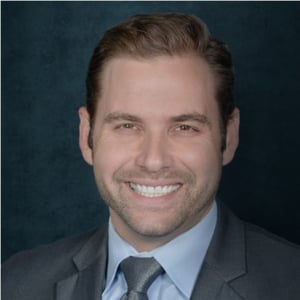
Vice President for the Program on Technology, Criminal Justice and Civil Liberties, Lincoln Network
Arthur Rizer is the Vice President for the Program on Technology, Criminal Justice and Civil Liberties at Lincoln Network. In addition to his work at Lincoln, Arthur is a visiting lecturer at University College London, and an adjunct professor at George Mason University’s Antonin Scalia Law School. Arthur is also a member of Columbia University Justice Lab’s Executive Session for the Future of Justice Policy, the Federalist Society’s Executive Committee of the Criminal Law Practice Group, the Virginia Advisory Committee to the U.S. Commission on Civil Rights, and other advisory bodies.
Before joining Lincoln, Arthur was founding director of the R Street Institute’s program on criminal justice and civil liberties. Prior to that, Arthur taught at West Virginia University’s College of Law, and was a visiting professor at Georgetown University Law Center. He also served as a trial attorney with the U.S. Justice Department, primarily as a federal prosecutor in the Criminal Division, where he targeted command-and-control drug cartel leaders and narco-terrorists. He also served as a prosecutor in the U.S. Attorney’s Office for the Southern District of California and in the civil division. Earlier in his career, Arthur served in the U.S. Army, originally enlisting as a private before later receiving a commission. He served as an armor officer, later becoming the commander of a military police company and a Reserve Officers’ Training Corps assistant professor. He deployed to Fallujah, Iraq, with the mission to train the Iraqi Infantry and served as an MP acting battalion commander and executive officer. He retired as a lieutenant colonel from the U.S. Army (WVNG). During his Army career, Arthur received the Bronze Star, Purple Heart, Meritorious Service and Iraq Campaign medals.
Arthur is the author of three books: Lincoln’s Counsel (2010); The National Security Implications of Immigration Law (2013); and Jefferson’s Pen: The Art of Persuasion (2016).
Arthur earned his bachelor’s degree in political science from Pacific Lutheran University; a master of laws, with distinction, from Georgetown University’s Law Center; and his JD, magna cum laude, from Gonzaga University School of Law. He is also a graduate of the U.S. Marine Corps’ Command Staff College. He is in the final stages of a doctorate at the University of Oxford, Faculty of Law, Centre of Criminology that focuses on policing.
Professor, Gonzaga University School of Law
Law clerk for Justice Stephen Bistline, Idaho Supreme Court, 1979-80; in private practice with Lukins & Annis, P.S., Spokane, (1980-84); assistant professor, Oklahoma City University (1984-87); Senior Fellow, Discovery Institute, Seattle, Washington.
University of Washington School of Law
Professor Jay has taught at the UW law school since 1980. Prior to coming to Washington he taught at the University of North Carolina for two years. Before entering teaching, Professor Jay clerked for two years, first with the U.S. District Court for the District of Columbia and then for U.S. Supreme Court Justice Warren E. Burger. His teaching and research interests include constitutional law and constitutional history. Professor Jay is the author of Most Humble Servants: The Advisory Role of Early Judges (Yale 1997). He has worked extensively to assure the reproductive rights of women, particularly access to safe and legal abortions. During 1984-85 he was a visiting professor at Georgetown University Law Center.
Washington State Supreme Court
Richard B. Sanders was elected to the Washington Supreme Court in 1995. During his 26 years of legal practice prior to becoming a Justice of the Supreme Court, Justice Sanders litigated more than 100 appeals (no fewer than 60 of which resulted in published opinions). Since coming to the Supreme Court he has become one of its most prolific authors and is recognized nationally for his published opinions and other writings. See www.JusticeSanders.com.
As a private practitioner he championed the civil rights of his clients and as a Justice he regards protecting our constitutionally guaranteed liberties as the first duty of our highest court. Justice Sanders believes the court must protect all the legal rights of all the citizens who come before it all the time. "We have no second class citizens," he adds. His special interest is the Washington State Constitution, and he often quotes his favorite passage: "[G]overnments . . . are established to protect and maintain individual rights." Const. art. I, § 1.
Justice Sanders is a native of Tacoma and spent the best years of his childhood there. He moved to Seattle where he graduated from Highline High School. While at Highline High he was elected president of the school's debate club, and he earned the rank of Eagle Scout. Justice Sanders received his Bachelor of Arts degree from the University of Washington after participating in the political science honors program and playing[1] in the Rose Bowl. He thereafter earned his J.D. in 1969 from the University of Washington School of Law. During his years at the University, Justice Sanders wrote "The Devil's Advocate," a weekly column of opinion in The Daily, the student newspaper.
Since taking his seat on the Supreme Court, Justice Sanders has served as an adjunct professor teaching appellate advocacy at the UW School of Law; has written articles for professional journals and texts; and has presented lectures to local, state, and national organizations on diverse topics including civil liberties, land use, the Washington State Constitution, legal ethics, and Abraham Lincoln, among others.
Justice Sanders enjoys inviting students and community groups to tour the Temple of Justice to visit with him. He is the father of Laura Sanders, a 2009 summa cum laude graduate of the University of San Francisco. Laura is enthusiastic in all her endeavors and is the light of her daddy's life.

The Evolution of Modern Use-of-Force Policies and the Need for Professionalism in Policing
Arthur Rizer, Emily Mooney
Note from the Editor: The Federalist Society takes no positions on particular legal and public...
Washington Supreme Court Position 6: A Debate
Peter Callaghan, David K. DeWolf, Stewart Jay, Richard B. Sanders, Charlie Wiggins
Candidates for the Washington State Supreme Court answered questions from a panel of experts and the...