
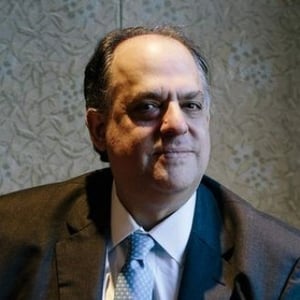
Director of Litigation and Senior Attorney, Hamilton Lincoln Law Institute
Theodore H. Frank is director at the Hamilton Lincoln Law Institute and the Center for Class Action Fairness. Frank founded and ran CCAF as a non-profit, public interest law firm in 2009.
Frank has won several landmark appeals and tens of millions of dollars for consumers and other plaintiffs through his class action work. Adam Liptak of The New York Times calls Frank “the leading critic of abusive class action settlements” and the American Lawyer Litigation Daily referred to him as “the indefatigable scourge of underwhelming class action settlements.”
Previously, Frank clerked for the Honorable Frank H. Easterbrook on the Seventh Circuit Court of Appeals, and was a litigator at firms in Washington and Los Angeles and a resident fellow at the American Enterprise Institute. Frank is a frequent public speaker and has testified before Congress multiple times on legal issues. He has been profiled by The Wall Street Journal, Forbes, GQ, and the ABA Journal, among other publications.
In 2008, Frank was elected to membership in the American Law Institute. He also serves on the Executive Committee of the Federalist Society Litigation Practice Group. Frank graduated from The University of Chicago Law School in 1994 with high honors and as a member of the Order of the Coif and the Law Review. He is a member of the District of Columbia Bar and the state bars of California and Illinois.

Milton R. Underwood Chair in Free Enterprise, Vanderbilt University Law School
Brian Fitzpatrick is the Milton R. Underwood Chair in Free Enterprise and Professor of Law at Vanderbilt Law School, where his research focuses on class action litigation, federal courts, judicial selection, and constitutional law. He is best known for his empirical studies of class action settlements as well as his book The Conservative Case for Class Actions (University of Chicago Press, 2019). Professor Fitzpatrick joined Vanderbilt's law faculty in 2007 after serving as the John M. Olin Fellow at New York University School of Law. He graduated first in his class from Harvard Law School and went on to clerk for Judge Diarmuid O'Scannlain on the U.S. Court of Appeals for the Ninth Circuit and Justice Antonin Scalia on the U.S. Supreme Court. After his clerkships, Professor Fitzpatrick practiced commercial and appellate litigation for several years at Sidley Austin in Washington, D.C., and served as Special Counsel for Supreme Court Nominations to U.S. Senator John Cornyn. Before earning his law degree, Fitzpatrick graduated summa cum laude with a bachelor's of science in chemical engineering from the University of Notre Dame. He has received the Hall-Hartman Outstanding Professor Award, which recognizes excellence in classroom teaching, for his Civil Procedure and Federal Courts courses.

Senior Fellow, Arthur F. Burns Fellow in Financial Policy Studies, American Enterprise Institute
Peter J. Wallison holds the Arthur F. Burns Chair in Financial Policy Studies and is co-director of AEI’s program on Financial Policy Studies. Prior to joining AEI, he practiced banking, corporate and financial law at Gibson, Dunn & Crutcher in Washington, D.C., and New York. Mr. Wallison has held a number of government positions. From June 1981 to January 1985, he was General Counsel of the United States Treasury Department, where he had a significant role in the development of the Reagan Administration's proposals for deregulation in the financial services industry. During 1986 and 1987, Mr. Wallison was White House counsel to President Ronald Reagan, and between 1972 and 1976, he served first as Special Assistant to New York's Gov. Nelson A. Rockefeller and, subsequently, as counsel to Mr. Rockefeller as vice president of the United States.
Mr. Wallison was admitted to practice before the courts of New York and the District of Columbia, and is retired from practice in New York. He continues to be a member of the District of Columbia Bar Association. He received his undergraduate degree from Harvard College in 1963 and law degree from Harvard Law School in 1966.
Mr. Wallison is the author of Ronald Reagan: The Power of Conviction and the Success of His Presidency, published in December 2002 by Westview Press. On campaign finance, he is the author (with Joel Gora) of Better Parties, Better Government, (AEI Press 2009). On financial or regulatory matters, he is the author of Back From the Brink, a proposal for a private deposit insurance system, and co-author of Nationalizing Mortgage Risk: The Growth of Fannie Mae and Freddie Mac; The GAAP Gap: Corporate Disclosure in the Internet Age; Competitive Equity: A Better Way to Organize Mutual Funds; Bad History, Worse Policy: How a False Narrative about the Financial Crisis Led to the Dodd-Frank Act (AEI Press 2013); and Hidden In Plain Sight: What Caused the World’s Worst Financial Crisis and Why it Could Happen Again (Encounter Books 2015). His most recent book is Judicial Fortitude: The Last Chance to Rein in the Administrative State, published by Encounter Books in October 2018.
He testifies frequently before committees of Congress, and is a frequent contributor to the op-ed pages of the Wall Street Journal and other print and online journals. He has also been a speaker at many conferences on financial services, housing, the causes of the financial crisis, the Dodd-Frank Act, accounting, and corporate governance, and was a member of the Shadow Financial Regulatory Committee between 1995 and 2015. He was a member of the SEC Advisory Committee on Improvements to Financial Reporting (2008), co-Chair of the Pew Financial Reform Task Force (2009), and a member of the congressionally- appointed Financial Crisis Inquiry Commission (2009-2011). In May 2011, for his work in financial policy, Mr. Wallison received an honorary doctorate in Humane Letters from the University of Colorado.

Wayne A. Abernathy, Wild Bells
Wayne A. Abernathy is a former U.S. Treasury Assistant Secretary for Financial Institutions under President George W. Bush, receiving the Alexander Hamilton Award in recognition of his service. In that office he was also a member of the Board of Directors of the Securities Investor Protection Corporation. Prior to his work at the Treasury, Mr. Abernathy served as Staff Director of the Senate Banking Committee, under Chairman Phil Gramm.
Following his service at the Treasury, Mr. Abernathy worked for 15 years on the staff of the American Bankers Association, as Executive Vice President for Financial Institutions Policy and Regulatory Affairs.
Previous experience with the Senate Banking Committee includes serving as Staff Director of the Subcommittee on Securities during 1995-1998. From 1989 until 1994, Mr. Abernathy was a Republican economist for the committee. He previously worked as a senior legislative assistant for Senator Gramm during 1987-1989 and as an economist for the Banking Committee’s Subcommittee on International Finance and Monetary Policy during 1981-1986, under Chairman Jake Garn.
Mr. Abernathy earned his bachelor’s degree in International Studies from The Johns Hopkins University in 1978. In 1980, he received a master’s degree in International Studies from the School of Advanced International Studies of The Johns Hopkins University.

Chairman of the Securities and Exchange Commission
Paul S. Atkins was sworn into office as the 34th Chairman of the Securities and Exchange Commission on April 21, 2025, after being nominated by President Donald J. Trump on January 20, 2025, and confirmed by the U.S. Senate on April 9, 2025.
Prior to returning to the SEC, Chairman Atkins was most recently chief executive of Patomak Global Partners, a company he founded in 2009. Chairman Atkins helped lead efforts to develop best practices for the digital asset sector. He served as an independent director and non-executive chairman of the board of BATS Global Markets, Inc. from 2012 to 2015.
Chairman Atkins was appointed by President George W. Bush to serve as a Commissioner of the SEC from 2002 to 2008. During his tenure, he advocated for transparency, consistency, and the use of cost-benefit analysis at the agency. Chairman Atkins also represented the SEC at meetings of the President’s Working Group on Financial Markets and the U.S.-EU Transatlantic Economic Council. From 2009 to 2010, he was appointed a member of the Congressional Oversight Panel for the Troubled Asset Relief Program.
Before serving as an SEC Commissioner, Chairman Atkins was a consultant on securities and investment management industry matters, especially regarding issues of strategy, regulatory compliance, risk management, new product development, and organizational control.
From 1990 to 1994, Chairman Atkins served on the staff of two chairmen of the SEC, Richard C. Breeden and Arthur Levitt, ultimately as chief of staff and counselor, respectively. He received the SEC’s 1992 Law and Policy Award for work regarding corporate governance matters.
Chairman Atkins began his career as a lawyer in New York, focusing on a wide range of corporate transactions for U.S. and foreign clients, including public and private securities offerings and mergers and acquisitions. He was resident for 2½ years in his firm's Paris office and admitted as conseil juridique in France.
A member of the New York and Florida bars, Chairman Atkins received his J.D. from Vanderbilt University School of Law in 1983 and was Senior Student Writing Editor of the Vanderbilt Law Review. He received his A.B., Phi Beta Kappa, from Wofford College in 1980.
Originally from Lillington, North Carolina, Chairman Atkins grew up in Tampa, Florida. He and his wife Sarah have three sons.
Bernard L. Schwartz Chair in Economic Policy, Brookings Institution
Resident Fellow, American Enterprise Institute
Timothy P. Carney is a resident fellow at the American Enterprise Institute, where he works on economic competition, cronyism, civil society, localism, and religion in America. He is concurrently the commentary editor at the Washington Examiner.
Mr. Carney’s latest book, “Alienated America: Why Some Places Thrive While Others Collapse” (HarperCollins), was published in February 2019. His previous books include “Obamanomics: How Barack Obama Is Bankrupting You and Enriching His Wall Street Friends, Corporate Lobbyists, and Union Bosses” (Regnery Publishing, 2009) and “The Big Ripoff: How Big Business and Big Government Steal Your Money” (John Wiley & Sons, 2006), which was awarded the 2008 Culture of Enterprise award by the Intercollegiate Studies Institute.
In addition to his Washington Examiner columns, Mr. Carney’s work has been published in a variety of magazines, websites, and newspapers, including The Atlantic, New York Post, The New York Times, Reason Magazine, and The Wall Street Journal. His television appearances include CNBC, CNN, Fox News, MSNBC, and the “PBS NewsHour.”
Mr. Carney has a bachelor’s degree from St. John’s College in Annapolis.
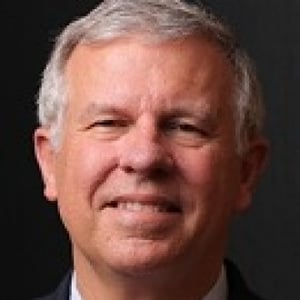
Partner, Davis Polk & Wardwell LLP
Mr. Guynn is head of Davis Polk’s Financial Institutions Group. He has been recognized as a thought-leader on financial regulatory reform and as one of the most widely consulted U.S. legal advisers during the financial crisis. See “In the Red Zone,”The American Lawyer, January 2009 and “For Davis Polk, Dodd-Frank Pays,” The American Lawyer, December 2010.
He has advised the Securities Industry and Financial Markets Association (SIFMA), the principal trade organization for U.S. banks, securities firms and asset managers, all of the U.S.’s six-largest banks and several foreign banks on the Dodd-Frank Act and its regulatory implementation.
His practice focuses on providing strategic bank and regulatory and enforcement advice and advising on M&A and capital markets transactions when the target or issuer is a banking organization or other financial institution. He also advises on bank failures and recapitalizations, corporate governance and internal controls, cross-border collateral transactions, credit risk management, securities settlement systems and payment systems.
Director of Research, Bloomberg Government, Bloomberg News
Now Director of Research at Bloomberg Government, Robert E. Litan has had a distinguished career. He had been vice president for Research and Policy at the Ewing Marion Kauffman Foundation in Kansas City, where he oversaw the Foundation’s extensive program for funding data collection and research relating entrepreneurship and economic growth. Dr. Litan also writes frequently with the Foundation’s president, Carl Schramm. Their book, Good Capitalism, Bad Capitalism, and the Economics of Growth and Prosperity, co-authored with William Baumol, (Yale University Press, 2007) has been translated into ten languages and is used as a college text around the world.
Dr. Litan was also a senior fellow in Economic Studies at the Brookings Institution, where he previously was vice president and director of Economic Studies. During his career, Dr. Litan has authored or co-authored over twenty books, edited another fourteen, and authored or co-authored over 200 articles in journals, magazines, and newspapers on a broad range of public policy issues. His other recent books include: Competitive Equity: Developing a Lower Cost Alternative for Mutual Funds (with Peter J. Wallison, AEI Press, 2007); Worldwide Financial Reporting (Oxford University Press, 2006, with three co-authors); Financial Statecraft (with Benn Steil, Yale University Press, 2006); and Follow The Money: The Enron Failure and the State of Corporate Disclosure (AEI-Brookings Joint Center for Regulatory Studies, 2003, with 3 co-authors).
Dr. Litan has been a lecturer in banking law at the Yale Law School, consulted for numerous organizations (public and private), and testified as an expert witness in a variety of legal and regulatory proceedings involving domestic (banking, antitrust) and international (primarily trade) issues. He also consulted for private sector firms and the Department of Justice on antitrust matters. Among his various assignments, he has written a number of influential federal reports. He co-authored two Congressionally-mandated studies for the Treasury Department on the role of the Community Reinvestment Act after the Financial Modernization Act of 1999. During 1996-97, he served as a consultant to the Treasury Department and was the lead author of its report to Congress on the future of the financial services industry (American Finance in the 21st Century), and in 1998-99, he was the main author of the Report of President’s Commission to Study Capital Budgeting. In 1998, he also chaired the National Academy of Sciences Committee on Assessing the Costs of Natural Disasters, which produced a report, The Impacts of Natural Disasters: A Framework for Loss Estimation.
Dr. Litan has served in several capacities in the federal government. During 1995 and 1996, he was associate director of the Office of Management and Budget, where he was responsible for overseeing budgetary and other policies of six cabinet agencies. From 1993 to 1995, he was Deputy Assistant Attorney General, in charge of civil antitrust litigation and regulatory issues at the Department of Justice (where among other matters, he supervised the first Microsoft investigation, which resulted in a consent decree; and the investigation against NASDAQ). From 1977 to 1979, he was the regulatory and legal staff specialist at the President’s Council of Economic Advisers. In the early 1990s, Dr. Litan was a member of the Commission on the Causes of the Savings and Loan Crisis.
Dr. Litan received his B.S. in economics (summa cum laude) from the Wharton School of Finance at the University of Pennsylvania; his J.D. from Yale Law School; and both his M. Phil. and Ph.D. in economics from Yale University.
Director, Berkeley Research Group LLC
Walter J. Mix III heads the financial services practice at Berkeley Research Group. He is also a former commissioner of the California Department of Financial Institutions (DFI). He previously served as a banking executive at Union Bank of California.
Mr. Mix works with the firm’s domestic and foreign bank clients on corporate governance, risk management, strategic planning, and financial advisory assignments. He has significant experience in strategic planning, mergers and acquisitions, enterprise risk management, regulatory compliance, and capital planning. He has also advised clients on reengineering and implementing technology to improve profitability. In addition, he performs litigation and expert services based on his extensive expertise in financial services. He speaks frequently before bankers’ groups and regulatory seminars.
In his position as commissioner of the DFI, he reorganized the organization and improved its efficiency and effectiveness. Mr. Mix worked with financial institutions on more than 60 mergers and acquisitions and the formation of 50 de novo institutions. He reengineered the examination processes for banking and other licensees. He was instrumental in the development and passage of California’s identity theft law and many other laws, including the interstate banking and branching law and cooperative supervisory agreements for domestic and foreign banks. Mr. Mix also spearheaded proposals designed to enhance financial institutions’ electronic banking and commerce capabilities.
He joined BRG from LECG, LLC and before that The Secura Group; he served as managing director in both firms. Mr. Mix is a graduate of the University of California, Riverside and earned a master’s degree with a concentration in economics and public policy from Rutgers University. Mr. Mix serves as chairman of the International Bankers Association of California.
Regent University School of Law
Before joining the Regent Law School faculty, Associate Professor Hester Peirce served as a Commissioner on the U.S. Securities and Exchange Commission (SEC) from 2018 to 2026. While in that role, she worked on a wide range of regulatory and enforcement matters. Her responsibilities included heading the agency’s Crypto Task Force, formed in January 2025.
Prior to joining the SEC, Professor Peirce conducted research on the regulation of financial markets at the Mercatus Center at George Mason University. During that time, she co-edited two books, testified, and wrote on issues including securities markets regulation, Dodd-Frank, small banks, clearinghouses, and economic analysis. Before that, she was a Senior Counsel on the U.S. Senate Committee on Banking, Housing, and Urban Affairs, where she advised Ranking Member Richard Shelby and other members of the Committee on securities issues. During a prior stint at the SEC, she served as counsel to SEC Commissioner Paul S. Atkins and also worked as a Staff Attorney in the SEC’s Division of Investment Management. She served as an associate at Wilmer, Cutler & Pickering (now WilmerHale) and clerked for Judge Roger Andewelt on the Court of Federal Claims.

Executive Vice President, The Federalist Society
Dean Reuter is Executive Vice President at the Federalist Society for Law and Public Policy Studies. He has served in two federal government agency Offices of the Inspector General, as Counsel to the Inspector General and Deputy Inspector General, responsible for policing the use of federal funds granted and contracted through those agencies. As such, he helped conduct and oversee criminal investigations across the country. He is the principal author of the non-fiction book, The Hidden Nazi: The Untold Story of America's Deal with the Devil, and editor of Liberty’s Nemesis: The Unchecked Expansion of the State and Confronting Terror: 9/11 and the Future of American National Security. He was appointed by the President and served as Vice-Chairman of the Board of Directors of the Corporation for National and Community Service, and recently served as an appointee on the U.S. Commission on Presidential Scholars. He is a graduate of Hood College (BA with Honors) and the University of Maryland School of Law.
Senior Advisor, Patomak Global Partners, LLC
Kathleen Casey is a senior advisor with Patomak Global Partners. Her Patomak client work spans corporate governance issues; international regulatory developments, including interaction with U.S. policies; and technical market regulations. She has more than two decades of experience in senior government regulatory, legal and policy roles.
Ms. Casey completed her five-year term as a Commissioner with the U.S. Securities and Exchange Commission in August 2011.
During her tenure, Ms. Casey acted as the SEC’s principal representative in various international fora, including multilateral and bilateral regulatory dialogues, the G-20 Financial Stability Board, and the International Organization of Securities Commissions (IOSCO). In this capacity, she also served in several international leadership positions, including as Chairman of the IOSCO Technical Committee and Co-chair of the CPSS/IOSCO Review of Standards, the IOSCO OTC Derivatives Task Force, the IOSCO Task Force on Supervisory Cooperation, and the FSB Working Group on Provisioning.
Prior to being appointed Commissioner, Ms. Casey served in various legal and policy roles in the United States Senate. From 2003 to 2006, she served as Staff Director and Counsel of the U.S. Senate Banking, Housing, and Urban Affairs Committee. Before serving as Staff Director for the Senate Banking Committee, Ms. Casey served in a series of senior advisory roles to U.S. Senator Richard Shelby (R-AL), including Chief of Staff from 2002 to 2003 and Legislative Director from 1996 to 2002. From 1994 to 1996, Ms. Casey served as the Staff Director of the Subcommittee on Financial Institutions and Regulatory Relief on the U.S. Senate Banking Committee; and from 1993 to 1994, she served as a Legislative Assistant for tax, budget, and finance matters for Senator Richard Shelby.
Currently, Ms. Casey serves as a non-executive director on the Board of HSBC Holdings plc, and is a member of the Board of Trustees of The Pennsylvania State University and Chairman of the Board of Penn State Health. She is also a member of the Library of Congress Trust Fund Board, the Board of Trustees of the International Valuation Standards Council, and the Public Company Accounting Oversight Board Advisory Council.
Previous roles include serving as a member and Non-Executive Chairman of the Council of the Alternative Investment Management Association, a group of over 1,300 hedge fund managers, fund of hedge funds managers, prime brokers, legal and accounting firms, investors, fund administrators, and independent fund directors based in more than 50 countries worldwide; as a distinguished policy fellow with the Georgetown Center for Financial Markets and Policy at Georgetown University's McDonough School of Business; an adjunct lecturer at George Mason University School of Law; a non-executive director of FX Alliance Inc., an independent electronic foreign exchange trading platform; Vice Chairman of the Board of Trustees of the Pennsylvania State University and a member of the Board of the Milton S. Hershey Medical Center.
Ms. Casey received her J.D. from George Mason University Antonin Scalia Law School, and her B.A. in International Politics from Pennsylvania State University.
Founding Principal, Gupta Wessler PLLC
Deepak Gupta is the founding principal of Gupta Wessler PLLC. He focuses on Supreme Court, appellate, and complex litigation on a wide range of issues, including constitutional law, class actions, and consumers’ and workers’ rights.
Deepak is “known as a skilled appellate lawyer” (New York Times), “one of the emerging giants of the appellate and the Supreme Court bar,” a “heavy hitter,” and a “principled” and “incredibly talented lawyer” (Law 360). He is described in Chambers and Partners USA as “an excellent lawyer” with a “vibrant appellate practice focused on public interest cases and plaintiff-side representations.” Fastcase recently recognized him as “one of the country’s top litigators,” noting that “what sets him apart” is his legal creativity. The National Law Journal has singled out Deepak’s “calm, comfortable manner that conveys confidence” in oral argument.
Deepak regularly appears in the U.S. Supreme Court and appellate courts nationwide. In the 2016-2017 U.S. Supreme Court term, Deepak’s firm was counsel of record for parties in three merits cases; he was lead counsel in two, prevailing in both. Beyond the Supreme Court, Deepak has handled appeals in every federal circuit and seven state supreme courts. He is frequently sought out by trial lawyers to defend their most consequential victories or resurrect worthy claims on appeal—often after years of hard-fought litigation. He also works with co-counsel to design cases from the ground up—focusing on class actions and administrative and constitutional challenges. In one class action, Deepak represented all of the nation’s federal bankruptcy judges, recovering more than $50 million in back pay for the judges over Congress’s violation of the Constitution’s Judicial Compensation Clause. As the American Lawyer observed, “it’s hard to imagine a higher compliment than being hired to represent federal judges.”
Deepak’s clients have included national nonprofits, state and local governments, members of Congress, retail merchants, tech companies, and classes of consumers and workers harmed by corporate wrongdoing. He currently represents the American Association for Justice (on forced arbitration and civil justice issues), Everytown for Gun Safety (in Second Amendment litigation), and Citizens for Responsibility and Ethics in Washington (in litigation over the Emoluments Clauses).
Before founding the firm in 2012, Deepak served as Senior Counsel for Litigation and Senior Counsel for Enforcement Strategy at the Consumer Financial Protection Bureau. As the first appellate litigator hired under Elizabeth Warren’s leadership, he launched the Bureau’s amicus program, defended its regulations, and worked with the Solicitor General’s office on Supreme Court matters. For seven years previously, he was an attorney at Public Citizen Litigation Group, where he founded and directed the Consumer Justice Project and was the Alan Morrison Supreme Court Project Fellow. Before that, he worked on voting rights litigation at the Civil Rights Division of the U.S. Department of Justice, prisoners’ rights litigation at the ACLU, and religion clause litigation at Americans United for Separation of Church and State.
Deepak frequently engages in public advocacy and speaking, has testified multiple times before the U.S. House of Representatives and U.S. Senate, and appears frequently in the national print and broadcast media. He is currently a 2018-2019 Wasserstein Public Interest Fellow at Harvard Law School and has previously taught courses on public interest law and appellate advocacy as an Adjunct Professor of Law at Georgetown and American universities. He served as a law clerk to Judge Lawrence K. Karlton of the U.S. District Court for the Eastern District of California and studied law at Georgetown, Sanskrit at Oxford, and philosophy at Fordham.
Deepak is an elected member of the American Law Institute and sits on the boards of directors of the National Consumer Law Center, The Impact Fund, and the Alliance for Justice, and the advisory boards of the University of California’s Civil Justice Research Initiative, the Biden Institute, and the Institute for Consumer Antitrust Studies.
Professor of Law and Rouse Chairholder, Antonin Scalia Law School, George Mason University
Professor Miller holds an Allison and Dorothy Rouse Chair in Law at the Antonin Scalia Law School. An elected member of the American Law Institute and a research member of the European Corporate Governance Institute, Professor Miller is also a Fellow and the Co-Director of the Program on Organizations, Business and Markets at the Classical Liberal Institute at the New York University Law School, an Adjunct Fellow at the Manhattan Institute, and an Affiliated Scholar at the James Wilson Institute on Natural Rights and the American Founding. Prior to joining George Mason University in 2025, Professor Miller was the F. Arnold Daum Chair in Corporate Finance and Law and a Professor of Law at the University of Iowa College of Law, where he had also served as the Associate Dean for Faculty Development.
Professor Miller’s research concerns corporate and securities law, the economic analysis of law, and the philosophy of law. He is particularly interested in applying economic concepts and methods to understand provisions in contracts between sophisticated commercial parties. He has written on material adverse effect clauses under Delaware law, the fiduciary duties of corporate directors, director oversight liability, the history and development of Delaware corporate law, and much more. His articles and working papers are available on his SSRN page.
Professor Miller has been cited by federal and state courts in the United States, including the Delaware Supreme Court and the Delaware Court of Chancery, as well as by the Commercial Court of the United Kingdom and the Ontario Superior Court of Justice (Commercial List) in Canada. Additionally, he is a member of the Committee on Mergers, Acquisitions & Corporate Control Contests and a former chair of the Corporation Law Committee of the New York City Bar Association.
Earlier in his career, Professor Miller was a Professor of Law at the Villanova University School of Law and the Associate Director of the Matthew J. Ryan Center for the Study of Free Institutions and the Public Good at Villanova University. He has been a Visiting Professor of Law at the University of Pennsylvania Law School, a Visiting Assistant Professor of Law at the Cardozo Law School, and an Olin Fellow in Law and Economics at the Columbia Law School.
Before entering academia, Professor Miller was an associate with Wachtell, Lipton, Rosen & Katz. He earned his J.D. from the Yale Law School where he was a Senior Editor of the Yale Law Journal and an Olin Fellow in Law, Economics and Public Policy. He earned his M.A. and M.Phil. degrees in philosophy from Columbia University, where he held a Mellon Fellowship in the Humanities from the Woodrow Wilson National Fellowship Foundation and a Western Civilization Fellowship from the Intercollegiate Studies Institute. He earned his B.A. in philosophy and mathematics from Columbia College.

George Mason University Foundation Professor of Law, Antonin Scalia Law School, George Mason University
TODD J. ZYWICKI is George Mason University Foundation Professor of Law at Antonin Scalia Law School at George Mason University and Research Fellow of the George Mason Law and Economics Center. During the Fall 2023 semester he served as the Visiting Scholar in Conservative Thought and Policy for the Bruce Benson Center for the Study of Western Civilization at the University of Colorado-Boulder. From 2020-2021 he was Chair of the Consumer Financial Protection Bureau Taskforce on Federal Consumer Financial Law. In 2021 he was inducted to the American College of Consumer Financial Services Lawyers. He is also a Senior Fellow of the F.A. Hayek Program for the Advanced Study of Politics, Philosophy, and Economics at George Mason University and a former Senior Fellow of the Cato Institute. From 2015-2017 he was Executive Director of the George Mason Law and Economics Center. He served as Co-Editor of the Supreme Court Economic Review from 2006-2017. From 2003-2004, Professor Zywicki served as the Director of the Office of Policy Planning at the Federal Trade Commission. He has also taught at Vanderbilt University Law School, Georgetown University Law Center, Boston College Law School, Mississippi College School of Law, and China University of Political Science and Law.
Professor Zywicki clerked for Judge Jerry E. Smith of the U.S. Court of Appeals for the Fifth Circuit and worked as an associate at Alston & Bird in Atlanta, Georgia, where he practiced bankruptcy and commercial law. He received his J.D. from the University of Virginia, where he was executive editor of the Virginia Tax Review and John M. Olin Scholar in Law and Economics. Professor Zywicki also received an M.A. in Economics from Clemson University and an A.B. cum Laude with high honors in his major from Dartmouth College.
Professor Zywicki is also a Lone Mountain Fellow of the Property and Environment Research Center, a Fellow of the International Centre for Economic Research in Turin, Italy, and a former Senior Fellow of the Goldwater Institute. During the Fall 2008 Semester Professor Zywicki was the Searle Fellow of the George Mason University School of Law and was a 2008-09 W. Glenn Campbell and Rita Ricardo-Campbell National Fellow and the Arch W. Shaw National Fellow at the Hoover Institution on War, Revolution and Peace. He has lectured and consulted with government officials around the world, including Iceland, Italy, Japan, and Guatemala. In 2006 Professor Zywicki served as a Member of the United States Department of Justice Study Group on “Identifying Fraud, Abuse and Errors in the United States Bankruptcy System.”
Professor Zywicki is the author of more than 130 articles in leading law reviews and peer-reviewed economics journals. He is one of the Top 10 most-cited law professors in the field of Commercial Law and one of the Top 25 law professors on Twitter as measured by engagement levels. He is one of the Top 50 Most Downloaded Law Authors at the Social Science Research Network. He has testified multiple times before Congress on issues of consumer bankruptcy law and consumer credit and is a frequent commentator on legal issues in the print and broadcast media, including the Wall Street Journal, New York Times, The Washington Post, The Washington Times, Nightline, The Newshour with Jim Lehrer, Neil Cavuto Show, Fox & Friends, Smerconish, Fox News @ Night with Shannon Bream, Fox Business, CNN, CNBC, Bloomberg News, BBC, The Diane Rehm Show, Lou Dobbs Show, Jerry Doyle Show, and The Laura Ingraham Show.
Professor Zywicki is former Chairman and a current member of the Board of Directors of the Competitive Enterprise Institute, and is a member of the Board of Directors of the Institute for Humane Studies, Bill of Rights Institute, the Executive Committee for the Federalist Society's Financial Institutions and E-Commerce Practice Group, the Board of Trustees of the Foundation for Research on Economics and the Environment. He formerly served on the Governing Board and the Advisory Council for the Financial Services Research Program at George Washington University School of Business. He is currently the Chair of the Academic Advisory Council for the following organizations: The Bill of Rights Institute, the film “We the People in IMAX,” and the McCormick-Tribune Foundation “Freedom Museum” in Chicago, Illinois. He is a member of the Board of Visitors of Ralston College and was a member of the Board of Trustees of Yorktown University. From 2005-2009 he served as an elected Alumni Trustee of the Dartmouth College Board of Trustees.

Laurence H. Silberman Chair in Constitutional Governance, American Enterprise Institute; Executive Director, Antonin Scalia Law School’s C. Boyden Gray Center for the Study of the Administrative State
Adam J. White is the Laurence H. Silberman Chair in Constitutional Governance and senior fellow at the American Enterprise Institute, where he focuses on the Supreme Court and the administrative state. He also directs the Antonin Scalia Law School’s C. Boyden Gray Center for the Study of the Administrative State.
He writes on regulation and constitutional government for a variety of publications. He practiced law in Washington, D.C., after clerking for the D.C. Circuit's Judge David Sentelle. He also has been chairman of the ABA's Administrative Law Section.
In 2021, he served on the Presidential Commission on the Supreme Court of the United States, where he criticized “Court packing” and other efforts to restructure the Supreme Court.
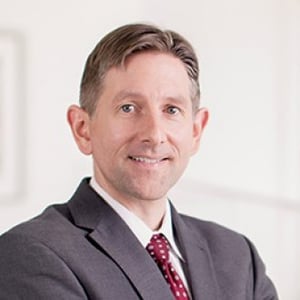
Partner, O'Melveny & Myers LLP
Gregory Jacob is a partner in O’Melveny’s Washington, D.C. office. Greg Jacob represents financial services companies including banks, investment managers, health care payors, and insurers, as well as other employers, in class action and other litigation concerning ERISA and other labor and employment matters. A former Solicitor of Labor, Greg has extensive knowledge on a wide variety of labor and employment issues including ERISA, FLSA, OFCCP, and whistleblower law. He regularly litigates in federal courts throughout the country, defends clients against Department of Labor investigations, and provides counseling to plans and plan sponsors.
Prior to rejoining O’Melveny in 2021, Greg served as Counsel to Vice President Pence and Deputy Assistant to the President. He directly advised the Vice President on all legal issues relating to the Office of the Vice President, and advised the White House Coronavirus Task Force concerning the Defense Production Act and other legal issues related to bolstering the domestic supply chain.
Executive Vice President, The Federalist Society
Dean Reuter is Executive Vice President at the Federalist Society for Law and Public Policy Studies. He has served in two federal government agency Offices of the Inspector General, as Counsel to the Inspector General and Deputy Inspector General, responsible for policing the use of federal funds granted and contracted through those agencies. As such, he helped conduct and oversee criminal investigations across the country. He is the principal author of the non-fiction book, The Hidden Nazi: The Untold Story of America's Deal with the Devil, and editor of Liberty’s Nemesis: The Unchecked Expansion of the State and Confronting Terror: 9/11 and the Future of American National Security. He was appointed by the President and served as Vice-Chairman of the Board of Directors of the Corporation for National and Community Service, and recently served as an appointee on the U.S. Commission on Presidential Scholars. He is a graduate of Hood College (BA with Honors) and the University of Maryland School of Law.
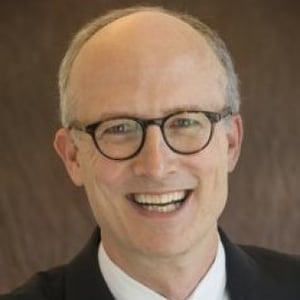
Michael J. Marks Professor of Law, University of Chicago Law School
M. Todd Henderson is the Michael J. Marks Professor of Law at the University of Chicago Law School. Professor Henderson’s research interests include corporations, securities regulation, and law and economics. He has taught classes ranging from Banking Regulation to Torts to American Indian Law.
Professor Henderson received an engineering degree cum laude from Princeton University in 1993. He worked for several years designing and building dams in California before matriculating at the Law School. While at the Law School, Todd was an editor of the Law Review and captained the Law School's all-University champion intramural football team. He graduated magna cum laude in 1998 and was elected to the Order of the Coif. Following law school, Todd served as clerk to the Hon. Dennis Jacobs of the US Court of Appeals for the Second Circuit. He then practiced appellate litigation at Kirkland & Ellis in Washington, DC, and was an engagement manager at McKinsey & Company in Boston, where he specialized in counseling telecommunications and high-tech clients on business and regulatory strategy.
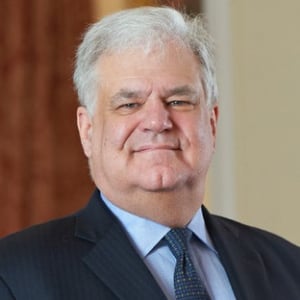
Stuyvesant P. Comfort Professor of Law; Director, Center for Financial Institutions; and Co-Director, Center for Civil Justice, New York University School of Law
Geoffrey Miller is an author or editor of a dozen books and more than 200 articles in the fields of financial institutions, contract law, corporate and securities law, constitutional law, civil procedure, legal history, jurisprudence, and ancient law. He has taught a wide range of subjects including law and economics, corporations, compliance and risk management, property, regulation of financial institutions, land development, securities law, the legal profession, and legal theory. Miller received his BA magna cum laude from Princeton in 1973 and his JD from Columbia in 1978, where he was a Stone Scholar and editor-in-chief of the Columbia Law Review. He clerked for Judge Carl McGowan of the US Court of Appeals for the District of Columbia Circuit and Justice Byron White of the US Supreme Court. After two years as an attorney adviser at the Office of Legal Counsel of the US Department of Justice and one year with a Washington, DC, law firm, he joined the faculty of the University of Chicago Law School in 1983 and NYU School of Law in 1995.
Miller has been a visiting professor or visiting scholar at Columbia University, Harvard University, University of Minnesota, University of Basel (Switzerland), University of Genoa (Italy), Collegio Carlo Alberto (Italy), Study Center Gerzensee (Switzerland), Vanderbilt University, University of St. Gallen (Switzerland), University of Frankfurt (Germany), University of Sydney (Australia), University of Auckland (New Zealand), and the Bank of Japan. Miller is a founder of the Society for Empirical Legal Studies, a scholarly organization devoted to promoting statistical and other empirical techniques in the study of legal institutions. He is founder and director of NYU School of Law’s Center for Financial Institutions, co-director of the Center for Civil Justice, co-founder of and Senior Academic Fellow at NYU's Program on Corporate Compliance and Enforcement, co-convener of the Global Economic Policy Forum, a member of the board of directors of State Farm Bank, and a fellow in the American Academy of Arts and Sciences.
S. Samuel Arsht Professor of Corporate Law, University of Pennsylvania Law School
David Skeel is the Caryl Louise Boies Visiting Professor of Law at New York University, and the S. Samuel Arsht Professor of Corporate Law at the University of Pennsylvania. He is the author of The New Financial Deal: Understanding the Dodd-Frank Act and its (Unintended) Consequences (Wiley, 2011); Icarus in the Boardroom: The Fundamental Flaws in Corporate America and Where They Came From (Oxford University Press, 2005); Debt’s Dominion: A History of Bankruptcy Law in America (Princeton University Press, 2001); and numerous articles on bankruptcy, corporate law, financial regulation, Christianity and law, and other topics. Professor Skeel has also written commentaries for the New York Times, Wall Street Journal, Books & Culture, The Weekly Standard, and other publications.
Laurence H. Silberman Chair in Constitutional Governance, American Enterprise Institute; Executive Director, Antonin Scalia Law School’s C. Boyden Gray Center for the Study of the Administrative State
Adam J. White is the Laurence H. Silberman Chair in Constitutional Governance and senior fellow at the American Enterprise Institute, where he focuses on the Supreme Court and the administrative state. He also directs the Antonin Scalia Law School’s C. Boyden Gray Center for the Study of the Administrative State.
He writes on regulation and constitutional government for a variety of publications. He practiced law in Washington, D.C., after clerking for the D.C. Circuit's Judge David Sentelle. He also has been chairman of the ABA's Administrative Law Section.
In 2021, he served on the Presidential Commission on the Supreme Court of the United States, where he criticized “Court packing” and other efforts to restructure the Supreme Court.

Sterling Professor of Law and Political Science, Yale Law School
Akhil Reed Amar is Sterling Professor of Law and Political Science at Yale University, where he teaches constitutional law in both Yale College and Yale Law School. After graduating from Yale College, summa cum laude, in 1980 and from Yale Law School in 1984, and clerking for Judge (later Justice) Stephen Breyer, Amar joined the Yale faculty in 1985 at the age of 26. He is Yale’s only living professor to have won the University’s unofficial triple crown — the Sterling Chair for scholarship, the DeVane Medal for teaching, and the Lamar Award for alumni service.
Amar’s work has won awards from both the American Bar Association and the Federalist Society, and he has been cited by Supreme Court justices across the spectrum in more than 50 cases — tops among scholars under age 70. According to both Fred Shapiro’s landmark 2021 study of lifetime scholarly citations and Heinonline’s most recent tabulation of lifetime law-review citations, Amar is America’s second most-cited legal scholar still under age 70. He is a member of the American Academy of Arts and Sciences and has written widely for popular publications, including The New York Times, The Washington Post, The Wall Street Journal, Time, and The Atlantic. He was an informal consultant to the popular TV show The West Wing and his scholarship has been showcased on many broadcasts, including The Colbert Report, Morning Joe, AC360, Velshi, Fox News @ Night with Shannon Bream, Fareed Zakaria GPS, Erin Burnett Outfront, and Constitution USA with Peter Sagal.
He is the author of more than a hundred law review articles and several books, including The Bill of Rights (1998 — winner of the Yale University Press Governors’ Award), America’s Constitution (2005 — winner of the ABA’s Silver Gavel Award), America’s Unwritten Constitution (2012 — named one of the year’s 100 best nonfiction books by The Washington Post), and The Constitution Today (2016 — named one of the year’s top ten nonfiction books by Time magazine). The first volume of his ambitious trilogy on American constitutional history from the Founding to the present, The Words That Made Us: America’s Constitutional Conversation, 1760-1840, came out in May 2021. The second volume, Born Equal: Remaking America’s Constitution, 1840-1920, will be published in September 2025 and is already available for pre-order. All together, his nonfiction books have won two starred reviews from Publishers Weekly and three starred reviews from Kirkus—tops, it is believed, among legal scholars under age 70. Together with Vikram David Amar (YLS ’88), he has a bi-weekly column on the Supreme Court on the distinguished website SCOTUSblog. Along with Andy Lipka, he co-hosts a popular and free weekly podcast, Amarica’s Constitution, whose listeners are eligible for CLE credit in most American jurisdictions. A wide assortment of his articles and op-eds and video links to many of his public lectures and free online courses may be found at akhilamar.com.

U.S. Court of Appeals, First Circuit
David Barron was appointed to the United States Court of Appeals for the First Circuit in May 2014. He graduated from Harvard College in 1989 and Harvard Law School in 1994. From 1989 to 1991, he worked as a newspaper reporter. After graduating from law school, he clerked for Judge Stephen R. Reinhardt of the United States Court of Appeals for the Ninth Circuit, from 1994 to 1995, and for Justice John Paul Stevens of the United States Supreme Court, from 1995 to 1996. He then worked as an attorney advisor for the Office of Legal Counsel of the United States Department of Justice, from 1996 to 1999. In 1999, Barron became an Assistant Professor at Harvard Law School. He became a full Professor at Harvard Law School in 2004, where he worked until he rejoined the Justice Department as Acting Assistant Attorney General for the Office of Legal Counsel, from 2009 to 2010. He then returned to the Harvard Law School faculty in 2010, where he was named the S. William Green Professor of Public Law in 2011, and worked until his appointment to the federal bench in 2014. Currently, Barron is the Honorable S. William Green Visiting Professor of Public Law at Harvard Law School. Barron has published articles in the Harvard Law Review, the Stanford Law Review, and the Yale Law Journal. His book, Waging War, won the 2017 William E. Colby Award.

Founding Partner, Boyden Gray & Associates
Ambassador C. Boyden Gray is the founding partner of Boyden Gray & Associates, a law and strategy firm in Washington, D.C., focused on constitutional and regulatory issues.
Mr. Gray worked in the White House for twelve years, first as counsel to the Vice President during the Reagan administration and then as White House Counsel to President George H.W. Bush. In the Reagan administration, he was Counsel to the Presidential Task Force on Regulatory Relief, for which he wrote the original Executive Order 12291 requiring cost-benefit analysis and White House review of regulations (later renumbered as current EO 12866). In the George H.W. Bush Administration, Mr. Gray was in charge of judicial selection and was also instrumental in the enactment of the Clean Air Act Amendments of 1990, the Energy Policy Act of 1992, and a cap-and-trade system for acid rain emissions. In 1993, he received the Presidential Citizens Medal. Under President George W. Bush, Mr. Gray was U.S. Ambassador to the European Union and U.S. Special Envoy to Europe for Eurasian Energy.
Mr. Gray practiced law for 25 years at the law firm of Wilmer, Cutler & Pickering and was chairman of the Administrative Law and Regulatory Practice Section of the American Bar Association from 2000 to 2002. Early in his career, Mr. Gray helped to develop the Business Roundtable and served as its first counsel. He is an adjunct professor at Antonin Scalia Law School and a former adjunct professor at NYU Law School (teaching energy and environmental law). Mr. Gray is on the Board of Directors of the Atlantic Council, the Federalist Society, Reason Foundation, and the Trust for the National Mall.
Mr. Gray earned his A.B. magna cum laude from Harvard, where he was an editor of the Crimson, and his J.D. with high honors from the University of North Carolina at Chapel Hill, where he was editor-in-chief of the Law Review. Mr. Gray served in the United States Marine Corps, and after law school, he clerked for Earl Warren, Chief Justice of the United States Supreme Court.

George C. Dix Professor in Constitutional Law, Northwestern University Pritzker School of Law
John O. McGinnis is a graduate of Harvard College and Harvard Law School where he was an editor of the Harvard Law Review. He also has an MA degree from Balliol College, Oxford, in philosophy and theology. Professor McGinnis clerked on the U.S. Court of Appeals for the District of Columbia. From 1987 to 1991, he was deputy assistant attorney general in the Office of Legal Counsel at the Department of Justice. He is the author of Accelerating Democracy: Transforming Government Through Technology (Princeton 2013) and Originalism and the Good Constitution (Harvard 2013) (with M. Rappaport). He is a past winner of the Paul Bator award given by the Federalist Society to an outstanding academic under 40. He has been listed by the United States on the roster of panelists who may be called upon to decide World Trade Organization Disputes.

Ralph V. Whitworth Professor in Law, Georgetown University Law Center
Professor Nourse is one of the nation’s leading scholars of Congress, the separation of powers, and statutory interpretation. In addition to her scholarship, she has practiced as an attorney in the White House, the Department of Justice, the Senate, and in private practice. The story of her pioneering work on gender equality is told in Equal: Women Reshape American Law.
Her most recent book is “The Impeachments of Donald Trump: An Introduction to Constitutional Argument” (West 2021). In 2016, Harvard Press published her Misreading Law, Misreading Democracy, on the limits of textualism. She is one of the most-cited scholars on interpretation in the country and has recently co-authored Yale’s revised leading casebook, Statutes, Regulation & Interpretation (West 2024).
Professor Nourse has published widely on the power of the President and the separation of powers, Reclaiming the Constitutional Text from Originalism: The Case of Executive Power, 106 Calif. L. Rev. 1 (2018), and constitutional rights, In Reckless Hands (Norton 2008), the story of Skinner v. Oklahoma and American eugenics.
President Biden appointed Professor Nourse to serve as Vice-Chair of the United States Commission on Civil Rights in 2023, with her term expiring in 2029.
Professor Nourse previously served as Chief Counsel to then Vice President Biden under the Obama Administration. Prior to that role, she practiced as an appellate litigator in the Department of Justice and as Special Counsel to the Senate Judiciary Committee.
Professor Nourse has held chairs at Emory University and the University of Wisconsin. She has been a visiting professor at Yale, NYU, University of Maryland, and Northwestern.
She began her legal career in New York, clerking for legendary trial judge of the Southern District of New York, Edward Weinfeld, and practicing at Paul, Weiss, Rifkind Wharton & Garrison. She left private practice to serve as junior counsel to the Senate-Iran Contra Committee. After serving on the appellate staff of the Civil Division, she was hired as a legal expert for then Senator Joseph Biden.
Professor Nourse is the co-Founder of the Supreme Court Interpretation Lab, which uses big data to analyze trends in Supreme Court analyses. She formerly served as Executive Director of the Georgetown Law Center on Congressional Studies.

Judge, United States Court of Appeals, D.C. Circuit
Judge Randolph was confirmed by the Senate and appointed to the United States Court of Appeals for the District of Columbia Circuit by President George H. W. Bush in July 1990.
Judge Randolph received his B.S. degree in 1966 from Drexel University, majoring in economics and basic engineering. At Drexel, he was president of the debate society, vice president of the Student Senate, and a member of the varsity wrestling squad. In 1969, he received his J.D. from the University of Pennsylvania, summa cum laude. Judge Randolph ranked first in his law school class all three years and was managing editor of the Law Review.
After graduation, Judge Randolph served as a law clerk to Judge Henry J. Friendly of the United States Court of Appeals for the Second Circuit in New York.
Admitted to the California Bar in 1970 (and to the District of Columbia bar in 1973), Judge Randolph worked as Assistant to the Solicitor General, U.S. Department of Justice, in Washington, D.C., 1970-1973.
After two years in private practice, Judge Randolph was named Deputy Solicitor General of the United States, a position he held from 1975-1977.
In 1979, Judge Randolph was appointed Special Counsel to the Committee on Standards of Official Conduct (the Ethics Committee) of the United States House of Representatives, remaining in this position until 1980.
In the 1980s, Judge Randolph held a number of positions while in private practice, including Special Assistant Attorney General for the states of New Mexico (1985 90), Utah (1986-1990) and Montana (1983-1990). He also served as a Member of the Advisory Panel of the Federal Courts Study Committee.
From 1971-1990, Judge Randolph argued 23 times in the United States Supreme Court, winning 20 of his cases.
As an Adjunct Professor of Law at Georgetown University Law Center from 1974-1978 he taught courses in civil procedure and injunctions. In 1992 he taught a course in constitutional law. He is a Distinguished Adjunct Professor of Law at George Mason School of Law and for the past ten years has been teaching First Amendment law. He also serves on the Judicial Advisory Board of the George Mason University Law and Economics Center.
From 1993 through 1995 Judge Randolph was a member of the Committee on Codes of Conduct of the Judicial Conference of the United States, and from 1995 to 1998 served as the Committee's chairman. He also served as the judicial liaison to the American Bar Association’s Administrative Law Section.
Judge Randolph is a member of the Board of Visitors at Drexel University Law School and was named to the “Drexel One Hundred” as a leading alumnus. In 2002 he was presented the James Wilson Award by the University of Pennsylvania Law School. In November 2005 he delivered the Fifth Annual Barbara K. Olson Memorial Lecture at the Annual Lawyers Convention of the Federalist Society. He has published numerous articles, the most recent of which is in the June 2006 issue of the Harvard Journal of Law and Public Policy.
Judge Randolph is married to the Honorable Eileen J. O’Connor, formerly Assistant Attorney General, Tax Division, U.S. Department of Justice. His son John Trevor Randolph is an investment banker in New York. His daughter Cynthia Lee Randolph is an artist living in San Francisco.
Executive Vice President, The Federalist Society
Dean Reuter is Executive Vice President at the Federalist Society for Law and Public Policy Studies. He has served in two federal government agency Offices of the Inspector General, as Counsel to the Inspector General and Deputy Inspector General, responsible for policing the use of federal funds granted and contracted through those agencies. As such, he helped conduct and oversee criminal investigations across the country. He is the principal author of the non-fiction book, The Hidden Nazi: The Untold Story of America's Deal with the Devil, and editor of Liberty’s Nemesis: The Unchecked Expansion of the State and Confronting Terror: 9/11 and the Future of American National Security. He was appointed by the President and served as Vice-Chairman of the Board of Directors of the Corporation for National and Community Service, and recently served as an appointee on the U.S. Commission on Presidential Scholars. He is a graduate of Hood College (BA with Honors) and the University of Maryland School of Law.
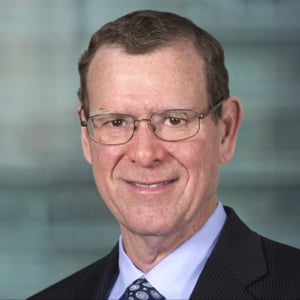
Executive in Residence, Wake Forest University School of Business
John Allison is an Executive in Residence at the Wake Forest School of Business. He is a member of the Cato Institute’s Board of Directors and Chairman of the Executive Advisory Council of the Cato Institute’s Center for Monetary and Financial Alternatives. Allison was president and CEO of the Cato Institute from October 2012 to April 2015. Prior to joining Cato, Allison was chairman and CEO of BB&T Corporation, the 10th-largest financial services holding company headquartered in the United States. During his tenure as CEO from 1989 to 2008, BB&T grew from $4.5 billion to $152 billion in assets. He was recognized by theHarvard Business Reviewas one of the top 100 most successful CEOs in the world over the last decade.
Allison has received the Corning Award for Distinguished Leadership, been inducted into the North Carolina Business Hall of Fame, and received the Lifetime Achievement Award from theAmerican Banker. He is the author of The Financial Crisis and the Free Market Cure: Why Pure Capitalism Is the World Economy’s Only Hope and The Leadership Crisis and the Free Market Cure: Why the Future of Business Depends on the Return to Life, Liberty, and the Pursuit of Happiness. In addition, he is a former Distinguished Professor of Practice at Wake Forest University School of Business, and serves on the Board of Visitors at the business schools at Wake Forest, Duke, and the University of North Carolina–Chapel Hill.
Allison is a Phi Beta Kappa graduate of the University of North Carolina–Chapel Hill. He received his master’s degree in management from Duke University and is also a graduate of the Stonier Graduate School of Banking. Allison is the recipient of six honorary doctorate degrees.
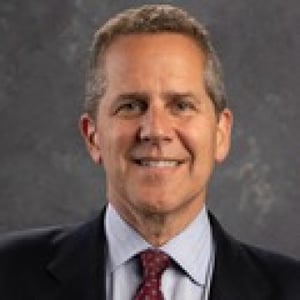
Member, Board of Governors , Federal Reserve System
Michael S. Barr took office as a member of the Board of Governors of the Federal Reserve System on July 19, 2022, for an unexpired term ending January 31, 2032. Mr. Barr served as the Vice Chair for Supervision of the Board of Governors of the Federal Reserve System from July 19, 2022, to February 28, 2025.
Prior to his appointment to the Board, Mr. Barr was the Joan and Sanford Weill Dean of the Gerald R. Ford School of Public Policy, the Frank Murphy Collegiate Professor of Public Policy, the Roy F. and Jean Humphrey Proffitt Professor of Law at the University of Michigan Law School, and the founder and faculty director of the University of Michigan's Center on Finance, Law & Policy. At the University of Michigan Law School, Mr. Barr taught financial regulation and international finance and co-founded the International Transactions Clinic and the Detroit Neighborhood Entrepreneurs Project.
Mr. Barr served as the U.S. Department of the Treasury's assistant secretary for financial institutions, 2009-2010. Under President William J. Clinton, he served as the Treasury Secretary's special assistant, as deputy assistant secretary of the Treasury, as special adviser to the President, and as a special adviser and counselor on the policy planning staff at the U.S. Department of State.
Additionally, Mr. Barr served as a law clerk to U.S. Supreme Court Justice David H. Souter during October Term 1993, and previously to the Honorable Pierre N. Leval, then of the Southern District of New York.
Mr. Barr received a BA in history from Yale University, an MPhil in international relations from Oxford University, and a JD from Yale Law School.
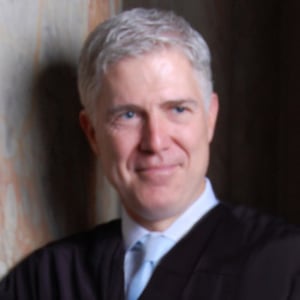
Associate Justice, Supreme Court of the United States
Neil M. Gorsuch, Associate Justice, was born in Denver, Colorado, August 29, 1967. He and his wife Louise have two daughters. He received a B.A. from Columbia University, a J.D. from Harvard Law School, and a D.Phil. from Oxford University. He served as a law clerk to Judge David B. Sentelle of the United States Court of Appeals for the District of Columbia Circuit, and as a law clerk to Justice Byron White and Justice Anthony M. Kennedy of the Supreme Court of the United States. From 1995–2005, he was in private practice, and from 2005–2006 he was Principal Deputy Associate Attorney General at the U.S. Department of Justice. He was appointed to the United States Court of Appeals for the Tenth Circuit in 2006. He served on the Standing Committee on Rules for Practice and Procedure of the U.S. Judicial Conference, and as chairman of the Advisory Committee on Rules of Appellate Procedure. He taught at the University of Colorado Law School. President Donald J. Trump nominated him as an Associate Justice of the Supreme Court, and he took his seat on April 10, 2017.
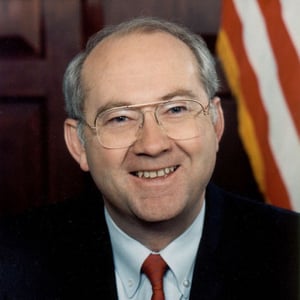
Senior Advisor, US Policy Metrics and Former U.S. Senator, Texas
Senator Gramm is a Senior Advisor at US Policy Metrics, overseeing our policy advisory team and acting as our Ambassador in Washington DC. Before US Policy Metrics, Senator Gramm was the Vice-Chairman of UBS Investment Bank for 9 years. At UBS he focused on providing strategic economic, political and policy advice to major corporate and institutional clients all around the world. He provided senior leadership on such landmark IPOs as Visa, Bank of China, China Merchants Bank and LGPhillips in Korea. He was instrumental in the follow-on equity offering for the Industrial and Commercial Bank of China and the privatization of Telstra in Australia.
Senator Gramm served six years in the US House and eighteen years in the US Senate. His legislative record includes landmark bills like the Gramm-Latta Budget, which reduced federal spending, rebuilt national defense and mandated the Reagan tax cut and the Gramm-Rudman Act, which placed the first binding constraints on federal spending. As Chairman of the Banking Committee, Senator Gramm steered through legislation modernizing banking, insurance and securities law, which had been languishing in Congress for 60 years. The Gramm-Leach-Bliley Act allowed banks, securities firms and insurance companies to affiliate as part of a financial services holding company. Dodd-Frank did not change Gramm-Leach-Bliley but expanded it by requiring systemically significant non-banks to become financial services holding companies.
Phil Gramm holds a Ph.D. from the University of Georgia in economics, the subject he taught at Texas A&M University for 12 years. He has published numerous articles and books on subjects ranging from monetary theory and policy to private property and the economics of mineral extraction.
He is married to Dr. Wendy Lee Gramm, former Chairman of the U.S. Commodity Futures Trading Commission under Presidents Reagan and Bush. They have two sons, Marshall and Jeff and four grandchildren, Caroline, Will, Joshua and Gilbert.

Managing Director, Promontory Financial Group, LLC
Bill brings an exceptional blend of experience and insights to his work with clients, having been a banker, California’s Commissioner of Financial Institutions, and a member of the Financial Stability Oversight Council. He works with financial institutions on corporate governance and organizational design, compliance program design and implementation, anti-money laundering programs, senior management reviews, and strategic planning.
Bill’s financial services experience spans the corporate sector, the executive branches of both state and federal government, academia, and think tanks. He earned a reputation as an open, fair, and pragmatic regulator during four years as Commissioner of Financial Institutions in California, leading the agency through a period of economic upheaval both in the state and nationwide. His vast knowledge and understanding of the financial system led to his selection as the state banking supervisors’ representative on the Financial Stability Oversight Council, a federal agency created by the Dodd-Frank Act to foster coordination among financial regulators in order to identify systemic risks to the nation’s financial stability.
Before his appointment to state office, Bill was an independent consultant with Promontory while also serving as a visiting professor of economics and finance for the Graduate School of Management at the University of California-Davis. He worked on a wide array of client engagements at Promontory, in areas that included governance, due diligence, compliance, and strategy.
During nine years with Bank of America, Bill was managing director of Banc of America Securities and senior vice president of strategic policy development and planning for the bank. Earlier, he worked for five years as director of policy analysis for Citicorp.
Bill was J. Edward Lundy Scholar and director of the financial markets project at the American Enterprise Institute for Public Policy Research. He served under President Reagan as senior staff economist and special assistant to the chairman of the Council of Economic Advisors.
Wayne A. Abernathy, Wild Bells
Wayne A. Abernathy is a former U.S. Treasury Assistant Secretary for Financial Institutions under President George W. Bush, receiving the Alexander Hamilton Award in recognition of his service. In that office he was also a member of the Board of Directors of the Securities Investor Protection Corporation. Prior to his work at the Treasury, Mr. Abernathy served as Staff Director of the Senate Banking Committee, under Chairman Phil Gramm.
Following his service at the Treasury, Mr. Abernathy worked for 15 years on the staff of the American Bankers Association, as Executive Vice President for Financial Institutions Policy and Regulatory Affairs.
Previous experience with the Senate Banking Committee includes serving as Staff Director of the Subcommittee on Securities during 1995-1998. From 1989 until 1994, Mr. Abernathy was a Republican economist for the committee. He previously worked as a senior legislative assistant for Senator Gramm during 1987-1989 and as an economist for the Banking Committee’s Subcommittee on International Finance and Monetary Policy during 1981-1986, under Chairman Jake Garn.
Mr. Abernathy earned his bachelor’s degree in International Studies from The Johns Hopkins University in 1978. In 1980, he received a master’s degree in International Studies from the School of Advanced International Studies of The Johns Hopkins University.
Senior Fellow, Arthur F. Burns Fellow in Financial Policy Studies, American Enterprise Institute
Peter J. Wallison holds the Arthur F. Burns Chair in Financial Policy Studies and is co-director of AEI’s program on Financial Policy Studies. Prior to joining AEI, he practiced banking, corporate and financial law at Gibson, Dunn & Crutcher in Washington, D.C., and New York. Mr. Wallison has held a number of government positions. From June 1981 to January 1985, he was General Counsel of the United States Treasury Department, where he had a significant role in the development of the Reagan Administration's proposals for deregulation in the financial services industry. During 1986 and 1987, Mr. Wallison was White House counsel to President Ronald Reagan, and between 1972 and 1976, he served first as Special Assistant to New York's Gov. Nelson A. Rockefeller and, subsequently, as counsel to Mr. Rockefeller as vice president of the United States.
Mr. Wallison was admitted to practice before the courts of New York and the District of Columbia, and is retired from practice in New York. He continues to be a member of the District of Columbia Bar Association. He received his undergraduate degree from Harvard College in 1963 and law degree from Harvard Law School in 1966.
Mr. Wallison is the author of Ronald Reagan: The Power of Conviction and the Success of His Presidency, published in December 2002 by Westview Press. On campaign finance, he is the author (with Joel Gora) of Better Parties, Better Government, (AEI Press 2009). On financial or regulatory matters, he is the author of Back From the Brink, a proposal for a private deposit insurance system, and co-author of Nationalizing Mortgage Risk: The Growth of Fannie Mae and Freddie Mac; The GAAP Gap: Corporate Disclosure in the Internet Age; Competitive Equity: A Better Way to Organize Mutual Funds; Bad History, Worse Policy: How a False Narrative about the Financial Crisis Led to the Dodd-Frank Act (AEI Press 2013); and Hidden In Plain Sight: What Caused the World’s Worst Financial Crisis and Why it Could Happen Again (Encounter Books 2015). His most recent book is Judicial Fortitude: The Last Chance to Rein in the Administrative State, published by Encounter Books in October 2018.
He testifies frequently before committees of Congress, and is a frequent contributor to the op-ed pages of the Wall Street Journal and other print and online journals. He has also been a speaker at many conferences on financial services, housing, the causes of the financial crisis, the Dodd-Frank Act, accounting, and corporate governance, and was a member of the Shadow Financial Regulatory Committee between 1995 and 2015. He was a member of the SEC Advisory Committee on Improvements to Financial Reporting (2008), co-Chair of the Pew Financial Reform Task Force (2009), and a member of the congressionally- appointed Financial Crisis Inquiry Commission (2009-2011). In May 2011, for his work in financial policy, Mr. Wallison received an honorary doctorate in Humane Letters from the University of Colorado.

Residual Class Action Awards: Cy Pres - Podcast
Theodore "Ted" Frank, Brian T. Fitzpatrick
Cy pres (from the French cy pres comme —“as near as possible”) originated in the...
The Financial Stability Oversight Council - Podcast
Peter J. Wallison, Wayne A. Abernathy
One feature of the Dodd-Frank Act is the authority given to the Financial Stability Oversight...
The Financial Stability Oversight Council
TeleforumFinancial Services: Too Big To Fail - What Now?
Paul S. Atkins, Martin Neil Baily, Timothy P. Carney, Randall D. Guynn, Robert E. Litan
In the aftermath of the recent economic crisis a remarkable political consensus developed that no...
Due Process in the Banking Industry - Podcast
Walter J. Mix, Hester M. Peirce, Dean Reuter
The bank regulators require larger banking organizations to prepare and file financial projections assuming various...
Dodd-Frank and Beyond
Kathleen Casey, Deepak Gupta, Robert T. Miller, Todd J. Zywicki
On June 11, 2013, the Federalist Society's Executive Branch Review Project held its First Annual...
Dodd-Frank Litigation Update: Amended Complaint - Podcast
Adam White, Gregory Frederick Jacob, Dean Reuter
Last year, several parties filed a constitutional challenge to parts of the Dodd-Frank financial reform...
Panel 2: Dodd Frank
Todd Henderson, Geoffrey P. Miller, David Skeel, Adam White
The Federalist Society's Facutly Division hosted this panel discussion on "Dodd-Frank" on Saturday, January 5,...
Showcase Panel II: Separation of Powers
Akhil Reed Amar, David Barron, C. Boyden Gray, John O. McGinnis, Victoria Nourse, A. Raymond Randolph, Dean Reuter
The present Supreme Court was also closely divided in the recent separation of powers case,...
Financial Services: Dodd-Frank: Act Two and What's Next in Financial Services Laws and Regulations?
John A. Allison, Michael S. Barr, Neil M. Gorsuch, Phil Gramm, William Haraf
The Financial Services & E-Commerce Practice Group hosted this panel on "Dodd-Frank: Act Two and...