
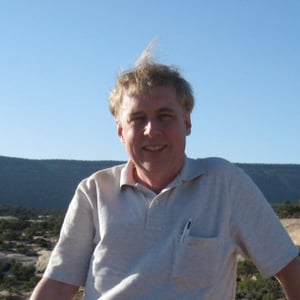
Distinguished Fellow, Foundation for Applied Molecular Evolution
Steven Benner heads the Foundation for Applied Molecular Evolution, which he founded after serving on the faculty at Harvard, ETH Zurich, and University of Florida. His research combines two traditions in science, one from natural history, the other from the physical sciences. In His laboratory has been a leader in the field of synthetic biology, where it has redesigned DNA to better understand how these molecules work, generate new classes of diagnostics tools, and to open new avenues to disease therapy. Separately, he also created the field of paleogenetics, where genes and proteins from now-extinct organisms are sesurrected to better understand how those proteins functioned in those organisms in changing environments. He has founded or contributed technology to a dozen different biotechnology companies, whose products include those that personalize the care of HIV, hepatitis B and hepatitis C patients, detect insect-borne pathogens, and monitor COVID. The work also guides NASA missions to see alien life and how life originated. His most recent book is: "Life, the Universe, and the Scientific Method."
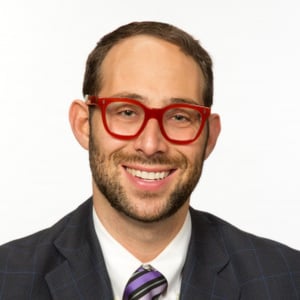
James A. Attwood and Leslie Williams Professor of Law, Deputy Dean, and Faculty Director, Petrie-Flom Center for Health Law Policy, Biotechnology & Bioethics, Harvard Law School
Prof. Cohen is one of the world's leading experts on the intersection of bioethics (sometimes also called "medical ethics") and the law, as well as health law. He also teaches civil procedure. From Seoul to Krakow to Vancouver, Professor Cohen has spoken at legal, medical, and industry conferences around the world and his work has appeared in or been covered on PBS, NPR, ABC, CNN, MSNBC, Mother Jones, the New York Times, the New Republic, the Boston Globe, and several other media venues.
He was the youngest professor on the faculty at Harvard Law School (tenured or untenured) both when he joined the faculty in 2008 (at age 29) and when he was tenured as a full professor in 2013 (at age 34), though not the youngest in history.
Prof. Cohen's current projects relate to big data, medical AI, health information technologies, mobile health, reproduction/reproductive technology, research ethics, organ transplantation, rationing in law and medicine, health policy, FDA law, COVID-19, translational medicine, and to medical tourism – the travel of patients who are residents of one country, the "home country," to another country, the "destination country," for medical treatment.
He is the author of more than 200 articles and chapters and his award-winning work has appeared in leading legal (including the Stanford, Cornell, and Southern California Law Reviews), medical (including the New England Journal of Medicine, JAMA), bioethics (including the American Journal of Bioethics, the Hastings Center Report), scientific (Science, Cell, Nature Reviews Genetics) and public health (the American Journal of Public Health) journals, as well as Op-Eds in the New York Times, Washington Post, New Republic, Time Magazine, and other venues.
Cohen is the author, co-author, editor, or co-editor of more than 18 books. They include: Consumer Genetic Technologies: Ethical and Legal Considerations (Cambridge University Press, 2021); Reproductive Technologies and the Law (Caroline Academic Press, 2021); Readings in Comparative Health Law and Bioethics (Carolina Academic Press, 2020); Disability, Health, Law, and Bioethics (Cambridge University Press, 2020); Transparency in Health and Health Care in the United States (Cambridge University Press, 2019); Health Care Law and Ethics (Aspen, 2018); Big Data, Health Law, and Bioethics (Cambridge University Press, 2018); Law, Religion, and Health in the United States (Cambridge University Press, 2017); Specimen Science (MIT Press, 2017); Nudging Health: Health Law and Behavioral Economics (John Hopkins University Press, 2016) The Oxford Handbook of U.S. Health Care Law (Oxford University Press, 2016); FDA in the Twenty-First Century: The Challenges of Regulating Drugs and New Technologies (Columbia University Press, 2015); Identified Versus Statistical Lives: An Interdisciplinary Perspective (Oxford University Press, 2015); Patients with Passports: Medical Tourism, Law, and Ethics (Oxford University Press, 2014); Human Subjects Research Regulation: Perspectives on the Future (MIT Press, 2014); The Globalization of Health Care: Legal and Ethical Issues (Oxford University Press, 2013).
For his law school teaching he was awarded the HLS Student Government Teaching and Advising Award in 2017. He also sometimes teaches courses at Harvard College and Harvard Medical School. For the public he created the free online Harvard X class Bioethics: The Law, Medicine, and Ethics of Reproductive Technologies and Genetics, which was nominated by Harvard for the Japan Prize. More than 97,000 students have taken the course so far. You can also watch his Tedx talk, Are There Non-Human Persons? Are There Non-Person Humans? He is also the faculty lead on Zero-L, an online course to help law students transition to law school that is now being used by more than half of all U.S. law schools.
Prior to becoming a professor he served as a law clerk to Judge Michael Boudin of the U.S. Court of Appeals for the First Circuit and as a lawyer for U.S. Department of Justice, Civil Division, Appellate Staff, where he handled litigation in the Courts of Appeals and (in conjunction with the Solicitor General’s Office) in the U.S. Supreme Court. In his spare time (where he can find any!) he still litigates, having authored an amicus brief in the U.S. Supreme Court for leading gene scientist Eric Lander in Association of Molecular Pathology v. Myriad, concerning whether human genes are patent eligible subject matter, a brief that was extensively discussed by the Justices at oral argument. Most recently he submitted an amicus brief to the U.S. Supreme Court in Whole Women's Health v. Hellerstedt (the Texas abortion case, on behalf of himself, Melissa Murray, and B. Jessie Hill).
Cohen was selected as a Radcliffe Institute Fellow for the 2012-2013 year and by the Greenwall Foundation to receive a Faculty Scholar Award in Bioethics. He is also a Fellow at the Hastings Center, the leading bioethics think tank in the United States as well as being a fellow of the Pierre Elliot Trudeau Foundation. He leads the Project on Precision Medicine, Artificial Intelligence, and the Law (PMAIL), which is part of the larger Centre for Advanced Studies in Biomedical Innovation Law (CeBIL). He co-leads the Regulatory Foundations, Ethics, and Law Program of Harvard Catalyst | The Harvard Clinical and Translational Science Center program. He is also the lead on the Project on Psychedelics Law and Regulation (POPLAR). He previously served as one of the key co-investigators on the multi-million dollar Football Players Health Study at Harvard which is committed to improving the health of NFL players (for more on this work click here). He is also one of three editors-in-chief of the Journal of Law and the Biosciences, a peer-reviewed journal published by Oxford University Press and serves on the editorial board for the American Journal of Bioethics. He served on the Steering Committee for Ethics for the Canadian Institutes of Health Research (CIHR), the Canadian counterpart to the NIH, and the Ethics Committee for the American College of Obstetricians and Gynecologists (ACOG). He currently serves on the Ethics Committee of the U.S. Organ Procurement and Transplantation Network (OPTN).
You can freely download his work here, and follow him on twitter @CohenProf.
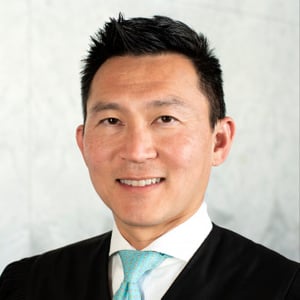
Judge, United States Court of Appeals, Ninth Circuit
Kenneth Kiyul Lee is a judge on the U.S. Court of Appeals for the Ninth Circuit. He was appointed in June 2019 and is based in San Diego, California.
Prior to his appointment, he was a partner at the law firm of Jenner & Block in Los Angeles. Judge Lee previously served as an Associate Counsel to President George W. Bush and as Special Counsel to Senator Arlen Specter, then-chair of the Senate Judiciary Committee. He started his legal career at Wachtell, Lipton, Rosen & Katz in New York.
Judge Lee received his J.D. from Harvard Law School, magna cum laude, and his A.B. from Cornell University, summa cum laude. He clerked for Judge Emilio M. Garza of the U.S. Court of Appeals for the Fifth Circuit.
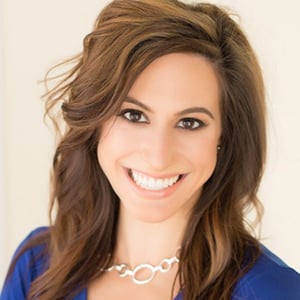
Executive Vice President, Goldwater Institute
Christina Sandefur is the Executive Vice President at the Goldwater Institute. She develops policies and litigates cases advancing healthcare freedom, free enterprise, private property rights, free speech, and taxpayer rights.
Christina is a co-drafter of the Right to Try initiative, now federal law, which protects terminally ill patients' right to try safe investigational treatments that have been prescribed by their physician but are not yet FDA-approved. She has won important victories for property rights in Arizona and works nationally to promote the Institute's Private Property Rights Protection Act, a state-level reform that requires government to pay owners when regulations destroy property rights and reduce property values.
Christina is the co-author of the book Cornerstone of Liberty: Private Property Rights in 21st Century America (2016). She is a frequent guest on national television and radio programs, has provided expert legal testimony to various legislative committees, and is a frequent speaker at conferences. She is the recipient of the 2018 Buckley Award in recognition of her leadership in the freedom movement, and she is an Advisory Board Member of the Network of enlightened Women. Christina serves on the board of the Phoenix Lawyers Chapter of the Federalist Society and is a member of the executive committee for the Federalist Society's Regulatory Transparency Project: FDA & Health.
Christina is a graduate of Michigan State University College of Law and Hillsdale College.
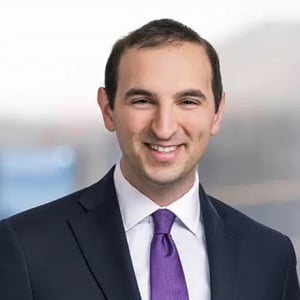
Associate, Covington & Burling LLP
Eli Nachmany is an associate at Covington & Burling LLP in the Washington, DC, office. He clerked for Judge Steven J. Menashi of the U.S. Court of Appeals for the Second Circuit. Eli graduated magna cum laude from Harvard Law School, where he was Editor-in-Chief of the Harvard Journal of Law & Public Policy. Prior to law school, Eli served as the speechwriter to the U.S. Secretary of the Interior and as a domestic policy aide in the White House Office of American Innovation. He graduated summa cum laude from New York University with a B.S. in Sports Management. Eli’s scholarship on administrative law and executive power has appeared in the BYU Law Review, George Mason Law Review, Wake Forest Law Review, and Yale Law Journal Forum.
Professor Emeritus of Political Science and Professor Emeritus of Public Policy, Univ. of Maryland Baltimore County
George R. La Noue is Professor Emeritus of Political Science and Professor Emeritus of Public Policy at the University of Maryland Baltimore County. He has served as a trial expert in twenty cases involving public procurement preferences. For thirty years, he was Director of the Project on Civil Rights and Public Contracts at UMBC which recently contributed 289 public contracting disparity studies to the Library of Congress. He has been a consultant to nine governments and trial expert in thirty cases where the validity of disparity studies was at issue.
Prof. La Noue can be reached by email at glanoue@umbc.edu.

Executive Vice President, The Federalist Society
Dean Reuter is Executive Vice President at the Federalist Society for Law and Public Policy Studies. He has served in two federal government agency Offices of the Inspector General, as Counsel to the Inspector General and Deputy Inspector General, responsible for policing the use of federal funds granted and contracted through those agencies. As such, he helped conduct and oversee criminal investigations across the country. He is the principal author of the non-fiction book, The Hidden Nazi: The Untold Story of America's Deal with the Devil, and editor of Liberty’s Nemesis: The Unchecked Expansion of the State and Confronting Terror: 9/11 and the Future of American National Security. He was appointed by the President and served as Vice-Chairman of the Board of Directors of the Corporation for National and Community Service, and recently served as an appointee on the U.S. Commission on Presidential Scholars. He is a graduate of Hood College (BA with Honors) and the University of Maryland School of Law.
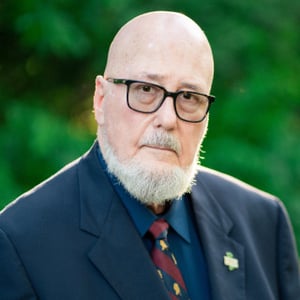
Senior Fellow, National Security Institute, Antonin Scalia School of Law, George Mason University; Retired Professor, Distinguished Fellow and Co-Founder, Center for National Security Law, University of Virginia School of Law (1987-2020)
Robert F. Turner holds both professional and academic doctorates from the University of Virginia School of Law. He co-founded the Center for National Security Law with Professor John Norton Moore in April 1981 and served as its associate director for 39 years, except for two periods of government service in the 1980s and during 1994-95, when he occupied the Charles H. Stockton Chair of International Law at the U.S. Naval War College in Newport, Rhode Island. He retired from UVA in January 2020 and currently serves as a non-resident senior fellow at the GMU National Security Institute. He also served briefly in 2020 as President of the Crime Prevention Research Center—one of the most respected pro-Second Amendment groups in the country—while its founder, Dr. John Lott, was on leave of absence.
A former Army captain and veteran of two tours in Vietnam, Turner served as a research associate and public affairs fellow at Stanford's Hoover Institution on War, Revolution and Peace before spending five years in the mid-1970s as national security adviser to U.S. Senator Robert P. Griffin, a member of the Senate Foreign Relations Committee (where Turner anticipated by seven years the Supreme Court’s landmark INS v. Chadha decision, striking down legislative vetoes). He also served in the executive branch during the Reagan administration as a member of the Senior Executive Service, first in the Pentagon as special assistant to the undersecretary of defense for policy, then in the White House as counsel to the President's Intelligence Oversight Board, and at the State Department as principal deputy and then acting assistant secretary for legislative affairs. In 1986, he became the first president of the congressionally established United States Institute of Peace.
A former three-term chairman of the ABA Standing Committee on Law and National Security (and for many years editor of the ABA National Security Law Report), Turner also chaired the Executive-Congressional Relations Subcommittee of the ABA Section on International Law and Practice and chaired or co-chaired the National Security Law Subcommittee of the Federalist Society’s International and National Security Law Practice Group for several years.
Turner taught undergraduate courses at Virginia on international law, U.S. foreign policy, the Vietnam War and foreign policy and the law in what is now the Woodrow Wilson Department of Politics. In addition, he co-taught National Security Law and advanced national security law seminars on the Indochina War and on war and peace with Moore at the Law School.
The author or editor of 18 books and monographs (including co-editor of the Center's 1,600-page National Security Law & Policy casebook, National Security Law Documents, and Legal Issues in the Struggle Against Terror) and numerous articles in law reviews and other professional journals, Turner has also contributed articles to most of the major U.S. newspapers, including The New York Times and USA Today. In an op-ed published in The International Herald Tribune in September 1990, he and Moore were the first to call for a war-crimes trial for Iraqi dictator Saddam Hussein and for international controls over Iraq's weapons of mass destruction, and the following month he wrote the lead story in The Washington Post Sunday Outlook Section, “Killing Saddam: Would It Be a Crime?,” arguing that Hussein would be a lawful target during Operation Desert Storm. (His reasoning contributed to the modern legal justification for drone strikes targeting specific terrorist leaders.) Three years before the terrorist attacks of September 11, 2001, Turner published an op-ed in USA Today entitled: “In Self-defense, U.S. Has Right to Kill bin Laden.”
In July 2007, he co-authored an article in The Washington Post with former U.S. Marine Corps Commandant General P.X. Kelley, “War Crimes and the White House,” criticizing the use of unlawful “enhanced interrogation techniques” by the Central Intelligence Agency. On the 40th anniversary of the fall of Saigon he authored an article in The Wall Street Journal, “Saigon’s Fall Still Echoes Today,” noting that after the war ended, Hanoi admitted it had made a decision in 1959 to open the Ho Chi Minh Trail and start sending troops, weapons and supplies into South Vietnam to overthrow its government — just as the United States had charged. In 2010 Turner received the first “person of the year” award from SACEI, a major Vietnamese-American human rights organization.
A frequent lecturer and debater, Turner has spoken at more than 100 law schools around the nation and in other fora — taking on as many as four opponents at a time. His debate opponents have included former or future deans of Yale, Stanford, the University of Chicago and Berkeley law schools. Following a 1987 debate against Dean Harlan Cleveland (Rhodes Scholar, U.S. Ambassador to NATO, and Presidential Medal of Freedom recipient) in which Turner defended the legality of U.S. support for the Nicaraguan contras during the Reagan Administration, the host student debating societies awarded Turner the victory by an 85-to-15 percent margin.
Turner has also written and lectured widely on University of Virginia founder and America’s third president Thomas Jefferson. In 2000-2001 he chaired the Jefferson-Hemings Scholars Commission. In his 2012 book Master of the Mountain, Jefferson critic Henry Wiencek described Turner as “Jefferson’s chief scholarly defender."
A former distinguished lecturer at the U.S. Military Academy at West Point, Turner is a member of the Council on Foreign Relations, the Academy of Political Science, the Committee on the Present Danger, The Heterodox Academy, and other professional organizations. He maintained a 4.0 gpa as a graduate student at Stanford in History and Political Science and in the UVA Department of Government and Foreign Affairs and was the first person admitted directly to the UVA academic law doctorate (SJD) program without first being required to earn an LL.M. master’s degree. He was selected for inclusion in Who’s Who in American Law less than two years after graduating from law school and Who’s Who in the World before he reached the age of 40. Turner has testified before more than a dozen different congressional committees on issues of international or constitutional law and other topics.
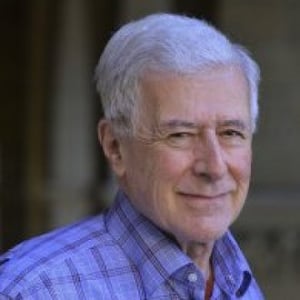
Visiting Scholar, Center for International Security and Cooperation, Stanford University
Leonard Weiss is a visiting scholar at Stanford University’s Center for International Security and Cooperation (CISAC). He is also a national advisory board member of the Center for Arms control and Non-Proliferation in Washington, DC. He began his professional career as a PhD researcher in mathematical system theory at the Research Institute for Advanced Studies in Baltimore. This was followed by tenured professorships in applied mathematics and electrical engineering at Brown University and the University of Maryland. During this period he published widely in the applied mathematics literature. In 1976 he received a Congressional Science Fellowship that resulted in a career change. For more than two decades he worked for Senator John Glenn as the staff director of both the Senate Subcommittee on Energy and Nuclear Proliferation and the Committee on Governmental Affairs. He was the chief architect of the Nuclear Nonproliferation Act of 1978 and legislation that created the Defense Nuclear Facilities Safety Board. In addition, he led notable investigations of the nuclear programs of India and Pakistan. Since retiring from the Senate staff in 1999, he has published numerous articles on nonproliferation issues for the Bulletin of Atomic Scientists, Arms Control Today, and the Nonproliferation Review. His current research interests include an assessment of the impact on the nonproliferation regime of nuclear trade with non-signers of the Nuclear Nonproliferation Treaty, and more generally the relationship of energy security concerns with nonproliferation.
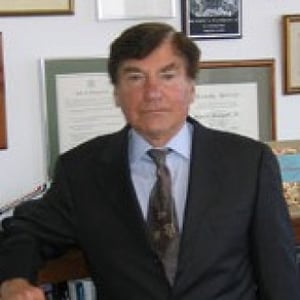
President, Institute for Foreign Policy Analysis, Inc.
Dr. Pfaltzgraff is president of the Institute for Foreign Policy Analysis, Inc., which he cofounded in 1976. He is also Shelby Cullom Davis Professor of International Security Studies at the Fletcher School, Tufts University. He is an authority on issues of U.S. national security policy, including homeland security; proliferation and counterproliferation; alliance relationships with a focus on Europe and the Asia-Pacific area; regional security issues; crisis management; force planning; military transformation; the interrelationships of political, economic, and security policies; technology transfer; missile defense; international relations theory; U.S. foreign policy; and the implications of emerging trends in both regional and global security environments. He has held visiting appointments as George C. Marshall Professor at the College of Europe, Bruges, Belgium; as professor at the National Defense College, Tokyo, Japan; and as honorary professor at the University of St. Andrews in Scotland. He has advised key U.S. officials on such topics as military strategy, modernization, and arms control policy, and has contributed as a management consultant to industry clients in the United States and abroad. He serves on the International Security Advisory Board (ISAB), U.S. Department of State. He serves as co-chairman of the Independent Working Group on Missile Defense, which produced the 2009 report, Missile Defense, the Space Relationship, and the 21st Century.
Dr. Pfaltzgraff has lectured widely at government, industry, and academic forums in the United States and overseas, including at the National Defense University, the NATO Defense College, the Army War College, the Naval War College, the Armed Forces Staff College, the Air Command Staff College, and the United States Military Academy at West Point.
He holds an M.A. in international relations, a Ph.D. in political science from the University of Pennsylvania, and an M.B.A. in international business from the Wharton School at the University of Pennsylvania.

Showcase Panel IV: Law, Science, and Public Policy
Steven A. Benner, I. Glenn Cohen, Kenneth Kiyul Lee, Christina Sandefur
The 2021 National Lawyers Convention took place November 11-13, 2021 at the Mayflower Hotel in...
Empowering the “Honest Broker”: Lessons Learned from the National Security Council Under President Donald J. Trump
Eli Nachmany
On September 18, 2019, Robert O’Brien took over as President Donald J. Trump’s National Security...
Public Contracting Litigation After Croson: Data, Disparities, & Discrimination
George R. La Noue
What causes racial disparities, and what, if anything, can and should be done to remedy...
Missile Defense and Space Security
Dean Reuter, Robert F. Turner, Leonard Weiss, Robert L. Pfaltzgraff
Space and U.S. national security are deeply entwined. The U.S. military is tremendously dependent upon...