
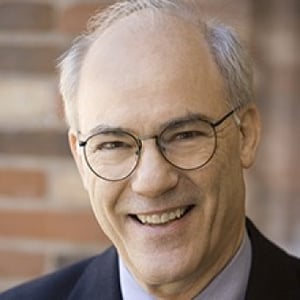
Walter E. Meyer Professor Emeritus of Property and Urban Law and Professorial Lecturer in Law, Yale Law School
Robert C. Ellickson was appointed Walter E. Meyer Professor of Property and Urban Law at Yale Law School in 1988. He has published numerous articles in legal and public policy journals on topics such as land use and housing policy, land tenure systems, social norms, homelessness, and the organization of households, community associations, and cities. Professor Ellickson’s books include Order Without Law: How Neighbors Settle Disputes (1991) (awarded the Order of the Coif Triennial Book Award in 1996), The Household: Informal Order Around the Hearth (2008), Land Use Controls: Cases and Materials (4th edition 2013, with Vicki Been, Roderick M. Hills, Jr. and Christopher Serkin), and Perspectives on Property Law (4th edition 2014, with Carol M. Rose and Henry E. Smith). He has written about ancient systems of land tenure and also periodically teaches a seminar on the history of development of the City of New Haven. Robert Ellickson was a member of the USC Law Faculty in 1970–1981, and the Stanford Law Faculty in 1981–88. He also has been a visiting professor at the Harvard and University of Chicago Law Schools. He was a founding member and later a director of the American Law and Economics Association, and served as its President in 2000–01. In 2016, the Association awarded him the Ronald H. Coase Medal in recognition of his scholarly contributions. Professor Ellickson served as an adviser during the American Law Institute’s preparation of the Restatement, Third, Property—Servitudes, and currently serves in the same capacity for the Restatement (Fourth) of Property. He is a fellow of the American Academy of Arts and Sciences, and, in 2008, received the William & Mary Law School’s Brigham-Kanner Property Rights Prize for Property Scholarship. At Yale Law School he has served as Deputy Dean (1991–92) and, during the reconstruction of the Sterling Law buildings, as chairman of the Building Committee. Prior to entering teaching in 1970, he worked for a Presidential commission on housing policy and then for Levitt & Sons, the homebuilding firm. Professor Ellickson is married to Lynn Hammer and has two children. For many decades he competed in competitive Scrabble tournaments and, during intervals when fortune smiled, was ranked as one of the top 20 players in the United States.

Frances and George Skestos Professor of Law, University of Michigan Law School
Adam C. Pritchard, the Frances and George Skestos Professor of Law, teaches corporate and securities law. He is the author, with Stephen J. Choi, of Securities Regulation: Cases and Analysis, currently in its fifth edition. His research focuses on securities class actions, Securities and Exchange Commission (SEC) enforcement, and the history of securities law in the U.S. Supreme Court. His articles have appeared in the Journal of Law and Economics, American Law and Economics Review, the Journal of Empirical Legal Studies, the Journal of Finance, the Journal of Law, Economics, and Organizations, and various law reviews. Professor Pritchard holds BA and JD degrees from the University of Virginia, as well as an MPP from the Harris School of Public Policy at the University of Chicago. While at Virginia, he was an Olin Fellow in Law and Economics and served as articles development editor of the Virginia Law Review. After graduation, he clerked for the Hon. J. Harvie Wilkinson III of the U.S. Court of Appeals for the Fourth Circuit and served as a Bristow Fellow in the Office of the Solicitor General at the U.S. Department of Justice. After working in private practice, Professor Pritchard served as senior counsel in the Office of the General Counsel of the SEC, where he wrote appellate briefs and studied the effect of recent reforms in the areas of securities fraud litigation. He received the SEC's Law and Policy Award for his work in United States v. O'Hagan, in which the U.S. Supreme Court upheld the misappropriation theory of insider trading. Professor Pritchard has been a visiting professor at the Northwestern University School of Law, the Georgetown University Law Center, and the University of Iowa School of Law. He also has been a visiting scholar at the SEC and a visiting fellow in capital market studies at the Cato Institute. He was previously a member of the FINRA National Adjudicatory Council and the Nasdaq Listing Qualifications Panel.
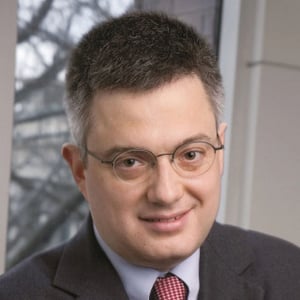
Fessenden Professor of Law, Harvard Law School
Henry E. Smith is the Fessenden Professor of Law at Harvard Law School, where he directs the Project on the Foundations of Private Law. Previously, he taught at the Northwestern University School of Law and was the Fred A. Johnston Professor of Property and Environmental Law at Yale Law School. He holds an A.B. from Harvard, a Ph.D. in Linguistics from Stanford, and a J.D. from Yale. After law school he clerked for the Hon. Ralph K. Winter, United States Court of Appeals for the Second Circuit. Smith has written primarily on the law and economics of property, intellectual property, and remedies, with a focus on how property-related institutions lower information costs and constrain strategic behavior. He teaches primarily in the areas of property, intellectual property, equity, restitution, and remedies. His books include The Oxford Introductions to U.S. Law: Property (2010, coauthored with Thomas W. Merrill), Property: Principles and Policies (3th ed., 2022, coauthored with Thomas W. Merrill & Maureen E. Brady), and Principles of Patent Law (7th ed., 2018, co-authored with John M. Golden, F. Scott Kieff, and Pauline Newman). He is the co-editor of The Research Handbook on the Economics of Property Law (2011, with Kenneth Ayotte), Philosophical Foundations of Property Law (2013, with James Penner), Perspectives on Property Law (4th ed., 2014, with Robert C. Ellickson and Carol M. Rose), Equity and Law: Fusion and Fission (2019, with John C.P. Goldberg & P.G. Turner), Philosophical Foundations of the Law of Equity (2020, with Dennis Klimcuk & Irit Samet), and The Oxford Handbook of the New Private Law (2020, with Andrew S. Gold, John C.P. Goldberg, Daniel B. Kelly & Emily Sherwin). In 2015-2016, Smith served as the President of the Society for Institutional and Organizational Economics, and in 2014, the American Law Institute named him Reporter for a Fourth Restatement of Property.
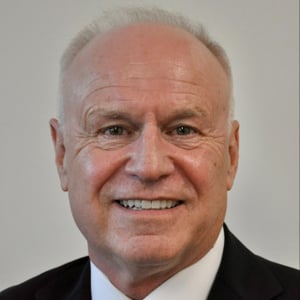
Former Director (consultant), International Affairs, The Federalist Society
From 2005 to 2025, Jim Kelly served on a consulting basis as the Federalist Society’s Director of International Affairs, responsible for outreach to law students, lawyers, and judges in Canada, Europe, and Israel. From 2005 to 2008, he served on the U.S. National Commission to UNESCO, and as Chairman of its Social and Human Sciences Committee. From 2001 to 2008, he served as an official U.S. delegate to five international human rights conferences. In 2019, the U.S. State Department appointed Jim to serve as one of the two U.S. members on the European Commission for Democracy through Law (the “Venice Commission”). In 2020, the State Department named him as an expert to the OSCE Moscow Mechanism. In March 2022, he initiated Ukraine’s consideration and use of the Moscow Mechanism to conduct the first official international investigation of the Russia-Ukraine conflict, which resulted in the Report on Violations of International Humanitarian and Human Rights Law, War Crimes and Crimes Against Humanity Committed in Ukraine (1 April – 25 June 2022). Jim is the Founder of, and Director of Research for, Global Governance Watch, a web-based project that monitors the global governance activities of the UN’s sustainable development and ESG agenda. In 2022, in connection with his position as a Lecturer at the Busch School of Business at Catholic University of America, he authored Evolution of Business, Human Rights, & ESG, consisting of 28 one-hour presentations about the technocratic, anti-democratic, anti-capitalist, and religious nature and practices of the ESG movement. Jim is Founder and President of Solidarity Center for Law and Justice, P.C., which, since 2001, has filed amicus curiae briefs in five landmark U.S. Supreme Court educational and religious liberty cases. He is the Founder and General Counsel of the Georgia GOAL Scholarship Program, Georgia’s largest K-12 tuition tax credit scholarship program, which, since 2008, has awarded scholarships worth $224.3 million to 21,744 students for use at the accredited private K-12 schools of their choice. He has served on the Georgia Judicial Nominating Commission and Georgia Board of Juvenile Justice. In 2005, he authored Christianity, Democracy, and the American Ideal, a collection of the writings of the French-Catholic philosopher, Jacques Maritain. Jim earned his BBA and Law degrees from the University of Georgia. He also earned a Master of Taxation degree from Georgia State University, a Master of Non-Profit Management degree from Regis University, and a Master of International Relations degree from Salve Regina University. Jim and his wife, Lisa, reside in the Atlanta area.

Sterling Professor of Law and Political Science, Yale Law School
Akhil Reed Amar is Sterling Professor of Law and Political Science at Yale University, where he teaches constitutional law in both Yale College and Yale Law School. After graduating from Yale College, summa cum laude, in 1980 and from Yale Law School in 1984, and clerking for Judge (later Justice) Stephen Breyer, Amar joined the Yale faculty in 1985 at the age of 26. He is Yale’s only living professor to have won the University’s unofficial triple crown — the Sterling Chair for scholarship, the DeVane Medal for teaching, and the Lamar Award for alumni service.
Amar’s work has won awards from both the American Bar Association and the Federalist Society, and he has been cited by Supreme Court justices across the spectrum in more than 50 cases — tops among scholars under age 70. According to both Fred Shapiro’s landmark 2021 study of lifetime scholarly citations and Heinonline’s most recent tabulation of lifetime law-review citations, Amar is America’s second most-cited legal scholar still under age 70. He is a member of the American Academy of Arts and Sciences and has written widely for popular publications, including The New York Times, The Washington Post, The Wall Street Journal, Time, and The Atlantic. He was an informal consultant to the popular TV show The West Wing and his scholarship has been showcased on many broadcasts, including The Colbert Report, Morning Joe, AC360, Velshi, Fox News @ Night with Shannon Bream, Fareed Zakaria GPS, Erin Burnett Outfront, and Constitution USA with Peter Sagal.
He is the author of more than a hundred law review articles and several books, including The Bill of Rights (1998 — winner of the Yale University Press Governors’ Award), America’s Constitution (2005 — winner of the ABA’s Silver Gavel Award), America’s Unwritten Constitution (2012 — named one of the year’s 100 best nonfiction books by The Washington Post), and The Constitution Today (2016 — named one of the year’s top ten nonfiction books by Time magazine). The first volume of his ambitious trilogy on American constitutional history from the Founding to the present, The Words That Made Us: America’s Constitutional Conversation, 1760-1840, came out in May 2021. The second volume, Born Equal: Remaking America’s Constitution, 1840-1920, will be published in September 2025 and is already available for pre-order. All together, his nonfiction books have won two starred reviews from Publishers Weekly and three starred reviews from Kirkus—tops, it is believed, among legal scholars under age 70. Together with Vikram David Amar (YLS ’88), he has a bi-weekly column on the Supreme Court on the distinguished website SCOTUSblog. Along with Andy Lipka, he co-hosts a popular and free weekly podcast, Amarica’s Constitution, whose listeners are eligible for CLE credit in most American jurisdictions. A wide assortment of his articles and op-eds and video links to many of his public lectures and free online courses may be found at akhilamar.com.
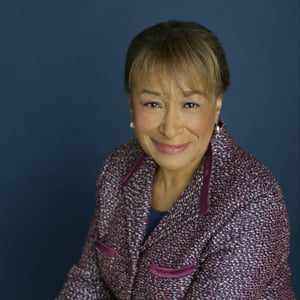
Judge, United States Court of Appeals, District of Columbia Circuit (ret.)
The Honorable Janice Rogers Brown was confirmed to the United States Court of Appeals for the District of Columbia Circuit on June 8, 2005. She retired from the court in 2017. From 1996 to 2005, she was an associate justice of the California Supreme Court. Prior to this, she served as associate justice of the Third District Court of Appeals in Sacramento and as legal affairs secretary to California Governor Pete Wilson. Earlier in her career, she served as Deputy Secretary and General Counsel for California’s Business, Transportation and Housing Agency after having worked in the criminal appellate and civil trial divisions of the California Attorney General’s Office. She currently chairs the Advisory Board of the New Civil Liberties Alliance, and serves on the Board of the Coolidge Foundation and the Association of College Trustees and Alumni. She is the Darling Foundation Jurist-in-Residence and visiting professor of Law at the University of California Boalt School of Law. Brown has been honored with the Jurisprudence Award of Claremont Institute’s Center for Constitutional Jurisprudence, the Baroness Thatcher Award of the Pacific Research Institute, the Edwin Meese III, Originalism and Religious Liberty Award from the Alliance Defending Freedom, the James Wilson Institute Leadership and the Law Award, and the 2019 Bradley Award. She earned her law degree from the University of California – Los Angeles School of Law, and a Master of Laws in judicial process from the University of Virginia School of Law.

U.S. Court of Appeals, Seventh Circuit
Frank H. Easterbrook is a judge of the United States Court of Appeals for the Seventh Circuit and a Senior Lecturer at the Law School of the University of Chicago. He was Chief Judge from 2006–2013. Before joining the court in 1985, he was the Lee andBrena Freeman Professor of Law at the University of Chicago, where he taught and wrote in antitrust, securities, corporate law, jurisprudence, and criminal procedure. He has published The Economic Structure of Corporate Law (with Daniel R. Fischel) and about 100 scholarly articles. He served as Co-Editor of the Journal of Law and Economics from 1982 to 1991 and as a member of the Judicial Conference’s Standing Committee on Rules of Practice and Procedure from 1991 to 1997. Before joining the faculty of the Law School in 1979, Judge Easterbrook was Deputy Solicitor General of the United States. He holds degrees from Swarthmore College (B.A. with high honors, 1970) and the University of Chicago (J.D. cum laude, 1973), and is a member of the American Academy of Arts and Sciences, the American Law Institute, the Mont Pelerin Society, Phi Beta Kappa, and the Order of the Coif.
Thurgood Marshall Professor of Constitutional Law, Harvard Law School
Vicki C. Jackson, Thurgood Marshall Professor of Constitutional Law, writes and teaches about U.S. constitutional law and comparative constitutional law. She is the author of Constitutional Engagement in a Transnational Era (2010), and coauthor, with Mark Tushnet, of Comparative Constitutional Law (3d ed. 2014), a leading course book in the field. She has written on constitutional aspects of federalism, gender equality, election law, free speech, sovereign immunity, courts and judicial independence, methodological challenges in comparative constitutional law, and other topics. Her other books include Federalism (with Susan Low Bloch, coauthor) (2013), two edited collections, Federal Courts Stories (2010) (with Judith Resnik, co-editor), and Defining the Field of Constitutional Law (2002) (with Mark Tushnet, co-editor), and another course book, Inside the Supreme Court: The Institution and Its Procedures (2d ed., 2008) (with Susan Low Bloch and Thomas G. Krattenmaker). Her scholarly projects include normative conceptions of the role of elected representatives in a democracy; proportionality in constitutional law and interpretation; gender equality and the interaction of international and domestic law; and the co-evolution of the constitutionalization of international law and the internationalization of constitutional law. She is a member of the Executive Committee of the American Association of Law Schools (AALS), and has served on the Executive Committee of the International Association of Constitutional Law, on the Board of Managerial Trustees of the International Association of Women Judges, as Chair of the Federal Courts Section of the AALS, and on the D.C. Bar Board of Governors. She has also practiced law, in private practice, and as a government lawyer in the Office of Legal Counsel in the U.S. Department of Justice.

Professor of Law, Georgetown University Law Center
Nicholas Quinn Rosenkranz teaches constitutional law and federal jurisdiction, and he writes articles for the Harvard Law Review and the Stanford Law Review.
He is currently developing a new theory of constitutional interpretation and judicial review. The first installment, entitledThe Subjects of the Constitution, was published in the Stanford Law Review in May of 2010, and it is among the most downloaded articles about constitutional interpretation, judicial review, and/or federal courts in the history of SSRN. The second installment, The Objects of the Constitution, was published in May of 2011, also in the Stanford Law Review. And the comprehensive version is forthcoming as a book by Oxford University Press.
Rosenkranz has served and advised the federal government in a variety of capacities. He clerked for Judge Frank H. Easterbrook on the U.S. Court of Appeals for the Seventh Circuit (1999-2000) and for Justice Anthony M. Kennedy at the U.S. Supreme Court (October Term 2001). He served as an Attorney-Advisor at the Office of Legal Counsel in the U.S. Department of Justice (November 2002 - July 2004). He often testifies before Congress as a constitutional expert—most recently before the House Financial Services Oversight Subcommittee, regarding the Obama Administration's use of bank settlement agreements to circumvent the Appropriations Clause. He has also filed briefs and presented oral argument before the U.S. Supreme Court. His most recent Supreme Court brief, in Los Angeles v. Patel, was cited by Justice Alito in dissent.
Rosenkranz is a member of the New York Bar and the U.S. Supreme Court Bar. He is a Senior Fellow at the Cato Institute. He serves on the Board of Directors of the Foundation for Individual Rights in Education (FIRE). He is a founding member of Heterodox Academy and a member of its Executive Committee. He also serves on the Board of Directors of the Federalist Society and as the faculty advisor to the Georgetown chapter.
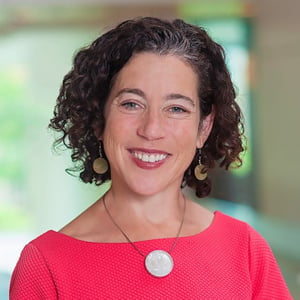
Assistant Professor of Law, American University Washington College of Law
Jennifer Daskal joined American University Washington College of Law (WCL) in 2013 as an Assistant Professor of Law. She teaches and writes in the fields of criminal law, national security law, and constitutional law. From 2009-2011, Prof. Daskal was counsel to the Assistant Attorney General for National Security at the Department of Justice and, among other things, served on the Secretary of Defense and Attorney General-led Detention Policy Task Force. Prior to joining DOJ, she was the senior counterterrorism counsel at Human Rights Watch, worked as a staff attorney for the Public Defender Service for the District of Columbia, and clerked for the Honorable Jed S. Rakoff. She spent two years before joining WCL’s faculty as a national security law fellow and adjunct professor at Georgetown Law Center.
Prof. Daskal is a graduate of Brown University, Harvard Law School, and Cambridge University, where she was a Marshall Scholar. Recent publications include The Un-Territoriality of Data, 326 Yale L.J. 326 (2015); Pre-Crime Restraints: The Explosion of Targeted, Non-Custodial Prevention, 99 Cornell L. Rev. 327 (2014); After the AUMF, 5 Harvard Nat'l Sec. L. J. 115 (2014) (co-authored with Steve Vladeck); and The Geography of the Battlefield: A Framework for Detention and Targeting Outside the ‘Hot’ Conflict Zone, 171 Penn. L. Rev. 1165 (2013). Prof. Daskal has published op-eds in the New York Times, Washington Post, International Herald Tribune, L.A. Times, and Salon.com, and she has appeared on BBC, C-Span, CNN, MSNBC, and NPR, among other media outlets. She is an Executive Editor of and regular contributor to the Just Security blog.
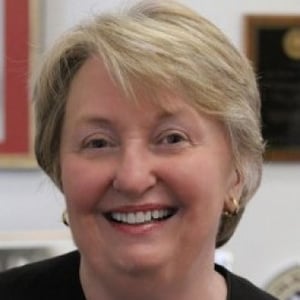
Judge, Contra Costa County Superior Court in California
Judge Haight was appointed to Contra Costa County Superior Court by Governor Pete Wilson in 1993.
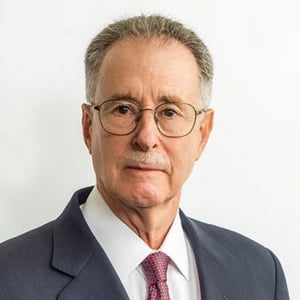
Wallace and Beverley Woodbury University Professor of Law; Co-director of the Litigation and Dispute Resolution Program, The George Washington University Law School
Stephen A. Saltzburg joined GW Law in 1990. Before that, he taught at the University of Virginia School of Law, and was named the first incumbent of the Class of 1962 Endowed Chair. In 1996, he founded and directed the master’s program in Litigation and Dispute Resolution at GW. He was named University Professor, the highest title a University can confer upon a faculty member, in 2004. The Chief Justice of the United States appointed him as reporter for, and then as a member of, the Advisory Committee on the Federal Rules of Criminal Procedure and as a member of the Advisory Committee on the Federal Rules of Evidence. He was the reporter for the Civil Justice Reform Act Committee for the D.C. District Court before he became chair. He has served as a special master in two class action cases in the D.C. District Court, and continues to serve as a mediator for the U.S. Court of Appeals for D.C. He has mediated a variety of disputes involving public agencies and private litigants; served as a sole arbitrator, panel chair, and panel member in domestic arbitrations; and served as an arbitrator for the International Chamber of Commerce.
Professor Saltzburg held the following governmental positions: associate independent counsel in the Iran-Contra investigation; deputy assistant attorney general in the Criminal Division of the U.S. Department of Justice, the Attorney General’s ex-officio representative on the U.S. Sentencing Commission; and director of the U.S. Treasury Department Tax Refund Fraud Task Force. He was chair of the ABA Criminal Justice Section from 2007 to 2008, and represents the section in the ABA House of Delegates. He was appointed to the ABA Task Force on Terrorism and the Law and to the ABA Task Force on Gatekeeper Regulation and the Profession in 2001, and to the ABA President’s Advisory Group on Citizen Detention and Enemy Combatant Issues in 2002. In 2001 he was appointed by Chief Judge Edward R. Becker of the U.S. Court of Appeals for the Third Circuit as co-chair of the Task Force on the Selection of Lead Counsel in Class Actions, which published its final report in 2002. Professor Saltzburg is the author of numerous books and articles on evidence, procedure, and litigation.
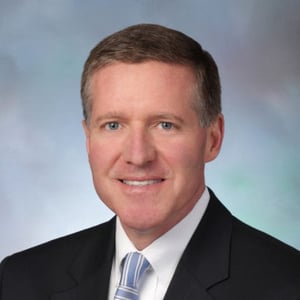
Partner, Davis Polk & Wardwell LLP
Kenneth Wainstein is a partner at Davis Polk & Wardwell, where he focuses his practice on corporate internal investigations and civil and criminal enforcement proceedings. Ken spent over 20 years in a variety of law enforcement and national security positions in the government. Between 1989 and 2001, Ken served as an Assistant U.S. Attorney in both the Southern District of New York and the District of Columbia, where he handled criminal prosecutions ranging from public corruption to gang prosecution cases and held a variety of supervisory positions, including Acting United States Attorney. In 2001, he was appointed Director of the Executive Office for U.S. Attorneys, where he provided oversight and support to the 94 U.S. Attorneys’ Offices. Between 2002 and 2004, Ken served as General Counsel of the Federal Bureau of Investigation and then as Chief of Staff to Director Robert S. Mueller III. In 2004, Ken was appointed and then confirmed as United States Attorney for the District of Columbia, where he had the privilege to lead the largest United States Attorney’s Office in the country. In 2006, the U.S. Senate confirmed Ken as the first Assistant Attorney General for National Security. In that position, Ken established and led the new National Security Division, which consolidated DOJ’s law enforcement and intelligence activities on counterterrorism and counterintelligence matters. In 2008, after 19 years at the Justice Department, Ken was named Homeland Security Advisor by President George W. Bush. In this capacity, he coordinated the nation’s counterterrorism, homeland security, infrastructure protection, and disaster response and recovery efforts. He advised the President, convened and chaired meetings of the Cabinet Officers on the Homeland Security Council, and oversaw the inter-agency coordination process for homeland security and counterterrorism programs.

Panel III: The People's Common Law: Is Law & Economics Anti-Democratic?
Robert C. Ellickson, Adam Christopher Pritchard, Brian Simpson, Henry Smith
The Federalist Society's Student Division presented this panel at the 2008 Annual Student Symposium on...
Corporate Social Responsibility or UN Corporate Governance?
John S. Gardner, James P. Kelly
Recently, UN officials have begun using a human rights agenda to govern the activities of...
The Constitution & American Exceptionalism: Citation of Foreign Law
Akhil Reed Amar, Janice Rogers Brown, Frank H. Easterbrook, Vicki C. Jackson, Nicholas Quinn Rosenkranz
What relationship is there between the ideology and reality of American exceptionalism and our ideas...
Bringing Terrorists to Justice-Can Criminal Prosecution Work?
Jennifer Daskal, Lois Haight Herrington, Kenneth M. Karas, Stephen A. Saltzburg, Kenneth L. Wainstein
The Federalist Society's Criminal Law Practice Group presented this panel discussion at the 2006 Annual...
The European Court of Human Rights
Christian Bonat
The European Court of Human Rights ("the Court") was established by the Council of Europe...