
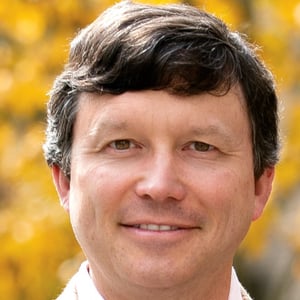
Partner, Baker Botts
George Fibbe represents clients in complex commercial disputes and regulatory matters, focusing on high-stakes matters across the energy sector. Before joining Baker Botts, he served as the Deputy General Counsel for Litigation, Regulation & Enforcement for the U.S. Department of Energy. Mr. Fibbe is a commercial trial attorney who practiced with Yetter Coleman, LLP in Houston for over ten years. He then served as head of litigation for the petroleum division of an international mining corporation. Before joining the Department of Energy, he served as General Counsel for a private solar company.

Professor of Law, University of Minnesota Law School
Professor James W. Coleman is a scholar of energy law. He specializes in North American energy infrastructure, transport, and trade. He is also a nonresident senior fellow at the American Enterprise Institute focused on energy policy.
Professor Coleman has testified before Congress on steps to speed up energy infrastructure permits. He also worked with a team of experts as part of Alberta's Royalty Review to revise the Canadian province's management of its vast oil and gas resources.
Before joining Minnesota, Professor Coleman taught at Southern Methodist University's Dedman School of Law, the University of Calgary’s law and business schools, and Harvard Law School. Earlier, he practiced environmental and appellate law at Sidley Austin in Washington, D.C., and clerked for the Honorable Steven M. Colloton of the U.S. Court of Appeals for the Eighth Circuit.
Professor Coleman received two degrees from Harvard University—a J.D. (cum laude) and B.A. in biology (magna cum laude with highest honors in the field). As a result of his undergraduate thesis on butterfly genetics, which required fieldwork in Central Asia, a species of lycaenid butterfly was named after him—Agrodiaetus ripartii colemani.
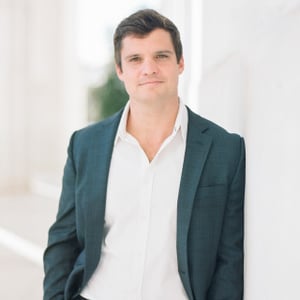
Managing Director, SCF Partners
Daniel G. West invests in energy services, equipment, and technology companies at SCF Partners in Houston, Texas. He provides equity capital and strategic growth assistance to entrepreneurs and leaders of both start-up ventures and established, growing businesses.
Prior to joining the private sector, Mr. West served as an infantry officer in the United States Marine Corps. As a platoon commander with the 22nd Marine Expeditionary Unit aboard the USS Mesa Verde, he led the Tactical Recovery of Aircraft and Personnel force in support of the NATO aerial campaign over Libya. He then served as executive officer of India Company, 3rd Battalion, 9th Marines as it mentored Afghan forces to assume lead security responsibility and executed counter-narcotics missions in Marjah, Helmand Province, Afghanistan. He also served as a clerk for Judge Laurence H. Silberman on the U.S. Court of Appeals for the D.C. Circuit.
Mr. West holds degrees in law, business administration, and economics from Harvard University, where he served as an editor of the Harvard Law Review and taught undergraduate courses in economics and government. He is a member of the Executive Committee of the International & National Security Law Practice Group of the Federalist Society and a term member of the Council on Foreign Relations.
Professor of Law, University of Minnesota Law School
Professor James W. Coleman is a scholar of energy law. He specializes in North American energy infrastructure, transport, and trade. He is also a nonresident senior fellow at the American Enterprise Institute focused on energy policy.
Professor Coleman has testified before Congress on steps to speed up energy infrastructure permits. He also worked with a team of experts as part of Alberta's Royalty Review to revise the Canadian province's management of its vast oil and gas resources.
Before joining Minnesota, Professor Coleman taught at Southern Methodist University's Dedman School of Law, the University of Calgary’s law and business schools, and Harvard Law School. Earlier, he practiced environmental and appellate law at Sidley Austin in Washington, D.C., and clerked for the Honorable Steven M. Colloton of the U.S. Court of Appeals for the Eighth Circuit.
Professor Coleman received two degrees from Harvard University—a J.D. (cum laude) and B.A. in biology (magna cum laude with highest honors in the field). As a result of his undergraduate thesis on butterfly genetics, which required fieldwork in Central Asia, a species of lycaenid butterfly was named after him—Agrodiaetus ripartii colemani.
Partner, Baker Botts
George Fibbe represents clients in complex commercial disputes and regulatory matters, focusing on high-stakes matters across the energy sector. Before joining Baker Botts, he served as the Deputy General Counsel for Litigation, Regulation & Enforcement for the U.S. Department of Energy. Mr. Fibbe is a commercial trial attorney who practiced with Yetter Coleman, LLP in Houston for over ten years. He then served as head of litigation for the petroleum division of an international mining corporation. Before joining the Department of Energy, he served as General Counsel for a private solar company.
Managing Director, SCF Partners
Daniel G. West invests in energy services, equipment, and technology companies at SCF Partners in Houston, Texas. He provides equity capital and strategic growth assistance to entrepreneurs and leaders of both start-up ventures and established, growing businesses.
Prior to joining the private sector, Mr. West served as an infantry officer in the United States Marine Corps. As a platoon commander with the 22nd Marine Expeditionary Unit aboard the USS Mesa Verde, he led the Tactical Recovery of Aircraft and Personnel force in support of the NATO aerial campaign over Libya. He then served as executive officer of India Company, 3rd Battalion, 9th Marines as it mentored Afghan forces to assume lead security responsibility and executed counter-narcotics missions in Marjah, Helmand Province, Afghanistan. He also served as a clerk for Judge Laurence H. Silberman on the U.S. Court of Appeals for the D.C. Circuit.
Mr. West holds degrees in law, business administration, and economics from Harvard University, where he served as an editor of the Harvard Law Review and taught undergraduate courses in economics and government. He is a member of the Executive Committee of the International & National Security Law Practice Group of the Federalist Society and a term member of the Council on Foreign Relations.
Professor of Law, University of Minnesota Law School
Professor James W. Coleman is a scholar of energy law. He specializes in North American energy infrastructure, transport, and trade. He is also a nonresident senior fellow at the American Enterprise Institute focused on energy policy.
Professor Coleman has testified before Congress on steps to speed up energy infrastructure permits. He also worked with a team of experts as part of Alberta's Royalty Review to revise the Canadian province's management of its vast oil and gas resources.
Before joining Minnesota, Professor Coleman taught at Southern Methodist University's Dedman School of Law, the University of Calgary’s law and business schools, and Harvard Law School. Earlier, he practiced environmental and appellate law at Sidley Austin in Washington, D.C., and clerked for the Honorable Steven M. Colloton of the U.S. Court of Appeals for the Eighth Circuit.
Professor Coleman received two degrees from Harvard University—a J.D. (cum laude) and B.A. in biology (magna cum laude with highest honors in the field). As a result of his undergraduate thesis on butterfly genetics, which required fieldwork in Central Asia, a species of lycaenid butterfly was named after him—Agrodiaetus ripartii colemani.
Partner, Baker Botts
George Fibbe represents clients in complex commercial disputes and regulatory matters, focusing on high-stakes matters across the energy sector. Before joining Baker Botts, he served as the Deputy General Counsel for Litigation, Regulation & Enforcement for the U.S. Department of Energy. Mr. Fibbe is a commercial trial attorney who practiced with Yetter Coleman, LLP in Houston for over ten years. He then served as head of litigation for the petroleum division of an international mining corporation. Before joining the Department of Energy, he served as General Counsel for a private solar company.
Managing Director, SCF Partners
Daniel G. West invests in energy services, equipment, and technology companies at SCF Partners in Houston, Texas. He provides equity capital and strategic growth assistance to entrepreneurs and leaders of both start-up ventures and established, growing businesses.
Prior to joining the private sector, Mr. West served as an infantry officer in the United States Marine Corps. As a platoon commander with the 22nd Marine Expeditionary Unit aboard the USS Mesa Verde, he led the Tactical Recovery of Aircraft and Personnel force in support of the NATO aerial campaign over Libya. He then served as executive officer of India Company, 3rd Battalion, 9th Marines as it mentored Afghan forces to assume lead security responsibility and executed counter-narcotics missions in Marjah, Helmand Province, Afghanistan. He also served as a clerk for Judge Laurence H. Silberman on the U.S. Court of Appeals for the D.C. Circuit.
Mr. West holds degrees in law, business administration, and economics from Harvard University, where he served as an editor of the Harvard Law Review and taught undergraduate courses in economics and government. He is a member of the Executive Committee of the International & National Security Law Practice Group of the Federalist Society and a term member of the Council on Foreign Relations.
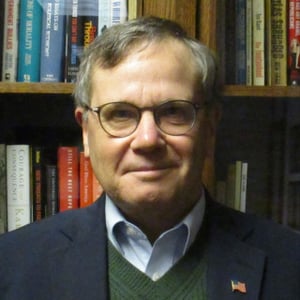
Senior Fellow in Constitutional Jurisprudence, Independence Institute
Professor Robert G. Natelson is a constitutional scholar and author.
Rob’s constitutional scholarship has been cited repeatedly by justices and parties at the U.S. Supreme Court—as well as by federal appeals courts, and at least 18 state supreme courts.
Rob’s research into the Constitution’s original meaning has carried him to libraries throughout the United States and in Britain, including four months at Oxford University. His books and articles span many different parts of the Constitution, including groundbreaking studies of the Necessary and Proper Clause, the Indian Commerce Clause, federalism, Founding-Era interpretation, regulation of elections, and the amendment process of Article V. He created the first-ever online bibliography for 18th century materials used in constitutional research. He is a contributing author to the Encyclopedia of the Supreme Court of the United States (on Magna Carta). He contributed eight essays to the third edition of the Heritage Guide to the Constitution: five on the amendment procedure and one each on the Guarantee Clause, the Postal Clause, and the Recess Appointments Clause.
U.S. Supreme Court justices have relied explicitly on Rob’s research in 41 citations in 13 separate cases.
Managing Director, Beacon Global Strategies LLC
From 2011-2013, Mr. Allen served as the Majority Staff Director of the House Permanent Select Committee on Intelligence (HPSCI). Under Chairman Mike Rogers’ (R-MI) direction, the HPSCI restored the process of an annual intelligence authorization bill to fund and give direction to the seventeen elements of the intelligence community, enacting measures for fiscal years 2011, 2012, and 2013. The HPSCI also led the House of Representatives’ consideration of cyber security legislation, passing the Cyber Information Sharing Protection Act (CISPA) with bipartisan majorities in 2012 and 2013.
Prior to joining the HPSCI, he was director for the Bipartisan Policy Center’s successor to the 9/11 Commission, the National Security Preparedness Group, co-chaired by former Congressman Lee Hamilton and former Governor Tom Kean.
Previously, Mr. Allen served in the White House for seven years in a variety of national security policy and legislative roles. At the National Security Council (NSC), he served as Special Assistant to the President and Senior Director for Counter-proliferation Strategy from June 2007 to January 2009 under National Security Advisor Steve Hadley. As Senior Director, he contributed to the development of the U.S. government’s policy on counter-proliferation issues, including on the Iranian, Syrian, and North Korean nuclear files; missile defense; civilian nuclear cooperation including the U.S.-India Civilian Nuclear Cooperation Agreement; U.S. exports controls; bio-defense; and WMD and terrorism.
As the Special Assistant to the President and Senior Director for Legislative Affairs from March 2005 to June 2007, Mr. Allen was the NSC’s chief liaison with the national security committees of Congress and led the confirmation teams of DNI nominees Negroponte and McConnell and CIA Director General Michael Hayden.
From December 2001 to February 2005, Mr. Allen worked in the legislative affairs office of the White House’s Homeland Security Council. As Special Assistant to the President for Legislative Affairs, Mr. Allen was part of team that managed the White House effort to enact the Intelligence Reform and Terrorism Prevention Act of 2004, which created the Office of the Director of National Intelligence.
At the beginning of the Bush Administration, Mr. Allen worked in the Bureau of Legislative Affairs at the Department of State. Mr. Allen received his L.L.M. with distinction in International Law from the Georgetown University Law Center, his J.D. from the University of Alabama (cum laude), and his B.A. from Vanderbilt University.
In addition to his work at the Bipartisan Policy Center, in 2009, Mr. Allen taught National Security Policymaking at the George Washington University Elliott School of International Affairs and served as an advisor for the congressionally-created Commission on WMD and Terrorism co-chaired by Senators Bob Graham and Jim Talent. Mr. Allen was the Intelligence Team Lead for the Romney for President Transition Team.
Mr. Allen is the author of Blinking Red: Crisis and Compromise in American Intelligence After 9/11. (Potomac Books, September 2013).
Executive Vice President, Chief Legal Officer, Gates Corporation
Matthew R. A. Heiman joined the Company in May 2026 and has served as the Company’s Chief Legal Officer and Corporate Secretary since June 2026. As Chief Legal Officer, Mr. Heiman is responsible for all legal functions for Gates, including securities and corporate governance, M&A, litigation, commercial, regulatory, compliance, patents and trademarks, real estate, employment and labor, sustainability and environmental matters. Prior to joining Gates, Mr. Heiman held senior legal leadership roles at Waystar, where he served as Chief Legal & Administrative Officer from 2023 to 2025 and as General Counsel and Corporate Secretary from 2020 to 2023. Prior to that, he was with Johnson Controls, where he served as Vice President, Corporate Secretary, and Associate General Counsel. Mr. Heiman has been a Senior Fellow for the National Security Institute at George Mason University’s Antonin Scalia School of Law since 2018.
Director of the Center for Eurasian, Russian and East European Studies and Professor of Government and Foreign Service, Georgetown University
Angela Stent is Director of the Center for Eurasian, Russian and East European Studies and Professor of Government and Foreign Service at Georgetown University. She is also a Senior Fellow (non-resident) at the Brookings Institution and co-chairs its Hewett Forum on Post-Soviet Affairs. During the academic year 2015-2016 she is a fellow at the Transatlantic Academy of the German Marshall Fund. From 2004-2006 she served as National Intelligence Officer for Russia and Eurasia at the National Intelligence Council. From 1999 to 2001, she served in the Office of Policy Planning at the U.S. Department of State. Stent’s academic work focuses on the triangular political and economic relationship between the United Sates, Russia and Europe. Her publications include: Russia and Germany Reborn: Unification, The Soviet Collapse and The New Europe (Princeton University Pres, 1999); From Embargo to Ostpolitik: The Political Economy of West German-Soviet Relations, 1955-1980 (Cambridge University Press, 1981); “Repairing US-Russian Relations: A Long Road Ahead” (2009) “Restoration and Revolution in Putin’s Foreign Policy,” (2008), “An Energy Superpower? Russia and Europe” (2008) and “Reluctant Europeans: Three Centuries of Russian Ambivalence Toward the West,” (2007), “Putin’s World” (2014). Her latest book is The Limits of Partnership: US-Russian Relations in the Twenty-First Century (Princeton University Press, 2014), for which she won the American Academy of Diplomacy’s Douglas Dillon prize for the best book on the practice of American Diplomacy. She is a member of the senior advisory panel for NATO’s Supreme Allied Commander in Europe. She is a member of the Council on Foreign Relations. She is a contributing editor to Survival and is on the editorial boards of the Journal of Cold War Studies, World Policy Journal, Internationale Politik and Mirovaia Ekonomika i Mezhdunarodnie Otnosheniie. She has served on the World Economic Forum’s Global Agenda Council for Russia and Central Asia. She is a Trustee of the Eurasia Foundation and of Supporters of Civil Society in Russia. Dr. Stent received her B.A. from Cambridge University, her MSc. with distinction from the London School of Economics and Political Science and her M.A. and PhD. from Harvard University.
Managing Director, Beacon Global Strategies LLC
From 2011-2013, Mr. Allen served as the Majority Staff Director of the House Permanent Select Committee on Intelligence (HPSCI). Under Chairman Mike Rogers’ (R-MI) direction, the HPSCI restored the process of an annual intelligence authorization bill to fund and give direction to the seventeen elements of the intelligence community, enacting measures for fiscal years 2011, 2012, and 2013. The HPSCI also led the House of Representatives’ consideration of cyber security legislation, passing the Cyber Information Sharing Protection Act (CISPA) with bipartisan majorities in 2012 and 2013.
Prior to joining the HPSCI, he was director for the Bipartisan Policy Center’s successor to the 9/11 Commission, the National Security Preparedness Group, co-chaired by former Congressman Lee Hamilton and former Governor Tom Kean.
Previously, Mr. Allen served in the White House for seven years in a variety of national security policy and legislative roles. At the National Security Council (NSC), he served as Special Assistant to the President and Senior Director for Counter-proliferation Strategy from June 2007 to January 2009 under National Security Advisor Steve Hadley. As Senior Director, he contributed to the development of the U.S. government’s policy on counter-proliferation issues, including on the Iranian, Syrian, and North Korean nuclear files; missile defense; civilian nuclear cooperation including the U.S.-India Civilian Nuclear Cooperation Agreement; U.S. exports controls; bio-defense; and WMD and terrorism.
As the Special Assistant to the President and Senior Director for Legislative Affairs from March 2005 to June 2007, Mr. Allen was the NSC’s chief liaison with the national security committees of Congress and led the confirmation teams of DNI nominees Negroponte and McConnell and CIA Director General Michael Hayden.
From December 2001 to February 2005, Mr. Allen worked in the legislative affairs office of the White House’s Homeland Security Council. As Special Assistant to the President for Legislative Affairs, Mr. Allen was part of team that managed the White House effort to enact the Intelligence Reform and Terrorism Prevention Act of 2004, which created the Office of the Director of National Intelligence.
At the beginning of the Bush Administration, Mr. Allen worked in the Bureau of Legislative Affairs at the Department of State. Mr. Allen received his L.L.M. with distinction in International Law from the Georgetown University Law Center, his J.D. from the University of Alabama (cum laude), and his B.A. from Vanderbilt University.
In addition to his work at the Bipartisan Policy Center, in 2009, Mr. Allen taught National Security Policymaking at the George Washington University Elliott School of International Affairs and served as an advisor for the congressionally-created Commission on WMD and Terrorism co-chaired by Senators Bob Graham and Jim Talent. Mr. Allen was the Intelligence Team Lead for the Romney for President Transition Team.
Mr. Allen is the author of Blinking Red: Crisis and Compromise in American Intelligence After 9/11. (Potomac Books, September 2013).
Executive Vice President, Chief Legal Officer, Gates Corporation
Matthew R. A. Heiman joined the Company in May 2026 and has served as the Company’s Chief Legal Officer and Corporate Secretary since June 2026. As Chief Legal Officer, Mr. Heiman is responsible for all legal functions for Gates, including securities and corporate governance, M&A, litigation, commercial, regulatory, compliance, patents and trademarks, real estate, employment and labor, sustainability and environmental matters. Prior to joining Gates, Mr. Heiman held senior legal leadership roles at Waystar, where he served as Chief Legal & Administrative Officer from 2023 to 2025 and as General Counsel and Corporate Secretary from 2020 to 2023. Prior to that, he was with Johnson Controls, where he served as Vice President, Corporate Secretary, and Associate General Counsel. Mr. Heiman has been a Senior Fellow for the National Security Institute at George Mason University’s Antonin Scalia School of Law since 2018.
Director of the Center for Eurasian, Russian and East European Studies and Professor of Government and Foreign Service, Georgetown University
Angela Stent is Director of the Center for Eurasian, Russian and East European Studies and Professor of Government and Foreign Service at Georgetown University. She is also a Senior Fellow (non-resident) at the Brookings Institution and co-chairs its Hewett Forum on Post-Soviet Affairs. During the academic year 2015-2016 she is a fellow at the Transatlantic Academy of the German Marshall Fund. From 2004-2006 she served as National Intelligence Officer for Russia and Eurasia at the National Intelligence Council. From 1999 to 2001, she served in the Office of Policy Planning at the U.S. Department of State. Stent’s academic work focuses on the triangular political and economic relationship between the United Sates, Russia and Europe. Her publications include: Russia and Germany Reborn: Unification, The Soviet Collapse and The New Europe (Princeton University Pres, 1999); From Embargo to Ostpolitik: The Political Economy of West German-Soviet Relations, 1955-1980 (Cambridge University Press, 1981); “Repairing US-Russian Relations: A Long Road Ahead” (2009) “Restoration and Revolution in Putin’s Foreign Policy,” (2008), “An Energy Superpower? Russia and Europe” (2008) and “Reluctant Europeans: Three Centuries of Russian Ambivalence Toward the West,” (2007), “Putin’s World” (2014). Her latest book is The Limits of Partnership: US-Russian Relations in the Twenty-First Century (Princeton University Press, 2014), for which she won the American Academy of Diplomacy’s Douglas Dillon prize for the best book on the practice of American Diplomacy. She is a member of the senior advisory panel for NATO’s Supreme Allied Commander in Europe. She is a member of the Council on Foreign Relations. She is a contributing editor to Survival and is on the editorial boards of the Journal of Cold War Studies, World Policy Journal, Internationale Politik and Mirovaia Ekonomika i Mezhdunarodnie Otnosheniie. She has served on the World Economic Forum’s Global Agenda Council for Russia and Central Asia. She is a Trustee of the Eurasia Foundation and of Supporters of Civil Society in Russia. Dr. Stent received her B.A. from Cambridge University, her MSc. with distinction from the London School of Economics and Political Science and her M.A. and PhD. from Harvard University.
Professor of Law, University of Minnesota Law School
Professor James W. Coleman is a scholar of energy law. He specializes in North American energy infrastructure, transport, and trade. He is also a nonresident senior fellow at the American Enterprise Institute focused on energy policy.
Professor Coleman has testified before Congress on steps to speed up energy infrastructure permits. He also worked with a team of experts as part of Alberta's Royalty Review to revise the Canadian province's management of its vast oil and gas resources.
Before joining Minnesota, Professor Coleman taught at Southern Methodist University's Dedman School of Law, the University of Calgary’s law and business schools, and Harvard Law School. Earlier, he practiced environmental and appellate law at Sidley Austin in Washington, D.C., and clerked for the Honorable Steven M. Colloton of the U.S. Court of Appeals for the Eighth Circuit.
Professor Coleman received two degrees from Harvard University—a J.D. (cum laude) and B.A. in biology (magna cum laude with highest honors in the field). As a result of his undergraduate thesis on butterfly genetics, which required fieldwork in Central Asia, a species of lycaenid butterfly was named after him—Agrodiaetus ripartii colemani.
Partner, Baker Botts
George Fibbe represents clients in complex commercial disputes and regulatory matters, focusing on high-stakes matters across the energy sector. Before joining Baker Botts, he served as the Deputy General Counsel for Litigation, Regulation & Enforcement for the U.S. Department of Energy. Mr. Fibbe is a commercial trial attorney who practiced with Yetter Coleman, LLP in Houston for over ten years. He then served as head of litigation for the petroleum division of an international mining corporation. Before joining the Department of Energy, he served as General Counsel for a private solar company.
Managing Director, SCF Partners
Daniel G. West invests in energy services, equipment, and technology companies at SCF Partners in Houston, Texas. He provides equity capital and strategic growth assistance to entrepreneurs and leaders of both start-up ventures and established, growing businesses.
Prior to joining the private sector, Mr. West served as an infantry officer in the United States Marine Corps. As a platoon commander with the 22nd Marine Expeditionary Unit aboard the USS Mesa Verde, he led the Tactical Recovery of Aircraft and Personnel force in support of the NATO aerial campaign over Libya. He then served as executive officer of India Company, 3rd Battalion, 9th Marines as it mentored Afghan forces to assume lead security responsibility and executed counter-narcotics missions in Marjah, Helmand Province, Afghanistan. He also served as a clerk for Judge Laurence H. Silberman on the U.S. Court of Appeals for the D.C. Circuit.
Mr. West holds degrees in law, business administration, and economics from Harvard University, where he served as an editor of the Harvard Law Review and taught undergraduate courses in economics and government. He is a member of the Executive Committee of the International & National Security Law Practice Group of the Federalist Society and a term member of the Council on Foreign Relations.
Senior Fellow, Cato Institute
Doug Bandow is a senior fellow at the Cato Institute, specializing in foreign policy and civil liberties. He worked as special assistant to President Reagan and editor of the political magazine Inquiry. He writes regularly for leading publications such as Fortune magazine, National Interest, Wall Street Journal, and Washington Times. Bandow speaks frequently at academic conferences, on college campuses, and to business groups. Bandow has been a regular commentator on ABC, CBS, NBC, CNN, Fox News Channel, and MSNBC. He holds a J.D. from Stanford University.
United States Attorney, Eastern District of California
Mr. Grant was appointed by Attorney General Pam Bondi to serve as the United States Attorney for the Eastern District of California beginning on August 11, 2025. Pursuant to 28 U.S.C. § 546(d), he was further appointed by the district court effective December 9, 2025.
Mr. Grant is a veteran of the Department of Justice, having served twice in Washington, D.C.: from 1991 to 1993 as an Attorney-Adviser in the Office of Legal Counsel, and from 2017 to 2021 as a Deputy Assistant Attorney General in the Environment and Natural Resources Division (ENRD). During his tenure at ENRD, he supervised more than a hundred Department litigators advancing the interests of the United States and its agencies in both enforcement and defensive matters, both civil and criminal.
In addition to his service in the Department, Mr. Grant has decades of experience in private practice in Washington, D.C. and Sacramento. That experience includes arguments in the U.S. Supreme Court, the California Supreme Court, and numerous other federal and state courts.
Mr. Grant served as a law clerk to Chief Justice Warren E. Burger (retired) and Associate Justice Clarence Thomas during the Supreme Court’s October 1994 Term. Earlier he served as a law clerk to Judge Edith H. Jones of the U.S. Court of Appeals for the Fifth Circuit in Houston, Texas.
Mr. Grant grew up in Modesto, California and raised his family in Sacramento County. He attended the University of California, Berkeley, from which he earned a bachelor’s degree in economics (1986) and a law degree (1990).
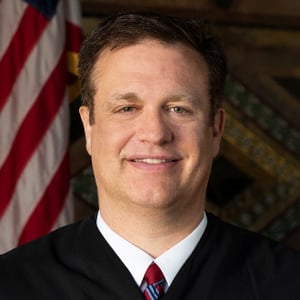
Judge, United States Court of Appeals, Ninth Circuit
Judge Nelson was confirmed to the Ninth Circuit in October 2018, as the youngest Circuit Judge to serve from Idaho and he has chambers in his hometown of Idaho Falls. Prior to his confirmation, Judge Nelson served for nine years as General Counsel of Idaho Falls-based Melaleuca, Inc., a consumer goods company. He previously worked in Washington, DC, where he served in all three branches of the federal government, including as Special Counsel for Supreme Court nominations to the Ranking Member of the Senate Judiciary Committee; Deputy General Counsel to the White House Office of Management and Budget; Deputy Assistant Attorney General in the Environment and Natural Resources Division of the United States Department of Justice; and a law clerk to Judge Henderson of the United States Court of Appeals for the D.C. Circuit. He has argued in most of the federal courts of appeals and worked on dozens of Supreme Court briefs. He started in the Washington, DC office of Sidley Austin as an appellate lawyer, after clerking for Judges Mosk and Brower of the Iran-U.S. Claims Tribunal at The Hague, and for now-Judge Tom Griffith, then-Senate Legal Counsel, during the impeachment trial of President Clinton. Judge Nelson earned his B.A. from Brigham Young University and his J.D., with honors, from BYU Law School. Judge Nelson has been a member of the Federalist Society since 1998.

Executive Director & Chief Legal Counsel, Our Children's Trust
Julia Olson graduated from the University of California, Hastings College of the Law, with a J.D. in 1997. For the first part of her 22-year career, Julia represented grassroots conservation groups working to protect the environment, organic agriculture, and human health. After becoming a mother, and realizing the greatest threat to her children and children everywhere was climate change, she focused her work on representing young people and elevating their voices on the issue that will most determine the quality of their lives and the well-being of all future generations. Julia founded Our Children’s Trust in 2010 to lead this strategic legal campaign on behalf of the world’s youth against governments everywhere. Julia leads Juliana v. the United States, the constitutional climate change case brought by 21 youth against the U.S. government for violating their Fifth Amendment rights to life, liberty, property, and public trust resources. Julia and OCT are recipients of the Rose-Walters Prize for Global Environmental Activism. She received the Kerry Rydberg Award for Environmental Activism in 2017 and is a member of Rachel's Network Circle of Advisors. To rejuvenate, Julia loves being high up in the mountains with her family and her dog or playing tunes on her ukulele with friends.
Managing Director, Beacon Global Strategies LLC
From 2011-2013, Mr. Allen served as the Majority Staff Director of the House Permanent Select Committee on Intelligence (HPSCI). Under Chairman Mike Rogers’ (R-MI) direction, the HPSCI restored the process of an annual intelligence authorization bill to fund and give direction to the seventeen elements of the intelligence community, enacting measures for fiscal years 2011, 2012, and 2013. The HPSCI also led the House of Representatives’ consideration of cyber security legislation, passing the Cyber Information Sharing Protection Act (CISPA) with bipartisan majorities in 2012 and 2013.
Prior to joining the HPSCI, he was director for the Bipartisan Policy Center’s successor to the 9/11 Commission, the National Security Preparedness Group, co-chaired by former Congressman Lee Hamilton and former Governor Tom Kean.
Previously, Mr. Allen served in the White House for seven years in a variety of national security policy and legislative roles. At the National Security Council (NSC), he served as Special Assistant to the President and Senior Director for Counter-proliferation Strategy from June 2007 to January 2009 under National Security Advisor Steve Hadley. As Senior Director, he contributed to the development of the U.S. government’s policy on counter-proliferation issues, including on the Iranian, Syrian, and North Korean nuclear files; missile defense; civilian nuclear cooperation including the U.S.-India Civilian Nuclear Cooperation Agreement; U.S. exports controls; bio-defense; and WMD and terrorism.
As the Special Assistant to the President and Senior Director for Legislative Affairs from March 2005 to June 2007, Mr. Allen was the NSC’s chief liaison with the national security committees of Congress and led the confirmation teams of DNI nominees Negroponte and McConnell and CIA Director General Michael Hayden.
From December 2001 to February 2005, Mr. Allen worked in the legislative affairs office of the White House’s Homeland Security Council. As Special Assistant to the President for Legislative Affairs, Mr. Allen was part of team that managed the White House effort to enact the Intelligence Reform and Terrorism Prevention Act of 2004, which created the Office of the Director of National Intelligence.
At the beginning of the Bush Administration, Mr. Allen worked in the Bureau of Legislative Affairs at the Department of State. Mr. Allen received his L.L.M. with distinction in International Law from the Georgetown University Law Center, his J.D. from the University of Alabama (cum laude), and his B.A. from Vanderbilt University.
In addition to his work at the Bipartisan Policy Center, in 2009, Mr. Allen taught National Security Policymaking at the George Washington University Elliott School of International Affairs and served as an advisor for the congressionally-created Commission on WMD and Terrorism co-chaired by Senators Bob Graham and Jim Talent. Mr. Allen was the Intelligence Team Lead for the Romney for President Transition Team.
Mr. Allen is the author of Blinking Red: Crisis and Compromise in American Intelligence After 9/11. (Potomac Books, September 2013).
Executive Vice President, Chief Legal Officer, Gates Corporation
Matthew R. A. Heiman joined the Company in May 2026 and has served as the Company’s Chief Legal Officer and Corporate Secretary since June 2026. As Chief Legal Officer, Mr. Heiman is responsible for all legal functions for Gates, including securities and corporate governance, M&A, litigation, commercial, regulatory, compliance, patents and trademarks, real estate, employment and labor, sustainability and environmental matters. Prior to joining Gates, Mr. Heiman held senior legal leadership roles at Waystar, where he served as Chief Legal & Administrative Officer from 2023 to 2025 and as General Counsel and Corporate Secretary from 2020 to 2023. Prior to that, he was with Johnson Controls, where he served as Vice President, Corporate Secretary, and Associate General Counsel. Mr. Heiman has been a Senior Fellow for the National Security Institute at George Mason University’s Antonin Scalia School of Law since 2018.
Director of the Center for Eurasian, Russian and East European Studies and Professor of Government and Foreign Service, Georgetown University
Angela Stent is Director of the Center for Eurasian, Russian and East European Studies and Professor of Government and Foreign Service at Georgetown University. She is also a Senior Fellow (non-resident) at the Brookings Institution and co-chairs its Hewett Forum on Post-Soviet Affairs. During the academic year 2015-2016 she is a fellow at the Transatlantic Academy of the German Marshall Fund. From 2004-2006 she served as National Intelligence Officer for Russia and Eurasia at the National Intelligence Council. From 1999 to 2001, she served in the Office of Policy Planning at the U.S. Department of State. Stent’s academic work focuses on the triangular political and economic relationship between the United Sates, Russia and Europe. Her publications include: Russia and Germany Reborn: Unification, The Soviet Collapse and The New Europe (Princeton University Pres, 1999); From Embargo to Ostpolitik: The Political Economy of West German-Soviet Relations, 1955-1980 (Cambridge University Press, 1981); “Repairing US-Russian Relations: A Long Road Ahead” (2009) “Restoration and Revolution in Putin’s Foreign Policy,” (2008), “An Energy Superpower? Russia and Europe” (2008) and “Reluctant Europeans: Three Centuries of Russian Ambivalence Toward the West,” (2007), “Putin’s World” (2014). Her latest book is The Limits of Partnership: US-Russian Relations in the Twenty-First Century (Princeton University Press, 2014), for which she won the American Academy of Diplomacy’s Douglas Dillon prize for the best book on the practice of American Diplomacy. She is a member of the senior advisory panel for NATO’s Supreme Allied Commander in Europe. She is a member of the Council on Foreign Relations. She is a contributing editor to Survival and is on the editorial boards of the Journal of Cold War Studies, World Policy Journal, Internationale Politik and Mirovaia Ekonomika i Mezhdunarodnie Otnosheniie. She has served on the World Economic Forum’s Global Agenda Council for Russia and Central Asia. She is a Trustee of the Eurasia Foundation and of Supporters of Civil Society in Russia. Dr. Stent received her B.A. from Cambridge University, her MSc. with distinction from the London School of Economics and Political Science and her M.A. and PhD. from Harvard University.

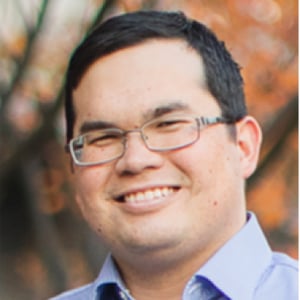
Deep Dive Episode 239 - Energy Security After Ukraine: What are the Challenges and Opportunities for the U.S. and its Allies?
George Fibbe, James W. Coleman, Daniel G. West
Russia’s invasion of Ukraine shocked the world – and directed renewed attention to the global...
Energy Security After Ukraine: What are the Challenges and Opportunities for the U.S. and its Allies?
James W. Coleman, George Fibbe, Daniel G. West
Russia’s invasion of Ukraine shocked the world – and directed renewed attention to the global...
Energy Security After Ukraine: What are the Challenges and Opportunities for the U.S. and its Allies?
James W. Coleman, George Fibbe, Daniel G. West
Russia’s invasion of Ukraine shocked the world – and directed renewed attention to the global...
Energy Security After Ukraine: What are the Challenges and Opportunities for the U.S. and its Allies?
TeleforumRussia versus Ukraine: Who Is Winning, What Is Victory, and What Is in Europe's Future?
McGeorge Student Chapter
Sacramento , CAThe Original Understanding of the Indian Commerce Clause: An Update
Robert G. Natelson
The Congress shall have Power . . . To regulate Commerce with foreign Nations, and...
From Russia Without Love: U.S. Energy Policy, Environmental Goals, Foreign Wars, and the Administrative State
TeleforumUkraine in Crisis
Michael Allen, Matthew R. A. Heiman, Angela Stent
A war is raging in Europe. Russia invaded Ukraine on February 24, 2022. Arguing that...
Ukraine in Crisis
Michael Allen, Matthew R. A. Heiman, Angela Stent
A war is raging in Europe. Russia invaded Ukraine on February 24, 2022. Arguing that...
Ukraine in Crisis
Teleforum