
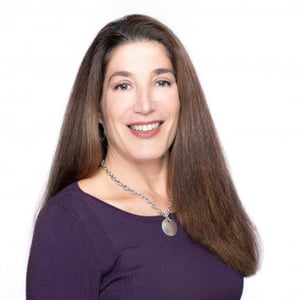
Director, Independent Women's Law Center, Independent Women's
Jennifer C. Braceras, a member of the Federalist Society Board of Visitors, is the director of Independent Women’s Law Center and a former member of the U.S. Commission on Civil Rights.
Ms. Braceras is a graduate of the Harvard Law School, where she served as an editor of the Law Review. After law school, she clerked for two federal judges and practiced labor and employment law with the Boston law firm Ropes & Gray.
A long time political columnist and editor, Ms. Braceras's writing has appeared in a variety of publications, including the Wall Street Journal, the Boston Globe, the Hill, and National Review Online. She co-hosts At the Bar, a bimonthly virtual happy hour discussion about issues at the intersection of law, politics, and culture.
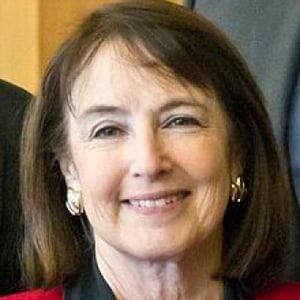
Senior Lecturer on Law, Harvard Law School
Nancy Gertner is a former U.S. federal judge who built her career around standing up for women’s rights, civil liberties and justice for all. Gertner was appointed to the federal bench of the U.S. District Court of Massachusetts by President Bill Clinton in 1994. She retired from the bench in 2011 to teach at Harvard Law School.
Named one of “The Most Influential Lawyers of the Past 25 Years” by Massachusetts Lawyers Weekly, Gertner has written and spoken throughout the U.S., Europe and Asia. She has published widely on sentencing, discrimination, and forensic evidence; women’s rights; and the jury system. Her autobiography, “In Defense of Women: Memoirs of an Unrepentant Advocate,” was published in 2011.
She is a graduate of Barnard College, Columbia University, and holds a M.A in Political Science and J.D. from Yale University. She has received numerous awards, including the Margaret Brent Award from the ABA commission on the status of Women, Massachusetts Bar Association’s Hennessey Award for judicial excellence in 2011; the Morton A. Brody Distinguished Judicial Service Award from Colby College in 2010; the National Association of Women Lawyers’ highest honor, the Arabella Babb Mansfield Award, in 2011,The Women's Bar Association's highest award, The Lelia Robinson Award, in 2012, and, in 2008, the Thurgood Marshall Award from the American Bar Association, Section of Individual Rights and Responsibilities, which recognized her contributions to advancing human rights and civil liberties. The Marshall award has been given to one other woman, Justice Ruth Ginsburg.
In November 2014, she gave the Pope and John lecture at Northwestern University. In October 2014, she was a resident scholar at the Rockefeller Foundation in Bellagio, Italy; In September she gave the keynote address at the 18th Anniversary Celebration of the Jewish Women’s archive (September 14, 2014).
Gertner is presently working on her second book, Incomplete Sentences, concerning the men who she sentenced over her 17 year career as a federal judge. In addition to writing about them, highlighting the unfairness and disproportionality of their sentences, she is assisting in clemency petitions where appropriate.
Drawing on her wide ranging experience in practice and as a judge, Gertner also consults and litigates in civil right cases (she is of counsel to Neufeld, Scheck & Brustin, a civil rights firm in New York City), white collar criminal case (she is of counsel to Fick and Marx, a white collar criminal defense firm in Boston), as well as in employment discrimination and false claims cases.
Drawing on her judicial experience, Gertner engages in mediation and arbitration with Resolutions, LLC. (with Eric Green) and the Southeast Regional Mediation, Arbitration and Compliance Association (with Bill Nettles and Paul Zwier).
U.S. District Court Judge, District of Massachusetts
Nathaniel M. Gorton is a federal judge for the United States District Court for the District of Massachusetts. He joined the court in 1992 after being nominated by President George H.W. Bush. At the time of appointment, he was a private practice in Massachusetts.
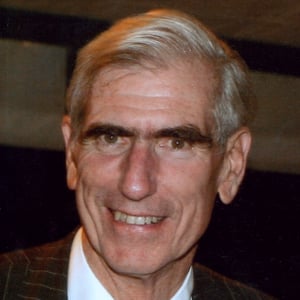
Founding Partner, Boyden Gray & Associates
Ambassador C. Boyden Gray is the founding partner of Boyden Gray & Associates, a law and strategy firm in Washington, D.C., focused on constitutional and regulatory issues.
Mr. Gray worked in the White House for twelve years, first as counsel to the Vice President during the Reagan administration and then as White House Counsel to President George H.W. Bush. In the Reagan administration, he was Counsel to the Presidential Task Force on Regulatory Relief, for which he wrote the original Executive Order 12291 requiring cost-benefit analysis and White House review of regulations (later renumbered as current EO 12866). In the George H.W. Bush Administration, Mr. Gray was in charge of judicial selection and was also instrumental in the enactment of the Clean Air Act Amendments of 1990, the Energy Policy Act of 1992, and a cap-and-trade system for acid rain emissions. In 1993, he received the Presidential Citizens Medal. Under President George W. Bush, Mr. Gray was U.S. Ambassador to the European Union and U.S. Special Envoy to Europe for Eurasian Energy.
Mr. Gray practiced law for 25 years at the law firm of Wilmer, Cutler & Pickering and was chairman of the Administrative Law and Regulatory Practice Section of the American Bar Association from 2000 to 2002. Early in his career, Mr. Gray helped to develop the Business Roundtable and served as its first counsel. He is an adjunct professor at Antonin Scalia Law School and a former adjunct professor at NYU Law School (teaching energy and environmental law). Mr. Gray is on the Board of Directors of the Atlantic Council, the Federalist Society, Reason Foundation, and the Trust for the National Mall.
Mr. Gray earned his A.B. magna cum laude from Harvard, where he was an editor of the Crimson, and his J.D. with high honors from the University of North Carolina at Chapel Hill, where he was editor-in-chief of the Law Review. Mr. Gray served in the United States Marine Corps, and after law school, he clerked for Earl Warren, Chief Justice of the United States Supreme Court.
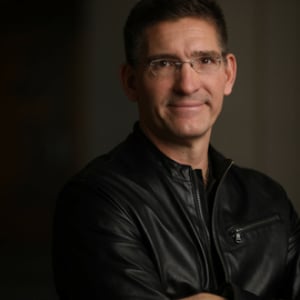
Founding Artistic Director, Commonwealth Shakespeare Company
Steven Maler is the Founding Artistic Director of Commonwealth Shakespeare Company (CSC). At CSC he has been directing Free Shakespeare on the Boston Common productions since 1996, including Love’s Labour’s Lost, King Lear, Twelfth Night, The Two Gentlemen of Verona, Coriolanus, All’s Well That Ends Well, Othello, The Comedy of Errors, As You Like It, A Midsummer Night’s Dream, The Taming of the Shrew, Hamlet, Much Ado About Nothing, Macbeth, Henry V, The Tempest, Julius Caesar, and Romeo & Juliet. In collaboration with Boston Landmarks Orchestra, he directed A Midsummer Night’s Dream, featuring the Overture and Incidental Music of Felix Mendelssohn, as well as concert stagings of The Boys from Syracuse and Kiss Me, Kate at Boston’s iconic Hatch Shell.
In a joint venture between CSC and Google, he most recently directed a Virtual Reality adaption of Hamlet entitled Hamlet 360: Thy Father’s Spirit, which is currently available for viewing on Boston public media producer WGBH’s YouTube channel.
Other CSC works include the critically acclaimed production of Ariel Dorfman’s Death and the Maiden, the world premiere of Jake Broder’s Our American Hamlet, and the world premiere of Robert Brustein’s The Last Will. He directed Peter Eötvös’s operatic treatment of Tony Kushner’s Angels in America (U.S. Premiere) and Thomas Adès’ Powder Her Face, The Turn of the Screw at New Repertory Theatre, Santaland Diaries and Chay Yew’s Porcelain at SpeakEasy Stage Company, Top Girls and Weldon Rising at Coyote Theatre, and The L.A. Plays by Han Ong at A.R.T. His New York City credits include the New York Musical Theatre Festival production of Without You, written by and starring Anthony Rapp. The production has been seen in Boston, Edinburgh, Toronto, London and Seoul.
He received the Elliot Norton Award for Sustained Excellence as well as for Best Production, Twelfth Night;Outstanding Director, A Midsummer Night’s Dream; Best Production, Suburbia; Best Solo Performance, John Kuntz’s Starf***ers (which also won Best Solo Performance Award at New York International Fringe Festival).
His feature film “The Autumn Heart”, starring Tyne Daly and Ally Sheedy, was in the Dramatic Competition at the Sundance Film Festival.
Senior Vice President, General Counsel, and Corporate Secretary, Raytheon Company
Mr. Jay B. Stephens has been Senior Vice President and General Counsel at Raytheon Co. since October 2002 and as its Secretary since December 19, 2006. Mr. Stephens provides leadership for Raytheon Co.'s legal and regulatory affairs, ethics and compliance programs, and corporate governance activities. He is also responsible for corporate staff activities in the areas of real estate, risk management, and safety and environmental quality. He is a member of Raytheon's senior leadership team and participates in the operational management and strategic planning of Raytheon Co. Prior to Raytheon, Mr. Stephens was an Associate Attorney General of the United States from January 2002 to October 2002. He served as a Corporate Vice President and Deputy General Counsel for Honeywell International (formerly AlliedSignal) from 1997 to 2001. From 1993 to 1997, he was a partner in the Washington office of the law firm of Pillsbury, Madison & Sutro (now Pillsbury and Winthrop). He served as United States Attorney for the District of Columbia from 1988 to 1993. From 1986 to 1988, he served in the White House as Deputy Counsel to the President , has primary responsibility for providing leadership and policy oversight for the civil components of the Department of Justice and these included the Antitrust, Civil, Civil Rights, Environment and Natural Resources, Justice Programs, and Tax Divisions of the Department. He served in a variety of senior executive, leadership, and legal positions in both government service and in the private sector. From 1993 to 1997, he was a partner in the Washington, D.C., office of the law firm of Pillsbury, Madison and Sutro where his practice focused on complex litigation, regulatory matters & corporate governance issues and he also served as co-managing partner of its Washington office. In 1988, he was appointed by the President following Senate confirmation to serve as the United States Attorney for the District of Columbia. For five years he provided leadership, policy guidance and litigation oversight for the nation's largest federal prosecutor's office which investigated and prosecuted cases involving public corruption, terrorism, national security matters, fraud, narcotics and violent crime and also represented the government in a variety of civil regulatory and litigation matters. From 1973 to 1985, he served in a variety of positions with the U.S. Department of Justice and in the private sector including Principal Associate Deputy Attorney General, Assistant United States Attorney, and Assistant Special Watergate Prosecutor. He also worked as an Assistant General Counsel with the Overseas Private Investment Corporation and as an associate with the Washington law firm of Wilmer Cutler & Pickering. He serves on the Boards of Directors of the National Legal Foundation for the Public Interest and the New England Legal Foundation. Mr. Stephens graduated from Harvard College magna cum laude with a bachelor's degree in government, attended Oxford University on a Knox Fellowship, and earned his J.D. degree cum laude from the Harvard Law School in 1973.
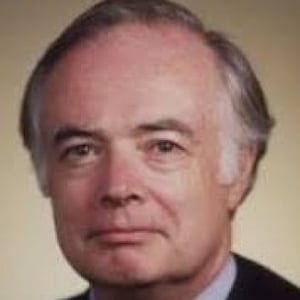
U.S. District Court Judge, District of Massachusetts
Douglas Preston Woodlock is a federal judge for the U.S. District Court for the District of Massachusetts. He joined the court in 1986 after being nominated by President Ronald Reagan. At the time of appointment, Woodlock served as Chairman of the Massachusetts Committee for Public Counsel Services.
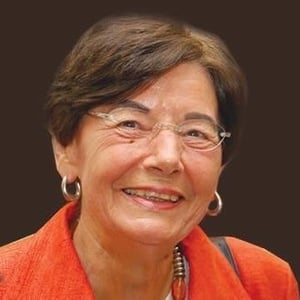
U.S. District Court Judge, District of Massachusetts
Rya Weickert Zobel is a federal judge of the United States District Court for the District of Massachusetts. She joined the court in 1979 after being nominated by President Jimmy Carter. At the time of her appointment, Zobel was a private practice attorney inMassachusetts.
Founder and Director, James Wilson Institute on Natural Rights & the American Founding
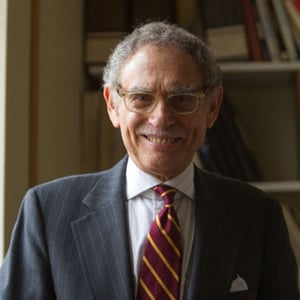
Hadley Arkes joined the faculty of Amherst College in 1966. He became the Edward Ney Professor of Jurisprudence in 1987, and held that chair until he retired officially in July 2015. But he has not retired from writing and speaking. He has carried that teaching into a new phase; he has become the Founder and Director of the James Wilson Institute on Natural Rights and the American Founding in Washington, D.C. He has written eight books, mostly with Princeton and Cambridge University Presss. Among the books at Princeton have been: The Philosopher in the City (1981), First Things (1986), Beyond the Constitution (1990), and The Return of George Sutherland (1994). With Cambridge Press he has done Natural Rights and the Right to Choose (2002), and Constitutional Illusions & Anchoring Truths: The Touchstone of the Natural Law (2010). His most recent book, with Regnery Press is Mere Natural Law (2023) His articles have appeared in professional journals, but apart from his writing in more scholarly formats, he has become known to a wider audience through his writings in the Wall Street Journal, National Review, Civitas and First Things, a journal that took its name from his book of that title.
He was the main advocate, and architect, of the bill that became known as the Born-Alive Infants’ Protection Act. The account of his experience, in moving the bill through Congress, is contained as an epilogue or memoir in his book, Natural Rights & the Right to Choose. Arkes first prepared his proposal as part of the debating kit assembled for the first George Bush in 1988. The purpose of that proposal was to offer the “most modest first step” of all in legislating on abortion, and opening a conversation even with people who called themselves “pro-choice.” Professor Arkes proposed to begin simply by preserving the life of a child who survived an abortion–contrary to the holding of one federal judge, that such a child was not protected by the laws. Professor Arkes led the testimony on the bill before the Judiciary Committee of the U.S. House in July 2000, then again in July 2001. The legislative calendar was upended in the aftermath of September 11th, but in March 2002, the bill was brought to the floor of the House, where it passed unanimously. To the surprise of Professor Arkes, the bill was brought to the floor of the Senate on July 18 by the Deputy Majority Leader, Harry Reid, and passed in the same way. On August 5, President Bush signed the bill into law with Professor Arkes in attendance.
Professor Arkes was the founder, at Amherst, of the Committee for the American Founding, a group of alumni and students seeking to preserve, at Amherst, the doctrines of “natural rights” taught by the American Founders and Lincoln. That interest has been carried over now to the founding of a new center for the jurisprudence of natural law, in Washington, D.C.: the James Wilson Institute on Natural Rights and the American Founding, named for one of the premier minds among the American Founders. Professor Arkes has drawn to this project a cluster of accomplished federal judges who have wanted to get a firmer hold on the natural law, and brought them together with some gifted teachers of philosophy and law. The new institute will be sponsoring lectures and seminars in Washington and other parts of the country. The purpose of this new James Wilson Institute is to teach anew, to lawyers, judges, and students those principles of law that furnished the guide to the American Founders as they set about framing a Constitution. And the hope is to restore, to a new generation, the furnishings of mind of the men who formed this regime.

The Religious Freedom Battle Moves to the States: Non-Partisan Legislative Caucuses
Marriage and Federalism
Denver, ColoradoReligious Free Exercise Under Fire
St. Louis, Missouri12th Annual Shakespeare and the Law
Boston, MassachusettsThe Future of the Supreme Court After the Election
Morristown, New JerseyAfter the 2012 Election… What’s Next for the Supreme Court?
The Challenge of Natural Law
Judicial Confirmations: Assessing the Current Environment and the Prospects for Change
Irvine, CaliforniaThe Judicial Assault on Marriage . . . and the Executive Surrender
Dallas, TexasLessons of the Sotomayor and Kagan Confirmation Processes: The Political Triumph of Judicial Conservatism