
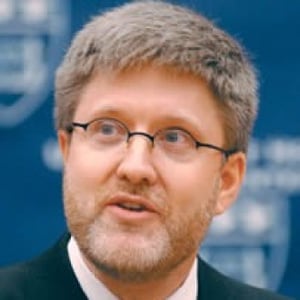
Professor of Law and the Mike and Teresa Baker College Professor, The University of Houston Law Center
Johnny Rex Buckles has been a faculty member of the University of Houston Law Center since August of 2000. He has also served as a Visiting Professor of Law at the Washington & Lee University School of Law. Professor Buckles has taught Taxation of Exempt Organizations, Federal Income Tax, Law & Theology, Estate Planning, Trusts & Wills, Contracts and Tax Policy Seminar. Professor Buckles’ primary research interests are in the law of tax and charity, and in law and theology. His publications include a number of law review articles and contributions to collective works. Professor Buckles holds a Juris Doctorate from the Harvard Law School, a Master of Arts in Biblical Studies from Dallas Theological Seminary, and a Bachelor of Science from Oklahoma State University.
University of California, Hastings College of Law
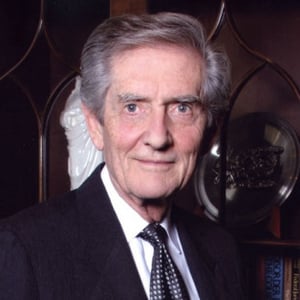
U.S. Court of Appeals, Ninth Circuit
Judge, U.S. District Court for the Southern District of California
Nominated by Richard M. Nixon on October 7, 1970, to a new seat authorized by 84 Stat. 294. Confirmed by the Senate on October 13, 1970, and received commission on October 16, 1970. Service terminated on July 14, 1972, due to appointment to another judicial position.
Judge, U.S. Court of Appeals for the Ninth Circuit
Nominated by Richard M. Nixon on May 22, 1972, to a seat vacated by James Marshall Carter. Confirmed by the Senate on June 28, 1972, and received commission on June 28, 1972. Served as chief judge, 1991-1996. Assumed senior status on April 8, 1996.
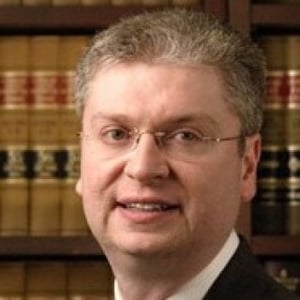
Associate Vice President & Associate Legal Director, Americans United for Separation of Church and State
Alex Luchenitser is the Associate Vice President & Associate Legal Director at Americans United for Separation of Church and State.
Alex has litigated church-state cases throughout the country for Americans United since January 2001. He has led lawsuits challenging religious proselytization of students in public schools, public funding of religious institutions, discriminatory governmental prayer practices, and government-sponsored religious displays. His successful cases include:
Alex has also authored and edited numerous friend-of-the-court briefs filed on behalf of Americans United. After the Covid-19 pandemic began, Alex led Americans United’s efforts to fight lawsuits that sought religious exemptions from public-health orders, filing fifty friend-of-the-court briefs in such cases around the country, including six in the U.S. Supreme Court.
Alex was born in Kyiv, Ukraine, in 1969 and immigrated to the United States in 1977. He received his bachelor’s degree magna cum laude in government and economics from Harvard University in 1991, and he received his Juris Doctor with distinction from Stanford Law School in 1994. After finishing law school, Alex served two one-year judicial clerkships, with Justice Warren W. Matthews Jr. of the Alaska Supreme Court and U.S. Magistrate Judge Wayne D. Brazil of the U.S. District Court for the Northern District of California. Alex then spent four years in private practice in Northern California, participating in the prosecution of class actions on behalf of investors, consumers, and trust beneficiaries.
Alex has spoken about church-state issues in many television and radio appearances and public presentations and has been quoted in numerous major newspapers. His published articles include:
Alex is an active member of the District of Columbia Bar, is an inactive member of the State Bar of California, and has been admitted to practice before the U.S. Supreme Court; the U.S. Courts of Appeals for the First, Second, Third, Fourth, Fifth, Sixth, Seventh, Eighth, Ninth, Tenth, Eleventh, Federal, and District of Columbia Circuits; and the U.S. District Courts for the District of Columbia, the Northern District of California, the District of Colorado, the Eastern District of Michigan, and the Eastern District of Wisconsin.
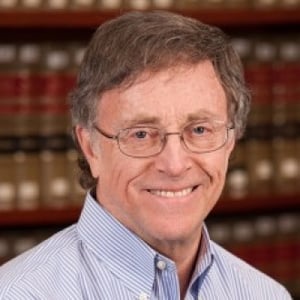
F. Elwood and Eleanor Davis Professor Emeritus of Law, The George Washington University Law School
Professor Lupu joined the law school in 1990. After graduating from law school, where he was case editor of the Harvard Law Review, he practiced law with the Boston firm of Hill & Barlow and then joined the law faculty at Boston University, where he taught from 1973 to 1989. During that time, he also served as a visiting professor at Northeastern University and at the University of California, Berkeley. In 1989–90, he was the professor-in-residence on the Appellate Staff of the Civil Division of the U.S. Department of Justice.
Professor Lupu is a nationally recognized scholar in constitutional law, with an emphasis in his writings on the religion clauses of the First Amendment. Together with his colleague Professor Robert Tuttle, Professor Lupu is the co-author of Secular Government, Religious People (Eerdmans Pub. Co., 2014) and many law journal articles.
David R. and Sherry Kirschner Berz Research Professor of Law and, GWU Law School
Senior Litigation Counsel, American Center for Law and Justice
Walter M. Weber is Senior Counsel for the ACLJ in the Washington, D.C. office. A highly regarded legal writer, Weber received his bachelor’s degree from Princeton University and his law degree from Yale Law School.
Weber emphasizes First Amendment law and has written briefs in many landmark cases at the Supreme Court including NOW v. Scheidler, Lamb’s Chapel v. Center Moriches School District and Bray v. Alexandria Women’s Health Clinic.
Weber has argued more than a dozen times in appeals before federal and state courts. Prior to joining the ACLJ, Weber served as a staff attorney with the Catholic League for Religious and Civil Rights.
Associate Vice President & Associate Legal Director, Americans United for Separation of Church and State
Alex Luchenitser is the Associate Vice President & Associate Legal Director at Americans United for Separation of Church and State.
Alex has litigated church-state cases throughout the country for Americans United since January 2001. He has led lawsuits challenging religious proselytization of students in public schools, public funding of religious institutions, discriminatory governmental prayer practices, and government-sponsored religious displays. His successful cases include:
Alex has also authored and edited numerous friend-of-the-court briefs filed on behalf of Americans United. After the Covid-19 pandemic began, Alex led Americans United’s efforts to fight lawsuits that sought religious exemptions from public-health orders, filing fifty friend-of-the-court briefs in such cases around the country, including six in the U.S. Supreme Court.
Alex was born in Kyiv, Ukraine, in 1969 and immigrated to the United States in 1977. He received his bachelor’s degree magna cum laude in government and economics from Harvard University in 1991, and he received his Juris Doctor with distinction from Stanford Law School in 1994. After finishing law school, Alex served two one-year judicial clerkships, with Justice Warren W. Matthews Jr. of the Alaska Supreme Court and U.S. Magistrate Judge Wayne D. Brazil of the U.S. District Court for the Northern District of California. Alex then spent four years in private practice in Northern California, participating in the prosecution of class actions on behalf of investors, consumers, and trust beneficiaries.
Alex has spoken about church-state issues in many television and radio appearances and public presentations and has been quoted in numerous major newspapers. His published articles include:
Alex is an active member of the District of Columbia Bar, is an inactive member of the State Bar of California, and has been admitted to practice before the U.S. Supreme Court; the U.S. Courts of Appeals for the First, Second, Third, Fourth, Fifth, Sixth, Seventh, Eighth, Ninth, Tenth, Eleventh, Federal, and District of Columbia Circuits; and the U.S. District Courts for the District of Columbia, the Northern District of California, the District of Colorado, the Eastern District of Michigan, and the Eastern District of Wisconsin.
David R. and Sherry Kirschner Berz Research Professor of Law and, GWU Law School
Senior Litigation Counsel, American Center for Law and Justice
Walter M. Weber is Senior Counsel for the ACLJ in the Washington, D.C. office. A highly regarded legal writer, Weber received his bachelor’s degree from Princeton University and his law degree from Yale Law School.
Weber emphasizes First Amendment law and has written briefs in many landmark cases at the Supreme Court including NOW v. Scheidler, Lamb’s Chapel v. Center Moriches School District and Bray v. Alexandria Women’s Health Clinic.
Weber has argued more than a dozen times in appeals before federal and state courts. Prior to joining the ACLJ, Weber served as a staff attorney with the Catholic League for Religious and Civil Rights.
F. Elwood and Eleanor Davis Professor Emeritus of Law, The George Washington University Law School
Professor Lupu joined the law school in 1990. After graduating from law school, where he was case editor of the Harvard Law Review, he practiced law with the Boston firm of Hill & Barlow and then joined the law faculty at Boston University, where he taught from 1973 to 1989. During that time, he also served as a visiting professor at Northeastern University and at the University of California, Berkeley. In 1989–90, he was the professor-in-residence on the Appellate Staff of the Civil Division of the U.S. Department of Justice.
Professor Lupu is a nationally recognized scholar in constitutional law, with an emphasis in his writings on the religion clauses of the First Amendment. Together with his colleague Professor Robert Tuttle, Professor Lupu is the co-author of Secular Government, Religious People (Eerdmans Pub. Co., 2014) and many law journal articles.
Professor Emeritus of Law, University of Notre Dame Law School
Charles E. Rice was Professor Emeritus at the University of Notre Dame law School. His areas of specialization were constitutional law and jurisprudence. He taught “Morality and the Law” at Notre Dame.
Rice was born in 1931, received the B.A. degree from the College of the Holy Cross, the J.D., from Boston College Law School and the LL.M. and J.S.D. from New York University. He served in the United States Marine Corps and was a Lt. Col. in the Marine Corps Reserve (Ret.). He practiced law in New York City and taught at New York University Law School and Fordham Law School before joining, in 1969, the faculty of law at Notre Dame. He served for eight years as State Vice-Chairman of the New York State Conservative Party.
From 1981 to 1993, Rice was a member of the Education Appeal Board of the U.S. Department of Education. He has served as a consultant to the U.S. Commission on Civil Rights and to various Congressional committees on constitutional issues and is an editor of the American Journal of Jurisprudence.
His continuing 13-part series, The Good Code: The Natural Law is available from the Eternal Word Television Network. Among his books are Freedom of Association; The Supreme Court and Public Prayer, The Vanishing Right to Live; Authority and Rebellion; Beyond Abortion: The Theory and Practice of the Secular State; No Exception: A Pro-Life Imperative; 50 Questions on the Natural Law; and The Winning Side: Questions on Living the Culture of Life. His latest books are Where Did I Come From? Where Am I Going? How Do I Get There?, (2nd ed.) co-authored with Dr. Theresa Farnan, and What Happened to Notre Dame?, both published by St. Augustine’s Press in 2009.
He was a faculty advisor and assistant coach of the Notre Dame Boxing Club.
Rice passed away on February 25, 2015.
Distinguished University Chair and Professor of Law, University of St. Thomas School of Law
Michael Stokes Paulsen is Distinguished University Chair & Professor of Law at the University of St. Thomas, where he has taught since 2007. Professor Paulsen was previously the McKnight Presidential Professor of Law & Public Policy and Associate Dean at the University of Minnesota Law School, where he taught from 1991-2007. He is a graduate of Northwestern University, Yale Law School, and Yale Divinity School. He has served as a federal prosecutor, as Attorney-Advisor in the Office of Legal Counsel of the U.S. Department of Justice, and as counsel for the Center for Law & Religious Freedom.
Paulsen has taught as a visiting professor at Princeton University, Pepperdine University, Georgetown University, Bethel University, Uppsala University (Sweden), Daystar University (Kenya), and University of the Andes (Chile). He has been a guest lecturer at universities around the nation, including Harvard, Yale, Columbia, Princeton, Penn, NYU, Georgetown, Virginia, Stanford, Berkeley, Michigan, University of Chicago, and Northwestern.
Professor Paulsen is the author of more than ninety scholarly articles and book chapters on a wide variety of constitutional law topics, published in law journals including the Harvard Law Review, the Yale Law Journal, the Stanford Law Review, the University of Chicago Law Review, the Michigan Law Review, the Georgetown Law Journal, and the Northwestern University Law Review. He is the author or co-author of three books, including The Constitution: An Introduction (Basic Books, 2015) (co-authored with Luke Paulsen) and the casebook The Constitution of the United States, now in its fifth edition with Foundation Press, co-authored with Michael McConnell, Samuel Bray, and Will Baude.
Counsel, The Judicial Confirmation Network
Wendy Long is legal counsel to the Judicial Confirmation Network. Until March 2005, she was a litigation partner in the New York office of Kirkland & Ellis LLP. Wendy was a law clerk to U.S. Supreme Court Justice Clarence Thomas and to Judge Ralph Winter of the U.S. Court of Appeals for the Second Circuit in New York. She is a graduate of Northwestern University School of Law, cum laude and Order of the Coif, where she was articles editor of the Northwestern University Law Review, and of Dartmouth College. She previously served as a press secretary in the U.S. Senate, for former U.S. Senator Bill Armstrong (R-Colo.) and former U.S. Senator Gordon Humphrey (R-N.H.).
Partner, Goldstein & Russell PC
Thomas C. Goldstein has argued 28 cases before the Supreme Court, including matters involving federal patent law, class action practice, labor and employment, and disability law. In addition to practicing law, Tom teaches Supreme Court Litigation at Harvard Law School and taught at Stanford Law School as well from 2004-2012.
In the Supreme Court and elsewhere, Mr. Goldstein litigates and advises clients in a broad range of issues. For example, he regularly litigates and lectures on questions of federal patent law. Mr. Goldstein frequently advises clients, litigates, and consults on legislative matters relating to the First Amendment. And he regularly represents parties in questions relating to the game of poker, including its lawfulness as a matter of federal and state law. Tom's clients include plaintiffs, criminal defendants, and major corporations such as BG Group, Home Depot, Humana, IMS Health, Nike, PokerStars, POM Wonderful, and Pemex.
In addition to practicing law, Tom founded, and is the publisher of, SCOTUSblog, which in 2013 became the only weblog ever to receive the Peabody Award for excellence in electronic media. It also won the 2013 Society of Professional Journalists (Sigma Delta Chi) prize for deadline reporting for its coverage of the Supreme Court’s healthcare ruling. In 2010, it became the first blog to receive the American Bar Association’s Silver Gavel Award for fostering the American public’s understanding of law and the legal system.
Tom has been repeatedly recognized as a leading member of the bar. In 2010, The National Law Journal named him one of the 40 most influential lawyers of the decade; Tom notably was ten years younger than any other law firm partner listed. Legal Times named him one of the “90 Greatest Washington Lawyers of the Last 30 Years” and praised him for “transforming the practice” of law before the Supreme Court. He is also included in both of the National Law Journal’s most recent lists of the nation’s 100 most influential lawyers (2006 and 2013). He has been repeatedly recognized as one of the nation’s top appellate advocates. GQ Magazine named him one of the 50 most powerful people in Washington, D.C.
Tom is an elected Fellow of the American Academy of Appellate Lawyers, and a member of the American Law Institute. He is involved with a number of professional organizations. He serves as the vice chair of the Amicus Committee of the ABA’s Intellectual Property Section and previously served for two years on the ABA’s Standing Committee on Amicus Curiae Briefs. In those capacities, he has authored several Supreme Court amicus briefs for the ABA. In addition, Tom serves on the boards of advisors of the Washington Legal Foundation and the Georgetown University Supreme Court Institute.
Before founding Goldstein & Howe in 1999, Tom practiced law at Boies & Schiller, LLP and at Jones Day Reavis & Pogue. Tom left the firm he founded in 2006 to create the Supreme Court Practice at Akin, Gump, Strauss, Hauer & Feld, where he also was a partner and principal co-chair of the firmwide litigation practice. He returned to what is now Goldstein & Russell in 2011.
Tom clerked for the Honorable Patricia M. Wald of the U.S. Court of Appeals for the D.C. Circuit.

Professor of Law, Antonin Scalia Law School, George Mason University
ILYA SOMIN is Professor of Law at George Mason University and the B. Kenneth Simon Chair in Constitutional Studies at the Cato Institute. His research focuses on constitutional law, property law, democratic theory, federalism, and migration rights. He is the author of Free to Move: Foot Voting, Migration, and Political Freedom (Oxford University Press, revised and expanded edition, 2022), Democracy and Political Ignorance: Why Smaller Government is Smarter (Stanford University Press, revised and expanded second edition, 2016), and The Grasping Hand: Kelo v. City of New London and the Limits of Eminent Domain (University of Chicago Press, 2015, rev. paperback ed., 2016), coauthor of A Conspiracy Against Obamacare: The Volokh Conspiracy and the Health Care Case (Palgrave Macmillan, 2013), and co-editor of Eminent Domain: A Comparative Perspective (Cambridge University Press, 2017). Democracy and Political Ignorance has been translated into Italian and Japanese.
Somin’s work has appeared in numerous scholarly journals, including the Yale Law Journal, Stanford Law Review, Northwestern University Law Review, Georgetown Law Journal, Critical Review, and others. Somin has also published articles in a variety of popular press outlets, including the New York Times, Washington Post, Wall Street Journal, Los Angeles Times, CNN, NBC, The Atlantic, USA Today, Boston Globe, US News and World Report, South China Morning Post, National Law Journal and Reason. He has been quoted or interviewed by the New York Times, Washington Post, Wall Street Journal, Time, Newsweek, The Economist, the Christian Science Monitor, the Financial Times, The Guardian, the Associated Press, CBS, MSNBC, NPR, BBC, Reuters, the Canadian Broadcasting Corporation, the Australian Broadcasting Corporation, Radio Free Europe/Radio Liberty, Al Jazeera, and the Voice of America, among other media.
Somin’s writings have been cited in decisions by the United States Supreme Court, multiple state supreme courts and lower federal courts, and the Supreme Court of Israel. He is co-counsel for the plaintiffs in VOS Selections, Inc. v. Trump, a case challenging the constitutionality of President Trump’s “Liberation Day” tariffs. Somin has testified on the use of drones for targeted killing in the War on Terror before the US Senate Judiciary Subcommittee on the Constitution, Civil Rights, and Human Rights. In 2009, he testified on property rights issues at the United States Senate Judiciary Committee confirmation hearings for Supreme Court Justice Sonia Sotomayor. Somin writes regularly for the popular Volokh Conspiracy law and politics blog, now affiliated with Reason magazine (previously affiliated with the Washington Post from 2014 to 2017). From 2006 to 2013, he served as Co-Editor of the Supreme Court Economic Review, one of the country’s top-rated law and economics journals.
Somin has served as a visiting professor at the University of Pennsylvania Law School. He has also been a visiting professor or scholar at the Georgetown University Law Center, the University of Hamburg, Germany, the University of Torcuato Di Tella in Buenos Aires, Argentina, Uriel Reichman University in Israel, and Zhengzhou University in China. He is a University Affiliate of the Schar School of Policy and Government at George Mason University, and an affiliated faculty member of the George Mason University Institute for Immigration Research. Before joining the faculty at George Mason, Somin was the John M. Olin Fellow in Law at Northwestern University Law School in 2002-2003. In 2001-2002, he clerked for the Hon. Judge Jerry E. Smith of the U.S. Court of Appeals for the Fifth Circuit. Professor Somin earned his B.A., Summa Cum Laude, at Amherst College, M.A. in Political Science from Harvard University, and J.D. from Yale Law School.

Thomas M. Siebel Senior Fellow, The Hoover Institution, Stanford University; Gary T. Schwartz Distinguished Professor of Law Emeritus, UCLA School of Law
Eugene Volokh is the Thomas M. Siebel Senior Fellow at the Hoover Institution (Stanford), as well as the Gary T. Schwartz Distinguished Professor of Law Emeritus and Distinguished Research Professor at UCLA School of Law. He recently retired from teaching at UCLA, after 30 years there, and is now focusing on research.
Volokh is the author of the textbooks The First Amendment and Related Statutes (8th ed. 2023), and Academic Legal Writing (5th ed. 2016), as well as over 100 academic law journal articles, mostly on First Amendment law. He is a member of The American Law Institute; the editor-in-chief of the Journal of Free Speech Law; and the creator and coauthor of The Volokh Conspiracy, a leading legal blog founded in 2002 (hosted at the Washington Post from 2014 to 2017 and now at Reason Magazine).
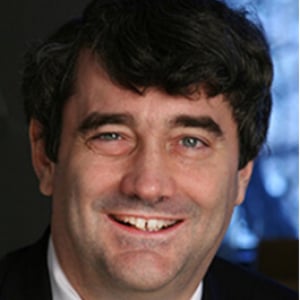
Clayton J. and Henry R. Barber Professor of Law, Northwestern University Pritzker School of Law and Co-Chairman, Board of Directors, The Federalist Society
STEVEN GOW CALABRESI is the Clayton J. & Henry R. Barber Professor at Northwestern Pritzker School of Law. He has also co-taught in the Fall semester at Yale Law School from 2013 to the present. Calabresi clerked for Justice Antonin Scalia and Judges Robert H. Bork and Ralph K. Winter. He was a Special Assistant to Attorney General Meese from 1985 to 1987 and worked with Ken Cribb as his deputy in 1987 on the second floor of the West Wing of the Reagan White House. Calabresi has written books on presidential power and comparative constitutional law and the origins of judicial review. He and Gary Lawson are the co-editors of a casebook on U.S. Constitutional Law, and Calabresi is also the co-editor of a casebook on comparative constitutional law. He has written over seventy law review articles since 1990.
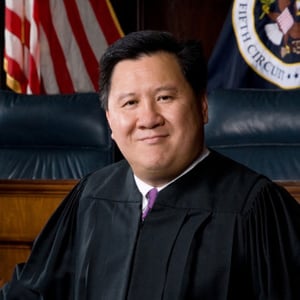
Judge, United States Court of Appeals, Fifth Circuit
James C. Ho is a Circuit Judge on the U.S. Court of Appeals for the Fifth Circuit. Before taking the bench on January 4, 2018, he was a partner and co-chair of the national Appellate and Constitutional Law practice group of Gibson, Dunn & Crutcher LLP.
As an appellate litigator for over a decade, including three years as the Solicitor General of Texas, Judge Ho presented 50 oral arguments in federal and state courts nationwide. He won numerous appeals, including three merits cases at the U.S. Supreme Court. He was routinely ranked among the nation’s leading lawyers by Benchmark, Chambers, Law360, The Legal 500, and The National Law Journal, among other publications. His work has been cited favorably by courts at every level of both the federal and state judiciaries. He won a Best Brief Award from the National Association of Attorneys General for every year that he served as solicitor general, and he is the only state solicitor general in history to be invited by the U.S. Supreme Court to express the views of a state.
Judge Ho has served in all three branches of the federal government. On the Senate Judiciary Committee, he served as chief counsel of the Subcommittees on the Constitution and Immigration under Senator John Cornyn. At the Justice Department, he served as Special Assistant to the Assistant Attorney General for Civil Rights and an attorney-advisor at the Office of Legal Counsel. He clerked for Judge Jerry E. Smith of the U.S. Court of Appeals for the Fifth Circuit and Justice Clarence Thomas of the U.S. Supreme Court.
His record of public service also includes appointments as vice chair of the Federal Judicial Evaluation Committee in Texas and co-chair of the National Asian Pacific American Bar Association Judiciary Committee, and as a member of the U.S. Magistrate Judge Merit Selection Panel for the Northern District of Texas, the U.S. delegation to the United Nations Committee on the Elimination of Racial Discrimination, and the Continuity of Government Commission.
In addition, Judge Ho has served as an Adjunct Professor of Law at the University of Texas School of Law, where he taught seminars on U.S. Supreme Court Litigation and Religious Liberty. He has authored numerous articles in respected law reviews nationwide, including an annual feature on exemplary judicial writing for The Green Bag Almanac & Reader. He previously served as senior editor of The Green Bag and as co-editor of Pub. L. Misc.
Judge Ho graduated from Stanford University with honors and a B.A. in Public Policy in 1995, and the University of Chicago Law School with high honors in 1999. Before law school, he was a legislative aide to California State Senator Quentin Kopp. He and his wife Allyson live in Dallas, Texas, with their twin daughter and son.
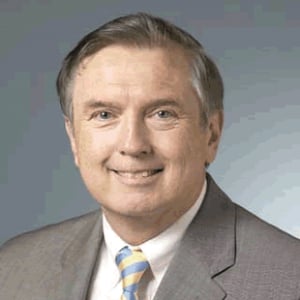
Professor of Law, University of Notre Dame Law School
Gerard V. Bradley is Professor of Law at the University of Notre Dame, where he teaches Legal Ethics and Constitutional Law. At Notre Dame he directs (with John Finnis) the Natural Law Institute and co-edits The American Journal of Jurisprudence, an international forum for legal philosophy. Bradley has been a Visiting Fellow at the Hoover Institution of Stanford University, and a Senior Fellow of the Witherspoon Institute, in Princeton, New Jersey. He served for many years as President of the Fellowship of Catholic Scholars.
Bradley received his B.A and J.D. degrees from Cornell University, graduating Summa cum laude from the law school in 1980. After serving in the Trial Division of the Manhattan District Attorney’s Office he joined the law faculty at the University of Illinois. He moved to Notre Dame in 1992. Bradley has published over one hundred scholarly articles and reviews. His most recent books are an edited collection of essays titled, Challenges to Religious Liberty in the Twenty-First Century (published by Cambridge University Press in 2012), Essays on Law, Religion, and Morality and Unquiet Americans: U.S. Catholics and the Common Good (both to be published in 2014.) He is currently working on a book about regulating obscenity in the Internet Age.

Tax Exempt Status of Churches, the Establishment Clause, and Political Speech
Boston, MAThe Establishment Clause
California - Hastings Student Chapter
San Francisco, CAThe Application of RFRA to Override Employment Non-Discrimination Clauses Embedded in Federal Social Service Programs
The basic federal employment nondiscrimination law is Title VII of the Civil Rights Act of...
Barwatch Bulletin February 13, 2008
CENTER FOR HUMAN RIGHTS LUNCHEONThe Center for Human Rights' House of Delegates Luncheon featured Albert...
Hein, One Year Later: The Future of Church-State Litigation
Alex J. Luchenitser, Robert W. Tuttle, Walter M. Weber, Ira C. “Chip” Lupu
In June 2007, the U.S. Supreme Court held, in Hein v. Freedom From Religion Foundation,...
Hein, One Year Later: The Future of Church-State Litigation
Religious Liberties Practice Group, The Constitution Project, and The Pew Forum on Religion & Public Life
Washington, DCSchool Vouchers: Past Lessons and Future Prospects - The Implications of Government "Strings" on Vouchers
Charles E. Rice, Michael Stokes Paulsen
MS. SMITH: It certainly has been an interesting week for religion in the news. We...
SCOTUS term
Wendy Long, Thomas C. Goldstein, Ilya Somin, Eugene Volokh, Steven G. Calabresi, James C. Ho
On June 28, 2007, the Supreme Court handed down its last decisions of the Spring...
New York and Maine High Courts Review State Financing of Schools
Amber Taylor
In the last year, the highest courts in New York and Maine issued important rulings...
New York Court of Appeals Rules on Contraception Case
Gerard V. Bradley
Seeking to advance women’s health and their overall treatment on terms equal to men, the...