
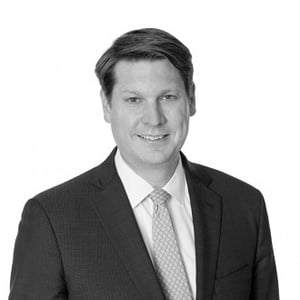
Former Acting Assistant Attorney General, United States Department of Justice; Partner, Winston & Strawn LLP
Jonathan “Jon” Brightbill is a trial and appellate lawyer in Winston’s Washington, D.C. office, and a partner in the firm’s Litigation and White Collar, Regulatory Defense, and Investigations Practices. He represents public and private companies, corporate officers, and other individuals across white collar, regulatory defense, and government and internal investigation matters and rulemaking challenges, as well as complex commercial disputes, citizen suits, and class actions. His commercial litigation experience encompasses business disputes, false advertising, consumer protection and fraud, FCA, and extensive class action defense work; antitrust and unfair competition matters; and intellectual property litigation, such as trademarks, patents, and trade secrets.
Jon served as the Nation’s lead environmental civil and criminal enforcement official and litigator, as Acting Assistant Attorney General for the Environment & Natural Resources Division (“ENRD”) of the U.S. Department of Justice (DOJ). Jon led ENRD’s 425 lawyers, overseeing 6,500 active matters and managing an annual budget of more than $150 million. Jon brings highly experienced executive leadership from among the most senior level of DOJ on white collar and regulatory enforcement, as well as on federal policymaking and rulemaking development and challenges. He speaks with authority on government decision-making processes, and the arguments and perspectives that move regulators and enforcers, best advising and positioning clients to deal with challenges.
Jon argued many of the government’s most significant cases during his time with the DOJ. This included the Navigable Waters Protection Rule and Clean Water Rule Repeal (10th Cir., district courts), the Affordable Clean Energy Rule and Clean Power Plan Repeal (D.C. Cir), defense of EPA actions on pesticide tolerances under FIFRA and the FDCA (9th Cir. en banc), among numerous others. Jon represented the United States in trial courts in both enforcement and defensive cases, including federal enforcement action against Jeffrey Lowe and the Tiger King Park, of Netflix fame, securing a first-of-its-kind injunction for violations of the Endangered Species Act and Animal Welfare Act. Jon directed the litigation and briefing of scores of additional federal cases nationwide, covering all of the major environmental and natural resources statutes, such as the Clean Air Act, the Clean Water Act, FIFRA (pesticides), FDCA (food safety), TSCA (toxics), CERCLA (land remediation), RCRA (waste), National Environmental Policy Act, Federal Land Policy and Management Act, and numerous other land- and resource-management statutes.
Jon has unmatched experience litigating legal and technical issues relating to climate change. He argued in the courts of appeals, including the D.C. Circuit, regarding the most significant climate change regulations by EPA, as well as the preemptive scope of the Clean Air Act. Jon also litigated climate change-related credit and trading schemes and international agreements in district court. During Jon’s time in leadership at ENRD, it successfully defeated one of the most wide-ranging lawsuits regarding climate change to date—obtaining a stay pending interlocutory appeal and dismissal just weeks before a scheduled three-month trial on federal government liability for climate change.
An accomplished trial lawyer, prior to working at DOJ, Jon was a partner in the Washington, D.C. office of another global law firm. He not only represents clients in court, but creatively counsels corporations on balancing business needs and realities with a broad range of litigation risks and compliance obligations. Jon is also an Adjunct Professor at Georgetown University Law Center. He served on the American Bar Association’s E-Discovery Working Group for Bankruptcy Practice, and was a frequent lecturer for District of Columbia Bar Association Continuing Legal Education Programs.
Jon served as an appellate clerk for the Honorable D. Brooks Smith, U.S. Court of Appeals for the Third Circuit, after graduating magna cum laude from the Georgetown University Law Center. He worked in state government as an Executive Policy Specialist for air, waste, land remediation, and radiation matters at the Pennsylvania Department of Environmental Protection.

Associate, Winston & Strawn LLP
Spencer draws on his experience as a former trial and appellate clerk to litigate white collar, commercial, administrative law, and constitutional matters at every stage.
Michael J. Woodrum is an Associate at Winston & Strawn LLP.

Laurence H. Silberman Chair in Constitutional Governance, American Enterprise Institute; Executive Director, Antonin Scalia Law School’s C. Boyden Gray Center for the Study of the Administrative State
Adam J. White is the Laurence H. Silberman Chair in Constitutional Governance and senior fellow at the American Enterprise Institute, where he focuses on the Supreme Court and the administrative state. He also directs the Antonin Scalia Law School’s C. Boyden Gray Center for the Study of the Administrative State.
He writes on regulation and constitutional government for a variety of publications. He practiced law in Washington, D.C., after clerking for the D.C. Circuit's Judge David Sentelle. He also has been chairman of the ABA's Administrative Law Section.
In 2021, he served on the Presidential Commission on the Supreme Court of the United States, where he criticized “Court packing” and other efforts to restructure the Supreme Court.
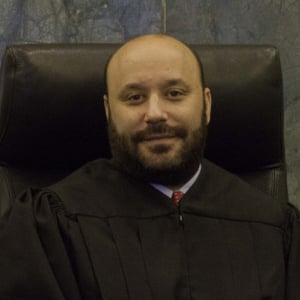
Judge, United States District Court, Eastern District of Arkansas
Lee Philip Rudofsky is a judge on the United States District Court for the Eastern District of Arkansas. Prior to his 2019 appointment by President Trump, Judge Rudofsky served as the Solicitor General of Arkansas, an Assistant General Counsel at Walmart, a Senior Litigation Associate at Kirkland & Ellis, and counsel to several Republican political campaigns. Today, in addition to his judicial service, Judge Rudofsky teaches law school classes on founding-era constitutional history and, separately, speaks to students across the country about the October 7th Massacre and the subsequent Israeli response. In 2024, Judge Rudofsky helped establish an annual judicial education mission to Israel that offers American judges the opportunity to learn first-hand about the Israeli legal system, Israeli society, and legal issues related to the Israel-Hamas war.

Pushing Pause on Liquified Natural Gas Exports: Can the Department of Energy Halt LNG Exports to Save the Planet?
Jonathan Brightbill, Spencer Churchill, Michael Woodrum
The Biden-Harris Administration recently interrupted the normal, export-friendly operation of the Natural Gas Act, triggering...
Thinking About the "Practically Unthinkable": Energy Infrastructure and the Threat of Low-Probability, High-Impact Events
Adam White
The National Environmental Policy Act1 requires federal agencies to ascertain and evaluate the possible environmental...
Mountaintop Coal Mining: A Permitting Process In Flux
Lee Rudofsky
Brought to you by the Environmental Law & Property Rights Practice GroupMountaintop coal mining is a...