
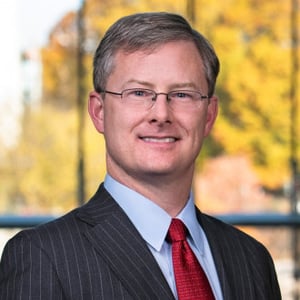
Partner, Jones Day
Kevin Marshall provides clients analysis, strategy, and advocacy involving novel or complex legal issues, particularly in white collar and other compliance matters and in civil litigation arising out of criminal matters or alleged fraud. This includes appeals, dispositive and other critical motions, and prelitigation analyses.
Kevin oversaw trial and appellate briefing, and argued on appeal, in the successful defense of lawsuits arising out of the wiretapping prosecution of a private investigator who had served Jones Day's clients. He also has overseen briefing of, and successfully argued, motions for R.J. Reynolds in connection with arbitration under the Federal Arbitration Act, and the partial settlement, of billion dollar disputes with states under the Master Settlement Agreement. His assistance with investigations and related litigation has included the Foreign Corrupt Practices Act, false claims acts, RICO, civil and criminal fraud, reckless manslaughter, and the intersection of products liability and bankruptcy. Kevin was part of the team representing the National Federation of Independent Business in challenging the constitutionality of the Patient Protection and Affordable Care Act before the Eleventh Circuit and U.S. Supreme Court. He also has advised on and briefed issues under the Consumer Product Safety Improvement Act (CPSIA).
Before joining Jones Day, Kevin was a deputy assistant attorney general in the U.S. Department of Justice's Office of Legal Counsel. He provided authoritative written legal opinions and other legal advice, throughout the executive branch, on the Constitution, treaties, international law including the law of war, and federal statutes and regulations. He also testified three times before Congress.
U.S. Court of Appeals, Ninth Circuit
Jay Scott Bybee is a federal judge on the United States Court of Appeals for the Ninth Circuit. He has published numerous articles in law journals and has taught in law school. His primary research interests are in constitutional and administrative law.
Professor of Law, Widener University Commonwealth Law School
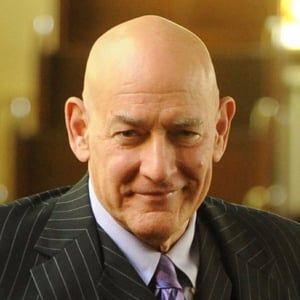
Raoul Berger Professor of Legal History at Northwestern University School of Law
Stephen Presser is a leading American legal historian and expert on shareholder liability for corporate debts. He is frequently an invited witness before committees of the U.S. Senate and House of Representatives on issues of constitutional law. He holds a joint appointment with the J. L. Kellogg Graduate School of Management and also teaches in Northwestern's history department.
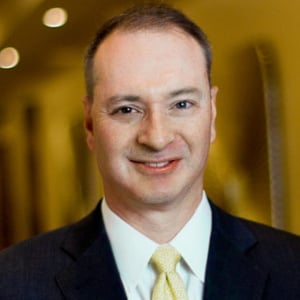
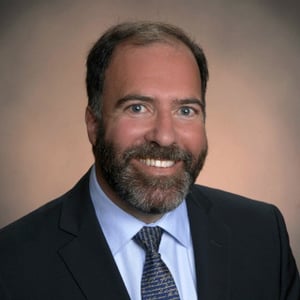
Managing Shareholder, Saltzman Mugan Dushoff, PLLC
Over the course of his twenty-plus years as an attorney in Las Vegas, Mr. Saltzman has developed a corporate law practice focused on financial institution and liquor law. He assists businesses in their formation, licensing and governance matters; he also counsels businesses on corporate mergers and acquisition matters. He assists highly regulated financial institutions and captive insurance companies in corporate and regulatory compliance matters and he has testified before the Nevada legislature as an expert on trust company legislation and drafted portions of Nevada law relating to the chartering and operation of Nevada trust companies. He has counseled trust companies and financial service firms on Blockchain and cryptocurrency related legal compliance matters.
Mr. Saltzman has developed and managed the firm’s liquor law practice into Nevada’s largest alcohol beverage specialty law practice group. He and his team of attorneys and paralegals assist a wide range of liquor retailers, wholesalers and suppliers in licensing and compliance matters in all Nevada jurisdictions. More information on Mr. Saltzman’s liquor law practice can be found at his blog: www.nvliquorlaw.com
Matthew Saltzman received a Bachelor of Arts degree in Economics and Philosophy from University of Wisconsin, Madison in 1987. In 1993, he received his Juris Doctor from University of Pittsburgh School of Law, where he was also Executive Editor of the University of Pittsburgh Law Review and served as teaching assistant for the Legal Research and Writing course.
John Henry Wigmore Professor of Law, Northwestern University School of Law
Professor Allen is the John Henry Wigmore Professor of Law at Northwestern University, in Chicago, IL. He did his undergraduate work in mathematics at Marshall University and studied law at the University of Michigan. He is an internationally recognized expert in the fields of evidence, procedure, and constitutional law. He has published five books and approximately eighty articles in major law reviews. The New York Times referred to him as one of nation's leading experts on evidence and procedure. He has been quoted in national news outlets hundreds of times, and appears regularly on national broadcast media on matters ranging from complex litigation to constitutional law to criminal justice.
Professor Allen began his career at the State University of New York, and has held professorships at the University of Iowa and Duke University prior to coming to Northwestern. He has lectured on his research at distinguished universities across the world, among them Columbia University, Cornell University, University of Chicago, University of Virginia, University of Pennsylvania, University of Michigan, Duke University, Oxford University, University of London, Leiden University, the Royal Netherlands Academy of Arts and Sciences, University of Edinburgh, University of British Columbia, the University of Paris (Sorbonne), Parma University, Turin University, Pavia University, University of Adelaide, Australia, and Victoria University of Wellington, New Zealand, and UNAM, Mexico City. In 1991, he was the University Distinguished Visiting Scholar, at the University of Adelaide, South Australia. One of his books has been translated into Chinese by the Ministry of Education of the People's Republic of China, and he has been invited to China for a series of lectures in the summer of 2004 and the spring of 2005. He has also been invited to lecture by the governments of Mexico and Trinidad/Tobago. For the last ten years, his research has focused on the nature of juridical proof. He has been involved as a consultant on numerous cases involving complex litigation in the United States and abroad.
He is a member of the American Law Institute, has chaired the Evidence Section of the Association of American Law Schools, and was Vice-chair of the Rules of Procedure and Evidence Committee of the American Bar Association's Criminal Justice Section. He has served as a Commissioner of the Illinois Supreme Court, assigned to the Attorney Registration and Disciplinary Commission. He is presently on the Boards of the Constitutional Rights Foundation-Chicago, and the Yeager Society of Scholars of Marshall University. He is, or has served, on various boards and committees of civic and cultural institutions in Chicago.
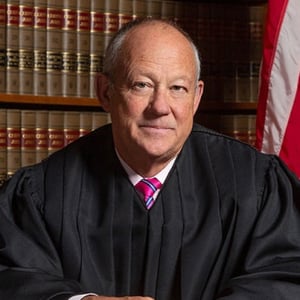
Judge, United States Court of Appeals, Tenth Circuit
Judge Tymkovich, of Denver, Colorado, was nominated to the Tenth Circuit Court of Appeals by President George W. Bush, and confirmed in April 2003. On October 1, 2015 he became Chief Circuit Judge and held this position until October 2022. He was Chair of the US Judicial Conference’s Committee on Judicial Resources from 2011 to 2015. Since 2008 he has been an adjunct professor of law at the University of Colorado School of Law, teaching Election Law. He is a member of the Doyle Inn of Court, the American Law Institute, and the International Society of Barristers. Since he joined the Circuit, Judge Tymkovich has hosted judicial delegations from Russia, Kazakhstan, and Afghanistan, and has also represented the United States in programs at Kiev and Yalta in Ukraine.

Professor Emeritus, Paul M. Hebert Law Center, Louisiana State University
In memoriam
Dr. John Baker is Professor Emeritus of Law, and previously the Dale E. Bennett Professor of Law, at Louisiana State University Law School. He is currently Visiting Professor at Peking University School of Transnational Law (via Zoom) and has been Visiting Professor at The Center for the Constitution, Georgetown Law School (2013-2020). He has also been a Visiting Fellow at Oriel College, the University of Oxford (2012-2014) and taught at Blackfriars Hall, Oxford in 2014. Dr. Baker has also been an adjunct Fellow at the Heritage Foundation (Spring, 2008) and a Distinguished Scholar at the Catholic University of America Law School (2011-12). He has taught at Tulane Law School, George Mason Law School, Pepperdine Law School, New York Law School, Hong Kong University, and the University of Dallas, School of Management and also taught and/or lectured in 17 foreign countries. Notable among his foreign visits are the
following: Visiting Professor at the University of Lyon III (France) (1999-2011); Visiting Professor at the Universidad de los Andes, Chile (2012), as a Fulbright Specialist (2006); and a Fulbright Scholar at various universities in the Philippines. Dr. Baker received his J.D., with honors, from the University of Michigan Law School and his B.A., magna cum laude, from the University of Dallas. He also earned a Ph.D. in Political Thought from the University of London. Baker has taught over a dozen different subjects, mostly courses in public law. His main areas of interest are Constitutional Law (particularly federalism and separation of powers), Criminal Law, Anti-Terrorism Law, International Law, Health Care Law, Mediation, and Comparative Law.
In addition to law review articles and book chapters, Dr. Baker’s academic publications include Hall's Criminal Law: Cases and Materials (with Benson, Force and George; 5th ed. Michie, 1993); An Introduction to the Law of the United States (ed. with Levasseur; University Press of America, 1992). He has also published on Forbes.com, FoxNews.com, in The Washington Times, and a number of times in The Wall Street Journal. He argues in federal court, including two oral arguments in the U.S. Supreme Court. For many years, he co-taught courses for the Federalist Society on separation of powers with the late Supreme Court Justice Antonin Scalia. In September 2016, he co-taught a Supreme Court seminar in China with Justice Samuel Alito. Following law school, he served as a law clerk in federal district court and as an assistant district attorney in New Orleans before joining LSU in 1975. While a professor, he has been as a consultant to USAID, USIA (since rolled into the State Department), the Justice Department, the U.S. Senate Judiciary Subcommittee on Separation of Powers, and the Office of Planning in the White House. He served on an ABA Task Force which issued the report, The Federalization of Crime (1998) and later as a consultant to the “Bi-Partisan Task Force on the Over- federalization of Crime” (2012-2014) created by the U.S. House Judiciary Subcommittee on Crime. Dr. Baker was a co-founder of the first iteration (1995) of Stratfor Inc., a global intelligence agency. He co-authored its first book: The Intelligence Edge (with Friedman, Friedman and Chapman; Crown Books/Random House 1997). In 2022, he began a short, weekly video podcast available on YouTube and Rumble, The Baker Brief.

Patrick Hotung Professor of Constitutional Law, Georgetown University Law Center; Faculty Director, Georgetown Center for the Constitution
Randy E. Barnett is the Patrick Hotung Professor of Constitutional Law at the Georgetown University Law Center and is the Faculty Director of the Georgetown Center for the Constitution. After graduating from Northwestern University and Harvard Law School, he tried many felony cases as a prosecutor in the Cook County States’ Attorney’s Office in Chicago. A recipient of a Guggenheim Fellowship in Constitutional Studies and the Bradley Prize, Professor Barnett has been a visiting professor at Penn, Northwestern and Harvard Law School.
Professor Barnett’s publications includes thirteen books, more than one hundred articles and reviews, as well as numerous op-eds. His most recent book is Felony Review: Tales of True Crime and Corruption in Chicago (2026). His other books on the Constitution include: A Life for Liberty: The Making of an American Originalist (2024); The Original Meaning of the Fourteenth Amendment: Its Letter and Spirit (2021) (with Evan Bernick); An Introduction to Constitutional Law: 100 Supreme Court Cases Everyone Should Know (2019) (with Josh Blackman); Restoring the Lost Constitution: The Presumption of Liberty (2nd ed. 2013); Our Republican Constitution: Securing the Liberty and Sovereignty of We the People (2016); and Constitutional Law: Cases in Context (5th ed. forthcoming 2027) (with Josh Blackman). His books on contracts are The Oxford Introductions to U.S. Law: Contracts (2010) and Contracts: Cases and Doctrine (7th ed. 2021) (with Nate Oman). And he is the author of The Structure of Liberty: Justice and the Rule of Law (2nd ed. 2014).
In 2004, he argued the medical marijuana case of Gonzalez v. Raich before the U.S. Supreme Court. In 2012, he was one of the lawyers representing the National Federation of Independent Business in its constitutional challenge to the Affordable Care Act in NFIB v. Sebelius. He’s appeared in numerous documentaries and portrayed a prosecutor in the 2010 science-fiction feature film, InAlienable: The Movie. On X he is @RandyEBarnett

Paul J. Schierl Professor of Law, University of Notre Dame Law School
Professor Richard W. Garnett teaches and writes in the areas of constitutional law, criminal law, the First Amendment, and law and religion. He is a leading authority on questions and debates regarding religious freedom and church-state relations, and is the founding director of Notre Dame Law School’s Program on Church, State, and Society.
Garnett clerked for the late Chief Justice of the United States, William H. Rehnquist, and also for the late Chief Judge of the United States Court of Appeals for the Eighth Circuit, Richard S. Arnold. He earned his J.D. from Yale Law School in 1995 and his B.A., summa cum laude, from Duke University in 1990. He joined the faculty in 1999 after practicing law in Washington, D.C. with Miller, Cassidy, Larroca & Lewin.
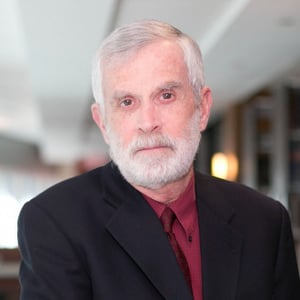
Robert W. Woodruff Professor of Law, Emory Law
Michael John Perry is the author of thirteen books and over eighty-five articles and essays. The titles of Perry’s books reflect his particular interests: The Constitution, the Courts, and Human Rights (Yale, 1982); Morality, Politics, and Law (Oxford, 1988); Love and Power: The Role of Religion and Morality in American Politics (Oxford, 1991); The Constitution in the Courts: Law or Politics? (Oxford, 1994); Religion in Politics: Constitutional and Moral Perspectives (Oxford, 1997); The Idea of Human Rights: Four Inquiries (Oxford, 1998); We the People: The Fourteenth Amendment and the Supreme Court (Oxford, 1999); Under God? Religious Faith and Liberal Democracy (Cambridge, 2003); Toward a Theory of Human Rights: Religion, Law, Courts (Cambridge, 2007); Constitutional Rights, Moral Controversy, and the Supreme Court (Cambridge, 2009); The Political Morality of Liberal Democracy (Cambridge, 2010); Human Rights in the Constitutional Law of the United States (Cambridge, 2013); and A Global Political Morality: Human Rights, Democracy, and Constitutionalism (Cambridge, 2017).
Since 2003, Perry has held a Robert W. Woodruff University Chair at Emory University, where he teaches in the law school. A Woodruff Chair is the highest honor Emory University bestows on a member of its faculty. Perry is also a senior fellow at Emory University’s Center for the Study of Law and Religion and a co-editor of the Journal of Law and Religion (Cambridge University Press).
Before coming to Emory, Perry was the inaugural occupant of the Howard J. Trienens Chair in Law at Northwestern University (1990-1997), where he taught for fifteen years (1982-1997). He then held the University Distinguished Chair in Law at Wake Forest University (1997-2003). Perry began his teaching career at the Ohio State University College of Law (1975-82) and has taught as a visiting professor at several law schools: Yale (1978-79), Tulane (spring semester, 1987), New York Law School (spring semester, 1990), the University of Tokyo (fall semester, 1991), the University of Alabama (fall semester, 2005), the University of Western Ontario, Canada (January term, 2009), and the University of Dayton (intrasession course, March 2011). For three consecutive fall semesters (2009, 2010, 2011), Perry was the University Distinguished Visiting Professor in Law and Peace Studies at the University of San Diego, where he taught an introductory course on international human rights both to law students and to graduate students at the Joan B. Kroc School of Peace Studies.
Perry, who was born and raised in Louisville, Kentucky, received his AB from Georgetown University (1968) and his JD from Columbia University (1973). After graduating from law school, Perry served as law clerk both to US District Judge Jack B. Weinstein (1973-74) and, a year later, to US Circuit Judge Shirley M. Hufstedler (1974-75). Perry is married to Sarah Anne O’Leary, a public health specialist at the US Centers for Disease Control and Prevention, in Atlanta. They have two sons: Daniel and Gabriel.

SCOTUScast 3-24-08 featuring Kevin Marshall
C. Kevin Marshall
On March 18 2008 the Court heard oral argument in District of Columbia v. Heller....
Appointive vs. Elective Methods of Judicial Selection
Jay S. Bybee, Michael R. Dimino, Stephen B. Presser, Matthew Saltzman
The blue ribbon Article VI Commission is studying Nevada’s judicial system and is reportedly leaning...
Panel II: Moral Choices and the Eighth Amendment
Ronald J. Allen, Laurence Claus, Michael S. Moore, Timothy M. Tymkovich
The Federalist Society's Student Division presented this panel at the 2007 Annual Student Symposium on...
Panel I: What is Morality? The Philosophical and Theological Foundations of Moral Debate
John S. Baker, Randy E. Barnett, Robert Burns, Richard W. Garnett, Michael J. Perry
The Federalist Society's Student Division presented this panel at the 2007 Annual Student Symposium on...