
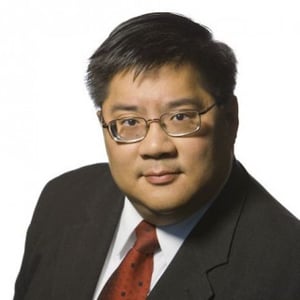
Senior Fellow, Potomac Institute for Policy Studies
Dean Cheng currently a Senior Fellow at the Potomac Institute for Policy Studies, specializing in the US relationship with China. Prior to being with the Potomac institute, he recently retired as the Senior Research Fellow for Chinese Political and Military Affairs at the Heritage Foundation. He is fluent in Chinese, and uses Chinese language materials regularly in his work. Previously, he worked with the China Studies Division (previously, Project Asia) at the Center for Naval Analysis, a Federally Funded Research and Development Center, where he specialized in Chinese military issues, with a focus on Chinese military doctrine and Chinese space capabilities. Before that, he worked for Science Applications International Corporation (SAIC), and as an analyst with the US Congress’ Office of Technology Assessment in the International Security and Space Division.
His published work includes the volume Cyber Dragon: Inside China’s Information Warfare and Cyber Operations (Praeger Publishing, 2016). He has testified before Congress, and spoken at the National Space Symposium, the US National Defense University, the USSTRATCOM Deterrence Symposium, Harvard, and MIT. He has appeared frequently in print and broadcast media to discuss Chinese space and military activities.
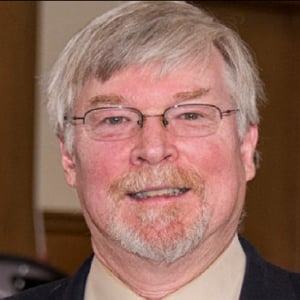
General Counsel, TechFreedom
James Dunstan serves as the General Counsel to TechFreedom. Jim has served as a Senior Adjunct Fellow to TechFreedom since its inception. Jim has more than 37 years of private practice experience in a technology-focused practice, including telecommunications, media, computer game, and outer space law. Jim spent 17 years at the telecom boutique firm Haley Bader & Potts (10 years in management), and headed the Telecommunications and Information Technology Group at Garvey, Schubert & Barer from 2000-2006. Jim founded his own firm, Mobius Legal Group, in 2010; he continues that private practice (on matters not in conflict with TechFreedom’s work) while serving as TechFreedom’s General Counsel.
Jim’s career includes being on the legal team that won the first cellular radio license for MCI in 1984, writing the constitutional challenge to the FCC’s Fairness Doctrine that took down the Doctrine in Syracuse Peace Council v. FCC, 867 F.2d 654 (1989), and helping shape the FCC’s children’s television rules on behalf of a client which produces the majority of educational programming for the major television networks. He litigated the first “virtual property” case and drafted and negotiated the first lease for a manned space station (Mir) as well as writing the first contract that was actually executed in outer space.
At TechFreedom, Jim’s substantive portfolio includes FCC regulation, the Children’s Online Protection and Privacy Act (COPPA), and all things outer space. As General Counsel, he oversees the entire legal team, and participates in TechFreedom’s robust appellate litigation team.
Jim was the 1978 Harry S. Truman Scholar from Arizona, is a graduate of Claremont McKenna College (1980), and the Georgetown University Law Center (1983). He is admitted to practice law in the District of Columbia and the Commonwealth of Virginia. Jim holds multiple patents for innovative computer input devices and has a number of patents pending in the field of computer game devices and methods. Jim is an avid musician, playing French horn in the Fairfax Wind Symphony, and with the Silver 5 Brass Quintet.
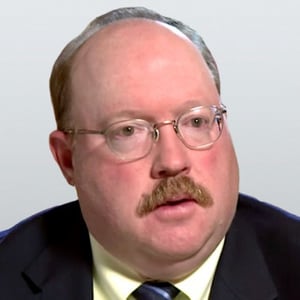
Senior Fellow, Asian Military Affairs, International Assessment and Strategy Center
Mr. Richard D. Fisher, Jr. is a Senior Fellow with the International Assessment and Strategy Center. He has previously worked with the Center for Security Policy, Jamestown Foundation China Brief, U.S. House of Representatives Republican Policy Committee, and The Heritage Foundation. Mr. Fisher has previously testified on aspects of China’s strategic challenge before the United States Senate, the House of Representatives and the U.S.-China Economic and Security Review Commission. He is the author of China’s Military Modernization, Building for Regional and Global Reach (Praeger, 2008, Stanford University Press, 2010, Taiwan Ministry of National Defense translation, 2012). His articles have been published in the Jane’s Intelligence Review, Jane’s Defence Weekly, Aviation Week and Space Technology, Armed Forces Journal, Far Eastern Economic Review, Asian Wall Street Journal, The Washington Times, The Sankei Shimbun, World Airpower Review and Air Forces Monthly. He received a B.A. (Honors) in 1981 from Eisenhower College.
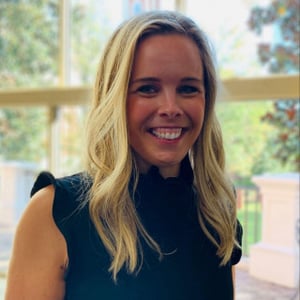
Senior Litigation Counsel, New Civil Liberties Alliance
Margaret Harker litigates for a public interest law firm. She has significant experience in government investigations and litigation, having served in the three branches of our government. Previously, she led complex Congressional investigations for the House Committee on Oversight and Government Reform—including the only government-wide investigation into federal agencies’ strategy (or lack thereof) to counter Chinese Communist Party political warfare against America.
Prior to her time on Capitol Hill, Harker served in the U.S. Department of Justice. She was an Assistant United States Attorney in both the Eastern District of Tennessee and the Eastern District of Virginia. She was a Trial Attorney in the National Security Division, Counterintelligence and Export Control Section, with an emphasis on the administration and enforcement of the Foreign Agents Registration Act.
Harker clerked for the Honorable Henry E. Hudson, U.S. District Court for the Eastern District of Virginia and the Honorable Randolph A. Beales, Court of Appeals of Virginia.
Earlier in her career, she studied in Beijing, China, and worked at the U.S. Chamber of Commerce’s China Center.
Law Clerk, U.S. Court of Appeals
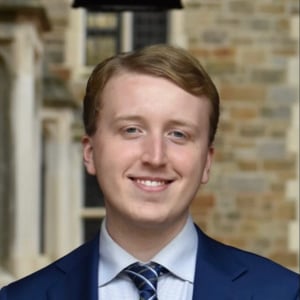
Nicholas Gadola Holmes graduated summa cum laude from Michigan Law School in 2024. He received the school's Henry M. Bates Memorial Scholarship Award and 1908 Memorial Scholarship Award. Nicholas was a co-chair of the speaker committee and a member of the executive board for Michigan's Federalist Society chapter. He currently serves as a law clerk on the U.S. Court of Appeals for the Eleventh Circuit, and following that, will clerk on the U.S. Court of Appeals for the Sixth Circuit. Nicholas attended the University of Notre Dame for undergrad, where he graduated with a degree in history & political science.

Laurence H. Silberman Chair in Constitutional Governance, American Enterprise Institute; Executive Director, Antonin Scalia Law School’s C. Boyden Gray Center for the Study of the Administrative State
Adam J. White is the Laurence H. Silberman Chair in Constitutional Governance and senior fellow at the American Enterprise Institute, where he focuses on the Supreme Court and the administrative state. He also directs the Antonin Scalia Law School’s C. Boyden Gray Center for the Study of the Administrative State.
He writes on regulation and constitutional government for a variety of publications. He practiced law in Washington, D.C., after clerking for the D.C. Circuit's Judge David Sentelle. He also has been chairman of the ABA's Administrative Law Section.
In 2021, he served on the Presidential Commission on the Supreme Court of the United States, where he criticized “Court packing” and other efforts to restructure the Supreme Court.
General Counsel, Building Industry Association of Washington
Ronald Reagan Distinguished Fellow, The Heritage Foundation
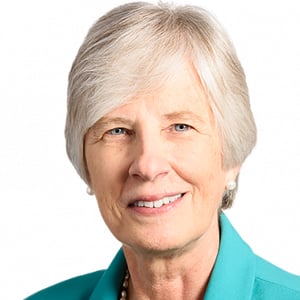
Becky Norton Dunlop, a prominent leader, strategist, and counselor in the conservative movement, is The Heritage Foundation’s Ronald Reagan Distinguished Fellow.
Dunlop, who joined the leading think tank in 1998, holds the only policy chair in the country to be officially named for the 40th president. She succeeds Ed Meese, the U.S. attorney general under Reagan, who assumed emeritus status.
Dunlop oversees special projects, travels as an ambassador for Heritage, and works tirelessly to assure that the legacy of principles, policies, and practices represented by the life and service of Ronald Reagan remain in the hearts and minds of Americans.
Previously, Dunlop was Heritage’s vice president for external relations from 1998 until May 2016. She served on the Trump Transition team.
Dunlop was a senior official in the Reagan administration from 1981-1989 inside the White House, at the Justice Department, and at the Interior Department.
She served from 1994-1998 as Secretary of Natural Resources for the Commonwealth of Virginia in the Cabinet of then-Virginia Gov. George Allen.
As political director for the American Conservative Union from 1973- 1977, she was instrumental in organizing grass-roots activists for Reagan’s unsuccessful 1976 race for the Republican nomination and advised his successful 1980 nomination and general election campaigns.
From Reagan’s first inauguration in 1981 to 1985, her White House posts included Deputy Assistant to the President for Presidential Personnel and Special Assistant to the President and Director of his Cabinet office. During Reagan’s second term, Dunlop served as senior special assistant to Meese, then attorney general, in charge of managing Cabinet-level domestic policy issues. She oversaw major policy reports on the environment, the family, federalism, tort reform, privatization, and welfare reform.
She completed her service in the Reagan administration as deputy undersecretary of the Interior Department and as assistant interior secretary for fish, wildlife, and parks.
Dunlop is one of the few of the insiders from the beginnings of the Reagan era who remain active in public policy leadership.
As Virginia’s natural resources chief, Dunlop worked to streamline, decentralize, and down-size agencies while protecting and improving the environment. She is one of the few “free-market environmentalists” to have headed a state agency and put ideas into action. Her book, “Clearing the Air” (Alexis de Tocqueville Institute, 2000), chronicles some of her experiences in advancing those principles.
In 2002, President George W. Bush appointed her to a part-time post as chairwoman of the Federal Service Impasses Panel. The seven-member panel resolves disputes between federal agencies management and labor unions. Under her leadership, it took on several hundred cases and eliminated backlogs.
Other current leadership roles include the boards of the Virginia Institute for Public Policy, the Reagan Ranch Board of Governors, the Reagan Alumni Association, the Association for American Educators and the AAE Foundation, the Council for National Policy and the American Conservative Union.
In addition to topics addressing conservative principles and their roots in the nation’s founding, Dunlop is a sought-after public speaker on the idea that personnel is policy; on energy, natural resources and the environment (including free market environmentalism); on federalism as a former member of a governor’s Cabinet; Capitalism and the Rule of Law, and on the Reagan administration (including the 40th president’s effective leadership style).
A graduate of Miami University in Ohio, she currently resides in Arlington, Virginia, with her husband, George S. Dunlop. The Dunlops are members of Oakland Baptist Church in Alexandria, Virginia.
Executive Director, republicEn, Energy and Enterprise Initiative at George Mason

Walter J. Blum Professor of Law and Senior Fellow, the Computation Institute of the University of Chicago and Argonne National Laboratory
David Weisbach received his BS in Mathematics from the University of Michigan in 1985; a Masters in Advance Study (Mathematics) from Wolfson College, Cambridge in 1986; and a JD from Harvard Law School in 1989. After graduating from law school, Weisbach clerked for Judge Joel M. Flaum of the U.S. Court of Appeals for the Seventh Circuit and worked as an associate in the law firm of Miller & Chevalier. In 1992, Weisbach joined the Department of Treasury where he worked as an attorney-advisor in the Office of the Tax Legislative Counsel and, subsequently, as associate tax legislative counsel. In 1996, Weisbach was appointed Associate Professor of Law at Georgetown Law Center and joined the Chicago faculty in 1998. He is also a Senior Fellow at the University of Chicago Computation Institute and Argonne National Laboratories and an International Research Fellow at the Said School of Business, Oxford University. Weisbach is primarily interested in issues relating to federal taxation and to climate change.

Race to a Moon Base—And Frontiers Beyond
Dean Cheng, James Dunstan, Richard D. Fisher, Margaret Harker
As Artemis II navigated around the far side of the moon, setting a new human...
Topics
Supreme Court’s Unanimous Ruling in Seven County Infrastructure Coalition v. Eagle County Might Be a Game Changer for Infrastructure
The Supreme Court just gave America’s infrastructure builders their biggest procedural victory in a generation,...
Michigan Supreme Court Rules on Distinction Between Rules and Informal Policy Statements
Nicholas Holmes
When does an agency’s action carry the force of law and bind both the...
Climate Change Solutions
Thinking About the "Practically Unthinkable": Energy Infrastructure and the Threat of Low-Probability, High-Impact Events
Adam White
The National Environmental Policy Act1 requires federal agencies to ascertain and evaluate the possible environmental...
Engage Volume 12, Issue 3, November 2011
*Online-Only Issue* ADMINISTRATIVE LAW & REGULATION Goodbye Tax Exceptionalism by Kristin E. Hickman Thinking About...
Cap and Trade: Implications for the Housing Industry
Timothy Harris, Benjamin Ingram
Brought to you by the Environmental Law & Property Rights Practice GroupIntroductionOne June 26, 2009 the...
Clinton to Nullify Provisions of National Security Law
In the Department of Defense authorization legislative signing statement issued on October 5, 1999 by...