
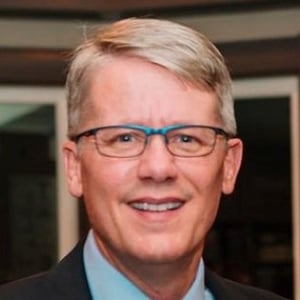
Professor, University of North Carolina at Wilmington
Mike Adams is a professor at the University of North Carolina at Wilmington (UNCW). He writes a weekly column for The Daily Wire and speaks frequently on First Amendment and pro-life issues. After graduating from Mississippi State University in 1993 with a PhD in Criminology, his research emphasized social psychological causes of crime and delinquency. He won the Faculty Member of the Year Award from the Office of the Dean of Students in 1998 and again in 2000. Later, after his involvement in a free speech controversy in the wake of the 9/11 attack his research emphasis shifted to threats to free speech, due process, and academic integrity in higher education. In 2006, he was denied a promotion full professor and filed suit in federal court alleging that UNCW retaliated against him for his criticism the diversity movement in general as well as his criticism of specific policies within his own university. The retaliation lawsuit set up a legal challenge concerning whether Garcetti v. Ceballos (2006), which denied First Amendment protection to public employees who were commenting about their “official duties,” applied to college professors. In Adams v. UNCW (2011), the 4th Circuit Court of Appeals unanimously ruled in his favor. The ruling set up a federal trial on the issue of retaliation, which he also won before a jury in federal district court in Greenville, North Carolina.
Professor of History, Brooklyn College and the CUNY Graduate Center
KC Johnson is professor of history at Brooklyn College and the CUNY Graduate Center, where he has taught since 1999. He has written 13 books on topics in U.S. political history, U.S. foreign policy, and legal and policy debates surrounding campus due process and civil liberties. His Duke lacrosse case blog, Durham-in-Wonderland, was named ABA Journal’s Best Ethics Blog in 2007; and he continues to blog on higher-ed matters at the blog Minding the Campus.
FIRE
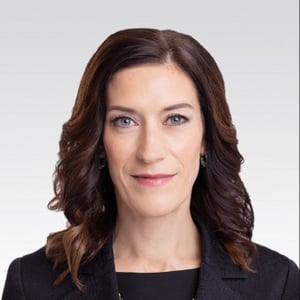
Executive Vice President of Global Governance, Chief Legal Officer and Corporate Secretary, Walmart Inc.
Rachel Brand is Walmart’s executive vice president of global governance, chief legal officer, and corporate secretary. She oversees the company’s global legal, compliance, ethics, corporate governance, digital citizenship, aviation, investigative, and corporate security functions, including Walmart’s Emergency Operations Center.
Immediately before joining Walmart, Rachel served as the United States Associate Attorney General and holds the distinction of being the first woman to serve in this role. She had previously served in the U.S. Department of Justice as the Assistant Attorney General for the Office of Legal Policy during President George W. Bush’s administration. Her other government service includes an appointment by President Obama to serve as a Member of the U.S. Privacy and Civil Liberties Oversight Board, service as an Associate Counsel to the President at the White House, and judicial clerkships with Justice Charles Fried of the Supreme Judicial Court of Massachusetts and Justice Anthony Kennedy at the Supreme Court of the United States. In the private sector, Rachel was a lawyer in private practice at two law firms in Washington, D.C. and served as the Vice President and Chief Counsel for Regulatory Litigation at the U.S. Chamber of Commerce Litigation Center.
Rachel serves on the board of directors for the Walmart Foundation and is the executive sponsor for Walmart’s Tribal Voices Associate Resource Group. Outside of Walmart, she serves on the board of directors for the International Justice Mission and is a member of The American Law Institute.
Rachel earned her Bachelor of Arts degree from the University of Minnesota-Morris and her J.D. from Harvard Law School.

Senior Scholar, Manhattan Institute; Professor of Law Emerita, University of San Diego
Gail Heriot is a Senior Scholar at the Manhattan Institute, a Professor of Law Emerita at the University of San Diego and the Chairman of the Board of the American Civil Rights Project. She served on the U.S. Commission on Civil Rights for 18 years. Her new book is entitled “Why We Walk on Eggshells: How Our Civil Rights Laws Stifle Our Public Discourse.”
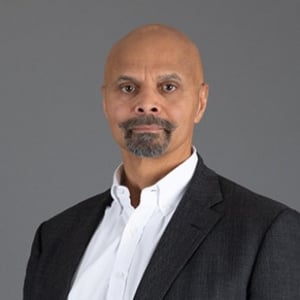
Partner, Benesch, Friedlander, Coplan & Aronoff LLP
Peter focuses his legal practice on representing management in employment-related litigation and in contract negotiations, NLRB proceedings, EEO matters and arbitration.
Peter Kirsanow is a partner with Benesch’s Labor & Employment Practice Group. He returned to Benesch in January 2008 after serving as a presidential appointee to the National Labor Relations Board (NLRB) in Washington D.C. for two years. While serving on the NLRB, he was involved with significant decisions including Oakwood Healthcare, Inc., Dana/Metaldyne and Oil Capital Sheet Metal, Inc. In addition, Peter testified before the Senate Judiciary Committee on the nominations of John Roberts, Samuel Alito, Sonia Sotomayor, Elena Kagan and Neil Gorsuch to the Supreme Court. He also continues to testify before and advise members of the U.S. Congress on employment law matters, most recently on November 18 before the House Subcommittee on Investigations and Oversight regarding disparate impact theory.
Peter was recently reappointed by the Majority Leader of the House of Representatives to his fourth consecutive six-year term on the U.S. Commission on Civil Rights. This is a part-time position which will expire in December 2025.
Recently, Peter and a team of Benesch attorneys served as lead counsel to the National Association of Manufacturers in litigation before the U.S. Circuit Court for the District of Columbia against the NLRB, challenging the Board’s Notice of Employer Rights Posting Rule. The court ruled in favor of Benesch’s client, striking down the NLRB’s Rule in its entirety. This ruling impacts over 6,000,000 employers nationwide which would have been subject to the posting requirement.
Additionally, Peter is past chair of the board of directors of the Center for New Black Leadership and is a member of Benesch’s Diversity & Inclusion Committee. This committee helps ensure that the firm promotes an environment in which differences are respected, employees are treated fairly, and individual skills and talents are valued.
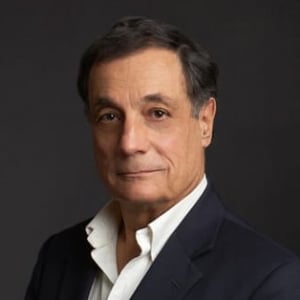
Thomas P. O’Neill, Jr. Professor of American Politics, Boston College; Co-Chair, Harvard Program on Constitutional Government
R. Shep Melnick is the Thomas P. O’Neill, Jr. Professor of American Politics at Boston College and co-chair of the Harvard Program on Constitutional Government. He is the author of The Crucible of Desegregation: The Uncertain Search for Educational Equality (Univeristy of Chicago Press, 2023); The Transformation of Title IX: Regulating Gender Equality in Education, (Brookings, 2018), Between the Lines: Interpreting Welfare Rights (Brookings,1994), and Regulation and the Courts: The Case of the Clean Air Act (Brookings, 1983), as well as many articles on courts, agencies, and public policy. He is currently completing a book on education and the civil rights state. In 2012 he received the American Political Science Association Law and Courts Section’s “Lasting Contribution” award. He received his BA and PhD from Harvard, and taught at Harvard and Brandeis before moving to Boston College. He has also been a Research Associate at Brookings, President of the New England Political Science Association, and an elected member of the NH House of Representatives.
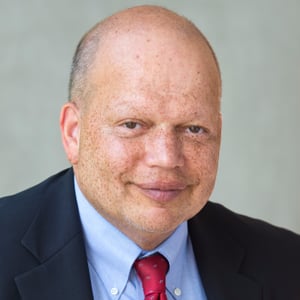
Julius L. Chambers Distinguished Professor of Law and Director of the Center for Civil Rights, University of North Carolina School of Law
Theodore M. Shaw is the Julius L. Chambers Distinguished Professor of Law and Director of the Center for Civil Rights at the University of North Carolina School of Law at Chapel Hill. Professor Shaw teaches Civil Procedure and Advanced Constitutional Law/Fourteenth Amendment. Before joining the faculty of UNC Law School, from 2008-2014 Professor Shaw taught at Columbia University Law School, where he was Professor of Professional Practice. During that time he was also “Of Counsel” to the law firm of Norton Rose Fulbright (formerly Fulbright & Jaworski, LLP). His practice involved civil litigation and representation of institutional clients on matters concerning diversity and civil rights.
Professor Shaw was the fifth Director-Counsel and President of the NAACP Legal Defense and Educational Fund, Inc., for which he worked in various capacities over the span of twenty-six years. He has litigated education, employment, voting rights, housing, police misconduct, capital punishment and other civil rights cases in trial and appellate courts, and in the United States Supreme Court.From 1982 until 1987, he litigated education, housing, and capital punishment cases and directed LDF's education litigation docket. In 1987, under the direction of LDF's third Director-Counsel, Julius Chambers, Mr. Shaw relocated to Los Angeles to establish LDF's Western Regional Office. In 1990, Mr. Shaw left LDF to join the faculty of the University of Michigan Law School, where he taught Constitutional Law, Civil Procedure and Civil Rights. While at Michigan, he played a key role in initiating a review of the law school's admissions practices and policies, and served on the faculty committee that promulgated the admissions program that was upheld by the U.S. Supreme Court in 2003 in Grutter v. Bollinger.
In 1993, Mr. Shaw returned to LDF as Associate Director-Counsel, and in 2004, he became LDF's fifth Director-Counsel. Mr. Shaw's legal career began as a Trial Attorney in the Honors Program of the United States Department of Justice, Civil Rights Division in Washington, D.C., where he worked from 1979 until 1982.
Mr. Shaw has testified on numerous occasions before Congress and before state and local legislatures. His human rights work has taken him to Africa, Asia, Europe, and South America. In addition to teaching at Columbia and at Michigan Law School, Professor Shaw held the 1997-1998 Haywood Burns Chair at CUNY School of Law at Queens College and the 2003 Phyllis Beck Chair at Temple Law School. He was a visiting scholar at the Constitution Center in Philadelphia in 2008-2009. He is a member of the faculty of the Practicing Law Institute (PLI).
Mr. Shaw served on the Obama Transition Team after the 2008 presidential election, as team leader for the Civil Rights Division of the Justice Department.
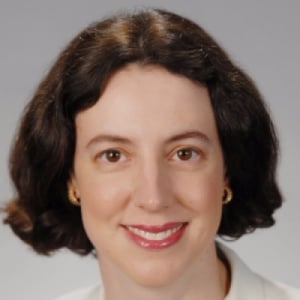
Donald Phillip Rothschild Research Professor, George Washington University Law School
Renée Lettow Lerner is Donald Phillip Rothschild Research Professor of Law at George Washington University Law School.
Professor Lerner works in the fields of U.S. and English legal history, civil and criminal procedure, and comparative law. She advises judges, lawyers, and government officials from the United States and countries in Europe, Latin America, and Asia about the differences between adversarial and nonadversarial legal systems.
She writes extensively about the history of American juries. Her work includes not only scholarly articles, but also online publications intended for a broader audience of legal professionals and the public. In many different settings, she has debated the role of juries with other academics and with lawyers. She has a book forthcoming with Oxford University Press in the Very Short Introduction Series entitled “The Jury.” She is also working on a book about the American civil jury, from the colonial period to the present.
She is the author, with John Langbein and Bruce Smith, of the book History of the Common Law: The Development of Anglo-American Legal Institutions (2009).
Her recent writings include a book review of Amalia D. Kessler’s Inventing American Exceptionalism: The Origins of American Adversarial Legal Culture, 1800-1877, 67 J. Legal Ed. 888 (2018); “How the Creation of Appellate Courts in England and the United States Limited Judicial Comment on Evidence to the Jury,” 40 Journal of the Legal Profession 215 (2016); “The Troublesome Inheritance of Americans in Magna Carta and Trial by Jury,” in Magna Carta and its Modern Legacy 77-98 (Robert Hazell and James Melton eds., Cambridge University Press 2015); and “The Failure of Originalism in Preserving Constitutional Rights to Civil Jury Trial,” 22 William & Mary Bill of Rights Journal 811 (2014).
Professor Lerner received an A.B. summa cum laude in history from Princeton University. She was a Rhodes Scholar at Oxford University, where she studied English legal history. At Yale Law School, she was Articles Editor of the Yale Law Journal. She served as a law clerk to Justice Anthony M. Kennedy of the U.S. Supreme Court and to Judge Stephen F. Williams of the U.S. Court of Appeals for the District of Columbia Circuit. From 2003 to 2005, she served as Deputy Assistant Attorney General in the Office of Legal Counsel at the U.S. Department of Justice.
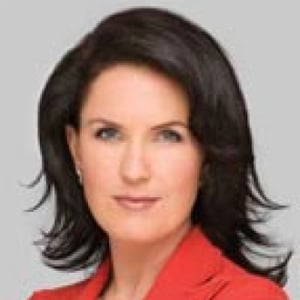
Adjunct Professor of Sexual Violence Law, New England Law | Boston
Wendy Murphy is adjunct professor of sexual violence law at New England Law|Boston where she has taught for fifteen years. Her litigation work specializes in the representation of crime victims, women and children.She has developed and directs several projects in conjunction with the school's Center for Law and Social Responsibility. The Judicial Language Project began in 2005 and involves law students using socio-linguistic research to critique harmful language used in law and society to describe violence against women and children. The Sexual Violence Legal News Project distributes appellate decisions of note to increase understanding among lay audiences and explain the likely impact and real world consequences of a court's ruling. The JD/PhD project is a multidisciplinary program where a JD student is teamed up with a PhD student to work across disciplines and produce a written critique that expresses the scientific and legal value of new research related to interpersonal violence. The team analyzes methodological reliability for the purpose of expediting or preventing its delivery into law, legal policy and human behavior.
Freelance Journalist and Author
Stuart Taylor, Jr. is a Washington writer focusing on legal and policy issues and a National Journal contributing editor. He occasionally practices law.
Taylor has coauthored three books. All have been acclaimed by commentators across the ideological spectrum. In January 2017, KC Johnson and Taylor authored The Campus Rape Frenzy: The Attack on Due Process at America's Universities. In 2012, Richard Sander and Taylor authored Mismatch: How Affirmative Action Hurts Students It's Intended to Help, and Why Universities Won't Admit It. In 2007, Taylor and Johnson authored Until Proven Innocent: Political Correctness and the Shameful Injustices of the Duke Lacrosse Rape Fraud. Sander and Taylor have also filed amicus briefs in Supreme Court cases involving admissions preferences.
Since 1980, Taylor has done reporting and commentary about issues ranging from the biggest Supreme Court cases to race, voting rights, mindlessly excessive criminal penalties, guilt-presuming campus rape processes, journalistic bias, the death penalty, war powers, gerrymandering, guns, polarization, civil liberties, national security, torture, campaign finance, education, impeachment, and other issues. He has often been called one of the nation's best legal journalists and is known for challenging both liberal and conservative conventional wisdom.
Taylor was a reporter for The New York Times from 1980-1988, covering legal affairs and then the Supreme Court. He wrote commentaries and long features for The American Lawyer, Legal Times and their affiliates from 1989-1997, and for National Journal and Newsweek from 1998 through 2010. He has written (less often) on a freelance basis for numerous publications since 2010. He has written op-eds for The Washington Post, The New York Times, The Wall Street Journal, The Los Angeles Times, USA Today, and The New York Daily News and longer commentaries for RealClearPolitics, The Atlantic, The New Republic, the (late) Weekly Standard, National Review, Slate, The Daily Beast, Harper’s, Reader’s Digest, Time and other magazines. He has been interviewed on all major television and radio networks. He taught “Law and the News Media” at Stanford Law School in 2011 and 2012 and practices law on occasion.
Taylor graduated from Princeton University in 1970 with an A.B. in History. After working as a reporter for the Baltimore Evening Sun and Sun from 1971-1974, he moved to Harvard Law School, was a Harvard Law Review note editor, and graduated in 1977 at the top of his class, with high honors. He also won a Frederick Sheldon Traveling Fellowship and traveled around the world in 1977-1978 while studying freedom of the press in the United Kingdom and Kenya.
Taylor practiced law with Wilmer, Cutler & Pickering, in Washington, D.C., from 1977-1980 before returning to journalism in 1980 by joining the Washington Bureau of The New York Times.
Taylor's journalism honors include the 2009 Northern California Innocence Project Media Award for his work on the Duke lacrosse rape fraud; a 2002 National Headliner Award for best special magazine column on one subject; and a share of The American Lawyer’s National Magazine Award for a March 1990 special issue on the drug war. He was a National Magazine Award finalist in 1993 and 1997 and was nominated by The New York Times for a Pulitzer Prize in 1988.
Professor of History, Brooklyn College and the CUNY Graduate Center
KC Johnson is professor of history at Brooklyn College and the CUNY Graduate Center, where he has taught since 1999. He has written 13 books on topics in U.S. political history, U.S. foreign policy, and legal and policy debates surrounding campus due process and civil liberties. His Duke lacrosse case blog, Durham-in-Wonderland, was named ABA Journal’s Best Ethics Blog in 2007; and he continues to blog on higher-ed matters at the blog Minding the Campus.
Freelance Journalist and Author
Stuart Taylor, Jr. is a Washington writer focusing on legal and policy issues and a National Journal contributing editor. He occasionally practices law.
Taylor has coauthored three books. All have been acclaimed by commentators across the ideological spectrum. In January 2017, KC Johnson and Taylor authored The Campus Rape Frenzy: The Attack on Due Process at America's Universities. In 2012, Richard Sander and Taylor authored Mismatch: How Affirmative Action Hurts Students It's Intended to Help, and Why Universities Won't Admit It. In 2007, Taylor and Johnson authored Until Proven Innocent: Political Correctness and the Shameful Injustices of the Duke Lacrosse Rape Fraud. Sander and Taylor have also filed amicus briefs in Supreme Court cases involving admissions preferences.
Since 1980, Taylor has done reporting and commentary about issues ranging from the biggest Supreme Court cases to race, voting rights, mindlessly excessive criminal penalties, guilt-presuming campus rape processes, journalistic bias, the death penalty, war powers, gerrymandering, guns, polarization, civil liberties, national security, torture, campaign finance, education, impeachment, and other issues. He has often been called one of the nation's best legal journalists and is known for challenging both liberal and conservative conventional wisdom.
Taylor was a reporter for The New York Times from 1980-1988, covering legal affairs and then the Supreme Court. He wrote commentaries and long features for The American Lawyer, Legal Times and their affiliates from 1989-1997, and for National Journal and Newsweek from 1998 through 2010. He has written (less often) on a freelance basis for numerous publications since 2010. He has written op-eds for The Washington Post, The New York Times, The Wall Street Journal, The Los Angeles Times, USA Today, and The New York Daily News and longer commentaries for RealClearPolitics, The Atlantic, The New Republic, the (late) Weekly Standard, National Review, Slate, The Daily Beast, Harper’s, Reader’s Digest, Time and other magazines. He has been interviewed on all major television and radio networks. He taught “Law and the News Media” at Stanford Law School in 2011 and 2012 and practices law on occasion.
Taylor graduated from Princeton University in 1970 with an A.B. in History. After working as a reporter for the Baltimore Evening Sun and Sun from 1971-1974, he moved to Harvard Law School, was a Harvard Law Review note editor, and graduated in 1977 at the top of his class, with high honors. He also won a Frederick Sheldon Traveling Fellowship and traveled around the world in 1977-1978 while studying freedom of the press in the United Kingdom and Kenya.
Taylor practiced law with Wilmer, Cutler & Pickering, in Washington, D.C., from 1977-1980 before returning to journalism in 1980 by joining the Washington Bureau of The New York Times.
Taylor's journalism honors include the 2009 Northern California Innocence Project Media Award for his work on the Duke lacrosse rape fraud; a 2002 National Headliner Award for best special magazine column on one subject; and a share of The American Lawyer’s National Magazine Award for a March 1990 special issue on the drug war. He was a National Magazine Award finalist in 1993 and 1997 and was nominated by The New York Times for a Pulitzer Prize in 1988.
John Marshall Harlan II Professor of Law Emerita, New York Law School; Former President, American Civil Liberties Union
Nadine Strossen, New York Law School Professor Emerita and Senior Fellow at FIRE (the Foundation for Individual Rights and Expression), was national President of the American Civil Liberties Union from 1991 to 2008. An internationally acclaimed free speech scholar and advocate, who regularly addresses diverse audiences and provides media commentary around the world, Strossen is also the Host and Project Consultant for Free To Speak, a 3-hour documentary film series distributed on public television in 2023. Her books about free speech include: Free Speech: What Everyone Needs to Know® (Oxford University Press 2023); HATE: Why We Should Resist It with Free Speech, Not Censorship (Oxford University Press 2018); and Defending Pornography: Free Speech, Sex, and the Fight for Women’s Rights (Scribner 1995), which was republished with a new Preface in 2024 as part of the NYU Classics Series. Her many honors and awards include the National Coalition Against Censorship’s Judy Blume Lifetime Achievement Award for Free Speech. She serves on the Advisory Boards of several organizations that do free speech work, including: ACLU, Academic Freedom Alliance, Foundation Against Intolerance and Racism (FAIR), Heterodox Academy, National Coalition Against Censorship, and the University of Austin.

The Student Right to Counsel
Mike S. Adams, KC Johnson, Adam Kissell
Note from the Editor: This article argues that a student right to counsel in quasi-criminal...
Race and Sex: Prime Movers of the Expansion of the Administrative State?
Rachel L. Brand, Gail L. Heriot, Peter Kirsanow, R. Shep Melnick, Theodore M. Shaw
Advocates of limited government are sometimes accused of being blind to issues of race and...
Debate: Statutory Authority and Sexual Assault
Renée Lettow Lerner, Wendy Murphy, Stuart S. Taylor
On Wednesday, October 4th at noon in the Moot Court Room the GW Federalist Society...
The Campus Rape Frenzy: The Attack on Due Process at America's Universities by Professor KC Johnson and Stuart Taylor
KC Johnson, Stuart S. Taylor, Nadine Strossen
In recent years, our nation’s college campuses have been portrayed as awash in a violent...