
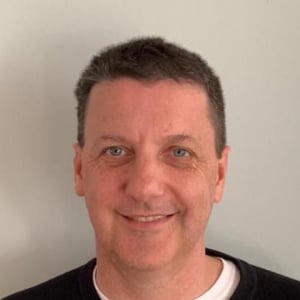
William Henry Glasson Distinguished Professor of Economics, Duke University
Peter Arcidiacono is the William Henry Glasson Professor of Economics at Duke University. He received his PhD from the University of Wisconsin-Madison in 1999 and has taught at Duke University ever since. He is a fellow of the Econometric Society, the International Association of Applied Econometricians, and a senior fellow at the Manhattan Institute. He is best known for his work in three areas: college major choice, affirmative action in higher education, and structural estimation of dynamic discrete choice models. He served as an expert witness for the plaintiffs in the Supreme Court cases SFFA v. Harvard and SFFA v. UNC, examining the role race played in the admissions process at both institutions.
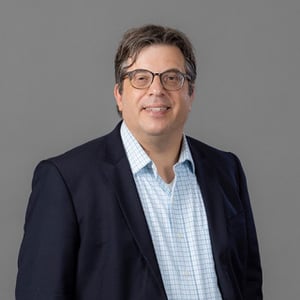
University Professor of Law and Executive Director, Liberty & Law Center, Antonin Scalia Law School, George Mason University
David Bernstein holds a University Professorship chair at the Antonin Scalia Law School, where he has been teaching since 1995. He has also been a visiting professor at the University of Michigan, Georgetown University, William & Mary, Brooklyn Law School, the University of Turin, and Hebrew University. Professor Bernstein teaches Constitutional Law, Evidence, and Products Liability.
A prolific author, Professor Bernstein often challenges the conventional wisdom with prodigious research and sharp, original analysis. He is the author of five books, and coauthor of two more. Professor Bernstein’s book Rehabilitating Lochner was praised across the political spectrum as “intellectual history in its highest form,” a “fresh perspective and a cogent analysis,” “delightful and informative,” “sharp and iconoclastic,” and “a terrific work of historical revisionism.” Columnist George Will praised Bernstein’s most recent book, Classified, The Untold Story of Racial Classification in America, as “perhaps the most consequential American book of 2022.”
Professor Bernstein has also written dozens of articles and essays published in major law reviews, including the California Law Review, Columbia Law Review, Michigan Law Review, and Yale Law Journal. An article he coauthored, Defending Daubert: It’s Time to Amend Federal Rule of Evidence 702, directly inspired a pending amendment to Rule 702.
Professor Bernstein blogs at the Instapundit.com, the Times of Israel, and the Volokh Conspiracy. He is a graduate of the Yale Law School, where he was senior editor of the Yale Law Journal and a John M. Olin Fellow in Law, Economics, and Public Policy.

Judge, United States Court of Appeals, Eleventh Circuit
On March 20, 2018, Judge Elizabeth L. Branch (Lisa) was sworn in as a United States Circuit Judge for the Eleventh Circuit.
Judge Branch attended and graduated from Davidson College in North Carolina (B.A., cum laude, 1990), and Emory University School of Law (J.D., with distinction, 1994).
After graduating from law school, Judge Branch served as a federal law clerk to The Honorable J. Owen Forrester of the U.S. District Court for the Northern District of Georgia from 1994 to 1996. Following her clerkship, Judge Branch joined the litigation department of Smith, Gambrell & Russell, LLP in Atlanta as an associate and then a partner.
From 2004 to 2008, Judge Branch was a senior official in the Administration of President George W. Bush in Washington, D.C. She served first as the Associate General Counsel for Rules and Legislation at the U.S. Department of Homeland Security and then as the Counselor to the Administrator of the Office of Information and Regulatory Affairs at the U. S. Office of Management and Budget.
She returned to Smith Gambrell in 2008 as a litigation partner. Judge Branch then was appointed to the Court of Appeals of Georgia by Governor Nathan Deal, taking office on September 4, 2012, where she served until March 19, 2018.
Judge Branch is a member of the Board of Advisors of the Atlanta Lawyers Chapter for the Federalist Society for Law and Public Policy Studies.
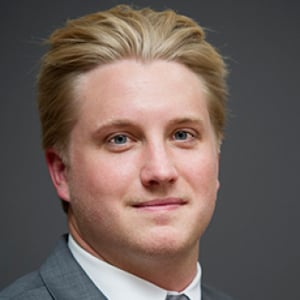
Professor of Law, Northwestern University
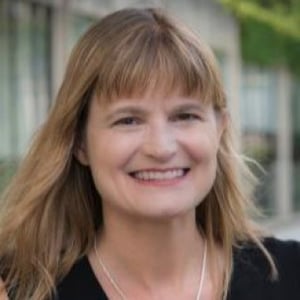
Julius Kreeger Professor of Law & Criminology, University of Chicago Law School
Sonja Starr joined the University of Chicago law faculty after eleven years teaching at the University of Michigan, where she was the Henry M. Butzel Professor of Law. She previously taught at the University of Maryland and Harvard Law School after graduating from Yale Law. She also clerked for Judges Merrick Garland of the DC Circuit and Mohamed Shahabuddeen of the International Criminal Tribunals for Rwanda and the Former Yugoslavia.
Professor Starr's research focuses on the criminal justice system and on discrimination and disparity (in the criminal process and in other contexts, including employment, education, and health care). Her research blends quantitative empirical work with more traditional legal scholarship. Topics include the use of predictive algorithms in sentencing and bail, legal and empirical analyses of statistical discrimination, racialized medical algorithms, educational diversity and race-conscious policymaking, racial and other disparities in prosecution and sentencing, policies designed to expand employment opportunities for people with criminal records, and how neighborhoods affect employment discrimination patterns. Professor Starr’s work has appeared in, for example, the Quarterly Journal of Economics, the Journal of Political Economy, the Yale Law Journal, and the Stanford and Harvard Law Reviews. She has been the Law and Economics Section Chair of the American Association of Law Schools, a past co-president of the Society for Empirical Legal Studies, and a board member of the American Law and Economics Association. She teaches Criminal Law, the Constitutional Law Workshop, Race and Criminal Justice Policy, and Collateral Consequences of Criminal Convictions.
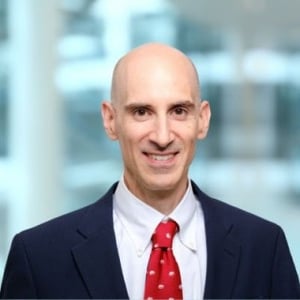
Partner, Holtzman Vogel
Joe Burns is a partner with Holtzman Vogel and focuses his practice on representing candidates and party committees in election cases throughout New York State.
Prior to joining the firm, Joe served as Deputy Director of Election Operations at the New York State Board of Elections. In this role, he worked with county Boards of Elections, candidates, and party committees, and was involved in New York State's transition from lever to optical scan voting. He also conducted hearings for the NYSBOE and represented it in court proceedings.
Additionally, Joe has served as an attorney for the Erie County and New York State Republican Committees, and has also represented candidates for a variety of public offices throughout New York State, including candidates for U.S. Congress and New York State Supreme Court.
From 2018 to 2024, Joe was the Deputy Administrative Director for the Erie County Water Authority; and from 2015 to 2018, he was the Secretary to the Erie County Water Authority.
A life-long resident of Upstate New York and active member of the Western New York community, Joe served as vice chair of the Erie County Charter Revision Commission in 2016 and was a member of the Erie County Advisory Commission on Reapportionment in 2021. City and State named Joe to its Upstate Power 100 list in 2024, and in 2025, Joe was named as one of New York State’s Law Power 100 by City and State.
Joe is a frequent commentator and author on New York State and national politics, and election law.

Chairman of the Securities and Exchange Commission
Paul S. Atkins was sworn into office as the 34th Chairman of the Securities and Exchange Commission on April 21, 2025, after being nominated by President Donald J. Trump on January 20, 2025, and confirmed by the U.S. Senate on April 9, 2025.
Prior to returning to the SEC, Chairman Atkins was most recently chief executive of Patomak Global Partners, a company he founded in 2009. Chairman Atkins helped lead efforts to develop best practices for the digital asset sector. He served as an independent director and non-executive chairman of the board of BATS Global Markets, Inc. from 2012 to 2015.
Chairman Atkins was appointed by President George W. Bush to serve as a Commissioner of the SEC from 2002 to 2008. During his tenure, he advocated for transparency, consistency, and the use of cost-benefit analysis at the agency. Chairman Atkins also represented the SEC at meetings of the President’s Working Group on Financial Markets and the U.S.-EU Transatlantic Economic Council. From 2009 to 2010, he was appointed a member of the Congressional Oversight Panel for the Troubled Asset Relief Program.
Before serving as an SEC Commissioner, Chairman Atkins was a consultant on securities and investment management industry matters, especially regarding issues of strategy, regulatory compliance, risk management, new product development, and organizational control.
From 1990 to 1994, Chairman Atkins served on the staff of two chairmen of the SEC, Richard C. Breeden and Arthur Levitt, ultimately as chief of staff and counselor, respectively. He received the SEC’s 1992 Law and Policy Award for work regarding corporate governance matters.
Chairman Atkins began his career as a lawyer in New York, focusing on a wide range of corporate transactions for U.S. and foreign clients, including public and private securities offerings and mergers and acquisitions. He was resident for 2½ years in his firm's Paris office and admitted as conseil juridique in France.
A member of the New York and Florida bars, Chairman Atkins received his J.D. from Vanderbilt University School of Law in 1983 and was Senior Student Writing Editor of the Vanderbilt Law Review. He received his A.B., Phi Beta Kappa, from Wofford College in 1980.
Originally from Lillington, North Carolina, Chairman Atkins grew up in Tampa, Florida. He and his wife Sarah have three sons.
Ruby R. Vale Professor of Corporate and Business Law, Widener University School of Law
Lawrence A. Hamermesh is the Ruby R. Vale Professor of Corporate and Business Law at Widener's Delaware campus and former Director of the Widener Institute of Delaware Corporate and Business Law. Professor Hamermesh received a B.A. from Haverford College in 1973, and a J.D. from Yale Law School in 1976.
Following graduation from law school, Professor Hamermesh worked as Associate Attorney with Morris, Nichols, Arsht & Tunnell in Wilmington, Delaware, from 1976-84, and was a partner at Morris, Nichols, Arsht & Tunnell from 1985-94.
Professor Hamermesh joined the faculty at Widener in 1994 as Associate Professor of Law. Professor Hamermesh is admitted to practice in Delaware, and he teaches and writes in the areas of Corporate Finance, Mergers and Acquisitions, Securities Regulation, Business Organizations, Corporate Takeovers, and Professional Responsibility.
Professor Hamermesh was elected in 1999 as a member of the American Law Institute. Since 1995 he has been a member of the Corporation Law Council of the Corporation Law Section of the Delaware State Bar Association, which is responsible for the annual review and modernization of the Delaware General Corporation Law, and was Chair of the Council from 2002-2004.
In 2001, Professor Hamermesh was elected as a member of the Corporate Laws Committee of the American Bar Association Business Law Section, which supervises the drafting and revision of the Model Business Corporation Act. Professor Hamermesh is also a member of the Board of Directors of ACLU Delaware, Inc., and the national board of directors of the ACLU.
Professor Hamermesh has been active in a number of professional and civic organizations, including the American Civil Liberties Union Delaware (President since 1996-2003) and Delaware Volunteer Legal Services, Inc. (Treasurer and Director from 1992 to 2000). In 2002-2003, Professor Hamermesh served as the Reporter for the American Bar Association Task Force on Corporate Responsibility.
Professor of Law, American University Washington College of Law
Jeffrey P. Mahoney joined the Council of Institutional Investors ("Council") in 2006 as General Counsel. As General Counsel, Mahoney responsibilities include advocating the Council's membership approved policies before standard setters, regulators, Members of Congress, and other policy makers. Prior to joining the Council, Mahoney was Counsel to the Chairman of the Financial Accounting Standards Board ("FASB"). Since 1996, he served FASB and, its parent entity, the Financial Accounting Foundation, in a variety of research, technical and administrative matters and was primarily responsible for the FASB's Washington, DC liaison activities. Prior to joining the FASB, Mahoney was a corporate/securities lawyer at Morgan, Lewis & Bockius LLP, a law clerk to the Honorable James G. Exum, Jr., Chief Justice, of the North Carolina Supreme Court, and an auditor at Arthur Andersen LLP.
Mahoney holds a J.D. degree, served on the North Carolina Law Review, and was named to the Order of the Coif. He also holds a B.B.A. degree and an A.A. degree. He is a member of the District of Columbia and North Carolina Bar Associations. He also is a certified public accountant in North Carolina and Michigan and a member of the American Institute of Certified Public Accountants.
Mahoney is currently a member and was the initial Co-Chair of the FASB's Investors Technical Advisory Committee, Vice Chair of the Investor Rights Committee of the Corporation, Finance, and Securities Law Section of the DC Bar, a member of the Public Company Accounting Oversight Board's Standing Advisory Group, and a member of the Nasdaq Listing Qualifications Hearing Panel. Mahoney holds a J.D. degree and served on the North Carolina Law Review. He also holds a B.B.A. degree and an A.A. degree. He is a member of the District of Columbia and North Carolina Bar Associations. He also is a certified public accountant in North Carolina and Michigan and a member of the American Institute of Certified Public Accountants.
Mahoney is currently the Co-Chair of the FASB's Investor Technical Advisory Committee, Vice Chair of the Investor Rights Committee of the Corporation, Finance, and Securities Law Section of the DC Bar, a member of the Public Company Accounting Oversight Board's Standing Advisory Group, and a member of the Nasdaq Listing Qualifications Hearing Panel.
Deputy Director, AFL-CIO Office of Investment
Senior Vice President, Policy and Governance, Apache Corporation
SARAH B. TESLIK was appointed senior vice president - Policy and Governance in October 2006.
Prior to joining the Company, she was chief executive officer of the Certified Financial Planner Board of Standards, Inc. from November 2004 to October 2006, and executive director of the Council of Institutional Directors from July 1988 to October 2004.
Ms. Teslik holds a bachelor's degree from Whitman College, a master's degree from Oxford University, and a juris doctorate from Georgetown University.

Former United States Attorney General
Michael B. Mukasey is the former Attorney General of the United States, the nation’s chief law enforcement officer. As Attorney General from November 2007 to January 2009, he oversaw the U.S. Department of Justice and advised on critical issues of domestic and international law.
From 1988 to 2006, Judge Mukasey served as a district judge in the United States District Court for the Southern District of New York, becoming Chief Judge in 2000.
From 1972 to 1976, Judge Mukasey served as an Assistant United States Attorney for the Southern District of New York, and as Chief of the Official Corruption Unit from 1975 to 1976. His practice consisted of criminal litigation on behalf of the government, including investigation and prosecution of narcotics, bank robbery, interstate theft, securities fraud, fraud on the government and bribery. From 1976 to 1987 and from 2006 to 2007 he was in private practice.
Judge Mukasey has received numerous honors, including the Federal Bar Council’s Learned Hand Medal for Excellence in Federal Jurisprudence. He served as Chairman of the Committee on Public Access to Information and Proceedings of the New York Bar Association from 1984 to 1987. He served on the Federal Courts Committee of the Association of the Bar of the City of New York from 1979 to 1982 and its Communications Law Committee from 1983 to 1986. Judge Mukasey was also a part-time lecturer at Columbia School of Law from January 1993 to May 2007, teaching trial advocacy.
He received his LL.B. from Yale Law School in 1967 and his B.A. from Columbia College in 1963.
Former Inspector General of the Corporation for National and Community Service
Gerald Walpin, the new Inspector General of the Corporation for National and Community Service, has vowed a vigorous effort to investigate and prosecute all persons who betray the public’s trust by defrauding the Corporation and its programs.
A prominent New York attorney, Walpin was nominated by President George W. Bush, confirmed by the U.S. Senate and sworn into office on January 8, 2007. He leads the Office of Inspector General (OIG), an independent Federal agency charged with oversight over the taxpayer-supported Corporation and its service programs, including AmeriCorps, Volunteers in Service to America (VISTA)and Senior Corps.
“My major objective is to expand upon the good work of this office by preventing, detecting and prosecuting all thefts and frauds,” said Walpin. “The reality is that such misconduct takes precious resources away from deserving people, the same way the theft of a welfare check hurts a single mother who needs that money to buy milk for her children. For that reason, this office will seek out and ensure sanctions for all wrongdoing involving Corporation funds.”
Walpin said his other major goal is to “assist the Corporation in making its services efficient and accessible for all national service stakeholders.”
A New York City native, Walpin graduated from College of the City of New York in 1952. He earnedhis law degree, cum laude, in 1955 from Yale Law School, where he was managing editor of the Yale Law Journal. From 1957-60, he served as a lieutenant in the United States Air Force Judge Advocate General.
His career included a five-year stint as Chief of Prosecutions for the United States Attorney for the Southern District of New York, where he successfully prosecuted a number of high-profile cases. He spent more than 40 years as senior partner and, more recently, of counsel to New York-based Katten Muchin Rosenman LLP.
Mr. Walpin has represented a wide range of clients, including large public corporations, securities brokerage firms, accounting firms, law firms, banks in lender liability claims, and individuals, both American and foreign, in securities litigations, employment litigations, criminal prosecutions, and investigations by the United States Securities and Exchange Commission. Both as an Assistant U.S. Attorney and in his law firm, he was frequently called upon to investigate fraudulent conduct.
Included in the published compilation “The Best Lawyers in America,” Mr. Walpin served from 2002-2004 as president of the Federal Bar Council, the association of attorneys practicing in the Second Circuit Federal courts. In 2003, he was honored with the American Inns of Court Professionalism Award for outstanding professionalism as an attorney and for mentoring younger lawyers.
Walpin and his wife Sheila, married for almost 50 years, have three children and six grandchildren.
Inspector General of the Corporation for National and Community Service
Chief of Prosecutions in the New York U.S. Attorney's Office.
President of the Federal Bar council
Senior Partner of and Council to Katten Muchin Rosenman LLP
Chief of Prosectutions for the US Attornery for the Southern District of New York
Lieutenant in the US Air Force Judge Advocate General
B.A., College of the City of New York, 1952
J.D., Yale Law School

Distinguished University Professor, Antonin Scalia Law School, George Mason University
University Professor Nelson Lund is the author of Rousseau’s Rejuvenation of Political Philosophy: A New Introduction. He has also written widely in the field of constitutional law, including articles on constitutional interpretation, federalism, separation of powers, the Second Amendment, the Commerce Clause, the Speech or Debate Clause, the Equal Protection Clause, and the Uniformity Clause. In addition, he has published articles in the fields of employment discrimination and civil rights, the legal regulation of medical ethics, and the application of economic analysis to legal institutions and legal ethics.
Professor Lund graduated from St. John's College in Annapolis, Maryland, after which he received an MA in philosophy from the Catholic University of America and a PhD in political science from Harvard University. He left the faculty of the University of Chicago to attend its law school, where he served as executive editor of the University of Chicago Law Review and chapter chairman of the Federalist Society for Law and Public Policy Studies. After law school, he held positions at the United States Department of Justice in the Office of the Solicitor General and the Office of Legal Counsel. He also served as a law clerk to the Honorable Patrick E. Higginbotham of the United States Court of Appeals for the Fifth Circuit and to the Honorable Sandra Day O'Connor of the United States Supreme Court. Following his clerkship with Justice O'Connor, Professor Lund served in the White House as associate counsel to the president from 1989 to 1992.
Since joining the faculty at George Mason University's Antonin Scalia Law School, Professor Lund has taught Constitutional Law, Legislation, Federal Election Law, Employment Discrimination, State and Local Government, and seminars on the Second Amendment and on a variety of topics in Jurisprudence.

Senior Vice President for Legal Studies, Cato Institute
Clark Neily is senior vice president for legal studies at the Cato Institute. His areas of interest include constitutional law, overcriminalization, civil forfeiture, police accountability, and gun rights. Neily is the author of Terms of Engagement: How Our Courts Should Enforce the Constitution’s Promise of Limited Government. His writing has appeared in the Wall Street Journal, Forbes, and National Review Online, as well as various law reviews, including the Harvard Journal of Law and Public Policy, George Mason Law Review, Georgetown Journal of Law and Public Policy, NYU Journal of Law and Liberty, and Texas Review of Law and Politics. Neily is a frequent guest speaker and lecturer for the Federalist Society, Institute for Humane Studies, and American Constitution Society.
Before joining Cato in 2017, Neily was a senior attorney and constitutional litigator at the Institute for Justice and director of the Institute’s Center for Judicial Engagement. He is also an adjunct professor at the University of Texas School of Law, where he teaches constitutional litigation and public-interest law.
Neily served as co-counsel in District of Columbia v. Heller, the historic case in which the Supreme Court held for the first time that the Second Amendment protects an individual right to own a gun for self-defense.
Neily began his legal career as a law clerk to Judge Royce Lamberth on the U.S. District Court for the District of Columbia. After that he spent four years in the trial department of the Dallas-based firm Thompson & Knight. Neily received his undergraduate and law degrees from the University of Texas, where he was Chief Articles Editor of the Texas Law Review.

Judge, United States Court of Appeals, Ninth Circuit
Judge O’Scannlain was appointed United States Circuit Judge for the Ninth Circuit by President Reagan on September 26, 1986. He received a J.D. degree in 1963 from Harvard Law School and a B.A. in 1957 from St. John’s University. He also earned the LL.M. (Judicial Process) degree at University of Virginia Law School in 1992. He was awarded the LL.D. (honoris causa) degree by the University of Notre Dame in 2002, the LL.D. (honoris causa) degree by Lewis & Clark College in 2003 and the LL.D. (honoris causa) degree by the University of Portland in 2011.
As a judge on the U.S. Court of Appeals for the Ninth Circuit, Judge O’Scannlain has participated in over 6,000 federal cases and has written hundreds of published opinions on a broad range of subjects including constitutional law, international law, securities law, administrative law, and criminal law. He hears appeals in San Francisco (court headquarters), as well as in Los Angeles (Pasadena), Portland, Seattle, Anchorage and Honolulu. The late Chief Justice Rehnquist appointed Judge O'Scannlain to the Federal Judicial Center's Advisory Committee on Appellate Judge Education. In 2009, Chief Justice Roberts appointed Judge O’Scannlain to the International Judicial Relations Committee of the U.S. Judicial Conference and subsequently appointed him Chairman in 2010.
President George W. Bush appointed Judge O’Scannlain to the Board of Trustees of the James Madison Memorial Fellowship Foundation in 2004. Pope Benedict XVI conferred the Order of Saint Gregory the Great on Judge and Mrs. O’Scannlain in 2007.
Judge O’Scannlain’s professional interests also include judicial administration and reform, and continuing legal education. Judge O’Scannlain is former Chair of the Judicial Division of the American Bar Association and has previously chaired the ABA’s Appellate Judges Conference, its Committee on Appellate Practice, and its 9th Appellate Practice Institute. He has testified before the Senate Judiciary Committee on several occasions, the House Judiciary Subcommittee on Courts and Intellectual Property, and the Commission on Structural Alternatives for the Federal Courts of Appeals on the subject of court reorganization. In addition to serving as a faculty member at numerous federal appellate practice seminars for judges and attorneys, including New York University Law School’s Institute for Judicial Administration, Judge O’Scannlain is an Adjunct Professor at Lewis & Clark Law School where he teaches a seminar on the Supreme Court. He has served as a Moot Court Judge at distinguished law schools across the United States including Harvard, Yale Stanford, Boalt Hall (Berkeley Law), Virginia, Cornell, Notre Dame, Fordham, Alabama, University of Southern California, King Hall (U.C. Davis) and Loyola Marymount University and in China at Xiamen and Renmin Universities.
Between graduation from Harvard and investiture as a federal judge, Judge O’Scannlain was primarily engaged in private law practice. Between 1969 and 1974, he was consecutively the Deputy Attorney General of Oregon, the Public Utility Commissioner of Oregon, and Director of the Oregon Department of Environmental Quality. He retired from the U.S. Army Reserve in 1978 as a Major after 23 years Reserve and National Guard service, including four years as an enlisted man.
A first generation Irish-American son of immigrant parents from Sligo and Derry, Judge O’Scannlain is married to the former Maura Nolan and has eight children: Sean, Jane, Brendan, Kevin, Megan, Christopher, Anne, and Kate, and nineteen grandchildren. His chambers are in the Pioneer Courthouse in Portland, Oregon.
Anne Green Regents Chair in Law and Professor of Government, University of Texas School of Law
A leading historian of the Supreme Court, Professor Powe clerked for Supreme Court Justice William O. Douglas before joining the Texas faculty in 1971. His latest book is The Supreme Court and The American Elite, 1789-2008 (2009). Previously , reflecting a split career as a historian and a First Amendment scholar, especially of the electronic media, his three award-winning books were American Broadcasting and the First Amendment (California 1987), The Fourth Estate and the Constitution (California 1991), and The Warren Court and American Politics (Harvard 2000). Additionally he has co-authored Regulating Broadcast Programming (MIT 1994) and written scores of articles. Powe was also a principal commentator on the 2007 four-part PBS series "The Supreme Court." He is also a Professor of Government and has been a visiting professor at Berkeley, Connecticut, and Georgetown.
Professor of Law, UCLA School of Law
United States Court of Appeals, Second Circuit
Dennis Jacobs is the Chief Judge of the United States Court of Appeals for the Second Circuit. He became Chief Judge on October 1, 2006. At the time of his appointment in 1992, he was a partner in the New York law firm of Simpson Thacher & Bartlett.
Judge Jacobs received his B.A. degree from Queens College of the City University of New York in 1964; his M.A. degree from New York University in 1965; and his J.D. degree from the New York University School of Law in 1973.
Judge Jacobs was a lecturer in the English Department of Queens College of the City University of New York from 1967 until 1969. He was in private practice from 1973 with the New York law firm of Simpson, Thacher & Bartlett, serving as a partner there from 1980 until his judicial appointment.
In 1997-2004, Judge Jacobs was a member of the Committee on Judicial Resources of the Judicial Conference of the United States; starting in 1999 he was chair of that committee.
Judge Jacobs is a native of New York City.

Showcase Panel IV: Race in the Law After SFFA
Peter Arcidiacono, David Bernstein, Lisa Branch, Kyle Rozema, Sonja B. Starr
Students for Fair Admission v. Harvard was the most important decision on affirmative action in...
State Court Docket Watch: Harkenrider v. Hochul
Joseph Thomas Burns
On April 27, 2022, the New York State Court of Appeals invalidated the Congressional and...
Corporations: The Creeping Federalization of Corporate Governance Law: The Dodd-Frank Bill
Paul S. Atkins, Lawrence A. Hamermesh, Jeffrey P. Mahoney, Brandon Rees, Sarah B. Teslik
Hon. Paul S. Atkins, Managing Director, Patomak Partners and former Commissioner, U.S. Securities & Exchange...
Address by Michael B. Mukasey
Michael B. Mukasey, Gerald Walpin
Hon. Michael B. Mukasey, Partner, Debevoise & Plimpton and Former U.S. Attorney General Introduction: Mr....
Civil Rights: The Heller Case
Nelson Lund, Clark Neily, Diarmuid F. O'Scannlain, Lucas A. Powe, Adam Winkler
For the first time in our history the federal courts have found that a gun...
Speech by Judge Dennis G. Jacobs
Dennis Jacobs
The following remarks were delivered by Chief Judge Dennis Jacobs of the United States Court...