

Op-Ed Columnist, The Boston Globe
Jeff Jacoby, who has been a columnist for The Boston Globe since 1994, is a conservative writer with a national reputation.
A native of Cleveland, Jeff has degrees from George Washington University and from Boston University Law School. Before entering journalism, he (briefly) practiced law at the prominent firm of Baker & Hostetler, worked on several political campaigns in Massachusetts, and was an assistant to Dr. John Silber, the president of Boston University. In 1999, Jeff became the first recipient of the Breindel Prize, a major award for excellence in opinion journalism. In 2014, he was included in the “Forward 50,” a list of the most influential American Jews.

Chief Policy Counsel, Council on Criminal Justice and Senior Advisor, Right on Crime
Marc A. Levin is the Chief Policy Counsel for the Council on Criminal Justice (counciloncj.org) and Senior Advisor for Right on Crime.
An attorney and accomplished author on legal and public policy issues, Marc began the Foundation’s criminal justice program in 2005. This work contributed to nationally praised policy changes that have been followed by dramatic declines in crime and incarceration in Texas. Building on this success, in 2010, Levin developed the concept for the Right on Crime initiative, a TPPF project in partnership with Prison Fellowship and the American Conservative Union Foundation. Right on Crime has become the national clearinghouse for conservative criminal justice reforms and has contributed to the adoption of policies in dozens of states that fight crime, support victims, and protect taxpayers.
In 2014, Levin was named one of the “Politico 50” in the magazine’s annual “list of thinkers, doers, and dreamers who really matter in this age of gridlock and dysfunction.”
Marc has testified on criminal justice policy on four occasions before Congress and has testified before legislatures in states including Texas, Nevada, Kansas, Wisconsin, and California. He also has met personally with leaders such as U.S. Presidents, Speakers of the House, and the Justice Commtitee of the United Kingdom Parliament to share his ideas on criminal justice reform. In 2007, he was honored in a resolution unanimously passed by the Texas House of Representatives that stated, “Mr. Levin’s intellect is unparalleled and his research is impeccable.”
Since 2005, Marc has published dozens of policy papers on topics such as sentencing, probation, parole, reentry, and overcriminalization which are available on the TPPF website. Levin’s articles on law and public policy have been featured in publications such as the Wall Street Journal, USA Today, Texas Review of Law & Politics, National Law Journal, New York Daily News, Jerusalem Post, Toronto Star, Atlanta Journal-Constitution, Philadelphia Inquirer, San Francisco Chronicle, Washington Times, Los Angeles Daily Journal, Charlotte Observer, Dallas Morning News, Houston Chronicle, Austin American-Statesman, San Antonio Express-News and Reason Magazine.
In 1999, Marc graduated with honors from the University of Texas with a B.A. in Plan II Honors and Government. In 2002, Marc received his J.D. with honors from the University of Texas School of Law. Marc was a Charles G. Koch Summer Fellow in 1996. He served as a law clerk to Judge Will Garwood on the U.S. Court of Appeals for the Fifth Circuit and Staff Attorney at the Texas Supreme Court.
Senior Director of Advocacy, The Sentencing Project
Nicole D. Porter manages The Sentencing Project’s state and local advocacy efforts on sentencing reform, voting rights, and confronting racial disparities in the criminal legal system.
Since joining The Sentencing Project in 2009, Porter’s advocacy and findings have supported criminal legal reforms in several states including Kentucky, Maryland Missouri, California, Texas and the District of Columbia. Porter’s areas of expertise include research and grassroots support around challenging racial disparities, felony disenfranchisement, in addition to prison closures and prison reuse. Her research has been cited in several major media outlets including Salon and the Washington Post, and she has appeared in the New York Times, Washington Post, and on National Public Radio and MSNBC.
Porter has also been invited to speak on state sentencing policy, collateral consequences, and racial disparity to various audiences including the League of Women Voters, NAACP, and the United Methodist Women’s Assembly and on Capitol Hill. She has authored reports highlighting ballot access for people detained in jails, state prison closures and declining prison populations, in addition to articles on the collateral impacts of justice involvement on communities of color and how current social movements are challenging mass incarceration.
Porter is the former director of the Texas ACLU’s Prison & Jail Accountability Project (PJAP) where she advocated in the Texas legislature to promote felony enfranchisement reforms, eliminate prison rape, and improve prison medical care. Porter received her undergraduate degree from Johns Hopkins University and a Master of Public Affairs from the University of Texas at Austin. Her master’s thesis addressed exploring self employment among formerly incarcerated African Americans. She also studied African politics at the University of Ghana, West Africa.

Legal Director & General Counsel, Criminal Justice Legal Foundation
Kent S. Scheidegger has been the Legal Director of the Criminal Justice Legal Foundation since December 1986. He also served as Chairman of the Criminal Law Practice Group of the Federalist Society 2003 to 2005. His articles on criminal and constitutional law have been published in law reviews, national legal publications, and congressional reports. Legal arguments authored by Mr. Scheidegger have been cited and incorporated in several precedent-setting United States Supreme Court decisions.
After receiving a degree in physics with honors from New Mexico State University in 1976, Mr. Scheidegger served for six years in the United States Air Force as a Nuclear Research Officer. He took his law degree with distinction from the University of the Pacific, McGeorge School of Law in 1982 and practiced civil law in Northern California. He was general counsel of California Cooler, Inc. from 1984 until 1986, when he joined the Foundation.
Partner, Creed & Gowdy
Bryan Gowdy is a board-certified appellate lawyer. His practice is limited to handling appeals, post-conviction motions, and trial support for matters likely to be appealed. His practice encompasses all substantive areas of the law, including plaintiff's injury and products liability, commercial cases, criminal law, and family law. He has briefed and orally argued appeals before the U.S. Supreme Court, the U.S. Court of Appeals for the Eleventh Circuit, the Supreme Court of Florida, and Florida's district courts of appeal. He also has handled appeals in the U.S. Courts of Appeals for the First, Fourth, Fifth, and Ninth Circuits. He is AV-rated by Martindale Hubbell and has been selected as a Top 100 in Florida Super Lawyer, Top 25 in Jacksonville Super Lawyer, and a "Legal Elite" by Florida Trend Magazine. In 2019, Mr. Gowdy began serving as the Chair for the Florida Justice Association Amicus Curiae Committee.
Before joining the firm, Mr. Gowdy was with the national law firm of McGuireWoods LLP, where he primarily handled commercial litigation at the trial and appellate level. Mr. Gowdy began his legal career as a law clerk for federal judges at the trial and appellate level. Mr. Gowdy attended the University of Florida Levin College of Law, where he was first in his class, a member of the Order of the Coif, and the management editor of the Florida Law Review.
Before law school, Mr. Gowdy was an active-duty surface warfare officer in the United States Navy, and he graduated from the School of Foreign Service at Georgetown University.
Partner, Williams & Connolly
Sarah Harris is a partner in Williams & Connolly’s Supreme Court and Appellate practice, where she represents clients in high-stakes appeals in the U.S. Supreme Court and federal and state appellate courts across the country. She has argued five cases before the U.S. Supreme Court, and she has presented many arguments in federal courts of appeals and state appellate courts. Her cases have run the gamut of substantive areas, including constitutional law—especially First Amendment and separation-of-powers issues—as well as administrative law, arbitration, class actions, antitrust, False Claims Act litigation, commercial litigation, and federal civil procedure.
Sarah is widely recognized for her appellate advocacy. Chambers USA has recognized her as “Up and Coming” in Appellate Law. She has been named to Bloomberg Law’s 40 Under 40 list of top lawyers nationwide and to Benchmark Litigation’s “40 & Under Hot List,” as well as a an appellate “Rising Star” by The National Law Journal and Law360, a “Next Generation Lawyer” by The Legal 500, and as one of Bloomberg Law’s “Five Fresh Faces to Know in Appellate.”
Sarah clerked for Justice Clarence Thomas on the Supreme Court of the United States, Judge Laurence Silberman on the United States Court of Appeals for the D.C. Circuit, and Judge Sandra Lynch on the United States Court of Appeals for the First Circuit. Before joining Williams & Connolly, she served as a Deputy Assistant Attorney General in the Department of Justice’s Office of Legal Counsel.
Sarah received her undergraduate degree summa cum laude from Princeton University, and her J.D. magna cum laude from Harvard Law School. She also holds a Ph.D. and M. Phil. from the University of Cambridge.
Co-chair, Appellate and Supreme Court Practice Group and Managing Partner, Morrison & Foerster LLP
Joe Palmore co-chairs Morrison & Foerster’s Appellate and Supreme Court practice and is the Managing Partner of the firm’s Washington, D.C. office. With 12 oral arguments before the U.S. Supreme Court and more than 45 in other appellate courts nationwide, Joe has handled complex appeals and critical motions on a wide range of issues important to businesses. Clients call him “an outstanding oral advocate,” praising his ability to remain “completely calm at all times and in complete command of the facts” (Chambers USA).
During a recent U.S. Supreme Court term, Joe successfully argued two cases: Law360 called one of them (Thole v. U.S. Bank) a “landmark ruling” that “made huge waves in the ERISA litigation arena” and named the other (Atlantic Richfield Co. v. Christian) one of the “biggest environmental law decisions” of the year. And Joe’s oral argument before the Supreme Court on the preemptive scope of the Comprehensive Environmental Response, Compensation and Liability Act (CERCLA) in CTS Corp. v. Waldburger was described in the National Law Journal as “brilliant” and a “template for anyone arguing a statutory case before these nine justices in the future.”
Joe’s practice extends to federal and state appellate courts across the country, where he has handled appeals on issues as varied as antitrust, class actions, communications, false advertising, intellectual property, and securities. Joe’s victory in the Federal Circuit for Immersion Corporation in a patent appeal was described by another practitioner as having “saved from the fire tens of thousands of patents that would have gone up in smoke.” Joe has secured important victories in the Second Circuit (where he clerked), including for an online marketplace in a securities class action and for a technology company in a Telephone Consumer Protection Act suit. He also has a successful track record in the Ninth Circuit, including winning for a beverage company defending against an antitrust suit and for an equipment manufacturer embroiled in a dispute over U.S. discovery for foreign litigation.
Before joining Morrison & Foerster, Joe served as an Assistant to the Solicitor General at the U.S. Department of Justice. During his nearly five years in the Solicitor General’s Office, Joe had principal responsibility for briefing the constitutionality of the Affordable Care Act’s minimum coverage provision, which was upheld in the Supreme Court’s landmark decision in NFIB v. Sebelius. For his work on that case, Joe received the Attorney General’s Award for Exceptional Service (the Department of Justice’s highest honor for employee performance). He also received the Environmental Protection Agency General Counsel’s medal for his successful defense of the EPA’s interstate air pollution rules in EPA v. EME Homer City Generation.
Before working for the Justice Department, Joe spent three years as Deputy General Counsel at the Federal Communications Commission, where he oversaw all litigation involving constitutional, statutory, and administrative-law challenges to the agency’s actions and argued 10 cases in the federal courts of appeals. His FCC experience includes virtually all aspects of communications regulation, including broadcast, cable, wireless, wireline, and Internet. In addition, he provided counsel to FCC officials on matters likely to result in litigation.
Joe clerked for Justice Ruth Bader Ginsburg of the U.S. Supreme Court, Judge John Gleeson of the U.S. District Court for the Eastern District of New York, and Judge Dennis Jacobs of the U.S. Court of Appeals for the Second Circuit in New York. Joe earned his J.D. from the University of Virginia School of Law, his M.A. in legal history from the University of Virginia, and his A.B. magna cum laude from Harvard University.
Joe is a Fellow in the American Academy of Appellate Lawyers, selected for his distinction as an appellate lawyer. He also serves as a member of the Technology Litigation Advisory Committee of the U.S. Chamber Litigation Center and is a master in, and former officer of, the Coke Appellate Inn at Court. In 2016, he served as one of the 15 “nationally recognized lawyers with substantial trial and appellate practices” who advised the American Bar Association’s Standing Committee on the Federal Judiciary on the professional qualifications of the Honorable Merrick Garland to be an Associate Justice of the Supreme Court of the United States. He is recommended by Chambers USA and Legal 500 US for appellate law.
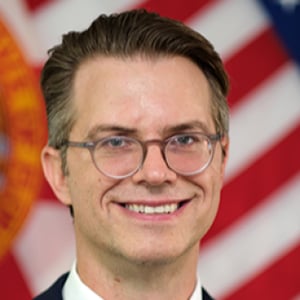
Solicitor General of Florida
Henry Whitaker became Florida’s Solicitor General in July 2021. He came to the position after four years of serving in the Office of Legal Counsel of the U.S. Department of Justice, including as Principal Deputy Assistant Attorney General, where he advised the White House Counsel’s Office, the Attorney General, and cabinet secretaries on a range of important and complex legal issues. Before that, Solicitor General Whitaker worked on the Appellate Staff of the Civil Division of the U.S. Department of Justice for almost nine years, arguing more than 40 appeals in the federal appellate courts. He clerked for Justice Clarence Thomas of the U.S. Supreme Court and for Judge David B. Sentelle of the U.S. Court of Appeals for the D.C. Circuit after graduating magna cum laude from both Harvard Law School and Yale College.

Tazewell Taylor Professor of Law and William H. Cabell Research Professor, William & Mary Law School
Jonathan H. Adler joined the William & Mary law faculty as the Tazwell Taylor Professor of Law and William H. Cabell Research Professor in 2025. Prior to joining the faculty, he was the inaugural Johan Verheij Memorial Professor of Law and the founding Director of the Coleman P. Burke Center for Environmental Law at the Case Western Reserve University School of Law.
Professor Adler is the author or editor of seven books, including Climate Liberalism: Perspectives on Liberty, Property and Pollution (Palgrave, 2023), Marijuana Federalism: Uncle Sam and Mary Jane (Brookings Institution Press, 2020), Business and the Roberts Court (Oxford University Press, 2016) and Rebuilding the Ark: New Perspectives on Endangered Species Act Reform (AEI Press, 2011).
His articles have appeared in publications ranging from the Harvard Environmental Law Review and Yale Journal on Regulation to the Wall Street Journal, New York Times, and Washington Post. He has testified before Congress a dozen times, and his work has been cited in the U.S. Supreme Court. A 2024 study identified Professor Adler as the seventh most cited legal academic in administrative and environmental law from 2019 to 2023.
Professor Adler is a contributing editor to Civitas Outlook and a regular contributor to the popular legal blog, The Volokh Conspiracy. A regular commentator on constitutional and regulatory issues, he has appeared on numerous radio and television programs, ranging from the PBS Newshour and National Public Radio to the Fox News Channel and Entertainment Tonight.
Professor Adler is a senior fellow at the Property & Environment Research Center in Bozeman, Montana. In 2018, Professor Adler was elected to membership in the American Law Institute and helped co-found the organization Checks and Balances. In 2024, Professor Adler was appointed a public member of the Administrative Conference of the United States.
Professor Adler clerked for the Honorable David B. Sentelle on the U.S. Court of Appeals for the District of Columbia Circuit.
Partner, Williams & Connolly
Sarah Harris is a partner in Williams & Connolly’s Supreme Court and Appellate practice, where she represents clients in high-stakes appeals in the U.S. Supreme Court and federal and state appellate courts across the country. She has argued five cases before the U.S. Supreme Court, and she has presented many arguments in federal courts of appeals and state appellate courts. Her cases have run the gamut of substantive areas, including constitutional law—especially First Amendment and separation-of-powers issues—as well as administrative law, arbitration, class actions, antitrust, False Claims Act litigation, commercial litigation, and federal civil procedure.
Sarah is widely recognized for her appellate advocacy. Chambers USA has recognized her as “Up and Coming” in Appellate Law. She has been named to Bloomberg Law’s 40 Under 40 list of top lawyers nationwide and to Benchmark Litigation’s “40 & Under Hot List,” as well as a an appellate “Rising Star” by The National Law Journal and Law360, a “Next Generation Lawyer” by The Legal 500, and as one of Bloomberg Law’s “Five Fresh Faces to Know in Appellate.”
Sarah clerked for Justice Clarence Thomas on the Supreme Court of the United States, Judge Laurence Silberman on the United States Court of Appeals for the D.C. Circuit, and Judge Sandra Lynch on the United States Court of Appeals for the First Circuit. Before joining Williams & Connolly, she served as a Deputy Assistant Attorney General in the Department of Justice’s Office of Legal Counsel.
Sarah received her undergraduate degree summa cum laude from Princeton University, and her J.D. magna cum laude from Harvard Law School. She also holds a Ph.D. and M. Phil. from the University of Cambridge.
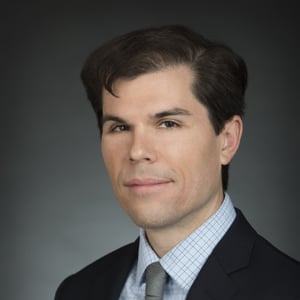
Appellate Counsel, Constitutional Accountability Center
Brian Frazelle is Constitutional Accountability Center’s Appellate Counsel. Before joining CAC, Mr. Frazelle was an Attorney-Advisor at the Privacy and Civil Liberties Oversight Board, an independent, bipartisan agency within the executive branch. Hired as the Board’s first employee in 2013, he helped review the legality, constitutionality, and policy implications of federal antiterrorism measures in order to ensure the adequate protection of civil liberties and privacy; he also contributed to public reports issued by the Board that have influenced recent debates and reforms concerning the government’s surveillance powers. Earlier in his career, Mr. Frazelle was the Supreme Court Assistance Project Fellow at Public Citizen Litigation Group, where he was the lead author of numerous briefs successfully opposing Supreme Court review as well as a merits-stage amicus brief on which the Court’s majority opinion relied. Mr. Frazelle served as a law clerk for Judge Paul L. Friedman of the United States District Court for the District of Columbia. He is a graduate of Yale Law School, where he was a senior editor for the Yale Law Journal. He received his undergraduate degree from the University of Mary Washington and holds a master’s degree in English from the University of North Carolina at Chapel Hill.

Assistant Attorney General, Alabama Attorney General's Office
Laura has been with the Alabama Attorney General’s Office since 2012, where she litigates the defense of state statutes that have been challenged in state or federal court. She was named a Supreme Court Fellow by the National Association of Attorneys General for October Term 2016, for which she wrote the States’ amicus brief in Lee v. United States.
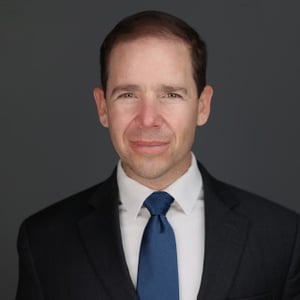
Founder and CEO, Lexpat Global Services
Adam Pearlman is the Founder and Chief Executive Officer of Lexpat Global Services. He is a National Security Law expert and a proven senior leader with experience across the U.S. Departments of Justice, Defense, and State, in the White House, and with the U.S. Federal Judiciary.
Before founding Lexpat, Mr. Pearlman served as the Senior Advisor for Legal Policy in the State Department’s Bureau of Counterterrorism. There, he counseled senior officials on matters covering the entire spectrum of programs and operations to counter terrorism and violent extremism. While participating in sensitive diplomatic engagements and helping to coordinate military operations, he also advised in the development of sanctions policy and initiatives to build legal and operational capacity in partner nations. Mr. Pearlman also managed the Bureau’s participation in federal litigation and led U.S. delegations in multilateral forums concerning criminal justice and rule of law. Separately, Mr. Pearlman supported the State Department’s Bureau of International Narcotics and Law Enforcement Affairs (INL) as the contracted Senior Justice and Rule of Law Advisor in Cabo Verde, Africa. There he was the chief implementer of a Foreign Assistance program that grew eight-fold during his tenure, building host nation capacity across the law enforcement, justice sector, rule of law, anti-money laundering, and corrections disciplines.
A former Associate Deputy General Counsel of the Department of Defense, Mr. Pearlman was agency counsel for complex civil and criminal national security matters in federal and military courts. He also led the Supreme Court and appellate unit of the team dedicated to litigating classified counterterrorism cases. His earlier service in the Department of Justice spanned four litigating divisions and the Office of the Deputy Attorney General. His diverse experience included reviewing complex international transactions and mergers, and advising on immigration removal proceedings, human rights abuses, and terrorist financing investigations. Mr. Pearlman also served with distinction in Iraq as an early advisor to the Iraqi High Tribunal’s prosecution of Saddam Hussein. He was a law clerk for The Honorable Royce C. Lamberth of the U.S. District Court for the District of Columbia, and during law school interned in the White House Counsel’s Office.
Mr. Pearlman is a Senior Fellow at the National Security Institute at George Mason University’s Antonin Scalia Law School, a member of the American Bar Association’s Advisory Committee on Law and National Security, and the Editor-in-Chief of the U.S. Intelligence Community Law Sourcebook. Previously, he has been a Term Member of the Council on Foreign Relations, National Security Fellow at the Foundation for Defense of Democracies, member of the ABA’s Africa Law Initiative Council and of the Center for Strategic & International Studies’ (CSIS) Project on Nuclear Issues, vice chairman of the ABA Section of International Law’s committees on national security, and aerospace and defense, and a liaison to the Board of Directors of the ABA’s Rule of Law Initiative. He has published articles in the Harvard National Security Journal, Stanford Law & Policy Review, Intelligence & National Security, The Foreign Service Journal, Lawfare, and many other outlets.
Mr. Pearlman earned his B.A., with honors, from UCLA, and his J.D., with honors, from The George Washington University Law School, where he was a member of the International Law Review. He also earned a Master of Science of Strategic Intelligence degree from the National Intelligence University, where he was the inaugural recipient of the Kornblum Award for national security law and ethics. Mr. Pearlman is a Certified Financial Crime Specialist and holds certificates in international human rights law from the University of Oxford and in anti-corruption law from American University’s Washington College of Law. He is admitted to the State Bars of California and Virginia, as well as to the Bar of the United States Supreme Court. He speaks and reads Portuguese at the intermediate level.
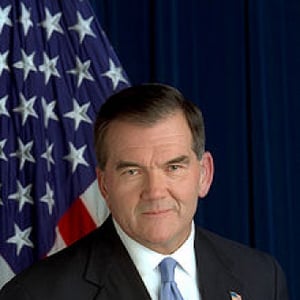
Chairman, Ridge Global, Former First Secretary, U.S. Department, Former Governor of Pennsylvania
Gov. Tom Ridge is Chairman of Ridge Global. He provides clients with solutions to cyber security, international security and risk management issues. Following the tragic events of September 11th, 2001, Gov. Tom Ridge became the first Assistant to the President for Homeland Security and, on January 24, 2003, became the first Secretary of the U.S. Department of Homeland Security. The creation of the country's 15th Cabinet Department marked the largest reorganization of government since the Truman administration and another call to service for the former soldier, congressman and governor of Pennsylvania. During his DHS tenure, Secretary Ridge worked with more than 180,000 employees from a combined 22 agencies to create an agency that facilitated the flow of people and goods, instituted layered security at air, land and seaports, developed a unified national response and recovery plan, protected critical infrastructure, integrated new technology and improved information sharing worldwide. Gov. Tom Ridge served as Secretary of this historic and critical endeavor until February 1, 2005. Before the events of September 11th, Gov. Tom Ridge was twice elected Governor of Pennsylvania. He served as the state's 43rd governor from 1995 to 2001. Gov. Ridge's aggressive technology strategy helped fuel the state's advances in economic development, education, health care and the environment. He serves on the boards of the Institute for Defense Analyses, the Center for the Study of the Presidency and Congress and other private and public entities. He is currently chairman of the U.S. Chamber of Commerce's National Security Task Force. He graduated from Harvard with honors. After his first year at Penn State University's Dickinson School of Law, he was drafted into the U.S. Army, where he served as an infantry staff sergeant in Vietnam, earning the Bronze Star for Valor, the Combat Infantry Badge and the Vietnamese Cross of Gallantry. After returning to Pennsylvania and to Dickinson, he earned his law degree and, later, became one of the first Vietnam combat veterans elected to the U.S. House of Representatives, where he served six terms.

Partner, Steptoe & Johnson LLP
Stewart Baker is a partner in the law firm of Steptoe & Johnson in Washington, D.C. From 2005 to 2009, he was the first Assistant Secretary for Policy at the Department of Homeland Security. His law practice covers cybersecurity, data protection, homeland security, and travel and foreign investment regulation; he has been awarded one patent.
Mr. Baker has been General Counsel of the National Security Agency and General Counsel of the commission that investigated WMD intelligence failures prior to the Iraq war. He is the author of Skating on Stilts, a book on terrorism, cybersecurity, and other technology issues; he also hosts the weekly Cyberlaw Podcast.

Patrick Hotung Professor of Constitutional Law, Georgetown University Law Center; Faculty Director, Georgetown Center for the Constitution
Randy E. Barnett is the Patrick Hotung Professor of Constitutional Law at the Georgetown University Law Center and is the Faculty Director of the Georgetown Center for the Constitution. After graduating from Northwestern University and Harvard Law School, he tried many felony cases as a prosecutor in the Cook County States’ Attorney’s Office in Chicago. A recipient of a Guggenheim Fellowship in Constitutional Studies and the Bradley Prize, Professor Barnett has been a visiting professor at Penn, Northwestern and Harvard Law School.
Professor Barnett’s publications includes thirteen books, more than one hundred articles and reviews, as well as numerous op-eds. His most recent book is Felony Review: Tales of True Crime and Corruption in Chicago (2026). His other books on the Constitution include: A Life for Liberty: The Making of an American Originalist (2024); The Original Meaning of the Fourteenth Amendment: Its Letter and Spirit (2021) (with Evan Bernick); An Introduction to Constitutional Law: 100 Supreme Court Cases Everyone Should Know (2019) (with Josh Blackman); Restoring the Lost Constitution: The Presumption of Liberty (2nd ed. 2013); Our Republican Constitution: Securing the Liberty and Sovereignty of We the People (2016); and Constitutional Law: Cases in Context (5th ed. forthcoming 2027) (with Josh Blackman). His books on contracts are The Oxford Introductions to U.S. Law: Contracts (2010) and Contracts: Cases and Doctrine (7th ed. 2021) (with Nate Oman). And he is the author of The Structure of Liberty: Justice and the Rule of Law (2nd ed. 2014).
In 2004, he argued the medical marijuana case of Gonzalez v. Raich before the U.S. Supreme Court. In 2012, he was one of the lawyers representing the National Federation of Independent Business in its constitutional challenge to the Affordable Care Act in NFIB v. Sebelius. He’s appeared in numerous documentaries and portrayed a prosecutor in the 2010 science-fiction feature film, InAlienable: The Movie. On X he is @RandyEBarnett
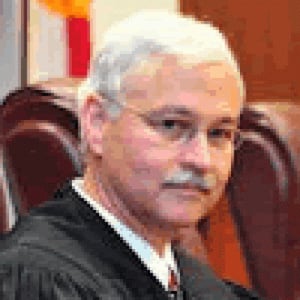
Justice, Florida Supreme Court
Ricky Polston is a justice on the Florida Supreme Court. He was appointed to the court on October 2, 2008, by Governor Charlie Crist. Polston was retained by voters on November 2, 2010, and again on November 8, 2016. His current term expires in 2023.
From 2012 to 2014, Polston served as the chief justice of the court.

Professor Emeritus of Law, Antonin Scalia Law School, George Mason University
Jeremy A. Rabkin is a Professor Emeritus of Law at the Antonin Scalia Law School, George Mason University. Before joining the faculty in June 2007, he was for over two decades a professor in the Department of Government at Cornell University. Professor Rabkin serves on the board of directors of the Center for Individual Rights, a public interest law firm based in Washington, D.C. Previously he was a board member of the U.S. Institute of Peace and the board of academic advisors of the American Enterprise Institute.
Professor Rabkin’s books include Law Without Nations? (Princeton University Press, 2005). He authored “If You Need a Friend, Don’t Call a Cosmopolitan,” a chapter in Varieties of Sovereignty and Citizenship (Sigal R. Ben-Porath & Rogers M. Smith eds., University of Pennsylvania Press, 2012). His articles have appeared in major law reviews and political science journals and his journalistic contributions in a range of magazines and newspapers, including the Washington Post and the Wall Street Journal.
Legal Director & General Counsel, Criminal Justice Legal Foundation
Kent S. Scheidegger has been the Legal Director of the Criminal Justice Legal Foundation since December 1986. He also served as Chairman of the Criminal Law Practice Group of the Federalist Society 2003 to 2005. His articles on criminal and constitutional law have been published in law reviews, national legal publications, and congressional reports. Legal arguments authored by Mr. Scheidegger have been cited and incorporated in several precedent-setting United States Supreme Court decisions.
After receiving a degree in physics with honors from New Mexico State University in 1976, Mr. Scheidegger served for six years in the United States Air Force as a Nuclear Research Officer. He took his law degree with distinction from the University of the Pacific, McGeorge School of Law in 1982 and practiced civil law in Northern California. He was general counsel of California Cooler, Inc. from 1984 until 1986, when he joined the Foundation.

Should a Felony Be a Barrier to Voting Behind Bars and Beyond?
Jeff Jacoby, Marc Levin, Nicole D. Porter
With campaign season in full swing, a high-stakes legal and policy battle is intensifying over...
Topics
Criminal Cases in SCOTUS’s October 2021-22 Terms: Introduction
This is the first in a series of posts on criminal cases and crime-related civil...
Courthouse Steps Decision Webinar: United States v. Tsarnaev
Kent Scheidegger
On March 4, 2022, the U.S. Supreme Court decided United States v. Tsarnaev. In a 6-3...
Courthouse Steps Decision Webinar: United States v. Tsarnaev
Kent Scheidegger
On March 4, 2022, the U.S. Supreme Court decided United States v. Tsarnaev. In a 6-3...
Courthouse Steps Decision Webinar: United States v. Tsarnaev
Teleforum2021 Supreme Court Preview
Bryan Scott Gowdy, Sarah M. Harris, Joseph Palmore, Henry Charles Whitaker
On September 29, 2021, the Federalist Society's Jacksonville Lawyers Chapter hosted a virtual discussion giving...
A Seat at the Sitting - October 2021
Jonathan H. Adler, Sarah M. Harris, Kate Comerford Todd
Streamed live on September 30, 2021Join us for the inaugural episode of the Federalist Society’s...
Lee v. US: Effectiveness of Counsel - Podcast
Brian R. Frazelle, Laura Howell
Jae Lee lived in the United States as a legal permanent resident since 1982. In...
Federal, State, Local, and Tribal Partnerships Feat. Governor Tom Ridge - Podcast
Adam R. Pearlman, Tom Ridge
Over the last fifteen years, homeland security has become a field unto itself. The United...
Panel I: Cybersecurity and the NSA
Stewart A. Baker, Randy E. Barnett, Ricky Polston, Jeremy A. Rabkin
The NSA acts pursuant to broad statutory authorities, and has interpreted those statutes to enable...