
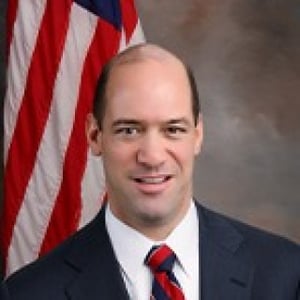
State’s Attorney, DuPage County, Illinois
A career prosecutor with over 31 years of experience and counting, Bob Berlin was sworn in as DuPage County State’s Attorney on December 14, 2010, after being appointed to complete the unexpired term of Joseph Birkett. In 2012, 2016, and 2020, Bob was elected to full four-year terms as DuPage County State’s Attorney. He serves as the Chief Law Enforcement Officer for the 2nd largest county in Illinois and leads an office of 87 Assistant State’s Attorneys and 90 support staff and investigators.
Berlin began his career in 1987 as an Assistant State’s Attorney in Cook County. During his tenure in Cook County, Bob’s assignments included the criminal appeals, misdemeanor, felony review, homicide-sexual assault preliminary hearing, child exploitation, and felony trial divisions. In 2001, Bob left the Cook County State’s Attorney’s Office opting to continue his career as First Assistant State’s Attorney for the Kane County State’s Attorney’s Office. As First Assistant State’s Attorney, Bob managed and supervised the entire Office staff of more than 140 lawyers and support staff.
While in Kane County, Bob developed and implemented new policies including the Community Prosecutions and a Felony Review Unit. Bob also served as Chief of the Priority Prosecutions Unit. In 2004, Bob began working for the DuPage County State’s Attorney’s Office as Deputy Chief of the Office’s Juvenile Division. During the next several years, Bob was promoted to Deputy Chief of the Felony Trial Division and in April 2010, Chief of the Criminal Bureau, where he supervised all Assistant State’s Attorneys charged with the criminal prosecutions function of the Office.
In his 31-year career as a prosecutor, Bob has tried more than 85 felony jury trials, 55 of which involved first-degree murder. Bob has also tried hundreds of felony bench trials, including more than 50 homicide cases.
Professor of Political Science, University of Chicago, Department of Political Science
Robert A. Pape is Professor of Political Science at the University of Chicago specializing in international security affairs. His publications include Cutting the Fuse: The Explosion of Global Suicide Terrorism and How to Stop It (Chicago 2010) (with James Feldman); Dying to Win: The Strategic Logic of Suicide Terrorism (Random House 2005); Bombing to Win: Air Power and Coercion in War (Cornell 1996), "Why Economic Sanctions Do Not Work," International Security (1997), "The Determinants of International Moral Action," International Organization (1999); "The Strategic Logic of Suicide Terrorism," American Political Science Review (2003); and "Soft Balancing against the United States," International Security (2005). His commentary on international security policy has appeared in The New York Times, Washington Post, New Republic, Boston Globe, Los Angeles Times, and Bulletin of Atomic Scientists, as well as on Nightline, ABC News, CBS News, CNN, Fox News, and National Public Radio. Before coming to Chicago in 1999, he taught international relations at Dartmouth College for five years and air power strategy for the USAF's School of Advanced Airpower Studies for three years. He received his PhD from the University of Chicago in 1988 and graduated summa cum laude and Phi Beta Kappa from the University of Pittsburgh in 1982. His current work focuses on the causes of suicide terrorism and the politics of unipolarity. He is the director of the Chicago Project on Security and Threats.
State’s Attorney, DuPage County, Illinois
A career prosecutor with over 31 years of experience and counting, Bob Berlin was sworn in as DuPage County State’s Attorney on December 14, 2010, after being appointed to complete the unexpired term of Joseph Birkett. In 2012, 2016, and 2020, Bob was elected to full four-year terms as DuPage County State’s Attorney. He serves as the Chief Law Enforcement Officer for the 2nd largest county in Illinois and leads an office of 87 Assistant State’s Attorneys and 90 support staff and investigators.
Berlin began his career in 1987 as an Assistant State’s Attorney in Cook County. During his tenure in Cook County, Bob’s assignments included the criminal appeals, misdemeanor, felony review, homicide-sexual assault preliminary hearing, child exploitation, and felony trial divisions. In 2001, Bob left the Cook County State’s Attorney’s Office opting to continue his career as First Assistant State’s Attorney for the Kane County State’s Attorney’s Office. As First Assistant State’s Attorney, Bob managed and supervised the entire Office staff of more than 140 lawyers and support staff.
While in Kane County, Bob developed and implemented new policies including the Community Prosecutions and a Felony Review Unit. Bob also served as Chief of the Priority Prosecutions Unit. In 2004, Bob began working for the DuPage County State’s Attorney’s Office as Deputy Chief of the Office’s Juvenile Division. During the next several years, Bob was promoted to Deputy Chief of the Felony Trial Division and in April 2010, Chief of the Criminal Bureau, where he supervised all Assistant State’s Attorneys charged with the criminal prosecutions function of the Office.
In his 31-year career as a prosecutor, Bob has tried more than 85 felony jury trials, 55 of which involved first-degree murder. Bob has also tried hundreds of felony bench trials, including more than 50 homicide cases.
Appellate Court Justice, Illinois Appellate Court for the Fourth District
Justice Eugene Doherty graduated summa cum laude from the Northern Illinois University School of Law in 1989. After serving as a law clerk to Honorable Philip G. Reinhard at the Illinois Appellate Court, Justice Doherty engaged in a civil litigation practice in Rockford, Illinois. The Illinois Supreme Court appointed him to the 17th Judicial Circuit Court in 2007, a position to which he was elected in 2008 and retained in 2012 and 2020. He served as chief judge of the 17th Circuit from 2018 through 2021. Justice Doherty is the author of a variety of articles in several legal publications including the Illinois Bar Journal, and he has been an instructor at the Illinois Education Conference multiple times. He serves on several Supreme Court Committees, including serving as chair of the e-Business Policy Advisory Board and vice-chair of the COVID-19 Task Force. In 2022, the Illinois Supreme Court assigned him to the Illinois Appellate Court for the Fourth District.

Chief Policy Counsel, Council on Criminal Justice and Senior Advisor, Right on Crime
Marc A. Levin is the Chief Policy Counsel for the Council on Criminal Justice (counciloncj.org) and Senior Advisor for Right on Crime.
An attorney and accomplished author on legal and public policy issues, Marc began the Foundation’s criminal justice program in 2005. This work contributed to nationally praised policy changes that have been followed by dramatic declines in crime and incarceration in Texas. Building on this success, in 2010, Levin developed the concept for the Right on Crime initiative, a TPPF project in partnership with Prison Fellowship and the American Conservative Union Foundation. Right on Crime has become the national clearinghouse for conservative criminal justice reforms and has contributed to the adoption of policies in dozens of states that fight crime, support victims, and protect taxpayers.
In 2014, Levin was named one of the “Politico 50” in the magazine’s annual “list of thinkers, doers, and dreamers who really matter in this age of gridlock and dysfunction.”
Marc has testified on criminal justice policy on four occasions before Congress and has testified before legislatures in states including Texas, Nevada, Kansas, Wisconsin, and California. He also has met personally with leaders such as U.S. Presidents, Speakers of the House, and the Justice Commtitee of the United Kingdom Parliament to share his ideas on criminal justice reform. In 2007, he was honored in a resolution unanimously passed by the Texas House of Representatives that stated, “Mr. Levin’s intellect is unparalleled and his research is impeccable.”
Since 2005, Marc has published dozens of policy papers on topics such as sentencing, probation, parole, reentry, and overcriminalization which are available on the TPPF website. Levin’s articles on law and public policy have been featured in publications such as the Wall Street Journal, USA Today, Texas Review of Law & Politics, National Law Journal, New York Daily News, Jerusalem Post, Toronto Star, Atlanta Journal-Constitution, Philadelphia Inquirer, San Francisco Chronicle, Washington Times, Los Angeles Daily Journal, Charlotte Observer, Dallas Morning News, Houston Chronicle, Austin American-Statesman, San Antonio Express-News and Reason Magazine.
In 1999, Marc graduated with honors from the University of Texas with a B.A. in Plan II Honors and Government. In 2002, Marc received his J.D. with honors from the University of Texas School of Law. Marc was a Charles G. Koch Summer Fellow in 1996. He served as a law clerk to Judge Will Garwood on the U.S. Court of Appeals for the Fifth Circuit and Staff Attorney at the Texas Supreme Court.
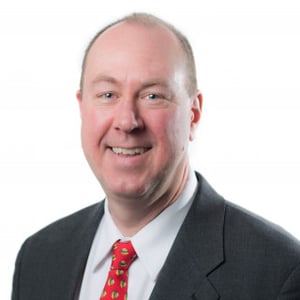
Professor, Department of Criminal Justice and Criminology & Co-Director, Center for Criminal Justice, Loyola University Chicago
David Olson is a Professor in the Criminal Justice and Criminology Department at Loyola University Chicago, where he is the Co-Director (with Don Stemen) of Loyola’s interdisciplinary Center for Criminal Justice Research. Previously Dr. Olson served as the Chair of the Department of Criminal Justice and Criminology, the Director of the Department’s Graduate Program, and as Director of Loyola’s interdisciplinary Forensic Science Program. Dr. Olson currently serves as the Chairperson for the advisory boards of the Illinois Department of Corrections and the Illinois Department of Juvenile Justice, and as a member of the Illinois Criminal Justice Information Authority’s Board through separate gubernatorial appointments. Dr. Olson also currently serves on the Illinois Supreme Court Commission on Pretrial Practices Implementation Task Force, the Illinois Department of Human Services’ Firearm Violence Research Group, and the Illinois Pretrial Practices Data Oversight Board.
For nearly 20 years, Dr. Olson worked at the Illinois Criminal Justice Information Authority, where he was the director of Illinois’ Statewide Drug and Violent Crime Control Strategy Impact Evaluation Program and was responsible for overseeing the evaluation and monitoring of federally funded drug control efforts in the State of Illinois. For six years, Dr. Olson served as a Special Assistant to the Cook County Sheriff through a cooperative agreement between Loyola and the Cook County Sheriff’s Office.
David has served as staff to the Illinois Governor’s Task Force on Crime and Corrections (1992-1993), the Illinois Legislative Committee on Juvenile Justice (1994-1996), the Illinois Truth-in-Sentencing Commission (1996-1998), the Illinois Governor’s Community Safety and Prisoner Re-Entry Management Workgroup/Commission (2004-2006), and the Illinois Capital Punishment Reform Study Committee (2007-2010). In 2015 Dr. Olson was appointed as a Commissioner to the Illinois Governor’s Commission on Criminal Justice and Sentencing Reform. Dr. Olson has worked with a variety of federal, state and local agencies to develop and evaluate programs and policies, particularly in the area of community and institutional corrections, during his 35 years in the field of criminal justice.
Dr. Olson has published more than 100 articles, research bulletins and research reports, and has made more than 100 presentations at professional conferences and training symposia. Some of David’s most recent research has been published in The Journal of Substance Abuse Treatment, the Journal of Crime and Justice, and by the Duke University School of Law’s Center for Firearms Law.
Dr. Olson received his B.S. in Criminal Justice from Loyola University Chicago, his M.A. in Criminal Justice from the University of Illinois at Chicago, and his Ph.D. in Political Science/Public Policy Analysis from the University of Illinois at Chicago, where he was the recipient of the Assistant United States Attorney General’s Graduate Research Fellowship. In 2015 Dr. Olson received the John Howard Association Outstanding Research Contributions Award, and in 2011 he received the Hans W. Mattick Award for outstanding accomplishments in the field of criminology and criminal justice research from the Illinois Academy of Criminology.
State’s Attorney, DuPage County, Illinois
A career prosecutor with over 31 years of experience and counting, Bob Berlin was sworn in as DuPage County State’s Attorney on December 14, 2010, after being appointed to complete the unexpired term of Joseph Birkett. In 2012, 2016, and 2020, Bob was elected to full four-year terms as DuPage County State’s Attorney. He serves as the Chief Law Enforcement Officer for the 2nd largest county in Illinois and leads an office of 87 Assistant State’s Attorneys and 90 support staff and investigators.
Berlin began his career in 1987 as an Assistant State’s Attorney in Cook County. During his tenure in Cook County, Bob’s assignments included the criminal appeals, misdemeanor, felony review, homicide-sexual assault preliminary hearing, child exploitation, and felony trial divisions. In 2001, Bob left the Cook County State’s Attorney’s Office opting to continue his career as First Assistant State’s Attorney for the Kane County State’s Attorney’s Office. As First Assistant State’s Attorney, Bob managed and supervised the entire Office staff of more than 140 lawyers and support staff.
While in Kane County, Bob developed and implemented new policies including the Community Prosecutions and a Felony Review Unit. Bob also served as Chief of the Priority Prosecutions Unit. In 2004, Bob began working for the DuPage County State’s Attorney’s Office as Deputy Chief of the Office’s Juvenile Division. During the next several years, Bob was promoted to Deputy Chief of the Felony Trial Division and in April 2010, Chief of the Criminal Bureau, where he supervised all Assistant State’s Attorneys charged with the criminal prosecutions function of the Office.
In his 31-year career as a prosecutor, Bob has tried more than 85 felony jury trials, 55 of which involved first-degree murder. Bob has also tried hundreds of felony bench trials, including more than 50 homicide cases.
Appellate Court Justice, Illinois Appellate Court for the Fourth District
Justice Eugene Doherty graduated summa cum laude from the Northern Illinois University School of Law in 1989. After serving as a law clerk to Honorable Philip G. Reinhard at the Illinois Appellate Court, Justice Doherty engaged in a civil litigation practice in Rockford, Illinois. The Illinois Supreme Court appointed him to the 17th Judicial Circuit Court in 2007, a position to which he was elected in 2008 and retained in 2012 and 2020. He served as chief judge of the 17th Circuit from 2018 through 2021. Justice Doherty is the author of a variety of articles in several legal publications including the Illinois Bar Journal, and he has been an instructor at the Illinois Education Conference multiple times. He serves on several Supreme Court Committees, including serving as chair of the e-Business Policy Advisory Board and vice-chair of the COVID-19 Task Force. In 2022, the Illinois Supreme Court assigned him to the Illinois Appellate Court for the Fourth District.
Chief Policy Counsel, Council on Criminal Justice and Senior Advisor, Right on Crime
Marc A. Levin is the Chief Policy Counsel for the Council on Criminal Justice (counciloncj.org) and Senior Advisor for Right on Crime.
An attorney and accomplished author on legal and public policy issues, Marc began the Foundation’s criminal justice program in 2005. This work contributed to nationally praised policy changes that have been followed by dramatic declines in crime and incarceration in Texas. Building on this success, in 2010, Levin developed the concept for the Right on Crime initiative, a TPPF project in partnership with Prison Fellowship and the American Conservative Union Foundation. Right on Crime has become the national clearinghouse for conservative criminal justice reforms and has contributed to the adoption of policies in dozens of states that fight crime, support victims, and protect taxpayers.
In 2014, Levin was named one of the “Politico 50” in the magazine’s annual “list of thinkers, doers, and dreamers who really matter in this age of gridlock and dysfunction.”
Marc has testified on criminal justice policy on four occasions before Congress and has testified before legislatures in states including Texas, Nevada, Kansas, Wisconsin, and California. He also has met personally with leaders such as U.S. Presidents, Speakers of the House, and the Justice Commtitee of the United Kingdom Parliament to share his ideas on criminal justice reform. In 2007, he was honored in a resolution unanimously passed by the Texas House of Representatives that stated, “Mr. Levin’s intellect is unparalleled and his research is impeccable.”
Since 2005, Marc has published dozens of policy papers on topics such as sentencing, probation, parole, reentry, and overcriminalization which are available on the TPPF website. Levin’s articles on law and public policy have been featured in publications such as the Wall Street Journal, USA Today, Texas Review of Law & Politics, National Law Journal, New York Daily News, Jerusalem Post, Toronto Star, Atlanta Journal-Constitution, Philadelphia Inquirer, San Francisco Chronicle, Washington Times, Los Angeles Daily Journal, Charlotte Observer, Dallas Morning News, Houston Chronicle, Austin American-Statesman, San Antonio Express-News and Reason Magazine.
In 1999, Marc graduated with honors from the University of Texas with a B.A. in Plan II Honors and Government. In 2002, Marc received his J.D. with honors from the University of Texas School of Law. Marc was a Charles G. Koch Summer Fellow in 1996. He served as a law clerk to Judge Will Garwood on the U.S. Court of Appeals for the Fifth Circuit and Staff Attorney at the Texas Supreme Court.
Professor, Department of Criminal Justice and Criminology & Co-Director, Center for Criminal Justice, Loyola University Chicago
David Olson is a Professor in the Criminal Justice and Criminology Department at Loyola University Chicago, where he is the Co-Director (with Don Stemen) of Loyola’s interdisciplinary Center for Criminal Justice Research. Previously Dr. Olson served as the Chair of the Department of Criminal Justice and Criminology, the Director of the Department’s Graduate Program, and as Director of Loyola’s interdisciplinary Forensic Science Program. Dr. Olson currently serves as the Chairperson for the advisory boards of the Illinois Department of Corrections and the Illinois Department of Juvenile Justice, and as a member of the Illinois Criminal Justice Information Authority’s Board through separate gubernatorial appointments. Dr. Olson also currently serves on the Illinois Supreme Court Commission on Pretrial Practices Implementation Task Force, the Illinois Department of Human Services’ Firearm Violence Research Group, and the Illinois Pretrial Practices Data Oversight Board.
For nearly 20 years, Dr. Olson worked at the Illinois Criminal Justice Information Authority, where he was the director of Illinois’ Statewide Drug and Violent Crime Control Strategy Impact Evaluation Program and was responsible for overseeing the evaluation and monitoring of federally funded drug control efforts in the State of Illinois. For six years, Dr. Olson served as a Special Assistant to the Cook County Sheriff through a cooperative agreement between Loyola and the Cook County Sheriff’s Office.
David has served as staff to the Illinois Governor’s Task Force on Crime and Corrections (1992-1993), the Illinois Legislative Committee on Juvenile Justice (1994-1996), the Illinois Truth-in-Sentencing Commission (1996-1998), the Illinois Governor’s Community Safety and Prisoner Re-Entry Management Workgroup/Commission (2004-2006), and the Illinois Capital Punishment Reform Study Committee (2007-2010). In 2015 Dr. Olson was appointed as a Commissioner to the Illinois Governor’s Commission on Criminal Justice and Sentencing Reform. Dr. Olson has worked with a variety of federal, state and local agencies to develop and evaluate programs and policies, particularly in the area of community and institutional corrections, during his 35 years in the field of criminal justice.
Dr. Olson has published more than 100 articles, research bulletins and research reports, and has made more than 100 presentations at professional conferences and training symposia. Some of David’s most recent research has been published in The Journal of Substance Abuse Treatment, the Journal of Crime and Justice, and by the Duke University School of Law’s Center for Firearms Law.
Dr. Olson received his B.S. in Criminal Justice from Loyola University Chicago, his M.A. in Criminal Justice from the University of Illinois at Chicago, and his Ph.D. in Political Science/Public Policy Analysis from the University of Illinois at Chicago, where he was the recipient of the Assistant United States Attorney General’s Graduate Research Fellowship. In 2015 Dr. Olson received the John Howard Association Outstanding Research Contributions Award, and in 2011 he received the Hans W. Mattick Award for outstanding accomplishments in the field of criminology and criminal justice research from the Illinois Academy of Criminology.
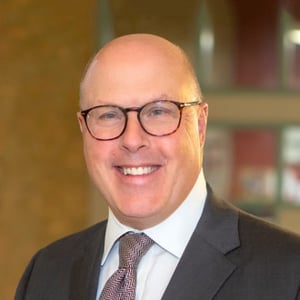
Senior Attorney, Sensient Technologies Corporation
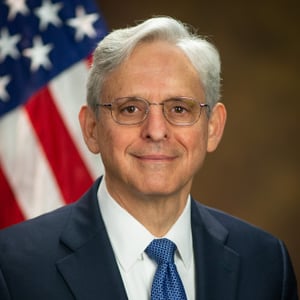
United States Attorney General
Attorney General Merrick B. Garland was sworn in as the 86th Attorney General of the United States on March 11, 2021. As the nation’s chief law enforcement officer, Attorney General Garland leads the Justice Department’s 115,000 employees, who work across the United States and in more than 50 countries worldwide. Under his leadership, the Department of Justice is dedicated to upholding the rule of law, keeping our country safe, and protecting the civil rights of all Americans.
Immediately preceding his confirmation as Attorney General, Attorney General Garland was a judge of the United States Court of Appeals for the District of Columbia Circuit. He was appointed to that position in 1997, served as Chief Judge of the Circuit from 2013-20, and served as Chair of the Executive Committee of the Judicial Conference of the United States from 2017-20. In 2016, President Obama nominated him for the position of Associate Justice of the United States Supreme Court.
Before becoming a federal judge, Attorney General Garland spent a substantial part of his professional life at the Department of Justice. He served in both career and non-career positions under five Attorneys General, including as Special Assistant to the Attorney General, Assistant United States Attorney, Deputy Assistant Attorney General in the Criminal Division, and Principal Associate Deputy Attorney General. In those roles, his responsibilities spanned the work of the Department, including criminal, civil, and national security matters. They also included direct supervision of investigations and prosecutions of national importance, including the Oklahoma City bombing, Unabomber, and Montana Freemen cases.
Earlier in his career, Attorney General Garland was a partner in the law firm of Arnold & Porter, where his practice involved civil and criminal litigation, antitrust, and administrative law. He also taught antitrust at Harvard Law School and published law review articles on both antitrust and administrative law.
Attorney General Garland graduated summa cum laude from Harvard College and magna cum laude from Harvard Law School. Following law school, he clerked for Judge Henry J. Friendly of the United States Court of Appeals for the Second Circuit, and for Justice William J. Brennan, Jr., of the United States Supreme Court.
Sidney Powell, PC
Sidney Powell has been lead counsel in more than 500 federal appeals resulting in more than 180 published decisions. She represents clients in complex federal appeals and consults in complex federal litigation in civil and selective criminal cases. Her representative cases traverse the following areas of substantive law: real estate, employment law, asbestos injuries (the $3 billion class action against Fiberboard), health care and medical malpractice, environmental issues, oil and gas, contract claims, patent, trademark, copyright, and other civil actions. She has also represented judges and lawyers on ethical issues and sanctions. For most of the last decade, she has represented one of the Merrill Lynch executives in the Enron “Nigerian Barge” litigation, in which she uncovered evidence that the Enron Task Force Prosecutors “plainly suppressed” exculpatory evidence that was favorable to the defense.
Ms. Powell is an elected member of the American Law Institute and a Fellow of the American Academy of Appellate Lawyers for which she served in 2001-2002 as President. She has long been a member of the Board of Governors of the Fifth Circuit Bar Association for which she also served as President and as Editor of the Fifth Circuit Reporter for 20 years.
A Phi Beta Kappa graduate of the University of North Carolina, where she also attended law school, Ms. Powell was the youngest Assistant United States Attorney in the country when she began with the United States Attorney’s Office in the Western District of Texas in 1978. She later chaired its Appellate Section. Thereafter, she began an Appellate Section for the Northern District of Texas. She also served as an Assistant United States Attorney for the Eastern District of Virginia, where she obtained the conviction of a local attorney for bankruptcy fraud.
Ms. Powell has written and taught extensively in the area of federal appellate practice, including for the Attorney General’s Advocacy Institute of the United States Department of Justice. Her most recent publication is the Chapter Evaluating an Appeal–Strategic Thinking Before and During The Appeal in the book Appellate Practice in Federal and State Courts (Law Journal Press, September 2011).
She is currently working on a book entitled Licensed To Lie, which will reveal to the layman and the broader Bar the insidious prosecutorial misconduct infecting the government’s cases against Alaska Senator Ted Stevens and the Merrill Lynch executives in the Enron litigation, including the dramatic distinctions in the responses to the two cases by both the judiciary and the Department of Justice.
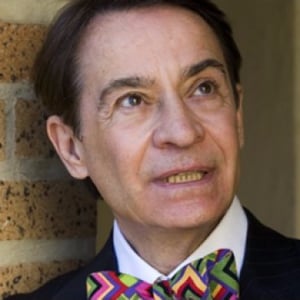
Doy & Dee Henley Chair and Distinguished Professor of Jurisprude, Chapman University Dale E. Fowler School of Law
Ronald D. Rotunda was the Doy & Dee Henley Chair and Distinguished Professor of Jurisprudence, at Chapman University, the Dale E. Fowler School of Law. He joined the faculty in 2008. Before that, he was University Professor and Professor of Law at George Mason University School of Law. From 2002 to 2006, he was the George Mason University Foundation Professor of Law. Before that, he was the Albert E. Jenner, Jr. Professor of Law, at the University of Illinois. He was a magna cum laude graduate of both Harvard College and Harvard Law School, where he was a member of Harvard Law Review. He joined the University of Illinois faculty in 1974 after clerking for Judge Walter R. Mansfield of the United States Court of Appeals for the Second Circuit, practicing law in Washington, D.C., and serving as assistant majority counsel for the Senate Watergate Committee. He has co-authored the most widely used course book on legal ethics, Problems and Materials on Professional Responsibility(Foundation Press, 12th ed. 2014) and was the author of a leading course book on constitutional law, Modern Constitutional Law (West Academic Co., 11th ed. 2015)(Abridged & Unabridged editions). He was the coauthor of, Legal Ethics: The Lawyer's Deskbook on Professional Responsibility (ABA- West/Thompson Reuters Publishing, St. Paul, Minnesota, 2016-2017 ed.) (Jointly published by the ABA and West/Thompson Reuters Publishing) (with John Dzienkowski). Rotunda also co-authored (with John Nowak) the six-volume Treatise on Constitutional Law (West/Thompson Reuters Publishing, 5th ed. 2012)(with annual updates), and a one volume Treatise on Constitutional Law (West Academic, 8th ed. 2010). He was also the author of several other books and more than 500 articles in various law reviews, journals, newspapers, and books in this country and abroad. His works have been translated into French, Portuguese German, Romanian, Czech, Russian, Japanese, and Korean. These books and articles have been cited more than 2000 times by law reviews, by state and federal courts at every level, from trial courts to the U.S. Supreme Court, and by foreign courts in Europe, Africa, Asia, and South America. He has been interviewed on radio and television on legal issues, both in this country and abroad. In 1993 he was the Constitutional Law Adviser to the Supreme National Council of Cambodia and assisted that country in writing its first democratic constitution. He has consulted with various new democracies in Eastern Europe and the former Soviet Union, including Moldova, Romania, and Ukraine, on their proposed constitutions and judicial codes. He chaired the subcommittee that drafted the American Bar Association's Model Rules for Lawyer Disciplinary Enforcement; was a member of the Publications Board of the A.B.A. Center for Professional Responsibility from 1994 to 2016; was a member of the A.B.A. Standing Committee on Professional Discipline (1991-1997); and was Liaison to the A.B.A. Standing Committee on Ethics and Professional Responsibility (1994-1997). He was a Fulbright Professor in Venezuela in 1986 and a Fulbright Research Scholar in Italy in 1981. In 1996 he assisted the Czech Republic in drafting the first Rules of Ethics for lawyers in that country. During the Spring, 1999 semester, he was Visiting Professor at the University of Alabama School of Law, holding the John S. Stone Endowed Chair of Law. During the summer and fall of 2000, he was the Visiting Senior Fellow in Constitutional Studies at the Cato Institute, in Washington, DC. In the fall of 2001, he was visiting professor at George Mason University School of Law. During November-December, 2002, he was Visiting Scholar, Katholieke Universiteit Leuven, Faculty of Law, Leuven, Belgium. In May, 2004, and December, 2005, he was visiting lecturer at the Institute of Law and Economics, Institut für Recht und Ökonomik, at the University of Hamburg. From early June 2004 to May 2005, he was the Special Counsel to the Department of Defense. He was on the Panel of Contributing Editors that produced, Black's Law Dictionary (West/Thompson Reuters Publishing, 8th ed. 2004; Thomson-Reuters, 10th ed. 2014). From 2005-2006, he was a member of the Task Force on Judicial Functions of the Commission on Virginia Courts in the 21st Century: To Benefit All, to Exclude None.
In May, 2000, American Law Media, publisher of The American Lawyer, the National Law Journal, and the Legal Times picked Professor Rotunda as one of the ten most influential Illinois Lawyers. Also in 2000, a lengthy study that the University of Chicago Press published, which sought to determine the influence, productivity, and reputations of law professors over the last several decades, listed Professor Rotunda as the 17th highest in the nation. The 2002-2003 New Educational Quality Ranking of U.S. Law Schools (EQR) [the last year for which such records are available] ranks Professor Rotunda as the eleventh most cited of all law faculty in the United States. Seehttp://www.leiterrankings.com/faculty/2002faculty_impact_cites.shtml.
In July, 2007, he was one of the main speakers at the International Judicial Conference hosted by the United States Embassy, the Supreme Court of Latvia, and the Latvian Ministry of Justice. The other main speakers were Justice Samuel Alito, the President of Latvia, the Prime Minister of Latvia, the Chief Justice of Latvia, and the Minister of Justice of Latvia. On February 27, 2008, President George W. Bush nominated Ronald D. Rotunda to become a member of the Privacy and Civil Liberties Oversight Board (PCLOB) for an initial four-year term and sent his nomination to the Senate Committee on Homeland Security and Governmental Affairs for confirmation hearings on the nominees. He was selected the Best Lawyer in Washington, DC, in 2009 in Ethics and Professional Responsibility Law, as published in November 2008 in the Washington Post in association with the Legal Times. When he moved to California, he was also selected as one of the Best Lawyers in Southern California, in 2009, 2010, 2011, 2012, 2013, 2014, 2015, 2016, 2017, also in Ethics and Professional Responsibility Law as published in the Los Angeles Times, U.S. News, and American Law Media. On June 17, 2009, he became a Commissioner of the Fair Political Practices Commission, a state regulatory agency (analogous to the Federal Election Commission) that is California's independent political watchdog. He served until January 31, 2013, when his term expired. In 2012, he became a Distinguished International Research Fellow at the World Engagement Institute, a non-profit, multidisciplinary and academically-based non-governmental organization with the mission to facilitate professional global engagement for international development and poverty reduction http://www.weinstitute.org/fellows.html. In 2012, Chapman University honored him with The Chapman University Excellence In Scholarly/Creative Work Award, 2011-2012. Since 2014, he has been a member of the Editorial Board of, The International Journal of Sustainable Human Security (IJSHS), a peer-reviewed publication of the World Engagement Institute (WEI). Rotunda was a Member of the Editorial Board of ABA's Journal of Legal Education (2014 to 2016).
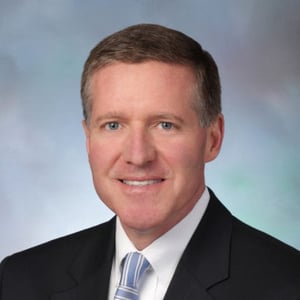
Partner, Davis Polk & Wardwell LLP
Kenneth Wainstein is a partner at Davis Polk & Wardwell, where he focuses his practice on corporate internal investigations and civil and criminal enforcement proceedings. Ken spent over 20 years in a variety of law enforcement and national security positions in the government. Between 1989 and 2001, Ken served as an Assistant U.S. Attorney in both the Southern District of New York and the District of Columbia, where he handled criminal prosecutions ranging from public corruption to gang prosecution cases and held a variety of supervisory positions, including Acting United States Attorney. In 2001, he was appointed Director of the Executive Office for U.S. Attorneys, where he provided oversight and support to the 94 U.S. Attorneys’ Offices. Between 2002 and 2004, Ken served as General Counsel of the Federal Bureau of Investigation and then as Chief of Staff to Director Robert S. Mueller III. In 2004, Ken was appointed and then confirmed as United States Attorney for the District of Columbia, where he had the privilege to lead the largest United States Attorney’s Office in the country. In 2006, the U.S. Senate confirmed Ken as the first Assistant Attorney General for National Security. In that position, Ken established and led the new National Security Division, which consolidated DOJ’s law enforcement and intelligence activities on counterterrorism and counterintelligence matters. In 2008, after 19 years at the Justice Department, Ken was named Homeland Security Advisor by President George W. Bush. In this capacity, he coordinated the nation’s counterterrorism, homeland security, infrastructure protection, and disaster response and recovery efforts. He advised the President, convened and chaired meetings of the Cabinet Officers on the Homeland Security Council, and oversaw the inter-agency coordination process for homeland security and counterterrorism programs.

The Rise and Future of Political Violence in America
Chicago Lawyers Chapter
Chicago, ILBail Reform: Illinois’ Experience After 9 months
Robert Berlin, Eugene Doherty, Marc Levin, David Olson
Balancing safety and justice is especially challenging in the pretrial context where difficult decisions must...
Bail Reform: Illinois’ Experience After 9 months
Robert Berlin, Eugene Doherty, Marc Levin, David Olson
Balancing safety and justice is especially challenging in the pretrial context where difficult decisions must...
Bail Reform: Illinois’ Experience After 9 months
Professional Responsibility: Prosecutorial Misconduct
James C. Dunlop, Merrick B. Garland, Sidney K. Powell, Ronald D. Rotunda, Kenneth L. Wainstein
The Professional Responsibility & Legal Education Practice Group hosted this panel on "Prosecutorial Misconduct" on Thursday,...