
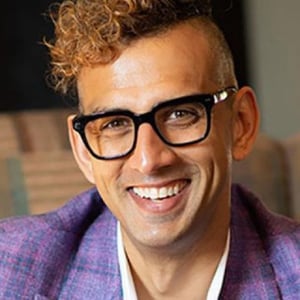
Pioneers Chair in Telecommunications, Penn State University
Dr. Christopher Ali is the Pioneers Chair in Telecommunications and a full professor of telecommunications in the Bellisario College. He is also an affiliate faculty with the College of Information, Science and Technology (IST) at Penn State. He holds a Ph.D. in communication studies from the Annenberg School for Communication at the University of Pennsylvania (2013). His research interests include media and telecommunications policy and regulation, broadband policy, critical political economy, critical geography, comparative media systems, qualitative research methods, media localism, and local news.
Ali uses critical, qualitative methods to research broadband policy, planning, deployment and digital equity in the United States. Presently, he has a series of projects dedicated to “broadband stories,” where he is researching how community-based stories can influence public policy. These projects form the basis of his forthcoming book, Where the wires end: Stories from the Digital Divide to be published in Spring 2027 with the University of Chicago Press. In 2026, Dr. Ali also completed a major grant funded research project for the Center for Rural Pennsylvania analyzing how the digital divide impacts rural first responders in the Commonwealth of Pennsylvania.
Dr. Ali is the author or editor of four books: "Public Service Media’s Contribution to Society"(Nordicom, 2023, with Prof. Dr. Manuel Puppis), "Farm Fresh Broadband: The Politics of Rural Connectivity" (MIT Press, 2021), "Media Localism: The Policies of Place" (University of Illinois Press, 2017), "Echoes of Gabriel Tarde: What we know better or different 100 years later" (USC Annenberg Press, 2014, with Drs. Elihu Katz and Joohan Kim).
Based on his expertise, Ali was called to testify before the Senate Commerce Committee in 2021 on broadband funding and policy programs. He has also briefed members of the House Democrats Task Force on Rural Broadband, the New York State Blue Ribbon Commission on Re-Imagining New York, the Federal Communications Commission, and has presented before numerous state and county governments.
Dr. Ali has published over two dozen peer reviewed articles in high-ranking academic journals including, The Journal of Communication, Communication Theory, Media Culture & Society, and Telecommunications Policy. His writing has also been published in Tech Policy Press, The New York Times, The Hill, Realtor Magazine, Law & Political Economy, Digital Beat, GovTech, Zocalo Public Square, the Canadian Broadcasting Corporation, Washington Monthly, Columbia Journalism Review, and The Conversation. He is a frequent press commentator on the subjects of broadband, media policy, and local news, with interviews in the Associated Press, Hollywood Reporter, Business Insider, Washington Post, Philadelphia Inquirer, Los Angeles Times, NPR, CNET, CBC, Bloomberg, and other major national and international news outlets.
Ali presently serves as the Associate Editor of the journal Communication Law & Policy. He also sits on the advisory board of the Centre County Film Festival.
Previously, he served as the Chair of the Communication Law and Policy Division of the International Communication Association (2021-2023) and was an advisor to the Virginia Joint Committee on Technology & Science. He has also served on the Federal Communication Commission’s Communication Equity and Diversity Council Working Group and was a board member of Charlottesville Tomorrow, a non-profit news organization in Charlottesville, Virginia.
Dr. Ali has held fellowships or grants from the Center for Rural Pennsylvania (2025), the Benton Institute for Broadband and Society (2019-2020), the Global Future Council of the World Economic Forum (2018), the Center for Advanced Research in Global Communications (CARGC) at the University of Pennsylvania (2017 & 2022), the Tow Center for Digital Journalism at Columbia University (2016-2017 & 2019-2021), the University of Fribourg in Fribourg Switzerland (2015), and the Social Sciences and Humanities Research Council of Canada (2011).
Ali is an award-winning scholar, having been honored with the 2024 Bellisario Alumni Association Teaching Excellence Award, the 2025 Dean’s Excellence Award for Research & Creative Accomplishment, and the 2025 Broadband Hero Award.
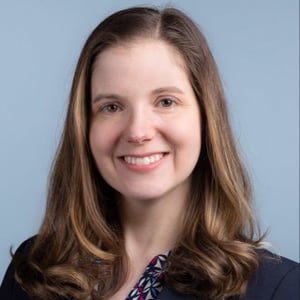
Vice President and Deputy Chief Counsel, U.S. Chamber Litigation Center, U.S. Chamber of Commerce
Jennifer B. Dickey is vice president and deputy chief counsel at the U.S. Chamber Litigation Center, the litigation arm of the U.S. Chamber of Commerce. Dickey handles a variety of litigation matters for the Chamber.
Dickey joined the Chamber following her service as Acting Assistant Attorney General and Principal Deputy Assistant Attorney General in the Civil Division at the U.S. Department of Justice. She also previously served as Deputy Associate Attorney General, providing strategic oversight of the Civil Division, Civil Rights Division, and Foreign Claims Settlement Commission, as well as Special Assistant to the President and Associate Counsel to the President. In the latter capacity, she provided legal advice on a wide array of executive actions and rulemakings, civil litigation, and judicial nominations.
Dickey also practiced law at Kirkland & Ellis LLP before her government service. She was a commercial and appellate litigator, representing businesses in federal and state courts.
Earlier in her career, Dickey served as a law clerk for the Honorable Clarence Thomas of the Supreme Court of the United States and the Honorable William H. Pryor Jr. of the United States Court of Appeals for the Eleventh Circuit.
Dickey earned her law degree magna cum laude from Duke University School of Law, where she was an Executive Editor of the Duke Law Journal, and her undergraduate degree magna cum laude from Dartmouth College.
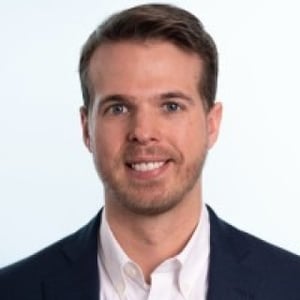
Counsel, U.S. House Energy and Commerce Committee
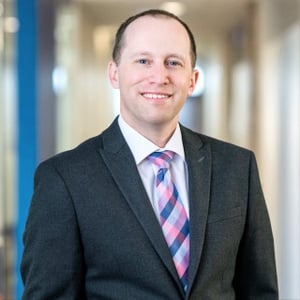
Partner, Wilkinson Barker Knauer, LLP
Dan leverages a deep understanding of telecommunications regulation and the broader legal landscape to help clients achieve their business goals. He provides practical and creative advice, develops persuasive policy advocacy, and represents clients in court appeals of agency matters. In an era in which courts play a larger role than ever in shaping regulation, Dan’s mix of legal depth, regulatory knowledge, and policymaking experience make him stand out.
His practice encompasses federal and state telecommunications regulation, emerging Internet issues, funding programs, online privacy frameworks, and consumer protection laws. He co-teaches a telecommunications law course at Georgetown Law School.
Prior to joining WBK, Dan spent eight years in leadership positions in the Federal Communications Commission’s Wireline Competition Bureau. There, Dan guided net neutrality and broadband infrastructure proceedings, implementation of caller ID authentication and the Robocall Mitigation Database, transaction reviews, and many other agency actions. He is especially proud of his contributions to establishing 988 as the three-digit code for the national suicide prevention hotline.
Today, courts make many of the most important decisions regarding agencies, and Dan regularly represents clients in court appeals concerning agency matters. He and the WBK team prevailed before the U.S. Supreme Court on behalf of industry associations in FCC v. Consumers’ Research, which affirmed the constitutionality of the Universal Service Fund.
Dan is a graduate of Yale University and Harvard Law School. Outside of work, Dan enjoys spending time with his kids, baking bread and cooking, playing card and board games, attempting to play sports, and science fiction/fantasy.
Executive Director & Secretary, American Civil Rights Project
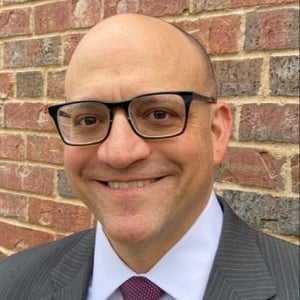
Dan Morenoff is the executive director at the American Civil Rights Project and an adjunct fellow at the Manhattan Institute.
His work focuses on protecting and, where necessary, restoring the primacy of all Americans' shared civil rights against the identitarian alternative.
Before practicing law, Morenoff served on the legislative staff of Sen. Phil Gramm (R-TX). Morenoff holds a B.A. from Columbia College of Columbia University in the City of New York and a J.D. from the University of Chicago Law School. He has also served as an officer or director of several community organizations in Dallas, Texas.
Director, Center for Education Policy and Mark A. Kolokotrones Fellow in Education, The Heritage Foundation
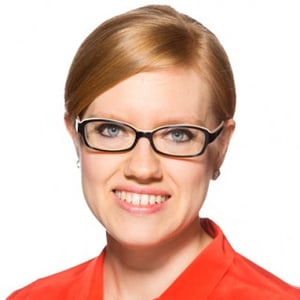
As director of the Center for Education Policy at The Heritage Foundation, Lindsey Burke oversees Heritage’s research and policy on issues pertaining to preschool, K-12, and higher education reform. Burke’s research has been presented at academic conferences and published in peer-reviewed journals including Social Science Quarterly, Educational Research and Evaluation, and the Journal of School Choice, and her commentary and op-eds have appeared in numerous magazines and newspapers. She is a frequent guest on radio and television shows and speaks on education reform issues across the country and internationally. She has published evaluations of education choice options for public policy foundations across the country and has done extensive work shaping and evaluating education savings accounts (ESAs).
In 2021, Burke was tapped to join Governor-elect Glenn Youngkin’s transition steering committee and was also appointed to serve on the Youngkin landing team for education. Burke was also appointed by Governor Youngkin to serve on the Board of Visitors for George Mason University. Her term runs from July 1, 2022 to June 30, 2026.
Burke also serves as a fellow at EdChoice, the namesake foundation of Milton and Rose Friedman, on the national advisory board of Learn4Life, a network of public charter schools serving “opportunity youth,” on the board of the Educational Freedom Institute, on the advisory board of the Independent Women’s Forum’s Education Freedom Center, and as a Trustee of Choice Media.
In 2015, Burke won Heritage’s prestigious W. Glenn and Rita Ricardo Campbell Award in recognition of her work fighting for expanded education choice options. The award is given annually to a policy expert who has made “an outstanding contribution to the analysis and promotion of a free society.”
Burke holds a bachelor's degree in politics from Hollins University in Roanoke, VA, and a master of teaching degree in foreign language education from the University of Virginia. She earned her Ph.D. in education policy from George Mason University, where she examined the intersection of education choice and institutional theory.

Senior Scholar, Manhattan Institute; Professor of Law Emerita, University of San Diego
Gail Heriot is a Senior Scholar at the Manhattan Institute, a Professor of Law Emerita at the University of San Diego and the Chairman of the Board of the American Civil Rights Project. She served on the U.S. Commission on Civil Rights for 18 years. Her new book is entitled “Why We Walk on Eggshells: How Our Civil Rights Laws Stifle Our Public Discourse.”
Former Assistant Secretary for Civil Rights, U.S. Department of Education; Former Chair, U.S. Commission on Civil Rights
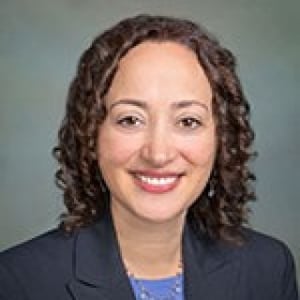
Catherine E. Lhamon served as Assistant Secretary of Education for Civil Rights from November 17, 2021 to January 20, 2025. Before that, she served as the Chair of the U.S. Commission on Civil Rights. President Obama appointed Lhamon to a six-year term on the Commission on December 15, 2016, and the Commission unanimously confirmed the President’s designation of Lhamon to chair the Commission on December 28, 2016. Lhamon also serves in the cabinet of California Governor Gavin Newsom, where she has been Legal Affairs Secretary since January 2019. Lhamon previously litigated civil rights cases at the National Center for Youth Law.
Before coming to the Commission, Lhamon served as the Assistant Secretary for Civil Rights at the U.S. Department of Education until January 2017. President Obama nominated her to the Assistant Secretary for Civil Rights position on June 10, 2013, and she was unanimously confirmed by the U.S. Senate on August 1, 2013. Immediately prior to joining the Department of Education, Lhamon was director of impact litigation at Public Counsel, the nation’s largest pro bono law firm. Before that, she practiced for a decade at the ACLU of Southern California, ultimately as assistant legal director.
Earlier in her career, Lhamon was a teaching fellow and supervising attorney in the Appellate Litigation Program at Georgetown University Law Center, after clerking for The Honorable William A. Norris on the United States Court of Appeals for the Ninth Circuit. In 2016, Politico Magazine named Lhamon one of Politico 50 Thinkers Transforming Politics and the National Action Network honored Lhamon with their Action & Authority Award. In 2015, Yale Law School named Lhamon their Gruber Distinguished Lecturer and the Association of University Centers on Disabilities awarded Lhamon their Special Recognition Award. Chronicle of Higher Education named Lhamon to their 2014 Influence List as the Enforcer. The Daily Journal listed her as one of California’s Top Women Litigators in 2010 and 2007, and as one of the Top 20 California Lawyers Under 40 in 2007. In 2004, California Lawyer magazine named Lhamon Attorney of the Year for Civil Rights.
Lhamon received her J.D. from Yale Law School, where she was the Outstanding Woman Law Graduate, and she graduated summa cum laude from Amherst College.
Thomas P. O’Neill, Jr. Professor of American Politics, Boston College; Co-Chair, Harvard Program on Constitutional Government
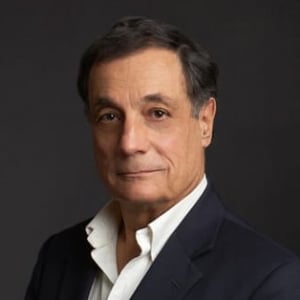
R. Shep Melnick is the Thomas P. O’Neill, Jr. Professor of American Politics at Boston College and co-chair of the Harvard Program on Constitutional Government. He is the author of The Crucible of Desegregation: The Uncertain Search for Educational Equality (Univeristy of Chicago Press, 2023); The Transformation of Title IX: Regulating Gender Equality in Education, (Brookings, 2018), Between the Lines: Interpreting Welfare Rights (Brookings,1994), and Regulation and the Courts: The Case of the Clean Air Act (Brookings, 1983), as well as many articles on courts, agencies, and public policy. He is currently completing a book on education and the civil rights state. In 2012 he received the American Political Science Association Law and Courts Section’s “Lasting Contribution” award. He received his BA and PhD from Harvard, and taught at Harvard and Brandeis before moving to Boston College. He has also been a Research Associate at Brookings, President of the New England Political Science Association, and an elected member of the NH House of Representatives.
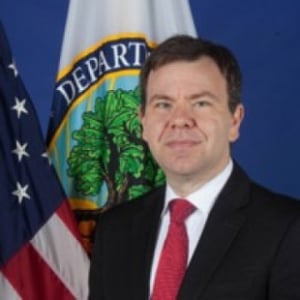
General Counsel, Mountain States Legal Foundation
William E. Trachman is General Counsel for Mountain States Legal Foundation, where he protects the rights of individuals to live freely and securely under the U.S. Constitution. Previously, he was appointed to serve in the Department of Education as Deputy Assistant Secretary in the Office for Civil Rights. Prior to his appointment, he served as General Counsel to the Douglas County School District, where he helped litigate the fight for school choice in the school district. Presently, Mr. Trachman serves as Chair of the Colorado Federalist Society and the Vice Chair of the U.S. Commission on Civil Rights’ Colorado Advisory Board. He previously taught as an Adjunct Professor at the University of Denver, Sturm College of Law. He attended U.C. Berkeley for both undergraduate and law school, and then clerked for the Honorable Harris Hartz on the 10th Circuit Court of Appeals. Mr. Trachman is licensed in Colorado, California, and Washington, D.C.

Director, Robert A. Levy Center for Constitutional Studies, Cato Institute
Thomas Berry is the director in the Cato Institute’s Robert A. Levy Center for Constitutional Studies and editor in chief of the Cato Supreme Court Review. Before joining Cato, he was an attorney at Pacific Legal Foundation and clerked for Judge E. Grady Jolly of the U.S. Court of Appeals for the Fifth Circuit. His academic work has appeared in NYU Journal of Law and Liberty, Washington and Lee Law Review Online, and Federalist Society Review. His popular writing has appeared in The Wall Street Journal, National Law Journal, Investor’s Business Daily, National Review Online, and The Hill Online. He has testified before the U.S. Senate, and his work has been cited by the U.S. District Court for the District of Columbia.
Berry holds a J.D. from Stanford Law School, where he was a senior editor on the Stanford Law and Policy Review and a Bradley Student Fellow in the Stanford Constitutional Law Center. He graduated with a B.A. in Liberal Arts from St. John’s College, Santa Fe.
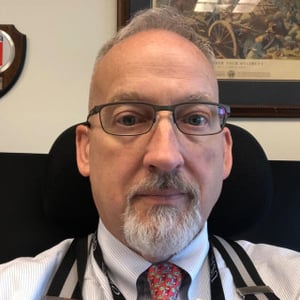
Appellate Counsel, Theodore Cooperstein PLLC
Theodore Cooperstein currently is an appellate attorney in the boutique law firm of Theodore Cooperstein PLLC, available for criminal and civil appeals in both state and federal courts. A former career prosecutor with twenty five years of service in the US Department of Justice, he was an Assistant United States Attorney for the Southern District of Florida and the Southern District of Mississippi, and has served as a Military Intelligence Officer in the Army Reserves from 1989 to 2011, retiring with the rank of Lieutenant Colonel. During the Trump Administration, he was appointed and served as the General Counsel of the U.S. Office of Personnel Management. Prior to joining the Southern District of Florida, Mr. Cooperstein served as a Special Assistant U.S. Attorney in the U.S. Attorney's Office for the District of Maryland. He previously had served as Counsel to the Deputy Attorney General at the Department of Justice, and as Assistant General Counsel in the FBI Office of the General Counsel.
A.B., Dartmouth College; J.D., Stanford University; LL.M., Comparative and International Law, Georgetown University Law Center; Masters of Strategic Studies, U.S. Army War College
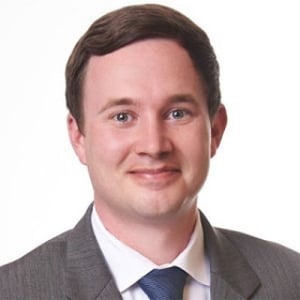
Regulatory Counsel, Americans for Prosperity Foundation
Mike Pepson is regulatory counsel at Americans for Prosperity Foundation, which frequently files amicus briefs in the U.S. Supreme Court, U.S. Courts of Appeals, and state Supreme Courts, as well as public comments in various federal and state regulatory proceedings. Mike assists AFPF with its efforts involving separation of powers, administrative process, criminal justice reform, tech and innovation, and other issues.
He is also Special Counsel for Administrative Law at Cause of Action Institute, where he has been involved in complex civil and criminal litigation in federal district and appellate courts and administrative litigation before federal agencies in a variety of matters, including agency enforcement actions, statutory and constitutional challenges to federal regulations and agency decisions, and Section 1983 challenges to state statutes.
He received his LL.M. from Columbia Law School, J.D. from The Catholic University of America, Columbus School of Law, and B.A. from Loyola College in Baltimore, Maryland.
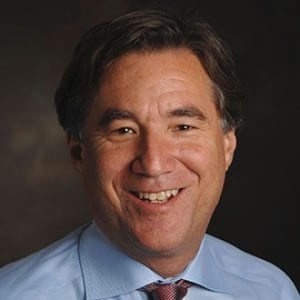
Ashe Family Chair Professor of Law, Georgia State University College of Law
Eric J. Segall graduated from Emory University, Phi Beta Kappa and summa cum laude, and from Vanderbilt Law School, where he was the research editor for the Law Review and member of Order of the Coif. He clerked for the Chief Judge Charles Moye Jr. for the Northern District of Georgia, and Albert J. Henderson of the 11th Circuit Court of Appeals. After his clerkships, Segall worked for Gibson, Dunn & Crutcher and the U.S. Department of Justice, before joining the Georgia State faculty in 1991.
Segall teaches federal courts and constitutional law I and II. He is the author of the books Originalism as Faith and Supreme Myths: Why the Supreme Court is not a Court and its Justices are not Judges. His articles on constitutional law have appeared in, among others, the Harvard Law Review Forum, the Stanford Law Review On Line, the UCLA Law Review, the George Washington Law Review, the Washington University Law Review, the University of Pennsylvania Journal of Constitutional Law, the Northwestern University Law Review Colloquy, and Constitutional Commentary among many others.
Segall’s op-eds and essays have appeared in the New York Times, the LA Times, The Atlantic, SLATE, Vox, Salon, and the Daily Beast, among others. He has appeared on CNN, Fox News, MSNBC, and France 24 and all four of Atlanta’s local television stations. He has also appeared on numerous local and national radio shows.
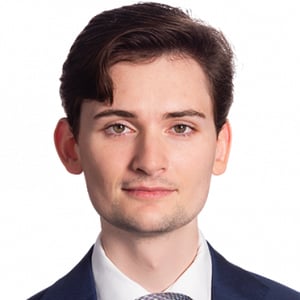
Principal Deputy Assistant Attorney General, Office of Legal Policy, United States Department of Justice
GianCarlo Canaparo serves as the Principal Deputy Assistant Attorney General in the Office of Legal Policy at the Department of Justice. He oversees the Office's regulatory work, assists the White House in the process of selecting nominees for federal judgeships and advises Department leadership on policy and legal matters.
Before joining the Department, Canaparo was a senior legal fellow at The Heritage Foundation’s Edwin Meese III Center for Legal and Judicial Studies where he researched constitutional law, administrative law, and civil rights.
Canaparo’s scholarship has appeared in various law reviews and periodicals. His research has been cited by Justice Neil Gorsuch and featured in the Wall Street Journal and Washington Post.
Canaparo co-hosted The Heritage Foundation’s SCOTUS 101 podcast, which followed the Supreme Court’s arguments and opinions and featured interviews with judges, advocates, and scholars.
After graduating Georgetown law, Canaparo spent three years at the law firm of Skadden, Arps, Slate, Meagher & Flom and two years as a federal law clerk. He earned his bachelor’s degree in economics from the University of California at Davis.
Canaparo is a classical pianist.
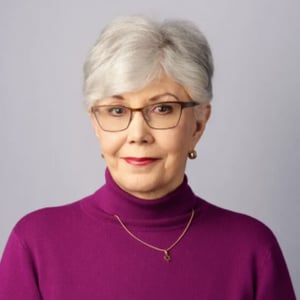
Chairman, Center for Equal Opportunity
Linda Chavez is Chairman of the Center for Equal Opportunity. She has published opinions and columns in newspapers across the country and appears regularly on cable news. Chavez is the author of the three books: Out of the Barrio: Toward a New Politics of Hispanic Assimilation, An Unlikely Conservative: The Transformation of an Ex-Liberal, and Betrayal: How Union Bosses Shake Down Their Members and Corrupt American Politics. She has been honored by the Library of Congress as a "Living Legend" and as nominee for Secretary of Labor by President George W. Bush.
Chavez has held many appointed positions and has served on numerous corporate and nonprofit boards. Among her appointed positions has been Chairman, National Commission on Migrant Education (1988-1992); White House Director of Public Liaison (1985); Staff Director of the U.S. Commission on Civil Rights (1983-1985); and member of the Administrative Conference of the United States (1984-1986). Chavez was also the Republican nominee for U.S. Senator from Maryland in 1986 and was elected by the United Nations' Human Rights Commission to serve a four-year term as U.S. Expert to the U.N. Sub-commission on the Prevention of Discrimination and Protection of Minorities.
Chavez earned her BA from the University of Colorado.
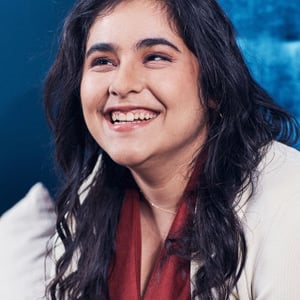
Aditi Juneja is the Executive Director of Democracy 2076, an organization founded in 2023 working long-term to change our Constitution, political culture, and political parties. She was most recently Chief of Staff at the Movement Voter Project and previously spent 4 years at Protect Democracy where she led the work of the National Task Force on Election Crises. Her writing has been featured in Vox, NPR, and Talking Points Memo. She received her J.D. from NYU Law School and a B.A. from Connecticut College
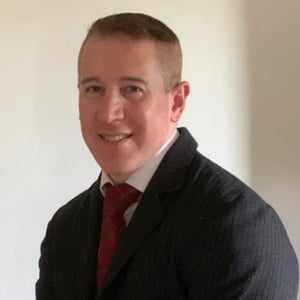
Associate Professor of Government; Pre-Law Advisor, Patrick Henry College
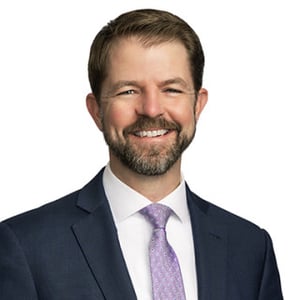
Partner, Baker Botts LLP
Drawing from two decades of experience in senior government, in-house corporate, and private law firm roles, Jeff Wood helps clients with federal enforcement, compliance, litigation, permitting, and policy challenges primarily in the energy and environmental fields.
Prior to joining Baker Botts, Mr. Wood served for almost two years as the Acting Assistant Attorney General (AAG) for the Justice Department's Environment and Natural Resources Division (ENRD). In that capacity, Mr. Wood led ENRD and its more than 600 attorneys and staff representing EPA, Departments of the Interior, Energy, and Defense, and other agencies in civil and criminal enforcement and defensive environmental, energy, and natural resources litigation.
As the top official in ENRD, Mr. Wood managed a complex organization with an annual budget exceeding $200 million and a docket of more than 6,000 cases and matters. E&E News noted that “Wood maintains a strong relationship with ENRD's career staff” (Greenwire, Oct. 31, 2018). He previously served on the staff of the United States Senate Committee on Environment and Public Works.
At the Justice Department, Mr. Wood oversaw the Division's civil and criminal enforcement programs and was responsible for developing legal strategies and approving briefs in key cases including filings before the Supreme Court and Courts of Appeals in coordination with the Office of Solicitor General. In this role, Mr. Wood held the highest level security clearance and worked closely with top leadership at DOJ, EPA, the Interior Department, USDA, the Energy Department, Transportation Department, FERC, NRC and across the Executive Branch, including the White House.
With many years of both private law firm and in-house legal experience, Mr. Wood has handled complex environmental enforcement, regulatory, policy, and litigation matters for electric utilities, energy companies, maritime companies, mining companies, real estate developers, financial institutions, industrial companies and manufacturers, business coalitions, associations, small businesses, and individual property owners. Drawing from his experiences in-house, Mr. Wood brings a common-sense, cost-effective, client-focused approach to his work every day.
With a strong national reputation, Mr. Wood is a frequent speaker on environmental law and policy matters, with recent speeches and presentations at the Environmental Law Institute, Harvard Law School, Vanderbilt Law School, American University Law School, American Bar Association Environmental Law Conferences, the Texas Environmental SuperConference, Air Force Judge Advocate General School's Advanced Environmental Law Course, Baker Institute's Center for Energy Studies (Rice University), and many other venues. He frequently appears in national news to share insights on significant environmental law and policy issues, including recent quotes in the New York Times, Washington Post, Wall Street Journal, Bloomberg, Law360, and E&E News, among others.
Attorney Specializing in Government Relations
Alec D. Rogers is an attorney specializing in government practice and policy in Washington, DC.
A graduate of James Madison College at Michigan State University and the University of Michigan Law School, he practiced law for several years before spending over a decade on Capitol Hill as a staffer to various Members and Committees.
He has reviewed books for the Washington Times, Hardball Times, The Journal of the American Revolution, and The Weekly Standard, and writes on legal matters in Engage, an online publication of the Federalist Society.

Partner, Baker Hostetler LLP
David Rivkin is a member of the firm's litigation, international and environmental teams and is co-leader of the firm's national appellate practice. He has extensive experience in constitutional, administrative and international law litigation and has been involved in numerous high-profile cases. With his prior experience in the government sector, David draws on a wealth of knowledge when providing compliance advice to companies and handling enforcement proceedings before government agencies on issues arising out of multilateral and unilateral sanctions, the Foreign Corrupt Practices Act (FCPA), anti-boycott issues, bankruptcy and financial fraud matters, and environmental and energy issues.
David has developed and implemented legislative, regulatory and litigation initiatives for two presidential administrations. Over the years, he has published hundreds of articles, op-eds, book reviews and book chapters on a variety of international, legal, constitutional, defense, arms control, foreign policy, environmental and energy issues for various newspapers and magazines, including The Wall Street Journal, The Washington Post, The New York Times, USA Today and The Los Angeles Times, and has been a frequent commentator and guest on TV and radio shows including ABC, CBS, NBC, CNN, Fox News, NPR and PBS.
Partner, Baker & Hostetler LLP
Lee A. Casey focuses on federal environmental, constitutional and international law and Alien Tort Statute issues. He also advises clients on compliance issues under the Foreign Corrupt Practices Act (FCPA), U.S. trade sanctions regimes, and federal ethics requirements. Mr. Casey’s practice includes federal, district and appellate court litigation, as well as matters before federal agencies. Prior to joining BakerHostetler, Mr. Casey was an associate with Hunton & Williams, practicing in international, environmental and constitutional law. From 2004 through 2007 he served as an member of the United Nations Subcommission on the Promotion and Protection of Human Rights.
From 1986 to 1993, Mr. Casey served in various capacities in the federal government, including the Office of Legal Policy (1986-90) and the Office of Legal Counsel (1992-93) at the U.S. Department of Justice and served as Deputy Associate General Counsel at the U.S. Department of Energy (1990-92). The Office of Legal Counsel is responsible for advising the Attorney General and the White House on issues of constitutional law and statutory interpretation. The Office of Legal Policy served as a strategic “think tank” for the Reagan Justice Department and was responsible for reviewing candidates for appointments to the federal bench.
Before joining the government in 1986, Mr. Casey was an associate in the Los Angeles firm of Mitchell, Silberberg & Knupp, practicing in the litigation section, with an emphasis on copyright, contract and First Amendment issues. From 1984 to 1985, Mr. Casey served as Law Clerk to the Honorable Alex Kozinski, then Chief Judge of the United States Claims Court. From 1982 to 1984, he practiced at the Detroit firm of Dykema Gossett, focusing on corporate, securities, commercial and intellectual property litigation, and from 1990 through 1994, he served as an Adjunct Professor of Law at George Mason University School of Law in Arlington, Virginia.
Among the chapters, articles and papers that Mr. Casey has authored or co-authored are: “International Law and the Nation-State at the U.N.,” Reclaiming the Language of Freedom at the United Nations: A Guide for U.S. Policymakers, The Heritage Foundation (2006) (with David B. Rivkin, Jr.); “The Dangerous Myth of Universal Jurisdiction,” A Country I Do Not Recognize (ed. Robert H. Bork) (2005) (with David B. Rivkin, Jr.); “Leashing the Dogs of War,” The National Interest (Fall 2003) (with David B. Rivkin, Jr.); “The Limits of Legitimacy: The Rome Statute’s Unlawful Application to Non-State Parties,” 44 Va.J.Int’l L. 63 (Fall 2003) (with David B. Rivkin, Jr.); “Devil’s Advocates: The Danger of Judging Lawyers By Their Clients,” Policy Review (Feb. and Mar. 2002) (with David B. Rivkin, Jr.); “The Case Against the International Criminal Court,” 25 Fordham Int’l L.J. 840 (2002); “Europe in the Balance: The Alarmingly Undemocratic Drift of the European Union,” Policy Review (June and July 2001) (with David B. Rivkin Jr.); “Against an International Criminal Court,” Commentary, May 1998 (with David B. Rivkin, Jr.); “Federalism (Cont’d.),” Commentary, December 1996 (with David B. Rivkin, Jr.); “Presidents and War Powers: Another View,” Common Sense, Winter 1996 (with David B. Rivkin, Jr.); “How Binding Are Contracts?” The American Enterprise, Nov./Dec. 1993 (with David B. Rivkin, Jr.); and “Pirate Constitutionalism: An Essay in Self-Government,” 8 J. of L. & Politics 477 (1992).
Mr. Casey is a member of the California, Michigan and District of Columbia Bar Associations.
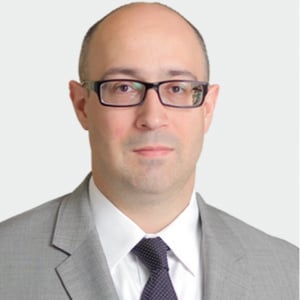
Partner, Baker & Hostetler LLP
Mark DeLaquil is a first-chair trial and appellate advocate who focuses on complex environmental and regulatory proceedings, First Amendment practice and political law.
Mark has been recognized by Chambers USA for environmental litigation (2015 to 2024) and has been named by Law360 as one of the "Top 5 Environmental Attorneys Under the Age of 40" on two occasions.

Litigation Update: Minnesota Telecom Alliance v. FCC
Christopher Ali, Jennifer B. Dickey, Matthew Furlow, Daniel H. Kahn
The U.S. Court of Appeals for the Eighth Circuit recently vacated the Federal Communications Commission’s...
Disparate-Impact Liability: Unfounded, Unconstitutional, & Not Long For This World
Dan Morenoff
For more than fifty years—ever since the Supreme Court decided Griggs v. Duke Power Co.[1]—almost...
Is Efficiency Desirable in Civil Rights Enforcement?
Lindsey Burke, Gail L. Heriot, Catherine E. Lhamon, R. Shep Melnick, William E. Trachman
The Trump Administration may bring significant changes to civil rights enforcement in the executive branch....
Can the Federal Government Ban At-Home Distilling?
Thomas Berry, Theodore Cooperstein, Michael D. Pepson, Eric J. Segall
After the U.S. Supreme Court in Morrison v. Olson (1988) and U.S. v. Lopez (1995)...
Equality and Equity: Contemporary Debates about Civil Rights in the Era of DEI
GianCarlo Canaparo, Linda L. Chavez, Aditi Juneja, Jesse Merriam
Join us to hear from experts who will discuss the history, current state, and future...
Topics
Post-Decision Review: United States Forest Service v. Cowpasture River Preservation Association
On June 15, 2020, the U.S. Supreme Court decided United States Forest Service v. Cowpasture...
Disparate Impact and Educational Resources
Disparate impact theory claims that a facially neutral practice that nevertheless has a disproportionate negative...
American Power Act: Senators Kerry and Lieberman Release “Discussion Draft” of New Climate Change Bill
Jeffrey H. Wood, Alec D. Rogers
Brought to you by the Environmental Law & Property Rights Practice GroupThe Federalist Society takes no...
EPA's NSR Enforcement Policy: An Improvident Regulatory Endeavor?
David B. Rivkin, Lee A. Casey, Mark DeLaquil
On November 1, 2006, the Supreme Court will hear oral argument in Environmental Defense v....