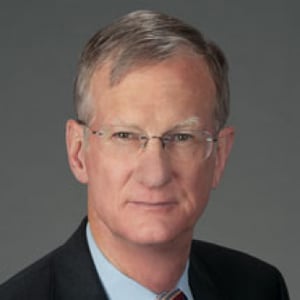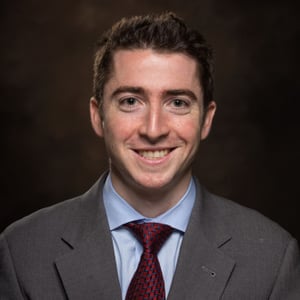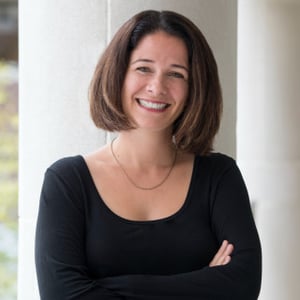
Associate Professor, Northern Illinois University
Evan Bernick joined the NIU Law faculty in 2021. He teaches courses in constitutional law, criminal law, criminal procedure, administrative law and legislation.
From 2020 to 2021, Professor Bernick was a visiting professor at the Georgetown University Law Center and the executive director of the Georgetown Center for the Constitution. Before that, he served as a clerk to Judge Diane S. Sykes of the United States Court of Appeals for the Seventh Circuit. From April 2017 to April 2019, he was a visiting lecturer at Georgetown and a resident fellow of the Center for the Constitution.
His scholarship covers a range of topics, from constitutional law, to philosophy of law, to social movements, to law enforcement. He has published with the Georgetown Law Journal, the Notre Dame Law Review, the William and Mary Law Review and the George Mason Law Review, among other journals. His book, The Original Meaning of the Fourteenth Amendment: Its Letter and Spirit (2021), with Randy E. Barnett, was published by Harvard University Press under its Belknap imprint "for books of long-lasting importance, superior in scholarship and physical production, chosen whether or not they might be profitable."
Professor Bernick received his bachelor's degree in 2008 from the University of Chicago, where he studied philosophy and graduated with honors. He received his juris doctorate in 2011 from the University of Chicago Law School.
Vice President of Law & Policy, Property and Environment Research Center
Jonathan Wood is vice president of law and policy at the Property and Environment Research Center (PERC). An attorney, Jonathan has litigated environmental and property-rights cases in the Supreme Court of the United States, federal and state appellate courts, and trial courts across the country. His writing has appeared in the Wall Street Journal, Washington Post, National Review, Reason, and other outlets. And his research has been published in journals such as Environmental Law Reporter, Yale Journal on Regulation Notice & Comment, Pace Environmental Law Review, and California Western Law Review.
Prior to coming to PERC, Jonathan was a senior attorney at Pacific Legal Foundation, where he litigated cases concerning the Endangered Species Act, Clean Water Act, and other federal environmental laws. He was co-counsel for forest landowners in Weyerhaeuser Co. v. U.S. Fish and Wildlife Service, in which the Supreme Court ruled unanimously that private land could not be arbitrarily regulated as critical habitat under the ESA. He also led a successful effort to reform regulation of threatened species to better align the incentives of private landowners with the interests of rare species.
Jonathan has testified before several congressional committees on wildlife conservation and endangered species topics. He has also appeared on national television and radio, including NPR’s All Things Considered, C-Span’s Washington Journal, Stossel, Fox News, and Hill.TV.
Jonathan has a law degree from the New York University School of Law, a masters degree in economic policy from the London School of Economics, and a bachelor’s degree in economics from the University of Texas. He is on the executive committee for the Federalist Society’s Environmental Law and Property Rights Practice Group and a steering committee member for the Environmental Law Institute’s Emerging Leaders Initiative.
Senior Legal Fellow, the Meese Institute for the Rule of Law, Advancing American Freedom
Paul J. Larkin is a Senior Legal Fellow in the Meese Institute for the Rule of Law at Advancing American Freedom. Paul has held various positions in the federal and state governments throughout his career, such as being an attorney in the Organized Crime and Racketeering Section of the Criminal Division at the U.S. Department of Justice, an Assistant to the Solicitor General in the Office of the Solicitor General at the U.S. Department of Justice, Special Agent-in-Charge and Acting Director of the Criminal Investigation Division at the Environmental Protection Agency, and a member of the Parole Abolition and Sentencing Reform Commission and of the Juvenile Justice Reform Commission in the Office of Virginia Governor George Allen.
He has also worked at Verizon Communications and two law firms in Washington, D.C. His current research is principally in the fields of drug policy, criminal justice policy, and administrative law and policy. He has published numerous articles in law and public policy journals, both in print and online.
Senior Attorney, Pacific Legal Foundation
Brian Hodges is a Senior Attorney at PLF’s Pacific Northwest office in Bellevue, Washington. Brian focuses his practice on defending of the right of individuals to make reasonable use of their property, free of unnecessary and oppressive regulations.
In 2013, Brian second-chaired Koontz v. St. Johns River Water Management District before the U.S. Supreme Court, a case that placed constitutional limits on the government’s common practice of demanding that landowners fund unrelated public projects in exchange for a permit approval. And in the 2008 case, Citizens’ Alliance for Property Rights v. Sims, Brian successfully challenged a Seattle-area ordinance that required all rural property owners to dedicate at least half their land as conservation areas as a mandatory condition of any new development without any showing that rural development would impact the environment.
Brian graduated from Seattle University of Law in 2001 with honors. After which, he served as a judicial clerk at the Washington State Court of Appeals, then entered private practice where he focused on appellate advocacy for several years before joining PLF in 2006.
Brian came to the liberty movement by an uncommon route: the arts. Brian played guitar and keyboards in several Seattle-area bands before eventually studying music composition and literature at the University of Washington—earning two Bachelor’s Degrees and a Master of Arts. Through that experience, he came to firmly believe that the goal of art—indeed, the goal of any creative ambition—is to maximize individual freedom and expression, tempered by personal responsibility and ownership, rather than outside oversight or arbitrary restriction. Carrying that philosophy into law school naturally led him to fight for individual rights.
Senior Attorney, Pacific Legal Foundation
Chris Kieser practices in PLF’s property rights and equality before the law practice groups.
His property rights clients include Cedar Point Nursery, which challenged a California regulation requiring them to allow union organizers to invade their private property, as well as Randall and Kimberley Pavlock, who are fighting back against Indiana’s beachfront land grab along Lake Michigan.
Under equality before the law, Chris represents coalitions of Asian-American parents challenging discriminatory admissions policies for selective K-12 schools in New York City; Montgomery County, Maryland; and Fairfax County, Virginia. He also represents a parent organization in Connecticut challenging a racial quota that prevents many Black and Hispanic students from enrolling at the state’s magnet schools.
Chris has published law review articles in the William & Mary Environmental Law Review and the Federalist Society Review. His op-eds have appeared in the New York Daily News, National Review, The Blaze, the Daily Journal, and SCOTUSblog.
Chris clerked for the Honorable Daniel A. Manion of the United States Court of Appeals for the Seventh Circuit and the Honorable Thomas D. Schroeder of the United States District Court for the Middle District of North Carolina. He holds a B.A., cum laude, from the University of Notre Dame, and graduated magna cum laude from Notre Dame Law School in 2013. At Notre Dame, he was an articles editor of the Notre Dame Law Review.
Growing up on Long Island, Chris developed a deep passion for limited government and individual liberty, arguing with his more numerous progressive classmates. This experience made him deeply skeptical that government tinkering at the expense of individual rights ever works, whether it be denying a property owner the use of his land or a student a seat at her desired school because of her race. He chose PLF because it is the national leader in litigation that furthers individual liberty.
When he’s not working, you’re likely to find Chris rooting for the Mets and Fighting Irish or debating some arcane point of law (because apparently that doesn’t happen enough at work).
Chris is currently licensed to practice in California and admitted to practice before the Supreme Court of the United States, the United States Courts of Appeal for the Second, Seventh, and Ninth Circuits, and the U.S. District Courts for the Eastern and Central Districts of California, the Northern District of Indiana, and the Northern District of Illinois.
Executive Director, Ohio Dental Association
David J. Owsiany is the executive director of the Ohio Dental Association and a past president of the Columbus Lawyers Chapter of the Federalist Society.
He has served as CEO of a statewide health care association, president of the Buckeye Institute, chief of policy for the Ohio Department of Insurance, judicial law clerk for the Illinois Appellate Court, and staffer on the United State Senate Judiciary Committee.
Mr. Owsiany has written dozens of articles on legal and public policy issues for various publications, including the University of Toledo Law Review, the Federalist Society's State Court Docket Watch, Columbus Dispatch, Cincinnati Enquirer, Crain’s Cleveland Business, and Akron Beacon Journal.
Owsiany received his J.D. from Washington University School of Law in St. Louis and B.A. from the University of Michigan in Ann Arbor.
Assistant Professor of Law, Emory University School of Law
Alexander "Sasha" Volokh is an assistant professor of law, joining the Emory Law faculty in Fall 2009.
Professor Volokh earned his B.S. from UCLA and his J.D. and Ph.D. in economics from Harvard University. He clerked for Judge Alex Kozinski of the Ninth Circuit and for Supreme Court Justices Sandra Day O'Connor and Samuel Alito. Before coming to Emory, he was a visiting associate professor at Georgetown University Law Center and a visiting assistant professor at University of Houston Law Center.
His interests include law and economics, administrative law and the regulatory process, environmental law and policy, and legal history. His current research topics include the private management of government services, medieval law, judicial decisionmaking and statutory interpretation.
Associate, Clark & Sauer, LLC
Ms. Weinberg is an associate attorney with Clark Law Firm, LLC in St. Louis, Missouri, concentrating in complex commercial litigation and state constitutional litigation.
Judge, United States District Court, Eastern District of Missouri
Stephen R. Clark the chief United States district judge for the Eastern District of Missouri. He was appointed to the bench by President Trump in 2018 and became the chief judge in 2022. Prior to serving on the court, Judge Clark was the founder and managing partner of the Runnymede Law Group in St. Louis, Missouri, from 2008 to 2019. He also served as the president of the Federalist Society’s St. Louis Lawyers Chapter.
Associate Professor of Law, St. Thomas University College of Law
Dan Epstein is Vice President at America First Legal and an Associate Professor of Law at St. Thomas University in Miami, Florida. He also advises individuals and small businesses in affirmative and defensive actions against government overreach. Previously, he advised startups on regulatory matters as Director at a venture capital firm. His federal service includes being a Special Assistant to and Senior Associate Counsel to the President and a counsel for the House of Representatives Committee on Oversight and Government Reform. Earlier in his career, Mr. Epstein founded and ran Cause of Action, where he represented clients in government investigations and litigated regulatory, constitutional, political, and public law matters.
He holds a Ph.D. from George Washington University in Political Economy, a J.D. from Emory University School of Law, and a B.A. from Kenyon College. He is active in the Palm Beach community as a member of the Fourth Court of Appeals Judicial Nominating Commission in Florida, a transition team member to Florida Attorney General James Uthmeier, and the Chairman and Trustee of Palm Beach State College.
Senior Attorney, Pacific Legal Foundation
Brian Hodges is a Senior Attorney at PLF’s Pacific Northwest office in Bellevue, Washington. Brian focuses his practice on defending of the right of individuals to make reasonable use of their property, free of unnecessary and oppressive regulations.
In 2013, Brian second-chaired Koontz v. St. Johns River Water Management District before the U.S. Supreme Court, a case that placed constitutional limits on the government’s common practice of demanding that landowners fund unrelated public projects in exchange for a permit approval. And in the 2008 case, Citizens’ Alliance for Property Rights v. Sims, Brian successfully challenged a Seattle-area ordinance that required all rural property owners to dedicate at least half their land as conservation areas as a mandatory condition of any new development without any showing that rural development would impact the environment.
Brian graduated from Seattle University of Law in 2001 with honors. After which, he served as a judicial clerk at the Washington State Court of Appeals, then entered private practice where he focused on appellate advocacy for several years before joining PLF in 2006.
Brian came to the liberty movement by an uncommon route: the arts. Brian played guitar and keyboards in several Seattle-area bands before eventually studying music composition and literature at the University of Washington—earning two Bachelor’s Degrees and a Master of Arts. Through that experience, he came to firmly believe that the goal of art—indeed, the goal of any creative ambition—is to maximize individual freedom and expression, tempered by personal responsibility and ownership, rather than outside oversight or arbitrary restriction. Carrying that philosophy into law school naturally led him to fight for individual rights.
Topics
How Your Smart Gun May be Used to Compel You to Incriminate Yourself
President Obama’s recent smart gun push has brought renewed attention to one of the only...
Book Review: The Right to Try
Evan D. Bernick
Note from the Editor: This book review discusses the controversial concept of the constitutional “right...
People for the Ethical Treatment of Property Owners v. U.S. Fish and Wildlife Service: Did Gonzalez v. Raich Eviscerate All Constitutional Limits on Federal Power?
Jonathan Wood
Note from the Editor: This article discusses an ongoing case questioning the constitutionality of the...
Domestic Convictions for Foreign Violations
Paul James Larkin
Note from the Editor: This article discusses the Lacey Act and argues that its incorporation of...
Horne v. United States Department of Agriculture: The Takings Clause and the Administrative State
Brian T. Hodges, Christopher M. Kieser
Note from the Editor: This article discusses and praises Horne v. United States Department of...
Topics
The Separation of Powers, "Stare Decisis," and the Constitution
Because the U.S. Constitution is dedicated to liberty through limited government, power is divided between...
North Carolina Board of Dental Examiners v. Federal Trade Commission
David J. Owsiany, Alexander Volokh
Note from the Editor: The Federalist Society is pleased to present two different perspectives on the North...
Missouri Supreme Court Unanimously Declares Cap on Punitive Damages Unconstitutional
Kristin Weinberg, Stephen R. Clark
In Lewellen v. Franklin (Lewellen),1 the Missouri Supreme Court unanimously held that a mandatory cap...
Redressing Politicized Spending
Daniel Z. Epstein
Note from the Editor: This article is about politicized spending in the federal discretionary budget. ...
Koontz v. St. Johns River Water Management District and Its Implications for Takings Law
Brian T. Hodges
Note from the Editor: This article is about the Supreme Court's decision in Koontz v....