
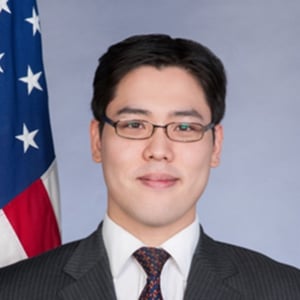
Managing Director, Chief US Economist and Head of Macro Strategy, BNP Paribas
Dr. Daniel P. Ahn is a Managing Director, the Chief U.S. Economist, and Head of Markets 360 – North America at BNP Paribas in New York. He is also a non-residential Global Fellow at the Woodrow Wilson International Center for Scholars.
Until 2018, he was the chief economist at the U.S. Department of State, where he advised the Secretary of State and senior principals on a wide range of international economic and security topics relevant to U.S. foreign policy, including global macroeconomic growth, financial stability, economic sanctions, international trade, and energy and environmental issues.
Prior to entering public service in 2014, Dr. Ahn was the chief economist for energy and commodities at Citigroup in New York and also held senior positions at Citadel, Barclays Capital, and Lehman Brothers. He has held research and teaching positions at Harvard University, the National Bureau of Economic Research, Columbia University, the Council on Foreign Relations, the International Monetary Fund, Johns Hopkins School of Advanced International Studies, Georgetown University, and the U.S. Federal Reserve Board of Governors.
He is the author of multiple research articles, Congressional testimony, and a textbook, Principles of Commodity Economics and Finance with MIT Press.
Dr. Ahn has extensive experience using state-of-the-art econometrics, data science, geospatial imagery, and machine-learning for economic forecasting, data analysis, financial risk management, project financing, commercial strategy, public policy, and operational solutions.
He was featured in Forbes Magazine as one of 30 under 30 in Finance. He is the recipient of both the Superior Honor Award and the Meritorious Honor Award from the U.S. Department of State.
He completed his A.B. in economics and finance with honors from Princeton University, and his Ph.D. in economics from Harvard University.
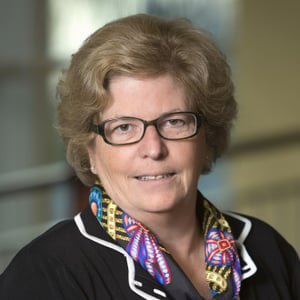
Former Managing Director, BlackRock Inc.
Joanne Medero was until July 2020 a Managing Director at BlackRock where she was member of their Global Public Policy Group and a Senior Advisor to the Vice Chairman on the intersection of public policy and corporate governance. In June 2021, Ms. Medero was appointed a director/trustee of the Nuveen Funds.
Ms. Medero's service with BlackRock dates back to 1996, including her years with Barclays Global Investors (BGI), which merged with BlackRock in 2009. She joined BGI as its Global General Counsel in 1996 and after more than ten years in that role, became the global head of Government Relations and Public Policy for Barclays’ investment banking and investment management businesses. Prior to joining BGI, Ms. Medero was a partner with Orrick, Herrington and Sutcliffe specializing in derivatives and market regulation issues. Ms. Medero also served as general counsel of the Commodity Futures Trading Commission (1989-1993) and as an associate director for legal and financial affairs at the Office of Presidential Personnel, The White House (1986-1989).
Ms. Medero is a graduate of St. Lawrence University and received her JD from George Washington University.
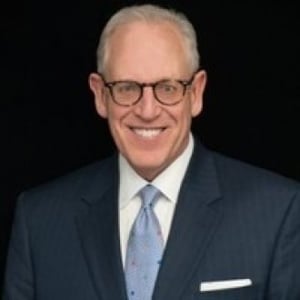
Senior Fellow, George Mason University National Security Institute
Bryan Smith is a Senior Fellow at the George Mason University National Security Institute.
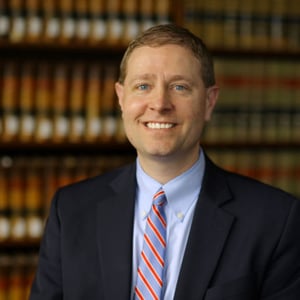
Executive Director, Salmon P. Chase Center for Civics, Culture, and Society, The Ohio State University
Professor Lee J. Strang serves as the inaugural executive director of the Salmon P. Chase Center for Civics, Culture, and Society at The Ohio State University.
Initiated in 2023 by the state of Ohio, the Chase Center will be an academic home at Ohio State for teaching, research, and programing on the foundations of the American constitutional order and its impact on society. As executive director, Professor Strang is responsible for organizing the center, overseeing the hiring and appointment of the center’s faculty, developing curriculum, and delivering student and academic programming. He also holds a faculty appointment in the Moritz College of Law at Ohio State.
Professor Strang is a nationally recognized legal scholar who has published dozens of articles in leading journals in the fields of constitutional law and interpretation, property law, and religion and the First Amendment. He co-edits the textbook Federal Constitutional Law, and his most recent book, Originalism’s Promise: A Natural Law Account of the American Constitution is the first book-length, natural law justification for originalism. He currently is writing on civic thought and leadership, and he is finalizing a book on the history of American Catholic legal education (with John M. Breen).
Before joining Ohio State, Professor Strang served as the inaugural director of the University of Toledo’s Institute of American Constitutional Thought & Leadership. He joined the Toledo College of Law faculty in 2008, was granted tenure in 2010, and was named John W. Stoepler Professor of Law & Values in 2015. The University of Toledo awarded Professor Strang its Outstanding Faculty Research and Scholarship Award in 2017. Before that, he was a visiting professor at Michigan State University College of Law. A graduate of the University of Iowa, where he was articles editor of the Iowa Law Review and Order of the Coif, Professor Strang holds an LL.M. degree from Harvard Law School.
Professor Strang has been a visiting scholar at the Georgetown Center for the Constitution and a visiting fellow at the James Madison Program at Princeton University. In 2016, he was appointed to the Ohio Advisory Committee of the U.S. Commission on Civil Rights and reappointed as chair in 2023.
Prior to teaching, Professor Strang served as a judicial clerk for Judge Alice M. Batchelder of the U.S. Court of Appeals for the Sixth Circuit. He was also an associate for Jenner & Block LLP in Chicago, where he practiced in general and appellate litigation.
Professor Strang is a frequent presenter at scholarly conferences. He is the president of the Board of Trustees of Northwest Ohio Classical Academy, Ohio’s first classical charter school. He is also a regular participant in debates at law schools across the country, a contributor to the media, and a speaker to political, civic, and religious groups.
Deputy Associate Attorney General, Office of the Associate Attorney General, U.S. Department of Justice
Shareholder, Reinhart Boerner Van Deuren s.c.
Robert Driscoll is a shareholder in Reinhart's Labor and Employment Practice. He is an experienced, accomplished attorney who works to understand his clients' goals and provide them with effective legal and business solutions.
Rob counsels employers to help them avoid disputes with an emphasis on discrimination (including disability discrimination), wage and hour issues and employment contracts of all kinds. Rob's practice also includes all areas of traditional labor law, such as collective bargaining, labor arbitrations, proceedings before the National Labor Relations Board, and advising employers of their rights under the National Labor Relations Act.
He understands that trials can be costly and time-consuming, and clients appreciate that he offers creative options to resolve disputes without litigation. However, when litigation is unavoidable, he's a confident and diligent legal partner, devising effective strategies for prevailing. Rob's litigation experience includes wage and hour claims (both individual and class actions), employment and fair housing discrimination and noncompetition agreements. He also represents clients in appeals.
Prior to joining the firm, Rob was a law clerk for the Hon. Diane S. Sykes, U.S. Court of Appeals for the Seventh Circuit in Milwaukee.
Rob proudly serves on the Board of Directors for GPS Education Partners, an organization that works to validate technical career paths and provide students and their communities pathways to prosperity.

Associate, Miller Canfield
Amanda Rauh-Bieri is an associate in Miller Canfield's Litigation and Dispute Resolution Group. She is a magna cum laude graduate of the University of Michigan Law School, where she was associate editor of the Michigan Law Review and co-president of the Women Law Students Association.
Amanda previously worked as a law clerk for both the Honorable John M. Walker Jr. of the U.S. Court of Appeals for the Second Circuit in New Haven, Connecticut; and the Honorable Amy Coney Barrett of the U.S. Court of Appeals for the Seventh Circuit in South Bend, Indiana.
Partner, Eimer Stahl LLP
Ryan is a partner at Eimer Stahl LLP and is based in the firm’s Madison office. He focuses his practice on appellate and complex litigation in a wide variety of areas, including antitrust, constitutional law, corporate law, environmental, ERISA, products liability, and white collar. As part of his practice, Ryan devotes significant time to matters of legal strategy and the art of written and oral advocacy.
Ryan previously served as Chief Deputy Solicitor General of Wisconsin, securing numerous wins in the Supreme Court of the United States, in three federal courts of appeal, and in the state supreme court. Ryan built national, bipartisan coalitions of attorneys general and agencies in support of several lawsuits and briefing efforts, including a Wisconsin-led, 12-state coalition whose suit against the Federal Communications Commission prompted that agency to reverse a major new rule. When he left government, Ryan had a perfect win record in all of his cases to have reached final judgment.
Earlier in his career, Ryan worked in Washington D.C. as an associate in the appellate group of one of the world’s largest law firms.
Ryan also served as a law clerk on the U.S. Supreme Court for the Honorable Antonin Scalia and on the U.S. Court of Appeals for the Ninth Circuit for the Honorable Diarmuid F. O’Scannlain.
Ryan was named to Forbes’ “30 Under 30: Law and Policy” list in 2017. His briefing has won awards from the National Association of Attorneys General and the International Municipal Lawyers Association. He has also won a “best brief” accolade from the State Bar of Wisconsin in the civil category for his written work defending Wisconsin’s right-to-work law.
Deputy Associate Attorney General, Office of the Associate Attorney General, U.S. Department of Justice
Shareholder, Reinhart Boerner Van Deuren s.c.
Robert Driscoll is a shareholder in Reinhart's Labor and Employment Practice. He is an experienced, accomplished attorney who works to understand his clients' goals and provide them with effective legal and business solutions.
Rob counsels employers to help them avoid disputes with an emphasis on discrimination (including disability discrimination), wage and hour issues and employment contracts of all kinds. Rob's practice also includes all areas of traditional labor law, such as collective bargaining, labor arbitrations, proceedings before the National Labor Relations Board, and advising employers of their rights under the National Labor Relations Act.
He understands that trials can be costly and time-consuming, and clients appreciate that he offers creative options to resolve disputes without litigation. However, when litigation is unavoidable, he's a confident and diligent legal partner, devising effective strategies for prevailing. Rob's litigation experience includes wage and hour claims (both individual and class actions), employment and fair housing discrimination and noncompetition agreements. He also represents clients in appeals.
Prior to joining the firm, Rob was a law clerk for the Hon. Diane S. Sykes, U.S. Court of Appeals for the Seventh Circuit in Milwaukee.
Rob proudly serves on the Board of Directors for GPS Education Partners, an organization that works to validate technical career paths and provide students and their communities pathways to prosperity.
Associate, Miller Canfield
Amanda Rauh-Bieri is an associate in Miller Canfield's Litigation and Dispute Resolution Group. She is a magna cum laude graduate of the University of Michigan Law School, where she was associate editor of the Michigan Law Review and co-president of the Women Law Students Association.
Amanda previously worked as a law clerk for both the Honorable John M. Walker Jr. of the U.S. Court of Appeals for the Second Circuit in New Haven, Connecticut; and the Honorable Amy Coney Barrett of the U.S. Court of Appeals for the Seventh Circuit in South Bend, Indiana.
Partner, Eimer Stahl LLP
Ryan is a partner at Eimer Stahl LLP and is based in the firm’s Madison office. He focuses his practice on appellate and complex litigation in a wide variety of areas, including antitrust, constitutional law, corporate law, environmental, ERISA, products liability, and white collar. As part of his practice, Ryan devotes significant time to matters of legal strategy and the art of written and oral advocacy.
Ryan previously served as Chief Deputy Solicitor General of Wisconsin, securing numerous wins in the Supreme Court of the United States, in three federal courts of appeal, and in the state supreme court. Ryan built national, bipartisan coalitions of attorneys general and agencies in support of several lawsuits and briefing efforts, including a Wisconsin-led, 12-state coalition whose suit against the Federal Communications Commission prompted that agency to reverse a major new rule. When he left government, Ryan had a perfect win record in all of his cases to have reached final judgment.
Earlier in his career, Ryan worked in Washington D.C. as an associate in the appellate group of one of the world’s largest law firms.
Ryan also served as a law clerk on the U.S. Supreme Court for the Honorable Antonin Scalia and on the U.S. Court of Appeals for the Ninth Circuit for the Honorable Diarmuid F. O’Scannlain.
Ryan was named to Forbes’ “30 Under 30: Law and Policy” list in 2017. His briefing has won awards from the National Association of Attorneys General and the International Municipal Lawyers Association. He has also won a “best brief” accolade from the State Bar of Wisconsin in the civil category for his written work defending Wisconsin’s right-to-work law.
Senior Fellow, National Review
Bestselling author Andrew C. McCarthy is a contributing editor at National Review, a senior fellow at National Review Institute, and a Fox News contributor. He is a former Chief Assistant United States Attorney in the Southern District of New York and led the terrorism prosecution against the “Blind Sheikh” (Omar Abdel Rahman) and eleven other jihadists for conducting a war of urban terrorism against the United States that included the 1993 World Trade Center bombing and a plot to bomb New York City landmarks. During is 20-year career as a prosecutor, he received numerous honors, including the Justice Department’s highest awards. Andy speaks and writes widely on law and national security, radical Islam, politics, and culture. He has testified before Congress as an expert on issues of constitutional law, counterterrorism, and law-enforcement. He is a columnist for The Hill, and his essays and book reviews appear frequently at The New Criterion. His most recent New York Times bestselling book is Ball of Collusion (Encounter Books, 2019), about the Russiagate controversy (an updated version was published in 2020). His other books include Willful Blindness (2008), The Grand Jihad (2010), Spring Fever: The Illusion of Islamic Democracy (2012), and Faithless Execution (2014). He has also written several pamphlets in the Broadside series published by Encounter Books, most recently Islam and Free Speech (2015).
Managing Director, Chief US Economist and Head of Macro Strategy, BNP Paribas
Dr. Daniel P. Ahn is a Managing Director, the Chief U.S. Economist, and Head of Markets 360 – North America at BNP Paribas in New York. He is also a non-residential Global Fellow at the Woodrow Wilson International Center for Scholars.
Until 2018, he was the chief economist at the U.S. Department of State, where he advised the Secretary of State and senior principals on a wide range of international economic and security topics relevant to U.S. foreign policy, including global macroeconomic growth, financial stability, economic sanctions, international trade, and energy and environmental issues.
Prior to entering public service in 2014, Dr. Ahn was the chief economist for energy and commodities at Citigroup in New York and also held senior positions at Citadel, Barclays Capital, and Lehman Brothers. He has held research and teaching positions at Harvard University, the National Bureau of Economic Research, Columbia University, the Council on Foreign Relations, the International Monetary Fund, Johns Hopkins School of Advanced International Studies, Georgetown University, and the U.S. Federal Reserve Board of Governors.
He is the author of multiple research articles, Congressional testimony, and a textbook, Principles of Commodity Economics and Finance with MIT Press.
Dr. Ahn has extensive experience using state-of-the-art econometrics, data science, geospatial imagery, and machine-learning for economic forecasting, data analysis, financial risk management, project financing, commercial strategy, public policy, and operational solutions.
He was featured in Forbes Magazine as one of 30 under 30 in Finance. He is the recipient of both the Superior Honor Award and the Meritorious Honor Award from the U.S. Department of State.
He completed his A.B. in economics and finance with honors from Princeton University, and his Ph.D. in economics from Harvard University.
Former Managing Director, BlackRock Inc.
Joanne Medero was until July 2020 a Managing Director at BlackRock where she was member of their Global Public Policy Group and a Senior Advisor to the Vice Chairman on the intersection of public policy and corporate governance. In June 2021, Ms. Medero was appointed a director/trustee of the Nuveen Funds.
Ms. Medero's service with BlackRock dates back to 1996, including her years with Barclays Global Investors (BGI), which merged with BlackRock in 2009. She joined BGI as its Global General Counsel in 1996 and after more than ten years in that role, became the global head of Government Relations and Public Policy for Barclays’ investment banking and investment management businesses. Prior to joining BGI, Ms. Medero was a partner with Orrick, Herrington and Sutcliffe specializing in derivatives and market regulation issues. Ms. Medero also served as general counsel of the Commodity Futures Trading Commission (1989-1993) and as an associate director for legal and financial affairs at the Office of Presidential Personnel, The White House (1986-1989).
Ms. Medero is a graduate of St. Lawrence University and received her JD from George Washington University.
Senior Fellow, George Mason University National Security Institute
Bryan Smith is a Senior Fellow at the George Mason University National Security Institute.
Deputy Associate Attorney General, Office of the Associate Attorney General, U.S. Department of Justice
Shareholder, Reinhart Boerner Van Deuren s.c.
Robert Driscoll is a shareholder in Reinhart's Labor and Employment Practice. He is an experienced, accomplished attorney who works to understand his clients' goals and provide them with effective legal and business solutions.
Rob counsels employers to help them avoid disputes with an emphasis on discrimination (including disability discrimination), wage and hour issues and employment contracts of all kinds. Rob's practice also includes all areas of traditional labor law, such as collective bargaining, labor arbitrations, proceedings before the National Labor Relations Board, and advising employers of their rights under the National Labor Relations Act.
He understands that trials can be costly and time-consuming, and clients appreciate that he offers creative options to resolve disputes without litigation. However, when litigation is unavoidable, he's a confident and diligent legal partner, devising effective strategies for prevailing. Rob's litigation experience includes wage and hour claims (both individual and class actions), employment and fair housing discrimination and noncompetition agreements. He also represents clients in appeals.
Prior to joining the firm, Rob was a law clerk for the Hon. Diane S. Sykes, U.S. Court of Appeals for the Seventh Circuit in Milwaukee.
Rob proudly serves on the Board of Directors for GPS Education Partners, an organization that works to validate technical career paths and provide students and their communities pathways to prosperity.
Associate, Miller Canfield
Amanda Rauh-Bieri is an associate in Miller Canfield's Litigation and Dispute Resolution Group. She is a magna cum laude graduate of the University of Michigan Law School, where she was associate editor of the Michigan Law Review and co-president of the Women Law Students Association.
Amanda previously worked as a law clerk for both the Honorable John M. Walker Jr. of the U.S. Court of Appeals for the Second Circuit in New Haven, Connecticut; and the Honorable Amy Coney Barrett of the U.S. Court of Appeals for the Seventh Circuit in South Bend, Indiana.
Partner, Eimer Stahl LLP
Ryan is a partner at Eimer Stahl LLP and is based in the firm’s Madison office. He focuses his practice on appellate and complex litigation in a wide variety of areas, including antitrust, constitutional law, corporate law, environmental, ERISA, products liability, and white collar. As part of his practice, Ryan devotes significant time to matters of legal strategy and the art of written and oral advocacy.
Ryan previously served as Chief Deputy Solicitor General of Wisconsin, securing numerous wins in the Supreme Court of the United States, in three federal courts of appeal, and in the state supreme court. Ryan built national, bipartisan coalitions of attorneys general and agencies in support of several lawsuits and briefing efforts, including a Wisconsin-led, 12-state coalition whose suit against the Federal Communications Commission prompted that agency to reverse a major new rule. When he left government, Ryan had a perfect win record in all of his cases to have reached final judgment.
Earlier in his career, Ryan worked in Washington D.C. as an associate in the appellate group of one of the world’s largest law firms.
Ryan also served as a law clerk on the U.S. Supreme Court for the Honorable Antonin Scalia and on the U.S. Court of Appeals for the Ninth Circuit for the Honorable Diarmuid F. O’Scannlain.
Ryan was named to Forbes’ “30 Under 30: Law and Policy” list in 2017. His briefing has won awards from the National Association of Attorneys General and the International Municipal Lawyers Association. He has also won a “best brief” accolade from the State Bar of Wisconsin in the civil category for his written work defending Wisconsin’s right-to-work law.
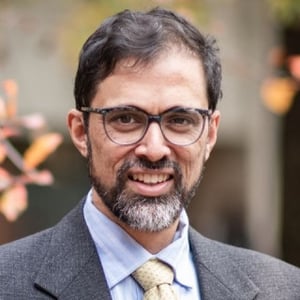
James Monroe Distinguished Professor of Law and Albert Clark Tate, Jr., Professor of Law, University of Virginia School of Law
Professor Saikrishna Prakash’s scholarship focuses on separation of powers, particularly executive powers. He teaches Constitutional Law, Foreign Relations Law and Presidential Powers at the Law School.
Prakash’s most recent book, “The Living Presidency: An Originalist Argument Against Its Ever-Expanding Powers,” was published by Harvard Belknap Press in 2020. He also authored “Imperial from the Beginning: The Constitution of the Original Executive” (Yale University Press, 2015). The former book focuses on the modern presidency while the latter considers the presidency of the Founders.
Prakash has authored over 75 law review articles. Among them are “Of Synchronicity and Supreme Law” in the Harvard Law Review, “The Indefensible Duty to Defend” in the Columbia Law Review, and “50 States, 50 Attorneys General and 50 Approaches to the Duty to Defend” and “The Executive Power Over Foreign Affairs” in the Yale Law Journal.
Prakash has published op-eds in The New York Times, The Wall Street Journal and the Los Angeles Times. At the request of Democrats and Republicans, he has testified before Congress on matters of presidential removal, the Mueller Report and how Congress might better check the presidency. He is currently a Miller Center Senior Fellow. In 2015, he received the Roger Traynor award for faculty scholarship. In the same year, he received an honorable mention from the American Society of Legal Writers for his book “Imperial from the Beginning.” He has given named lectures at William & Mary Law School, Princeton University and Toledo Law School, and keynote addresses at several conferences.
Prakash majored in economics and political science at Stanford University. At Yale Law School, he served as senior editor of the Yale Law Journal and received the John M. Olin Fellowship in Law, Economics and Public Policy. He subsequently clerked for Judge Laurence H. Silberman of the U.S. Court of Appeals for the District of Columbia Circuit and for Justice Clarence Thomas of the U.S. Supreme Court. After practicing in New York for two years, he served as a visiting professor at the University of Illinois College of Law and as an associate professor at Boston University School of Law. He then spent several years at the University of San Diego School of Law as the Herzog Research Professor of Law. Prakash has been a visiting professor at Northwestern University and the University of Chicago. He also has served as a James Madison Fellow at Princeton University and Visiting Research Fellow at the Hoover Institution of War & Peace at Stanford University.
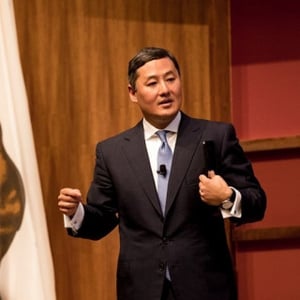
Emanuel S. Heller Professor of Law, University of California at Berkeley; Thomas Smith Senior Research Fellow, Civitas Institute, University of Texas at Austin
John Yoo is the Emanuel Heller Professor of Law at the University of California at Berkeley. He is also the Thomas Smith Senior Research Fellow, Civitas Institute, at the University of Texas at Austin. He is also a Nonresident Senior Fellow at the American Enterprise Institute.
His most recent book, The Politically Incorrect Guide to the Supreme Court, co-authored with Robert Delahunty, was published in 2023. Professor Yoo’s other books include Defender-in-Chief: Trump’s Fight for Presidential Power; Striking Power: How Cyber, Robots, and Space Weapons Change the Rules for War; Point of Attack: Preventive War, International Law, and Global Welfare; and Crisis and Command: A History of Executive Power from George Washington to George Bush.
He is a co-author of volumes 1 and 2 of R. Rossum, G. Tarr, V. Munoz & J. Yoo American Constitution Law (Routledge, 2026), and a co-editor of the eight-volume series on the 250th anniversary of the American Revolution, We Hold These Truths, with Yuval Levin and Adam White of the American Enterprise Institute.
Professor Yoo has published more than 100 articles in academic journals on subjects including national security, constitutional law, international law, and the Supreme Court. He also regularly contributes to the editorial pages of the Wall Street Journal, New York Times, Washington Post, Los Angeles Times, and National Review, among others.
Professor Yoo has served in all three branches of government. He was an official in the U.S. Department of Justice, where he worked on national security and terrorism issues after the 9/11 attacks. He served as general counsel of the U.S. Senate Judiciary Committee. He has been a law clerk for Supreme Court Justice Clarence Thomas and federal appeals Judge Laurence Silberman. He has been a visiting professor at the University of Texas at Austin’s School of Civic Leadership, Seoul National University, the Interdisciplinary Center Herzliya, Keio University, Trento University, the University of Chicago, and the Free University of Amsterdam.
Professor Yoo supervises the Public Law and Policy Program and the California Constitution Center. He also serves on the boards of Founding Forward, the Washington Legal Foundation, the Pacific Legal Foundation, the Ulysses Grant Institute, the Federalist Society’s Separation of Powers and Federalism Division, the Universidad Cientifica del Sur Law School, and the Asia-Pacific Law Institute at Seoul National University. He is a winner of the Federalist Society’s Paul Bator award and the Heritage Foundation’s Edwin Meese III Originalism Lectureship.
Professor Yoo graduated from Yale Law School and summa cum laude from Harvard College.

Supply Chain Security and Global Power Competition: Should the United States Get China Out of its Supply Chain?
Daniel P. Ahn, Joanne Medero, Bryan Smith
Recent events have demonstrated how dependent on China the United States has become for critical...
Can Originalism Constrain the Imperial Presidency?
Lee J. Strang
A review of The Living Presidency: An Originalist Argument Against Its Ever-Expanding Powers, by Saikrishna...
Supply Chain Security and Global Power Competition: Should the United States Get China Out of its Supply Chain?
TeleforumThe Judicial Philosophy of Amy Coney Barrett
John Adams, Robert S. Driscoll, Amanda Lee Rauh-Bieri, Ryan J. Walsh
President Donald Trump nominated Judge Amy Coney Barrett of the United States Court of Appeals...
The Judicial Philosophy of Amy Coney Barrett
John Adams, Robert S. Driscoll, Amanda Lee Rauh-Bieri, Ryan J. Walsh
President Donald Trump nominated Judge Amy Coney Barrett of the United States Court of Appeals...
Topics
The FCC Should Not Engage in Section 230 Rulemaking
That's Debatable is a new blog initiative bringing together legal and policy experts with differing perspectives...
The Judicial Philosophy of Amy Coney Barrett
Wisconsin Lawyers Chapters
The Accidental Defender of the Constitution
Andrew McCarthy
A Review of Defender in Chief: Donald Trump’s Fight for Presidential Power, by John Yoo,...
Topics
Why a Justice Amy Coney Barrett Won't Mean the End of the Administrative State
Many are offering opinions about what Judge Amy Barrett's potential confirmation to the U.S. Supreme...
VIRTUAL EVENT: Yoo v. Prakash Debate: The True Extent of Executive Power
Columbus Lawyers Chapter