

Judge, United States Court of Appeals, Third Circuit
Stephanos Bibas is a judge on the U.S. Court of Appeals for the Third Circuit. Judge Bibas was previously a professor of law and criminology at the University of Pennsylvania Law School. As director of the Penn Law Supreme Court Clinic, he argued six cases before the Supreme Court of the United States and filed briefs in dozens of others. He graduated summa cum laude and Phi Beta Kappa from Columbia University in 1989 with a B.A. in political theory and from Oxford University in 1991 with a B.A. in jurisprudence. He then earned his J.D. from Yale Law School in 1994.
After graduating from Yale Law, Judge Bibas clerked for Judge Patrick Higginbotham of the U.S. Court of Appeals for the Fifth Circuit and Justice Anthony Kennedy on the Supreme Court and was a litigation associate at Covington & Burling LLP in Washington, D.C. Thereafter, Judge Bibas served as an Assistant U.S. Attorney in the Southern District of New York, where he successfully prosecuted the world’s leading expert in Tiffany stained glass for hiring a grave robber to steal priceless Tiffany windows from cemeteries. Before his tenure at Penn Law, Judge Bibas taught at the University of Chicago Law School and the University of Iowa College of Law and was a research fellow at Yale Law School. He has published two books and seventy scholarly articles.
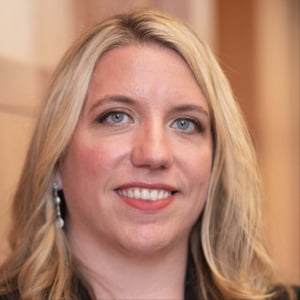
Louis D. Brandeis Professor of Law and Deputy Dean, Harvard Law School
Molly Brady is the Louis D. Brandeis Professor of Law at Harvard Law School, where she teaches property law and related subjects. Her scholarship uses historical analyses of property institutions and land use doctrines to explore broader theoretical questions. Her current research projects involve the relationship between covenants and zoning, the persistence of community knowledge in property doctrine, and the uses of history in state constitutional law. She is also an Associate Reporter for the American Law Institute’s Fourth Restatement of Property.
Previously, Professor Brady taught at the University of Virginia School of Law, where she received the 2019 UVA Student Council Distinguished Teaching Award, the 2018 Z Society Distinguished Faculty Award for “one outstanding member of the University’s faculty who has positively impacted the student body,” and an invitation to the Seven Society 27th Annual Monticello Dinner Series for “exemplary scholarship and transformative instruction of students.” Her recent article, “The Forgotten History of Metes and Bounds,” won both the Association of American Law Schools’ Scholarly Papers Prize for junior faculty members in their first five years of law teaching and the American Society for Legal History’s William Nelson Cromwell Article Prize for the year’s best paper by an early-career scholar.
Professor Brady received an AB summa cum laude in history from Harvard College, where she was elected to Phi Beta Kappa and was awarded the Harvard-Radcliffe Foundation for Women’s Athletics Prize for the top female scholar-athlete. Professor Brady then obtained her JD from Yale Law School, where she was the two-time recipient of the Parker Prize for legal history scholarship and was awarded the Quintin Johnstone Prize in Real Property Law, the Jewell Prize for an outstanding contribution to a Yale Law School journal, and the Cullen Prize for the best paper written by a first-year student. Following graduation, she served as a clerk to Judge Bruce M. Selya on the US Court of Appeals for the First Circuit and practiced at Ropes and Gray in Boston as a corporate associate focusing on intellectual property transactions. After leaving practice, she was in the first graduating class of the PhD in Law program at Yale University.
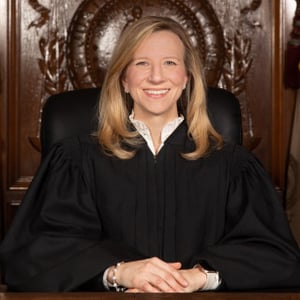
Justice, Supreme Court of Tennessee
Justice Sarah Campbell was confirmed to the Tennessee Supreme Court in 2022. She previously served as an Associate Solicitor General in the Tennessee Attorney General’s Office and as an associate at the law firm of Williams & Connolly LLP in Washington, DC. Justice Campbell earned her law degree from Duke University School of Law, a Master of Public Policy degree from Duke University, and her undergraduate degree from the University of Tennessee, where she received the Torchbearer Award. She served as a law clerk for Justice Samuel A. Alito, Jr. on the United States Supreme Court and Judge William H. Pryor Jr. on the U.S. Court of Appeals for the Eleventh Circuit.
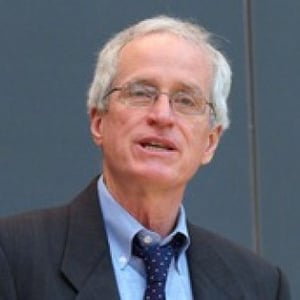
Lecturer, Harvard Law School
James E. Tierney is the former Attorney General of Maine and a Lecturer at Harvard Law School where he teaches a course on the role of state attorneys general while directing the Harvard Attorney General clinic. For thirteen years he was the Director of the National State Attorneys General Program at Columbia Law School, and he has also taught courses at Boston College Law School, Northeastern Law School and the University of Maine School of Law.
Mr. Tierney served as the Attorney General of Maine from 1980 until 1990. During his ten years as Attorney General of Maine, Mr. Tierney played an active role in the National Association of Attorneys General (NAAG) and has instructed newly elected state Attorneys General on the effective performance of their office. Mr. Tierney has also served as a Special Prosecutor in Florida, Pennsylvania, Minnesota and Vermont and, on behalf of NAAG, has authored an analysis of the operations of state grand jury practice throughout the United States. He travels regularly to visit in offices of attorney general where he conducts ethics seminars for incumbent attorneys general and their staffs.
Tierney has served on the Board of both the American Judicature Society and was a member of the Board of Commentators of the Courtroom Television Network. In April of 2006, Professor Tierney was selected as the Columbia Law School Public Interest Professor of the Year. This award, which is given to the faculty member or administrator who has most supported and inspired a significant portion of the public interest law student community, is selected by a vote of students.
Tierney is married to Maine author Elizabeth Strout. He has five children and eight grandchildren.
Alston & Bird Professor of Law, Duke University School of Law
Professor Young teaches constitutional law, federal courts, and foreign relations law. He is one of the nation's leading authorities on the constitutional law of federalism, having written extensively on the Rehnquist Court's "Federalist Revival" and the difficulties confronting courts as they seek to draw lines between national and state authority. He also is an active commentator on foreign relations law, where he focuses on the interaction between domestic and supranational courts and the application of international law by domestic courts. Professor Young also writes on constitutional interpretation and constitutional theory. He has been known to dabble in maritime law and comparative constitutional law.
A native of Abilene, Texas, Professor Young joined the Duke Law faculty in 2008, after serving as the Charles Alan Wright Chair in Federal Courts at the University of Texas at Austin School of Law, where he had taught since 1999. He graduated from Dartmouth College in 1990 and Harvard Law School in 1993. After law school, he served as a law clerk to Judge Michael Boudin of the 1st U.S. Circuit Court of Appeals (1993-94) and to Justice David Souter of the U.S. Supreme Court (1995-96). Professor Young practiced law at Cohan, Simpson, Cowlishaw, & Wulff in Dallas, Texas (1994-95) and at Covington & Burling in Washington, D.C. (1996-98), where he specialized in appellate litigation. He has also been a visiting professor at Harvard Law School (2004-05) and Villanova University School of Law (1998-99), as well as an adjunct professor at Georgetown University Law Center (1997).
Elected to the American Law Institute in 2006, Professor Young is an active participant in both public and private litigation in his areas of interest. He has been the principal author of amicus briefs on behalf of leading constitutional scholars in several recent Supreme Court cases, including Medellin v. Texas(concerning presidential power and the authority of the International Court of Justice over domestic courts) and Gonzales v. Raich (concerning federal power to regulate medical marijuana).

President, Harned Strategies LLC
Karen Harned is President at Harned Strategies LLC. Previously, she served as Executive Director of the National Federation of Independent Business Small Business Legal Center, a post she held from 2002-2022. Prior to joining the Legal Center, Ms. Harned was an attorney at a Washington, D.C. law firm specializing in food and drug law, where she represented several small and large businesses and their respective trade associations before Congress and federal agencies. She also served as Assistant Press Secretary to U.S. Senator Don Nickles of Oklahoma from August of 1989 to March of 1993. Ms. Harned received her B.A. from the University of Oklahoma in 1989 and her J.D. from The George Washington University National Law Center in 1995. She is admitted to practice in the District of Columbia.
As Executive Director of the NFIB Small Business Legal Center, Ms. Harned commented regularly on small business cases before federal and state courts, as well as the U.S. Supreme Court. She has appeared on Fox News, Fox Business, NBC Nightly News, CNN, CNBC and MSNBC, as well as National Public Radio, CBS Radio, and radio outlets across the country. Her opinion editorials and articles regarding healthcare, lawsuit abuse, regulation, and other issues important to small business have been published in newspapers and other publications nationwide.
Ms. Harned has testified before Congress on the small business impact of regulation and the civil justice system. Additionally, she has conducted numerous webinars and legal compliance seminars for small business owners across the country on issues relating to employment law, including unionization and immigration.
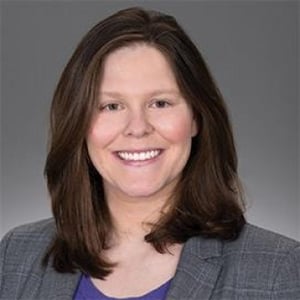
Partner, Goodwin Procter LLP
Jaime A. Santos is a partner in the firm’s Appellate Litigation practice. Her work focuses on appellate matters and complex civil litigation in federal courts, and she has experience in a wide range of areas including ERISA litigation, patent litigation, constitutional law, and product litigation. Ms. Santos has been the primary author of dozens of briefs filed in the Supreme Court, many more briefs filed in federal courts of appeals and federal district courts, and she has presented oral argument in state and federal trial and appellate courts. Ms. Santos also co-hosts the Supreme Court podcast Strict Scrutiny.
Ms. Santos maintains an active pro bono practice. She has been counsel of record in numerous criminal, immigration, and civil rights appeals in the Fourth, Seventh, and Ninth Circuits. She has also advocated on behalf of transgender litigants asserting constitutional claims before the Fourth Circuit and the Supreme Court, and represented a criminal defendant challenging his sentence before the Supreme Court. In 2015, Ms. Santos was honored by the Lawyers’ Committee for Civil Rights for her commitment to pro bono civil rights work.
In addition to her pro bono practice, Ms. Santos has been a thought leader in preventing and addressing bias and harassment in the legal profession. She speaks at conferences across the country and has published several articles on the topic. Since January 2018, she has advised numerous state and federal courts on improving the policies and processes governing inappropriate conduct in the workplace.
Ms. Santos serves on the MacArthur Justice Center Supreme Court & Appellate Advisory Board, and on the National Women’s Law Center’s Leadership Advisory Council.
Before joining Goodwin in 2013, Ms. Santos served as a law clerk to the Honorable George H. King of the U.S. District Court for the Central District of California, and to the Honorable Raymond C. Fisher of the U.S. Court of Appeals for the Ninth Circuit. In law school, she was a supervising editor for the Harvard Law Review.

Director of Litigation and Senior Attorney, Hamilton Lincoln Law Institute
Theodore H. Frank is director at the Hamilton Lincoln Law Institute and the Center for Class Action Fairness. Frank founded and ran CCAF as a non-profit, public interest law firm in 2009.
Frank has won several landmark appeals and tens of millions of dollars for consumers and other plaintiffs through his class action work. Adam Liptak of The New York Times calls Frank “the leading critic of abusive class action settlements” and the American Lawyer Litigation Daily referred to him as “the indefatigable scourge of underwhelming class action settlements.”
Previously, Frank clerked for the Honorable Frank H. Easterbrook on the Seventh Circuit Court of Appeals, and was a litigator at firms in Washington and Los Angeles and a resident fellow at the American Enterprise Institute. Frank is a frequent public speaker and has testified before Congress multiple times on legal issues. He has been profiled by The Wall Street Journal, Forbes, GQ, and the ABA Journal, among other publications.
In 2008, Frank was elected to membership in the American Law Institute. He also serves on the Executive Committee of the Federalist Society Litigation Practice Group. Frank graduated from The University of Chicago Law School in 1994 with high honors and as a member of the Order of the Coif and the Law Review. He is a member of the District of Columbia Bar and the state bars of California and Illinois.
Attorney, Robinson, Bradshaw & Hinson, PA
Erik Zimmerman is a commercial and appellate litigator. He previously clerked for Chief Justice John G. Roberts Jr. of the U.S. Supreme Court and the Honorable J. Harvie Wilkinson III of the U.S. Court of Appeals for the Fourth Circuit. Aided by his experience in the judicial system, Erik represents clients at all levels of the federal and state courts, including the U.S. Supreme Court, federal and state appellate and trial courts, and federal administrative agencies.
Erik has experience in a broad range of subject areas, including contract disputes, employment and labor law, ERISA, and health care and health insurance law. He also represents clients in cases involving constitutional law, communications law, fraud, the False Claims Act, product liability, punitive damages and federal preemption of state law.
Erik's representative matters include helping to secure dismissal of a multibillion dollar breach of contract action in federal district court. He also successfully represented a client in appealing a judgment of nearly $100 million to the U.S. Court of Appeals for the Fourth Circuit in another contract dispute.
Erik also maintains an active pro bono practice. He has represented clients in federal and state appeals involving issues of criminal law, the Fourth Amendment and landlord-tenant law. Erik is admitted only in the District of Columbia.
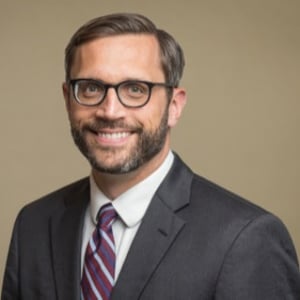
Partner, Consovoy McCarthy
Mr. Green helps clients litigate constitutional, statutory, and regulatory issues in courts and agencies throughout the country. Before joining the firm, he served as the Solicitor General of the State of Utah for five years. In that role, he oversaw all civil and criminal appellate matters in which the State of Utah or its officers or agencies were a party. While serving as solicitor general, he successfully argued cases before the Supreme Court of the United States, the U.S. Court of Appeals for the Tenth Circuit, and the Utah Supreme Court. He also led the Utah Attorney General office’s multistate litigation efforts, both challenging and defending regulatory actions by the federal government and other states. And he oversaw the division of the Utah Attorney General’s office responsible for defending cases challenging the constitutionality of state law. Before his service to the State of Utah, Mr. Green was Deputy Chief Counsel for Litigation at the U.S. Chamber Litigation Center. He began his career at Gibson, Dunn & Crutcher LLP’s Washington, D.C. office, where he litigated a variety of appellate and trial-court cases. Mr. Green served as a law clerk to Justice Clarence Thomas at the U.S. Supreme Court, to Judge Michael McConnell at the U.S. Court of Appeals for the Tenth Circuit, and to Judge Paul Cassell at the U.S. District Court for the District of Utah. He earned both his undergraduate and law degrees from the University of Utah. At the College of Law, he served as Editor in Chief of the Utah Law Review and graduated Order of the Coif and first in his class. He currently serves on the Utah Supreme Court’s advisory committee for the Utah Rules of Appellate Procedure and has been named one of Utah’s Legal Elite by Utah Business magazine.

Panel I: Federalism and the Separation of Powers
Stephanos Bibas, Maureen Brady, Sarah Keeton Campbell, James E. Tierney, Ernest Young
It has been said that American-style split sovereignty provides the people a “double security” for...
Courthouse Steps Decision Teleforum: Ford Motor Company v. Montana Eighth Judicial Dist. Court
Karen Harned, Jaime A. Santos
On Thursday, March 25, 2021, the Supreme Court issued its decision in Ford Motor Company v....
Courthouse Steps Decision: Home Depot U.S.A., Inc. v. Jackson
Theodore "Ted" Frank
The Class Action Fairness Act permits "any defendant" to remove a class action to federal...
Americold Realty Trust v. ConAgra Foods - Post-Decision SCOTUScast
Erik R. Zimmerman
On March 7, 2016, the Supreme Court decided Americold Realty Trust v. ConAgra Foods, a...
Topics
SCOTUS Orders and Opinions: 3/7/2016
Today the Court issued 3 opinions and a new Order List, summarized below: OPINIONS Two...
Dart Cherokee Basin Operating Company, LLC v. Owens - Post-Decision SCOTUScast
Tyler Green
On December 15, 2014, the Supreme Court heard oral argument in Dart Cherokee Basin Operating...
Shady Grove Orthopedic Associates v. Allstate Insurance - Post-Decision SCOTUScast