

Professor of Law, Antonin Scalia Law School, George Mason University
ILYA SOMIN is Professor of Law at George Mason University and the B. Kenneth Simon Chair in Constitutional Studies at the Cato Institute. His research focuses on constitutional law, property law, democratic theory, federalism, and migration rights. He is the author of Free to Move: Foot Voting, Migration, and Political Freedom (Oxford University Press, revised and expanded edition, 2022), Democracy and Political Ignorance: Why Smaller Government is Smarter (Stanford University Press, revised and expanded second edition, 2016), and The Grasping Hand: Kelo v. City of New London and the Limits of Eminent Domain (University of Chicago Press, 2015, rev. paperback ed., 2016), coauthor of A Conspiracy Against Obamacare: The Volokh Conspiracy and the Health Care Case (Palgrave Macmillan, 2013), and co-editor of Eminent Domain: A Comparative Perspective (Cambridge University Press, 2017). Democracy and Political Ignorance has been translated into Italian and Japanese.
Somin’s work has appeared in numerous scholarly journals, including the Yale Law Journal, Stanford Law Review, Northwestern University Law Review, Georgetown Law Journal, Critical Review, and others. Somin has also published articles in a variety of popular press outlets, including the New York Times, Washington Post, Wall Street Journal, Los Angeles Times, CNN, NBC, The Atlantic, USA Today, Boston Globe, US News and World Report, South China Morning Post, National Law Journal and Reason. He has been quoted or interviewed by the New York Times, Washington Post, Wall Street Journal, Time, Newsweek, The Economist, the Christian Science Monitor, the Financial Times, The Guardian, the Associated Press, CBS, MSNBC, NPR, BBC, Reuters, the Canadian Broadcasting Corporation, the Australian Broadcasting Corporation, Radio Free Europe/Radio Liberty, Al Jazeera, and the Voice of America, among other media.
Somin’s writings have been cited in decisions by the United States Supreme Court, multiple state supreme courts and lower federal courts, and the Supreme Court of Israel. He is co-counsel for the plaintiffs in VOS Selections, Inc. v. Trump, a case challenging the constitutionality of President Trump’s “Liberation Day” tariffs. Somin has testified on the use of drones for targeted killing in the War on Terror before the US Senate Judiciary Subcommittee on the Constitution, Civil Rights, and Human Rights. In 2009, he testified on property rights issues at the United States Senate Judiciary Committee confirmation hearings for Supreme Court Justice Sonia Sotomayor. Somin writes regularly for the popular Volokh Conspiracy law and politics blog, now affiliated with Reason magazine (previously affiliated with the Washington Post from 2014 to 2017). From 2006 to 2013, he served as Co-Editor of the Supreme Court Economic Review, one of the country’s top-rated law and economics journals.
Somin has served as a visiting professor at the University of Pennsylvania Law School. He has also been a visiting professor or scholar at the Georgetown University Law Center, the University of Hamburg, Germany, the University of Torcuato Di Tella in Buenos Aires, Argentina, Uriel Reichman University in Israel, and Zhengzhou University in China. He is a University Affiliate of the Schar School of Policy and Government at George Mason University, and an affiliated faculty member of the George Mason University Institute for Immigration Research. Before joining the faculty at George Mason, Somin was the John M. Olin Fellow in Law at Northwestern University Law School in 2002-2003. In 2001-2002, he clerked for the Hon. Judge Jerry E. Smith of the U.S. Court of Appeals for the Fifth Circuit. Professor Somin earned his B.A., Summa Cum Laude, at Amherst College, M.A. in Political Science from Harvard University, and J.D. from Yale Law School.
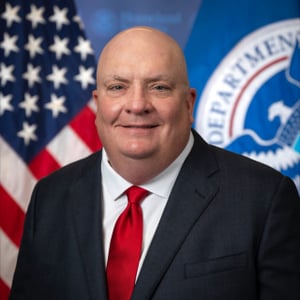
Acting Assistant Commissioner of Customs and Border Protection, Office of Professional Responsibility, U.S. Department of Homeland Security
Brian M. Fish is currently the Senior Advisor to the General Counsel at the Department of Homeland Security where he works on immigration and law enforcement issues. Previously, he was a trial attorney with the United States Immigration and Customs Enforcement, where he represented the Department of Homeland Security in removal hearings before the U.S. Immigration Court. Additionally, he was a Special Assistant United States Attorney and a Baltimore City homicide prosecutor. He is a member of the Federalist Society's Criminal Law & Procedure Practice Group Executive Committee and the President of its Baltimore Lawyers Chapter. He earned his B.A. from LaSalle University in 1992 and his J.D. from Loyola University New Orleans School of Law in 1998.
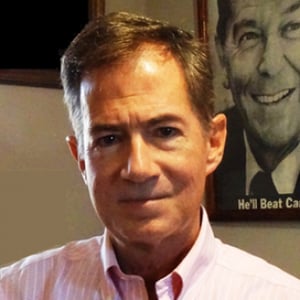
Former General Counsel of the U.S. Immigration and Naturalization, Former United States Ambassador to East Timor
Grover Joseph Rees is a Louisiana native whose family has lived in the Breaux Bridge/Lafayette area since the 1700s.
His first job after college was as an assistant to Congressman Dave Treen (R-LA3), who had just been elected as the first Republican Congressman from Louisiana since Reconstruction.
Rees graduated with honors from LSU Law School, where he served as Editor-in-Chief of the Louisiana Law Review. While in law school he worked on Ronald Reagan’s 1976 presidential campaign and was a Reagan delegate from Louisiana to the Republican National Convention. He also served as a member of the Lafayette Parish Republican Executive Committee and as a board member of Acadiana Right to Life.
In 1979, when Congressman Treen ran successfully for Governor, he asked Rees to write his authorized biography. The book, Dave Treen of Louisiana, was read and discussed widely during the campaign and after Treen’s election.
In 1985-86 Rees served as Special Counsel for Judicial Selection in President Reagan’s Justice Department, working closely with Attorney General Ed Meese to reorganize the judicial selection process to make it more philosophically oriented. These efforts resulted in the appointment of over 100 federal judges and were widely credited with transforming the federal judiciary.
From 1986 through 1991 Rees served as Chief Justice of the High Court of American Samoa, an Article I federal judicial position.
From 1991 through 1993 he was General Counsel of the U.S. Immigration and Naturalization Service.
In 1995 Rees went to work for the new Republican Congress as staff director and chief counsel of the Subcommittee on International Operations and Human Rights. He worked with subcommittee chairman Chris Smith (R.-N.J.) to cut U.S. funding for the International Planned Parenthood Federation and other organizations that perform and promote abortions overseas. Rees also worked on the drafting and enactment of the International Religious Freedom Act, the Trafficking Victims Protection Act, and other legislation that has helped to bring U.S. foreign policy into closer alignment not only with our national interests but also with our values.
In 2001-2002 Rees worked for Congressman Henry Hyde (R.-Ill.), who was then serving as Chairman of the House International Relations Committee.
From 2002 until 2006 Rees served as the first United States Ambassador to newly independent East Timor.
From 2006 until 2009 Ambassador Rees was the United States Special Representative for Social Issues, responsible for representing the United States on issues relating to vulnerable persons and the family within the United Nations system.
Ambassador Rees retired from government service in January 2009 and returned to Lafayette. He is married to Lan Dai Nguyen Rees and is a member of St. Genevieve’s Catholic parish in Lafayette. He was recently elected to serve as a member of the Louisiana Republican State Central Committee.
Acting Assistant Commissioner of Customs and Border Protection, Office of Professional Responsibility, U.S. Department of Homeland Security
Brian M. Fish is currently the Senior Advisor to the General Counsel at the Department of Homeland Security where he works on immigration and law enforcement issues. Previously, he was a trial attorney with the United States Immigration and Customs Enforcement, where he represented the Department of Homeland Security in removal hearings before the U.S. Immigration Court. Additionally, he was a Special Assistant United States Attorney and a Baltimore City homicide prosecutor. He is a member of the Federalist Society's Criminal Law & Procedure Practice Group Executive Committee and the President of its Baltimore Lawyers Chapter. He earned his B.A. from LaSalle University in 1992 and his J.D. from Loyola University New Orleans School of Law in 1998.
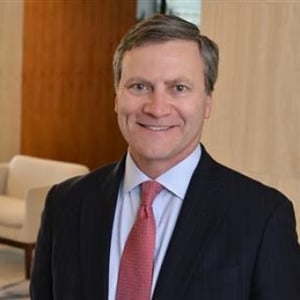
Shareholder, Brownstein, Hyatt, Farber, Shreck
With more than 20 years of experience both as a first-chair litigator and in public service, Greg Brower’s practice focuses on civil and criminal litigation, as well as regulatory and enforcement actions, corporate investigations, cybersecurity matters and federal and state government relations.
Most recently, Greg served as the assistant director for the Office of Congressional Affairs at the Federal Bureau of Investigation (FBI), serving as the FBI’s chief liaison to Congress on a wide range of critical oversight and investigative matters. He previously served as the FBI’s Deputy General Counsel, managing a diverse portfolio of legal matters, including litigation, privacy, procurement, compliance and ethics. During his time as a senior FBI executive, spanning two administrations, he worked closely with high-ranking officials in the U.S. Department of Justice (DOJ), the U.S. intelligence community and with key leaders on Capitol Hill. Greg is a regular commentator and contributor on national security, legal and cybersecurity issues, regularly appearing on CNN and MSNBC, and he is the featured contributor on white collar crime and corporate compliance for the Washington Legal Foundation’s Legal Pulse blog.
Greg has a long history of public service. At the federal level, he previously served as the U.S. Attorney for the District of Nevada, and as both General Counsel and Inspector General at the U.S. Government Publishing Office. Greg also served at DOJ as Legislative Counsel in the Executive Office for U.S. Attorneys. At the state level, he has served in a variety of public policy roles, including five terms in the Nevada Legislature, where he was chairman of the Senate Judiciary Committee. He has also served on the Nevada Gaming Policy Committee, the Nevada Advisory Commission on the Administration of Justice, the Nevada Sentencing Commission and the Nevada Juvenile Justice Commission.
Throughout his career, Greg has served the Nevada legal community as an adjunct professor of law at the William S. Boyd School of Law at the University of Nevada, Las Vegas, where he has taught courses in national security law and trial advocacy. Before attending law school, Greg served in the U.S. Navy as a Surface Warfare Officer.
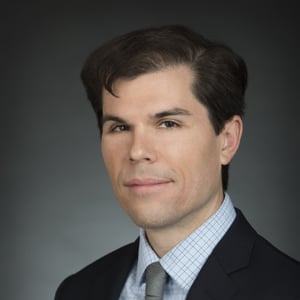
Appellate Counsel, Constitutional Accountability Center
Brian Frazelle is Constitutional Accountability Center’s Appellate Counsel. Before joining CAC, Mr. Frazelle was an Attorney-Advisor at the Privacy and Civil Liberties Oversight Board, an independent, bipartisan agency within the executive branch. Hired as the Board’s first employee in 2013, he helped review the legality, constitutionality, and policy implications of federal antiterrorism measures in order to ensure the adequate protection of civil liberties and privacy; he also contributed to public reports issued by the Board that have influenced recent debates and reforms concerning the government’s surveillance powers. Earlier in his career, Mr. Frazelle was the Supreme Court Assistance Project Fellow at Public Citizen Litigation Group, where he was the lead author of numerous briefs successfully opposing Supreme Court review as well as a merits-stage amicus brief on which the Court’s majority opinion relied. Mr. Frazelle served as a law clerk for Judge Paul L. Friedman of the United States District Court for the District of Columbia. He is a graduate of Yale Law School, where he was a senior editor for the Yale Law Journal. He received his undergraduate degree from the University of Mary Washington and holds a master’s degree in English from the University of North Carolina at Chapel Hill.
Assistant Attorney General, Alabama Attorney General's Office
Laura has been with the Alabama Attorney General’s Office since 2012, where she litigates the defense of state statutes that have been challenged in state or federal court. She was named a Supreme Court Fellow by the National Association of Attorneys General for October Term 2016, for which she wrote the States’ amicus brief in Lee v. United States.
Senior Fellow, Stand Together Trust
Vikrant Reddy is a senior fellow at Stand Together Trust, specializing in the area of criminal justice reform. Reddy previously served as a senior policy analyst at the Texas Public Policy Foundation (TPPF), where he managed the launch of TPPF’s national Right on Crime initiative in 2010. He has worked as a research assistant at the Cato Institute, as a judicial clerk to the Hon. Gina M. Benavides in Texas, and as an attorney in private practice. He is a member of the State Bar of Texas, and he serves on the Executive Committee of the Criminal Law Practice Group of the Federalist Society. He is also an appointee to the U.S. Commission on Civil Rights Texas State Advisory Committee.
Reddy’s research and scholarly opinions have appeared in a range of national media outlets, including USA Today, National Review, The Federalist, and others.
Reddy earned his law degree from the Southern Methodist University School of Law. He received his undergraduate degree from the University of Texas at Austin.
Judge, United States District Court for the Eastern District of North Carolina
A native of Kingston, Jamaica, Myers was a Chancellors Scholar at the UNC School of Law, where he graduated with high honors in 1998. Upon graduation from law school, he clerked in Washington, D.C., for the Hon. David Sentelle on the United States Court of Appeals for the D.C. Circuit, and then entered private practice as a litigator for O'Melveny & Myers, LLP, in Los Angeles California. After two years with the White Collar Criminal Law and Environmental and regulatory Compliance Practice Group, he left private practice in January 2002 to become an Assistant United States Attorney in the Central District of California. In September, 2002, he transferred to the Eastern District of North Carolina in Raleigh, where he prosecuted white collar and violent crimes, and headed the district's Violent Crimes Task Force for Wilmington and New Hanover and Pender Counties.
Myers joined the UNC Law School faculty in July 2004, where he taught Criminal Law, Criminal Procedure, Ethics, and a seminar on White Collar Crime. He was confirmed to the United States District Court for the Eastern District of North Carolina in 2019.

Courthouse Steps Decision: Biden v. Texas
Ilya Somin
On June 30, 2022, the Supreme Court decided Biden v. Texas. In a 5-4 decision, the...
Courthouse Steps Oral Argument Teleforum: United States v. Palomar-Santiago
Brian M. Fish
On April 27, 2021, the Supreme Court will hear oral argument in the case of U.S....
Courthouse Steps Oral Argument Teleforum: Sanchez v. Mayorkas
Grover Joseph Rees
On April 19, 2021, the Supreme Court will hear oral argument in the case of Sanchez...
Pereida v. Barr - Post-Argument SCOTUScast
Brian M. Fish
On October 14, 2020, the Supreme Court heard Pereida v. Barr, an immigration case. The...
Courthouse Steps Oral Argument Teleforum: Pereida v. Barr
Brian M. Fish
Clemente Avelino Pereida faced removability charges by the Department of Homeland Security after receiving a...
Nielsen v. Preap - Post Decision SCOTUScast
Greg Brower
On March 19, 2019, the Supreme Court decided Nielsen v. Preap (and its companion case Wilcox...
Lee v. US: Effectiveness of Counsel - Podcast
Brian R. Frazelle, Laura Howell
Jae Lee lived in the United States as a legal permanent resident since 1982. In...
Courthouse Steps: Esquivel-Santana v. Sessions - Podcast
Vikrant P. Reddy
The Immigration and Nationality Act (INA) was used as grounds for the deportation of Juan...
Moncrieffe v. Holder - Post-Decision SCOTUScast
D Broyles
On April 23, 2013, the Supreme Court announced its decision in Moncrieffe v. Holder. The question...
Chaidez v. United States - Post-Decision SCOTUScast
Richard E. Myers
On February 20, 2013, the Supreme Court announced its decision in Chaidez v. United States. The question...