
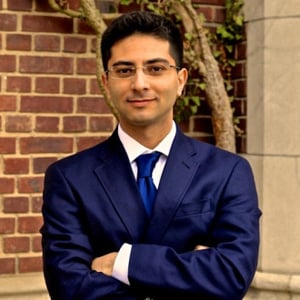
Associate Professor of Law, University of Notre Dame Law School
Sherif Girgis joined Notre Dame Law School in 2021. Prior to joining Notre Dame Law, Sherif practiced law at Jones Day in Washington, D.C., where he focused on appellate and complex civil litigation. Before that, Girgis served as a law clerk to Justice Samuel Alito, Jr., of the U.S. Supreme Court and Judge Thomas B. Griffith of the U.S. Court of Appeals for the D.C. Circuit. Now completing his Ph.D. in philosophy at Princeton, Girgis earned his J.D. at Yale Law School, where he served as an editor of the Yale Law Journal and won the Felix S. Cohen Prize for best paper in legal philosophy. Before law school, he earned a master's degree (B.Phil.) in philosophy from the University of Oxford as a Rhodes Scholar, and his bachelor's degree in philosophy from Princeton, Phi Beta Kappa and summa cum laude. Girgis is coauthor of What Is Marriage? Man and Woman: A Defense, cited in a dissent in United States v. Windsor, and Debating Religious Liberty and Discrimination, released by Oxford University Press in 2017. His work at the intersection of philosophy and law--including criminal law, constitutional liberties, and jurisprudence--has appeared in academic and popular venues including the Yale Law Journal, the Virginia Law Review, the University of Pennsylvania Law Review, the Harvard Journal of Law and Public Policy, the American Journal of Jurisprudence, the Cambridge Companion to Philosophy of Law, The New York Times, and The Wall Street Journal.
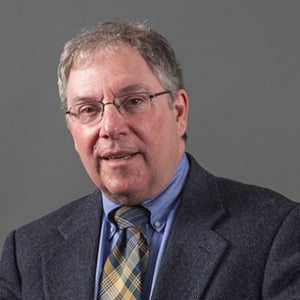
Professor Emeritus of Law, Antonin Scalia Law School, George Mason University
In 1994, Professor of Law Michael I. Krauss became the law school's first recipient of the university's "Teacher of the Year" award for his engaging and challenging approach in the classroom. Born in the United States but raised in Canada, Professor Krauss speaks legalese in two languages. He earned his B.A. cum laude from Carleton University, his LL.B. summa cum laude from the Université de Sherbrooke, and his LL.M. from Yale Law School, where he was a Commonwealth Scholar. He was Columbia University's Law and Economics Fellow in 1981. He has been teaching at George Mason since 1987 and also has taught at the law schools of Seattle University, the University of Toronto, and the Université de Sherbrooke.
Hired as a law clerk by Justice Louis-Philippe Pigeon of Canada's Supreme Court, Professor Krauss practiced law for Quebec City's largest law firm before entering academia. He also served for five years on Québec's Human Rights Commission. A Salvatori Fellow of the Heritage Foundation and an academic fellow of the Foundation for the Defense of Democracies, Professor Krauss sits on the advisory boards of several think tanks. He served as president of the Virginia Association of Scholars and on the Board of Governors of the Education Section of the Virginia State Bar, and is currently a member of the Board of Governors of the National Association of Scholars.
Professor Krauss teaches Torts, Legal Ethics and Jurisprudence, and has a strong interest in national security issues. His research on torts and ethics is nationally known. He co-authored the first edition of Legal Ethics in a Nutshell in May 2003. This book digests the Model Rules in an engaging and often critical fashion. The second edition was published in 2006. Professor Krauss is now under contract with West Publications to produce an innovative textbook on Products Liability in late 2008.
Professor Krauss received his B.A. cum laude from Carleton University, his LL.B. summa cum laude from the Université de Sherbrooke, and his LL.M. from Yale Law School.

Vice President, Edwin Meese III Institute for the Rule of Law, Advancing American Freedom
John G. Malcolm oversees Advancing American Freedom’s work to increase understanding of the Constitution and the rule of law as Vice President of the organization’s Edwin Meese III Institute for the Rule of Law. Malcolm brings to the challenge a wealth of legal expertise and experience in both the public and private sectors.
Prior to joining Advancing American Freedom in 2025, Malcolm was the Vice President of the Institute for Constitutional Government and the Director of the Meese Center for Legal and Judicial Studies at the Heritage Foundation. Prior to joining Heritage in 2012, Malcolm was general counsel at the U.S. Commission on International Religious Freedom, as well as a distinguished practitioner in residence at Pepperdine Law School. From 2004 to 2009, Malcolm was executive vice president and director of worldwide anti-piracy operations for the Motion Picture Association.
Malcolm served as a deputy assistant attorney general in the Department of Justice’s Criminal Division from 2001 to 2004, where he oversaw sections on computer crime and intellectual property, domestic security, child exploitation and obscenity, and special investigations. Immediately prior to that, he was a founding partner in the Atlanta law firm of Malcolm & Schroeder, LLP.
From 1990 to 1997, Malcolm was an assistant U.S. attorney in Atlanta, assigned to the fraud and public corruption section, and also an associate independent counsel, investigating fraud and abuse in the Department of Housing and Urban Development. He was honored with the Director’s Award for Superior Performance for his work in connection with the successful prosecution of Walter Leroy Moody Jr., who assassinated an 11th Circuit judge and the head of the Savannah chapter of the NAACP.
A graduate of Harvard Law School and Columbia College, Malcolm began his career as a law clerk to a federal district court judge and a federal appellate court judge, and as an associate at the Atlanta-based law firm of Sutherland, Asbill & Brennan (new Eversheds Sutherland).
Malcolm, who resides in Washington, D.C., serves on the Board of Trustees of the Washington National Opera and is a Senate-confirmed member of the Board of Directors of the Legal Services Corporation, the largest funder of civil legal aid in the United States.
United States House of Representatives, Maryland
The son of immigrants who fled communist Eastern Europe immediately after World War II, Andrew P. Harris, M.D., has spent a lifetime serving his neighbors, country and community. Whether it was as a physician at the prestigious Johns Hopkins Hospital, as a medical officer in the Naval Reserve, as a hard-working state senator, or now as congressman, Andy has made a life by serving others. He is dedicated to making sure every constituent in the 1st Congressional District receives the highest-quality assistance and is well-represented in the halls of Congress.
Serving his neighbors. Andy is a proud father of five children (Joe, Becky, Irene, Jessica and Danny), grandfather of two (Charles, Abigail), and husband to Cookie for over 33 years. Born in working-class Brooklyn in 1957, Andy grew up one of four boys.. He found his calling studying medicine at the Johns Hopkins Hospital in Baltimore, where he continued to practice as an anesthesiologist for over three decades. Obstetric anesthesiology was his subspecialty, and over those years has helped thousands of women through their labor and delivery. For many years, his peers chose him to be named as one of the nation’s “Best Doctors” in his specialty. Recently, Andy still practices at Memorial Hospital in Easton, Maryland.
Serving his country. Answering a recruitment call to fill a critical need for anesthesiologists in the Naval Reserve during the Reagan Administration, Andy volunteered to serve in the military as a medical specialist. He went on to establish and command the Johns Hopkins Medical Naval ReserveUnit. In 1990, his unit was called up to active duty in order to assist with Operation Desert Shield (and later Operation Desert Storm). They took care of active duty military, veterans, and POWs at Bethesda Naval Hospital. Harris reached the rank of Commander (O-5).
Serving his community. Unhappy with the status quo in Annapolis, Harris, a political neophyte, decided to take on the establishment and make a run for the Maryland State Senate in 1998. After winning by an impressive margin, Andy continued to serve as a physician – epitomizing our Founding Fathers' belief in a part-time, citizen legislature. His innovative thinking, devotion to efficient government and dedication to his constituents earned him the “Hero of the Taxpayer” award from the Maryland Taxpayers Association in 2008.
Andy began serving as the Congressman from the beautiful 1st Congressional District of Maryland in 2011. He serves on the Committee on Appropriations and on the following subcommittees: Commerce, Justice, Science, and Related Agencies; Labor, Health and Human Services, Education, and Related Agencies; and Legislative Branch. In his free time, he enjoys spending time on the Chesapeake Bay with his family, and repairing old cars with his sons.
Prof. Jill Levenson is a licensed clinical social worker with more than 20 years experience in the human service field. She began her career as a child protection social worker in Baltimore and has worked in a variety of social service agencies over the years. In addition to teaching at Lynn, she maintains a small psychotherapy practice.
Levenson is also a nationally recognized expert in sexual violence and is frequently quoted in the media. She has testified in front of the Florida, Kansas, Vermont and New Mexico Legislatures and has contributed to an Amicus Brief submitted to the U.S. Supreme Court in the 2002 case of CT v. Doe, which addressed the constitutionality of Megan's Law. Levenson is actively engaged in several research projects funded by the National Institute of Justice, and serves on the editorial board of “Sexual Abuse: Journal of Research and Treatment.”
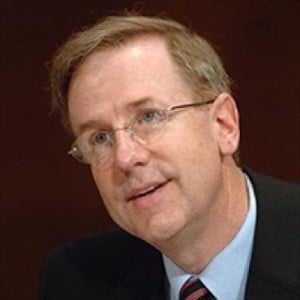
Board Member, Center for Equal Opportunity
Roger Clegg is a Board Member at and former President and General Counsel of the Center for Equal Opportunity. He focuses on legal issues arising from civil rights laws--including the regulatory impact on business and the problems in higher education created by affirmative action. A former Deputy Assistant Attorney General in the Reagan and Bush administrations, Clegg held the second highest positions in both the Civil Rights Division (1987-91) and in the Environment and Natural Resources Division (1991-93). He has held several other positions at the U.S. Justice Department, including Assistant to the Solicitor General (1985-87), Associate Deputy Attorney General (1984-85), and Acting Assistant Attorney General in the Office of Legal Policy (1984). Clegg is a graduate of Yale University Law School (1981).
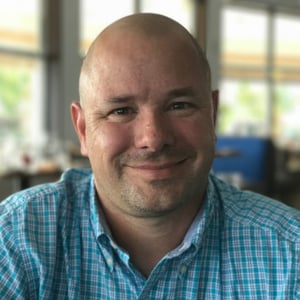
Professor of Political Science, University of Pittsburgh
Chris W. Bonneau is Professor of Political Science at the University of Pittsburgh, where he has been since 2002. His research is primarily in the areas of judicial selection (specifically, judicial elections) and judicial decisionmaking. Professor Bonneau’s work has been supported by the National Science Foundation and he has published numerous articles, including in the American Journal of Political Science and Journal of Politics. He is also the coauthor of three books: Strategic Behavior and Policy Choice on the U.S. Supreme Court (2005), In Defense of Judicial Elections (2009), and the award-winning Voters’ Verdicts: Citizens, Campaigns, and Institutions in State Supreme Court Elections (2015).
Professor Bonneau teaches undergraduate classes in constitutional law, judicial politics, and research methods, as well as graduate classes in judicial politics and research design.
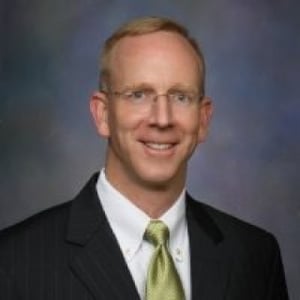
Investigative Counsel, U.S. House Committee on Education and the Workforce
Kent Talbert is a Washington, DC-based attorney with over 25 years’ experience in providing advice on education law and policy in Congress, the U.S. Department of Education, and the private sector. His practice includes legal and policy advice to colleges and universities, for-profit schools, accrediting agencies, the pre-K-12 sector, charter school organizations, trade associations, and education-focused companies, as well as service as an expert witness. He currently serves as Investigative Counsel, U.S. House Committee on Education and the Workforce.
Prior to establishing his firm, Mr. Talbert practiced at Talbert & Eitel, PLLC from 2010-2012. From 2006-2009 he served as General Counsel of the U.S. Department of Education, advising the Secretary of Education on a broad range of legal and policy matters, including the reauthorization of the Higher Education Act of 1965, the drafting and implementation of regulations under the No Child Left Behind Act of 2001, and major education law cases pending before the Supreme Court of the United States and other appellate and trial courts. During his tenure as General Counsel, Mr. Talbert served as the Chief Regulatory Officer for the Department, overseeing all documents for publication in the Federal Register.
He has provided legal and strategic advice on the No Child Left Behind Act of 2001, the Higher Education Opportunity Act of 2008, the Ensuring Continued Access to Student Loans Act of 2008, the Freedom of Information Act (FOIA), the Family Educational Rights and Privacy Act (FERPA), the Rehabilitation Act of 1973, the Americans With Disabilities Act, Title IX of the Education Amendments of 1972, the Jeanne Clery Disclosure of Campus Security Policy and Campus Crime Statistics Act ("Clery Act"), Federal Student Aid program reviews, negotiated rulemaking, and accreditation.
Prior to his service as General Counsel, Mr. Talbert served as the Department's Deputy General Counsel for Departmental and Legislative Service from 2001-2006. Earlier in his career, Mr. Talbert served for over 12 years on House and Senate staff, both as Education Policy Counsel for the Committee on Education and the Workforce in the U.S. House of Representatives, and as a professional staff member of the Committee on Labor and Human Resources (now Committee on Health, Education, Labor, and Pensions) in the U.S. Senate.
Mr. Talbert is a member of the Bars of the District of Columbia and South Carolina, the Alliance of Public Charter School Attorneys, and the National Association of College and University Attorneys where he serves on the Committee on Legal Education. He is admitted to practice before the United States Supreme Court, the United States Court of Federal Claims, the United States Court of Appeals for the District of Columbia Circuit, the United States Court of Appeals for the Fourth Circuit, and all federal courts in South Carolina and Washington, DC.
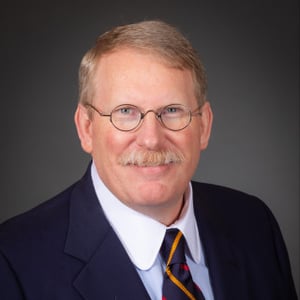
Co-Founder and President, Defense of Freedom Institute
Bob is a co-founder and President of DFI. He previously served as Senior Counselor to the Secretary of Education from 2017 through 2020 and Deputy General Counsel of the U.S. Department of Education from 2005 until 2009.
During his most recent tenure at the Department, Bob served on the Secretary’s Leadership Team as a strategic and legal adviser on higher education, civil rights, and congressional oversight matters. As the Department’s Regulatory Reform Officer, he also supervised the implementation of the Secretary’s regulatory agenda and was an architect of the Secretary’s reforms concerning Title IX and the Higher Education Act. As Deputy General Counsel, Bob advised on a wide variety of regulatory, legislative, and oversight matters.
Prior to joining the Department in 2017, Bob was vice president for regulatory compliance matters for several postsecondary institutions and practiced education and employment law in Washington, D.C. Before coming to the Department in 2005, he practiced law in New Orleans, litigating commercial, employment, and bankruptcy cases in Louisiana, Texas, and Mississippi.
Bob earned his A.B. in History from Georgetown University, studied British government and international politics at the London School of Economics and Political Science, and received his law degree from Tulane University Law School. His articles have been published by National Review, Real Clear Education, Washington Examiner, and other media outlets. Fox News has featured his work.
Bob is a member of the District of Columbia and Louisiana Bars and the Federalist Society for Law and Public Policy Studies.
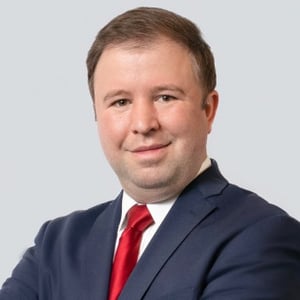
Partner, Wiley Rein LLP
Tom has over 15 years’ experience in private practice and public service at the federal and state levels representing clients in high-stakes appellate and regulatory litigation matters. Tom has argued appeals in the Fourth, Fifth, Ninth, D.C. and Federal Circuits, and the West Virginia Supreme Court of Appeals.
Prior to joining Wiley, Tom was the General Counsel at the Federal Communications Commission (FCC), where he served as the agency’s chief legal officer and briefed dozens of appeals – personally arguing two – in the federal courts of appeals in constitutional and administrative law challenges to the FCC’s orders. Tom managed a team of over 70 attorneys and staff and provided consultation and advice on a wide range of practice areas relating to the FCC’s work, including administrative law, appellate and trial litigation, bankruptcy, ethics, fiscal law, fraud, labor and employment, and public records requests. He has spent his career advising clients on all stages of federal agency rulemaking, adjudication, and litigation, in fields ranging from communications to environmental law to securities to labor and employment. He frequently speaks and writes on legal issues and his articles have appeared in the Wall Street Journal, Washington Post, National Review, Forbes, and Newark Star-Ledger.
Professor of Law and Rouse Chairholder, Antonin Scalia Law School, George Mason University
Professor Miller holds an Allison and Dorothy Rouse Chair in Law at the Antonin Scalia Law School. An elected member of the American Law Institute and a research member of the European Corporate Governance Institute, Professor Miller is also a Fellow and the Co-Director of the Program on Organizations, Business and Markets at the Classical Liberal Institute at the New York University Law School, an Adjunct Fellow at the Manhattan Institute, and an Affiliated Scholar at the James Wilson Institute on Natural Rights and the American Founding. Prior to joining George Mason University in 2025, Professor Miller was the F. Arnold Daum Chair in Corporate Finance and Law and a Professor of Law at the University of Iowa College of Law, where he had also served as the Associate Dean for Faculty Development.
Professor Miller’s research concerns corporate and securities law, the economic analysis of law, and the philosophy of law. He is particularly interested in applying economic concepts and methods to understand provisions in contracts between sophisticated commercial parties. He has written on material adverse effect clauses under Delaware law, the fiduciary duties of corporate directors, director oversight liability, the history and development of Delaware corporate law, and much more. His articles and working papers are available on his SSRN page.
Professor Miller has been cited by federal and state courts in the United States, including the Delaware Supreme Court and the Delaware Court of Chancery, as well as by the Commercial Court of the United Kingdom and the Ontario Superior Court of Justice (Commercial List) in Canada. Additionally, he is a member of the Committee on Mergers, Acquisitions & Corporate Control Contests and a former chair of the Corporation Law Committee of the New York City Bar Association.
Earlier in his career, Professor Miller was a Professor of Law at the Villanova University School of Law and the Associate Director of the Matthew J. Ryan Center for the Study of Free Institutions and the Public Good at Villanova University. He has been a Visiting Professor of Law at the University of Pennsylvania Law School, a Visiting Assistant Professor of Law at the Cardozo Law School, and an Olin Fellow in Law and Economics at the Columbia Law School.
Before entering academia, Professor Miller was an associate with Wachtell, Lipton, Rosen & Katz. He earned his J.D. from the Yale Law School where he was a Senior Editor of the Yale Law Journal and an Olin Fellow in Law, Economics and Public Policy. He earned his M.A. and M.Phil. degrees in philosophy from Columbia University, where he held a Mellon Fellowship in the Humanities from the Woodrow Wilson National Fellowship Foundation and a Western Civilization Fellowship from the Intercollegiate Studies Institute. He earned his B.A. in philosophy and mathematics from Columbia College.
Partner, Horvitz & Levy LLP
Jeremy Rosen is nationally renowned for his proficiency in numerous issues arising under the First Amendment and California’s anti-SLAPP law. Using that knowledge, Jeremy has helped a wide variety of clients – including churches, private businesses, and individuals – defeat lawsuits that seek to impose liability on clients for exercising their rights of petition, free speech, and free exercise of religion. He has also handled hundreds of appeals in numerous appellate courts, including the Ninth Circuit Court of Appeals, the California Supreme Court, and California’s intermediate appellate courts. In addition to First Amendment and anti-SLAPP cases, his cases have involved numerous important issues regarding anti-trust, class actions, wage and hour law, employment law, breach of contract, California’s Unfair Competition Law, CEQA, the enforceability of arbitration clauses, hospital peer review, the scope of public employee whistleblower protection, and the application of the primary assumption of risk doctrine.
Jeremy is a partner at the firm, which he joined in 2001. He is a California State Bar Certified Appellate Specialist and a member of the California Academy of Appellate Lawyers.
Jeremy directed the Pepperdine University School of Law Ninth Circuit Appellate Advocacy Clinic for 6 years. The Clinic represents individuals in the Ninth Circuit who are identified by the court as needing pro bono counsel. Jeremy also previously served a three-year term where he was appointed by the Ninth Circuit to serve as one of 18 appellate lawyer representatives to the court.
Jeremy is a member of the National Chamber Litigation Center’s California Litigation Advisory Committee. Before joining the firm, Jeremy was a Litigation Associate with Munger, Tolles & Olson.

The Marriage Debate: How Courts Have Reinterpreted the Constitution, States’ Rights and Separation of Powers
Nashville, TennesseeVirginia Supreme Court Expands Wrongful Discharge Cause of Action
Michael I. Krauss
In Van Buren v. Grubb,1 the Virginia Supreme Court ruled for the first time that...
Del Monte and El Paso: Going to Revlon-Land With a Conflicted Financial Advisor
Note from the Editor: This article examines two recent cases in the Delaware Court of...
An Exchange Over The Sex Offender Registration and Notification Act (SORNA)
John G. Malcolm, Andrew P. Harris, Jill Levenson
The Sex Offender Registration and Notification Act: A Sensible and Workable Law that Helps Keep...
Testimony on the "Democracy Restoration Act"
Roger B. Clegg
Note from the Editor: This paper is based on testimony given by the author before...
A Survey of Empirical Evidence Concerning Judicial Elections
Chris W. Bonneau
The election of state judges is a controversial topic. Consider, for example, this quote from...
The Road to a National Curriculum: The Legal Aspects of the Common Core Standards, Race to the Top, and Conditional Waivers
Kent D. Talbert, Robert S. Eitel
Note from the Editor: This paper examines the U.S. Department of Education’s administration of the...
Legislative Authority to Adjust Judicial Benefits Under the New Jersey Constitution
Thomas M. Johnson
The Federalist Society for Law and Public Policy Studies is an organization of 40,000 lawyers,...
Lyondell Chemical Co. v. Ryan: The Duty of Good Faith Comes to Revlon-Land
Robert T. Miller
Section 102(b)(7) of the Delaware General Corporation Law authorizes Delaware corporations to include in their...
State Court Docket Watch Summer 2009
Joshua Daniel Davey, David Strachman, Jennifer Wolsing, Jeremy B. Rosen, Aaron Chastain, Shauna Peterson
In an effort to increase dialogue about state court jurisprudence, the Federalist Society presents State...