
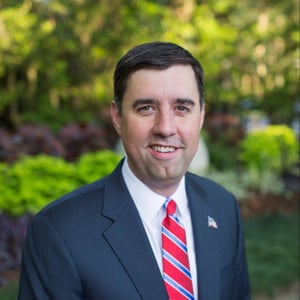
Associate Justice, Alabama Supreme Court
James L. “Jay” Mitchell was elected to the Alabama Supreme Court in 2018.
Prior to serving on the Supreme Court, Justice Mitchell was an accomplished litigation attorney with Maynard, Cooper & Gale, P.C. During his time in private practice, he tried a number of complex cases to verdict, successfully handled appeals, and obtained favorable settlements for clients. He was rated as one of the top litigators in the United States and Alabama, and received the highest possible rating for professional ethics. He also served on Maynard, Cooper & Gale’s executive committee, helping to lead strategic and growth initiatives for the firm.
Justice Mitchell was born in Mobile and grew up in South Alabama and in Homewood. He is a graduate of Homewood High School and received his Bachelor of Arts with honors from Birmingham-Southern College, where he graduated Phi Beta Kappa, served as president of the student body, and played forward on the school’s 1995 national championship basketball team. He holds a Master of Arts from University College in Dublin, Ireland, and received his law degree from the University of Virginia School of Law.
Justice Mitchell has long been active in organizations that benefit the community and enhance the legal profession. In addition to his service with other organizations, he is a member of the Rotary Club of Birmingham and serves on the board of directors at Cornerstone School, an inner city Christian school. He is also a member of the Federalist Society.
Justice Mitchell and his wife, Elizabeth, have been married for 20 years and have four children. They reside in Homewood and are longtime members of Church of the Highlands.
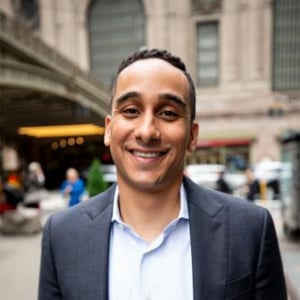
Nick Ohnell Fellow, The Manhattan Institute
Rafael Mangual is the Nick Ohnell Fellow at the Manhattan Institute, a contributing editor of City Journal, and a member of the Council on Criminal Justice. His first book, Criminal (In)Justice, was released in July 2022. He has authored and coauthored a number of MI reports and op-eds on issues ranging from urban crime and jail violence to broader matters of criminal and civil justice reform. His work has been featured and mentioned in a wide array of publications, including the Wall Street Journal, The Atlantic, New York Post, The New York Times, The Washington Post, Philadelphia Inquirer and City Journal. Mangual also regularly appears on Fox News and has made a number of national and local television and radio appearances on outlets such as C-SPAN and Bloomberg Radio. In 2020, he was appointed to serve a four-year term as a member of the New York State Advisory Committee of the U.S. Commission on Civil Rights.
Prior to joining MI in 2015, Rafael worked in corporate communications for the International Trademark Association. He holds a B.A. in corporate communications from the City University of New York’s Baruch College and a J.D. from DePaul University in Chicago, where he was president of the Federalist Society and vice president of the Appellate Moot Court team. After graduating from law school, Mangual was inducted into the Order of the Barristers, a national honor society for excellence in oral and written advocacy.

Senior Fellow and Director of Constitutional Studies, Manhattan Institute
Ilya Shapiro is a senior fellow and director of constitutional studies at the Manhattan Institute and a contributing editor of City Journal. Previously he was executive director and senior lecturer at the Georgetown Center for the Constitution, and before that a vice president of the Cato Institute.
Shapiro is the author of Lawless: The Miseducation of America’s Elites (2025) and Supreme Disorder: Judicial Nominations and the Politics of America’s Highest Court (2020), coauthor of Religious Liberties for Corporations? (2014), and editor of 11 volumes of the Cato Supreme Court Review (2008-18). He has contributed to a variety of academic, popular, and professional publications, including the Wall Street Journal, Harvard Journal of Law & Public Policy, Washington Post, Los Angeles Times, USA Today, National Review, and Newsweek. He also regularly provides commentary for various media outlets, writes the Shapiro’s Gavel newsletter on Substack, and once appeared on the Colbert Report.
Shapiro has testified many times before Congress and state legislatures and has filed more than 500 amicus curiae “friend of the court” briefs in the Supreme Court. He lectures regularly on behalf of the Federalist Society, is a member of the board of fellows of the Jewish Policy Center, was an inaugural Washington Fellow at the National Review Institute, and has been an adjunct law professor at the George Washington University and University of Mississippi. He is also the chairman of the board of advisers of the Mississippi Justice Institute, a barrister in the Edward Coke Appellate Inn of Court, and a former member of the Virginia Advisory Committee to the U.S. Commission on Civil Rights.
Earlier in his career, Shapiro was a special assistant/adviser to the Multi-National Force in Iraq on rule-of-law issues and practiced at Patton Boggs and Cleary Gottlieb. Before entering private practice, he clerked for Judge E. Grady Jolly of the U.S. Court of Appeals for the Fifth Circuit. He holds an AB from Princeton University, an MSc from the London School of Economics, and a JD from the University of Chicago Law School.
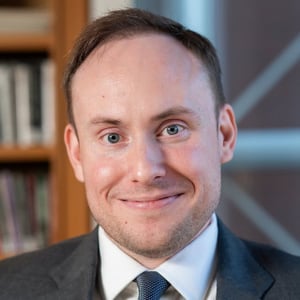
Director, Robert A. Levy Center for Constitutional Studies, Cato Institute
Thomas Berry is the director in the Cato Institute’s Robert A. Levy Center for Constitutional Studies and editor in chief of the Cato Supreme Court Review. Before joining Cato, he was an attorney at Pacific Legal Foundation and clerked for Judge E. Grady Jolly of the U.S. Court of Appeals for the Fifth Circuit. His academic work has appeared in NYU Journal of Law and Liberty, Washington and Lee Law Review Online, and Federalist Society Review. His popular writing has appeared in The Wall Street Journal, National Law Journal, Investor’s Business Daily, National Review Online, and The Hill Online. He has testified before the U.S. Senate, and his work has been cited by the U.S. District Court for the District of Columbia.
Berry holds a J.D. from Stanford Law School, where he was a senior editor on the Stanford Law and Policy Review and a Bradley Student Fellow in the Stanford Constitutional Law Center. He graduated with a B.A. in Liberal Arts from St. John’s College, Santa Fe.

Textualism in Alabama
Jay Mitchell
Textualism is alive and well in Alabama. This interpretive doctrine teaches that legal texts have...
Police Use of Force and the Practical Limits of Popular Reform Proposals: A Response to Rizer and Mooney
Rafael A. Mangual
Note from the Editor: The Federalist Society takes no positions on particular legal and public...
Evenwel v. Abbott: The Court Shanks Its Punt on “One Person, One Vote”
Ilya Shapiro, Thomas Berry
Note from the Editor: This article criticizes the Supreme Court’s recent decision in Evenwel v....