

Maurice A. Deane Distinguished Professor of Constitutional Law and Faculty Director of International Programs, Hofstra University School of Law
Professor Ku’s primary research interest is the relationship of international law to constitutional law. He has also conducted academic research on a wide range of topics including international dispute resolution, international criminal law, and China’s relationship with international law. He teaches courses such as U.S. constitutional law, U.S. foreign affairs law, transnational law, and international trade and business law. Since 2014, he has served as the faculty director of international programs, overseeing Hofstra Law’s study abroad, exchange and LL.M. programs. Professor Ku also teaches Constitutional Law in our online degree programs: Master of Laws in American Law and Master of Arts in American Legal Studies. He has also been selected as the John DeWitt Gregory Research Scholar and as a Hofstra Law Research Fellow. He is a member of the American Law Institute.
He is the co-author, with John Yoo, of Taming Globalization: International Law, the U.S. Constitution, and the New World Order (Oxford University Press 2012). He also has published more than 40 law review articles, book chapters and symposia essays. He has given dozens of academic lectures and workshops at major universities and conferences in the United States, Europe and Asia.
He co-founded the leading international law weblog Opinio Juris, which is read daily by thousands worldwide. His essays and op-eds have been published in major news publications such as the Wall Street Journal, the Los Angeles Times, and the NYTimes.com. He has been frequently interviewed for television news programs and quoted in print and electronic media. He has also signed or submitted amicus briefs to national and international courts and served as an expert witness in both domestic and international proceedings.
Before joining the Hofstra Law faculty, Professor Ku served as a law clerk to the Honorable Jerry E. Smith of the U.S. Court of Appeals for the Fifth Circuit and as an Olin Fellow and Lecturer in Law at the University of Virginia Law School. Professor Ku also practiced as an associate at the New York City law firm of Debevoise & Plimpton, specializing in litigation and arbitration arising out of international disputes. He has been a visiting professor at the College of William & Mary Marshall- Wythe School of Law in Williamsburg, Virginia; a Fulbright Distinguished Lecturer in Law at East China University of Political Science and Law in Shanghai, China; and a Taiwan Fellow at National Taiwan University in Taipei, Taiwan. He is a member of the New York Bar and a graduate of Yale College and Yale Law School.
Director, Center for Religious Freedom, Hudson Institute
An international human-rights lawyer for over thirty years, Nina Shea joined Hudson Institute as a Senior Fellow in November 2006, where she directs the Center for Religious Freedom. Shea works extensively for the advancement of individual religious freedom and other human rights in U.S. foreign policy as it confronts an ascendant Islamic extremism, as well as nationalist and remnant communist regimes. She undertakes scholarship and advocacy in defense of those persecuted for their religious beliefs and identities and on behalf of diplomatic measures to end religious repression and violence abroad, whether from state actors or extremist groups.
Ms. Shea was appointed by the U.S. House of Representatives to serve seven terms as a Commissioner on the U.S. Commission on International Religious Freedom (June 1999 - March 2012). During the Soviet era, Shea’s first client before the United Nations was Soviet Nobel Peace Laureate Andrei Sakharov. Since then, she has been appointed as a U.S. delegate to the United Nation's main human rights body by both Republican and Democratic administrations. She also served as a member of the Clinton administration's Advisory Committee on Religious Freedom Abroad. In 2009, she was appointed to serve as a member of the U.S. National Commission to UNESCO.
Ms. Shea played a leading role in building grassroot support for the adoption of the International Religious Freedom Act (1998). For seven years ending in 2005, she helped organize and lead a coalition of churches and religious groups that worked to end a religious war against non-Muslims and dissident Muslims in southern Sudan. In 2014, she initiated and helped lead a coalition of hundreds of prominent American religious leaders to issue The Pledge of Solidarity for Persecuted Iraqi, Syrian and Egyptian Christians and Other Minorities, which was released by a bi-partisan Congressional panel on May 7. In summer 2014, she met with Pope Francis to discuss the persecution of Christians in the Middle East.
At Hudson, she has organized conferences for Nigerian schoolgirls and others who survived Boko Haram attacks, Christian converts formerly imprisoned in Iran, Coptic bishops from Egypt, Catholic bishops from China and the Gulf, Muslim scholars, and many others. Ms. Shea advocates in the nation's capital on behalf of a broad range of persecuted religious minorities around the world; and, for such work, was honored by the Ahmadiyya Muslim Community USA with the Community's inaugural "Ahmadiyya Muslim Humanitarian Award."
She has authored and/or edited four widely-acclaimed reports on Saudi state educational materials that promote extremist views and in 2011 had an opportunity to travel to Saudi Arabia and speak directly about her findings with the Ministers of Education, Justice and Islamic Affairs. Her reports include: Ten Years On: Saudi Arabia's Textbooks Still Promote Religious Violence (2011), Update: Saudi Arabia's Curriculum of Intolerance (2008), Saudi Arabia's Curriculum of Intolerance (2006), and Saudi Publications on Hate Ideology Invade American Mosques (2005), all of which translated and analyzed Saudi governmental publications that teach hatred and violence against the religious "other."
She is the co-author of Silenced: How Apostasy & Blasphemy Codes are Choking Freedom Worldwide, with a Foreword by Kyai Haji Abdurrahman Wahid, the former President of Indonesia and head of Nahdlatul Ulama, the world's largest Muslim organization (Oxford University Press, 2011). Her most recent book, which she also co-authored, is Persecuted: The Global Assault on Christians (Thomas Nelson Publishers, 2013). She regularly presents testimony before Congress, delivers public lectures, organizes briefings and conferences, and writes frequently on religious freedom issues. Her writings have appeared in the Wall Street Journal, Washington Post, CQ Researcher, Weekly Standard, National Review Online, CNN, Fox, The Daily Beast, HuffingtonPost, and RealClearWorld, among others.
For the ten years prior to joining Hudson, Ms. Shea worked at Freedom House, where she directed the Center for Religious Freedom, an entity which she had helped found in 1986 as the Puebla Institute.
She is a member of the bar of the District of Columbia. She is a graduate of Smith College, and American University's Washington College of Law.

Professor Emeritus of Law, Antonin Scalia Law School, George Mason University
Jeremy A. Rabkin is a Professor Emeritus of Law at the Antonin Scalia Law School, George Mason University. Before joining the faculty in June 2007, he was for over two decades a professor in the Department of Government at Cornell University. Professor Rabkin serves on the board of directors of the Center for Individual Rights, a public interest law firm based in Washington, D.C. Previously he was a board member of the U.S. Institute of Peace and the board of academic advisors of the American Enterprise Institute.
Professor Rabkin’s books include Law Without Nations? (Princeton University Press, 2005). He authored “If You Need a Friend, Don’t Call a Cosmopolitan,” a chapter in Varieties of Sovereignty and Citizenship (Sigal R. Ben-Porath & Rogers M. Smith eds., University of Pennsylvania Press, 2012). His articles have appeared in major law reviews and political science journals and his journalistic contributions in a range of magazines and newspapers, including the Washington Post and the Wall Street Journal.
President, Genocide Watch
Gregory H. Stanton is President of Genocide Watch, an organization he founded in 1999. He is also director of the Cambodian Genocide Project and he is Research Professor of Genocide Studies and Prevention at George Mason University. Dr. Stanton served in the State Department (1992-1999), where he drafted the United Nations Security Council resolutions that created the International Criminal Tribunal for Rwanda, the Burundi Commission of Inquiry, and the Central African Arms Flow Commission. He also drafted the U.N. Peacekeeping Operations resolutions that helped bring about an end to the Mozambique civil war. In 1994, Stanton won the American Foreign Service Association’s prestigious W. Averell Harriman award for “extraordinary contributions to the practice of diplomacy exemplifying intellectual courage,” based on his dissent from U.S. policy on the Rwandan genocide. He wrote the State Department options paper on ways to bring the Khmer Rouge to justice in Cambodia.

Judge, United States Court of Appeals, Ninth Circuit
Judge Carlos Bea serves as a judge on the United States Court of Appeals for the Ninth Circuit. He received his Bachelor's Degree from Stanford University in 1956 and his J.D. from Stanford Law School in 1958. Judge Bea was born in San Sebastian, Spain, and immigrated with his family to Cuba in 1939. In 1952, he represented Cuba on the Cuban National basketball team in the Helsinki Olympics. Judge Bea became a naturalized citizen of the United States in 1958. He engaged in private practice in San Francisco, principally in the area of civil trials (jury and non-jury), from 1959-75 at Dunne, Phelps & Mills and from 1975-90 at Carlos Bea, A Law Corporation. He taught courses in civil litigation advocacy at Hastings College of Law and Stanford Law School. From 1990 to 2003, Judge Bea served as a judge of the San Francisco Superior Court. He was nominated by President George W. Bush to the United States Court of Appeals for the Ninth Circuit and was confirmed in 2003.
Judge Bea and his wife Louise reside in San Francisco, where they raised their four sons, Sebastian, Alexander, Nicholas, and Dominic.
Professor of Economics, University of California, San Diego
Julian Betts is a Professor in (and former Chair of) the Department of Economics at the University of California, San Diego. He is also the Executive Director of the San Diego Education Research Alliance at UCSD (sandera.ucsd.edu), a Research Associate at the National Bureau of Economic Research and a Bren Fellow at the Public Policy Institute of California (PPIC).
His research focuses on the economics of education. He has written extensively on the link between student outcomes and measures of public school spending including class size, teachers' salaries, and teachers' level of education. He has also examined the role that standards and expectations play in student achievement. Examples of his work include a theoretical analysis of the impact of educational standards published in the American Economic Review (1998), the book “Taking Measure of Charter Schools: Better Assessments, Better Policymaking, Better Schools,” co-edited with Paul Hill, the book “Getting Choice Right: Ensuring Equity and Efficiency in Education Policy” (Brookings Institution Press 2005) co-edited with Tom Loveless, and the co-authored books “Predicting Success, Preventing Failure: An Investigation of the California High School Exit Exam” (PPIC 2008), “Does School Choice Work?” (PPIC 2006), “From Blueprint to Reality: San Diego’s Education Reforms” (PPIC 2005), “Determinants of Student Achievement: New Evidence from San Diego” (PPIC 2003) and “Equal Resources, Equal Outcomes? The Distribution of School Resources and Student Achievement in California” (PPIC, 2000). Current research includes studies of school choice, California’s Mathematics Diagnostic Testing Project, and San Diego’s controversial Blueprint for Student Success.
His other main areas of research include higher education; immigration; technology, skills, and the labor market; and the economics of unions.
Betts is Principal Investigator on a multi-year study of magnet elementary schools funded by the U.S. Department of Education. This project, which is examining the impact of magnet schools on the achievement of both local and non-local enrollees, is joint with the American Institutes of Research (AIR) and Berkeley Policy Associates (BPA). He was also Principal Investigator of a three-year study for the U.S. Department of Education of the effects of career and technical education on students’ academic trajectories. Betts has served on two National Academy of Sciences panels, including (from 2005-2008) the congressionally mandated “Committee on Evaluation of Teacher Certification by the National Board for Professional Teaching Standards (NBPTS)”. Betts became a council member of the California Council on Science and Technology in 2007. Betts has also served on several technical review panels for the U.S. Department of Education, and the national advisory committees for the National Charter School Research Center at the University of Washington. In 2001-2003 Betts served on the National Working Commission on Choice in K-12 Education. He is a member of the editorial board of Education Finance and Policy, published by MIT Press.
At UCSD Betts is a professor in the Department of Economics, where he served as Department Chair from 2008 through 2011. Within the Department of Economics Betts has also served as Computing Director and more recently as Vice Chair, Graduate Studies, for the Department between 2004 and 2007. Betts was a member of the UCSD Admissions Committee from 1999 to 2003, serving as both Chair and Vice Chair in various years. In 2001 he served on the University’s Gender Equity Taskforce. Between 1999 and 2008 he also served on the Board of Directors of the Preuss School at UCSD, a
charter school on the UCSD campus that admits disadvantaged students from the local area. Betts also serves as UCSD campus director of the UC Educational Evaluation Center.
Betts obtained a Bachelor's degree in chemistry from McGill University, the M.Phil. in economics from Oxford University, Oxford, England, and a Ph.D. in economics from Queen's University, Kingston, Ontario, Canada.

Justice, Supreme Court of Arizona
Clint Bolick was appointed by Governor Doug Ducey in January 2016 to serve on the Arizona Supreme Court and was retained by the voters in 2018 and 2024.
Prior to joining the Court, Justice Bolick litigated constitutional cases in state and federal courts from coast to coast, including the U.S. Supreme Court. Among other positions, he served as Vice President for Litigation at the Goldwater Institute and as Co-founder and Vice President for Litigation at the Institute for Justice. He has litigated in support of school choice, freedom of enterprise, private property rights, freedom of speech, and federalism, and against racial classifications and government subsidies.
Justice Bolick received his Juris Doctor degree from the University of California at Davis, where he has been recognized as a distinguished alumnus, and his Bachelor of Arts degree magna cum laude from Drew University. He serves as a research fellow with the Hoover Institution. Among other honors, he was named one of the 90 Greatest DC Lawyers in the Last 30 Years by Legal Times in 2008, received a Bradley Prize in 2006, and was recognized as one of the nation’s three lawyers of the year by American Lawyer in 2002 for his successful defense of school vouchers in Zelman v. Simmons-Harris.
Justice Bolick is a prolific author of a dozen books and hundreds of articles. Among his most recent books are Unshackled: Freeing America’s K-12 Education System: Immigration Wars: Forging an American Solution, co-authored with former Florida Governor Jeb Bush; and David’s Hammer: The Case for an Activist Judiciary. Bolick serves as an adjunct professor of constitutional law at Arizona State University’s Sandra Day O’Connor School of Law and has served as a lecturer at Harvard University’s John F. Kennedy School of Government.
Professor of Education and Public Policy, University of Californ, Berkeley
Working inside policy organizations and the academy over the past three decades, Bruce Fuller has asked how public action best strengthens families and schools. He helped to design policy reforms for a free-thinking California governor, and advised opposition leaders on education reform as democracy emerged in southern Africa. Professor Fuller has studied child care programs arising at the grassroots or state run in Latin America. A fundamental question continues to motivate this array of research and writings: How can central governments enrich families and schools when situated in colorfully pluralistic societies? In short, what happens when government confronts culture?
Trained in political sociology, Professor Fuller's recent projects center on small-scale organizations that sprout across diverse communities, such as charter schools and preschools, which often spread in response to the clumsy or gray character of central states. Yet, decentralized institutions can disempower central governments, a worrisome scenario for those concerned with equity. Professor Fuller's current research delves into how young children are socialized in diverse Mexican-American homes, and what neighborhood organizations effectively advance their development. His recent book, Standardized Childhood: The Political and Cultural Struggle over Early Education, examines how elite reformers often push for state incorporation of community programs, even eroding the authority and resources spread across diverse ethnic leaders.
Professor Fuller also looks into fields that have become hyper-centralized, exemplified by his critical work on No Child Left Behind. A college dropout, he eventually received his Ph.D. from Stanford University. Before coming to Berkeley, Professor Fuller was a research sociologist at the World Bank and taught at Harvard's School of Education.

Co-Chairman, The Federalist Society for Law and Public Policy Studies
Leonard is Co-Chairman and former Executive Vice President of the Federalist Society, joining the organization over 25 years ago. Since that time he has been instrumental in helping the organization top 70,000, focusing on the growth of lawyers membership, operations and activities advancing limited, constitutional government. In addition to his work at the Society, Leonard has advised President Trump on judicial selection, assisted with the Gorsuch and Kavanaugh Supreme Court selection and confirmation process, and served as a member of the transition team. He also organized the outside coalition efforts in support of the Roberts and Alito U.S. Supreme Court confirmations. Leonard was appointed by President George W. Bush to three terms to the U.S. Commission on International Religious Freedom as chairman. He was also a U.S. Delegate to the UN Council and UN Commission on Human Rights during the Bush Administration. Leonard was the recipient of the 2009 Bradley Prize, along with the other founders and directors of the Federalist Society, for his work in advancing freedom and the rule of law. He is the coeditor of Presidential Leadership: Rating the Best and the Worst in the White House, as well as the author of opinion editorials in the New York Times,The Wall Street Journal, and Washington Post. Leonard holds degrees from Cornell University and Cornell Law School. He presently resides in Northern Virginia, where he and his wife Sally have raised their seven children.
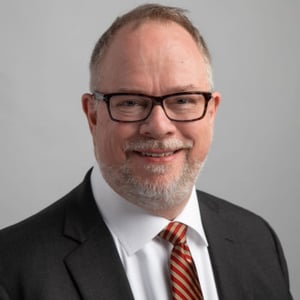
Managing Attorney of the Washington Office, Institute for Justice
William R. Maurer is the Managing Attorney of the Washington state office of the Institute for Justice, which engages in litigation in the areas of economic liberty, private property rights, educational choice, & freedom of speech.
Maurer is an advocate against the criminalization of poverty and the governmental use of the criminal and civil enforcement systems to raise revenue. He was lead counsel in a class action challenging the use of tickets to raise revenue in the city of Pagedale, Missouri. The suit resulted in a federal consent decree that reformed the city’s ticketing and municipal court system. He regularly speaks, teaches, and writes about the abuse of fines and fees in the criminal justice system. He was a participant in summits on taxation by citation put on by the White House and Department of Justice during the Obama Administration. His work on the issue includes serving as an advisory board member of the Fines and Fees Justice Center.
In addition to his work on criminal and civil justice reform, Maurer is a First Amendment litigator. In 2011, he successfully argued before the U.S. Supreme Court that Arizona’s punitive campaign financing regime was unconstitutional. Before the Washington Supreme Court, he successfully argued against efforts to classify radio commentary as a contribution under the state’s campaign finance law.
His cases and advocacy have been covered in the Washington Post, the New York Times, the Economist, the Wall Street Journal, and other major media outlets.
Maurer was named a “Washington Superlawyer” by Washington Law & Politics Magazine for several years. He is a chapter author in numerous legal reference works and has written several articles for law reviews and legal publications across the country.
Prior to joining IJ-WA, Maurer clerked for Washington Supreme Court Justice Richard Sanders and then practiced law at Perkins Coie LLP. Maurer received his law degree in 1994 from the University of Wisconsin – Madison, where he was an editor of the Wisconsin Law Review. He received his BA from Bard College in 1989.
State Director, Democrats for Education Reform and former California State Senator
Former California State Senator Gloria Romero is the State Director of Democrats for Education Reform and has been a forceful advocate for education reform and civil rights.
She brings to the post not only a great passion for quality education opportunities for all children, but a keen knowledge of the legislative and political process. She was elected to the 24th Senate District in 2001, representing East Los Angeles and the greater San Gabriel Valley. Upon her election she was recognized as one of the hardest working members of the Legislature and quickly rose in leadership positions. She was elected by her peers to serve as Senate Democratic Caucus Chair and as Senate Majority Leader -- the first woman to ever hold that leadership position in the history of the California State Senate.
Romero served as Chair of both the Education Committee and the Senate Budget and Fiscal Review Subcommittee on Education, making her one of the most influential voices on education policy in California. She believes that education is the civil rights issue of our time. States Romero, "My mother had a sixth grade education; I have a PhD. I understand the transformational power of education and the key it holds to accessing the American Dream".
Professor, The Ohio State University
Professor Cornell has written A Well Regulated Militia: The Founding Fathers and the Origins of Gun Control in America and The Other Founders: Anti-Federalism and the Dissenting Tradition in America, 1788-1828. He has also published Whose Right to Bear Arms Did the Second Amendment Protect? part of the Bedford Book's "Historians At Work" series. He has written articles in the Journal of American History, American Studies, William and Mary Quarterly, William and Mary Law Review,Constitutional Commentary, and others. His book reviews have appeared in the Journal of the Early Republic, Reviews in American History, and many others. Prof. Cornell is a co-author of a forthcoming textbook, Visions of America: A History of the American Nation.
His first book won the Society of the Cincinnati Prize and was a Choice Outstanding Book. His most recent book won the 2006 Langum Prize in legal history. He has been a National Endowment for the Humanities Postdoctoral Fellow at the Institute of Early American History and Culture. He has held an NEH fellowship and ACLS fellowship. He has delivered invited lectures at Oxford University, Columbia University, Duke, NYU Law School, UCLA Law School, Stanford Law School, and Vanderbilt University Law School. He has presented papers at meetings of the American Historical Association, the American Society of Legal History, the American Studies Association, the Organization of American Historians, and many others. He has published editorials in the New York Times and the Detroit Free Press, and appeared on PBS, C-SPAN, and Fox and Friends
He has a strong interest in teaching with technology. He has written about new media in the AHA's Perspectivesand is on the Board of Advisers of Pearson's website, The History Place. He has guest blogged on the Oxford University Press Blog and at Balkinization.
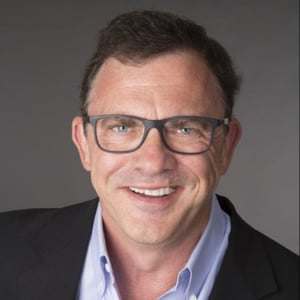
Beauchamp Brogan Distinguished Professor of Law, University of Tennessee College of Law
Professor Reynolds is one of the most prolific scholars on the UT faculty. His special interests are law and technology and constitutional law issues and his work has appeared in a wide variety of publications, including the Columbia Law Review, the Virginia Law Review, the University of Pennsylvania Law Review, the Wisconsin Law Review, the William and Mary Law Review, the Southern California Law Review, the Harvard Journal of Law and Technology, The Columbia Human Rights Law Review, Law and Policy in International Business, Jurimetrics, the Journal of Space Law, and the High Technology Law Journal. Professor Reynolds has also written in the New York Times, the Washington Post, The Atlantic, the Washington Times, the Los Angeles Times, Road & Track, Urb, and the Wall Street Journal, as well as other popular publications. He was for many years a contributing editor at Popular Mechanics magazine, and today writes a regular column for USA Today. He is the co-author of Outer Space: Problems of Law and Policy, and The Appearance of Impropriety: How the Ethics Wars Have Undermined American Government, Business, and Society. His most recent books are The Social Media Upheaval, The Judiciary’s Class War, and The New School: How the Information Age Will Save American Education from Itself.
Professor Reynolds has testified before Congressional committees on space law, international trade, and domestic terrorism. He has been executive chairman of the National Space Society and a member of the White House Advisory Panel on Space Policy. A member of the UT faculty since 1989, Professor Reynolds has received the Harold C. Warner Outstanding Faculty Scholarship Award in W. Allen Separk Outstanding Faculty Scholarship Award, and the Carden Award for Outstanding Scholarship.
A songwriter and producer for such bands as Mobius Dick, The Nebraska Guitar Militia, and The Defenders Of The Faith, Professor Reynolds is a member of the American Society of Composers and Performers and a former member of the National Academy of Recording Arts and Sciences.
Professor Reynolds blogs at InstaPundit.com.
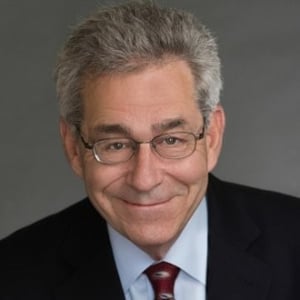
Vice President, Brady Center to Prevent Gun Violence
 Dennis A. Henigan is the Vice President of the Brady Center to Prevent Gun Violence and Founder of its Legal Action Project. He is the author of Lethal Logic: Exploding the Myths that Paralyze American Gun Policy (Potomac Books 2009).
For twenty years, he has been a leading advocate for stronger gun laws, appearing dozens of times on national television and radio shows, including 60 Minutes, The Today Show, Nightline, Larry King Live and Dateline. He also has written and spoken extensively on liability and constitutional issues relating to gun laws and gun violence, including testifying before several Congressional Committees.
Under his direction, Brady Center lawyers have recovered millions of dollars in damages for gun violence victims, as well as winning precedent-setting decisions on the liability of gun sellers. In 2004, he was named one of the top ten "Lawyers of the Year" by Lawyers' Weekly magazine. His work as a public interest lawyer has been profiled in The New Yorker.
Henigan received his B.A. from Oberlin College in 1973 and his law degree in 1977 from the University of Virginia School of Law. Prior to joining the Brady Center in 1989, he was a partner in the law firm of Foley & Lardner.
Henigan received his B.A. from Oberlin College in 1973 and his law degree in 1977 from the University of Virginia School of Law.
Executive Director, Coalition to Stop Gun Violence
Mr. Horwitz is a graduate of the University of Michigan and received his law degree from the George Washington University. He is currently a visiting scholar at the Johns Hopkins Bloomberg School of Public Health and is working on a book examining the relationship between guns and democracy which will be published by the University of Michigan Press in 2008.
Vice President for Litigation, Institute for Free Speech
Alan joined the Institute for Free Speech as Vice President for Litigation in February 2021. In this role, Alan directs the Institute’s litigation and legal advocacy, leads our in-house legal team, and manages and works to expand our network of volunteer attorneys.
Prior to joining the Institute, Alan litigated complex federal matters for twenty years, in his own practice and as a partner in various Washington-area firms. He argued and won landmark constitutional cases in the United States Supreme Court and has appeared before numerous appellate and district courts throughout the country. Alan often speaks at law schools and continuing legal education seminars. He also teaches strategic/public interest litigation as an adjunct professor at the Georgetown University Law Center.
Alan began his career clerking for the Hon. Terrence W. Boyle, United States District Judge for the Eastern District of North Carolina. He has also served as a Deputy Attorney General for the State of California, a litigation associate at the Washington office of Sidley Austin, and as counsel to the United States Senate Judiciary Committee.
Alan earned his J.D. at Georgetown (1995) and his B.A. at Cornell University (1992). He is an active member in good standing of the Virginia, District of Columbia, and California bars, the Bar of the United States Supreme Court, and various federal appellate and district court bars.

Senior Vice President for Legal Studies, Cato Institute
Clark Neily is senior vice president for legal studies at the Cato Institute. His areas of interest include constitutional law, overcriminalization, civil forfeiture, police accountability, and gun rights. Neily is the author of Terms of Engagement: How Our Courts Should Enforce the Constitution’s Promise of Limited Government. His writing has appeared in the Wall Street Journal, Forbes, and National Review Online, as well as various law reviews, including the Harvard Journal of Law and Public Policy, George Mason Law Review, Georgetown Journal of Law and Public Policy, NYU Journal of Law and Liberty, and Texas Review of Law and Politics. Neily is a frequent guest speaker and lecturer for the Federalist Society, Institute for Humane Studies, and American Constitution Society.
Before joining Cato in 2017, Neily was a senior attorney and constitutional litigator at the Institute for Justice and director of the Institute’s Center for Judicial Engagement. He is also an adjunct professor at the University of Texas School of Law, where he teaches constitutional litigation and public-interest law.
Neily served as co-counsel in District of Columbia v. Heller, the historic case in which the Supreme Court held for the first time that the Second Amendment protects an individual right to own a gun for self-defense.
Neily began his legal career as a law clerk to Judge Royce Lamberth on the U.S. District Court for the District of Columbia. After that he spent four years in the trial department of the Dallas-based firm Thompson & Knight. Neily received his undergraduate and law degrees from the University of Texas, where he was Chief Articles Editor of the Texas Law Review.

We've Said It – Now What? Genocide in the Middle East - Podcast
Julian Ku, Nina Shea, Jeremy A. Rabkin, Gregory H. Stanton
After much prodding from human rights advocates and congressional committees, Secretary of State John Kerry...
Panel One: Are Vouchers and Charter Schools Viable Alternatives to Public Schools?
Carlos T. Bea, Julian R. Betts, Clint Bolick, Bruce Fuller, Leonard A. Leo, William R. Maurer, Gloria Romero
Parental and community support for school choice has increased dramatically in recent years, with vouchers,...
Parker v. District of Columbia: DC Gun Ban Case
Saul Cornell, Glenn Reynolds, Dennis A. Henigan, Joshua Horwitz, Alan Gura, Clark Neily
Earlier this year, the U.S. Court of Appeals for the District of Columbia Circuit ruled...