

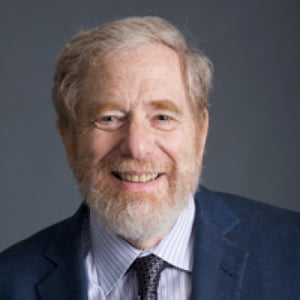
Senior Fellow, Arthur F. Burns Fellow in Financial Policy Studies, American Enterprise Institute
Peter J. Wallison holds the Arthur F. Burns Chair in Financial Policy Studies and is co-director of AEI’s program on Financial Policy Studies. Prior to joining AEI, he practiced banking, corporate and financial law at Gibson, Dunn & Crutcher in Washington, D.C., and New York. Mr. Wallison has held a number of government positions. From June 1981 to January 1985, he was General Counsel of the United States Treasury Department, where he had a significant role in the development of the Reagan Administration's proposals for deregulation in the financial services industry. During 1986 and 1987, Mr. Wallison was White House counsel to President Ronald Reagan, and between 1972 and 1976, he served first as Special Assistant to New York's Gov. Nelson A. Rockefeller and, subsequently, as counsel to Mr. Rockefeller as vice president of the United States.
Mr. Wallison was admitted to practice before the courts of New York and the District of Columbia, and is retired from practice in New York. He continues to be a member of the District of Columbia Bar Association. He received his undergraduate degree from Harvard College in 1963 and law degree from Harvard Law School in 1966.
Mr. Wallison is the author of Ronald Reagan: The Power of Conviction and the Success of His Presidency, published in December 2002 by Westview Press. On campaign finance, he is the author (with Joel Gora) of Better Parties, Better Government, (AEI Press 2009). On financial or regulatory matters, he is the author of Back From the Brink, a proposal for a private deposit insurance system, and co-author of Nationalizing Mortgage Risk: The Growth of Fannie Mae and Freddie Mac; The GAAP Gap: Corporate Disclosure in the Internet Age; Competitive Equity: A Better Way to Organize Mutual Funds; Bad History, Worse Policy: How a False Narrative about the Financial Crisis Led to the Dodd-Frank Act (AEI Press 2013); and Hidden In Plain Sight: What Caused the World’s Worst Financial Crisis and Why it Could Happen Again (Encounter Books 2015). His most recent book is Judicial Fortitude: The Last Chance to Rein in the Administrative State, published by Encounter Books in October 2018.
He testifies frequently before committees of Congress, and is a frequent contributor to the op-ed pages of the Wall Street Journal and other print and online journals. He has also been a speaker at many conferences on financial services, housing, the causes of the financial crisis, the Dodd-Frank Act, accounting, and corporate governance, and was a member of the Shadow Financial Regulatory Committee between 1995 and 2015. He was a member of the SEC Advisory Committee on Improvements to Financial Reporting (2008), co-Chair of the Pew Financial Reform Task Force (2009), and a member of the congressionally- appointed Financial Crisis Inquiry Commission (2009-2011). In May 2011, for his work in financial policy, Mr. Wallison received an honorary doctorate in Humane Letters from the University of Colorado.

Executive Vice President, The Federalist Society
Dean Reuter is Executive Vice President at the Federalist Society for Law and Public Policy Studies. He has served in two federal government agency Offices of the Inspector General, as Counsel to the Inspector General and Deputy Inspector General, responsible for policing the use of federal funds granted and contracted through those agencies. As such, he helped conduct and oversee criminal investigations across the country. He is the principal author of the non-fiction book, The Hidden Nazi: The Untold Story of America's Deal with the Devil, and editor of Liberty’s Nemesis: The Unchecked Expansion of the State and Confronting Terror: 9/11 and the Future of American National Security. He was appointed by the President and served as Vice-Chairman of the Board of Directors of the Corporation for National and Community Service, and recently served as an appointee on the U.S. Commission on Presidential Scholars. He is a graduate of Hood College (BA with Honors) and the University of Maryland School of Law.
Partner, McCarter & English, LLP
Erik concentrates his practice in the area of Intellectual Property/Information Technology. He is a trial attorney specializing in patent, trademark, and licensing disputes in federal and state courts, arbitrations, and the U.S. Patent and Trademark Office. He has handled a wide range of technology cases involving, for example, x-ray inspection systems, speech recognition software, Internet security software, diagnostic and medical devices, immunoassays, telecommunications electronics, and water purification systems.
Erik has extensive experience representing national and international clients in patent litigation in federal courts throughout the country. He has successfully enforced patent rights and has also defended companies accused of infringement. Erik has also designed and implemented trademark and copyright protection and enforcement strategies for clients in virtually every industry, including business consulting, financial services, life sciences, electronics, communications equipment, computer products, and consumer goods.
Erik's recent litigation victories include, for example, a case involving infringement of x-ray technology patents in which he obtained sanctions against an alleged infringer for making material misrepresentations to the court and for other misconduct. Sanctions included an award of attorneys' fees and striking of the validity defenses. He also successfully moved to exclude the alleged infringer's expert witness. This case settled on the first day of trial, after Erik and his team defeated the accused infringer's motion for summary judgment of non-infringement and won a number of motionsin limine.
In a precedent-setting case, Erik represented a vendor of Internet security software that had been sued by an adware company for blocking pop-up ads and adware. A federal court dismissed the claims, holding that his client was immune from civil liability under the Communications Decency Act. 47 USC § 230(c)(2)(B). The United States Court of Appeals for the Ninth Circuit affirmed the district court's ruling. SeeZango, Inc. v. Kaspersky Lab., Inc.(9th Cir. Case No. 07-35800). The case set precedent as the first application of the Act to immunize a vendor of Internet security software used to screen adware and spyware.
Erik represented a Sonoma winery that that owned a well-known trademark. In a summary judgment decision, a federal court ruled that the winery's licensee, an importer of luxury vodka, breached the license, that the winery properly terminated the license, and that the importer's continued sale of the vodka infringed the winery's trademark rights. The case settled soon afterwards.
Erik represented an R&D lab that had invented the key component of a medical diagnostic device. When the R&D lab discovered that its licensee, the manufacturer of the device, was using questionable accounting methods to reduce royalties, the lab sued to recover the unpaid royalties. Erik's client was awarded approximately $11 million in unpaid royalties, attorneys' fees, and interest. The First Circuit Court of Appeals upheld this award. SeeCytyc Corp. v. DEKA Products Limited Partnership, 439 F.2d 27 (1st Cir. 2006).
Erik writes and speaks on intellectual property and litigation issues. He has been honored for the past four years as aMassachusetts Super Lawyerin the field of intellectual property litigation in Massachusetts by Law & Politics and Boston Magazine.
Partner, Burns & Levinson LLP
Prior to joining Burns & Levinson LLP in January 2006, Mr. Cohen was a partner with the firm Perkins Smith & Cohen LLP.
He has more than 40 years experience as a lawyer dealing with patent, copyright, trademark, unfair competition, licensing/franchising, visual arts, software, databases and publication law, formation and operation of business enterprises and not-for-profit organizations, international trade, litigation/ADR, and legal ethics. He handles acquisition, licensing and litigation of intellectual property rights. He has also served as an expert witness, arbitrator and mediator in intellectual property matters.
Partner, McCarter & English LLP
Mr. Cote represents both small and large businesses and occasionally individuals in both federal and state courts throughout the country. His practice concentrates primarily on hospitality, employment, civil rights, contracts, unfair and deceptive conduct, class action, private property rights and appellate litigation.
During his time with McCarter, Mr. Cote has played an integral role in obtaining several significant victories for the firm's clients, including the dismissal of a challenge under the public trust doctrine to the private ownership of lawfully filled, tidelands that were developed pursuant to a legislative grant issued in 1832 and the successful defense of a large food service company in a case of first impression concerning the application and interpretation of the Massachusetts Tips Act. Mr. Cote was also instrumental in obtaining a sanctions award of $100,000 in connection with a construction accident case brought in bad faith against one of the firm's clients.
Prior to his admission to the bar, Mr. Cote served for over ten years as a paralegal and law clerk in Arizona, Massachusetts, Vermont and Washington, D.C. During this time, he served as the principal legal assistant to the Arizona Legislature's Ombudsman for Private Property Rights. He also clerked for the Honorable Roger J. Marzulla and Nancie G. Marzulla at Defenders of Property Rights, which, at the time, was the nation's only non-profit legal foundation dedicated exclusively to the protection of private property rights. He is a contributing author of that organization's 1999 publication "State Property Rights Legislation Report: Federalism in Action."
Mr. Cote presently serves as the vice-chair of the Boston Lawyers Division of the Federalist Society for Law and Public Policy Studies. He is also a member of the executive committee for the Federalist Society's Litigation Practice Group and the primary author of the Environmental Practice Group's 2001 terrorism briefing paper entitled: "National Security vs. Public Disclosure: The War on Terrorism's Implications Upon Federal Emergency Planning and Right to Know Laws."

Stevenson Bernard Professor, George Washington University Law School
The Honorable F. Scott Kieff is the Stevenson Bernard Professor at George Washington University Law School and a Visiting Fellow at Stanford University’s Hoover Institution.
He served as Commissioner of the U.S. International Trade Commission from 2013-2017. He also served during the Bush, Obama, and Trump Administrations in the part-time leadership of the national security defense-intelligence community.
He was previously a professor of law and medicine at Washington University in Saint Louis and a Senior Fellow at Hoover. A former law clerk to U.S. Circuit Judge Giles S. Rich, he is a graduate of Penn Law School and MIT, where he studied molecular biology and microeconomics. He was elected to the European Academy of Sciences and Arts in 2012 and the Academia Europaea in 2024.
His private sector work through Kieff Strategies LLC (www.kieffstrategies.com) provides neutral services including mediation and compliance, and expert services including crisis management, advising, and testimony.

Professor of Law, Boston University School of Law
The son of an economics professor, Michael Meurer knew by the time he was 13 that he, too, wanted to teach at the university level. An S.B., J.D. and Ph.D. later, he became an economics professor at Duke University and later a law professor at the University of Buffalo. He came to Boston University School of Law in 1999, where he has taught courses in patents, intellectual property and public policy toward the high-tech industry. "It's a special privilege to be able to speak three times a week to an attentive and thoughtful audience," he says.
Professor Meurer has received several grants and fellowships, including two grants from the Pew Charitable Trust, a Ford Foundation grant, an Olin Faculty Fellowship at Yale Law School and a postdoctoral fellowship at AT&T Bell Labs. He has served as an expert witness for the Federal Trade Commission on a merger case presenting issues related to patent licensing. He also has consulted with government officials from developing countries about antitrust law, and taught short courses in American intellectual property law at the law faculties of the University of Victoria and the National University of Singapore. "I'm excited by the prospect of having a positive influence on American technology law and policy," Professor Meurer says. Outside of work, he enjoys playing and watching basketball.

Associate Professor, Boston College Law School
David Olson is an associate professor and the Faculty Director of the Program on Innovation and Entrepreneurship. He teaches patent law, intellectual property law, antitrust law, and various seminars. His research and writing primarily focus on patents, copyrights, antitrust, and incentives for innovation and competition. Since joining BC Law in 2007, he has been recognized for his teaching excellence and contributions. In 2011, he received the Business & Law Society Faculty Award for Achievement in Business & Law. In 2012, he received the Professor Emil Slizewski Award for Faculty Excellence. For one semester in 2015, Olson served as a visiting professor at Pontifical Catholic University, Rio de Janeiro, Brazil, where he conducted research and taught a course on intellectual property.
Olson has published scholarly articles on patent law, copyright law, antitrust, music licensing, and first amendment copyright issues. His writing has been cited in Supreme Court and other legal opinions. He has testified before the U.S. Congress on matters of drug patents, FDA regulation, and antitrust.
The media frequently seeks Olson’s insights and opinions. He has been quoted in the Wall Street Journal, Associated Press, and Reuters, among others. He has appeared as a guest panelist on WBUR’s Radio Boston, WAMU's Kojo Namdi Show, and Public Radio Canada. His op-eds have appeared in the Chicago Tribune, Washington Times, and The Hill.
Olson came to Boston College from Stanford Law School's Center for Internet and Society, where he conducted research on patent law and litigated copyright fair use impact cases. Before entering academia, Olson practiced law as a patent litigator. He clerked for Judge Jerry Smith of the U.S. Court of Appeals for the Fifth Circuit.
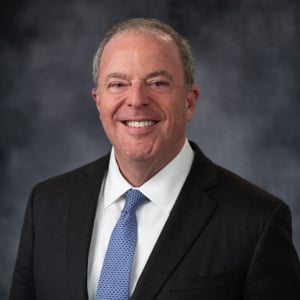
Vice President of Washington Operations and Dean of the Van Andel Graduate School of Government, Hillsdale College
Matthew Spalding is the Kirby Professor in Constitutional Government at Hillsdale College and the Dean of the Van Andel Graduate School of Government at Hillsdale College’s Washington, D.C., campus. As Vice President for Washington Operations, he also oversees the Allan P. Kirby, Jr. Center for Constitutional Studies and Citizenship and the academic and educational programs of Hillsdale in the nation’s capital.
He is the best-selling author of We Still Hold These Truths: Rediscovering Our Principles, Reclaiming Our Future, which details America’s core principles, shows how they have come under assault by modern progressive-liberalism, and lays out a strategy to recover them. Spalding is also executive editor of The Heritage Guide to the Constitution, a line-by-line analysis of each clause of the U.S. Constitution. His other books include A Sacred Union of Citizens: Washington’s Farewell Address and the American Character; Patriot Sage: George Washington and the American Political Tradition; and The Founders’ Almanac: A Practical Guide to the Notable Events, Greatest Leaders & Most Eloquent Words of the American Founding.
Prior to joining Hillsdale, Dr. Spalding was vice president of American Studies at The Heritage Foundation and founding director of its B. Kenneth Simon Center for Principles and Politics. He is a Fellow at the Claremont Institute for the Study of Statesmanship and Political Philosophy, and serves on the boards of the Steamboat Institute and the Philadelphia Society.
He received his B.A. from Claremont McKenna College and his M.A. and Ph.D. in government from the Claremont Graduate School. In addition to teaching at Hillsdale, he has taught at George Mason University, the Catholic University of America, and Claremont McKenna College. He and his wife Elizabeth, a Hillsdale alumna, reside with their two children in Arlington, Virginia.
Carmack Waterhouse Professor of Constitutional Law, Georgetown Law
After graduating from Harvard Law School in 1971, Professor Seidman served as a law clerk for J. Skelly Wright of the D.C. Circuit and U.S. Supreme Court Justice Thurgood Marshall. He then was a staff attorney with the D.C. Public Defender Service until joining the Law Center faculty in 1976. He teaches a variety of courses in the fields of constitutional and criminal law. He is co-author of a constitutional law casebook and the author of many articles concerning criminal justice and constitutional law. His most recent books are Silence and Freedom (Stanford 2007), Our Unsettled Constitution: A New Defense of Constitutionalism and Judicial Review (Yale 2001) and Equal Protection of the Laws (Foundation 2002).

Judge, United States Court of Appeals, Seventh Circuit
Judge Sykes was nominated to the Seventh Circuit by President George W. Bush and confirmed by the Senate in 2004. Prior to her appointment to the federal bench, Judge Sykes served as a justice on the Wisconsin Supreme Court. Governor Tommy G. Thompson appointed her in September 1999 to fill a mid-term vacancy on the state supreme court, and she was elected to a full ten-year term in April 2000. From 1992-1999, Judge Sykes served on the state trial bench in Milwaukee County (elected in 1992 and re-elected in 1998). From 1985-1992, Judge Sykes practiced law with the Milwaukee firm of Whyte & Hirschboeck, S.C., and from 1984-1985, was a law clerk to Federal Judge Terence T. Evans.
Born and raised in the Milwaukee area, Judge Sykes earned a bachelor’s degree in journalism from Northwestern University in 1980 and a law degree from Marquette University Law School in 1984. Between college and law school, Judge Sykes worked as a reporter for The Milwaukee Journal.
Judge Sykes has two sons.
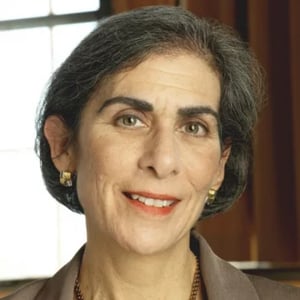
Robert Mundheim Professor of Law, University of Pennsylvania Law School
Amy Wax's work addresses issues in social welfare law and policy as well as the relationship of the family, the workplace, and labor markets. By bringing to bear her training in biomedical sciences and appellate practice as well as her interest in economic analysis, Wax has developed a uniquely insightful approach to problems in her areas of expertise.
Wax's career has been stellar. As an Assistant to the Solicitor General in the Office of the Solicitor General at the U.S. Department of Justice in the late 1980s and early 1990s, Wax argued 15 cases before the United States Supreme Court. She taught for seven years at the University of Virginia Law School before joining the Penn Law faculty in 2001.
Wax has published widely in law journals, including Chicago, Virginia, Villanova, Indiana, Emory, the Virginia Journal of Social Policy and Law, Yale Journal on Regulation and the Michigan Journal of Race and Law. Papers in press address liberal theory and welfare work requirements as well as the economics of federal disability laws. Current work in progress includes articles on law and evolutionary psychology, the political psychology of social security reform, and economic models of the family-friendly workplace. Wax has also received the A. Leo Levin Award for Excellence in an Introductory Course.

Professor Emeritus, Paul M. Hebert Law Center, Louisiana State University
In memoriam
Dr. John Baker is Professor Emeritus of Law, and previously the Dale E. Bennett Professor of Law, at Louisiana State University Law School. He is currently Visiting Professor at Peking University School of Transnational Law (via Zoom) and has been Visiting Professor at The Center for the Constitution, Georgetown Law School (2013-2020). He has also been a Visiting Fellow at Oriel College, the University of Oxford (2012-2014) and taught at Blackfriars Hall, Oxford in 2014. Dr. Baker has also been an adjunct Fellow at the Heritage Foundation (Spring, 2008) and a Distinguished Scholar at the Catholic University of America Law School (2011-12). He has taught at Tulane Law School, George Mason Law School, Pepperdine Law School, New York Law School, Hong Kong University, and the University of Dallas, School of Management and also taught and/or lectured in 17 foreign countries. Notable among his foreign visits are the
following: Visiting Professor at the University of Lyon III (France) (1999-2011); Visiting Professor at the Universidad de los Andes, Chile (2012), as a Fulbright Specialist (2006); and a Fulbright Scholar at various universities in the Philippines. Dr. Baker received his J.D., with honors, from the University of Michigan Law School and his B.A., magna cum laude, from the University of Dallas. He also earned a Ph.D. in Political Thought from the University of London. Baker has taught over a dozen different subjects, mostly courses in public law. His main areas of interest are Constitutional Law (particularly federalism and separation of powers), Criminal Law, Anti-Terrorism Law, International Law, Health Care Law, Mediation, and Comparative Law.
In addition to law review articles and book chapters, Dr. Baker’s academic publications include Hall's Criminal Law: Cases and Materials (with Benson, Force and George; 5th ed. Michie, 1993); An Introduction to the Law of the United States (ed. with Levasseur; University Press of America, 1992). He has also published on Forbes.com, FoxNews.com, in The Washington Times, and a number of times in The Wall Street Journal. He argues in federal court, including two oral arguments in the U.S. Supreme Court. For many years, he co-taught courses for the Federalist Society on separation of powers with the late Supreme Court Justice Antonin Scalia. In September 2016, he co-taught a Supreme Court seminar in China with Justice Samuel Alito. Following law school, he served as a law clerk in federal district court and as an assistant district attorney in New Orleans before joining LSU in 1975. While a professor, he has been as a consultant to USAID, USIA (since rolled into the State Department), the Justice Department, the U.S. Senate Judiciary Subcommittee on Separation of Powers, and the Office of Planning in the White House. He served on an ABA Task Force which issued the report, The Federalization of Crime (1998) and later as a consultant to the “Bi-Partisan Task Force on the Over- federalization of Crime” (2012-2014) created by the U.S. House Judiciary Subcommittee on Crime. Dr. Baker was a co-founder of the first iteration (1995) of Stratfor Inc., a global intelligence agency. He co-authored its first book: The Intelligence Edge (with Friedman, Friedman and Chapman; Crown Books/Random House 1997). In 2022, he began a short, weekly video podcast available on YouTube and Rumble, The Baker Brief.

Patrick Hotung Professor of Constitutional Law, Georgetown University Law Center; Faculty Director, Georgetown Center for the Constitution
Randy E. Barnett is the Patrick Hotung Professor of Constitutional Law at the Georgetown University Law Center and is the Faculty Director of the Georgetown Center for the Constitution. After graduating from Northwestern University and Harvard Law School, he tried many felony cases as a prosecutor in the Cook County States’ Attorney’s Office in Chicago. A recipient of a Guggenheim Fellowship in Constitutional Studies and the Bradley Prize, Professor Barnett has been a visiting professor at Penn, Northwestern and Harvard Law School.
Professor Barnett’s publications includes thirteen books, more than one hundred articles and reviews, as well as numerous op-eds. His most recent book is Felony Review: Tales of True Crime and Corruption in Chicago (2026). His other books on the Constitution include: A Life for Liberty: The Making of an American Originalist (2024); The Original Meaning of the Fourteenth Amendment: Its Letter and Spirit (2021) (with Evan Bernick); An Introduction to Constitutional Law: 100 Supreme Court Cases Everyone Should Know (2019) (with Josh Blackman); Restoring the Lost Constitution: The Presumption of Liberty (2nd ed. 2013); Our Republican Constitution: Securing the Liberty and Sovereignty of We the People (2016); and Constitutional Law: Cases in Context (5th ed. forthcoming 2027) (with Josh Blackman). His books on contracts are The Oxford Introductions to U.S. Law: Contracts (2010) and Contracts: Cases and Doctrine (7th ed. 2021) (with Nate Oman). And he is the author of The Structure of Liberty: Justice and the Rule of Law (2nd ed. 2014).
In 2004, he argued the medical marijuana case of Gonzalez v. Raich before the U.S. Supreme Court. In 2012, he was one of the lawyers representing the National Federation of Independent Business in its constitutional challenge to the Affordable Care Act in NFIB v. Sebelius. He’s appeared in numerous documentaries and portrayed a prosecutor in the 2010 science-fiction feature film, InAlienable: The Movie. On X he is @RandyEBarnett

Paul J. Schierl Professor of Law, University of Notre Dame Law School
Professor Richard W. Garnett teaches and writes in the areas of constitutional law, criminal law, the First Amendment, and law and religion. He is a leading authority on questions and debates regarding religious freedom and church-state relations, and is the founding director of Notre Dame Law School’s Program on Church, State, and Society.
Garnett clerked for the late Chief Justice of the United States, William H. Rehnquist, and also for the late Chief Judge of the United States Court of Appeals for the Eighth Circuit, Richard S. Arnold. He earned his J.D. from Yale Law School in 1995 and his B.A., summa cum laude, from Duke University in 1990. He joined the faculty in 1999 after practicing law in Washington, D.C. with Miller, Cassidy, Larroca & Lewin.
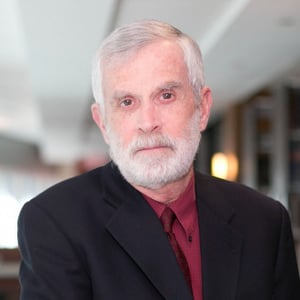
Robert W. Woodruff Professor of Law, Emory Law
Michael John Perry is the author of thirteen books and over eighty-five articles and essays. The titles of Perry’s books reflect his particular interests: The Constitution, the Courts, and Human Rights (Yale, 1982); Morality, Politics, and Law (Oxford, 1988); Love and Power: The Role of Religion and Morality in American Politics (Oxford, 1991); The Constitution in the Courts: Law or Politics? (Oxford, 1994); Religion in Politics: Constitutional and Moral Perspectives (Oxford, 1997); The Idea of Human Rights: Four Inquiries (Oxford, 1998); We the People: The Fourteenth Amendment and the Supreme Court (Oxford, 1999); Under God? Religious Faith and Liberal Democracy (Cambridge, 2003); Toward a Theory of Human Rights: Religion, Law, Courts (Cambridge, 2007); Constitutional Rights, Moral Controversy, and the Supreme Court (Cambridge, 2009); The Political Morality of Liberal Democracy (Cambridge, 2010); Human Rights in the Constitutional Law of the United States (Cambridge, 2013); and A Global Political Morality: Human Rights, Democracy, and Constitutionalism (Cambridge, 2017).
Since 2003, Perry has held a Robert W. Woodruff University Chair at Emory University, where he teaches in the law school. A Woodruff Chair is the highest honor Emory University bestows on a member of its faculty. Perry is also a senior fellow at Emory University’s Center for the Study of Law and Religion and a co-editor of the Journal of Law and Religion (Cambridge University Press).
Before coming to Emory, Perry was the inaugural occupant of the Howard J. Trienens Chair in Law at Northwestern University (1990-1997), where he taught for fifteen years (1982-1997). He then held the University Distinguished Chair in Law at Wake Forest University (1997-2003). Perry began his teaching career at the Ohio State University College of Law (1975-82) and has taught as a visiting professor at several law schools: Yale (1978-79), Tulane (spring semester, 1987), New York Law School (spring semester, 1990), the University of Tokyo (fall semester, 1991), the University of Alabama (fall semester, 2005), the University of Western Ontario, Canada (January term, 2009), and the University of Dayton (intrasession course, March 2011). For three consecutive fall semesters (2009, 2010, 2011), Perry was the University Distinguished Visiting Professor in Law and Peace Studies at the University of San Diego, where he taught an introductory course on international human rights both to law students and to graduate students at the Joan B. Kroc School of Peace Studies.
Perry, who was born and raised in Louisville, Kentucky, received his AB from Georgetown University (1968) and his JD from Columbia University (1973). After graduating from law school, Perry served as law clerk both to US District Judge Jack B. Weinstein (1973-74) and, a year later, to US Circuit Judge Shirley M. Hufstedler (1974-75). Perry is married to Sarah Anne O’Leary, a public health specialist at the US Centers for Disease Control and Prevention, in Atlanta. They have two sons: Daniel and Gabriel.

Bad History, Worse Policy - Podcast
Peter J. Wallison, Dean Reuter
Did the government-constructed narratives surrounding the collapse of Fannie Mae and Freddie Mac and the...
Patent Enforcement in the 21st Century
Erik P. Belt, Jerry Cohen, Gregory D. Cote, F. Scott Kieff, Michael J. Meurer, David S. Olson
This panel will explore the long-standing debate over remedies for patent infringement and whether and...
We STILL Hold These Truths: Self-Government & the Founders' Constitution
Matthew Spalding
On March 2, 2010, Dr. Matthew Spalding, Director of the Heritage Foundation's B. Kenneth Simon Center...
Debate: Same-Sex Marriage: Marriage, Public Policy, and the Constitution
Louis Michael Seidman, Diane S. Sykes, Amy Wax
The Federalist Society's Student Division presented this debate at the 2007 Annual Student Symposium on...
Panel I: What is Morality? The Philosophical and Theological Foundations of Moral Debate
John S. Baker, Randy E. Barnett, Robert Burns, Richard W. Garnett, Michael J. Perry
The Federalist Society's Student Division presented this panel at the 2007 Annual Student Symposium on...