

Charles Evans Hughes Professor of Law, Columbia Law School
THOMAS W. MERRILL is the Charles Evans Hughes Professor of Law at Columbia Law School. He previously taught at Northwestern University School of Law and Yale Law School. He has undergraduate degrees from Grinnell College and Oxford University, where he studied as a Rhodes Scholar, and a law degree from the University of Chicago. He clerked on the D.C. Circuit (for Chief Judge David Bazelon) and the U.S. Supreme Court (for Justice Harry Blackmun). From 1987-1990 he served as Deputy Solicitor General, U.S. Department of Justice. Professor Merrill’s writings related to property include Property: Principles and Policies (Foundation Press Second Edition, 2012) (with Henry E. Smith); Property: The Oxford Introductions to U.S. Law (Oxford U. Press, 2010); Property: Takings (Foundation Press, 2002)(with David Dana); and numerous articles, including “The Economics of Public Use” (Cornell Law Review 1986); “The Landscape of Constitutional Property” (Virginia Law Review 2000); and “The Character of the Governmental Action” (Vermont Law Review 2012). He is a member of the American Academy of Arts and Sciences.
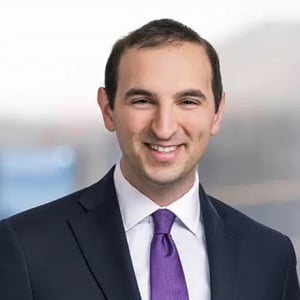
Associate, Covington & Burling LLP
Eli Nachmany is an associate at Covington & Burling LLP in the Washington, DC, office. He clerked for Judge Steven J. Menashi of the U.S. Court of Appeals for the Second Circuit. Eli graduated magna cum laude from Harvard Law School, where he was Editor-in-Chief of the Harvard Journal of Law & Public Policy. Prior to law school, Eli served as the speechwriter to the U.S. Secretary of the Interior and as a domestic policy aide in the White House Office of American Innovation. He graduated summa cum laude from New York University with a B.S. in Sports Management. Eli’s scholarship on administrative law and executive power has appeared in the BYU Law Review, George Mason Law Review, Wake Forest Law Review, and Yale Law Journal Forum.
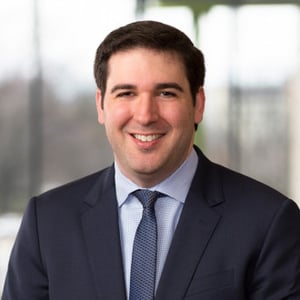
Jones Day, Partner
Yaakov Roth's goal is to strategically develop and effectively present the key legal arguments that will secure victory for clients through appellate advocacy and dispositive motions. He has represented clients in high-profile Supreme Court cases, argued appeals in the federal Courts of Appeals, and prepared motions to dismiss and for summary judgment across a range of substantive areas.
Yaakov's most recent Supreme Court experience includes vindicating former Virginia Gov. Bob McDonnell from political corruption charges, narrowing the geographic scope of private civil RICO lawsuits, and pursuing a major challenge to the Affordable Care Act from inception through high court review. At the appellate level, Yaakov's oral advocacy has included pressing a First Amendment challenge to an Ohio law prohibiting "false" campaign statements, seeking disclosure of a Justice Department policy manual concerning criminal discovery, and protecting the religious freedom rights of Death Row inmates. He has successfully defended his clients against defamation, antitrust, Title VII, and ERISA claims — including nationwide class actions — and pursued a host of challenges to federal, state, and local regulations. His ERISA experience also includes a series of withdrawal liability arbitrations and related litigation.
Yaakov speaks and writes about the Supreme Court and First Amendment issues and maintains an active pro bono practice centered around religious freedom and criminal justice.
Partner, Sullivan & Cromwell LLP
Eric Kadel is engaged in a wide variety of corporate, transactional and regulatory matters. He is a member of the Firm’s Corporate and Finance, Financial Services, Investment Management, Alternative Investment Management, Cybersecurity, and Commodities, Futures and Derivatives Groups. With regard to financings, Mr. Kadel regularly represents participants in capital markets transactions, and dealers and end users in connection with structuring and documenting a wide variety of swaps and other derivatives, including equity, credit default and commodity swaps, options and forwards. Mr. Kadel’s work in the investment management area includes advising public and private investment companies and investment advisers on a wide variety of transactional, regulatory, compliance and other matters, including registration and regulation. Mr. Kadel also advises clients of the Firm regarding developments in the laws regulating the financial services industry and on cybersecurity issues. Mr. Kadel is currently an adjunct professor at George Washington University Law School.
In addition, Mr. Kadel is one of the principal partners in the Firm’s International Trade and Investment practice. He counsels and represents clients on questions about U.S. economic sanctions, including those administered by the Treasury Department’s Office of Foreign Assets Control (“OFAC”), United States antiboycott requirements under the Export Administration Regulations administered and enforced by the Commerce Department’s Office of Antiboycott Compliance within the Bureau of Industry and Security, Bank Secrecy Act/anti‐money laundering laws and the U.S. Foreign Corrupt Practices Act (“FCPA”). Mr. Kadel’s practice includes analysis of proposed transactions and business relationships; due diligence and design and review of compliance procedures and strategies; and internal investigations, voluntary disclosures and government enforcement actions. Mr. Kadel also regularly advises clients regarding questions arising under Exon-Florio and the transaction review process administered by the Committee on Foreign Investment in the United States (“CFIUS”), and has represented clients before CFIUS on many national security reviews.
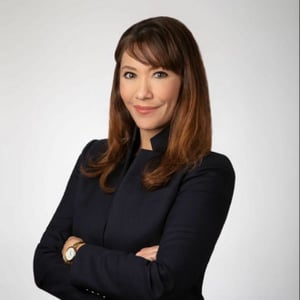
Partner & Chair, National Security Practice, Wiley Rein LLP
Of Counsel, Sullivan & Cromwell LLP
A member of the Firm’s Financial Services Group, Adam Szubin focuses his practice on financial services and national security, with particular emphasis on economic sanctions, export controls, money laundering and counter terrorism.
Prior to joining Sullivan & Cromwell, Mr. Szubin served for two years as Acting Treasury Department Under Secretary for Terrorism and Financial Intelligence. During his nearly 13 year tenure at the Treasury, Mr. Szubin served as the Director of Treasury’s Office of Foreign Assets Control (OFAC) for nine years and Senior Advisor to the Under Secretary for Terrorism and Financial Intelligence.
As the Acting Under Secretary, he led the policy, enforcement, regulatory, and intelligence functions of the Treasury Department aimed at combating threatening states, international terrorist organizations, proliferators of weapons of mass destruction, narcotics traffickers, and others posing a threat to U.S. national security or foreign policy. As the lead national security official at the Treasury Department, Mr. Szubin also advised the Treasury Secretary and National Security Council on a wide range of economic and security issues, including select matters before the Committee on Foreign Investment in the United States (CFIUS).
Earlier in his career, Mr. Szubin served as Counsel to the Deputy Attorney General at the Department of Justice where he also worked as a trial attorney in the Civil Division and was a member of the Terrorism Litigation Task Force.
Professor of Law, University of Michigan Law School
Professor Nicholas Bagley teaches and writes in the areas of administrative law, regulatory theory, and health law. Prior to joining the Law School faculty, he was an attorney with the appellate staff in the Civil Division at the U.S. Department of Justice, where he argued a dozen cases before the U.S. Courts of Appeals and acted as lead counsel in many more. Professor Bagley also served as a law clerk to Justice John Paul Stevens of the U.S. Supreme Court and to the Hon. David S. Tatel of the U.S. Court of Appeals, District of Columbia Circuit. Professor Bagley holds a BA in English from Yale University and received his JD, summa cum laude, from New York University School of Law. Before entering law school, he joined Teach For America and taught eighth-grade English at a public school in South Bronx. Professor Bagley's work has appeared in the Harvard Law Review, the Columbia Law Review, the Georgetown Law Journal, the New England Journal of Medicine, and the Journal of Health Politics, Policy, and Law. In 2012, he was the recipient of the Law School's L. Hart Wright Award for Excellence in Teaching. He is a frequent contributor to The Incidental Economist, a prominent health policy blog.

Maurice and Hilda Friedman Professor of Law, Columbia Law School; CEO, New Civil Liberties Alliance
Philip Hamburger is the Maurice and Hilda Friedman Professor of Law at Columbia Law School, and Chief Executive Officer at the New Civil Liberties Alliance. Before coming to Columbia, he was the John P. Wilson Professor at the University of Chicago Law School.
He writes on constitutional law and its history—with particular emphasis on religious liberty, freedom of speech and the press, judicial office, administrative power, and unconstitutional conditions.
His books are Separation of Church and State (Harvard 2002), Law and Judicial Duty (Harvard 2008), Is Administrative Law Unlawful? (Chicago 2014), The Administrative Threat (Encounter 2017), and Liberal Suppression: Section 501(c)(3) and the Taxation of Speech (Chicago 2018). A forthcoming book is Purchasing Submission: Conditions, Power, and Freedom (Harvard 2021).
He is a member of the American Academy of Arts and Sciences, and he has served on the board of directors of the American Society for Legal History. He has twice received the Sutherland Prize for the most significant contribution to English legal history, and has been awarded the Henry Paolucci - Walter Bagehot Book Award, the Hayek Book Prize, and the Bradley Prize.

Judge, U.S. Court of Appeals for the Third Circuit
Hon. Jennifer Mascott served as Associate Professor of Law and Director of the Separation of Powers Institute at The Catholic University of America’s Columbus School of Law before her appointment to the federal bench. On July 16, 2025, President Donald J. Trump nominated her to the U.S. Court of Appeals for the Third Circuit (Delaware), and she was confirmed on October 9, 2025.
Prior to her confirmation, Judge Mascott wrote extensively in administrative and constitutional law, statutory interpretation, and the separation of powers. Her scholarship—published in leading journals including the Stanford Law Review, Notre Dame Law Review, and Supreme Court Review—was cited by the U.S. Supreme Court and multiple federal courts. She also contributed Supreme Court commentary for NBC Universal.
Before joining Catholic Law, she was an Assistant Professor and Co-Director of The C. Boyden Gray Center at George Mason University’s Antonin Scalia Law School. In 2022 she became co-author of Beermann, Cass & Diver’s Administrative Law: Cases and Materials (9th ed.). In 2023 she received the Justice Joseph Story Award for excellence in scholarship, teaching, and advancing the rule of law.
Judge Mascott also served as a Council Member of the ABA’s Administrative Law Section and as a Public Member of the Administrative Conference of the United States. She frequently testified before Congress on executive power, regulatory reform, and judicial jurisdiction, and participated in multiple Supreme Court confirmation hearings.
From 2019 to 2021, she took leave from academia to serve as Deputy Assistant Attorney General in the Department of Justice’s Office of Legal Counsel and later as Associate Deputy Attorney General, where she argued federal cases and assisted with Justice Amy Coney Barrett’s confirmation. Earlier in her career, she clerked for Justice Clarence Thomas and for then-Judge Brett M. Kavanaugh on the D.C. Circuit.
Judge Mascott earned her J.D. summa cum laude from the George Washington University Law School and her B.A. from the same institution.
William K. Townsend Professor of Law, Yale Law School
Nicholas R. Parrillo is Townsend Professor of Law at Yale, with a secondary appointment as Professor of History. His research and teaching focus on administrative law and government bureaucracy and extend to legal history, remedies, and legislation. He has received the ABA’s award for the year’s best scholarship in administrative law and the Law and Society Association’s Hurst Prize for the year’s best book in legal history.
Parrillo’s Yale Law Journal article finding new originalist evidence of broad congressional delegations to agencies was discussed in the Solicitor General’s winning brief in the Supreme Court’s latest nondelegation case and in the en banc 5th Circuit opinion in that case. His Harvard Law Review article on how the judiciary handles the federal government’s disobedience to court orders has been discussed in The Washington Post, The Wall Street Journal, and The New York Times. Parrillo also authored a study that provided the empirical basis for best practices adopted by the Administrative Conference of the United States (ACUS) on the federal government’s ubiquitous but controversial use of guidance documents. Peer scholars at Jotwell, in selecting the “best new scholarship” in law, selected each of these three publications (one of them twice). Parrillo’s most recent article, invited for GW’s annual administrative law issue, reveals and analyzes dramatic variation among industries in their willingness to sue their federal health-and-safety regulators.
Parrillo has testified before Congress, been quoted by the Supreme Court, is a senior fellow of ACUS, and has been an instructor at the New York Historical Society’s graduate institute and an invited speaker before the 2nd Circuit Judicial Conference, the U.S. Department of Justice (in 2019 and again in 2024), the ACLU’s national legal staff, and the Federalist Society’s national convention (two times). He is a recipient of the Law School’s annual teaching award.

Judge, United States Court of Appeals, District of Columbia Circuit
Judge Rao was appointed to the United States Court of Appeals for the District of Columbia Circuit in March 2019. She graduated from Yale College in 1995 and the University of Chicago Law School in 1999. Following graduation, she served as a law clerk to Judge J. Harvie Wilkinson III of the U.S. Court of Appeals for the Fourth Circuit and, in the 2001 October Term, as law clerk to Justice Clarence Thomas of the U.S. Supreme Court. Between her clerkships, Judge Rao served as counsel for nominations and constitutional law to the U.S. Senate Committee on the Judiciary. In 2002, she joined the international arbitration group of Clifford Chance LLP in London, England. From 2005-2006, she served as Special Assistant and Associate White House Counsel to President George W. Bush. From 2006 to 2017, Judge Rao was a professor at the Antonin Scalia Law School at George Mason University, where she taught constitutional law, legislation and statutory interpretation, and the history and foundations of the administrative state. In 2014, she founded the Center for the Study of the Administrative State, a non-profit Center that promotes academic scholarship and public policy debates about administrative law. In July 2017, she was appointed to serve as the Administrator of the Office of Information and Regulatory Affairs in the Office of Management and Budget. She served in this position until her appointment to the D.C. Circuit.
CEO, Asset Forfeiture Law, LLC
As a federal prosecutor, Stefan D. Cassella was one of the federal government’s leading experts on asset forfeiture and money laundering law for over thirty years. He now serves as an expert witness and consultant to law enforcement agencies and the private sector as the CEO of AssetForfeitureLaw, LLC.
As a Deputy Chief of the Justice Department’s Asset Forfeiture and Money Laundering Section and later as the Chief of the Asset Forfeiture and Money Laundering Section in the U.S. Attorney’s Office in Baltimore, Maryland, Mr. Cassella litigated some of the Government’s most significant forfeiture and money laundering cases and drafted many of the federal forfeiture and money laundering statutes.
He is the author of Asset Forfeiture Law in the United States, a one-volume resource designed to lead the practitioner, prosecutor, judge and policy maker through the labyrinth of statutes, rules and cases that govern this dynamic area of the law, and of more than 40 law review articles on money laundering and forfeiture. He has trained state and federal prosecutors and agents and their counterparts in numerous foreign countries, including over 200 lectures at the National Advocacy Center at the University of South Carolina.
Mr. Cassella is also the author and publisher of the Money Laundering and Forfeiture Digest, a monthly compendium of the forfeiture and money laundering cases decided by the federal courts that is circulated to hundreds of state, federal and foreign prosecutors and lawyers, law enforcement agents, academics and policy makers in the U.S. and abroad.
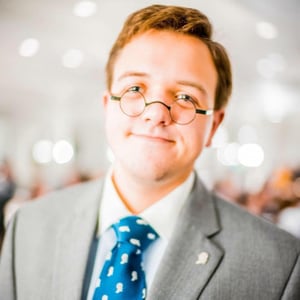
Adam Griffin is a graduate of the University of North Carolina School of Law. During law school, he served as a research assistant to Professor Stephen E. Sachs and UNC Law Dean Martin Brinkley. After law school, Adam spent two years litigating for liberty at the Institute for Justice as an inaugural Law and Liberty Fellow. He then served as a law clerk to Chief Judge Richard E. Myers in the United States District Court for the Eastern District of North Carolina, and previously worked at Pacific Legal Foundation and the Civil Rights Division of the Department of Justice.
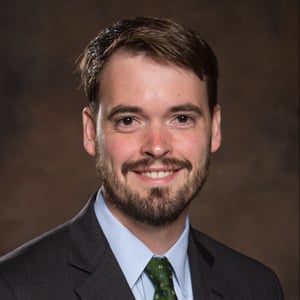
Senior Attorney, Institute for Justice
Rob Johnson is a senior attorney at the Institute for Justice, where he litigates to protect private property, free speech, and other individual rights. Rob is a nationally-recognized expert on civil forfeiture. He previously represented a series of small business owners who had their entire bank accounts seized by the IRS, and he launched an initiative that resulted in the IRS reopening hundreds of closed forfeiture cases and returning millions of dollars. He has also litigated cases challenging the constitutionality of civil forfeiture procedures, and he scored a victory striking down a forfeiture program as a violation of due process.
Beyond civil forfeiture, Rob has litigated cases defending a range of constitutional rights. He was part of teams that successfully challenged occupational licensing requirements for tour guides in Savannah and Charleston. He also developed a class action lawsuit fighting the NYPD’s use of a draconian “no-fault eviction” statute to coerce residents to waive their constitutional rights, which led New York City to reform the challenged law.
Rob’s writing has been published in the Wall Street Journal, Washington Post, Politico, and Reason, among other venues. Rob has testified about occupational licensing before the House and Senate Judiciary Committees and has twice testified about civil forfeiture before the House Ways & Means Oversight Subcommittee. He has also testified before state legislatures across the country.
From 2014-2017, Rob served as IJ’s first Elfie Gallun Fellow for Freedom and the Constitution. In that role, Rob wrote and spoke about the vital role the U.S. Constitution plays in protecting our most precious freedoms. He is currently at work on a book about the Fourteenth Amendment.
Rob studied literature and anthropology at Columbia University, and he studied law at Harvard Law School. Upon graduation, he clerked for Chief Judge Alex Kozinski on the Ninth Circuit and for Justice Anthony Kennedy on the Supreme Court.
Rob lives in Cleveland with his wife and two daughters—all named after characters in Shakespeare plays—and is an amateur large format photographer.
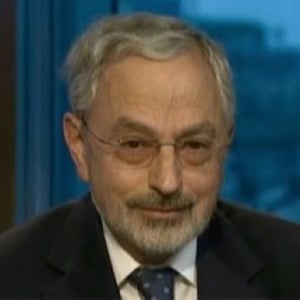
David B. Smith, PLLC
David B. Smith has over 35 years of white collar criminal experience. He has litigated scores of cases and argued more than one hundred federal criminal appeals as a federal prosecutor and defense attorney, including extensive experience with civil and criminal litigation in the Supreme Court of the United States. Mr. Smith has been repeatedly named in the list of preeminent lawyers in the field of white collar criminal defense by Best Lawyers in America (2012-2021) and Virginia Super Lawyers (2009-2020), and has received the President’s Commendation for outstanding service from the National Association of Criminal Defense Lawyers in 1993, 1994, and 2004. He served for nine years on the Board of the NACDL and has been Chair of its Forfeiture Committee since 1990. He is also a Vice-Chair of its Amicus Committee.
For nearly a decade prior to entering private practice, Mr. Smith was a prosecutor in the Criminal Division of the United States Department of Justice and at the United States Attorney’s Office for the Eastern District of Virginia, where he was involved in complex white collar criminal investigations, trials, and appeals involving defense procurement fraud, congressional bribery, espionage, tax evasion, mail fraud, false claims and other crimes. In 1995-1996, Mr. Smith served as an Associate Independent Counsel in the investigation of Michael Espy, the former secretary of agriculture.
Mr. Smith is regarded as the foremost expert in the country on asset forfeiture law and practice. He is the author of the leading two-volume legal treatise on forfeiture, Prosecution and Defense of Forfeiture Cases (2020), published by Matthew Bender, and co-author of Civil RICO (2020), also published by Matthew Bender. He has testified before congressional committees several times with respect to forfeiture, restitution, and money laundering legislation. Mr. Smith has regularly counseled the Senate and House Judiciary Committees on forfeiture legislation, and was heavily involved in drafting the Civil Asset Forfeiture Reform Act of 2000. He has also assisted the federal advisory committees in writing the procedural rules governing criminal and civil forfeiture proceedings. In 2000-2001, Mr. Smith was appointed by Senator Richard Shelby (R. Ala.), the Chairman of the Senate Intelligence Committee, to serve as a Commissioner with the Judicial Review Commission on Foreign Asset Control.
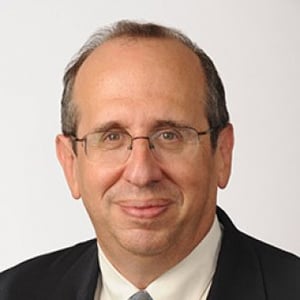
Director and Senior Fellow, Berkeley Center for Law and Technology, University of California at Berkeley
Mark Cohen heads the Asia IP Project at the Berkeley Center for Law and Technology at Berkeley Law School. He is also responsible for teaching international trade law and research and writing on IP issues. Previously, Cohen was Senior Counsel, China in the Office of Policy and International Affairs at the U.S. Patent and Trademark Office, after serving as a visiting professor at Fordham Law School (2011-2012). Prior to that time, he served in such functions as: Director, International Intellectual Property at Microsoft Corporation; Of Counsel to Jones Day’s Beijing office; and Senior Intellectual Property Attaché at the U.S. Embassy in Beijing (2004- 2008). In total, he has over 30 years private, public sector, in-house and academic experience in China and transition economies, with a focus on technology trade and intellectual property.
Cohen was the first IPR Attaché posted by USPTO to handle IPR issues in a foreign country. In addition, he launched the annual “Ambassador’s IPR Roundtable” which he co-chaired for five years, devised IPR “toolkits”, “road shows”, pro-bono programs, internal training programs for the US government and external training programs, and worked with USPTO and other US agencies to engage China and Chinese IP agencies. Cohen led a China team at USPTO consisting of 21 individuals in DC, Beijing, Shanghai and Guangzhou, China on all aspects of USPTO’s activities in China. Among his book-length publications are Antimonopoly Law and Practice in China (Oxford University Press 2011, with Steve Harris et al.). He was also the editor of Chinese Intellectual Property Law and Practice (Kluwer Law International 1999) and has edited or published a number of on-line publications, including the blog www.chinaipr.com.
Mr. Cohen has taught and lectured at numerous universities in the United States, Asia and Europe. Amongst other honors, he was the recipient of the US Chamber of Commerce’s “IP Champion” award in 2014. Mr. Cohen holds a J.D. degree from Columbia University (1984), an M.A. from the University of Wisconsin in Chinese Language and Literature (1979) and a B.A. from the State University of New York at Albany in Chinese Studies (1977).
Hon. William Matthew Byrne, Jr. Chair Professor of Law, Loyola Law School, Loyola Marymount University
Prior to joining Loyola in 2013, Professor Justin Hughes taught at Cardozo Law School where he served as director of Cardozo’s Intellectual Property Program, 2004 through 2008, and founded the law school’s Indie Film Clinic, the first of its kind.
From 2009 through 2013, Professor Hughes also worked in the Obama Administration as Senior Advisor to the Undersecretary of Commerce for Intellectual Property. In that capacity he was the United States chief negotiator for the Beijing Treaty on Audiovisual Performances (2012) and the Marrakesh Treaty for the Blind (2013).
In the 1990s, Professor Hughes did volunteer work in democracy development in Latin America, West Africa and the Balkans. He has practiced law in Paris and Los Angeles. As a Henry Luce Scholar, he clerked for the Lord President of the Malaysian Supreme Court in Kuala Lumpur.
Dinsmore & Shohl LLP, Partner
Brian is chair of Dinsmore’s IP Transactions and Licensing Group. He is a past president of the Licensing Executives Society (USA and Canada), Inc. (LES), the leading professional society devoted to commercial transactions and licensing of intangible property. He continues to serve LES as senior vice president for public policy. He has extensive experience in a wide variety of commercial transactions involving intangible property, and is known for creative licensing strategies to promote collaboration and resolve IP-related disputes.
He is a registered patent attorney with more than 30 years of experience before the U.S. Patent and Trademark Office and in structuring global IP portfolios and strategies. He has extensive experience in contested proceedings before the USPTO Patent Trial and Appeal Board (interferences, Inter Partes Reviews and Post Grant Reviews), as well as contested matters in federal courts and the International Trade Commission. His wide-ranging experience affords a broad, informed perspective and facilitates creative approaches to intellectual property management, licensing, and enforcement.
In addition to his leadership of LES, Brian served on the LES Board of Directors 2007 – 2018. In his ongoing role as senior vice president for public policy he is responsible for coordinating the society’s public policy positions, amicus briefs, and congressional outreach. He works with legislators, the executive branch, and the courts toward consistent, reliable, and prudent IP laws and policies that advance innovation and economic development. He has also served LES as trustee for education, and has long served as an author, editor, and faculty member of LES educational programs focusing on best practices in IP licensing.
He is also active in the global society, LES International (LESI). Among his various roles in LESI, he has served as co-chair of the External Relations Committee, coordinating public policy and advocacy for effective IP laws and policies among the 33 regional LES societies, and with various non-governmental organizations such as WIPO and EPO. In 2019, he received the LES International President’s Service Recognition Award.
Brian also serves as Chair of the Board of Directors of the Bayh Dole Coalition, a 501(c)(4) corporation dedicated to promoting and preserving the Bayh Dole Act. He is a member of the Founding Board of Directors of the United States Intellectual Property Alliance (USIPA), an organization dedicated to raising public awareness of, and appreciation for, the role of IP in fostering innovation for the public good; and he has served on the DC Bar Intellectual Property Section Steering Committee (2013 – 2016).
In 2016, Brian testified before the U.S. Senate Committee on Small Business and Entrepreneurship on the effects of the America Invents Act on small business and entrepreneurs in a hearing entitled “An Examination of Changes to the U.S. Patent System & Impacts on America's Small Businesses.”
With his longstanding and diverse patent practice, in both private practice and in-house, Brian advises corporate leaders and entrepreneurs in effective IP procurement practices, and in maximizing value from IP assets. He has been retained as a testifying witness in IP and licensing disputes by the U.S. Department of Justice, the U.S. Department of the Treasury, and by various private enterprises.
Brian has been acknowledged by IAM magazine as among its “IAM Strategy 300”, the world’s leading IP strategists, and among “The World's Leading Patent and Technology Licensing Lawyers.”
He earned B.S. and M.S. degrees from the Department of Chemistry, Rochester Institute of Technology, Rochester, NY; and Juris Doctor from Syracuse University, College of Law, Syracuse, NY (1986).
Brian has served his alma mater as president of the RIT Alumni Association 2005 – 2009; and now serves on the RIT Board of Trustees as a member of its Executive Committee, chair of its Student Life Committee, and vice-chair of its Committee on Trustees. In 2013, Brian was awarded RIT’s Outstanding Alumnus Award, and in 2005 he was awarded the Distinguished Alumnus Award by RIT’s College of Science.

Executive Vice President, Chief Legal Officer, Gates Corporation
Matthew R. A. Heiman joined the Company in May 2026 and has served as the Company’s Chief Legal Officer and Corporate Secretary since June 2026. As Chief Legal Officer, Mr. Heiman is responsible for all legal functions for Gates, including securities and corporate governance, M&A, litigation, commercial, regulatory, compliance, patents and trademarks, real estate, employment and labor, sustainability and environmental matters. Prior to joining Gates, Mr. Heiman held senior legal leadership roles at Waystar, where he served as Chief Legal & Administrative Officer from 2023 to 2025 and as General Counsel and Corporate Secretary from 2020 to 2023. Prior to that, he was with Johnson Controls, where he served as Vice President, Corporate Secretary, and Associate General Counsel. Mr. Heiman has been a Senior Fellow for the National Security Institute at George Mason University’s Antonin Scalia School of Law since 2018.
Senior Counselor, The Brunswick Group
Robert B. Zoellick is a Principal of Brunswick Group’s Geopolitical advisory offer and a Senior Fellow at the Belfer Center for Science and International Affairs at Harvard University’s Kennedy School of Government. In addition, Zoellick serves on the boards of Temasek, Singapore’s Sovereign Wealth Fund, and Twitter, Inc., and is on the Advisory Board of Swiss Re. He is a member of the boards of the Peterson Institute for International Economics and the Carnegie Endowment, chairs the Global Tiger Initiative, and is a member of the Global Leadership Council of Mercy Corps, a global humanitarian agency.
Zoellick was the President of the World Bank Group from 2007-12, U.S. Trade Representative from 2001 to 2005, and Deputy Secretary of State from 2005 to 2006. From 1985 to 1993, Zoellick served as Counselor to the Secretary of the Treasury and Under Secretary of State, as well as White House Deputy Chief of Staff.
Zoellick is a recipient of the Distinguished Service Award, the Department of State’s highest honor, the Alexander Hamilton Award of the Department of the Treasury, and the Medal for Distinguished Public Service of the Department of Defense. The German government awarded him the Knight Commanders Cross for his achievements in the course of German unification. The Mexican and Chilean governments awarded him their highest honors for non-citizens, the Aztec Eagle and the Order of Merit, for recognition of his work on free trade, development, and the environment.
Zoellick holds a J.D. magna cum laude from the Harvard Law School, a master's degree in public policy from Harvard's Kennedy School of Government, and a bachelor's degree from Swarthmore College.
Adjunct Professor of Law, Scalia Law; Google, Corporate Counsel
Kathryn Ciano Mauler currently serves as a Corporate Counsel at Google. Prior to Google, Kathryn was Senior Regulatory Counsel at Uber Technologies, and also spent three years at i360, LLC as General Counsel. Before this, she also worked at a boutique law firm in Washington, D.C. and at the Institute for Justice.
She received her B.A. from the University of Florida. She also received her business degree from the University of Florida - Warrington College of Business, studying at the Ecole supérieure de Commerce de Toulouse in France. Kathryn's J.D. is from the George Mason University School of Law.
Associate, Fox Rothschild LLP
A licensed U.S. Customs broker and Certified Customs Specialist, Joseph is a logistics and international trade attorney who advises clients on:
He regularly counsels clients on various matters pertaining to Customs and trade, representing both domestic and foreign importers and exporters in multiple aspects of international trade transactions. Joseph works diligently and closely with clients to identify and implement systems aimed at maximizing landed cost savings through duty reduction or deferral, as well as utilization of trade preference programs. Joseph also works alongside clients to assist them through regulatory and C-TPAT program audits; fines, penalties and forfeiture actions; and the filing and perfection of prior disclosures.

Co-Founder and Co-CEO, Institute for Progress
Caleb Watney is the co-founder and co-CEO of the Institute for Progress.
Caleb manages the metascience and immigration policy teams at IFP. His research focuses on policy levers the U.S. could use to rebuild state capacity and increase long-term rates of innovation.
Previously, Caleb worked as the director of innovation policy at the Progressive Policy Insitute, a technology policy fellow at the R Street Institute, and a graduate research fellow at the Mercatus Center. His commentary has been published in The Washington Post, The Atlantic, Politico, Lawfare, and the National Review. He has also been cited in the New York Times, The Economist, Vox, Ars Technica, and the National Journal. He received his master’s in economics from George Mason University and a bachelor of business administration from Sterling College.
Former Director, State Courts, The Federalist Society for Law and Public Policy Studies
Peter Bisbee served as Director of State Courts for the Federalist Society. In this capacity, he lead a comprehensive effort to promote the discussion on the role of courts in states across the country. Peter also executed the Society’s government and coalition outreach efforts at the national level as Deputy Director of External Relations, working as a liaison to Congress and other public policy organizations. He previously served as Director of Membership at the Society, where he managed relations with the Society’s network of over 70,000 individuals, created outreach campaigns to increase engagement, and developed the organization's recordkeeping and communication systems. Peter holds a B.A. from the University of Michigan in History and lives in Virginia with his wife and daughter.
Immigration Policy Attorney, National Immigration Law Center
Kamal Essaheb engages in advocacy and technical assistance relating to state and local enforcement of immigration law and access to legal status for immigrants. At NILC, his advocacy focuses on passage of the DREAM Act, implementation of the Deferred Action for Childhood Arrivals (DACA) program, and state and local enforcement of immigration law. Prior to joining NILC, Mr. Essaheb was a practicing immigration attorney at CUNY Citizenship Now, a nonprofit immigration legal services provider in New York City. He is a graduate of Fordham Law School, where he was a Stein Scholar in Public Interest Law and Ethics. He is an immigrant from Morocco and is fluent in Arabic.

Partner, Baker Hostetler LLP
David Rivkin is a member of the firm's litigation, international and environmental teams and is co-leader of the firm's national appellate practice. He has extensive experience in constitutional, administrative and international law litigation and has been involved in numerous high-profile cases. With his prior experience in the government sector, David draws on a wealth of knowledge when providing compliance advice to companies and handling enforcement proceedings before government agencies on issues arising out of multilateral and unilateral sanctions, the Foreign Corrupt Practices Act (FCPA), anti-boycott issues, bankruptcy and financial fraud matters, and environmental and energy issues.
David has developed and implemented legislative, regulatory and litigation initiatives for two presidential administrations. Over the years, he has published hundreds of articles, op-eds, book reviews and book chapters on a variety of international, legal, constitutional, defense, arms control, foreign policy, environmental and energy issues for various newspapers and magazines, including The Wall Street Journal, The Washington Post, The New York Times, USA Today and The Los Angeles Times, and has been a frequent commentator and guest on TV and radio shows including ABC, CBS, NBC, CNN, Fox News, NPR and PBS.

Senior Fellow and Director of Constitutional Studies, Manhattan Institute
Ilya Shapiro is a senior fellow and director of constitutional studies at the Manhattan Institute and a contributing editor of City Journal. Previously he was executive director and senior lecturer at the Georgetown Center for the Constitution, and before that a vice president of the Cato Institute.
Shapiro is the author of Lawless: The Miseducation of America’s Elites (2025) and Supreme Disorder: Judicial Nominations and the Politics of America’s Highest Court (2020), coauthor of Religious Liberties for Corporations? (2014), and editor of 11 volumes of the Cato Supreme Court Review (2008-18). He has contributed to a variety of academic, popular, and professional publications, including the Wall Street Journal, Harvard Journal of Law & Public Policy, Washington Post, Los Angeles Times, USA Today, National Review, and Newsweek. He also regularly provides commentary for various media outlets, writes the Shapiro’s Gavel newsletter on Substack, and once appeared on the Colbert Report.
Shapiro has testified many times before Congress and state legislatures and has filed more than 500 amicus curiae “friend of the court” briefs in the Supreme Court. He lectures regularly on behalf of the Federalist Society, is a member of the board of fellows of the Jewish Policy Center, was an inaugural Washington Fellow at the National Review Institute, and has been an adjunct law professor at the George Washington University and University of Mississippi. He is also the chairman of the board of advisers of the Mississippi Justice Institute, a barrister in the Edward Coke Appellate Inn of Court, and a former member of the Virginia Advisory Committee to the U.S. Commission on Civil Rights.
Earlier in his career, Shapiro was a special assistant/adviser to the Multi-National Force in Iraq on rule-of-law issues and practiced at Patton Boggs and Cleary Gottlieb. Before entering private practice, he clerked for Judge E. Grady Jolly of the U.S. Court of Appeals for the Fifth Circuit. He holds an AB from Princeton University, an MSc from the London School of Economics, and a JD from the University of Chicago Law School.
Solicitor General, Montana Attorney General's Office
Christian is currently Solicitor General of Montana, where he serves as the chief litigator and principal legal advisor to Montana Attorney General Austin Knudsen. In that capacity, he manages litigation before the federal district courts, courts of appeal, and the United States Supreme Court, as well as the Montana Supreme Court. He previously served in the Trump Administration as Senior Counsel to the Assistant Secretary for Civil Rights at the U.S. Department of Education. Prior to government service, he was a public interest constitutional litigator at Mountain States Legal Foundation and a fellow at the Institute for Justice. He clerked for Justice Caleb Stegall on the Kansas Supreme Court. He also served as Director of Publications for the Federalist Society's national headquarters.
Christian earned his B.A. in Political Science in 2009 from the University of Pennsylvania before attending the University of Kansas School of Law. Christian is admitted to practice law in Kansas and Montana. A Kansas native, he is a die-hard fan of the Kansas Jayhawks, Kansas City Chiefs, and Kansas City Royals.
Christian is a member of the Federalism & Separation of Powers Practice Group's Executive Committee.
Senior Staff Attorney, Speech, Privacy & Technology Project, ACLU
Brian Hauss is a senior staff attorney with the ACLU’s Speech, Privacy & Technology Project, where he focuses on free expression issues. Since joining the ACLU in 2012, he has litigated cases defending the First Amendment rights of writers, journalists, media organizations, activists, advocacy groups, labor unions and private citizens. He has authored or co-authored numerous Supreme Court amicus curiae briefs on behalf of the ACLU and other groups. He also regularly discusses First Amendment issues in the media and at law schools throughout the country. Brian was a 2021-22 Wasserstein Public Interest Fellow at Harvard Law School. He is a graduate of Yale University and Harvard Law School and served as a law clerk to the Hon. Marsha S. Berzon of the U.S. Court of Appeals for the Ninth Circuit.
Former General Counsel, U.S. Department of Homeland Security
Andrew Levy is a former Deputy General Counsel at the Department of Homeland Security. Levy studied law at Boston College Law School in 2001, and clerked at United States District Court for the Southern District of New York as well as the United States Court of Appeals for the Ninth Circuit.

Co-Chairman, The Federalist Society for Law and Public Policy Studies
Leonard is Co-Chairman and former Executive Vice President of the Federalist Society, joining the organization over 25 years ago. Since that time he has been instrumental in helping the organization top 70,000, focusing on the growth of lawyers membership, operations and activities advancing limited, constitutional government. In addition to his work at the Society, Leonard has advised President Trump on judicial selection, assisted with the Gorsuch and Kavanaugh Supreme Court selection and confirmation process, and served as a member of the transition team. He also organized the outside coalition efforts in support of the Roberts and Alito U.S. Supreme Court confirmations. Leonard was appointed by President George W. Bush to three terms to the U.S. Commission on International Religious Freedom as chairman. He was also a U.S. Delegate to the UN Council and UN Commission on Human Rights during the Bush Administration. Leonard was the recipient of the 2009 Bradley Prize, along with the other founders and directors of the Federalist Society, for his work in advancing freedom and the rule of law. He is the coeditor of Presidential Leadership: Rating the Best and the Worst in the White House, as well as the author of opinion editorials in the New York Times,The Wall Street Journal, and Washington Post. Leonard holds degrees from Cornell University and Cornell Law School. He presently resides in Northern Virginia, where he and his wife Sally have raised their seven children.
Former United States Attorney General
Jeff Sessions served as the 84th Attorney General of the United States from February 9, 2017 until November 7, 2018.
Prior to becoming Attorney General, Mr. Sessions served as a United States Senator for Alabama since 1996. As a United States Senator, he focused his energies on maintaining a strong military, upholding the rule of law, limiting the role of government, and providing tax relief to stimulate economic growth and to empower Americans to keep more of their hard-earned money.
Mr. Sessions was born in Selma, Alabama on December 24, 1946, and grew up in Hybart, the son of a country store owner. Growing up in the country, Sessions was instilled with certain core values – honesty, hard work, belief in God and parental respect – that define him today. In 1964, he became an Eagle Scout and thereafter received the Distinguished Eagle Scout Award. After attending school in nearby Camden, Sessions attended Huntingdon College in Montgomery, graduating with a Bachelor of Arts degree in 1969. He received a Juris Doctorate degree from the University of Alabama in 1973. Sessions served in the United States Army Reserve from 1973 to 1986, ultimately attaining the rank of Captain. He still considers that period to be one of the most rewarding chapters of his life.
Sessions’ interest in the law led to a distinguished legal career, first as a practicing attorney in Russellville, Alabama, and then in Mobile. Following a two-year stint as Assistant United States Attorney for the Southern District of Alabama (1975-1977), Sessions was nominated by President Reagan in 1981 and confirmed by the Senate to serve as the United States Attorney for the Southern District of Alabama, a position he held for 12 years. Sessions was elected Alabama Attorney General in 1995, serving as the State’s chief legal officer until 1996, when he entered the United States Senate.
Sessions and his wife, Mary Blackshear Sessions, originally of Gadsden, Alabama, have three children, Mary Abigail Reinhardt, Ruth Sessions Walk, and Sam. They have seven granddaughters, Jane Ritchie, Alexa, Gracie, Sophia, Hannah, Joanna, and Phoebe, and three grandsons, Jim Beau, Lewis, and Nicholas.

The Future of Chevron Deference at the Supreme Court
Thomas W. Merrill, Eli Nachmany, Yaakov M. Roth
The Supreme Court decided multiple administrative law cases this term, but in no majority opinion...
Foreign Policy in the Biden Administration
Eric J. Kadel, Nazak Nikakhtar, Adam J. Szubin
This virtual event examined current national security issues, including relations with China, as well as...
Non-Delegation? Or No Divesting? Art. I, Sec. 1 at the Founding and Today
Nicholas Bagley, Philip A. Hamburger, Jenn L. Mascott, Nicholas R. Parrillo, Neomi Rao
Whether as the result of hyper-partisanship or as a residue of the constitutional design for...
Undue Delay or Due Process? Does the Due Process Clause Require a Prompt Post-Seizure Hearing When the Government Seizes an Individual’s Property?
Stefan D. Cassella, Adam F. Griffin, Robert E. Johnson, David B. Smith
The Institute for Justice (IJ) has filed a petition for certiorari in Serrano v. CPB, asking...
Deep Dive Episode 164 – How Will the Biden Administration Handle China's Intellectual Property Practices?
Mark Cohen, Justin Hughes, Brian O'Shaughnessy
The Biden administration faces a variety of issues when it comes to China, from trade...
Book Review: America in the World: A History of U.S. Diplomacy and Foreign Policy
Matthew R. A. Heiman, Robert Zoellick
Ranging from Benjamin Franklin, Alexander Hamilton, and Thomas Jefferson to Henry Kissinger, Ronald Reagan, and...
Executive Agencies' Effects on Innovation and Consumers under President Trump
Kathryn Ciano Mauler, Joseph Rohe, Caleb Watney
On December 4, 2019, the Federalist Society's Triangle Lawyers Chapter, Fox Rothschild LLP, and the...
Executive Action on Immigration
Peter Bisbee, Kamal Essaheb, David B. Rivkin, Ilya Shapiro
On November 20, 2014, President Obama, with much attention from the media and the public,...
Border Searches, National Security, and the Reasonable Expectation of Digital Privacy - Podcast
Christian Corrigan, Brian Hauss, Andrew J.P Levy
In United States v. Cotterman, the Ninth Circuit held en banc that government officials must...
Welcome and Opening Address by Senator Jeff Sessions
Leonard A. Leo, Jefferson B. Sessions
United States Senator Jeff Sessions of Alabama opened the Federalist Society's 2011 National Lawyers Convention with an address...