
Partner, Sullivan & Cromwell LLP
Garrard Beeney is co-head of the Firm’s Intellectual Property and Technology Group and a member of the Firm’s Managing Partners Committee. Mr. Beeney has been inducted as a Fellow of the American College of Trial Lawyers. He is counsel in the two major patent cases to be argued before the U.S. Supreme Court in 2016.
Mr. Beeney has litigated intellectual property and licensing cases throughout the country in both federal and state courts. Mr. Beeney also represents clients before U.S. and European competition law authorities, particularly in the area of the intersection between intellectual property and competition laws. In addition to trying patent and antitrust cases, Mr. Beeney has argued appellate cases in various courts, including in the U.S. Supreme Court, the Federal Circuit and the Second Circuit Courts of Appeal, and the Supreme Court of Arkansas. He represents both plaintiffs and defendants in infringement actions, and advises plaintiffs on patent selection in pre-suit due diligence. Mr. Beeney also frequently advises on licensing issues and IP monetization, and has represented patent holders in the formation of licensing pools, including those related to the AVC, MPEG-2, MPEG-4, DVD, LTE, ATSC, VC-9, IEEE 1394 and other technologies.
In addition to the “Litigator of the Week” award noted below, Mr. Beeney has been recognized as one of the “Top 10 Oral Advocates of the Year” in the Federal Circuit Court of Appeals, as an “Innovative U.S. Lawyer” by the Financial Times and in IAM Patent 1000 – The World’s Leading Patent Practitioners (2014, 2015), which commented that Mr. Beeney is “one of the best in the business.” IAM added that peers comment, “When there is something you can’t do, you send it to him.” The 2014 edition of IAM added that Mr. Beeney is “one of the best trial lawyers on the planet”, and he “sounds the part, looks the part, is always prepared and persuasive, with especially brilliant opening and closing presentations.” He is a recipient of the Burton Award for legal scholarship, and has received the Adele Warnock and other awards for his community service.
Mr. Beeney also is regularly recognized as a leading lawyer in the intellectual property and antitrust fields, among others, by leading industry publications, including The Best Lawyers in America, The Legal 500 United States and New York Super Lawyers.
Mr. Beeney has been a speaker at various professional associations, including the American Intellectual Property Law Association, the American Bar Association, the Licensing Executives Society and Law Seminars International. He has written and contributed chapters to several books, including Business and Commercial Litigation in Federal Courts, Commercial Litigation in New York State Courts and On the Merits: Current Issues in Competition Law and Policy. Mr. Beeney has taught various trial advocacy courses, including serving as a member of the faculty at the National Trial Skills Program of the National Institute for Trial Advocacy. He is also a member of Law360’s 2013 Intellectual Property Editorial Advisory Board.
Mr. Beeney’s public service activities include having served for more than a decade as the deputy mayor of Irvington, New York. He is chairman of the board of Mercado Global, a not-for-profit working to improve the lives of impoverished artisans in Central America, and he regularly represents clients in pro bono litigation, including in a recent successful First Amendment trial and in a matter involving child adoption in Arkansas, the latter of which he successfully argued before the Supreme Court of Arkansas in March 2011.
Partner, Jenner & Block
Matthew S. Hellman is a litigator. He has been lead counsel in dozens of appellate matters, and has presented arguments in the U.S. Supreme Court, the U.S. Courts of Appeals, and in state appellate courts. In addition, he routinely presents arguments in the trial courts. Mr. Hellman’s cases involve a variety of issues such as commercial law, intellectual property and administrative law. He has argued important cases for corporations like Marriott, GE and General Dynamics.
In 2010, Law360 recognized Mr. Hellman as a “Rising Legal Star” in the practice of Appellate Law. In 2007, Jenner & Block recognized Mr. Hellman with the Albert E. Jenner, Jr. Pro Bono Award, which annually recognizes attorneys in the Firm with a strong commitment to pro bono or public service work. He has argued or supervised more than a dozen pro bono cases in the courts of appeals, including two capital cases.
Mr. Hellman is member of the firm’s Appellate and Supreme Court Practice. He is also a member of the Edward Coke Appellate Inn of Court, and an Associate Trustee for the Washington Lawyer’s Committee for Civil Rights and Urban Affairs. He serves as the Co-Chair of the DC Hiring and the Hiring Executive Committees and is also a member of the Associate Development and Evaluation Committee and the Finance Committee.
Co-Director, Center for Intellectual Property & Entrepreneurship, University of Missouri School of Law
Professor Crouch is Associate Professor of Law at the University of Missouri School of Law. Prior to joining the MU Law Faculty, he was a patent attorney at McDonnell Boehnen Hulbert & Berghoff LLP in Chicago, Illinois, and taught at Boston University Law School. He has worked on cases involving various technologies including computer memory and hardware, circuit design, software, networking, mobile and internet telephony, automotive technologies, lens design, bearings, HVAC systems, and business methods. He is also the editor of the popular patent law weblog: Patently-O .
Professor Crouch received his BSE in mechanical engineering cum laude from Princeton University, where he also earned a certificate in engineering management systems. He then earned his JD cum laude from the University of Chicago Law School. While at the University of Chicago, he was a Microsoft, Merck, & Pfizer scholar and a member of the Olin program in law and economics.
Prior to attending law school, Professor Crouch worked as a technical consultant for manufacturing firms in New England, as a research fellow at NASA’s Glenn Research Center, as a software developer at the Mayo Clinic’s department of biomedical imaging, and as a Peace Corps Volunteer in Ghana, West Africa. Dennis Crouch grew up on a farm near Pittsburg, Kansas.

Assistant Professor of Law, Stanford Law School
David Freeman Engstrom’s scholarship focuses on the design of public institutions, particularly regarding civil rights, as well as topics in administrative law, employment law, complex litigation, constitutional federalism, and law and education. Current work includes a book exploring the pre-Title VII, state-level origins of American employment discrimination law; a quantitative analysis of disability discrimination laws; and a project examining the qui tam provisions of the False Claims Act.
Previously, Professor Engstrom ’02 was a law clerk to Judge Diane P. Wood of the U.S. Court of Appeals for the Seventh Circuit and a John M. Olin Fellow in Law, Economics, and Public Policy at Yale Law School. He also practiced for four years, most of it at Kellogg, Huber, Hansen, Todd, Evans & Figel, where he represented clients before the U.S. Supreme Court, U.S. Courts of Appeals, and various trial courts and administrative agencies. Earlier in his career, he worked on education, early childhood, and civil rights issues at the Edward Zigler Center at Yale University and the Hewlett Foundation and taught high school and coached football in the Mississippi Delta.

Founding Partner, Boyden Gray & Associates
Ambassador C. Boyden Gray is the founding partner of Boyden Gray & Associates, a law and strategy firm in Washington, D.C., focused on constitutional and regulatory issues.
Mr. Gray worked in the White House for twelve years, first as counsel to the Vice President during the Reagan administration and then as White House Counsel to President George H.W. Bush. In the Reagan administration, he was Counsel to the Presidential Task Force on Regulatory Relief, for which he wrote the original Executive Order 12291 requiring cost-benefit analysis and White House review of regulations (later renumbered as current EO 12866). In the George H.W. Bush Administration, Mr. Gray was in charge of judicial selection and was also instrumental in the enactment of the Clean Air Act Amendments of 1990, the Energy Policy Act of 1992, and a cap-and-trade system for acid rain emissions. In 1993, he received the Presidential Citizens Medal. Under President George W. Bush, Mr. Gray was U.S. Ambassador to the European Union and U.S. Special Envoy to Europe for Eurasian Energy.
Mr. Gray practiced law for 25 years at the law firm of Wilmer, Cutler & Pickering and was chairman of the Administrative Law and Regulatory Practice Section of the American Bar Association from 2000 to 2002. Early in his career, Mr. Gray helped to develop the Business Roundtable and served as its first counsel. He is an adjunct professor at Antonin Scalia Law School and a former adjunct professor at NYU Law School (teaching energy and environmental law). Mr. Gray is on the Board of Directors of the Atlantic Council, the Federalist Society, Reason Foundation, and the Trust for the National Mall.
Mr. Gray earned his A.B. magna cum laude from Harvard, where he was an editor of the Crimson, and his J.D. with high honors from the University of North Carolina at Chapel Hill, where he was editor-in-chief of the Law Review. Mr. Gray served in the United States Marine Corps, and after law school, he clerked for Earl Warren, Chief Justice of the United States Supreme Court.
Judge, Contra Costa County Superior Court in California
Judge Haight was appointed to Contra Costa County Superior Court by Governor Pete Wilson in 1993.
Justice William J. Brennan, Jr., Professor of Law, Georgetown University Law Center
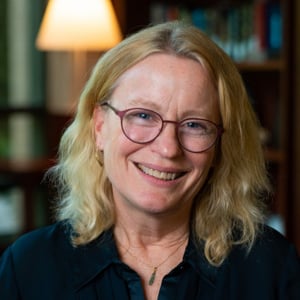
Lisa Heinzerling is the Justice William J. Brennan, Jr. Professor of Law at Georgetown University. Her primary specialties are administrative law and environmental law. She is the author of several books, including Priceless: On Knowing the Price of Everything and the Value of Nothing, a critique of the use of cost-benefit analysis in environmental policy. Professor Heinzerling has received the Georgetown University President's Award for Distinguished Scholar-Teachers, the faculty teaching award at Georgetown Law, and several awards related to her scholarship and advocacy in environmental law. She was the lead author of the winning briefs in Massachusetts v. EPA, in which the Supreme Court held that the Clean Air Act gives EPA the authority to regulate greenhouse gases. From January 2009 to July 2009, Heinzerling served as Senior Climate Policy Counsel to the Administrator of the Environmental Protection Agency and then, from July 2009 to December 2010, she served as Associate Administrator of EPA’s Office of Policy. She was a law clerk to Judge Richard A. Posner of the U.S. Court of Appeals for the Seventh Circuit and Justice William J. Brennan, Jr. of the U.S. Supreme Court.

Richard and Frances Mallery Professor of Law and Faculty Director, Constitutional Law Center, Stanford Law School
Michael W. McConnell is the Richard and Frances Mallery Professor and Faculty Director of the Constitutional Law Center at Stanford Law School, and a Senior Fellow at the Hoover Institution. From 2002 to 2009, he served as a Circuit Judge on the United States Court of Appeals for the Tenth Circuit. He was nominated by President George W. Bush, a Republican, and confirmed by a Democratic Senate by unanimous consent. McConnell has previously held chaired professorships at the University of Chicago and the University of Utah, and visiting professorships at Harvard and NYU. He teaches courses on constitutional law, constitutional history, First Amendment, and interpretive theory. He has published widely in the fields of constitutional law and theory, especially church and state, equal protection, and separation of powers. His book, “The President Who Would Not Be King: Executive Power Under the Constitution,” was published by Princeton University Press in 2020, based on the Tanner Lectures in Human Values, which he delivered at Princeton in 2019. His latest book, co-authored with Nathan Chapman, “Agreeing to Disagree: How the Establishment Clause Protects Religious Diversity and Freedom of Conscience,” was published by Oxford University Press in mid-2023. McConnell has argued sixteen cases in the United States Supreme Court, most recently Carney v. Adams (2020). defending a provision of the Delaware Constitution requiring political balance on that state’s courts. More recently, he was co-counsel in Gonzalez v. Google. He earned his B.A. from Michigan State University and his J.D. from the University of Chicago, and has received honorary degrees from Notre Dame University and Michigan State. He served as law clerk to Supreme Court Justice William J. Brennan, Jr. and D.C. Circuit Chief Judge J. Skelly Wright. He has been Assistant General Counsel of the Office of Management & Budget, Assistant to the Solicitor General of the Department of Justice, and a member of the President’s Intelligence Oversight Board. He is Senior of Counsel to the law firm Wilson, Sonsini, Goodrich & Rosati, and is co-chair of Meta’s Oversight Review Board.

Intellectual Property in the Supreme Court - Podcast
Garrard R. Beeney, Matthew S. Hellman, Dennis Crouch
Continuing the trend of recent years, this Term the Supreme Court is hearing a number...
Panel 2: Congress vs. Agencies: Balancing Checks and Efficiency: Gridlock, Organized Interests, and Regulatory Capture
David Engstrom, C. Boyden Gray, Lois Haight Herrington, Lisa Heinzerling, Michael W. McConnell, Michael Reynolds
The administrative state is often defended as a necessary response to modern conditions that make...