
Professor of Criminology and Statistics, University of Pennsylvania
Richard A. Berk is a professor in the Departments of Statistics and Criminology at the University of Pennsylvania. He has a B.A. degree in psychology from Yale University and a Ph.D. in sociology from the Johns Hopkins University. He was previously a Distinguished Professor of Statistics at UCLA. He has also been on the faculty of the University of California Santa Barbara and Northwestern University. Professor Berk is an elected fellow of the American Statistical Association, the American Association for the Advancement of Science, and the Academy of Experimental Criminology. He has served on the National Research Council Committee on Applied and Theoretical Statistics and has been on the Board of Directors of the Social Science Research Council. He is frequently employed as an expert witness in civil litigation and two cases on which he worked were ultimately decided by the U.S. Supreme Court. Professor Berk’s interests include a wide range of policy-related matters: detecting violations of environmental regulations, properly allocating prison inmates to different security levels, forecasting which individuals on parole are likely to commit violent crimes, monitoring systems for consumer protection, and the role of race in capital cases. His work in applied statistics includes machine learning, causal inference, methods for evaluating the effectiveness of social programs, and the use of statistics in litigation.
Judge, United States Court of Appeals, Fifth Circuit
Judge Edith Clement sits on the United States Court of Appeals for the Fifth Circuit. Judge Clement worked in a private practice as a maritime attorney in New Orleans, Louisiana, before being appointed in 1991 to the United States District Court for the Eastern District of Louisiana by President George H. W. Bush. In 2001, she was appointed by President George W. Bush to the United States Court of Appeals for the Fifth Circuit. Judge Clement is a member of the Maritime Law Association of the United States, the Federal Bar Association, the American Law Institute, the Federalist Society, the Tulane Law Schools Inn of Court, and the Committee on the Administrative Office of the Judicial Conference of the United States. She is a graduate of the University of Alabama and received her JD from Tulane Law School.
Partner, Krieg DeVault LLP
Deborah Daniels, former U.S. Attorney and U.S. Assistant Attorney General, has lengthy experience in criminal and civil investigations and public safety. Her work has included responsibilities at the U.S. Department of Justice directly related to the nation’s response to the September 11th attack on the U.S., data and communications interoperability, and the nation's ability to detect, prevent and respond to future terrorist acts. Ms. Daniels provides counsel to the firm’s public and private sector clients in matters affecting public safety, homeland security, disaster preparedness, leveraging of federal and state resources, federal and state regulatory compliance and internal investigations. She assists the firm’s clients in interacting with agencies of the federal government, including both the Executive Branch and the U.S. Congress, and advises clients ranging from government agencies to health care providers to other private sector entities on compliance and public policy matters.
Assistant District Attorney, Philadelphia District Attorney
Sarah Hart has worked for over three decades in the criminal justice field at the federal, state and local levels.
From 1979-95, she served as a prosecutor in Philadelphia where (for 9 years) she represented the District Attorney in federal prison litigation involving mass releases of pretrial detainees. During this time, she provided substantial assistance to the U.S. Congress in drafting the Federal Prison Litigation Reform Act (PLRA).
From 1995-2001, Mrs. Hart served as the Chief Counsel for the Pennsylvania Department of Corrections where she successfully defended the constitutionality of the PLRA in the federal courts.
From 2001-2005, following unanimous Senate confirmation, she served as the Director of the National Institute of Justice (the research and evaluation arm of the U.S. Department of Justice) where, among other things, she developed the national $1 billion DNA initiative.
After an appointment as a Visiting Professor teaching graduate school courses at Rutgers University, she returned to Philadelphia to represent Philadelphia District Attorney in class action litigation concerning the Philadelphia Prison System. During this time she represented the Pennsylvania District Attorney’s Association in crafting comprehensive, bipartisan prison reform legislation in Pennsylvania that enacted sweeping changes in sentencing and parole practices. (Acts 81-84 of 2008).
Mrs. Hart previously served as Vice Chair of the Legal Affairs Committee of the American Corrections Association, a member of the Executive Committee of the Criminal Law Practice Group of the Federalist Society, a member of the Board of Directors of the Crime Victims Law Institute, and as a member of the Pennsylvania Supreme Court’s Appellate Procedural Rules Committee. She has also provided extensive training on the PLRA and corrections issues to the National Institute of Corrections, the National Association of Attorneys General, and the Association of State Correctional Administrators.
Mrs. Hart has published articles relating to corrections, forensics, and domestic violence. A recent publication focuses on the benefits and costs of prisoner class actions.
S. Hart, Evaluating Institutional Prisoners’ Rights Litigation: Costs and Benefits and Federalism Considerations, 11 U. Penn. J. Const. L. 73 (2008).
She is a graduate of Rutgers Law School and the University of Delaware.
Executive Director, Prison Law Office
Donald Specter is the Executive Director of the Prison Law Office at San Quentin, California. The Prison Law Office is a nonprofit law firm based in Berkeley, California that provides free legal services to California incarcerated offenders concerning their conditions of confinement. Mr. Specter has been lead counsel in numerous successful institutional reform cases challenging various conditions of confinement in California=s adult and juvenile prison systems. He has been chair of the California State Bar=s Commission on Corrections, was named Appellate Lawyer of the Week by the National Law Journal for his work in Brown v. Plata, 531 U.S. ___ (2011), has received the California Lawyers of the Year Award in 2006 and 2009 and was selected three times as one of the top 100 lawyers in California. Mr. Specter earned his B.A. in Economics from New College in Sarasota, Florida in 1974 and his J.D. from the University of San Francisco School of Law in 1978.
Former Senator, State of Alabama
Luther J. Strange, III is a former Republican member of the U.S. Senate from the state of Alabama. Strange was first appointed to the Senate position by Gov. Robert Bentley on February 9, 2017. He replaced Jeff Sessions, who was confirmed as United States Attorney General.
Strange is the former Republican Attorney General of Alabama. He was first elected to the statewide position in 2010 and assumed office on January 17, 2011. Strange's first four-year term ended on January 19, 2015, and he won re-election to a second term on November 4, 2014.
Prior to his election as Attorney General, Luther Strange practiced law in Birmingham, Alabama. In 2010, U.S. News-Best Lawyers "Best Law Firms" gave his firm a first-tier ranking, and the firm was named as one of the Top Ten Law Firms that Understand Economic Development by Southern Business & Development magazine.
Before establishing his own law firm, Strange was a partner with Bradley Arant Boult Cummings LLP. During his time in private practice, he was recognized in Best Lawyers in America® , named Best of the Bar by the Birmingham Business Journal, and called one of the "Best Lawyers" in Alabama by Birmingham magazine.
His tenure in office was marked by a strong emphasis on fighting public corruption, including the conviction and removal from office of the Alabama House Speaker in June 2016. He was also a leader in opposing costly overregulation and the expansion of the federal government at the expense of the states.
Luther Strange served as the court-appointed Coordinating Counsel for the Gulf Coast States in the historic Deepwater Horizon Oil spill litigation. Strange was actively involved in trying the case, which led to a landmark settlement agreement to compensate Alabama for both economic and environmental damages as a result of that disaster.
Among many civic commitments, he has served on the Advisory Board of the United States Merchant Marine Academy and as a Trustee of Talladega College, Alabama’s oldest historically black college.
An Eagle Scout since he was 13 and a recipient of the Distinguished Eagle Scout Award from the Boy Scouts of America in 2011, Strange is passionate about encouraging young people in Alabama to become involved in public service.
Strange received both his undergraduate and law degrees from Tulane University. He was a scholarship basketball player while earning his undergraduate degree at Tulane. In June of 2016, he was inducted into the Tulane Law School Hall of Fame.
Assistant District Attorney, Philadelphia District Attorney
Sarah Hart has worked for over three decades in the criminal justice field at the federal, state and local levels.
From 1979-95, she served as a prosecutor in Philadelphia where (for 9 years) she represented the District Attorney in federal prison litigation involving mass releases of pretrial detainees. During this time, she provided substantial assistance to the U.S. Congress in drafting the Federal Prison Litigation Reform Act (PLRA).
From 1995-2001, Mrs. Hart served as the Chief Counsel for the Pennsylvania Department of Corrections where she successfully defended the constitutionality of the PLRA in the federal courts.
From 2001-2005, following unanimous Senate confirmation, she served as the Director of the National Institute of Justice (the research and evaluation arm of the U.S. Department of Justice) where, among other things, she developed the national $1 billion DNA initiative.
After an appointment as a Visiting Professor teaching graduate school courses at Rutgers University, she returned to Philadelphia to represent Philadelphia District Attorney in class action litigation concerning the Philadelphia Prison System. During this time she represented the Pennsylvania District Attorney’s Association in crafting comprehensive, bipartisan prison reform legislation in Pennsylvania that enacted sweeping changes in sentencing and parole practices. (Acts 81-84 of 2008).
Mrs. Hart previously served as Vice Chair of the Legal Affairs Committee of the American Corrections Association, a member of the Executive Committee of the Criminal Law Practice Group of the Federalist Society, a member of the Board of Directors of the Crime Victims Law Institute, and as a member of the Pennsylvania Supreme Court’s Appellate Procedural Rules Committee. She has also provided extensive training on the PLRA and corrections issues to the National Institute of Corrections, the National Association of Attorneys General, and the Association of State Correctional Administrators.
Mrs. Hart has published articles relating to corrections, forensics, and domestic violence. A recent publication focuses on the benefits and costs of prisoner class actions.
S. Hart, Evaluating Institutional Prisoners’ Rights Litigation: Costs and Benefits and Federalism Considerations, 11 U. Penn. J. Const. L. 73 (2008).
She is a graduate of Rutgers Law School and the University of Delaware.

Professor Emeritus, Paul M. Hebert Law Center, Louisiana State University
In memoriam
Dr. John Baker is Professor Emeritus of Law, and previously the Dale E. Bennett Professor of Law, at Louisiana State University Law School. He is currently Visiting Professor at Peking University School of Transnational Law (via Zoom) and has been Visiting Professor at The Center for the Constitution, Georgetown Law School (2013-2020). He has also been a Visiting Fellow at Oriel College, the University of Oxford (2012-2014) and taught at Blackfriars Hall, Oxford in 2014. Dr. Baker has also been an adjunct Fellow at the Heritage Foundation (Spring, 2008) and a Distinguished Scholar at the Catholic University of America Law School (2011-12). He has taught at Tulane Law School, George Mason Law School, Pepperdine Law School, New York Law School, Hong Kong University, and the University of Dallas, School of Management and also taught and/or lectured in 17 foreign countries. Notable among his foreign visits are the
following: Visiting Professor at the University of Lyon III (France) (1999-2011); Visiting Professor at the Universidad de los Andes, Chile (2012), as a Fulbright Specialist (2006); and a Fulbright Scholar at various universities in the Philippines. Dr. Baker received his J.D., with honors, from the University of Michigan Law School and his B.A., magna cum laude, from the University of Dallas. He also earned a Ph.D. in Political Thought from the University of London. Baker has taught over a dozen different subjects, mostly courses in public law. His main areas of interest are Constitutional Law (particularly federalism and separation of powers), Criminal Law, Anti-Terrorism Law, International Law, Health Care Law, Mediation, and Comparative Law.
In addition to law review articles and book chapters, Dr. Baker’s academic publications include Hall's Criminal Law: Cases and Materials (with Benson, Force and George; 5th ed. Michie, 1993); An Introduction to the Law of the United States (ed. with Levasseur; University Press of America, 1992). He has also published on Forbes.com, FoxNews.com, in The Washington Times, and a number of times in The Wall Street Journal. He argues in federal court, including two oral arguments in the U.S. Supreme Court. For many years, he co-taught courses for the Federalist Society on separation of powers with the late Supreme Court Justice Antonin Scalia. In September 2016, he co-taught a Supreme Court seminar in China with Justice Samuel Alito. Following law school, he served as a law clerk in federal district court and as an assistant district attorney in New Orleans before joining LSU in 1975. While a professor, he has been as a consultant to USAID, USIA (since rolled into the State Department), the Justice Department, the U.S. Senate Judiciary Subcommittee on Separation of Powers, and the Office of Planning in the White House. He served on an ABA Task Force which issued the report, The Federalization of Crime (1998) and later as a consultant to the “Bi-Partisan Task Force on the Over- federalization of Crime” (2012-2014) created by the U.S. House Judiciary Subcommittee on Crime. Dr. Baker was a co-founder of the first iteration (1995) of Stratfor Inc., a global intelligence agency. He co-authored its first book: The Intelligence Edge (with Friedman, Friedman and Chapman; Crown Books/Random House 1997). In 2022, he began a short, weekly video podcast available on YouTube and Rumble, The Baker Brief.
Charles L. B. Lowndes Professor of Law, Duke Law School
Partner, Sidley Austin LLP
BRADFORD A. BERENSON is a litigator in the Washington, D.C., office whose practice focuses on the defense of white collar criminal cases, investigations by government agencies and congressional committees, and other civil or constitutional matters that present unusual legal, public relations, or political risks. He has defended criminal cases at every stage of development, from internal investigations and grand jury proceedings through trials, sentencings, and appeals. Mr. Berenson’s practice has included criminal matters in the fraud, environmental, health care, pharmaceutical, and public corruption areas. In addition, Mr. Berenson served as a consultant to Independent Counsel David M. Barrett in the prosecution of former HUD Secretary Henry Cisneros. He has also handled a variety of civil and appellate cases in federal court.
From January 2001 through January 2003, Mr. Berenson served as Associate Counsel to the President of the United States. In the White House, he worked on a wide variety of legal, legislative and policy issues associated with the Bush Administration’s relations with Congress, its justice and domestic policy initiatives, and the war on terrorism. These included judicial selection, responses to congressional oversight and investigations, the USA Patriot Act, the Military Order authorizing the use of military commissions, detainee and anti-terrorism litigation, presidential action against terrorist financing, and the creation of the new Department of Homeland Security.
Mr. Berenson has also provided commentary on legal matters in the mainstream media, publishing articles in the Wall Street Journal, Los Angeles Times and Washington Times and making appearances on news and public affairs programming on ABC, NBC, CBS, PBS, NPR, CNN and Fox News Channel. He was a consultant to ABC News in connection with the departures of Chief Justice Rehnquist and Justice O’Connor from the Supreme Court and the nominations of Chief Justice Roberts, Harriet Miers and Justice Alito.
Mr. Berenson holds a B.A., summa cum laude, from Yale University, and a J.D., magna cum laude, from Harvard Law School, where he was Supreme Court editor of the Harvard Law Review. Following graduation, he clerked for Judge Laurence H. Silberman of the U.S. Court of Appeals for the District of Columbia Circuit and Justice Anthony M. Kennedy of the United States Supreme Court.
Chief Counsel for Criminal Justice, Committee on the Judiciary, U.S. Senate
Noah Bookbinder serves as chief counsel for criminal justice to Senator Patrick Leahy on the Senate Judiciary Committee. In this position, he advises Senator Leahy on legislative issues including public corruption, criminal justice, detainee treatment and procedure, corrections, and juvenile justice. He also assists Senator Leahy in conducting oversight of the Department of Justice and evaluating judicial and executive nominations. He previously worked as a trial attorney for the Department of Justice's Public Integrity Section, where he investigated and prosecuted a wide variety of federal public corruption cases, ranging from bribery and contracting fraud to international immigration fraud schemes. He received a B.A. from Yale University and a J.D. from Stanford University and clerked for U.S. District Judge Douglas Woodlock in Boston, Massachusetts.

Vice President, Edwin Meese III Institute for the Rule of Law, Advancing American Freedom
John G. Malcolm oversees Advancing American Freedom’s work to increase understanding of the Constitution and the rule of law as Vice President of the organization’s Edwin Meese III Institute for the Rule of Law. Malcolm brings to the challenge a wealth of legal expertise and experience in both the public and private sectors.
Prior to joining Advancing American Freedom in 2025, Malcolm was the Vice President of the Institute for Constitutional Government and the Director of the Meese Center for Legal and Judicial Studies at the Heritage Foundation. Prior to joining Heritage in 2012, Malcolm was general counsel at the U.S. Commission on International Religious Freedom, as well as a distinguished practitioner in residence at Pepperdine Law School. From 2004 to 2009, Malcolm was executive vice president and director of worldwide anti-piracy operations for the Motion Picture Association.
Malcolm served as a deputy assistant attorney general in the Department of Justice’s Criminal Division from 2001 to 2004, where he oversaw sections on computer crime and intellectual property, domestic security, child exploitation and obscenity, and special investigations. Immediately prior to that, he was a founding partner in the Atlanta law firm of Malcolm & Schroeder, LLP.
From 1990 to 1997, Malcolm was an assistant U.S. attorney in Atlanta, assigned to the fraud and public corruption section, and also an associate independent counsel, investigating fraud and abuse in the Department of Housing and Urban Development. He was honored with the Director’s Award for Superior Performance for his work in connection with the successful prosecution of Walter Leroy Moody Jr., who assassinated an 11th Circuit judge and the head of the Savannah chapter of the NAACP.
A graduate of Harvard Law School and Columbia College, Malcolm began his career as a law clerk to a federal district court judge and a federal appellate court judge, and as an associate at the Atlanta-based law firm of Sutherland, Asbill & Brennan (new Eversheds Sutherland).
Malcolm, who resides in Washington, D.C., serves on the Board of Trustees of the Washington National Opera and is a Senate-confirmed member of the Board of Directors of the Legal Services Corporation, the largest funder of civil legal aid in the United States.

Ronald Reagan Distinguished Fellow Emeritus, The Heritage Foundation
Edwin Meese III, the prominent conservative leader, thinker and elder statesman, continues a quarter-century formal association with The Heritage Foundation as the leading think tank’s Ronald Reagan Distinguished Fellow Emeritus.
In that capacity, Meese oversees special projects and acts as an ambassador for Heritage within the conservative movement.
Meese was chairman of Heritage’s Center for Legal and Judicial Studies from its founding in 2001 until what he calls his “semi-retirement” on Feb. 1, 2013.
He joined Heritage in 1988 as the think tank's first Ronald Reagan Distinguished Fellow -- the only policy chair in the country to be officially named for the 40th president. His work focused on keeping President Reagan’s legacy of conservative principles alive in public debate and discourse.
The legal center now bears his name, in recognition of Meese’s contributions to the rule of law and the nation’s understanding of constitutional law. Its mission is to educate government officials, the media and the public about the Constitution and legal principles -- and how they affect public policy.
Perhaps best known as U.S. attorney general during Reagan’s second term, Meese’s service to the conservative icon stretched from the California governor’s mansion in 1966 to the White House in 1981 before he went to the Department of Justice four years later.
His Heritage “hats” kept Meese among the major conservative voices in national policy debates at an age when most men and women enjoyed quiet retirements.
In 2006, for example, Meese was named to the Iraq Study Group, a special presidential commission dedicated to examining the best resolutions for America's involvement in Iraq. In the past few years he wrote and spoke about constitutional topics ranging from religious liberty to the responsibility of Supreme Court justices.
Immediately after Reagan's death in 2004, and in the years since, Meese often agreed to major media appearances to discuss the lasting impact of his old friend, mentor and boss. He has summarized the Reagan legacy in three accomplishments: Reagan cut taxes and kept them low. He worked to defeat and end the Soviet Union and its worldwide push for communism. And he restored America's faith in itself after years of failure and "malaise."
"I admired him as a leader and cherish his friendship," Meese wrote in a 2004 essay for Heritage members and supporters. "Ronald Reagan had strong convictions. He was committed to the principles that had led to the founding of our nation. And he had the courage to follow his convictions against all odds." <[>Edwin Meese III was born Dec. 2, 1931, to Edwin Jr. and Leone Meese in Oakland, Calif. He graduated from Yale University in 1953 and holds a law degree from the University of California-Berkeley.
Meese spent much of his adult life working for Reagan, first after the former actor, sports announcer and athlete was elected as California’s governor in 1966 and then when he sought and won the presidency in 1980.
Reagan never forgot Meese's loyalty and hard work. During a press conference at which reporters questioned Meese's actions at the Justice Department, Reagan replied: "If Ed Meese is not a good man, there are no good men."
During the Reagan governorship, Meese served as executive assistant and chief of staff from 1969 through 1974 and as legal affairs secretary from 1967 through 1968. He previously was deputy district attorney in Alameda County, Calif.
From January 1981 to February 1985, Meese held the position of counsellor to the president -- the senior job on the White House staff -- and functioned as Reagan's chief policy adviser. In 1985, he received Government Executive magazine's annual award for excellence in management.
Meese served as the 75th attorney general of the United States from February 1985 to August 1988. As the nation's chief law enforcement officer, he directed the Justice Department and led international efforts to combat terrorism, drug trafficking and organized crime.
Meese’s relationship with Heritage began when he met with senior management to discuss the think tank's landmark policy guide, Mandate for Leadership, prepared for the incoming administration. Meese later recalled that Reagan personally handed out copies of the 1,093-page book to members of his Cabinet and asked them to read it. Nearly two-thirds of Mandate's 2,000 recommendations would be adopted or attempted by the Reagan administration.
More than a decade after joining Heritage, Meese assumed the chairmanship of its Center for Legal and Judicial Studies. Under his guidance, the center counseled White House staffers, Justice Department officials and Senate Judiciary Committee members on the importance of filling judicial vacancies with qualified men and women who are committed to interpreting the Constitution according to the founding document's original meaning.
The center became known for hosting "moot court" practice sessions to sharpen the arguments of attorneys slated to bring important cases before the Supreme Court. Those cases addressed constitutional issues ranging from property rights to racial preferences in primary and secondary schools to restrictions on free speech in campaign finance law.
Meese headed the legal center's Advisory Board for the writing and editing of the best-selling book, The Heritage Guide to the Constitution (Regnery, 2005). In it, 109 experts walked readers through a clause-by-clause analysis of the Constitution. Sen. Tom Coburn (R-Okla.) was among those keeping the reference work handy during Judiciary Committee hearings on Supreme Court nominees.
Meese's other books include “Leadership, Ethics and Policing” (Prentice Hall, 2004); “Making America Safer” (Heritage, 1997); and “With Reagan: The Inside Story” (Regnery Gateway, 1992).He wrote the Introduction to a well-received 2010 book on the “overcriminalization” trend, “One Nation Under Arrest,” by Heritage veterans Paul Rosenzweig and Brian W. Walsh.
He also is a distinguished visiting fellow at the Hoover Institution at Stanford University in California and lectures, writes and consults throughout the United States on a variety of subjects.
As both attorney general and counsellor to Reagan, Meese was a member of the Cabinet and the National Security Council. He served as chairman of the Domestic Policy Council and the National Drug Policy Board. After Reagan won the White House in the 1980 election, Meese headed the transition team. During the campaign, he was the Reagan-Bush Committee's senior official.
Meese had a career outside government and politics. From 1977 to 1981, he was a law professor at the University of San Diego, where he also directed the Center for Criminal Justice Policy and Management.
He was an executive in the aerospace and transportation industry as vice president for administration of Rohr Industries Inc. in Chula Vista, Calif. He left Rohr to return to the practice of law, doing corporate and general work in San Diego County.
A retired colonel in the Army Reserve, Meese remains active in numerous civic and educational organizations.
He and his wife, Ursula, have two grown children and reside in McLean, Va.
Assistant Professor of Law, Ave Maria School of Law
 Professor Govern began his legal career as an Army Judge Advocate, serving 20 years during peacetime and war in assignments that spanned the world. He has also served as an Assistant Professor of Law at the United States Military Academy and has taught at California University of Pennsylvania. Professor Govern has published widely and spoken frequently on international and comparative law, national security and homeland security law, military operations, and professional ethics.
Professor Emeritus, Paul M. Hebert Law Center, Louisiana State University
In memoriam
Dr. John Baker is Professor Emeritus of Law, and previously the Dale E. Bennett Professor of Law, at Louisiana State University Law School. He is currently Visiting Professor at Peking University School of Transnational Law (via Zoom) and has been Visiting Professor at The Center for the Constitution, Georgetown Law School (2013-2020). He has also been a Visiting Fellow at Oriel College, the University of Oxford (2012-2014) and taught at Blackfriars Hall, Oxford in 2014. Dr. Baker has also been an adjunct Fellow at the Heritage Foundation (Spring, 2008) and a Distinguished Scholar at the Catholic University of America Law School (2011-12). He has taught at Tulane Law School, George Mason Law School, Pepperdine Law School, New York Law School, Hong Kong University, and the University of Dallas, School of Management and also taught and/or lectured in 17 foreign countries. Notable among his foreign visits are the
following: Visiting Professor at the University of Lyon III (France) (1999-2011); Visiting Professor at the Universidad de los Andes, Chile (2012), as a Fulbright Specialist (2006); and a Fulbright Scholar at various universities in the Philippines. Dr. Baker received his J.D., with honors, from the University of Michigan Law School and his B.A., magna cum laude, from the University of Dallas. He also earned a Ph.D. in Political Thought from the University of London. Baker has taught over a dozen different subjects, mostly courses in public law. His main areas of interest are Constitutional Law (particularly federalism and separation of powers), Criminal Law, Anti-Terrorism Law, International Law, Health Care Law, Mediation, and Comparative Law.
In addition to law review articles and book chapters, Dr. Baker’s academic publications include Hall's Criminal Law: Cases and Materials (with Benson, Force and George; 5th ed. Michie, 1993); An Introduction to the Law of the United States (ed. with Levasseur; University Press of America, 1992). He has also published on Forbes.com, FoxNews.com, in The Washington Times, and a number of times in The Wall Street Journal. He argues in federal court, including two oral arguments in the U.S. Supreme Court. For many years, he co-taught courses for the Federalist Society on separation of powers with the late Supreme Court Justice Antonin Scalia. In September 2016, he co-taught a Supreme Court seminar in China with Justice Samuel Alito. Following law school, he served as a law clerk in federal district court and as an assistant district attorney in New Orleans before joining LSU in 1975. While a professor, he has been as a consultant to USAID, USIA (since rolled into the State Department), the Justice Department, the U.S. Senate Judiciary Subcommittee on Separation of Powers, and the Office of Planning in the White House. He served on an ABA Task Force which issued the report, The Federalization of Crime (1998) and later as a consultant to the “Bi-Partisan Task Force on the Over- federalization of Crime” (2012-2014) created by the U.S. House Judiciary Subcommittee on Crime. Dr. Baker was a co-founder of the first iteration (1995) of Stratfor Inc., a global intelligence agency. He co-authored its first book: The Intelligence Edge (with Friedman, Friedman and Chapman; Crown Books/Random House 1997). In 2022, he began a short, weekly video podcast available on YouTube and Rumble, The Baker Brief.
Executive Vice President, Hudson Institute
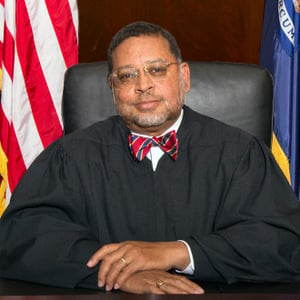
Former Michigan Supreme Court Justice
Robert P. Young, Jr., retired justice of the Michigan Supreme Court, promoted initiatives to measure judicial performance, track public satisfaction, adopt best practices, streamline court processes, and implement technologies that expand public access, increase efficiency, and boost productivity of trial courts. From 2018 to 2019 he served as vice president and general counsel at Michigan State University. Mr. Young previously served 18 years as a member of the Michigan Supreme Court, including as chief justice from 2011 to January 2017. Before that, he was a judge of the Michigan Court of Appeals. Mr. Young has served on the boards of many charitable groups, including the Detroit Urban League, United Community Services of Metropolitan Detroit, and Vista Maria, a resource center for abused and neglected young women and girls. A former commissioner of the Michigan Civil Service Commission, he was a trustee of Central Michigan University, University Liggett School, and the Grosse Pointe Academy. Mr. Young is a former chair of the Greater Detroit Chamber of Commerce Leadership Detroit. He had been an adjunct professor at Wayne State University Law School for more than 20 years and more recently taught at Michigan State University Law School.

Criminal Law: Prisoner Releases and the Role of the Courts
Richard A. Berk, Edith Brown Clement, Deborah J. Daniels, Sarah V. Hart, Donald Specter, Luther Johnson Strange
The Criminal Law & Procedure Practice Group hosted this panel on "Prisoner Releases and the...
Brown v. Plata - Post-Decision SCOTUScast
Sarah V. Hart
On May 23, 2011, the Supreme Court announced its decision in Brown v. Plata (formerly...
Criminal Law: Expansion of Federal Criminal Power: Too Much or Too Little?
John S. Baker, Sara Sun Beale, Bradford A. Berenson, Noah D. Bookbinder, John G. Malcolm, Edwin Meese
Prof. John S. Baker, Jr., Dale E. Bennett Professor of Law, Paul M. Hebert Law...
Dillon v. United States - Post-Decision SCOTUScast
Kevin H. Govern
On June 17, 2010, the Supreme Court announced its decision in Dillon v. United States. ...
Criminal Law: Drug Enforcement Policy
John S. Baker, Mariano-Florentino Cuéllar, Aryeh Neier, John P. Walters, Robert P. Young
Signaling a sharp departure from more than 20 years of federal policy, the Obama Administration...