
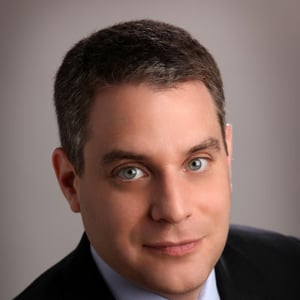
Partner, Drinker Biddle & Reath LLP
Jeff Jacobson defends consumer, privacy and securities class actions, and represents media, technology and other companies in general commercial litigation. With nearly two decades in private practice and several years of experience at the highest levels of the New Jersey Attorney General’s Office, Mr. Jacobson assists his clients to resolve and minimize the reputational damage and business interruptions that can arise from litigation, particularly costly class actions. In addition, Mr. Jacobson has considerable and proven skills in managing the electronic discovery challenges presented by complex litigation and investigative matters.
During his tenure as director of the New Jersey Division of Law and chief counsel to the New Jersey Attorney General (2014-16), Mr. Jacobson oversaw law enforcement investigations involving consumer protection and data privacy, chaired the Attorney General’s Cyber Working Group, and oversaw more than 500 lawyers who represented all agencies of state government in defensive and affirmative litigation. Throughout his tenure, Jeff personally handled some of the state’s highest profile cases in state and federal court.
Because Mr. Jacobson has chaired both the prosecution and defense of major consumer fraud and privacy litigation, he is able to provide his clients with the benefit of a truly multifaceted and strategic perspective regarding even the highest-stakes claims. Mr. Jacobson has successfully defended consumer fraud and privacy-related class actions for media, electronics and consumer products companies, as well as securities class actions for U.S.-based and foreign private issuers in federal and state trial and appellate courts.
Class actions can be both costly and disruptive, so Mr. Jacobson strives to resolve such matters in his client’s favor as quickly and inexpensively as possible. This may mean moving the court to deny class certification at the earliest stage of a case, seeking quick summary judgment on key issues underlying the class motion, or devising a settlement that costs less than litigating the case. In matters requiring extensive discovery, Mr. Jacobson focuses on avoiding unnecessary tasks and minimizing vendor costs.
Mr. Jacobson has been selected to the Data Protection and Privacy and Securities Litigation lists by US Legal 500, a Legalease Publication. A description of the selection methodology can be found at www.legal500.com/assets/pages/about-us/how-it-works.html#rank. He has also been recognized as a Securities Litigation “Star” in the IFLR Benchmark Litigation Guide. A description of the selection methodology can be found at www.benchmarklitigation.com/general/research. (No aspect of these advertisements have been approved by the Supreme Court of New Jersey.)
Mr. Jacobson has written extensively on class action defense and e-discovery strategies for the New York Law Journal, Class Action Litigation Report, Product Liability Law 360, and other publications. He is also a member of the advisory board of the Association of Certified E-Discovery Specialists, and served on a New Jersey Supreme Court task force to assess attorney ethics issues arising from metadata in electronic documents.
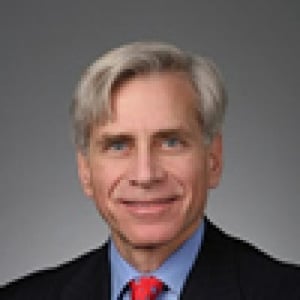
Partner, Sidley Austin LLP
Alan Raul is the founder and leader of Sidley’s highly ranked Privacy, Data Security and Information Law practice. He represents companies on federal, state and international privacy and cybersecurity issues, including global data protection and compliance programs, data breaches, consumer protection issues and Internet law. Mr. Raul advises companies regarding their cybersecurity and information governance and preparedness, and helps them address crisis management for data security incidents. Mr. Raul’s practice involves litigation and counseling regarding consumer class actions and investigations, enforcement actions and policy development by the FTC, State Attorneys General, SEC, Department of Justice and other government agencies.
Mr. Raul provides clients with perspective gained from extensive government service. He previously served as Vice Chairman of the White House Privacy and Civil Liberties Oversight Board, General Counsel of the Office of Management and Budget, General Counsel of the U.S. Department of Agriculture, and Associate Counsel to the President.
Mr. Raul serves as a member of the Data Security, Privacy, and Intellectual Property Litigation Advisory Committee of the U.S. Chamber Litigation Center (affiliated with the U.S. Chamber of Commerce). He also serves ex officio on the American Bar Association’s Cybersecurity Legal Task Force by past appointment of the ABA President, and as a member of the Practicing Law Institute’s (PLI) Privacy Law Advisors Group.
Mr. Raul has represented a Special Cybersecurity Review Committee of the Board of Directors of a major tech company in connection with its independent investigation of the company’s handling of major data breaches.
In addition to leading a “Privacy and Data Security” practice nationally rated by Chambers Global and Chambers USA, Mr. Raul is ranked by Chambers in its top tier of Privacy and Data Security practitioners. Chambers USA has described Mr. Raul as a “true ‘ambassador’ for the privacy sector” who “attracts praise for his deep knowledge of the field. Interviewees stress that ‘he gives invaluable advice’ and is known to be a strong litigator. He also earns plaudits for his regulatory compliance and data protection policy expertise.” He has been named as a leading international Internet and E-Commerce Lawyer in Who’s Who Legal. Mr. Raul was also named to Ethisphere Institute’s “Attorneys Who Matter” in Data Privacy/Security, which recognizes lawyers with the highest commitment to public service, legal community engagement and academic involvement. In 2016, the Washingtonian named Mr. Raul one of Washington, DC’s Best Lawyers: Cybersecurity.
In 1991, Mr. Raul co-founded the “Lawyers Have Heart” 10K run and walk, to benefit the American Heart Association. He continues his active involvement with the event.
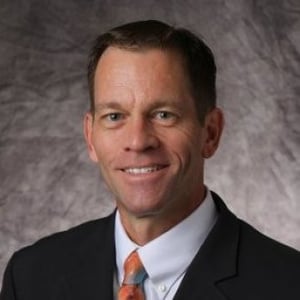
Andrew A. Hufford is an Intellectual Property attorney with Brinks Gilson & Lione. His practice emphasizes US and global patent prosecution in biopharma, chemistry, and plant genetics. He also has significant experience in patent and trade secret litigation, inter-partes review, and patent due diligence. Mr. Hufford is the Vice Chair of the Utah State Bar Intellectual Property Section; a founding member of the David K. Winder IP Inns of Court; and an active member of the American Bar Association’s IP Law Section.
Mr. Hufford was a Professor of Biology before practicing law. He holds a Bachelor of Science (Cum Laude, Phi Beta Kappa) and Master of Science in Biochemistry, and spent several years conducting clinical pharmacology research. He earned his J.D. from the University of Houston, where he was an Articles Editor with the Houston Journal of Health Law and Policy and a member of the Moot Court and Mock Trial teams.
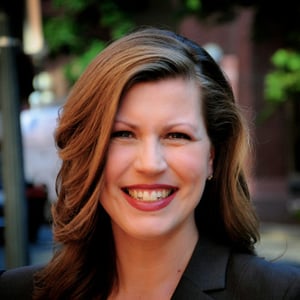
Senior Counsel, The Becket Fund for Religious Liberty
Senior Counsel Hannah Smith joined Becket in 2007 following two clerkships at the U.S. Supreme Court for Justices Clarence Thomas and Samuel A. Alito, Jr.
Ms. Smith was a member of the Becket legal team that secured victories in key U.S. Supreme Court religious liberty cases, including Holt v. Hobbs, 574 U.S. ___ (Jan. 20, 2015), where a unanimous Court held in an opinion authored by Justice Alito that the Religious Land Use and Institutionalized Persons Act requires prison officials to accommodate peaceful expressions of religious devotion; Burwell v. Hobby Lobby, 134 S. Ct. 2751 (June 30, 2014), where the Court held in a 5-4 opinion authored by Justice Alito that family-owned businesses enjoy religious liberty rights under the Religious Freedom Restoration Act and that the HHS mandate violated the Act; and Hosanna-Tabor Evangelical Lutheran Church and School v. EEOC, 132 S. Ct. 694 (2012), where a unanimous Court held in an opinion authored by Chief Justice Roberts that the “ministerial exception” under the First Amendment protects a church’s right to choose its own ministers.
Ms. Smith contributed to Becket's Supreme Court filings in Little Sisters of the Poor v. Burwell (2015); Houston Baptist University v. Burwell (2015); Stormans v. Wiesman (2015); Michigan Catholic Conference v. Burwell (2015); Obergefell v. Hodges (2015); University of Notre Dame v. Burwell (2014); Wheaton College v. Burwell, 134 S. Ct. 2806 (2014); Little Sisters of the Poor v. Sebelius, 134 S. Ct. 1022 (2014); Bronx Household of Faith v. New York City Board of Education (2014), Elmbrook School District v. Doe (2014), Big Sky Colony v. Montana Department of Labor and Industry (2013), Sossamon v. Texas (2011), Arizona Christian School Tuition Association v. Winn (2011), Bronx Household of Faith v. New York City Board of Education (2011), Utah Highway Patrol Association v. American Atheists (2011), Christian Legal Society v. Martinez (2010), and Salazar v. Buono (2010).
Ms. Smith has been featured on CNN, Fox News, The O'Reilly Factor, The Sean Hannity Show, C-Span, EWTN, Al Jazeera America, the Wall Street Journal, the Washington Post, the Los Angeles Times, U.S. News and World Report, the Associated Press, National Review Online, Bloomberg News, NPR, BBC, the Laura Ingraham Show, the Rush Limbaugh Show, the Hugh Hewitt Show, BYU Radio, and many other publications and radio shows. She has been invited to speak on religious liberty at Harvard Law School, Princeton University, Stanford Law School, University of Pennsylvania Law School, Southern Methodist University Law School, Brigham Young University Law School, American University Washington College of the Law, and Central European University. And she has given briefings on religious liberty issues at the U.S. Capitol, the State Department, the Heritage Foundation, the Ethics and Public Policy Center, the Federalist Society for Law and Public Policy Studies, the American Bar Association, and the National Constitution Center.
Ms. Smith received her B.A. from Princeton University, concentrating in the Woodrow Wilson School of Public and International Affairs. She graduated with honors from Brigham Young University Law School and was elected to the Order of the Coif. She served as Executive Editor of the BYU Law Review, as a research assistant for the BYU International Center for Law and Religion Studies, and as president of the BYU Federalist Society. BYU awarded her its Alumni Achievement Award for her work in the defense of religious freedom. Ms. Smith also received the J. Reuben Clark Law Society's Women-in-Law Leadership Award for her national leadership in defending religious liberty and advancing the contributions of Mormon women to the law.
Following law school and in between clerkships, she was an associate in private practice at Williams & Connolly and Sidley Austin in Washington D.C., representing clients before state and federal courts and the U.S. Supreme Court in civil, criminal, and constitutional cases. Her private practice religious liberty work included the U.S. Supreme Court petition for certiorari in Corporation of the Presiding Bishop of the Church of Jesus Christ of Latter-day Saints v. First Unitarian Church of Salt Lake City (2003), as well as matters on behalf of Brigham Young University, the Church of Jesus Christ of Latter-day Saints, and the Roman Catholic Archdiocese of Washington D.C.
Ms. Smith served as a full-time volunteer missionary for the Church of Jesus Christ of Latter-day Saints in France and Switzerland. She currently serves as a member of the J. Reuben Clark Law Society International Board and as a member of the Deseret News Editorial Advisory Board. She writes on religious liberty issues in the Deseret News. Hannah and her husband John are happily married with 4 wonderful children.
Partner, Drinker Biddle & Reath LLP
Jeff Jacobson defends consumer, privacy and securities class actions, and represents media, technology and other companies in general commercial litigation. With nearly two decades in private practice and several years of experience at the highest levels of the New Jersey Attorney General’s Office, Mr. Jacobson assists his clients to resolve and minimize the reputational damage and business interruptions that can arise from litigation, particularly costly class actions. In addition, Mr. Jacobson has considerable and proven skills in managing the electronic discovery challenges presented by complex litigation and investigative matters.
During his tenure as director of the New Jersey Division of Law and chief counsel to the New Jersey Attorney General (2014-16), Mr. Jacobson oversaw law enforcement investigations involving consumer protection and data privacy, chaired the Attorney General’s Cyber Working Group, and oversaw more than 500 lawyers who represented all agencies of state government in defensive and affirmative litigation. Throughout his tenure, Jeff personally handled some of the state’s highest profile cases in state and federal court.
Because Mr. Jacobson has chaired both the prosecution and defense of major consumer fraud and privacy litigation, he is able to provide his clients with the benefit of a truly multifaceted and strategic perspective regarding even the highest-stakes claims. Mr. Jacobson has successfully defended consumer fraud and privacy-related class actions for media, electronics and consumer products companies, as well as securities class actions for U.S.-based and foreign private issuers in federal and state trial and appellate courts.
Class actions can be both costly and disruptive, so Mr. Jacobson strives to resolve such matters in his client’s favor as quickly and inexpensively as possible. This may mean moving the court to deny class certification at the earliest stage of a case, seeking quick summary judgment on key issues underlying the class motion, or devising a settlement that costs less than litigating the case. In matters requiring extensive discovery, Mr. Jacobson focuses on avoiding unnecessary tasks and minimizing vendor costs.
Mr. Jacobson has been selected to the Data Protection and Privacy and Securities Litigation lists by US Legal 500, a Legalease Publication. A description of the selection methodology can be found at www.legal500.com/assets/pages/about-us/how-it-works.html#rank. He has also been recognized as a Securities Litigation “Star” in the IFLR Benchmark Litigation Guide. A description of the selection methodology can be found at www.benchmarklitigation.com/general/research. (No aspect of these advertisements have been approved by the Supreme Court of New Jersey.)
Mr. Jacobson has written extensively on class action defense and e-discovery strategies for the New York Law Journal, Class Action Litigation Report, Product Liability Law 360, and other publications. He is also a member of the advisory board of the Association of Certified E-Discovery Specialists, and served on a New Jersey Supreme Court task force to assess attorney ethics issues arising from metadata in electronic documents.
Partner, Sidley Austin LLP
Alan Raul is the founder and leader of Sidley’s highly ranked Privacy, Data Security and Information Law practice. He represents companies on federal, state and international privacy and cybersecurity issues, including global data protection and compliance programs, data breaches, consumer protection issues and Internet law. Mr. Raul advises companies regarding their cybersecurity and information governance and preparedness, and helps them address crisis management for data security incidents. Mr. Raul’s practice involves litigation and counseling regarding consumer class actions and investigations, enforcement actions and policy development by the FTC, State Attorneys General, SEC, Department of Justice and other government agencies.
Mr. Raul provides clients with perspective gained from extensive government service. He previously served as Vice Chairman of the White House Privacy and Civil Liberties Oversight Board, General Counsel of the Office of Management and Budget, General Counsel of the U.S. Department of Agriculture, and Associate Counsel to the President.
Mr. Raul serves as a member of the Data Security, Privacy, and Intellectual Property Litigation Advisory Committee of the U.S. Chamber Litigation Center (affiliated with the U.S. Chamber of Commerce). He also serves ex officio on the American Bar Association’s Cybersecurity Legal Task Force by past appointment of the ABA President, and as a member of the Practicing Law Institute’s (PLI) Privacy Law Advisors Group.
Mr. Raul has represented a Special Cybersecurity Review Committee of the Board of Directors of a major tech company in connection with its independent investigation of the company’s handling of major data breaches.
In addition to leading a “Privacy and Data Security” practice nationally rated by Chambers Global and Chambers USA, Mr. Raul is ranked by Chambers in its top tier of Privacy and Data Security practitioners. Chambers USA has described Mr. Raul as a “true ‘ambassador’ for the privacy sector” who “attracts praise for his deep knowledge of the field. Interviewees stress that ‘he gives invaluable advice’ and is known to be a strong litigator. He also earns plaudits for his regulatory compliance and data protection policy expertise.” He has been named as a leading international Internet and E-Commerce Lawyer in Who’s Who Legal. Mr. Raul was also named to Ethisphere Institute’s “Attorneys Who Matter” in Data Privacy/Security, which recognizes lawyers with the highest commitment to public service, legal community engagement and academic involvement. In 2016, the Washingtonian named Mr. Raul one of Washington, DC’s Best Lawyers: Cybersecurity.
In 1991, Mr. Raul co-founded the “Lawyers Have Heart” 10K run and walk, to benefit the American Heart Association. He continues his active involvement with the event.
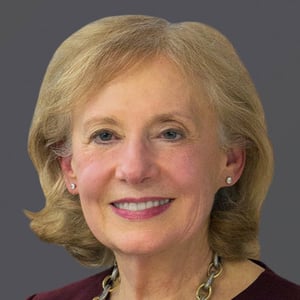
Partner, Mayer Brown LLP
Marcia Madsen was Chair of the Government Contracts practice and co-chair of the National Security Practice at Mayer Brown. She represented contractors in regulatory, policy, transactional, litigation, and investigative matters involving virtually every federal agency. Her clients included defense contractors, information technology and systems integrators, telecommunications companies, engineering firms, insurers, and manufacturing companies. Ms. Madsen's practice included defense of False Claims Act matters, internal investigations, audits, bid protests, claims and disputes before administrative forums and in the federal courts. She was a former Chair of the American Bar Association Section of Public Contract Law and currently co-chairs the Section’s Procurement Fraud Committee. She also is a member of the Federalist Society Administrative Law and Regulation Executive Committee. In addition, Marcia was a member of the Court of Federal Claims Advisory Council - Emeritus, and a recipient of the Court's Golden Eagle award. She was a Past President of the Board of Contract Appeals Bar Association. She was appointed by the Executive Office of the President to chair the Section 1423 Panel which recommended revision of the acquisition laws. She spoke and wrote frequently on government contracts and litigation topics.
Georgetown University Law Center, LL.M., 1980
American University - Washington College of Law, J.D., 1976
University of Utah, B.A., 1972
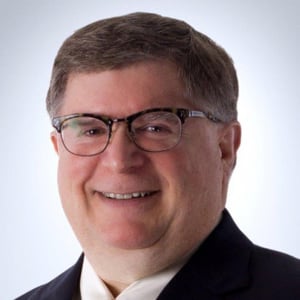
Shareholder, Rogers Joseph O’Donnell
Brian D. Miller is a shareholder in the Washington, D.C. office, of Rogers Joseph O’Donnell, where he represents clients in False Claims Act investigations and other investigations, audits, and reviews. He also serves as a corporate monitor for defense and other federal contractors in criminal and other matters. With over 27 years of experience as a federal prosecutor, Senate-confirmed inspector general, and civil litigator, Mr. Miller’s experience is unique. For example, he has represented a federal magistrate judge and the Attorney General in civil litigation. He has also personally issued grand jury subpoenas, signed inspector general subpoenas, and received testimony from civil investigative demands—something very few, if any, other attorneys have done. For nearly the last decade, Mr. Miller served as the Inspector General for the U.S. General Services Administration where he led over 300 auditors, special agents, attorneys, and support staff in conducting nationwide government audits and high profile investigations. As Inspector General, Mr. Miller is well known for his report on the excesses at a GSA conference in Las Vegas. Mr. Miller frequently testified before Congress regarding his investigations and audits. Earlier in Mr. Miller’s career, he held several high level positions within the U.S. Department of Justice, including senior counsel to the deputy attorney general and special counsel on healthcare fraud. He served as an Assistant United States Attorney for over a decade, where he prosecuted terrorists, fraudsters, and drug kingpins.
Andrew A. Hufford is an Intellectual Property attorney with Brinks Gilson & Lione. His practice emphasizes US and global patent prosecution in biopharma, chemistry, and plant genetics. He also has significant experience in patent and trade secret litigation, inter-partes review, and patent due diligence. Mr. Hufford is the Vice Chair of the Utah State Bar Intellectual Property Section; a founding member of the David K. Winder IP Inns of Court; and an active member of the American Bar Association’s IP Law Section.
Mr. Hufford was a Professor of Biology before practicing law. He holds a Bachelor of Science (Cum Laude, Phi Beta Kappa) and Master of Science in Biochemistry, and spent several years conducting clinical pharmacology research. He earned his J.D. from the University of Houston, where he was an Articles Editor with the Houston Journal of Health Law and Policy and a member of the Moot Court and Mock Trial teams.

Topics
SCOTUS Opinions & Orders
OPINIONS (1) Cooper v. Harris: By a vote of 5-3 the judgment of the three-judge...
Spokeo v. Robins: One Year Later - Podcast
Jeffrey S. Jacobson, Alan C. Raul
When is an alleged injury “concrete and particularized” under Article III of the U.S. Constitution?...
Spokeo v. Robins: One Year Later
TeleforumThe False Claims Act – Enforcement of the Regulatory State: Time for A Change?
TeleforumCourthouse Steps: Amgen, Inc. v. Sandoz, Inc. - Podcast
Andrew A. Hufford
The Biologics Price Competition and Innovation Act of 2010 (42 U.S.C. § 262) created an...
Courthouse Steps: Amgen, Inc. v. Sandoz, Inc.
TeleforumWhen a Pastor’s House Is a Church Home: Why the Parsonage Allowance Is Desirable Under the Establishment Clause
Daniel Benson, Hannah C. Smith
Note from the Editor: This article discusses the parsonage allowance, whereby the value of a...
Could Economic Liberty Litigation Free the Booze?
Recently, the South Carolina Supreme Court issued a decision striking down a state law that...
Topics
"Uncommonly Silly"—and Correctly Decided: The Right and Wrong of Griswold v. Connecticut and Why It Matters Today
It is one of the Supreme Court’s most consequential and controversial decisions, and no one should...
Topics
Justice Thomas' Long History of Criticizing Asset Forfeiture
Alongside Sen. Rand Paul, Supreme Court Justice Clarence Thomas has become one of the most...