
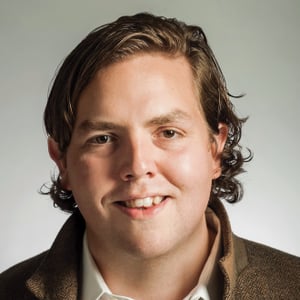
Harry Kalven, Jr. Professor of Law & Faculty Director, Constitutional Law Institute, University of Chicago Law School
William Baude is a Professor of Law and the Faculty Director of the Constitutional Law Institute at the University of Chicago Law School, where he teaches federal courts, constitutional law, and conflict of laws. His current research interests include different aspects of the Fourteenth Amendment (particularly both Section One and Section Three) and the nature of judicial discretion.
Among his other activities Baude is: the co-editor of two textbooks, The Constitution of the United States and Hart & Wechsler's Federal Courts in the Federal System; an Affiliated Scholar at the Center for the Study of Constitutional Originalism; a founding member of the Academic Freedom Alliance; a member of the American Law Institute; an occasional blogger at The Volokh Conspiracy; and a podcaster on Divided Argument. He also recently served on the Presidential Commission on the Supreme Court of the United States.
Professor Baude received his BS in Mathematics from the University of Chicago and his JD from Yale Law School. He then clerked for then-Judge Michael McConnell on the United States Court of Appeals, and Chief Justice John Roberts on the United States Supreme Court. Before joining the Chicago faculty, he was a fellow at the Stanford Constitutional Law Center, and a lawyer in Washington, DC.
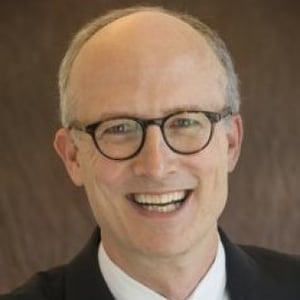
Michael J. Marks Professor of Law, University of Chicago Law School
M. Todd Henderson is the Michael J. Marks Professor of Law at the University of Chicago Law School. Professor Henderson’s research interests include corporations, securities regulation, and law and economics. He has taught classes ranging from Banking Regulation to Torts to American Indian Law.
Professor Henderson received an engineering degree cum laude from Princeton University in 1993. He worked for several years designing and building dams in California before matriculating at the Law School. While at the Law School, Todd was an editor of the Law Review and captained the Law School's all-University champion intramural football team. He graduated magna cum laude in 1998 and was elected to the Order of the Coif. Following law school, Todd served as clerk to the Hon. Dennis Jacobs of the US Court of Appeals for the Second Circuit. He then practiced appellate litigation at Kirkland & Ellis in Washington, DC, and was an engagement manager at McKinsey & Company in Boston, where he specialized in counseling telecommunications and high-tech clients on business and regulatory strategy.
D'Alemberte Professor, Florida State University College of Law
Professor Markel's scholarship develops a new theory of retributive justice for liberal democracies, and applies that theory in particular to topics such as the proper scope of mercy, the death penalty, punitive damages, shaming punishments, and transitional justice in states recovering from mass atrocities.
His work has been published in leading law reviews, and he also has written for or appeared as a commentator in a wide variety of national and international mass media. Raised in Toronto, he studied politics and philosophy as an undergraduate at Harvard. He then did graduate work in political philosophy at the Hebrew University of Jerusalem and the University of Cambridge, before returning to Harvard for his law degree, where he was an Olin Fellow and on law review. Upon graduation from law school, Professor Markel was a research fellow at the Berkman Center at Harvard Law School, a clerk for Judge Michael Daly Hawkins on the U.S. Court of Appeals for the Ninth Circuit, and an associate at Kellogg, Huber, Hansen, Todd, Evans & Figel in Washington, D.C., where he practiced white-collar criminal defense and civil litigation in trial and appellate courts. He teaches primarily in the area of criminal law.

Professor of Law, Georgetown University Law Center
Nicholas Quinn Rosenkranz teaches constitutional law and federal jurisdiction, and he writes articles for the Harvard Law Review and the Stanford Law Review.
He is currently developing a new theory of constitutional interpretation and judicial review. The first installment, entitledThe Subjects of the Constitution, was published in the Stanford Law Review in May of 2010, and it is among the most downloaded articles about constitutional interpretation, judicial review, and/or federal courts in the history of SSRN. The second installment, The Objects of the Constitution, was published in May of 2011, also in the Stanford Law Review. And the comprehensive version is forthcoming as a book by Oxford University Press.
Rosenkranz has served and advised the federal government in a variety of capacities. He clerked for Judge Frank H. Easterbrook on the U.S. Court of Appeals for the Seventh Circuit (1999-2000) and for Justice Anthony M. Kennedy at the U.S. Supreme Court (October Term 2001). He served as an Attorney-Advisor at the Office of Legal Counsel in the U.S. Department of Justice (November 2002 - July 2004). He often testifies before Congress as a constitutional expert—most recently before the House Financial Services Oversight Subcommittee, regarding the Obama Administration's use of bank settlement agreements to circumvent the Appropriations Clause. He has also filed briefs and presented oral argument before the U.S. Supreme Court. His most recent Supreme Court brief, in Los Angeles v. Patel, was cited by Justice Alito in dissent.
Rosenkranz is a member of the New York Bar and the U.S. Supreme Court Bar. He is a Senior Fellow at the Cato Institute. He serves on the Board of Directors of the Foundation for Individual Rights in Education (FIRE). He is a founding member of Heterodox Academy and a member of its Executive Committee. He also serves on the Board of Directors of the Federalist Society and as the faculty advisor to the Georgetown chapter.
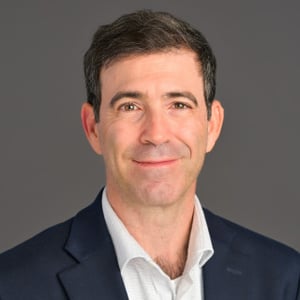
DeMuth Chair of Business Law, University of Colorado Law School
Andrew A. Schwartz joined the Colorado Law faculty in 2008 and was promoted to full professor in 2017. He teaches and publishes on corporate, securities and contract law, and has become an internationally recognized expert on investment crowdfunding. In 2017, Professor Schwartz served as a Fulbright Research Scholar and visiting professor at the University of Auckland Law School in New Zealand.
Professor Schwartz earned an Sc.B. in Civil Engineering from Brown University and a J.D. from Columbia University, where he served on the Columbia Law Review and was named a James Kent Scholar (top honors) all three years. Before entering academia, he clerked for Judge William A. Fletcher of the U.S. Court of Appeals for the Ninth Circuit and Judge Naomi Reice Buchwald of the U.S. District Court for the Southern District of New York. Following his clerkships, Professor Schwartz practiced corporate law in New York at Wachtell, Lipton, Rosen & Katz.
Professor Schwartz is the author of one book, Investment Crowdfunding, forthcoming from the Oxford University Press, as well as more than forty scholarly publications. His major articles have appeared in leading flagship law reviews including the UCLA Law Review, Minnesota Law Review, and Notre Dame Law Review, top specialty journals such as the Yale Journal on Regulation and Harvard Business Law Review, and peer-reviewed journals like the New Zealand Law Review.
Professor Schwartz has won numerous national awards for his scholarship, including the AALS Scholarly Paper Competition and the Federalist Society Young Legal Scholars Paper Competition. At Colorado Law, Professor Schwartz has received the Provost's Award for Faculty Achievement, the Gilbert Goldstein Faculty Fellowship, and the Outstanding New Faculty Award. His research is frequently cited and relied upon by courts and commentators across the country and around the world, including numerous citations by the Delaware Court of Chancery, the nation's leading venue for corporate law.
Associate Professor of Law, New York Law School
Houman B. Shadab is an internationally recognized expert in financial law and regulation whose research focuses on hedge funds and credit derivatives. Professor Shadab is an Associate Director of the Center on Financial Services Law and teaches Contracts, Corporations, and a seminar on financial regulatory policy. He also serves as the Editor-in-Chief of the Journal of Taxation and Regulation of Financial Institutions. His blog is Lawbitrage.
Professor Shadab has testified before Congress on the compensation of public company executives and also on the role of hedge funds in the financial crisis at a hearing that included George Soros, John Paulson, and other leading figures from the hedge fund industry. Professor Shadab is often invited to speak at academic meetings and those for high level market practitioners and policymakers. In May of 2010, he delivered a keynote presentation on financial complexity at a forum for investors in Switzerland and joined a group of speakers that included former British Prime Minister Tony Blair and leading economists from major financial institutions. He will be speaking in October 2011 on Dodd-Frank and regulatory arbitrage at the 17th annual Risk USA conference in New York City.
Professor Shadab is the author of several academic articles published in journals such as the New York University Journal of Legislation and Public Policy and the Berkeley Business Law Journal. He is frequently asked to contribute to authoritative works and is currently writing or recently published book chapters on hedge fund lending, credit default swaps, and short selling for books to be published by Oxford University Press, Elsevier, and Wiley Finance. Governmental authorities worldwide have cited Professor Shadab's research, including the Delaware Court of Chancery, the U.S. Congressional Oversight Panel, the U.K. House of Lords, the European Parliament, the Reserve Bank of India, and the Secretary General of Japan's Securities and Exchange Surveillance Commission.
Professor Shadab has been quoted in numerous media publications including the New York Times, the Financial Times, and the Washington Post, and has appeared on Bloomberg Television. He serves on the Advisory Board of the NY Business Law Journal and the U.K.-based Hedge Fund Society, and is an affiliated Scholar with George Washington University's Regulatory Studies Center. Professor Shadab is also a member of the New York and California bars and previously practiced law with Ropes & Gray in New York City and Latham & Watkins in Los Angeles.

Thomas M. Siebel Senior Fellow, The Hoover Institution, Stanford University; Gary T. Schwartz Distinguished Professor of Law Emeritus, UCLA School of Law
Eugene Volokh is the Thomas M. Siebel Senior Fellow at the Hoover Institution (Stanford), as well as the Gary T. Schwartz Distinguished Professor of Law Emeritus and Distinguished Research Professor at UCLA School of Law. He recently retired from teaching at UCLA, after 30 years there, and is now focusing on research.
Volokh is the author of the textbooks The First Amendment and Related Statutes (8th ed. 2023), and Academic Legal Writing (5th ed. 2016), as well as over 100 academic law journal articles, mostly on First Amendment law. He is a member of The American Law Institute; the editor-in-chief of the Journal of Free Speech Law; and the creator and coauthor of The Volokh Conspiracy, a leading legal blog founded in 2002 (hosted at the Washington Post from 2014 to 2017 and now at Reason Magazine).

Topics
Liberty Month Revisited: The Separation of Powers, Stare Decisis, and the Constitution
This month we are sharing a selection of paired pieces from The Federalist Society's Liberty...
Topics
The Separation of Powers, "Stare Decisis," and the Constitution
Because the U.S. Constitution is dedicated to liberty through limited government, power is divided between...
Young Legal Scholars Paper Presentations
William Baude, Todd Henderson, Dan Markel, Nicholas Quinn Rosenkranz, Andrew A. Schwartz, Houman B. Shadab, Eugene Volokh
On January 6, 2012, at the 14th Annual Faculty Conference in Washington, DC, the Federalist...