
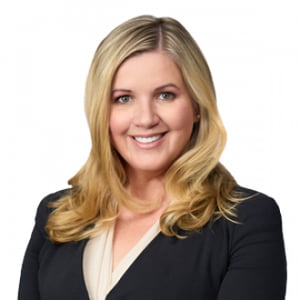
Partner, Womble Bond Dickinson
Britt Whitesell Biles is a trial lawyer and a partner in the Business Litigation Group. Resident in the firm’s Washington, D.C. office, Britt has extensive experience at the highest levels of the federal government, having served in senior legal roles at the U.S. Securities and Exchange Commission (SEC), the White House, and the U.S. Small Business Administration (SBA). She has nearly two decades of experience representing and advising clients in high-stakes government investigations and bet-the-company litigation.
Most recently, Britt served as the General Counsel of the SBA. She was appointed in 2020 to manage the immense and unprecedented legal needs that arose from the SBA’s role as a lead agency in the federal government’s economic response to COVID-19; the Agency was under intense pressure to implement and administer trillion-dollar loan and grant programs established by the CARES Act and faced unparalleled levels of scrutiny from Congress, the media, and the public. As the SBA’s chief legal officer and third-highest-ranking official, Britt led the SBA’s legal function, managing 140 lawyers and staff across the country.
Britt was the principal legal advisor to the Administrator on the CARES Act and related legislation. She supervised the drafting of regulations and guidance that implemented the Paycheck Protection Program and designed key aspects of the loan review and forgiveness process. She worked closely with senior officials across the federal government to establish data-sharing and cooperation agreements to facilitate the investigation and prosecution of fraud and abuse in the COVID-19 loan and grant programs. Britt oversaw the litigation of cases arising under the CARES Act and devised the SBA’s strategy for responding to oversight, audits, and inquiries. She regularly counseled senior Agency officials in connection with Congressional testimony and briefings, including before the House Committee on Oversight and Reform, the House and Senate Small Business Committees, the House Financial Services Committee, and the House Select Subcommittee on the Coronavirus Crisis. In addition to acting as a legal advisor, Britt performed a crisis management role, advising the SBA on its communications strategy and engagement with external stakeholders. Britt, along with her staff in the Office of General Counsel, received the 2020 Administrator’s Award for Outstanding Achievement.
Before she was appointed General Counsel of the SBA, Britt served as a Special Assistant to the President and Associate White House Counsel. During her tenure at the White House, she provided legal advice on financial regulation and reform, consumer protection, privacy, transportation, and congressional oversight matters. She also was the White House’s legal liaison to the Departments of Treasury, Transportation, and Housing and Urban Development, as well as independent financial services and consumer protection agencies, including the SEC, the Federal Trade Commission (FTC), and the Consumer Financial Protection Bureau.
Britt also recently held a senior enforcement position at the SEC. As Assistant Chief Litigation Counsel, she investigated and litigated securities matters involving insider trading, cybersecurity, accounting and disclosure fraud, registered and unregistered securities offerings, market abuses, the Foreign Corrupt Practices Act, broker-dealers, investment advisors, and other regulated entities. Her cases involved millions of dollars in civil monetary penalties and disgorgement. She routinely worked with the Federal Bureau of Investigation, the Department of Justice (DOJ), and U.S. Attorneys’ Offices on parallel criminal proceedings. Britt also worked with international authorities, handling significant cross-border enforcement actions involving China, Macau, India, and Eastern Europe.
During her time at the SEC, Britt investigated and litigated many of the Commission’s most significant cases. In 2017, she received the Chairman’s Award for Excellence for leading the litigation in SEC v. Hong, a ground-breaking case in which Chinese nationals were charged with insider trading in connection with a cyber-attack on two New York law firms. The case received international attention because it demonstrated the reach of the SEC’s enforcement program as the SEC recovered illegal trading profits from foreign defendants who lived abroad and carried out their illegal scheme without entering the United States. Britt also twice received the Division of Enforcement Director’s Award for making outstanding contributions to the enforcement of the federal securities laws — in 2015, for her work on an $80-million-variable-annuity-fraud case, and again in 2016, for her work on a conflict-of-interest case against one of the world’s largest asset managers and its chief compliance officer.
In addition to serving in senior legal roles in the federal government, Britt was a partner at a global law firm and a Washington, D.C. litigation boutique. She represented high-profile individuals and public and private companies in the financial services, healthcare, pharmaceutical, defense, communications, government contracting, technology, manufacturing, and entertainment industries. She defended clients in investigations and enforcement matters by Congress, the DOJ, the SEC, the FTC, the Federal Deposit Insurance Corporation, and various state attorneys general. She also represented clients in commercial litigation, including securities, contract, cybersecurity, data privacy, defamation, consumer protection, unfair competition, professional liability, environmental, and product liability cases. An experienced trial lawyer, Britt litigated in state and federal courts nationwide. She presented cases to arbitrators and mediators. Britt also was a lecturing fellow at Duke University School of Law, teaching a course on electronic discovery.
Britt began her law career as a federal appellate clerk for the Honorable Julia Smith Gibbons on the U.S. Court of Appeals for the Sixth Circuit, after graduating magna cum laude from Duke University School of Law and being elected to the Order of the Coif.
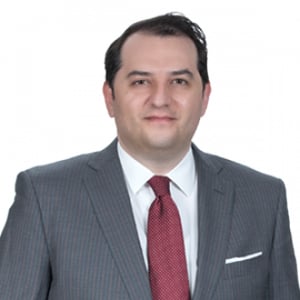
Partner, Womble Bond Dickinson
Luke Cass defends corporations and individuals in connection with a variety of federal criminal allegations, including health care fraud, conspiracy, mail and wire fraud, embezzlement, bank fraud, and money laundering. He also conducts proactive, internal investigations related to bribery, misbranding, and the Foreign Corrupt Practices Act (FCPA). Luke served as a federal prosecutor for over a decade and has significant experience with white collar investigations and has litigated federal appellate and district court cases throughout the United States.
Previously, Luke worked as a Senior Trial Attorney with the Public Integrity Section of the U.S. Department of Justice’s Criminal Division where he handled public corruption investigations and prosecutions of elected, appointed, and career government officials. Luke served as an Assistant United States Attorney in the Financial Fraud and Corruption Unit of the U.S. Attorney’s Office for the District of Puerto Rico before working at the DOJ in Washington. In addition to Luke's extensive federal trial experience, he has also briefed and argued numerous appeals before the U.S. Court of Appeals for the First Circuit. He also clerked in the United States District Court for the Eastern District of New York.
As a result of his experience, Luke is well qualified to counsel clients in nearly every aspect of complex white collar matters involving both the public and private sectors.
Partner, Baker & Hostetler LLP
Lee A. Casey focuses on federal environmental, constitutional and international law and Alien Tort Statute issues. He also advises clients on compliance issues under the Foreign Corrupt Practices Act (FCPA), U.S. trade sanctions regimes, and federal ethics requirements. Mr. Casey’s practice includes federal, district and appellate court litigation, as well as matters before federal agencies. Prior to joining BakerHostetler, Mr. Casey was an associate with Hunton & Williams, practicing in international, environmental and constitutional law. From 2004 through 2007 he served as an member of the United Nations Subcommission on the Promotion and Protection of Human Rights.
From 1986 to 1993, Mr. Casey served in various capacities in the federal government, including the Office of Legal Policy (1986-90) and the Office of Legal Counsel (1992-93) at the U.S. Department of Justice and served as Deputy Associate General Counsel at the U.S. Department of Energy (1990-92). The Office of Legal Counsel is responsible for advising the Attorney General and the White House on issues of constitutional law and statutory interpretation. The Office of Legal Policy served as a strategic “think tank” for the Reagan Justice Department and was responsible for reviewing candidates for appointments to the federal bench.
Before joining the government in 1986, Mr. Casey was an associate in the Los Angeles firm of Mitchell, Silberberg & Knupp, practicing in the litigation section, with an emphasis on copyright, contract and First Amendment issues. From 1984 to 1985, Mr. Casey served as Law Clerk to the Honorable Alex Kozinski, then Chief Judge of the United States Claims Court. From 1982 to 1984, he practiced at the Detroit firm of Dykema Gossett, focusing on corporate, securities, commercial and intellectual property litigation, and from 1990 through 1994, he served as an Adjunct Professor of Law at George Mason University School of Law in Arlington, Virginia.
Among the chapters, articles and papers that Mr. Casey has authored or co-authored are: “International Law and the Nation-State at the U.N.,” Reclaiming the Language of Freedom at the United Nations: A Guide for U.S. Policymakers, The Heritage Foundation (2006) (with David B. Rivkin, Jr.); “The Dangerous Myth of Universal Jurisdiction,” A Country I Do Not Recognize (ed. Robert H. Bork) (2005) (with David B. Rivkin, Jr.); “Leashing the Dogs of War,” The National Interest (Fall 2003) (with David B. Rivkin, Jr.); “The Limits of Legitimacy: The Rome Statute’s Unlawful Application to Non-State Parties,” 44 Va.J.Int’l L. 63 (Fall 2003) (with David B. Rivkin, Jr.); “Devil’s Advocates: The Danger of Judging Lawyers By Their Clients,” Policy Review (Feb. and Mar. 2002) (with David B. Rivkin, Jr.); “The Case Against the International Criminal Court,” 25 Fordham Int’l L.J. 840 (2002); “Europe in the Balance: The Alarmingly Undemocratic Drift of the European Union,” Policy Review (June and July 2001) (with David B. Rivkin Jr.); “Against an International Criminal Court,” Commentary, May 1998 (with David B. Rivkin, Jr.); “Federalism (Cont’d.),” Commentary, December 1996 (with David B. Rivkin, Jr.); “Presidents and War Powers: Another View,” Common Sense, Winter 1996 (with David B. Rivkin, Jr.); “How Binding Are Contracts?” The American Enterprise, Nov./Dec. 1993 (with David B. Rivkin, Jr.); and “Pirate Constitutionalism: An Essay in Self-Government,” 8 J. of L. & Politics 477 (1992).
Mr. Casey is a member of the California, Michigan and District of Columbia Bar Associations.
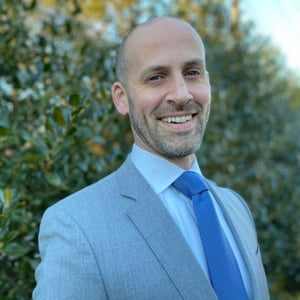
Partner, Lehotsky Keller LLP
The New York Times recognized Scott A. Keller as a “legal heavyweight,” who “is praised by opponents as a formidable advocate.”
Mr. Keller has argued 12 cases before the U.S. Supreme Court and 12 cases before the Texas Supreme Court. He is the only practicing lawyer to have argued at least 10 cases in both courts. Mr. Keller frequently represents parties in high stakes appeals, and he has argued many cases in federal courts of appeals throughout the nation. He has earned individual accolades from Lawdragon 500 Leading Litigators in America, Chambers, Legal 500, The American Lawyer, The National Law Journal, Law360, Super Lawyers, The Best Lawyers in America, and other publications.
Before founding Lehotsky Keller Cohn LLP, Mr. Keller headed Baker Botts LLP’s Supreme Court Practice. He also has significant experience at the highest levels in all three branches of government. Mr. Keller served as the Solicitor General of Texas, the State’s chief appellate litigator. He was U.S. Senator Ted Cruz’s chief counsel on the Senate Judiciary Committee. Mr. Keller was a law clerk for Justice Anthony Kennedy of the Supreme Court of the United States and Chief Judge Alex Kozinski of the U.S. Court of Appeals for the Ninth Circuit. He was also a Bristow Fellow in the U.S. Department of Justice’s Office of the Solicitor General.
Mr. Keller represents clients in cases where public communications strategy is crucial, and he has made numerous media appearances in major outlets such as The New York Times, The Wall Street Journal, BBC, Fox News, NPR, and Politico. As a sought after speaker and writer, Mr. Keller’s articles have appeared in the Stanford Law Review, Virginia Law Review, and Texas Law Review. He has also served as an adjunct professor of constitutional litigation, Supreme Court practice, and federal courts at the University of Texas School of Law.

Judge, United States Court of Appeals, D.C. Circuit
Judge Randolph was confirmed by the Senate and appointed to the United States Court of Appeals for the District of Columbia Circuit by President George H. W. Bush in July 1990.
Judge Randolph received his B.S. degree in 1966 from Drexel University, majoring in economics and basic engineering. At Drexel, he was president of the debate society, vice president of the Student Senate, and a member of the varsity wrestling squad. In 1969, he received his J.D. from the University of Pennsylvania, summa cum laude. Judge Randolph ranked first in his law school class all three years and was managing editor of the Law Review.
After graduation, Judge Randolph served as a law clerk to Judge Henry J. Friendly of the United States Court of Appeals for the Second Circuit in New York.
Admitted to the California Bar in 1970 (and to the District of Columbia bar in 1973), Judge Randolph worked as Assistant to the Solicitor General, U.S. Department of Justice, in Washington, D.C., 1970-1973.
After two years in private practice, Judge Randolph was named Deputy Solicitor General of the United States, a position he held from 1975-1977.
In 1979, Judge Randolph was appointed Special Counsel to the Committee on Standards of Official Conduct (the Ethics Committee) of the United States House of Representatives, remaining in this position until 1980.
In the 1980s, Judge Randolph held a number of positions while in private practice, including Special Assistant Attorney General for the states of New Mexico (1985 90), Utah (1986-1990) and Montana (1983-1990). He also served as a Member of the Advisory Panel of the Federal Courts Study Committee.
From 1971-1990, Judge Randolph argued 23 times in the United States Supreme Court, winning 20 of his cases.
As an Adjunct Professor of Law at Georgetown University Law Center from 1974-1978 he taught courses in civil procedure and injunctions. In 1992 he taught a course in constitutional law. He is a Distinguished Adjunct Professor of Law at George Mason School of Law and for the past ten years has been teaching First Amendment law. He also serves on the Judicial Advisory Board of the George Mason University Law and Economics Center.
From 1993 through 1995 Judge Randolph was a member of the Committee on Codes of Conduct of the Judicial Conference of the United States, and from 1995 to 1998 served as the Committee's chairman. He also served as the judicial liaison to the American Bar Association’s Administrative Law Section.
Judge Randolph is a member of the Board of Visitors at Drexel University Law School and was named to the “Drexel One Hundred” as a leading alumnus. In 2002 he was presented the James Wilson Award by the University of Pennsylvania Law School. In November 2005 he delivered the Fifth Annual Barbara K. Olson Memorial Lecture at the Annual Lawyers Convention of the Federalist Society. He has published numerous articles, the most recent of which is in the June 2006 issue of the Harvard Journal of Law and Public Policy.
Judge Randolph is married to the Honorable Eileen J. O’Connor, formerly Assistant Attorney General, Tax Division, U.S. Department of Justice. His son John Trevor Randolph is an investment banker in New York. His daughter Cynthia Lee Randolph is an artist living in San Francisco.
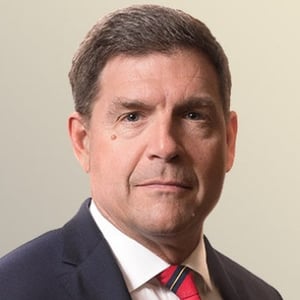
Partner, King & Spalding
John Richter is a trial and investigations partner in the Special Matters and Investigations Practice Group, and represents and defends companies, Boards of Directors, Board committees, and individuals facing a variety of white-collar criminal and regulatory enforcement matters, parallel civil litigation, and internal corporate investigations. John previously served as the Acting Assistant Attorney General in charge of the Criminal Division at the U.S. Department of Justice and as the U.S. Attorney for the Western District of Oklahoma, having been nominated by President George W. Bush and confirmed by unanimous consent of the U.S. Senate.

Partner, McGuireWoods LLP
George Terwilliger is co-head of the firm's white collar practice and leads the firm's Strategic Response and Crisis Management practice group. Following his fifteen years of public service in the US Department of Justice, where he began as a law clerk and concluded as Acting Attorney General, George has provided counsel in government and internal investigations, agency enforcement proceedings and in civil and criminal litigation. He has represented many of the nation's and the world's largest corporations, including major financial institutions, energy companies, public institutions as well as leading business and government officials, including members of the US Senate and House as well as cabinet officials. He has also represented lawyers and corporate legal departments in investigations. As a result of both his private sector work and government positions, George is called upon to provide counsel as well as commentary to government officials, Congress and private organizations on national security, homeland defense, terrorism, and other public policy and legal issues. George's work regularly involves providing counsel in the executive suites and boardrooms of major corporations.
In private practice for international law firms, George has represented national and international financial, energy, telecommunications, industrial and healthcare companies. He is a recognized expert in leading credible corporate internal investigations and his experience designing and executing both targeted and global legal compliance reviews has involved work in more than 60 countries around the globe. George is an expert on the Foreign Corrupt Practices Act and regularly provides counsel to companies addressing FCPA issues. No stranger to high stakes litigation and crisis events, George helped lead the Bush-Cheney legal team in the 2000 Florida vote recount, served as special outside counsel to a Senate committee investigating vote fraud allegations, served as counsel to an executive commission on gambling, and has represented many clients in politically charged election law and similar cases. He has guided corporations and individual through high stakes matters of intense public interest. He represented an incumbent president in First Amendment litigation concerning the right to have an inaugural prayer said in a public ceremony.
At the Department of Justice, George served for 10 years as a frontline federal prosecutor, handling hundreds of investigations, trials and appeals, including in white collar and national security cases. President Ronald Reagan appointed him as a U.S. attorney, and he next served as the deputy attorney general and as acting attorney general during the George H.W. Bush administration. As Deputy Attorney General, George ran the Justice Department's operations, overseeing all the nation's federal prosecutors, as well as the FBI and other law enforcement agencies. He also had leadership responsibility in several national and international crises, including a hostage-taking in a federal prison and the federal law enforcement response to domestic unrest in Los Angeles. In several instances, he personally handled negotiations of high-profile criminal and civil matters in the United States and abroad.
Partner, King & Spalding
John Richter is a trial and investigations partner in the Special Matters and Investigations Practice Group, and represents and defends companies, Boards of Directors, Board committees, and individuals facing a variety of white-collar criminal and regulatory enforcement matters, parallel civil litigation, and internal corporate investigations. John previously served as the Acting Assistant Attorney General in charge of the Criminal Division at the U.S. Department of Justice and as the U.S. Attorney for the Western District of Oklahoma, having been nominated by President George W. Bush and confirmed by unanimous consent of the U.S. Senate.
Partner, McGuireWoods LLP
George Terwilliger is co-head of the firm's white collar practice and leads the firm's Strategic Response and Crisis Management practice group. Following his fifteen years of public service in the US Department of Justice, where he began as a law clerk and concluded as Acting Attorney General, George has provided counsel in government and internal investigations, agency enforcement proceedings and in civil and criminal litigation. He has represented many of the nation's and the world's largest corporations, including major financial institutions, energy companies, public institutions as well as leading business and government officials, including members of the US Senate and House as well as cabinet officials. He has also represented lawyers and corporate legal departments in investigations. As a result of both his private sector work and government positions, George is called upon to provide counsel as well as commentary to government officials, Congress and private organizations on national security, homeland defense, terrorism, and other public policy and legal issues. George's work regularly involves providing counsel in the executive suites and boardrooms of major corporations.
In private practice for international law firms, George has represented national and international financial, energy, telecommunications, industrial and healthcare companies. He is a recognized expert in leading credible corporate internal investigations and his experience designing and executing both targeted and global legal compliance reviews has involved work in more than 60 countries around the globe. George is an expert on the Foreign Corrupt Practices Act and regularly provides counsel to companies addressing FCPA issues. No stranger to high stakes litigation and crisis events, George helped lead the Bush-Cheney legal team in the 2000 Florida vote recount, served as special outside counsel to a Senate committee investigating vote fraud allegations, served as counsel to an executive commission on gambling, and has represented many clients in politically charged election law and similar cases. He has guided corporations and individual through high stakes matters of intense public interest. He represented an incumbent president in First Amendment litigation concerning the right to have an inaugural prayer said in a public ceremony.
At the Department of Justice, George served for 10 years as a frontline federal prosecutor, handling hundreds of investigations, trials and appeals, including in white collar and national security cases. President Ronald Reagan appointed him as a U.S. attorney, and he next served as the deputy attorney general and as acting attorney general during the George H.W. Bush administration. As Deputy Attorney General, George ran the Justice Department's operations, overseeing all the nation's federal prosecutors, as well as the FBI and other law enforcement agencies. He also had leadership responsibility in several national and international crises, including a hostage-taking in a federal prison and the federal law enforcement response to domestic unrest in Los Angeles. In several instances, he personally handled negotiations of high-profile criminal and civil matters in the United States and abroad.
Partner, Latham & Watkins LLP
Alice Fisher is a partner in Latham & Watkins' Washington, D.C. office and is a member of the firm's Executive Committee. She focuses her practice on white collar criminal investigations, internal investigations and advises clients on a range of criminal matters.
From 2005-2008, Ms. Fisher served as Assistant Attorney General in charge of the Criminal Division of the US DOJ. As Assistant Attorney General, Ms. Fisher led more than 750 attorneys and staff responsible for federal criminal enforcement policy as well as handling criminal matters in federal courts across the country in all areas of federal criminal law enforcement. Under her leadership, the Criminal Division pursued a broad array of federal criminal investigations and prosecutions, with particular focus on corporate fraud matters, including securities fraud, procurement fraud, financial institution fraud, anti-money laundering, healthcare fraud, computer hacking and cyber security, national security, as well as US-domestic and international corruption.
Ms. Fisher also chaired the National Procurement Fraud Task Force, supervised the Medicare Fraud Strike Force, and served as a member of the President's Corporate Fraud Task Force. She handled various transnational and multi-national law enforcement operations and policies, including bilateral agreements and treaties involving information sharing and global criminal enforcement initiatives. Representing the DOJ in front of Congress, Ms. Fisher testified on criminal enforcement policies and served on the Federal Criminal Rules Committee.
As a litigation partner at Latham from 2003-2005 and prior to 2001, Ms. Fisher represented both individual and corporate clients in grand jury, agency and congressional inquiries involving allegations of securities and bank fraud, healthcare fraud, the FCPA, criminal antitrust matters, OFAC sanctions and procurement fraud. She has also represented clients in a number of complex civil and regulatory litigations. Ms. Fisher previously held other positions in government, including Deputy Special Counsel to a US Senate Special Committee.
Ms. Fisher has published articles and spoken on criminal law topics such as the criminalization of corporate conduct, the FCPA, healthcare and procurement fraud, the False Claims Act, the US criminal enforcement environment, public corruption and the honest services statute, financial crime in the financial services industry, securities fraud, identity theft, cybercrime and national security.
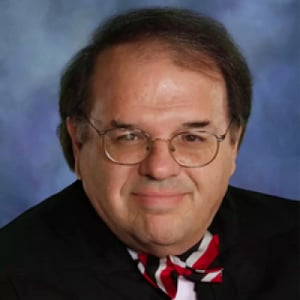
Senior Judge, United States District Court, District of Columbia
Judge Leon was appointed to the United States District Court in February 2002. He received his A.B. from Holy Cross College in 1971, his J.D. cum laude from Suffolk Law School in 1974, and his LL.M. from Harvard Law School in 1981. Immediately prior to his appointment to the bench, Judge Leon was engaged in private practice in Washington, D.C., as a partner in the Washington office of Baker & Hostetler (1989-1999), and Vorys, Sater, Seymour and Pease (1999-2002). Prior to and while in private practice, Judge Leon served as counsel to Congress in the investigations of three sitting Presidents. In 1987, he was the Deputy Chief Minority Counsel for the U.S. House Select “Iran-Contra” Committee. From 1992-1993, he was the Chief Minority Counsel to the U.S. House Foreign Affairs Committee’s “October Surprise” Task Force. In 1994, Judge Leon was Special Counsel to the U.S. House Banking Committee for its “Whitewater” investigation. He also served in 1997 as Special Counsel to the bipartisan U.S. House Ethics Reform Task Force. Earlier in his career, Judge Leon served at the U.S. Department of Justice in a number of positions including Deputy Assistant Attorney General in the Environment Division, Senior Trial Attorney in the Criminal Section of the Tax Division, and as a Special Assistant United States Attorney in the Southern District of New York. He also served as a Commissioner on the White House Fellows Commission and the Judicial Review Commission on Foreign Asset Control. A former full-time law professor at St. John’s Law School (1979-1983), Judge Leon is currently an adjunct law professor at the Georgetown University Law Center and the George Washington University Law School.
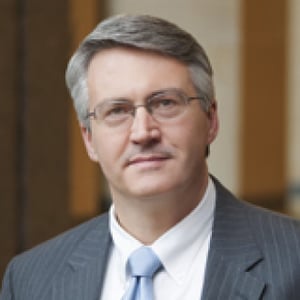
Partner, Morgan, Lewis & Bockius LLP
Matthew S. Miner focuses his practice on white collar enforcement and compliance matters, as well as US congressional inquiries and committee investigations. Mr. Miner has experience in investigations involving alleged corporate misconduct—including matters related to the FCPA—in jurisdictions on five continents. He regularly represents companies and individuals in grand jury investigations, matters involving the US Department of Justice, Securities and Exchange Commission, and Office of Foreign Assets Control, internal and audit committee investigations, and inquiries by non-governmental entities, such the World Bank.
Partner, McGuireWoods LLP
George Terwilliger is co-head of the firm's white collar practice and leads the firm's Strategic Response and Crisis Management practice group. Following his fifteen years of public service in the US Department of Justice, where he began as a law clerk and concluded as Acting Attorney General, George has provided counsel in government and internal investigations, agency enforcement proceedings and in civil and criminal litigation. He has represented many of the nation's and the world's largest corporations, including major financial institutions, energy companies, public institutions as well as leading business and government officials, including members of the US Senate and House as well as cabinet officials. He has also represented lawyers and corporate legal departments in investigations. As a result of both his private sector work and government positions, George is called upon to provide counsel as well as commentary to government officials, Congress and private organizations on national security, homeland defense, terrorism, and other public policy and legal issues. George's work regularly involves providing counsel in the executive suites and boardrooms of major corporations.
In private practice for international law firms, George has represented national and international financial, energy, telecommunications, industrial and healthcare companies. He is a recognized expert in leading credible corporate internal investigations and his experience designing and executing both targeted and global legal compliance reviews has involved work in more than 60 countries around the globe. George is an expert on the Foreign Corrupt Practices Act and regularly provides counsel to companies addressing FCPA issues. No stranger to high stakes litigation and crisis events, George helped lead the Bush-Cheney legal team in the 2000 Florida vote recount, served as special outside counsel to a Senate committee investigating vote fraud allegations, served as counsel to an executive commission on gambling, and has represented many clients in politically charged election law and similar cases. He has guided corporations and individual through high stakes matters of intense public interest. He represented an incumbent president in First Amendment litigation concerning the right to have an inaugural prayer said in a public ceremony.
At the Department of Justice, George served for 10 years as a frontline federal prosecutor, handling hundreds of investigations, trials and appeals, including in white collar and national security cases. President Ronald Reagan appointed him as a U.S. attorney, and he next served as the deputy attorney general and as acting attorney general during the George H.W. Bush administration. As Deputy Attorney General, George ran the Justice Department's operations, overseeing all the nation's federal prosecutors, as well as the FBI and other law enforcement agencies. He also had leadership responsibility in several national and international crises, including a hostage-taking in a federal prison and the federal law enforcement response to domestic unrest in Los Angeles. In several instances, he personally handled negotiations of high-profile criminal and civil matters in the United States and abroad.
Attorney, Arguedas, Cassman & Headley, LLP
Ms. Arguedas is recognized as one of the finest criminal defense lawyers in the United States. In her 20-plus years in private practice, she has represented high-profile clients in some of the most visible cases around the country, as well as many little-known clients on relatively routine matters that never make the nightly news.
Ms. Arguedas is equally adept at handling complex white-collar cases, sensational murders, and the full range of less serious criminal cases. She works closely with other ACH lawyers as well as a team of investigators, jury consultants and other top experts she has assembled over more than two decades.
Singled out for her thorough preparation, shrewd strategizing, and impressive courtroom skills, Cris has been named the lawyer other lawyers would hire if they got arrested (California Lawyer), one of the 10 best lawyers in the Bay Area (San Francisco Chronicle, Northern California Super Lawyers), one of the 50 most influential women lawyers in the United States (National Law Journal), one of the 100 top lawyers in California (San Francisco Daily Journal, The Recorder), and one of the five most promising women lawyers in the country (Time). She was named to “The International Who’s Who of Business Crime Lawyers 2010”, is a fellow of the American College of Trial Lawyers, and in 2010 was inducted into the Trial Lawyer Hall of Fame of the Litigation Section of the State Bar of California (an honor shared by only 20 other attorneys in the State).
Ms. Arguedas expertise also makes her a highly sought-after lecturer, teacher, and advisor to public officials in both major parties. She has served on advisory committees for the District Attorney of San Francisco and for the current and two past United States Attorneys for the Northern District of California. At the statewide level, she has been appointed to several commissions on judicial standards by the Chief Justice of the California Supreme Court. Cris has also headed U.S. Senator Barbara Boxer’s Federal Judicial Selection Committee, which recommends nominees for the federal judiciary and for the U.S. Attorney for the Northern District of California.
Assistant Attorney General for the Criminal Division, The United States Department of Justice
Leslie R. Caldwell was confirmed as the Assistant Attorney General for the Criminal Division on May 15, 2014.
As head of the Criminal Division, Ms. Caldwell oversees nearly 600 attorneys who prosecute federal criminal cases across the country, help develop criminal law and formulate criminal enforcement policy. She also works closely with the nation’s 93 United States Attorneys in the investigation and prosecution of criminal matters in their districts.
Ms. Caldwell has dedicated most of her professional career to handling federal criminal cases, both as a prosecutor and as defense counsel. From 2002 to 2004, Ms. Caldwell served as the director of the Justice Department’s Enron Task Force. When she worked at the U.S. Attorney’s Office for the Northern District of California from 1999 to 2002, she served as the Chief of the Criminal Division and the Chief of the Securities Fraud Section. During her eleven years in the U.S. Attorney’s Office for the Eastern District of New York from 1987 to 1998, her positions included Senior Trial Counsel for the Business & Securities Fraud Section and Chief of the Violent Criminal Enterprises Section. For her work on the Enron Task Force, Ms. Caldwell received the Attorney General’s Award for Exceptional Service. She is also the recipient of the Attorney General’s John Marshall Award for Trial of Litigation and the Attorney General’s Award for Fraud Prevention.
Prior to joining the Criminal Division, Ms. Caldwell was a partner at Morgan Lewis & Bockius LLP, a position she held since 2004. From 2004 to 2009, Ms. Caldwell was co-chair of the firm’s Corporate Investigations and White Collar Practice Group.
Ms. Caldwell received a B.A. in Economics from Pennsylvania State University and a J.D. from the George Washington University Law School.
Partner, McGuireWoods
Mr. Hatch is a partner in the firm’s Government Investigations and White Collar Litigation group. Prior to joining McGuireWoods, Mr. Hatch spent nine years as a federal prosecutor with the United States Attorney’s Office, serving in the Alexandria, Richmond and Norfolk divisions of the Eastern District of Virginia. Most recently, Ben served as the Managing Assistant United States Attorney (AUSA) and Criminal Chief in the Norfolk Division.
During his time as an AUSA, Mr. Hatch successfully argued nine appeals in the U.S. Court of Appeals for the Fourth Circuit and conducted thirteen jury trials and two bench trials in the Norfolk, Alexandria and Richmond Divisions.
Mr. Hatch's work involved a diverse array of criminal cases, including prosecuting complex national security matters, white collar, public corruption and violent crime. Mr. Hatch received The John Marshall Award for Trial of Litigation, one of the highest awards given for trial practice by the Department of Justice, from then Attorney General Eric Holder for his role in a two month trial of several Somali pirates.
Mr. Hatch previously served as a law clerk to Justice Antonin Scalia of the Supreme Court of the United States and Judge J. Michael Luttig of the U.S. Court of Appeals for the Fourth Circuit. He graduated magna cum laude from the Harvard Law School. At Harvard, Mr. Hatch served as an editor of the Harvard Law Review. He was also part of a team that won Harvard Law School's Ames Moot Court Competition, and Ben received the George Leisure Award for being recognized as the best oralist.
For the last six years, Mr. Hatch has served as an Adjunct Professor teaching the Advanced Brief Writing class at the College of William and Mary Marshall-Wythe School of Law.
Partner, King & Spalding
John Richter is a trial and investigations partner in the Special Matters and Investigations Practice Group, and represents and defends companies, Boards of Directors, Board committees, and individuals facing a variety of white-collar criminal and regulatory enforcement matters, parallel civil litigation, and internal corporate investigations. John previously served as the Acting Assistant Attorney General in charge of the Criminal Division at the U.S. Department of Justice and as the U.S. Attorney for the Western District of Oklahoma, having been nominated by President George W. Bush and confirmed by unanimous consent of the U.S. Senate.
Partner, Goodwin Procter LLP
Joseph Savage, a partner in Goodwin's Securities Litigation & White Collar Defense Group, concentrates his practice on white collar criminal defense, governmental investigations work and complex civil litigation. His practice involves representing individuals and companies in a wide variety of fraud, false claims act, securities, health care, tax, public corruption, environmental and other investigations by federal, state and local law enforcement and government regulators, as well as representing companies and individuals in civil litigation, especially complex commercial disputes.
With more than 30 years’ experience, Mr. Savage is one of the most widely respected and accomplished trial lawyers in the nation. He is a Fellow of the American College of Trial Lawyers and is annually recognized by Chambers USA: America’s Leading Lawyers for Business and U.S. News-Best Lawyers, which named him Boston white collar “Lawyer of the Year” for 2017.

Freelance Journalist and Author
Stuart Taylor, Jr. is a Washington writer focusing on legal and policy issues and a National Journal contributing editor. He occasionally practices law.
Taylor has coauthored three books. All have been acclaimed by commentators across the ideological spectrum. In January 2017, KC Johnson and Taylor authored The Campus Rape Frenzy: The Attack on Due Process at America's Universities. In 2012, Richard Sander and Taylor authored Mismatch: How Affirmative Action Hurts Students It's Intended to Help, and Why Universities Won't Admit It. In 2007, Taylor and Johnson authored Until Proven Innocent: Political Correctness and the Shameful Injustices of the Duke Lacrosse Rape Fraud. Sander and Taylor have also filed amicus briefs in Supreme Court cases involving admissions preferences.
Since 1980, Taylor has done reporting and commentary about issues ranging from the biggest Supreme Court cases to race, voting rights, mindlessly excessive criminal penalties, guilt-presuming campus rape processes, journalistic bias, the death penalty, war powers, gerrymandering, guns, polarization, civil liberties, national security, torture, campaign finance, education, impeachment, and other issues. He has often been called one of the nation's best legal journalists and is known for challenging both liberal and conservative conventional wisdom.
Taylor was a reporter for The New York Times from 1980-1988, covering legal affairs and then the Supreme Court. He wrote commentaries and long features for The American Lawyer, Legal Times and their affiliates from 1989-1997, and for National Journal and Newsweek from 1998 through 2010. He has written (less often) on a freelance basis for numerous publications since 2010. He has written op-eds for The Washington Post, The New York Times, The Wall Street Journal, The Los Angeles Times, USA Today, and The New York Daily News and longer commentaries for RealClearPolitics, The Atlantic, The New Republic, the (late) Weekly Standard, National Review, Slate, The Daily Beast, Harper’s, Reader’s Digest, Time and other magazines. He has been interviewed on all major television and radio networks. He taught “Law and the News Media” at Stanford Law School in 2011 and 2012 and practices law on occasion.
Taylor graduated from Princeton University in 1970 with an A.B. in History. After working as a reporter for the Baltimore Evening Sun and Sun from 1971-1974, he moved to Harvard Law School, was a Harvard Law Review note editor, and graduated in 1977 at the top of his class, with high honors. He also won a Frederick Sheldon Traveling Fellowship and traveled around the world in 1977-1978 while studying freedom of the press in the United Kingdom and Kenya.
Taylor practiced law with Wilmer, Cutler & Pickering, in Washington, D.C., from 1977-1980 before returning to journalism in 1980 by joining the Washington Bureau of The New York Times.
Taylor's journalism honors include the 2009 Northern California Innocence Project Media Award for his work on the Duke lacrosse rape fraud; a 2002 National Headliner Award for best special magazine column on one subject; and a share of The American Lawyer’s National Magazine Award for a March 1990 special issue on the drug war. He was a National Magazine Award finalist in 1993 and 1997 and was nominated by The New York Times for a Pulitzer Prize in 1988.
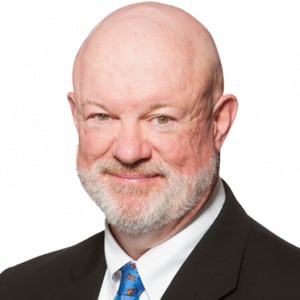
Senior Legal Fellow, the Meese Institute for the Rule of Law, Advancing American Freedom
Paul J. Larkin is a Senior Legal Fellow in the Meese Institute for the Rule of Law at Advancing American Freedom. Paul has held various positions in the federal and state governments throughout his career, such as being an attorney in the Organized Crime and Racketeering Section of the Criminal Division at the U.S. Department of Justice, an Assistant to the Solicitor General in the Office of the Solicitor General at the U.S. Department of Justice, Special Agent-in-Charge and Acting Director of the Criminal Investigation Division at the Environmental Protection Agency, and a member of the Parole Abolition and Sentencing Reform Commission and of the Juvenile Justice Reform Commission in the Office of Virginia Governor George Allen.
He has also worked at Verizon Communications and two law firms in Washington, D.C. His current research is principally in the fields of drug policy, criminal justice policy, and administrative law and policy. He has published numerous articles in law and public policy journals, both in print and online.

Vice President, Edwin Meese III Institute for the Rule of Law, Advancing American Freedom
John G. Malcolm oversees Advancing American Freedom’s work to increase understanding of the Constitution and the rule of law as Vice President of the organization’s Edwin Meese III Institute for the Rule of Law. Malcolm brings to the challenge a wealth of legal expertise and experience in both the public and private sectors.
Prior to joining Advancing American Freedom in 2025, Malcolm was the Vice President of the Institute for Constitutional Government and the Director of the Meese Center for Legal and Judicial Studies at the Heritage Foundation. Prior to joining Heritage in 2012, Malcolm was general counsel at the U.S. Commission on International Religious Freedom, as well as a distinguished practitioner in residence at Pepperdine Law School. From 2004 to 2009, Malcolm was executive vice president and director of worldwide anti-piracy operations for the Motion Picture Association.
Malcolm served as a deputy assistant attorney general in the Department of Justice’s Criminal Division from 2001 to 2004, where he oversaw sections on computer crime and intellectual property, domestic security, child exploitation and obscenity, and special investigations. Immediately prior to that, he was a founding partner in the Atlanta law firm of Malcolm & Schroeder, LLP.
From 1990 to 1997, Malcolm was an assistant U.S. attorney in Atlanta, assigned to the fraud and public corruption section, and also an associate independent counsel, investigating fraud and abuse in the Department of Housing and Urban Development. He was honored with the Director’s Award for Superior Performance for his work in connection with the successful prosecution of Walter Leroy Moody Jr., who assassinated an 11th Circuit judge and the head of the Savannah chapter of the NAACP.
A graduate of Harvard Law School and Columbia College, Malcolm began his career as a law clerk to a federal district court judge and a federal appellate court judge, and as an associate at the Atlanta-based law firm of Sutherland, Asbill & Brennan (new Eversheds Sutherland).
Malcolm, who resides in Washington, D.C., serves on the Board of Trustees of the Washington National Opera and is a Senate-confirmed member of the Board of Directors of the Legal Services Corporation, the largest funder of civil legal aid in the United States.
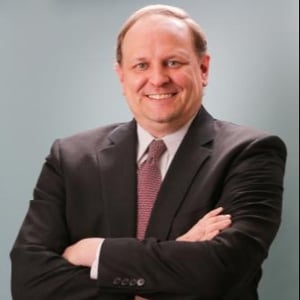
Director, Center for Legal Policy, Manhattan Institute for Policy Research
James R. Copland is a senior fellow at the Manhattan Institute and director of Legal Policy. In those roles, he develops and communicates novel, sound ideas on how to improve America’s civil- and criminal-justice systems. His forthcoming book, The Unelected: How an Unaccountable Elite is Governing America (Encounter Books) will be released on September 8, 2020. He has testified before Congress as well as state and municipal legislatures; and has authored many policy briefs, book chapters, articles and opinion pieces in a variety of publications, including the Harvard Business Law Review and Yale Journal on Regulation, the Wall Street Journal, National Law Journal, and USA Today. Copland speaks regularly on civil- and criminal-justice issues; has made hundreds of media appearances in such outlets as PBS, Fox News, MSNBC, CNBC, Fox Business, Bloomberg, C-Span, and NPR; and is frequently cited in news articles in the New York Times, Washington Post, The Economist, and Forbes. In 2011 and 2012, he was named to the National Association of Corporate Directors “Directorship 100” list, which designates the individuals most influential over U.S. corporate governance.
Prior to joining MI, Copland was a management consultant with McKinsey and Company in New York. Earlier, he was a law clerk for Ralph K. Winter on the U.S. Court of Appeals for the Second Circuit. Copland has been a director of two privately held manufacturing companies since 1997 and has served on many public and nonprofit boards. He holds a J.D. and an M.B.A. from Yale, where he was an Olin Fellow in Law and Economics; an M.Sc. in the politics of the world economy from the London School of Economics; and a B.A. in economics from the University of North Carolina at Chapel Hill, where he was a Morehead Scholar.

Assistant Professor of Law, University of Michigan Law School
Prof. Kate Andrias teaches and writes in the areas of constitutional and administrative law, labor law, and the law of democracy. Prof. Andrias previously served as Special Assistant and Associate Counsel to the President of the United States, and as Chief of Staff of the White House Counsel's Office. While in the White House, she focused on constitutional and administrative law issues and on domestic policy, including labor and immigration. Prior to joining the Obama Administration, Prof. Andrias was an attorney in the Washington, D.C., office of Perkins Coie LLP, where she practiced in the political law and appellate litigation groups. In addition, she clerked for Justice Ruth Bader Ginsburg of the U.S. Supreme Court and Judge Stephen Reinhardt of the U.S. Court of Appeals for the Ninth Circuit, and taught American Constitutional Law as a visiting professor at L'Institut d'Études Politiques (Sciences Po) in Paris. Prof. Andrias graduated from Yale Law School, where she served on the Yale Law Journal and as a Coker Fellow. Prior to law school, Prof. Andrias worked as a union organizer.
Partner, Cohen Milstein Sellers & Toll PLLC
Matt Axelrod, a Partner at the Firm, joined Cohen Milstein at the beginning of 2014. His practice is focused on holding entities accountable for corporate malfeasance and spans a number of the Firm’s practice groups, including the Antitrust Group, the Whistleblower/False Claims Act Group, and the Public Client Group. He is one of the firm’s senior trial lawyers, having tried nearly twenty cases to verdict in federal court.
Prior to joining the firm, Mr. Axelrod worked for more than a decade at the United States Department of Justice (“DOJ”), where he served as both a federal prosecutor in Miami and then as one of DOJ’s highest-ranking career officials in Washington, D.C.
From March 2011 until December 2013, Mr. Axelrod served as Associate Deputy Attorney General in the Office of the Deputy Attorney General, where he advised the Deputy Attorney General and Attorney General on DOJ’s most significant white collar criminal matters and False Claims Act investigations, and oversaw the work of DOJ’s Criminal Division, Tax Division, FBI, ATF, and U.S. Attorneys’ Offices. He was also responsible for managing DOJ’s efforts to combat healthcare fraud, and served as DOJ’s primary liaison to the U.S. Department of Health and Human Services on healthcare fraud matters.
Professor of Law, Benjamin N. Cardozo School of Law
Professor Bierschbach's scholarship focuses on the procedural and institutional structure of criminal justice and its relationship to the substantive and regulatory concerns of the criminal law. He teaches courses in administrative law, corporations, and criminal law, and his work often touches on points of overlap between those fields. His articles have been published in a number of top law reviews, including the flagship journals of Yale, Pennsylvania, Minnesota, Michigan, Georgetown, and Virginia.
Before joining Cardozo's full-time faculty in 2005, Professor Bierschbach served as a Bristow Fellow in the U.S. Department of Justice's Office of the Solicitor General, an Attorney-Advisor in its Office of Legal Counsel, and a law clerk to D.C. Circuit Judge A. Raymond Randolph and U.S. Supreme Court Justice Sandra Day O'Connor. He has also done multiple stints in private practice and has held various leadership roles in the ABA's Criminal Justice and Administrative Law & Regulatory Practice Sections.
He received his J.D. from the University of Michigan Law School, where he was an articles editor of the Michigan Law Review and the winner of both the Daniel H. Grady Prize (for graduating first in his class) and the Henry M. Bates Award (the law school’s highest honor).
Cardozo students voted Professor Bierschbach "best professor" in 2013.
Director, Center for Legal Policy, Manhattan Institute for Policy Research
James R. Copland is a senior fellow at the Manhattan Institute and director of Legal Policy. In those roles, he develops and communicates novel, sound ideas on how to improve America’s civil- and criminal-justice systems. His forthcoming book, The Unelected: How an Unaccountable Elite is Governing America (Encounter Books) will be released on September 8, 2020. He has testified before Congress as well as state and municipal legislatures; and has authored many policy briefs, book chapters, articles and opinion pieces in a variety of publications, including the Harvard Business Law Review and Yale Journal on Regulation, the Wall Street Journal, National Law Journal, and USA Today. Copland speaks regularly on civil- and criminal-justice issues; has made hundreds of media appearances in such outlets as PBS, Fox News, MSNBC, CNBC, Fox Business, Bloomberg, C-Span, and NPR; and is frequently cited in news articles in the New York Times, Washington Post, The Economist, and Forbes. In 2011 and 2012, he was named to the National Association of Corporate Directors “Directorship 100” list, which designates the individuals most influential over U.S. corporate governance.
Prior to joining MI, Copland was a management consultant with McKinsey and Company in New York. Earlier, he was a law clerk for Ralph K. Winter on the U.S. Court of Appeals for the Second Circuit. Copland has been a director of two privately held manufacturing companies since 1997 and has served on many public and nonprofit boards. He holds a J.D. and an M.B.A. from Yale, where he was an Olin Fellow in Law and Economics; an M.Sc. in the politics of the world economy from the London School of Economics; and a B.A. in economics from the University of North Carolina at Chapel Hill, where he was a Morehead Scholar.
University of Maryland School of Law and President, Center for Progressive Reform
Rena Steinzor is a Professor at the University of Maryland School of Law and teaches an environmental survey course, as well as offerings in risk assessment, critical issues in law and science, legal methods, contracts, and an introduction to the administrative system. During the course of her academic career, Professor Steinzor has written extensively on efforts to reinvent environmental regulation in the United States, the use and misuse of science in environmental policy making, and the devolution of legal and administrative authority to the states.
Professor Steinzor edited the book A New Progressive Agenda for Public Health and the Environment (Carolina Academic Press 2005) with Professor Christopher Schroeder of the Duke Law School. The book proposes an alternative set of values and principles that should guide efforts to reform environmental law. She worked with Professor Wendy Wagner of the University of Texas School of Law, to edit a book of essays by prominent academics entitled Rescuing Science from Politics (Cambridge University Press, 2005) writing an introduction and conclusion summarizing the issues and recommendations suggested by the book. Professor Steinzor's book entitled Mother Earth and Uncle Sam: How Pollution and Hollow Government Hurt Our Kids was published by the University of Texas Press in the fall of 2007.
Professor Steinzor is the president of the Center for Progressive Reform (CPR) (http://www.progressivereform.org/), a think tank comprised of some 52 member scholars from universities across the United States. CPR is committed to developing and sharing knowledge and information, with the ultimate aim of preserving the fundamental value of the life and health of human beings and the natural environment. One component of CPR's mission is to circulate academic papers, studies, and other analyses that promote public policy based on the multiple social values that motivated the enactment of our nation's health, safety and environmental laws. CPR seeks to inform the public about scholarship that envisions government as an arena where members of society choose and preserve their collective values. CPR rejects the idea that government's only function is to increase the economic efficiency of private markets.
Before joining the law school faculty, Professor Steinzor was the partner in charge of the environmental practice at Spiegel & McDiarmid, a Washington D.C. Law firm specializing in the representation of state and local government entities in the energy and environmental areas. Prior to joining the firm, Professor Steinzor was counsel to the Subcommittee on Commerce, Transportation & Tourism of the House Energy & Commerce Committee, which was then chaired by James J. Florio (D-N.J.). She advised the Subcommittee during its consideration of the Superfund Amendments and Reauthorization Act of 1986 and the Asbestos Hazard Emergency Response Act of 1986. She also served as an attorney advisor to Commissioner Patricia P. Bailey of the Federal Trade Commission and worked as a consumer protection attorney at the FTC in various staff positions.
Assistant Attorney General, U.S. Department of Justice
As head of the Criminal Division, Mr. Breuer oversees nearly 600 attorneys who prosecute federal criminal cases across the country and help develop the criminal law. He also works closely with the nation’s 94 U.S. Attorneys’ Offices in connection with the investigation and prosecution of criminal matters in their districts. Mr. Breuer is a national leader on a range of federal law enforcement priorities, including financial fraud, health care fraud, public corruption, and violence along the Southwest Border. He has also been a leading voice on policy issues related to criminal law enforcement, including the scope of prosecutors’ discovery obligations in federal criminal cases and sentencing disparities between crack and powder cocaine offenses. Mr. Breuer regularly testifies before Congress on the Administration’s policy initiatives and advises the Attorney General and the White House on matters of criminal law. Mr. Breuer also serves as the Department's representative on the Atrocities Prevention Board, which President Obama announced in April 2012. For his work as Assistant Attorney General, the National Law Journal named Mr. Breuer a "Visionary" in the Washington, D.C. legal community, and he was recently ranked sixth on Ethisphere’s list of The 100 Most Influential People in Business Ethics.
Mr. Breuer began his legal career in 1985 as an Assistant District Attorney in Manhattan, where he prosecuted violent crime, such as armed robbery and gang violence, white collar crime, and other offenses. In 1989, he joined the law firm of Covington & Burling LLP, where he worked until 1997, when he joined the White House Counsel’s Office as Special Counsel to President William Jefferson Clinton. As Special Counsel, Mr. Breuer assisted in defending President Clinton in the Senate impeachment trial.
Mr. Breuer returned to Covington in 1999 as co-chair of the White Collar Defense and Investigations practice group, where he specialized in white collar criminal defense and complex civil litigation and represented individuals and corporations in matters involving high-stakes legal risks. He also vice-chaired the firm’s Public Service Committee. At Covington, Mr. Breuer developed a reputation as one of the top defense lawyers in the country. He has been recognized as a leading litigator by numerous publications, including American Lawyer ("45 Under 45"), Chambers USA, The Best Lawyers in America, Guide to the World’s Leading White Collar Crime Lawyers, The International Who’s Who of Business Lawyers, and Washingtonian ("Big Guns"). He is a Fellow of the American College of Trial Lawyers, a Barrister of the Edward Bennett Williams Inn of Court, and a member of the American Law Institute.
Mr. Breuer received his B.A. from Columbia College in 1980 and his J.D. from Columbia Law School in 1985.
Partner, Paul, Weiss, Rifkind, Wharton & Garrison LLP
A partner in the Litigation Department, Mark Mendelsohn is Chair of the FCPA Group, and a member of the White Collar Crime and Regulatory Defense, Internal Investigations, and Securities Litigation Practice Groups. Prior to joining Paul, Weiss, Mark served as the deputy chief of the Fraud Section of the Criminal Division of the United States Department of Justice (DOJ), and is internationally acknowledged and respected as the architect and key enforcement official of DOJ’s modern Foreign Corrupt Practices Act (FCPA) enforcement program.
As deputy chief of the Fraud Section from 2005 to 2010, Mark was responsible for overseeing all DOJ investigations and prosecutions under the FCPA, and for supervising a team of trial attorneys with respect to investigations and prosecutions of a wide variety of federal white collar crimes including money laundering, mail and wire fraud, procurement fraud, Arms Export Control Act and International Traffic in Arms Regulations (ITAR) violations, and violations of economic and trade sanctions laws and regulations, including with respect to the United Nations Oil for Food Program. During his tenure, Mark handled hundreds of voluntary disclosures of illicit corporate payments, worked closely with attorneys in the Division of Enforcement at the U.S. Securities and Exchange Commission, helped establish and worked closely with the Federal Bureau of Investigation's FCPA squad at the Washington Field Office, negotiated numerous corporate plea, deferred and non-prosecution agreements on behalf of DOJ, and participated in the appointment of, interaction with, and reporting by more than 16 corporate compliance monitors. Mark led an effort to forge closer working relationships with foreign regulators in connection with transnational bribery cases, resulting in coordinated settlements with the Munich Public Prosecutor in Germany in the Siemens prosecutions and coordinated settlements with the U.K.'s Serious Fraud Office in the BAE and Innospec prosecutions, among others. Mark was also responsible for administering DOJ's FCPA Opinion Release Procedure, including issuing the seminal opinion on FCPA transactional diligence and successor liability (Op. Rel. 08-02).
In addition to case-related responsibilities, Mark had significant policy responsibilities, including principal policy responsibilities related to the Organisation for Economic Co-operation and Development (OECD) Anti-bribery Convention. As a member of the U.S. delegation to the OECD Bribery Working Group, Mark served as a lead examiner for the follow-up review of Japan's implementation of the OECD Anti-bribery Convention, played a key role in peer review of the United Kingdom including consultation regarding its Bribery Act of 2010, negotiated the 2009 Anti-Bribery Recommendation, and played a leading role in the drafting and adoption of the OECD's "Good Practice Guidance on Internal Controls, Ethics and Compliance."
During his tenure administering the DOJ's FCPA enforcement program, the DOJ brought more than 50 prosecutions against corporations for violations of the FCPA and related offenses, resulting in more than $1.5 billion in criminal penalties. During that same period, DOJ brought approximately 80 prosecutions against individuals. Among the notable prosecutions were the following: U.S. v. Siemens AG, et al.; U.S. v. Kellogg Brown & Root, LLC and U.S. v. Albert "Jack" Stanley; U.S. v. Congressman William J. Jefferson; U.S. v.BAE Systems plc; U.S. v. Baker Hughes, et al.; U.S. v. Titan Corp.; U.S. v. Statoil ASA; U.S. v.Monsanto; Lucent Technologies, Inc.; U.S. v. Willbros Group, Inc., et al.; U.S. v. Christian Sapsizian, et al.; U.S. v. Viktor Kozeny and Frederick Bourke, Jr.; U.S. v. Gerald and Patricia Green; U.S. v. Innospec, Inc.; and U.S. v. Daimler AG.
Prior to joining the Fraud Section, Mark was senior counsel in the DOJ's Computer Crime and Intellectual Property Section in Washington, D.C., and prior to that served for nearly six years as an assistant U.S. attorney in the U.S. Attorney's Office in the Southern District of New York. During his service with the U.S. Attorney's Office, Mark tried numerous cases to verdict and argued several appeals before the United States Court of Appeals for the Second Circuit. As a federal prosecutor, Mark was a recipient of the Attorney General's Award for Distinguished Service for the "Investigation into Corrupt Payments by Siemens AG," and a recipient of the Assistant Attorney General's Award for "The Safeguarding and Maintenance of Confidence in the American Marketplace." Mark has been recognized by Ethisphere Institute in 2011 as a "Top Gun" among "Attorneys Who Matter," in 2009 as a "Government Star" among "Attorneys Who Matter In Corporate Compliance," and in 2007 and 2008 as one of the "100 Most Influential People in Business Ethics." In 2010 and 2011, Mark was selected as one of the 2010 Lawdragon "500 Leading Lawyers in America." Mark is also ranked by Chambers as an International Trade/FCPA expert.
Mark has spoken frequently as a faculty member, panelist and keynote speaker at numerous FCPA, anti-corruption, corporate compliance, securities fraud, money laundering, and white collar crime programs and conferences. He teaches International Criminal Law as a visiting professor at the University of Virginia School of Law and has also been an adjunct lecturer-in-law at Columbia Law School. Mark is member of the Edward Bennett Williams Inn of Court and a member of the Board of Directors of Transparency International-USA.

Former United States Attorney General
Michael B. Mukasey is the former Attorney General of the United States, the nation’s chief law enforcement officer. As Attorney General from November 2007 to January 2009, he oversaw the U.S. Department of Justice and advised on critical issues of domestic and international law.
From 1988 to 2006, Judge Mukasey served as a district judge in the United States District Court for the Southern District of New York, becoming Chief Judge in 2000.
From 1972 to 1976, Judge Mukasey served as an Assistant United States Attorney for the Southern District of New York, and as Chief of the Official Corruption Unit from 1975 to 1976. His practice consisted of criminal litigation on behalf of the government, including investigation and prosecution of narcotics, bank robbery, interstate theft, securities fraud, fraud on the government and bribery. From 1976 to 1987 and from 2006 to 2007 he was in private practice.
Judge Mukasey has received numerous honors, including the Federal Bar Council’s Learned Hand Medal for Excellence in Federal Jurisprudence. He served as Chairman of the Committee on Public Access to Information and Proceedings of the New York Bar Association from 1984 to 1987. He served on the Federal Courts Committee of the Association of the Bar of the City of New York from 1979 to 1982 and its Communications Law Committee from 1983 to 1986. Judge Mukasey was also a part-time lecturer at Columbia School of Law from January 1993 to May 2007, teaching trial advocacy.
He received his LL.B. from Yale Law School in 1967 and his B.A. from Columbia College in 1963.

Chief Judge, United States Court of Appeals, Eleventh Circuit
William H. Pryor Jr. serves as Chief Circuit Judge on the United States Court of Appeals for the Eleventh Circuit.
In 2013–18, he served on the United States Sentencing Commission and, in 2017–18, served as Acting Chair.
He has taught as a visiting professor at the University of Alabama School of Law and previously taught as an adjunct professor at the Cumberland School of Law of Samford University.
He served as the 45th Attorney General of Alabama from 1997 to 2004. When he took office, he was the youngest attorney general in the nation. In his reelection, he received the highest percentage of votes of any statewide candidate.
He graduated magna cum laude from Tulane Law School where he finished first in the common-law curriculum and was editor in chief of the Tulane Law Review. He then served as a law clerk for Judge John Minor Wisdom of the U.S. Court of Appeals for the Fifth Circuit.
He is a member of The American Law Institute and an Adviser for the RESTATEMENT OF THE LAW THIRD, CONFLICT OF LAWS. He is a coauthor with Bryan Garner, Justices Gorsuch and Kavanaugh, and several other judges of a treatise, THE LAW OF JUDICIAL PRECEDENT. He has published in the Yale Law Journal, Columbia Law Review, Virginia Law Review, Notre Dame Law Review, Harvard Journal of Law & Public Policy, Yale Law & Policy Review, George Mason Law Review, Florida Law Review, Alabama Law Review, Case Western Reserve Law Review, and Tulane Law Review. He has published op-eds in The Wall Street Journal, The New York Times, National Review, and USA Today. He has debated at National Lawyers’ Conventions of the Federalist Society (including on National Public Radio) and at the Oxford Union in the United Kingdom. And he is listed among several “widely admired judicial writers” in Bryan Garner’s The Redbook: A Manual on Legal Style.
He is a member of the Tulane Law School Hall of Fame and has received the Defender of the Constitution Award from the Heritage Foundation, the Jurist of the Year Award from the Texas Review of Law & Politics, and the St. Thomas More Award from the St. Thomas More Society of Atlanta. Judge Pryor is also a proud member of the National Society of the Sons of the American Revolution.
Partner, McGuireWoods LLP
George Terwilliger is co-head of the firm's white collar practice and leads the firm's Strategic Response and Crisis Management practice group. Following his fifteen years of public service in the US Department of Justice, where he began as a law clerk and concluded as Acting Attorney General, George has provided counsel in government and internal investigations, agency enforcement proceedings and in civil and criminal litigation. He has represented many of the nation's and the world's largest corporations, including major financial institutions, energy companies, public institutions as well as leading business and government officials, including members of the US Senate and House as well as cabinet officials. He has also represented lawyers and corporate legal departments in investigations. As a result of both his private sector work and government positions, George is called upon to provide counsel as well as commentary to government officials, Congress and private organizations on national security, homeland defense, terrorism, and other public policy and legal issues. George's work regularly involves providing counsel in the executive suites and boardrooms of major corporations.
In private practice for international law firms, George has represented national and international financial, energy, telecommunications, industrial and healthcare companies. He is a recognized expert in leading credible corporate internal investigations and his experience designing and executing both targeted and global legal compliance reviews has involved work in more than 60 countries around the globe. George is an expert on the Foreign Corrupt Practices Act and regularly provides counsel to companies addressing FCPA issues. No stranger to high stakes litigation and crisis events, George helped lead the Bush-Cheney legal team in the 2000 Florida vote recount, served as special outside counsel to a Senate committee investigating vote fraud allegations, served as counsel to an executive commission on gambling, and has represented many clients in politically charged election law and similar cases. He has guided corporations and individual through high stakes matters of intense public interest. He represented an incumbent president in First Amendment litigation concerning the right to have an inaugural prayer said in a public ceremony.
At the Department of Justice, George served for 10 years as a frontline federal prosecutor, handling hundreds of investigations, trials and appeals, including in white collar and national security cases. President Ronald Reagan appointed him as a U.S. attorney, and he next served as the deputy attorney general and as acting attorney general during the George H.W. Bush administration. As Deputy Attorney General, George ran the Justice Department's operations, overseeing all the nation's federal prosecutors, as well as the FBI and other law enforcement agencies. He also had leadership responsibility in several national and international crises, including a hostage-taking in a federal prison and the federal law enforcement response to domestic unrest in Los Angeles. In several instances, he personally handled negotiations of high-profile criminal and civil matters in the United States and abroad.

Professor Emeritus, Paul M. Hebert Law Center, Louisiana State University
In memoriam
Dr. John Baker is Professor Emeritus of Law, and previously the Dale E. Bennett Professor of Law, at Louisiana State University Law School. He is currently Visiting Professor at Peking University School of Transnational Law (via Zoom) and has been Visiting Professor at The Center for the Constitution, Georgetown Law School (2013-2020). He has also been a Visiting Fellow at Oriel College, the University of Oxford (2012-2014) and taught at Blackfriars Hall, Oxford in 2014. Dr. Baker has also been an adjunct Fellow at the Heritage Foundation (Spring, 2008) and a Distinguished Scholar at the Catholic University of America Law School (2011-12). He has taught at Tulane Law School, George Mason Law School, Pepperdine Law School, New York Law School, Hong Kong University, and the University of Dallas, School of Management and also taught and/or lectured in 17 foreign countries. Notable among his foreign visits are the
following: Visiting Professor at the University of Lyon III (France) (1999-2011); Visiting Professor at the Universidad de los Andes, Chile (2012), as a Fulbright Specialist (2006); and a Fulbright Scholar at various universities in the Philippines. Dr. Baker received his J.D., with honors, from the University of Michigan Law School and his B.A., magna cum laude, from the University of Dallas. He also earned a Ph.D. in Political Thought from the University of London. Baker has taught over a dozen different subjects, mostly courses in public law. His main areas of interest are Constitutional Law (particularly federalism and separation of powers), Criminal Law, Anti-Terrorism Law, International Law, Health Care Law, Mediation, and Comparative Law.
In addition to law review articles and book chapters, Dr. Baker’s academic publications include Hall's Criminal Law: Cases and Materials (with Benson, Force and George; 5th ed. Michie, 1993); An Introduction to the Law of the United States (ed. with Levasseur; University Press of America, 1992). He has also published on Forbes.com, FoxNews.com, in The Washington Times, and a number of times in The Wall Street Journal. He argues in federal court, including two oral arguments in the U.S. Supreme Court. For many years, he co-taught courses for the Federalist Society on separation of powers with the late Supreme Court Justice Antonin Scalia. In September 2016, he co-taught a Supreme Court seminar in China with Justice Samuel Alito. Following law school, he served as a law clerk in federal district court and as an assistant district attorney in New Orleans before joining LSU in 1975. While a professor, he has been as a consultant to USAID, USIA (since rolled into the State Department), the Justice Department, the U.S. Senate Judiciary Subcommittee on Separation of Powers, and the Office of Planning in the White House. He served on an ABA Task Force which issued the report, The Federalization of Crime (1998) and later as a consultant to the “Bi-Partisan Task Force on the Over- federalization of Crime” (2012-2014) created by the U.S. House Judiciary Subcommittee on Crime. Dr. Baker was a co-founder of the first iteration (1995) of Stratfor Inc., a global intelligence agency. He co-authored its first book: The Intelligence Edge (with Friedman, Friedman and Chapman; Crown Books/Random House 1997). In 2022, he began a short, weekly video podcast available on YouTube and Rumble, The Baker Brief.
Charles L. B. Lowndes Professor of Law, Duke Law School
Partner, Sidley Austin LLP
BRADFORD A. BERENSON is a litigator in the Washington, D.C., office whose practice focuses on the defense of white collar criminal cases, investigations by government agencies and congressional committees, and other civil or constitutional matters that present unusual legal, public relations, or political risks. He has defended criminal cases at every stage of development, from internal investigations and grand jury proceedings through trials, sentencings, and appeals. Mr. Berenson’s practice has included criminal matters in the fraud, environmental, health care, pharmaceutical, and public corruption areas. In addition, Mr. Berenson served as a consultant to Independent Counsel David M. Barrett in the prosecution of former HUD Secretary Henry Cisneros. He has also handled a variety of civil and appellate cases in federal court.
From January 2001 through January 2003, Mr. Berenson served as Associate Counsel to the President of the United States. In the White House, he worked on a wide variety of legal, legislative and policy issues associated with the Bush Administration’s relations with Congress, its justice and domestic policy initiatives, and the war on terrorism. These included judicial selection, responses to congressional oversight and investigations, the USA Patriot Act, the Military Order authorizing the use of military commissions, detainee and anti-terrorism litigation, presidential action against terrorist financing, and the creation of the new Department of Homeland Security.
Mr. Berenson has also provided commentary on legal matters in the mainstream media, publishing articles in the Wall Street Journal, Los Angeles Times and Washington Times and making appearances on news and public affairs programming on ABC, NBC, CBS, PBS, NPR, CNN and Fox News Channel. He was a consultant to ABC News in connection with the departures of Chief Justice Rehnquist and Justice O’Connor from the Supreme Court and the nominations of Chief Justice Roberts, Harriet Miers and Justice Alito.
Mr. Berenson holds a B.A., summa cum laude, from Yale University, and a J.D., magna cum laude, from Harvard Law School, where he was Supreme Court editor of the Harvard Law Review. Following graduation, he clerked for Judge Laurence H. Silberman of the U.S. Court of Appeals for the District of Columbia Circuit and Justice Anthony M. Kennedy of the United States Supreme Court.
Chief Counsel for Criminal Justice, Committee on the Judiciary, U.S. Senate
Noah Bookbinder serves as chief counsel for criminal justice to Senator Patrick Leahy on the Senate Judiciary Committee. In this position, he advises Senator Leahy on legislative issues including public corruption, criminal justice, detainee treatment and procedure, corrections, and juvenile justice. He also assists Senator Leahy in conducting oversight of the Department of Justice and evaluating judicial and executive nominations. He previously worked as a trial attorney for the Department of Justice's Public Integrity Section, where he investigated and prosecuted a wide variety of federal public corruption cases, ranging from bribery and contracting fraud to international immigration fraud schemes. He received a B.A. from Yale University and a J.D. from Stanford University and clerked for U.S. District Judge Douglas Woodlock in Boston, Massachusetts.
Vice President, Edwin Meese III Institute for the Rule of Law, Advancing American Freedom
John G. Malcolm oversees Advancing American Freedom’s work to increase understanding of the Constitution and the rule of law as Vice President of the organization’s Edwin Meese III Institute for the Rule of Law. Malcolm brings to the challenge a wealth of legal expertise and experience in both the public and private sectors.
Prior to joining Advancing American Freedom in 2025, Malcolm was the Vice President of the Institute for Constitutional Government and the Director of the Meese Center for Legal and Judicial Studies at the Heritage Foundation. Prior to joining Heritage in 2012, Malcolm was general counsel at the U.S. Commission on International Religious Freedom, as well as a distinguished practitioner in residence at Pepperdine Law School. From 2004 to 2009, Malcolm was executive vice president and director of worldwide anti-piracy operations for the Motion Picture Association.
Malcolm served as a deputy assistant attorney general in the Department of Justice’s Criminal Division from 2001 to 2004, where he oversaw sections on computer crime and intellectual property, domestic security, child exploitation and obscenity, and special investigations. Immediately prior to that, he was a founding partner in the Atlanta law firm of Malcolm & Schroeder, LLP.
From 1990 to 1997, Malcolm was an assistant U.S. attorney in Atlanta, assigned to the fraud and public corruption section, and also an associate independent counsel, investigating fraud and abuse in the Department of Housing and Urban Development. He was honored with the Director’s Award for Superior Performance for his work in connection with the successful prosecution of Walter Leroy Moody Jr., who assassinated an 11th Circuit judge and the head of the Savannah chapter of the NAACP.
A graduate of Harvard Law School and Columbia College, Malcolm began his career as a law clerk to a federal district court judge and a federal appellate court judge, and as an associate at the Atlanta-based law firm of Sutherland, Asbill & Brennan (new Eversheds Sutherland).
Malcolm, who resides in Washington, D.C., serves on the Board of Trustees of the Washington National Opera and is a Senate-confirmed member of the Board of Directors of the Legal Services Corporation, the largest funder of civil legal aid in the United States.

Ronald Reagan Distinguished Fellow Emeritus, The Heritage Foundation
Edwin Meese III, the prominent conservative leader, thinker and elder statesman, continues a quarter-century formal association with The Heritage Foundation as the leading think tank’s Ronald Reagan Distinguished Fellow Emeritus.
In that capacity, Meese oversees special projects and acts as an ambassador for Heritage within the conservative movement.
Meese was chairman of Heritage’s Center for Legal and Judicial Studies from its founding in 2001 until what he calls his “semi-retirement” on Feb. 1, 2013.
He joined Heritage in 1988 as the think tank's first Ronald Reagan Distinguished Fellow -- the only policy chair in the country to be officially named for the 40th president. His work focused on keeping President Reagan’s legacy of conservative principles alive in public debate and discourse.
The legal center now bears his name, in recognition of Meese’s contributions to the rule of law and the nation’s understanding of constitutional law. Its mission is to educate government officials, the media and the public about the Constitution and legal principles -- and how they affect public policy.
Perhaps best known as U.S. attorney general during Reagan’s second term, Meese’s service to the conservative icon stretched from the California governor’s mansion in 1966 to the White House in 1981 before he went to the Department of Justice four years later.
His Heritage “hats” kept Meese among the major conservative voices in national policy debates at an age when most men and women enjoyed quiet retirements.
In 2006, for example, Meese was named to the Iraq Study Group, a special presidential commission dedicated to examining the best resolutions for America's involvement in Iraq. In the past few years he wrote and spoke about constitutional topics ranging from religious liberty to the responsibility of Supreme Court justices.
Immediately after Reagan's death in 2004, and in the years since, Meese often agreed to major media appearances to discuss the lasting impact of his old friend, mentor and boss. He has summarized the Reagan legacy in three accomplishments: Reagan cut taxes and kept them low. He worked to defeat and end the Soviet Union and its worldwide push for communism. And he restored America's faith in itself after years of failure and "malaise."
"I admired him as a leader and cherish his friendship," Meese wrote in a 2004 essay for Heritage members and supporters. "Ronald Reagan had strong convictions. He was committed to the principles that had led to the founding of our nation. And he had the courage to follow his convictions against all odds." <[>Edwin Meese III was born Dec. 2, 1931, to Edwin Jr. and Leone Meese in Oakland, Calif. He graduated from Yale University in 1953 and holds a law degree from the University of California-Berkeley.
Meese spent much of his adult life working for Reagan, first after the former actor, sports announcer and athlete was elected as California’s governor in 1966 and then when he sought and won the presidency in 1980.
Reagan never forgot Meese's loyalty and hard work. During a press conference at which reporters questioned Meese's actions at the Justice Department, Reagan replied: "If Ed Meese is not a good man, there are no good men."
During the Reagan governorship, Meese served as executive assistant and chief of staff from 1969 through 1974 and as legal affairs secretary from 1967 through 1968. He previously was deputy district attorney in Alameda County, Calif.
From January 1981 to February 1985, Meese held the position of counsellor to the president -- the senior job on the White House staff -- and functioned as Reagan's chief policy adviser. In 1985, he received Government Executive magazine's annual award for excellence in management.
Meese served as the 75th attorney general of the United States from February 1985 to August 1988. As the nation's chief law enforcement officer, he directed the Justice Department and led international efforts to combat terrorism, drug trafficking and organized crime.
Meese’s relationship with Heritage began when he met with senior management to discuss the think tank's landmark policy guide, Mandate for Leadership, prepared for the incoming administration. Meese later recalled that Reagan personally handed out copies of the 1,093-page book to members of his Cabinet and asked them to read it. Nearly two-thirds of Mandate's 2,000 recommendations would be adopted or attempted by the Reagan administration.
More than a decade after joining Heritage, Meese assumed the chairmanship of its Center for Legal and Judicial Studies. Under his guidance, the center counseled White House staffers, Justice Department officials and Senate Judiciary Committee members on the importance of filling judicial vacancies with qualified men and women who are committed to interpreting the Constitution according to the founding document's original meaning.
The center became known for hosting "moot court" practice sessions to sharpen the arguments of attorneys slated to bring important cases before the Supreme Court. Those cases addressed constitutional issues ranging from property rights to racial preferences in primary and secondary schools to restrictions on free speech in campaign finance law.
Meese headed the legal center's Advisory Board for the writing and editing of the best-selling book, The Heritage Guide to the Constitution (Regnery, 2005). In it, 109 experts walked readers through a clause-by-clause analysis of the Constitution. Sen. Tom Coburn (R-Okla.) was among those keeping the reference work handy during Judiciary Committee hearings on Supreme Court nominees.
Meese's other books include “Leadership, Ethics and Policing” (Prentice Hall, 2004); “Making America Safer” (Heritage, 1997); and “With Reagan: The Inside Story” (Regnery Gateway, 1992).He wrote the Introduction to a well-received 2010 book on the “overcriminalization” trend, “One Nation Under Arrest,” by Heritage veterans Paul Rosenzweig and Brian W. Walsh.
He also is a distinguished visiting fellow at the Hoover Institution at Stanford University in California and lectures, writes and consults throughout the United States on a variety of subjects.
As both attorney general and counsellor to Reagan, Meese was a member of the Cabinet and the National Security Council. He served as chairman of the Domestic Policy Council and the National Drug Policy Board. After Reagan won the White House in the 1980 election, Meese headed the transition team. During the campaign, he was the Reagan-Bush Committee's senior official.
Meese had a career outside government and politics. From 1977 to 1981, he was a law professor at the University of San Diego, where he also directed the Center for Criminal Justice Policy and Management.
He was an executive in the aerospace and transportation industry as vice president for administration of Rohr Industries Inc. in Chula Vista, Calif. He left Rohr to return to the practice of law, doing corporate and general work in San Diego County.
A retired colonel in the Army Reserve, Meese remains active in numerous civic and educational organizations.
He and his wife, Ursula, have two grown children and reside in McLean, Va.

The Biden Administration’s Enhanced Policies On Corporate Criminal and Regulatory Enforcement
Britt Biles, Luke Cass, Nicholas Marr
Last fall, Deputy Attorney General Lisa Monaco announced significant changes to Department of Justice policies...
Whither the DOJ?
Lee A. Casey, Scott Allen Keller, A. Raymond Randolph, John C. Richter, George J. Terwilliger
With recent changes in leadership at the Department of Justice, and still further changes imminent,...
Foreign Corrupt Practices Act
John C. Richter, George J. Terwilliger
Deputy Attorney General Rod Rosenstein announced on Nov. 29 that the Department of Justice Foreign...
Beyond the Yates Memo: A New Era of Enforcement?
Alice Fisher, Richard J. Leon, Matthew S. Miner, George J. Terwilliger
In this sequel to our panel last year on “The Limits of Federal Criminal Law,”...
The Limits of Federal Criminal Law
Cristina C. Arguedas, Leslie R. Caldwell, Benjamin L. Hatch, John C. Richter, Joseph F. Savage, Stuart S. Taylor
In the last year, the Department of Justice lost three major cases against Fed Ex,...
Guilty as Charged: The Yates Memo - Podcast
Paul James Larkin, John G. Malcolm, James R. Copland
On September 15, 2015, Deputy Attorney General Sally Yates issued a much-talked about memo, directing...
Washington Post: "Justice Dept. to Focus on Individuals in Cases of Corporate Misconduct"
The Washington Post reports: The Justice Department has issued a new policy to make the prosecution...
Panel II: Agency Enforcement and Prosecution of Regulatory Crimes
Kate Andrias, Matthew S. Axelrod, Richard Bierschbach, James R. Copland, Rena I. Steinzor
The Administrative Conference, together with The Federalist Society, the American Bar Association's Criminal Justice and...
Criminal Law: The Foreign Corrupt Practices Act
Lanny A. Breuer, Mark F. Mendelsohn, Michael B. Mukasey, William H. Pryor, George J. Terwilliger
The Criminal Law & Procedure Practice Group hosted this panel on "The Foreign Corrupt Practices...
Criminal Law: Expansion of Federal Criminal Power: Too Much or Too Little?
John S. Baker, Sara Sun Beale, Bradford A. Berenson, Noah D. Bookbinder, John G. Malcolm, Edwin Meese
Prof. John S. Baker, Jr., Dale E. Bennett Professor of Law, Paul M. Hebert Law...