
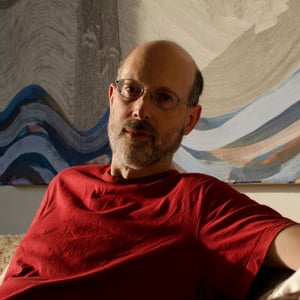
Maurice and Hilda Friedman Professor of Law, Columbia Law School; CEO, New Civil Liberties Alliance
Philip Hamburger is the Maurice and Hilda Friedman Professor of Law at Columbia Law School, and Chief Executive Officer at the New Civil Liberties Alliance. Before coming to Columbia, he was the John P. Wilson Professor at the University of Chicago Law School.
He writes on constitutional law and its history—with particular emphasis on religious liberty, freedom of speech and the press, judicial office, administrative power, and unconstitutional conditions.
His books are Separation of Church and State (Harvard 2002), Law and Judicial Duty (Harvard 2008), Is Administrative Law Unlawful? (Chicago 2014), The Administrative Threat (Encounter 2017), and Liberal Suppression: Section 501(c)(3) and the Taxation of Speech (Chicago 2018). A forthcoming book is Purchasing Submission: Conditions, Power, and Freedom (Harvard 2021).
He is a member of the American Academy of Arts and Sciences, and he has served on the board of directors of the American Society for Legal History. He has twice received the Sutherland Prize for the most significant contribution to English legal history, and has been awarded the Henry Paolucci - Walter Bagehot Book Award, the Hayek Book Prize, and the Bradley Prize.

Laurence H. Silberman Chair in Constitutional Governance, American Enterprise Institute; Executive Director, Antonin Scalia Law School’s C. Boyden Gray Center for the Study of the Administrative State
Adam J. White is the Laurence H. Silberman Chair in Constitutional Governance and senior fellow at the American Enterprise Institute, where he focuses on the Supreme Court and the administrative state. He also directs the Antonin Scalia Law School’s C. Boyden Gray Center for the Study of the Administrative State.
He writes on regulation and constitutional government for a variety of publications. He practiced law in Washington, D.C., after clerking for the D.C. Circuit's Judge David Sentelle. He also has been chairman of the ABA's Administrative Law Section.
In 2021, he served on the Presidential Commission on the Supreme Court of the United States, where he criticized “Court packing” and other efforts to restructure the Supreme Court.
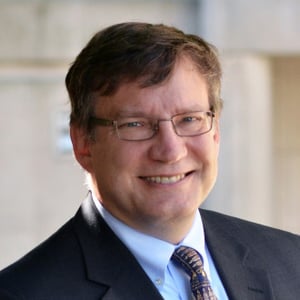
Chairman and Founder, Institute for Free Speech; Josiah H. Blackmore II/Shirley M. Nault Designated Professor of Law, Capital University Law School

Thomas M. Siebel Senior Fellow, The Hoover Institution, Stanford University; Gary T. Schwartz Distinguished Professor of Law Emeritus, UCLA School of Law
Eugene Volokh is the Thomas M. Siebel Senior Fellow at the Hoover Institution (Stanford), as well as the Gary T. Schwartz Distinguished Professor of Law Emeritus and Distinguished Research Professor at UCLA School of Law. He recently retired from teaching at UCLA, after 30 years there, and is now focusing on research.
Volokh is the author of the textbooks The First Amendment and Related Statutes (8th ed. 2023), and Academic Legal Writing (5th ed. 2016), as well as over 100 academic law journal articles, mostly on First Amendment law. He is a member of The American Law Institute; the editor-in-chief of the Journal of Free Speech Law; and the creator and coauthor of The Volokh Conspiracy, a leading legal blog founded in 2002 (hosted at the Washington Post from 2014 to 2017 and now at Reason Magazine).
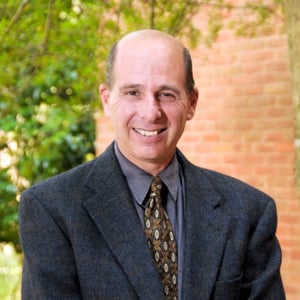
Sandra Day O'Connor Professor of Law & Professor of Government, William & Mary Law School
Neal Devins is the Sandra Day O’Connor Professor of Law and Professor of Government at the College of William and Mary. He is the author of several books and more than 100 articles and book chapters on courts, constitutional law, and law & politics. His books include The Company They Keep (Oxford 2019) (with Larry Baum), The Democratic Constitution (Oxford 2d ed. 2015) (with Louis Fisher), Political Dynamics of Constitutional Law (West 6th ed. 2019) (with Louis Fisher), and Shaping Constitutional Values: The Supreme Court, Elected Government, and the Abortion Dispute (Johns Hopkins University Press 1996). His articles have appeared in The Yale Law Journal, The Stanford Law Review, The Columbia Law Review, The Michigan Law Review, The California Law Review, The Virginia Law Review, The University of Pennsylvania Law Review, The University of Chicago Law Review, The New York University Law Review, and several other journals and magazines. Professor Devins is also the author of op-eds appearing in The Wall Street Journal, The New York Times, The Washington Post, The Los Angeles Times, Slate, and several other newspapers. He has testified before House and Senate committees on budget reform and the separation of powers. Professor Devins is a graduate of Georgetown University (A.B. 1978) and Vanderbilt Law School (J.D. 1982).
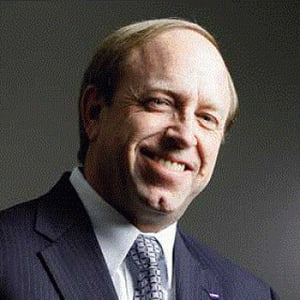
Attorney General, State of Colorado
John W. Suthers is a lifetime resident of Colorado. He graduated magna cum laude from the University of Notre Dame with a degree in Government in 1974 and from the University of Colorado Law School in 1977. From 1977 to 1981, he served as a deputy and chief deputy district attorney in Colorado Springs. From September of 1979 to January of 1981, he headed the Economic Crime Division of the District Attorney’s Office and co-authored a nationally published book on consumer fraud and white-collar crime.
In January of 1981, Mr. Suthers entered private practice and became a litigation partner in the Colorado Springs firm of Sparks Dix, P.C. He remained with the firm until November of 1988, when he defeated an incumbent to be elected District Attorney of the Fourth Judicial District. He was elected to a second term as District Attorney in November of 1992. At the conclusion of that second term in January of 1997, he returned to Sparks Dix, P.C. as Senior Counsel in charge of the firm’s litigation section.
On January 12, 1999, Gov. Bill Owens appointed Mr. Suthers as the executive director of the Colorado Department of Corrections. As head of the Colorado correctional system, he was in charge of an organization with nearly 6,000 employees and an annual operational budget of approximately $500 million.
On July 30, 2001, Mr. Suthers was nominated by President George W. Bush to be the United States Attorney for the District of Colorado. He was unanimously confirmed by the U.S. Senate. As U.S. Attorney, Mr. Suthers represented the United States in all criminal and civil matters within the District of Colorado.
On January 4, 2005, Mr. Suthers was appointed Attorney General of Colorado. After serving as Attorney General for nearly two years, in November 2006, the voters of Colorado elected Mr. Suthers by a large margin to serve a four-year term. Mr. Suthers was again re-elected in 2010 by the biggest margin or any statewide race that year. As Attorney General, he represents and defends the interests of the people of the state of Colorado and is chief legal counsel and adviser to state government and its many state agencies, boards and commissions.
Mr. Suthers has served on the board of numerous civic organizations. He has served as President of the El Paso County Bar Association in 1990-91 and as Senior Vice President of the Colorado Bar Association in 1996-97. He served as President of the Colorado District Attorney’s Council in 1994-95. In 1992, he was appointed by the Colorado legislature to serve as a Colorado delegate to the National Conference on Uniform State Laws and served until January of 1997. In the Summer of 2000, Mr. Suthers received a Gates Foundation Fellowship to attend the Government Executives Program at Harvard University’s Kennedy School of Government.
John and his wife Janet have two adult daughters. Alison is a Deputy District Attorney in Denver. Kate is a procurement analyst for the Defense Department in Pearl Harbor and a Lieutenant Commander in the U.S. Navy Reserves.
Suthers has authored five books, including his most recent, No Higher Calling, No Greater Responsibility: A Prosecutor Makes His Case (Fulcrum Publishing, 2008).
In his tenure as Attorney General, Mr. Suthers has initiated successful programs to protect children from Internet predators and to reduce mortgage and foreclosure fraud. He has served as Chairman of the Conference of Western Attorneys General, a member of the NAAG Executive Committee, Co-Chair of the NAAG Criminal Law Committee and as a member of the U.S. Attorney General’s Executive Working Group.

Senior Vice President for Legal Studies, Cato Institute
Clark Neily is senior vice president for legal studies at the Cato Institute. His areas of interest include constitutional law, overcriminalization, civil forfeiture, police accountability, and gun rights. Neily is the author of Terms of Engagement: How Our Courts Should Enforce the Constitution’s Promise of Limited Government. His writing has appeared in the Wall Street Journal, Forbes, and National Review Online, as well as various law reviews, including the Harvard Journal of Law and Public Policy, George Mason Law Review, Georgetown Journal of Law and Public Policy, NYU Journal of Law and Liberty, and Texas Review of Law and Politics. Neily is a frequent guest speaker and lecturer for the Federalist Society, Institute for Humane Studies, and American Constitution Society.
Before joining Cato in 2017, Neily was a senior attorney and constitutional litigator at the Institute for Justice and director of the Institute’s Center for Judicial Engagement. He is also an adjunct professor at the University of Texas School of Law, where he teaches constitutional litigation and public-interest law.
Neily served as co-counsel in District of Columbia v. Heller, the historic case in which the Supreme Court held for the first time that the Second Amendment protects an individual right to own a gun for self-defense.
Neily began his legal career as a law clerk to Judge Royce Lamberth on the U.S. District Court for the District of Columbia. After that he spent four years in the trial department of the Dallas-based firm Thompson & Knight. Neily received his undergraduate and law degrees from the University of Texas, where he was Chief Articles Editor of the Texas Law Review.
Chairman and Founder, Institute for Free Speech; Josiah H. Blackmore II/Shirley M. Nault Designated Professor of Law, Capital University Law School
Thomas M. Siebel Senior Fellow, The Hoover Institution, Stanford University; Gary T. Schwartz Distinguished Professor of Law Emeritus, UCLA School of Law
Eugene Volokh is the Thomas M. Siebel Senior Fellow at the Hoover Institution (Stanford), as well as the Gary T. Schwartz Distinguished Professor of Law Emeritus and Distinguished Research Professor at UCLA School of Law. He recently retired from teaching at UCLA, after 30 years there, and is now focusing on research.
Volokh is the author of the textbooks The First Amendment and Related Statutes (8th ed. 2023), and Academic Legal Writing (5th ed. 2016), as well as over 100 academic law journal articles, mostly on First Amendment law. He is a member of The American Law Institute; the editor-in-chief of the Journal of Free Speech Law; and the creator and coauthor of The Volokh Conspiracy, a leading legal blog founded in 2002 (hosted at the Washington Post from 2014 to 2017 and now at Reason Magazine).
Sandra Day O'Connor Professor of Law & Professor of Government, William & Mary Law School
Neal Devins is the Sandra Day O’Connor Professor of Law and Professor of Government at the College of William and Mary. He is the author of several books and more than 100 articles and book chapters on courts, constitutional law, and law & politics. His books include The Company They Keep (Oxford 2019) (with Larry Baum), The Democratic Constitution (Oxford 2d ed. 2015) (with Louis Fisher), Political Dynamics of Constitutional Law (West 6th ed. 2019) (with Louis Fisher), and Shaping Constitutional Values: The Supreme Court, Elected Government, and the Abortion Dispute (Johns Hopkins University Press 1996). His articles have appeared in The Yale Law Journal, The Stanford Law Review, The Columbia Law Review, The Michigan Law Review, The California Law Review, The Virginia Law Review, The University of Pennsylvania Law Review, The University of Chicago Law Review, The New York University Law Review, and several other journals and magazines. Professor Devins is also the author of op-eds appearing in The Wall Street Journal, The New York Times, The Washington Post, The Los Angeles Times, Slate, and several other newspapers. He has testified before House and Senate committees on budget reform and the separation of powers. Professor Devins is a graduate of Georgetown University (A.B. 1978) and Vanderbilt Law School (J.D. 1982).
Attorney General, State of Colorado
John W. Suthers is a lifetime resident of Colorado. He graduated magna cum laude from the University of Notre Dame with a degree in Government in 1974 and from the University of Colorado Law School in 1977. From 1977 to 1981, he served as a deputy and chief deputy district attorney in Colorado Springs. From September of 1979 to January of 1981, he headed the Economic Crime Division of the District Attorney’s Office and co-authored a nationally published book on consumer fraud and white-collar crime.
In January of 1981, Mr. Suthers entered private practice and became a litigation partner in the Colorado Springs firm of Sparks Dix, P.C. He remained with the firm until November of 1988, when he defeated an incumbent to be elected District Attorney of the Fourth Judicial District. He was elected to a second term as District Attorney in November of 1992. At the conclusion of that second term in January of 1997, he returned to Sparks Dix, P.C. as Senior Counsel in charge of the firm’s litigation section.
On January 12, 1999, Gov. Bill Owens appointed Mr. Suthers as the executive director of the Colorado Department of Corrections. As head of the Colorado correctional system, he was in charge of an organization with nearly 6,000 employees and an annual operational budget of approximately $500 million.
On July 30, 2001, Mr. Suthers was nominated by President George W. Bush to be the United States Attorney for the District of Colorado. He was unanimously confirmed by the U.S. Senate. As U.S. Attorney, Mr. Suthers represented the United States in all criminal and civil matters within the District of Colorado.
On January 4, 2005, Mr. Suthers was appointed Attorney General of Colorado. After serving as Attorney General for nearly two years, in November 2006, the voters of Colorado elected Mr. Suthers by a large margin to serve a four-year term. Mr. Suthers was again re-elected in 2010 by the biggest margin or any statewide race that year. As Attorney General, he represents and defends the interests of the people of the state of Colorado and is chief legal counsel and adviser to state government and its many state agencies, boards and commissions.
Mr. Suthers has served on the board of numerous civic organizations. He has served as President of the El Paso County Bar Association in 1990-91 and as Senior Vice President of the Colorado Bar Association in 1996-97. He served as President of the Colorado District Attorney’s Council in 1994-95. In 1992, he was appointed by the Colorado legislature to serve as a Colorado delegate to the National Conference on Uniform State Laws and served until January of 1997. In the Summer of 2000, Mr. Suthers received a Gates Foundation Fellowship to attend the Government Executives Program at Harvard University’s Kennedy School of Government.
John and his wife Janet have two adult daughters. Alison is a Deputy District Attorney in Denver. Kate is a procurement analyst for the Defense Department in Pearl Harbor and a Lieutenant Commander in the U.S. Navy Reserves.
Suthers has authored five books, including his most recent, No Higher Calling, No Greater Responsibility: A Prosecutor Makes His Case (Fulcrum Publishing, 2008).
In his tenure as Attorney General, Mr. Suthers has initiated successful programs to protect children from Internet predators and to reduce mortgage and foreclosure fraud. He has served as Chairman of the Conference of Western Attorneys General, a member of the NAAG Executive Committee, Co-Chair of the NAAG Criminal Law Committee and as a member of the U.S. Attorney General’s Executive Working Group.
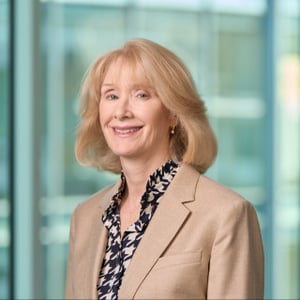
Partner, HWG LLP
Patricia Paoletta is a partner with the law firm of HWG LLP, where she specializes in telecommunications, trade and technology policy. Ms. Paoletta provides advice on regulatory, trade and legislative policy to clients before the FCC, Congress and the Administration. Her clients include providers of content, cloud, mobile broadband, VoIP, international telecommunications, small cells, cognitive radio, public safety and homeland security solutions. She serves on Advisory Boards for several entities engaged in information services, communications and technology.
Ms. Paoletta has accrued considerable experience with telecommunications trade and policy in the public sector. From 1990 to 1995, she was senior advisor to the International Bureau Chief and Office Director at the Federal Communications Commission. In the mid 1990s, Ms. Paoletta served as Director of Telecommunications Trade Policy in the Office of the U.S. Trade Representative, Executive Office of the President, where she worked on the WTO Information Technology Agreement (ITA) and the Basic Telecommunications Agreement. After USTR, Ms. Paoletta served as Majority Counsel to the House Energy and Commerce Committee. She then moved to Level 3 Communications, as Vice President, Government Relations.
Ms. Paoletta is on the Steering Committee of the Transatlantic Roundtable on Telecommunications and Information Technology of the European Institute. She is a member of the USTR Alumni Association, Washington International Trade Association, the Federal Communications Bar Association (FCBA), and Women in Technology. Ms. Paoletta has served on the Board of Advisors for the Inter-American Dialogue's Latin America Telecom Advisor, Co-Chairman of the American Bar Association International Communications Committee, and as a member of the U.S. Chamber of Commerce's Technology Policy Committee.
Ms. Paoletta served as a delegate in 2012 to the ITU-R's Study Group 6 Working Party 6A Meeting and in 2009 and 2010 to the ITU-R's Study Group I Working Party IB Meetings; the 2009 meetings of CITEL (the Committee on International Telecommunications at the Organization of American States) PCC-II; the International Telecommunication Union (ITU) World Telecommunications Standards Assembly (2000); the ITU Internet Protocol Telephony Experts Group and the ITU World Telecommunications Policy Forum in 2001; as Chairman of the National Reliability and Interoperability Council (NRIC) Steering Committee (2000-2001); as Board Member for the Voice on the Net Coalition (2001); as Co-Chairman of the FCBA's Annual Seminar Committee (2009-2011); as a member of the FCBA's Ad Hoc Speakers Committee (2006-2007); as Co-Chairman for the FCBA International Practice Committee (2001-2002 and 2005-2006); and as a Co-Chairman of the FCBA Legislative Practice Committee (1999-2000).
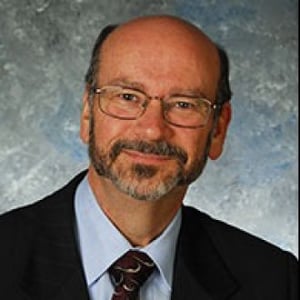
Clinical Professor of Law, Dale E. Fowler School of Law, Chapman University

Is Administrative Law Unlawful?
TeleforumConservative & Libertarian Legal Scholarship: International Law & Transactions
[Return to Table of Contents] XVI. International Law & Transactions Introductory Materials Emer de Vattel,...
Conservative & Libertarian Legal Scholarship: Family Law
[Return to Table of Contents] XIII. Family Law Philosophical Underpinnings Individual Responsibility and the Law,...
Amending the Bill of Rights - Podcast
Bradley A. Smith, Eugene Volokh
There is a recent, concerted effort to ratify an amendment to the U.S. Constitution to...
Amending the Bill of Rights
TeleforumDo State Attorneys General Have a Duty to Defend State Laws? - Podcast
Neal E. Devins, John W. Suthers
Recently U.S. Attorney General Eric Holder, citing the Supreme Court's 5-4 decision in United States...
Do State Attorneys General Have a Duty to Defend State Laws?
TeleforumA Discussion with Clark Neily
Mobile, AlabamaThe Cybersecurity Overreach: A Few Harsh Words About the President’s Cybersecurity Executive Order, Along with a Better Solution
Patricia J. Paoletta
Note from the Editor: This article is a discussion about Executive Order 13636 on cybersecurity...
Part II: Can States Require Proof of Citizenship for Voter Registration?: Arizona v. Inter Tribal Council of Arizona
Anthony (Tom) Caso
Note from the Editor: This article discusses the Arizona v. Inter Tribal Council of Arizona...