

Tazewell Taylor Professor of Law and William H. Cabell Research Professor, William & Mary Law School
Jonathan H. Adler joined the William & Mary law faculty as the Tazwell Taylor Professor of Law and William H. Cabell Research Professor in 2025. Prior to joining the faculty, he was the inaugural Johan Verheij Memorial Professor of Law and the founding Director of the Coleman P. Burke Center for Environmental Law at the Case Western Reserve University School of Law.
Professor Adler is the author or editor of seven books, including Climate Liberalism: Perspectives on Liberty, Property and Pollution (Palgrave, 2023), Marijuana Federalism: Uncle Sam and Mary Jane (Brookings Institution Press, 2020), Business and the Roberts Court (Oxford University Press, 2016) and Rebuilding the Ark: New Perspectives on Endangered Species Act Reform (AEI Press, 2011).
His articles have appeared in publications ranging from the Harvard Environmental Law Review and Yale Journal on Regulation to the Wall Street Journal, New York Times, and Washington Post. He has testified before Congress a dozen times, and his work has been cited in the U.S. Supreme Court. A 2024 study identified Professor Adler as the seventh most cited legal academic in administrative and environmental law from 2019 to 2023.
Professor Adler is a contributing editor to Civitas Outlook and a regular contributor to the popular legal blog, The Volokh Conspiracy. A regular commentator on constitutional and regulatory issues, he has appeared on numerous radio and television programs, ranging from the PBS Newshour and National Public Radio to the Fox News Channel and Entertainment Tonight.
Professor Adler is a senior fellow at the Property & Environment Research Center in Bozeman, Montana. In 2018, Professor Adler was elected to membership in the American Law Institute and helped co-found the organization Checks and Balances. In 2024, Professor Adler was appointed a public member of the Administrative Conference of the United States.
Professor Adler clerked for the Honorable David B. Sentelle on the U.S. Court of Appeals for the District of Columbia Circuit.
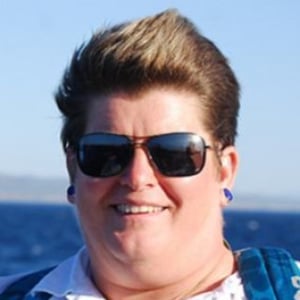
Robert A. Schroeder Distinguished Professor of Law, University of Kansas School of Law
Robin Kundis Craig joined the KU Law faculty in July 2024 and serves as the Robert A. Schroeder Distinguished Professor of Law.
Craig specializes in all things water, including the relationships between climate change and water; the water-energy-food nexus; the Clean Water Act; the intersection of water issues and land issues; ocean and coastal law; marine biodiversity and marine protected areas; water law; ecological resilience and the law; climate change adaptation, and the relationships between environmental law and public health. She is the author, co-author, or editor of 12 books, including Re-Envisioning the Anthropocene Ocean (University of Utah Press, 2024, co-edited with Jeffrey M. McCarthy); The End of Sustainability (Kansas University Press 2017, with Melinda Harm Benson); Contemporary Issues in Climate Change Law and Policy (Environmental Law Institute 2016, with Stephen Miller); Comparative Ocean Governance: Place- Based Protections in an Era of Climate Change (Edward Elgar 2012); and The Clean Water Act and the Constitution (Environmental Law Institute 2nd Ed. 2009), as well as textbooks for Environmental Law, Water Law and Toxic Torts. She has also written more than100 law review articles and book chapters in both legal and scientific publications.
In recognition of her work on these topics, Craig was elected to membership in the American Law Institute (2015) and the American College of Environmental Lawyers (2019) and has been appointed to the International Union for the Conservation of Nature’s World Commission on Environmental Law and to the Center for Progressive Reform. She has served on six National Academy of Sciences committees that evaluated Florida Everglades restoration, implementation of the Edwards Aquifer Habitat Conservation Plan and application of the Clean Water Act to the Mississippi River. She has consulted on water quality issues with the government of Victoria, Australia, and the Council on Environmental Cooperation in Montreal, Quebec, Canada, and she was one of 12 marine educators chosen to participate in a 2010 program in the Papahanamokuakea Marine National Monument, spending a week on Midway Atoll. She was also a principal researcher in a four-year grant project on Adaptive Water Governance sponsored by the National Social-Ecological Synthesis Center with money from the National Science Foundation. In 2018, Craig was named a William Evans Visiting Research Fellow at the University of Otago, Dunedin, New Zealand. In 2017, the Rockefeller Foundation awarded her a Bellagio Center Writing Residency fellowship, allowing her to spend four weeks on Lake Como, Italy, working on a new book project on Re-Envisioning the Anthropocene Oceans, and in 2016 she was a Research Fellow at the University of Tasmania, Hobart, Australia.
Craig is an active participant in several national organizations, including the American Bar Association Section on Environment, Energy and Resources (ABA SEER), where she currently serves on the editorial board of Natural Resources & Environment; the Foundation for Natural Resources and Environmental Law, where she co-chairs the Natural Resources Law Teachers Committee; and the Association of American Law Schools (AALS), where she has chaired the Maritime Law Section, the Natural Resources Law Section and the Environmental Law Section. She has also served as a consultant to the Environmental Defense Fund and the River Network’s Nutrient Task Force. Craig serves on the Editorial Boards of Coastal and Ocean Management and Ecology & Society, as a Specialty Chief Editor of Frontiers Climate: Climate Law and Policy and as a Guest Associate Editor for Frontiers Climate: Risk Management on the topic of “Climate Change Adaptation as Risk Management.”
Craig earned her J.D. summa cum laude in 1996 from the Lewis & Clark School of Law in Portland, Oregon, with a Certificate in Environmental Law; her Ph.D. in English/Literature and Science in 1993 from the University of California, Santa Barbara; her M.A. in Writing About Science in 1986 from the Johns Hopkins University; and her B.A. cum laude in English/Writing in 1985 from Pomona College in Claremont, California. While in law school, she worked for the Oregon Department of Justice in its General Counsel Division, Natural Resources Section, representing the state’s environmental and natural resources agencies. After law school, she clerked for Judge Robert E. Jones at the U.S. District Court for the District of Oregon before starting her law teaching career as a Visiting Assistant Professor at the Lewis & Clark School of Law. Before arriving at KU in 2024, Craig held tenure-track positions at the Western New England College School of Law, Indiana University—Indianapolis School of Law (where she first received tenure), the Florida State University School of Law, the University of Utah S.J. Quinney School of Law and USC’s Gould School of Law. She has visited at the Lewis & Clark School of Law, Vermont Law School, the University of Hawaii School of Law and the University of Tasmania Faculty of Law. At Kansas, Craig teaches Environmental Law, Water Law, Ocean & Coastal Law, Toxic Torts and Civil Procedure.
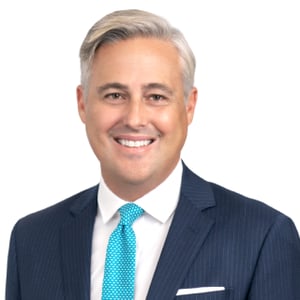
Managing Partner, Best Best & Krieger LLP
Andre Monette works with both public and private clients in matters involving water quality issues. He is a member of the Environmental & Natural Resources practice group in Best Best & Krieger LLP’s Washington, D.C. office. Andre works extensively with water districts, cities, counties and agricultural interests, and other private entities on matters involving the Federal Clean Water Act and its state law analogues.
Andre works with public agencies and farmers on matters involving water rights, water supply and water quality. Andre also works with investors interested in water projects, helping funds assess the viability of potential water related investments.
A major area of focus for Andre’s practice is the intersection of the water quality and water supply regulation. Federal and state laws across the nation divide water quality and water supply regulations into separate categories that often do not intersect and can preclude efficient use of the supply. Andre’s practice focuses on areas of overlap where acute knowledge of multiple regulatory schemes is required, including; streambed restoration, groundwater recharge projects, indirect potable reuse projects, large scale recycled water projects, and effluent limitation compliance.
Andre is the managing partner of BBK's Washington, D.C. office.
Tazewell Taylor Professor of Law and William H. Cabell Research Professor, William & Mary Law School
Jonathan H. Adler joined the William & Mary law faculty as the Tazwell Taylor Professor of Law and William H. Cabell Research Professor in 2025. Prior to joining the faculty, he was the inaugural Johan Verheij Memorial Professor of Law and the founding Director of the Coleman P. Burke Center for Environmental Law at the Case Western Reserve University School of Law.
Professor Adler is the author or editor of seven books, including Climate Liberalism: Perspectives on Liberty, Property and Pollution (Palgrave, 2023), Marijuana Federalism: Uncle Sam and Mary Jane (Brookings Institution Press, 2020), Business and the Roberts Court (Oxford University Press, 2016) and Rebuilding the Ark: New Perspectives on Endangered Species Act Reform (AEI Press, 2011).
His articles have appeared in publications ranging from the Harvard Environmental Law Review and Yale Journal on Regulation to the Wall Street Journal, New York Times, and Washington Post. He has testified before Congress a dozen times, and his work has been cited in the U.S. Supreme Court. A 2024 study identified Professor Adler as the seventh most cited legal academic in administrative and environmental law from 2019 to 2023.
Professor Adler is a contributing editor to Civitas Outlook and a regular contributor to the popular legal blog, The Volokh Conspiracy. A regular commentator on constitutional and regulatory issues, he has appeared on numerous radio and television programs, ranging from the PBS Newshour and National Public Radio to the Fox News Channel and Entertainment Tonight.
Professor Adler is a senior fellow at the Property & Environment Research Center in Bozeman, Montana. In 2018, Professor Adler was elected to membership in the American Law Institute and helped co-found the organization Checks and Balances. In 2024, Professor Adler was appointed a public member of the Administrative Conference of the United States.
Professor Adler clerked for the Honorable David B. Sentelle on the U.S. Court of Appeals for the District of Columbia Circuit.
Partner, Sidley Austin LLP
ROGER MARTELLA co-leads the Environmental practice group at Sidley Austin LLP. He rejoined Sidley Austin LLP after serving as the General Counsel of the United States Environmental Protection Agency, concluding 10 years of litigating and handling complex environmental and natural resource matters at the Department of Justice and EPA. In 2015, Roger was recognized by Who’s Who Legal as the environmental lawyer of the year globally.
Roger’s practice focuses on three primary areas. First, Roger advises companies on developing strategic approaches to achieve their goals in light of rapidly developing demands to addressclimate change, promote sustainability and utilize clean energy. Second, Roger handles a broad range of environmental and natural resource litigation and mediation. Third, Roger advises multinational companies on compliance with environmental laws in the United States, China, the European Union and other nations.
Roger counsels approximately 50 of the world’s leading conventional and renewable energy, industrial, transportation, agricultural, forestry, and technology companies on bet-the-company environmental issues, regulatory matters, and litigation including transitioning to an era of legal controls addressing greenhouse gas emissions, increasingly stringent pollutant controls, alternative and clean energy, hydraulic fracturing, and sustainability both in the United States and abroad.
Roger employs a strategic, forward-looking approach to solving emerging law and policy issues across the world that have the potential to create both opportunities and risks for domestic and multinational energy and manufacturing companies and industries. Roger’s approach is to build a collaborative and coalition-building framework that seeks the strongest possible results through up front coordination with government, industry, and NGO stakeholders, leveraging strong honest broker relations with government officials and understanding of government approach to realize resolutions that have led to extraordinary favorable resolutions offering significant regulatory relief to industries and pennies-on-the-dollar enforcement settlements for companies.
Roger was unanimously confirmed by the United States Senate as EPA General Counsel. In that role, Roger served as EPA’s chief legal advisor supervising an office of 350 lawyers and staff in Washington and 10 regional offices. In particular, Roger led the team responsible for developing for the first time under the Clean Air Act the federal government’s climate change legal framework and options in response to the landmark Supreme Court decision Massachusetts v. EPA, which held greenhouse gases to be air pollutants under the Clean Air Act.
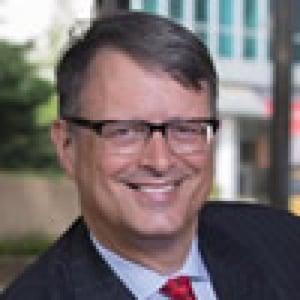
Andrew P. Morriss is Dean and Anthony G. Buzbee Dean's Endowed Chairholder at Texas A&M School of Law and a member of the Board of Advisors for the Center on Culture and Civil Society at the Independent Institute. He is also a Research Fellow at the Center for Labor and Employment Law at New York University; Senior Fellow at the Property & Environment Research Center; Senior Scholar at the Mercatus Center at George Mason University; and a regular Visiting Professor at Universidad Francisco Marroquín, in Guatemala. Prior to coming to the University of Illinois, he served as Galen J. Roush Professor of Business Law and Regulation at Case Western Reserve University.
He received his A.B. degree from Princeton University, his J.D. and a masters degree in public affairs from the University of Texas at Austin, and his Ph.D. (economics) from the Massachusetts Institute of Technology. After law school he clerked for U.S. District Judge Barefoot Sanders in the Northern District of Texas and worked for two years at Texas Rural Legal Aid in Hereford and Plainview, Texas.
Professor Morriss is the author or coauthor of more than forty book chapters and scholarly articles, and he is the co-editor of Cross-Border Human Resources, Labor and Employment Issues: Proceedings of the New York University 54th Annual Conference on Labor (with Samuel Estreicher); Property Stories (with Gerald Korngold); and The Common Law and the Environment (with Roger Meiners). He is the author of the book, Regulation by Litigation (with Bruce Yandle and Andrew Dorchak), and he also regularly writes for The Freeman: Ideas on Liberty and Books & Culture: A Christian Review.
Professor Morriss was recently named one of the Reporters for the Restatement of Employment Law by the American Law Institute (ALI), Senior Fellow for the Institute for Energy Research, and a Reporter for the Restatement of Employment Law by the American Law Institute.
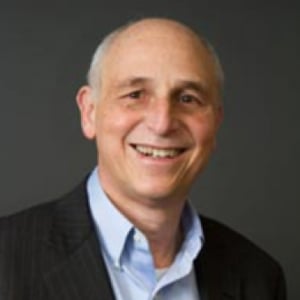
A.B. Chettle Chair in Civil Procedure, Georgetown University Law Center
Professor Vladeck teaches civil procedure, federal courts, a practicum on privacy and technology (taught jointly with MIT), and directs the Civil Litigation Clinic, a student clinic that handles trial court litigation focused on public-interest cases. He also serves as Faculty Director of the Law Center’s Center on Privacy and Technology.
From 2002 to 2009, Professor Vladeck served as Director of the Civil Rights section of Georgetown Law’s Institute for Public Representation, a student clinic that handles complex trial court and appellate litigation focused on civil rights and other public-interest litigation, while also teaching civil procedure and federal courts. From 2009 to 2012, Professor Vladeck took leave from Georgetown to serve as the Director of the Federal Trade Commission’s Bureau of Consumer Protection.
At the FTC, he supervised the Bureau’s 450 lawyers, investigators, paralegals and support staff in carrying out the Bureau’s work to protect consumers from unfair, deceptive or fraudulent practices. Before joining the Law Center faculty full-time in 2002, Professor Vladeck spent over 25 years with Public Citizen Litigation Group, a national public interest law firm, serving the last ten years as the Group’s director. He has briefed and argued a number of cases before the U.S. Supreme Court and more than sixty cases before federal courts of appeal and state courts of law resort.
He is a Senior Fellow of the Administrative Conference of the United States, a member of the National Academy of Sciences’ Committee on Law, Science and Technology, and an elected member of the American Law Institute. He also serves as Vice Chair of the Board of Trustees of the Natural Resources Defense Council, and on the boards of the National Consumers Law Center and the Center for Democracy and Technology. Professor Vladeck frequently testifies before Congress and writes on administrative law, First Amendment, consumer protection, privacy, and access to justice issues.

Litigation Update: City and County of San Francisco v. Environmental Protection Agency
Jonathan H. Adler, Robin Kundis Craig, Andre Monette
The Supreme Court recently decided that they will review a case dealing with the Clean...
Topics
Agency Doesn't Need Public Permission to Withdraw Proposed Regulations
In a memorandum opinion dated September 29, 2015, Judge Randolph Moss of the United States...
Regulation by Litigation: Boon or Bane?
Jonathan H. Adler, Andrew Dorchak, Roger Martella, Andrew P. Morriss, David C. Vladeck, Bruce Yandle
Federal regulators, state attorneys general and plaintiffs attorneys increasingly rely upon litigation to impose regulatory...