

Founding Partner, Lodestar Law and Economics PLLC
Josh is the founder of Lodestar Law and Economics, PLLC. On January 1, 2013, the U.S. Senate unanimously confirmed Wright as a Commissioner of the Federal Trade Commission (FTC). He is a leading scholar in antitrust law, economics, intellectual property, regulation, and consumer protection, and has published more than 100 articles and book chapters, co-authored a leading antitrust casebook, and edited several book volumes focusing on these issues. Commentators have recognized Wright as “widely considered his generation’s greatest mind on antitrust law,” and his academic work ranks him as one of the most cited antitrust academics in the world. Wright was also awarded the Paul M. Bator Award by the Federalist Society in 2014 to “an academic who demonstrated excellence in legal scholarship, a commitment to teaching, a concern for students, and who has made a significant public impact.” Wright also served as the Executive Director of the Global Antitrust Institute, the world’s premiere academic institute focused upon antitrust education for judges and regulators and has taught hundreds of judges and thousands of regulators from dozens of countries.
Wright’s practice focuses upon helping clients solve complex competition, consumer protection, and regulatory problems by providing legal and economic analysis, strategic advice and counseling, and economic expert testimony.

Professor of Law, Antonin Scalia Law School, George Mason University
Adam Mossoff is Professor of Law at Antonin Scalia Law School, George Mason University. He has published extensively on why patents, copyrights, and other intellectual property rights have been—and should be—legally secured to innovators and creators as property rights. His scholarship has been relied on by the United States Supreme Court, by lower federal courts, and by U.S. federal agencies. He has been invited to testify numerous times before the U.S. Senate and the House of Representatives on intellectual property legislation. His writings on intellectual property policy have also appeared in the Wall Street Journal, New York Times, Forbes, Investors Business Daily, and in other media outlets. His journal articles can be downloaded here.
Professor Mossoff is a longstanding member of the Executive Committee of the Intellectual Property Practice Group of the Federalist Society, on which he served as Chairperson from 2016-2018, and he is Chair of the Intellectual Property Working Group of the Regulatory Transparency Project of the Federalist Society. He is a Senior Fellow and Chair of the Forum for Intellectual Property at the Hudson Institute, a Visiting Intellectual Property Fellow at the Heritage Foundation, and a member of the Board of Directors of the Center for Intellectual Property Understanding. He is a member of the Intellectual Property Rights Policy Committee of ANSI and he has served as Chair and Vice-Chair of the Intellectual Property Committee of the IEEE-USA, on which he remains a member in good standing.
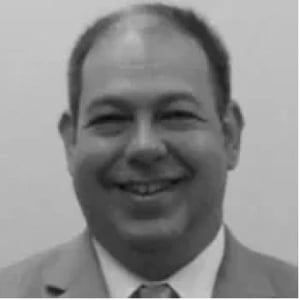
CoFounder, RightsClick
Steven’s extensive background in IP law and policy began as an attorney for the U.S. Senate Judiciary Committee, after which, he served as senior counsel for Policy and International Affairs at the U.S. Copyright Office and then as Chief Intellectual Property Counsel for the Global Intellectual Property Center of the U.S. Chamber of Commerce. Before co-founding RightsClick, he started the IP consultancy Sentinel Worldwide, and teaches copyright law at George Washington University Law School.

Associate Dean for Academic Affairs, Austin E. Owen Research Scholar & Professor of Law, The University of Richmond School of Law
Dean Kristen Jakobsen Osenga teaches and writes in the areas of patent law, antitrust, and legislation and regulation. Some of her recent scholarship focuses on standard development organizations, patent eligible subject matter, patent licensing firms, litigation and remedies for patent infringement, and patent law reform. She has written numerous law review articles on these and other topics, as well as book chapters and op eds on various aspects of patent law. Additionally, she has spoken on these issues at many academic conferences and bar events. Dean Osenga is Chief Policy Counselor for the Inventors Defense Alliance, as well as an active member of the Federal Circuit Bar Association and the American Intellectual Property Law Association.
Dean Osenga received a B.S. degree in Biomedical Engineering from the University of Iowa, an M.S. degree in Electrical Engineering from Southern Illinois University – Carbondale, and a J.D. from the University of Illinois College of Law, where she graduated magna cum laude. After law school, she practiced at the law firm of Finnegan, Henderson, Farabow, Garrett, & Dunner LLP, (now Finnegan) where she did patent prosecution and litigation. She then clerked for the Judge Richard Linn of the U.S. Court of Appeals for the Federal Circuit. After clerking, she entered academia, teaching first at Chicago-Kent College of Law and then at the University of Richmond, where she has been since 2006. She has also been a Visiting Professor at Emory University School of Law and at William & Mary School of Law.
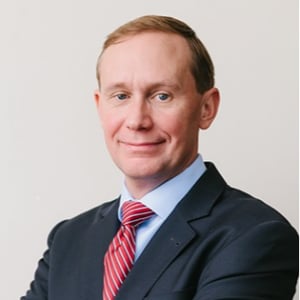
Associate Professor, Boston College Law School
David Olson is an associate professor and the Faculty Director of the Program on Innovation and Entrepreneurship. He teaches patent law, intellectual property law, antitrust law, and various seminars. His research and writing primarily focus on patents, copyrights, antitrust, and incentives for innovation and competition. Since joining BC Law in 2007, he has been recognized for his teaching excellence and contributions. In 2011, he received the Business & Law Society Faculty Award for Achievement in Business & Law. In 2012, he received the Professor Emil Slizewski Award for Faculty Excellence. For one semester in 2015, Olson served as a visiting professor at Pontifical Catholic University, Rio de Janeiro, Brazil, where he conducted research and taught a course on intellectual property.
Olson has published scholarly articles on patent law, copyright law, antitrust, music licensing, and first amendment copyright issues. His writing has been cited in Supreme Court and other legal opinions. He has testified before the U.S. Congress on matters of drug patents, FDA regulation, and antitrust.
The media frequently seeks Olson’s insights and opinions. He has been quoted in the Wall Street Journal, Associated Press, and Reuters, among others. He has appeared as a guest panelist on WBUR’s Radio Boston, WAMU's Kojo Namdi Show, and Public Radio Canada. His op-eds have appeared in the Chicago Tribune, Washington Times, and The Hill.
Olson came to Boston College from Stanford Law School's Center for Internet and Society, where he conducted research on patent law and litigated copyright fair use impact cases. Before entering academia, Olson practiced law as a patent litigator. He clerked for Judge Jerry Smith of the U.S. Court of Appeals for the Fifth Circuit.

Partner, Wiley Rein, LLP
Megan L. Brown is a partner at Wiley Rein LLP. She has significant litigation, appellate and regulatory experience before state and federal courts and agencies.
Ms. Brown helps businesses respond to federal, state and local regulation and investigations raising administrative law, statutory interpretation, and constitutional issues, including the First Amendment.
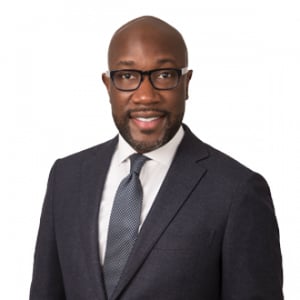
Of Counsel, Womble Bond Dickinson
Dwayne represents clients in complex proceedings concerning communications law, constitutional issues, the interpretation and enforcement of federal statutes, and administrative law. As an experienced advocate, Dwayne regularly practices before federal agencies, federal appellate and district courts, and the Supreme Court of the United States.
In addition to his legal practice, Dwayne serves as an adjunct professor at William & Mary Law School where he co-directs the Appellate and Supreme Court Clinic. The Clinic focuses on First Amendment (free speech and religion) and Fourth Amendment (search and seizure) cases in various federal courts of appeals and the Supreme Court of the United States.
Previously, Dwayne served as a law clerk to Judge Janice Rogers Brown of the United States Court of Appeals for the D.C. Circuit and Judge George L. Russell, III, of the United States District Court for the District of Maryland. He is a member of the Federal Communications Bar Association and the Edward Coke Appellate Inn of Court.

Senior Associate, Orrick
Rachel Wainer Apter is a member of the firm’s Supreme Court and Appellate Litigation practice. Ms. Apter has been a lead drafter on dozens of briefs in federal and state appellate tribunals and in the U.S. Supreme Court.
Her work spans a wide range of subject areas, including employment, bankruptcy, intellectual property, and constitutional litigation, and she has worked on many cases raising complex issues of statutory interpretation. She also maintains an active pro bono practice, recently presenting argument in the D.C. Court of Appeals on behalf of a defendant convicted of first degree murder.
Prior to joining Orrick, Ms. Apter served as a law clerk to Justice Ruth Bader Ginsburg, Chief Judge Robert Katzmann of the U.S. Court of Appeals for the Second Circuit, and Judge Jed Rakoff of the U.S. District Court for the Southern District of New York. Rachel sits on the selection committee of the Immigrant Justice Corps, the country's first fellowship program dedicated to meeting the need for high-quality legal assistance for immigrants seeking citizenship and fighting deportation.
Robert A. Lucas Chair of Law and Director of the Center for Inte, Indiana University
Mark D. Janis teaches courses in patents, trademarks, and other areas of intellectual property law. He is the Robert A. Lucas Chair of Law and the Director of the Center for Intellectual Property Research. Janis has authored a number of books, including the treatise IP and Antitrust (with Hovenkamp, Lemley and Leslie), Trademarks and Unfair Competition in a Nutshell, two casebooks (Trademarks and Unfair Competition: Law and Policy (3d ed.), and Trade Dress and Design Law, both with Dinwoodie) and other books on trademark law (with Dinwoodie). He has published numerous law review articles and book chapters on patent law, intellectual property and antitrust, trademark law, intellectual property protection for plants, plant biotechnology and intellectual property protection for designs.
Janis is the winner of a Collegiate Teaching Award and a Faculty Scholar Award (both from the University of Iowa College of Law), and INTA's Ladas Award in 2008. At Indiana Law, he was the recipient of the Leon H. Wallace Teaching Award, the highest teaching honor given to law faculty.
Prior to joining the faculty at Indiana, Professor Janis was the H. Blair & Joan V. White Chair in Intellectual Property Law at the University of Iowa College of Law. He practiced patent law at Barnes & Thornburg (Indianapolis) from 1989 to 1995.
Founding Member, Gammage & Burnham PLC
Grady Gammage, Jr. has been practicing law in Phoenix for 40 years. His practice has focused on land use, zoning and real estate projects throughout Arizona. He has represented projects ranging from master planned communities and subdivisions to high rise buildings and intense urban mixed-use redevelopment.
Examples of public sector representation include zoning ordinances in Sedona, Avondale, Cave Creek and Phoenix. He also has represented cities with regard to economic development issues and development agreements. He has represented dozens of clients regarding State Trust Land and was a principal author of the state Urban Lands Act.
He served on the Central Arizona Project Board of Directors for 12 years, and was President during a period of turbulence when the CAP was suing the Federal Government over the cost of the canal.
As a real estate developer, he built an intense, urban mixed use project in the City of Tempe which won three architectural awards and has been widely acclaimed.
Mr. Gammage’s recent book The Future of the Suburban City: Lessons from Sustaining Phoenix has just been published by Island Press.

Executive Vice President, Goldwater Institute
Christina Sandefur is the Executive Vice President at the Goldwater Institute. She develops policies and litigates cases advancing healthcare freedom, free enterprise, private property rights, free speech, and taxpayer rights.
Christina is a co-drafter of the Right to Try initiative, now federal law, which protects terminally ill patients' right to try safe investigational treatments that have been prescribed by their physician but are not yet FDA-approved. She has won important victories for property rights in Arizona and works nationally to promote the Institute's Private Property Rights Protection Act, a state-level reform that requires government to pay owners when regulations destroy property rights and reduce property values.
Christina is the co-author of the book Cornerstone of Liberty: Private Property Rights in 21st Century America (2016). She is a frequent guest on national television and radio programs, has provided expert legal testimony to various legislative committees, and is a frequent speaker at conferences. She is the recipient of the 2018 Buckley Award in recognition of her leadership in the freedom movement, and she is an Advisory Board Member of the Network of enlightened Women. Christina serves on the board of the Phoenix Lawyers Chapter of the Federalist Society and is a member of the executive committee for the Federalist Society's Regulatory Transparency Project: FDA & Health.
Christina is a graduate of Michigan State University College of Law and Hillsdale College.
Founding Partner, Lodestar Law and Economics PLLC
Josh is the founder of Lodestar Law and Economics, PLLC. On January 1, 2013, the U.S. Senate unanimously confirmed Wright as a Commissioner of the Federal Trade Commission (FTC). He is a leading scholar in antitrust law, economics, intellectual property, regulation, and consumer protection, and has published more than 100 articles and book chapters, co-authored a leading antitrust casebook, and edited several book volumes focusing on these issues. Commentators have recognized Wright as “widely considered his generation’s greatest mind on antitrust law,” and his academic work ranks him as one of the most cited antitrust academics in the world. Wright was also awarded the Paul M. Bator Award by the Federalist Society in 2014 to “an academic who demonstrated excellence in legal scholarship, a commitment to teaching, a concern for students, and who has made a significant public impact.” Wright also served as the Executive Director of the Global Antitrust Institute, the world’s premiere academic institute focused upon antitrust education for judges and regulators and has taught hundreds of judges and thousands of regulators from dozens of countries.
Wright’s practice focuses upon helping clients solve complex competition, consumer protection, and regulatory problems by providing legal and economic analysis, strategic advice and counseling, and economic expert testimony.

Partner, Crowell & Moring LLP, Crowell & Moring LLP
Trevor K. Copeland is a partner in the law firm of Crowell & Moring LLP (formerly Brinks Gilson & Lione PC).
His patent prosecution experience includes work on medical devices, sunglasses, footwear, sprinklers and irrigation equipment, decorative statuary and water gardens, biotechnology and general mechanical arts. He works closely with clients having products in these areas to develop intellectual property acquisition and management strategies, as well as to protect new ideas and products while respecting the rights of others.
Mr. Copeland's further practice includes design protection, whereby clients are able to protect the unique and valuable ornamental designs of their products using patent, copyright, and/or trademark. He has also litigated utility patents on clients' behalf, and has worked on preliminary injunction lawsuits for both design and utility patents, including winning a preliminary injunction against a foreign company preparing to launch an infringing laser-level device with a suction base.
Mr. Copeland has former experience as a high school biology and chemistry teacher, and as a visiting scientist with a Fungal Biochemistry and Molecular Genetics Laboratory Group.
Associate, Brinks, Gilson, & Lione PC
Daniel A. Parrish is an inventor and engineer with four pending patents on neuro-stimulation treatments for obstructive sleep apnea, and multiple academic publications on the topic. He has worked in both legal and scientific roles at three med-tech startups, each a spinoff from the same medical device incubator, gaining additional experience with cataract and glaucoma treatments. In 2014, Mr. Parrish graduated with honors from the William Mitchell College of Law in St. Paul, Minnesota, where he held an editor position in Cybaris®, an intellectual property law review. He authored an article on a new USPTO post-grant procedure, published in the same journal. While in law school, he worked as a law clerk and completed an independent externship with two Minneapolis IP law firms. He holds a Bachelor of Science from the University of Minnesota, double majoring in Biomedical Engineering and Human Physiology.
J.D., cum laude, William Mitchell College of Law, 2014
B.S., Biomedical Engineering and Physiology, University of Minnesota, 2008
Legal Scholar and Solo Practitioner
Jack received his B.A. in History from the University of Virginia in 1977, graduating with Highest Distinction. After graduating Yale Law School in 1980, he served active duty in the U.S. Army's JAG Corps, rising to the rank of Major, where he represented the United States in more than 250 cases.
He practiced for a decade as an Associate for Bradley Arant in Birmingham, Alabama. He proudly served the State of Alabama in the Office of the Attorney General, both as Deputy and Assistant Attorney General, handling complex civil and criminal litigation cases for the people of Alabama. In 2000, he won the "Best Brief Award" from the National Association of Attorneys General for his brief in a case decided by the U.S. Supreme Court, James Alexander v. Martha Sandoval – a case he won. He was Special Assistant to the Inspector General for the Corporation for National and Community Service, Visiting Legal Fellow for the Center for Judicial and Legal Studies for the Heritage Foundation, Of Counsel at Strickland Brockington Lewis, a solo practitioner, and General Counsel for Indigo Energy.
Most recently, he "re-upped" for military service, volunteering his legal services to the Georgia State Defense Force where twice each month he provided legal services for National Guardsmen who were being deployed. He wore his military uniform for the last time in October 2024.
Jack Park passed away on March 16, 2026.
Publius comes from the pen name Alexander Hamilton, James Madison, and John Jay used when they wrote 85 publicly printed letters now known as the Federalist Papers. Hamilton chose “Publius” as a name that would represent friends of the newly proposed American republic - Publius Valeria Publicola was a Roman general who helped to found the Roman Republic. The Federalist Society continues the tradition of publishing things under the name Publius in celebration of our constitutional roots and recognition that author credit is not always necessary.

Antitrust Enforcement in the Modern Era - Podcast
Joshua D. Wright
With a change in administration, businesses and consumers alike are searching the tea leaves for...
Impression Products v. Lexmark International and the Law of Patent Exhaustion - Podcast
Adam Mossoff, Steven M. Tepp, Kristen Osenga, David S. Olson
The Federalist Society will host a teleforum discussion of Impression Products v. Lexmark International, which...
Courthouse Steps: Lee v. Tam - Podcast
Megan L. Brown, Dwayne D. Sam
Can the government police speech it thinks is offensive, even when members of the group...
Courthouse Steps: Samsung v. Apple: Giants in the Supreme Court - Podcast
Rachel W. Apter, Mark Janis
After years of litigation, the bitterly fought and highly publicized smartphone patent war between two...
Protecting Property Rights in the Sharing Economy - Podcast
Grady Gammage, Christina Sandefur
On June 1, Arizona Governor Doug Ducey signed legislation prohibiting local and municipal governments from...
Net Neutrality Meets Regulatory Economics 101
Joshua D. Wright
Note from the Editor: This article reproduces then-Commissioner Joshua D. Wright's remarks at the Federalist...
International Design Patent Filing Considerations After U.S. Entry into the Hague Agreement
Trevor K. Copeland, Daniel A. Parrish
Effective May 13, 2015, applicants can file international design patent applications in a single, standardized...
State AGs on Antitrust and Interstate Comity
Amicus curiae, or "friend of the court", briefs offer non-parties to a case an opportunity...
Extraterritorial Application of State Antitrust Law Rejected in Texas
John J. Park
In late October 2006, the Supreme Court of Texas handed down a decision with important...
Extraterritorial Application of State Antitrust Law (Texas)
Publius
In a recent opinion affirming a jury verdict against The Coca-Cola Company and several Coca-Cola...