
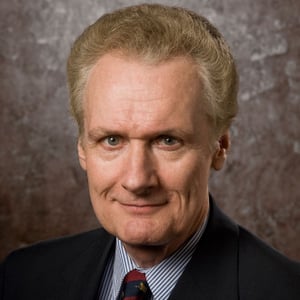
Vice President for Legal Affairs, Cato Institute
Roger Pilon is the Cato’s Institute’s vice president for legal affairs, the founding director of Cato’s Robert A. Levy Center for Constitutional Studies, the inaugural holder of Cato’s B. Kenneth Simon Chair in Constitutional Studies, and the founding publisher of the Cato Supreme Court Review.
Prior to joining Cato, Pilon held five senior posts in the Reagan administration, including at State and Justice, and was a national fellow at Stanford’s Hoover Institution. In 1989 the Bicentennial Commission presented him with its Benjamin Franklin Award for excellence in writing on the U.S. Constitution. In 2001 Columbia University’s School of General Studies awarded him its Alumni Medal of Distinction. Pilon lectures and debates at universities and law schools across the country and testifies often before Congress.
His writing has appeared in the Wall Street Journal, the Washington Post, the New York Times, the Los Angeles Times, Legal Times, National Law Journal, Harvard Journal of Law and Public Policy, Stanford Law and Policy Review, and elsewhere. He has appeared on ABC’s Nightline, CBS’s 60 Minutes II, Fox News Channel, NPR, CNN, MSNBC, CNBC, C-SPAN, and other media.
Pilon holds a BA from Columbia University, an MA and a PhD from the University of Chicago, and a JD from the George Washington University School of Law.
Founder and President, American Civil Rights Institute
Ward Connerly is founder and President of the American Civil Rights Institute – a national, not-for-profit organization aimed at educating the public about the need to move beyond race and, specifically, racial and gender preferences. Mr. Connerly has gained national attention as an outspoken advocate of equal opportunity for all Americans, regardless of race, sex, or ethnic background.
Mr. Connerly is author of Creating Equal: My Fight Against Race Preferences and his new release Lessons from My Uncle James: Beyond Skin Color to the Content of Our Character. One part memoir, one part moral guide, Lessons from My Uncle James is a touching, funny and ultimately a philosophical book about living a principled and productive life regardless of skin color. Lessons illustrates how Mr. Connerly arrived at the ethics that have guided his life and is a new starting point for the discussion about character that America must have in order to move beyond race for good.
As a member of the University of California Board of Regents, Mr. Connerly focused the attention of the nation on the University's race-based system of preferences in its admissions policy. On July 20, 1995, following Mr. Connerly's lead, a majority of the Regents voted to end the University's use of race as a means for admissions. He was appointed to a 12-year term as UC Regent in March 1993.
In 1995, Mr. Connerly accepted chairmanship of the California Civil Rights Initiative (Proposition 209) campaign. Under his leadership, the campaign successfully obtained more than 1 million signatures and qualified for the November 1996 ballot. California voters passed Proposition 209 by a 55 percent to 45 percent margin.
Mr. Connerly also led the efforts to pass initiatives in the States of Washington, Michigan, Nebraska and Arizona that were patterned after California's Proposition 209, to require equal treatment under the law for all residents in public education, public employment and public contracting.
Mr. Connerly has been profiled on 60 Minutes, the cover of Parade magazine, the New York Times, Wall Street Journal, Newsweek magazine, and virtually every major news magazine in America. He has also appeared on The NewsHour with Jim Lehrer, Crossfire, Hannity & Colmes, Meet the Press, Dateline, NBC Nightly News, CNN, and C-SPAN.
Mr. Connerly is President and Chief Executive Officer of Connerly & Associates, Inc., a Sacramento-based association management and land development consulting firm founded in 1973. He is regarded as one of the housing industry's top experts, possessing a comprehensive knowledge of housing and development issues. He has been inducted as a lifetime member into the California Building Industry Hall of Fame and has been a member of the Rotary Club of Sacramento for over 15 years.

Contrasting Constitutional Perspectives: Conservatives, Liberals, and Libertarians
ChicagoDistrict of Columbia v. Heller
Austin, TexasThe Dirty Dozen
The Second Amendment and the Heller
An Evening with Robert Levy: An Insider's Perspective on the D.C. Gun Ban Case
Should Judges Secure Unenumerated Rights? From Lochner to Lawrence
St. Louis, MissouriD.C. Gun Ban in the Crosshairs
Orlando, FloridaFulfilling the American Vision of a Colorblind Government
Parker v. District of Columbia and the 2nd Amendment: Is There a Personal Right to Bear Arms?
Greenville, South CarolinaBlacks, Democrats, and Republicans: Yesterday, Today, and Tomorrow
Portland, Oregon