
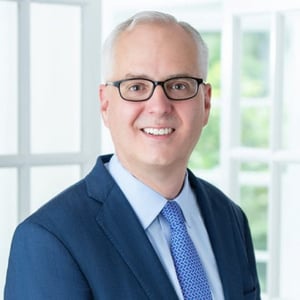
Principal, Clear IP, LLC
Joseph Matal is the Principal at Clear IP, LLC.
Joe has served as both the U.S. Patent and Trademark’s Acting Director and Acting Solicitor. As Acting Solicitor, he defended the agency in intellectual property cases before the U.S. Court of Appeals for the Federal Circuit and U.S. Supreme Court. In his role in the Solicitor’s Office, he participated in briefing almost every major case involving PTAB trials that has come before the Federal Circuit, including cases that have defined the Board’s powers and the evidence that it may consider, the content of final decisions, and the burdens and scope of motions to amend. Recent cases include Uniloc v. Hulu, Thryv v. Click-to-Call, and Aqua Products v. Matal. Previously, Joe served in senior legal roles for more than a decade for the U.S. Senate Judiciary Committee. In that capacity, he negotiated and drafted many of the key provisions of the America Invents Act.
In his roles at the USPTO, Joe briefed and argued numerous appeals of patent and trademark decisions before the Federal Circuit; oversaw the management of the USPTO and its 13,000 employees; and advised the U.S. Solicitor General’s Office in key IP cases before the Supreme Court.

Visiting Fellow, National Security Institute, George Mason University's Antonin Scalia Law School
Mr. Taylor was counsel and chief counsel of the House Subcommittee on the Constitution, Civil Rights, and Civil Liberties, for over 20 years, where he shepherded dozens of bills through committee to be signed into law by presidents of both political parties. He was also counsel to the House Oversight Committee, where he handled constitutional and civil rights issues. He is the author of over a dozen law review articles on legal reform, continuity in government, religious liberty, congressional powers, civil rights, and patent law. He is an elected member of the American Law Institute (the first active congressional staff person elected to that body in its 100-year history), a 1991 graduate of Yale University (BA, summa cum laude), and a 1994 graduate of Harvard Law School (JD, cum laude). He is a Visiting Fellow at the National Security Institute at George Mason University's Antonin Scalia Law School.
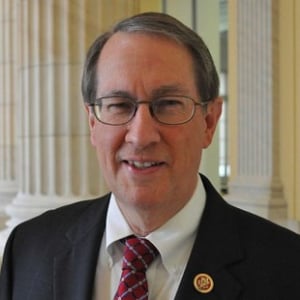
Former Congressman, United States House of Representatives
Bob Goodlatte served in the United States House of Representatives representing Virginia's 6th congressional district for 13 terms.
Goodlatte’s service to the people of the Sixth District began in 1977 when he became District Director for former Congressman Caldwell Butler. He served in this position for two years until 1979, and was responsible for helping folks across the District seeking assistance with or encountering problems from various federal agencies. In 1979, he founded his own private law practice in Roanoke. Later, he was a partner in the law firm of Bird, Kinder and Huffman, working there from 1981 until taking office.
Rep. Goodlatte was first elected to serve as Chairman of the House Judiciary Committee in the 113th Congress. He was the first Judiciary Committee Chairman from Virginia in the last 125 years. Rep. Goodlatte was an active Member of the Judiciary Committee since arriving in Congress, serving in a variety of leadership positions on the Committee including taking the lead on many intellectual property issues. During his time in Congress, Rep. Goodlatte made a name for himself as a leader on Internet and technology issues. He was Co-Chair of the Congressional Internet Caucus and the International Creativity and Theft-Prevention Caucus.
Rep. Goodlatte is a graduate of Washington and Lee University School of Law, and his undergraduate degree in Government was earned at Bates College in Lewiston, Maine.

Partner, WilmerHale
Tom Saunders' practice focuses on appellate and government and public policy litigation with a particular emphasis on intellectual property. He has extensive experience representing clients in patent and copyright cases and has built a reputation as a leading advocate in high-stakes litigation before the Federal Circuit and Supreme Court. He returned to the firm in 2008 after completing a clerkship for the Honorable Ruth Bader Ginsburg of the United States Supreme Court.
Mr. Saunders also has significant experience in civil litigation involving the government and quasi-governmental entities. He regularly advises clients on constitutional matters, questions of public policy and strategy, and administrative law.

Partner, Kellogg, Huber, Hansen, Todd, Evans & Figel, P.L.L.C.
Aaron M. Panner specializes in antitrust law, Supreme Court and appellate litigation, and telecommunications regulation. His clients include many of the nation’s leading communications and information services companies, which he has represented at all levels of the federal courts and before the Federal Communications Commission. He has also represented leading companies and individuals in high-stakes litigation at the trial and appellate levels. He has successfully briefed multiple motions to dismiss antitrust claims on the pleadings; he has also successfully represented plaintiffs in defeating motions to dismiss. Since 2010, he has served as amicus counsel for the American Psychiatric Association, participating in a range of Supreme Court and appellate cases involving matters of concern to the psychiatric profession.

Professor of Law, Antonin Scalia Law School, George Mason University
Adam Mossoff is Professor of Law at Antonin Scalia Law School, George Mason University. He has published extensively on why patents, copyrights, and other intellectual property rights have been—and should be—legally secured to innovators and creators as property rights. His scholarship has been relied on by the United States Supreme Court, by lower federal courts, and by U.S. federal agencies. He has been invited to testify numerous times before the U.S. Senate and the House of Representatives on intellectual property legislation. His writings on intellectual property policy have also appeared in the Wall Street Journal, New York Times, Forbes, Investors Business Daily, and in other media outlets. His journal articles can be downloaded here.
Professor Mossoff is a longstanding member of the Executive Committee of the Intellectual Property Practice Group of the Federalist Society, on which he served as Chairperson from 2016-2018, and he is Chair of the Intellectual Property Working Group of the Regulatory Transparency Project of the Federalist Society. He is a Senior Fellow and Chair of the Forum for Intellectual Property at the Hudson Institute, a Visiting Intellectual Property Fellow at the Heritage Foundation, and a member of the Board of Directors of the Center for Intellectual Property Understanding. He is a member of the Intellectual Property Rights Policy Committee of ANSI and he has served as Chair and Vice-Chair of the Intellectual Property Committee of the IEEE-USA, on which he remains a member in good standing.
Partner, WilmerHale
Tom Saunders' practice focuses on appellate and government and public policy litigation with a particular emphasis on intellectual property. He has extensive experience representing clients in patent and copyright cases and has built a reputation as a leading advocate in high-stakes litigation before the Federal Circuit and Supreme Court. He returned to the firm in 2008 after completing a clerkship for the Honorable Ruth Bader Ginsburg of the United States Supreme Court.
Mr. Saunders also has significant experience in civil litigation involving the government and quasi-governmental entities. He regularly advises clients on constitutional matters, questions of public policy and strategy, and administrative law.
Partner, Kellogg, Huber, Hansen, Todd, Evans & Figel, P.L.L.C.
Aaron M. Panner specializes in antitrust law, Supreme Court and appellate litigation, and telecommunications regulation. His clients include many of the nation’s leading communications and information services companies, which he has represented at all levels of the federal courts and before the Federal Communications Commission. He has also represented leading companies and individuals in high-stakes litigation at the trial and appellate levels. He has successfully briefed multiple motions to dismiss antitrust claims on the pleadings; he has also successfully represented plaintiffs in defeating motions to dismiss. Since 2010, he has served as amicus counsel for the American Psychiatric Association, participating in a range of Supreme Court and appellate cases involving matters of concern to the psychiatric profession.
Professor of Law, Antonin Scalia Law School, George Mason University
Adam Mossoff is Professor of Law at Antonin Scalia Law School, George Mason University. He has published extensively on why patents, copyrights, and other intellectual property rights have been—and should be—legally secured to innovators and creators as property rights. His scholarship has been relied on by the United States Supreme Court, by lower federal courts, and by U.S. federal agencies. He has been invited to testify numerous times before the U.S. Senate and the House of Representatives on intellectual property legislation. His writings on intellectual property policy have also appeared in the Wall Street Journal, New York Times, Forbes, Investors Business Daily, and in other media outlets. His journal articles can be downloaded here.
Professor Mossoff is a longstanding member of the Executive Committee of the Intellectual Property Practice Group of the Federalist Society, on which he served as Chairperson from 2016-2018, and he is Chair of the Intellectual Property Working Group of the Regulatory Transparency Project of the Federalist Society. He is a Senior Fellow and Chair of the Forum for Intellectual Property at the Hudson Institute, a Visiting Intellectual Property Fellow at the Heritage Foundation, and a member of the Board of Directors of the Center for Intellectual Property Understanding. He is a member of the Intellectual Property Rights Policy Committee of ANSI and he has served as Chair and Vice-Chair of the Intellectual Property Committee of the IEEE-USA, on which he remains a member in good standing.

National Affairs Columnist, National Review
John Fund is National Affairs Columnist for National Review magazine and a on-air analyst on the Fox News Channel. He is considered a notable expert on American politics and the nexus between politics and economics.
He previously served as a columnist and editorial board member for The Wall Street Journal. He is the author of several books, including Who's Counting: Bow Fraudsters and Bureaucrats Put Your Vote At Risk (Encounter Books, 2012); Stealing Elections: How Voter Fraud Threatens Our Democracy (Encounter Books, 2008) and The Dangers of Regulation Through Litigation (ATRA Press, 2008). He worked as a research analyst for the California Legislature in Sacramento before beginning his journalism career as a reporter for the syndicated columnists Rowland Evans and Robert Novak.
Roll Call, the newspaper of Capitol Hill, called him "the Tom Paine of the modern Congressional reform movement." He has won awards from the Institute for Justice, The School Choice Aliance and the Warren Brooks award for journalistic excellence from the American Legislative Exchange Council.

Senior Legal Fellow, Edwin Meese III Institute for the Rule of Law, Advancing American Freedom
Professor of Law, Antonin Scalia Law School, George Mason University
Adam Mossoff is Professor of Law at Antonin Scalia Law School, George Mason University. He has published extensively on why patents, copyrights, and other intellectual property rights have been—and should be—legally secured to innovators and creators as property rights. His scholarship has been relied on by the United States Supreme Court, by lower federal courts, and by U.S. federal agencies. He has been invited to testify numerous times before the U.S. Senate and the House of Representatives on intellectual property legislation. His writings on intellectual property policy have also appeared in the Wall Street Journal, New York Times, Forbes, Investors Business Daily, and in other media outlets. His journal articles can be downloaded here.
Professor Mossoff is a longstanding member of the Executive Committee of the Intellectual Property Practice Group of the Federalist Society, on which he served as Chairperson from 2016-2018, and he is Chair of the Intellectual Property Working Group of the Regulatory Transparency Project of the Federalist Society. He is a Senior Fellow and Chair of the Forum for Intellectual Property at the Hudson Institute, a Visiting Intellectual Property Fellow at the Heritage Foundation, and a member of the Board of Directors of the Center for Intellectual Property Understanding. He is a member of the Intellectual Property Rights Policy Committee of ANSI and he has served as Chair and Vice-Chair of the Intellectual Property Committee of the IEEE-USA, on which he remains a member in good standing.

Ten Years On: The America Invents Act and the role of the Patent Trial and Appeal Board in resolving patent disputes
Joseph Matal, Paul Brian Taylor, Bob Goodlatte
On September 16, 2011, President Obama signed the American Invents Act (AIA) into law. The...
Limelight v. Akamai Technologies and Nautilus v. Biosig Instruments - Post-Decision SCOTUScast
Thomas G. Saunders, Aaron M. Panner
On June 2, 2014, the Supreme Court issued opinions in two property rights cases, Limelight...
Alice Corporation Pty. Ltd. v. CLS Bank International - Post-Decision SCOTUScast
Adam Mossoff
On June 19, 2014, the Supreme Court issued its opinion in Alice Corporation Pty. Ltd. v....
Property Rights in the Supreme Court: Limelight and Nautilus - Podcast
Thomas G. Saunders, Aaron M. Panner
The U.S. Supreme Court recently decided another important pair of property rights cases. Nautilus v....
Supreme Court Rules on Patents: Alice Corp v. CLS Bank - Podcast
Adam Mossoff
In its surprisingly short opinion in Alice Corp. v. CLS Bank on June 19, 2014, the...
Obama's Enforcer: Eric Holder's Justice Department - Podcast
John Fund, Hans A. Von Spakovsky
In their new book, Obama's Enforcer: Eric Holder's Justice Department, Hans von Spakovsky and John...
Alice Corp. Pty. Ltd. v. CLS Bank International - Post-Argument SCOTUScast
Adam Mossoff
On March 31, 2014, the Supreme Court heard oral argument in Alice Corporation Pty. Ltd....
Alice Corp. v. CLS Bank - Podcast
Adam Mossoff
The rise of the software industry following the personal computer revolution in the early 1980s...