
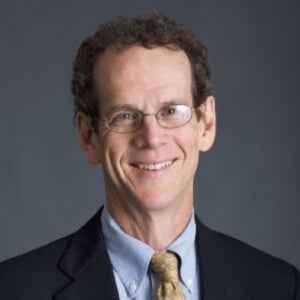
Hon. George J. Mitchell Professor in Law and Public Policy, Georgetown Law
David Cole is the Honorable George J. Mitchell Professor in Law and Public Policy and former National Legal Director of the American Civil Liberties Union (ACLU). He writes about and teaches constitutional law, freedom of speech, and constitutional criminal procedure. He is a regular contributor to The New York Review of Books and is the legal affairs correspondent for The Nation.
David has published widely in law journals and the popular press, including The Yale Law Journal, California Law Review, Stanford Law Review, The New York Times, The Washington Post, The New Yorker, The Atlantic, and The New Republic. He is the author or editor of ten books, several of which have won awards. Less Safe, Less Free: Why America Is Losing the War on Terror, published in 2007, and co-authored with Jules Lobel, won the Palmer Civil Liberties Prize for best book on national security and civil liberties. Enemy Aliens: Double Standards and Constitutional Freedoms in the War on Terrorism received the American Book Award in 2004. No Equal Justice: Race and Class in the American Criminal Justice System was named Best Non-Fiction Book of 1999 by the Boston Book Review and best book on an issue of national policy in1999 by the American Political Science Association.
David received his bachelor’s degree and law degree from Yale University. He worked as a staff attorney for the Center for Constitutional Rights from 1985 to 1990. He has continued to litigate as a professor and, from 2017 to 2024, as National Legal Director of the ACLU. He has litigated many significant constitutional cases at the Supreme Court, including Texas v. Johnson (1989), which extended First Amendment protection to flag burning; Bostock v. Clayton County (2020), which held that discrimination on the basis of sexual orientation and gender identity are prohibited forms of sex discrimination under Title VII; Mahanoy Area Sch. Dist. v. B.L. (2021), which protected student online speech from school discipline; and National Rifle Association v. Vullo (2024), which held that government officials violate the First Amendment when they use their regulatory authority to coerce private parties to blacklist a disfavored political group.
David has received two honorary degrees and numerous awards for his work, including the inaugural Norman Dorsen Presidential Prize from the ACLU for lifetime commitment to civil liberties. The late New York Times columnist Anthony Lewis called David “one of the country’s great legal voices for civil liberties today.” Nat Hentoff called him “a one-man Committee of Correspondence in the tradition of patriot Sam Adams.”

Judge, United States Court of Appeals, Third Circuit
Judge Hardiman was appointed to the United States Court of Appeals for the Third Circuit on January 9, 2007 and was confirmed by the Senate (95-0) on March 15, 2007. Prior to becoming an appellate judge, Judge Hardiman served as a trial judge on the United States District Court for the Western District of Pennsylvania as of November 1, 2003. In 2008, Chief Justice John Roberts appointed Judge Hardiman to the Information Technology Committee of the Judicial Conference of the United States. Judge Hardiman was appointed Chairman of the IT Committee in 2013 and served in that capacity until September 2021. In 2021 he was appointed by the Director of the Administrative Office of the United States Courts to serve as Chair of the Judiciary IT Security Task Force, which completed its work in fall 2023. Chief Justice Roberts appointed Judge Hardiman to the Board of the Federal Judicial Center to serve from March 2020 until March 2024. As part of his work with the Center, Judge Hardiman now serves as Editor in Chief for the Manual for Complex Civil Litigation, Fifth.
Before entering judicial service, Judge Hardiman handled a wide variety of litigation matters in state and federal trial and appellate courts as a partner at Reed Smith LLP (1999-2003), a partner at Titus & McConomy LLP (1996-1999), and as an associate with its predecessor firm, Cindrich & Titus (1992-1996). Judge Hardiman began his legal career as an associate in the Washington, D.C. office of Skadden, Arps, Slate, Meagher & Flom (1990-1992).
A 1987 honors graduate of the University of Notre Dame, Judge Hardiman received his law degree in 1990 from the Georgetown University Law Center, where he served as a Notes and Comments Editor on the Georgetown Law Journal. In 2012, Judge Hardiman was elected as a member of the American Law Institute and was elected to its Council in 2019 and its Executive Committee in 2025. Judge Hardiman regularly teaches a seminar on Advanced Constitutional Law at Duquesne University School of Law and a one-week course entitled “Constitutional Law: the First and Second Amendments” at Georgetown University Law Center.
A native of Waltham, Massachusetts, Judge Hardiman has chambers in Pittsburgh, Pennsylvania. He and his wife Lori married in 1992 and have three children.

Senior Fellow and Director of Constitutional Studies, Manhattan Institute
Ilya Shapiro is a senior fellow and director of constitutional studies at the Manhattan Institute and a contributing editor of City Journal. Previously he was executive director and senior lecturer at the Georgetown Center for the Constitution, and before that a vice president of the Cato Institute.
Shapiro is the author of Lawless: The Miseducation of America’s Elites (2025) and Supreme Disorder: Judicial Nominations and the Politics of America’s Highest Court (2020), coauthor of Religious Liberties for Corporations? (2014), and editor of 11 volumes of the Cato Supreme Court Review (2008-18). He has contributed to a variety of academic, popular, and professional publications, including the Wall Street Journal, Harvard Journal of Law & Public Policy, Washington Post, Los Angeles Times, USA Today, National Review, and Newsweek. He also regularly provides commentary for various media outlets, writes the Shapiro’s Gavel newsletter on Substack, and once appeared on the Colbert Report.
Shapiro has testified many times before Congress and state legislatures and has filed more than 500 amicus curiae “friend of the court” briefs in the Supreme Court. He lectures regularly on behalf of the Federalist Society, is a member of the board of fellows of the Jewish Policy Center, was an inaugural Washington Fellow at the National Review Institute, and has been an adjunct law professor at the George Washington University and University of Mississippi. He is also the chairman of the board of advisers of the Mississippi Justice Institute, a barrister in the Edward Coke Appellate Inn of Court, and a former member of the Virginia Advisory Committee to the U.S. Commission on Civil Rights.
Earlier in his career, Shapiro was a special assistant/adviser to the Multi-National Force in Iraq on rule-of-law issues and practiced at Patton Boggs and Cleary Gottlieb. Before entering private practice, he clerked for Judge E. Grady Jolly of the U.S. Court of Appeals for the Fifth Circuit. He holds an AB from Princeton University, an MSc from the London School of Economics, and a JD from the University of Chicago Law School.
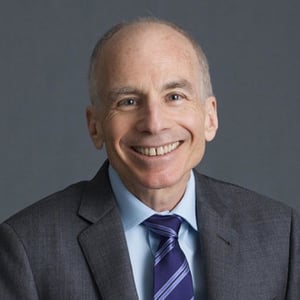
University Professor, Founding Linda D. & Timothy J. O’Neill Professor of Global Health Law, Faculty Director of O’Neill Institute for National & Global Health Law, Georgetown University, Director, World Health Organization Collaborating Center on Public Health Law & Human Rights
Lawrence O. Gostin is University Professor, Georgetown University’s highest academic rank conferred by the University President. Prof. Gostin directs the O’Neill Institute for National and Global Health Law and is the Founding O’Neill Chair in Global Health Law. He served as Associate Dean for Research at Georgetown Law from 2004 to 2008. He is Professor of Medicine at Georgetown University and Professor of Public Health at the Johns Hopkins University.
Prof. Gostin is the Director of the World Health Organization Collaborating Center on National and Global Health Law. The WHO Director-General has appointed Prof. Gostin to high-level positions, including the International Health Regulations (IHR) Roster of Experts and the Expert Advisory Panel on Mental Health. He served on the Director-General’s Advisory Committee on Reforming the World Health Organization, as well as numerous WHO expert advisory committees, including on the Pandemic Influenza Preparedness Framework, smallpox, genomic sequencing data, migrant health, and NCD prevention. He served on the WHO/Global Fund Blue Ribbon Expert Panel: The Equitable Access Initiative to develop a global health equity framework. He co-chairs the Lancet Commission on Global Health Law.
Professor Gostin served on two global commissions to report on the lessons learned from the 2015 West Africa Ebola epidemic. He was also senior advisor to the United Nations Secretary General’s post-Ebola Commission. He also served on the drafting team for the G-7 Summit in Tokyo 2016, focusing on global health security and Universal Health Coverage.
Prof. Gostin holds multiple international academic professorial appointments, including at Oxford University, the University of Witwatersrand (South Africa), and Melbourne University. Prof. Gostin served on the Governing Board of Directors of the Consortium of Universities for Global Health.
Prof. Gostin holds editorial appointments in leading academic journals throughout the world. He is the Legal and Global Health Correspondent for the Journal of the American Medical Association. He is also Founding Editor-in-Chief of Laws (an international open access law journal). He was formally the Editor-in-Chief of the Journal of Law, Medicine & Ethics.
Prof. Gostin holds four honorary degrees. In 1994, the Chancellor of the State University of New York conferred an Honorary Doctor of Laws Degree. In 2006, Her Majesty Queen Elizabeth II and the Vice Chancellor awarded Cardiff University’s (Wales) highest honor, an Honorary Fellow. In 2007, the Royal Institute of Public Health (United Kingdom) appointed Prof. Gostin as a Fellow of the Royal Society of Public Health (FRSPH). In 2012, the Chancellor of the University of Sydney – on the nomination of the Deans of the Law and Medical Schools – conferred a Doctor of Laws (honoris causa), presided by two Justices of Australia’s highest court—Justices Kirby and Haydon.
Prof. Gostin is an elected lifetime Member of the National Academy of Medicine/ National Academy of Sciences. He has served on the National Academy’s Board on Health Sciences Policy, the Board on Population Health, the Human Subjects Review Board, and the Committee on Science, Technology, and Law. He currently serves on the National Academies of Sciences Engineering, and Medicine, Board on Global Health. Gostin chaired the National Academy’s Committee on Global Solutions to Falsified, Substandard, and Counterfeit Medicines. He has chaired National Academy Committees on national preparedness for mass disasters, health informational privacy, public health genomics, and human subject research on prisoners.
Prof. Gostin is also a Member of the Council on Foreign Relations and Fellow of the Hastings Center. In 2016, President Obama appointed Prof. Gostin to a six-year term on the President’s National Cancer Advisory Board to advise the nation on cancer prevention, research, and policy. He also serves on the National Institutes of Health Director’s Advisory Committee on the ethics of public/private partnerships to end the opioid crisis.
Prof. Gostin has led major law reform initiatives in the U.S., including drafting the Model Emergency Health Powers Act (MEHPA) to combat bioterrorism (following the post-9/11 anthrax attacks) and the “Turning Point” Model State Public Health Act. He also spearheaded the World Health Organization and International Development Law Organization’s major report, Advancing the Right to Health: The Vital Role of Law.
Prof. Gostin’s proposal for a Framework Convention on Global Health – an international treaty ensuring the right to health – is now part of a global campaign, endorsed by the UN Secretary-General and Director of UNAIDS.
In the United Kingdom, Lawrence Gostin was the Legal Director of the National Association for Mental Health, Director of the National Council of Civil Liberties (the UK equivalent of the ACLU), and a Fellow at Oxford University. He helped draft the Mental Health Act (England and Wales) and brought landmark cases before the European Court of Human Rights.
Prof. Gostin’s books include: Public Health Law: Power, Duty, Restraint (University of California Press, 3rd ed., 2016); Public Health Law and Ethics: A Reader (University of California Press, 3rd ed., 2018); Human Rights in Global Health: Rights-Based Governance for a Globalizing World (Oxford University Press, 2018); Law and the Health System (Foundation Press, 2014); Principles of Mental Health Law & Practice (Oxford University Press, 2010).
Gostin’s classic text, Global Health Law (Harvard University Press, 2014) is read throughout the world—translated and published in both simplified and traditional Chinese, and in Spanish. Paul Farmer, Partners in Health, says of his book: Global Health Law is “more than the definitive book on a dynamic field. Gostin harnesses the power of international law and human rights as tools to close unconscionable health inequities — the injustices that burden marginalized populations throughout the world. Gostin presents a forceful vision, one that deserves a wide embrace.”
In a 2012 systematic empirical analysis of legal scholarship, independent researchers ranked Prof. Gostin 1st in the nation in productivity among all law professors, and 11th in in impact and influence. A 2017 and 2018 systematic empirical analysis ranked Prof. Gostin 1st in the nation for citations in health law.
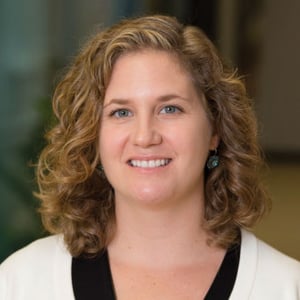
Senior Scholar, Johns Hopkins Center for Health Security
Dr. Nuzzo is a Senior Scholar at the Johns Hopkins Center for Health Security and an Associate Professor in the Department of Environmental Health and Engineering and the Department of Epidemiology at the Johns Hopkins Bloomberg School of Public Health. An epidemiologist by training, her work focuses on global health security, with a particular focus on outbreak detection and response, health systems as they relate to global health security, international and domestic biosurveillance, and infectious disease diagnostics. She directs the Outbreak Observatory, which conducts, in partnership with front-line public health practitioners, operational research to improve outbreak preparedness and response. Together with colleagues from the Nuclear Threat Initiative and the Economist Intelligence Unit, she co-leads the development of the first-ever Global Health Security Index, which benchmarks 195 countries’ public health and healthcare capacities and capabilities, their commitment to international norms and global health security financing, and socioeconomic, political, and environmental risk environments. Previously, she has conducted research related to the Affordable Care Act, tuberculosis control, foodborne outbreaks, and water security. Dr. Nuzzo is an Associate Editor of the peer-reviewed journal Health Security.
In addition to her work at the Center, Dr. Nuzzo has advised national governments and nonprofit organizations. She has served as a consultant to the National Biosurveillance Advisory Subcommittee, as a member of the US Environmental Protection Agency’s National Drinking Water Advisory Council (NDWAC), and as a member of the NDWAC’s Water Security Working Group. She has also served as a project advisor for the American Water Works Association Research Foundation (now called the Water Research Foundation), a primary funding organization for drinking water research in the United States. She has also been consulted on pandemic planning efforts in the Republic of Indonesia and Taiwan.
Dr. Nuzzo joined the Center at its founding in 2003, and she has served as an Analyst, Senior Analyst, and Associate. Prior to joining the Center, she served as a Research Analyst with the Center for Civilian Biodefense Strategies at the Johns Hopkins Bloomberg School of Public Health.
In 2002 and 2003, Dr. Nuzzo worked as a public health epidemiologist for the City of New York, where she was involved with disease and syndromic surveillance efforts related to the city’s Waterborne Disease Risk Assessment Program. Central to her duties in New York was the management of the city’s drug sale monitoring program for surveillance of diarrheal illness. She also worked on a local climate change initiative for the City of Cambridge, MA.
Dr. Nuzzo received a DrPH in epidemiology from the Johns Hopkins Bloomberg School of Public Health, an SM in environmental health from Harvard University, and a BS in environmental sciences from Rutgers University.
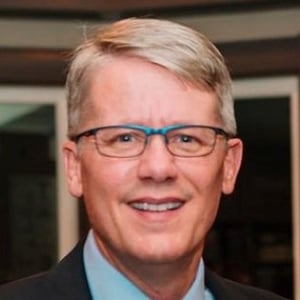
Professor, University of North Carolina at Wilmington
Mike Adams is a professor at the University of North Carolina at Wilmington (UNCW). He writes a weekly column for The Daily Wire and speaks frequently on First Amendment and pro-life issues. After graduating from Mississippi State University in 1993 with a PhD in Criminology, his research emphasized social psychological causes of crime and delinquency. He won the Faculty Member of the Year Award from the Office of the Dean of Students in 1998 and again in 2000. Later, after his involvement in a free speech controversy in the wake of the 9/11 attack his research emphasis shifted to threats to free speech, due process, and academic integrity in higher education. In 2006, he was denied a promotion full professor and filed suit in federal court alleging that UNCW retaliated against him for his criticism the diversity movement in general as well as his criticism of specific policies within his own university. The retaliation lawsuit set up a legal challenge concerning whether Garcetti v. Ceballos (2006), which denied First Amendment protection to public employees who were commenting about their “official duties,” applied to college professors. In Adams v. UNCW (2011), the 4th Circuit Court of Appeals unanimously ruled in his favor. The ruling set up a federal trial on the issue of retaliation, which he also won before a jury in federal district court in Greenville, North Carolina.
Professor of History, Brooklyn College and the CUNY Graduate Center
KC Johnson is professor of history at Brooklyn College and the CUNY Graduate Center, where he has taught since 1999. He has written 13 books on topics in U.S. political history, U.S. foreign policy, and legal and policy debates surrounding campus due process and civil liberties. His Duke lacrosse case blog, Durham-in-Wonderland, was named ABA Journal’s Best Ethics Blog in 2007; and he continues to blog on higher-ed matters at the blog Minding the Campus.
FIRE
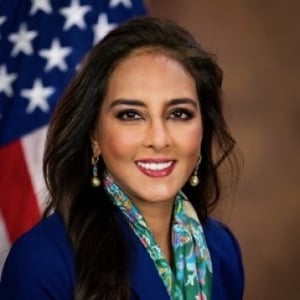
Assistant Attorney General for Civil Rights, U.S. Department of Justice
Harmeet K. Dhillon is the Assistant Attorney General for Civil Rights at the U.S. Department of Justice. She was nominated by President Donald Trump in December 2024. She was confirmed by the U.S. Senate on April 3, 2025, and sworn in as AAG by Attorney General Pam Bondi on April 7, 2025.
Prior to joining the Division, Ms. Dhillon founded both the Dhillon Law Group, Inc., a successful legal practice with offices in California, Florida, Virginia, and New Jersey; and the Center for American Liberty, a nonprofit organization dedicated to pursuing civil liberties legal claims. Her law practice focused on First Amendment / free speech, civil rights, and campaign and election law issues. Among her many notable cases, Ms. Dhillon brought legal challenges against the University of California, Berkeley over its free speech policy, against an Antifa organization for an assault on a conservative journalist, against several states for their restrictive responses to Covid-19, and against various large tech companies for a host of civil rights issues.
Assistant Attorney General Dhillon was born in Chandigarh, India, and lived in London before moving to The Bronx, New York. Her family ultimately settled in rural Smithfield, North Carolina. After graduating high school at age 16, Ms. Dhillon attended Dartmouth College where she became editor-in-chief of The Dartmouth Review. After earning her bachelor’s degree in Classical Studies, she attended the University of Virginia School of Law and served on the editorial board of the Virginia Law Review. She later clerked for the Honorable Paul V. Niemeyer of the United States Court of Appeals for the Fourth Circuit in Baltimore, Maryland.
U.S. Court of Appeals, Ninth Circuit
Sandra Segal Ikuta was confirmed as a judge of the U.S. Court of Appeals for the Ninth Circuit on June 19, 2006. She filled a judgeship vacant since September 1, 2000, when Chief Judge Emeritus James R. Browning took senior status.
Before becoming a U.S. Circuit Judge, California Gov. Arnold Schwarzenegger appointed her to be deputy secretary and general counsel of the California Resources Agency in January 2004.
Prior to her political appointment, Judge Ikuta was a partner at the Los Angeles office of O'Melveny & Myers LLP. She joined the law firm in 1990 as an associate and became a partner in 1997. She specialized in environmental and natural resources law and co-chaired the firm's environmental practice group. She previously served as a law clerk for U.S. Supreme Court Justice Sandra Day O'Connor, 1989-90, and Judge Alex Kozinski of the U.S. Court of Appeals for the Ninth Circuit, 1988-89.
Prior to her legal career, Judge Ikuta took an unorthodox career path, which included serving as the first female editor-in-chief of a national martial arts magazine.
She received her J.D. from the University of California at Los Angeles School of Law and a Master of Science from Columbia University School of Journalism. She earned her undergraduate degree from the University of California at Berkeley in 1976.
In addition to her duties as an active U.S. Circuit Judge, Judge Ikuta was an appointed member of the Judicial Conference of the U.S. Advisory Committee on Bankruptcy Rules.

Richard and Frances Mallery Professor of Law and Faculty Director, Constitutional Law Center, Stanford Law School
Michael W. McConnell is the Richard and Frances Mallery Professor and Faculty Director of the Constitutional Law Center at Stanford Law School, and a Senior Fellow at the Hoover Institution. From 2002 to 2009, he served as a Circuit Judge on the United States Court of Appeals for the Tenth Circuit. He was nominated by President George W. Bush, a Republican, and confirmed by a Democratic Senate by unanimous consent. McConnell has previously held chaired professorships at the University of Chicago and the University of Utah, and visiting professorships at Harvard and NYU. He teaches courses on constitutional law, constitutional history, First Amendment, and interpretive theory. He has published widely in the fields of constitutional law and theory, especially church and state, equal protection, and separation of powers. His book, “The President Who Would Not Be King: Executive Power Under the Constitution,” was published by Princeton University Press in 2020, based on the Tanner Lectures in Human Values, which he delivered at Princeton in 2019. His latest book, co-authored with Nathan Chapman, “Agreeing to Disagree: How the Establishment Clause Protects Religious Diversity and Freedom of Conscience,” was published by Oxford University Press in mid-2023. McConnell has argued sixteen cases in the United States Supreme Court, most recently Carney v. Adams (2020). defending a provision of the Delaware Constitution requiring political balance on that state’s courts. More recently, he was co-counsel in Gonzalez v. Google. He earned his B.A. from Michigan State University and his J.D. from the University of Chicago, and has received honorary degrees from Notre Dame University and Michigan State. He served as law clerk to Supreme Court Justice William J. Brennan, Jr. and D.C. Circuit Chief Judge J. Skelly Wright. He has been Assistant General Counsel of the Office of Management & Budget, Assistant to the Solicitor General of the Department of Justice, and a member of the President’s Intelligence Oversight Board. He is Senior of Counsel to the law firm Wilson, Sonsini, Goodrich & Rosati, and is co-chair of Meta’s Oversight Review Board.
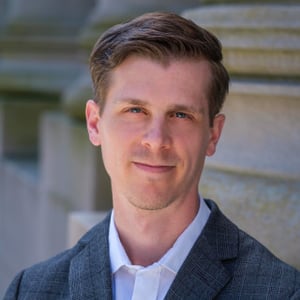
Assistant Clinical Professor of Law & Director, Religious Freedom Clinic, Harvard Law School
Josh is the Director of Harvard Law School’s Religious Freedom Clinic, a pro bono program that gives students a hands-on, supervised experience representing a diverse group of clients in First Amendment and religious freedom cases.
Before entering clinical teaching, Josh clerked for the Honorable Cormac J. Carney of the U.S. District Court for the Central District of California and the Honorable Jay S. Bybee of the U.S. Court of Appeals for the Ninth Circuit. In addition to serving as a staff attorney in the clinic’s inaugural semester in 2020, he was previously a trial litigator at Munger, Tolles & Olson and an appellate litigator at Horvitz & Levy, where he specialized in representing individual and organizational clients in both commercial and civil rights cases, with particular expertise in First Amendment and religious freedom issues.
While in private practice, Josh received a Daily Journal 2022 California Lawyer Attorneys of the Year (CLAY) award, was twice named a “One to Watch” in appellate law by Best Lawyers, and argued in numerous appellate courts and courts of last resort, including twice before the California Supreme Court. His amicus brief for Jewish schools in a case before the U.S. Supreme Court was quoted by Justice Kavanaugh at oral argument.
Josh earned his B.A., magna cum laude, from Brigham Young University and graduated first in his class from UCLA School of Law.
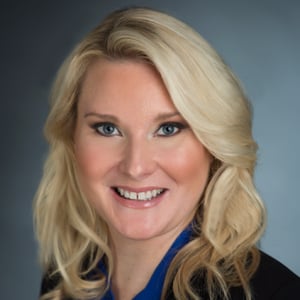
President, Constitutional Accountability Center
Elizabeth is Constitutional Accountability Center’s President. From 2008-2016, she served as CAC's Chief Counsel, representing the Center as well as clients including preeminent constitutional scholars and historians, state and local government organizations, and groups such as the League of Women Voters and the AARP. She frequently participates in Supreme Court litigation and her legal brief writing has been recognized as “exemplary” by the Green Bag Almanac & Reader. Elizabeth has also argued several important cases in the federal courts of appeals on a range of issues, including immigration law, habeas corpus, and sovereign immunity. She joined CAC from private practice at Quinn Emanuel Urquhart & Sullivan in San Francisco, where she was an attorney working with former Stanford Law School Dean Kathleen Sullivan in the firm’s Supreme Court/appellate practice. Previously, Elizabeth was a supervising attorney and teaching fellow at the Georgetown University Law Center appellate litigation clinic, a law clerk for Judge James R. Browning of the U.S. Court of Appeals for the Ninth Circuit, and a lawyer at Pillsbury Winthrop Shaw Pittman, a law firm in Washington. She has appeared as a legal expert for NBC, ABC, PBS, CNN, Fox News, the BBC, Current TV, and NPR, among other outlets. Elizabeth has been quoted extensively in the print media and is a regular contributor to the ABA’s Preview of United States Supreme Court Cases. Her writings have appeared in The New York Times, Reuters, USA Today, Politico, CNN.com, Slate, and on numerous political and legal blogs, such as Huffington Post, SCOTUSblog, and ACSblog. She has also published in the UCLA Journal of Environmental Law & Policy, Syracuse Law Review, The Cato Institute’s Supreme Court Review, and the Yale Journal of International Law. Elizabeth is a graduate of Yale Law School.
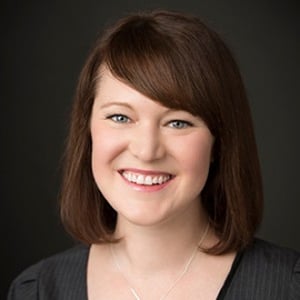
Director of Litigation, The Foundation for Individual Rights in Education
A native of the Philadelphia area, Marieke graduated summa cum laude from New York University’s Gallatin School of Individualized Study in 2004. Marieke continued her studies at Temple University’s Beasley School of Law, graduating magna cum laude in 2008.
After law school, Marieke clerked for the Honorable A. Richard Caputo in the U.S. District Court for the Middle District of Pennsylvania before joining the American Civil Liberties Union of Pennsylvania as a legal fellow in 2009. She later joined the Philadelphia firm of Schnader Harrison Segal & Lewis as a commercial litigation associate, where she continued to work on civil rights cases on a pro bono basis, focusing primarily on the First Amendment. Right before joining FIRE, she served as a Project Coordinator for the nonprofit Resources for Human Development, where she implemented projects addressing disability discrimination and health care reform. Outside the office, she loves to be around horses and volunteers for a therapeutic riding program.
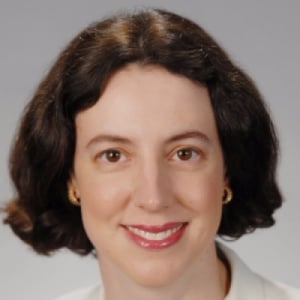
Donald Phillip Rothschild Research Professor, George Washington University Law School
Renée Lettow Lerner is Donald Phillip Rothschild Research Professor of Law at George Washington University Law School.
Professor Lerner works in the fields of U.S. and English legal history, civil and criminal procedure, and comparative law. She advises judges, lawyers, and government officials from the United States and countries in Europe, Latin America, and Asia about the differences between adversarial and nonadversarial legal systems.
She writes extensively about the history of American juries. Her work includes not only scholarly articles, but also online publications intended for a broader audience of legal professionals and the public. In many different settings, she has debated the role of juries with other academics and with lawyers. She has a book forthcoming with Oxford University Press in the Very Short Introduction Series entitled “The Jury.” She is also working on a book about the American civil jury, from the colonial period to the present.
She is the author, with John Langbein and Bruce Smith, of the book History of the Common Law: The Development of Anglo-American Legal Institutions (2009).
Her recent writings include a book review of Amalia D. Kessler’s Inventing American Exceptionalism: The Origins of American Adversarial Legal Culture, 1800-1877, 67 J. Legal Ed. 888 (2018); “How the Creation of Appellate Courts in England and the United States Limited Judicial Comment on Evidence to the Jury,” 40 Journal of the Legal Profession 215 (2016); “The Troublesome Inheritance of Americans in Magna Carta and Trial by Jury,” in Magna Carta and its Modern Legacy 77-98 (Robert Hazell and James Melton eds., Cambridge University Press 2015); and “The Failure of Originalism in Preserving Constitutional Rights to Civil Jury Trial,” 22 William & Mary Bill of Rights Journal 811 (2014).
Professor Lerner received an A.B. summa cum laude in history from Princeton University. She was a Rhodes Scholar at Oxford University, where she studied English legal history. At Yale Law School, she was Articles Editor of the Yale Law Journal. She served as a law clerk to Justice Anthony M. Kennedy of the U.S. Supreme Court and to Judge Stephen F. Williams of the U.S. Court of Appeals for the District of Columbia Circuit. From 2003 to 2005, she served as Deputy Assistant Attorney General in the Office of Legal Counsel at the U.S. Department of Justice.
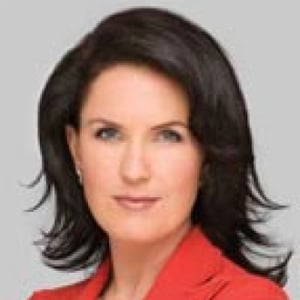
Adjunct Professor of Sexual Violence Law, New England Law | Boston
Wendy Murphy is adjunct professor of sexual violence law at New England Law|Boston where she has taught for fifteen years. Her litigation work specializes in the representation of crime victims, women and children.She has developed and directs several projects in conjunction with the school's Center for Law and Social Responsibility. The Judicial Language Project began in 2005 and involves law students using socio-linguistic research to critique harmful language used in law and society to describe violence against women and children. The Sexual Violence Legal News Project distributes appellate decisions of note to increase understanding among lay audiences and explain the likely impact and real world consequences of a court's ruling. The JD/PhD project is a multidisciplinary program where a JD student is teamed up with a PhD student to work across disciplines and produce a written critique that expresses the scientific and legal value of new research related to interpersonal violence. The team analyzes methodological reliability for the purpose of expediting or preventing its delivery into law, legal policy and human behavior.
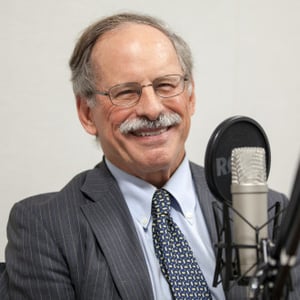
Freelance Journalist and Author
Stuart Taylor, Jr. is a Washington writer focusing on legal and policy issues and a National Journal contributing editor. He occasionally practices law.
Taylor has coauthored three books. All have been acclaimed by commentators across the ideological spectrum. In January 2017, KC Johnson and Taylor authored The Campus Rape Frenzy: The Attack on Due Process at America's Universities. In 2012, Richard Sander and Taylor authored Mismatch: How Affirmative Action Hurts Students It's Intended to Help, and Why Universities Won't Admit It. In 2007, Taylor and Johnson authored Until Proven Innocent: Political Correctness and the Shameful Injustices of the Duke Lacrosse Rape Fraud. Sander and Taylor have also filed amicus briefs in Supreme Court cases involving admissions preferences.
Since 1980, Taylor has done reporting and commentary about issues ranging from the biggest Supreme Court cases to race, voting rights, mindlessly excessive criminal penalties, guilt-presuming campus rape processes, journalistic bias, the death penalty, war powers, gerrymandering, guns, polarization, civil liberties, national security, torture, campaign finance, education, impeachment, and other issues. He has often been called one of the nation's best legal journalists and is known for challenging both liberal and conservative conventional wisdom.
Taylor was a reporter for The New York Times from 1980-1988, covering legal affairs and then the Supreme Court. He wrote commentaries and long features for The American Lawyer, Legal Times and their affiliates from 1989-1997, and for National Journal and Newsweek from 1998 through 2010. He has written (less often) on a freelance basis for numerous publications since 2010. He has written op-eds for The Washington Post, The New York Times, The Wall Street Journal, The Los Angeles Times, USA Today, and The New York Daily News and longer commentaries for RealClearPolitics, The Atlantic, The New Republic, the (late) Weekly Standard, National Review, Slate, The Daily Beast, Harper’s, Reader’s Digest, Time and other magazines. He has been interviewed on all major television and radio networks. He taught “Law and the News Media” at Stanford Law School in 2011 and 2012 and practices law on occasion.
Taylor graduated from Princeton University in 1970 with an A.B. in History. After working as a reporter for the Baltimore Evening Sun and Sun from 1971-1974, he moved to Harvard Law School, was a Harvard Law Review note editor, and graduated in 1977 at the top of his class, with high honors. He also won a Frederick Sheldon Traveling Fellowship and traveled around the world in 1977-1978 while studying freedom of the press in the United Kingdom and Kenya.
Taylor practiced law with Wilmer, Cutler & Pickering, in Washington, D.C., from 1977-1980 before returning to journalism in 1980 by joining the Washington Bureau of The New York Times.
Taylor's journalism honors include the 2009 Northern California Innocence Project Media Award for his work on the Duke lacrosse rape fraud; a 2002 National Headliner Award for best special magazine column on one subject; and a share of The American Lawyer’s National Magazine Award for a March 1990 special issue on the drug war. He was a National Magazine Award finalist in 1993 and 1997 and was nominated by The New York Times for a Pulitzer Prize in 1988.
Principal Deputy Assistant Secretary, Office for Civil Rights, United States Department of Education
Seth Galanter serves as the Principal Deputy Assistant Secretary for Civil Rights in the Department of Education.
Seth started his career at the Department of Justice, where he worked in the Civil Rights Division. During his 8 years there, he argued over 40 cases in the courts of appeals on a range of topics, including sexual harassment under Title IX.
Seth later moved into private practice at Morrison and Foerster, where he was in the Appellate Practice Group. During his time there, Seth argued two cases in the Supreme Court. Seth was also named Pro Bono Lawyer of the Year during this time by the Washington DC Bar for his work regarding people with disabilities.
Seth joined the Department of Education in 2011.

Senior Scholar, Manhattan Institute; Professor of Law Emerita, University of San Diego
Gail Heriot is a Senior Scholar at the Manhattan Institute, a Professor of Law Emerita at the University of San Diego and the Chairman of the Board of the American Civil Rights Project. She served on the U.S. Commission on Civil Rights for 18 years. Her new book is entitled “Why We Walk on Eggshells: How Our Civil Rights Laws Stifle Our Public Discourse.”
Senior Counsel & Director of Education Policy for At-Risk Studen, National Women's Law Center
Lara S. Kaufmann is Senior Counsel and Director for Education Policy for At-Risk Students. She works on the advancement of women and girls at school and in the workplace. Lara engages in litigation, advocacy, and public education, with a particular focus on improving educational outcomes for at-risk girls, including pregnant and parenting students. Lara co-authored the Center’s 2012 report, A Pregnancy Test for Schools: The Impact of Education Laws on Pregnant and Parenting Students, as well as its 2009 report, Listening to Latinas: Barriers to High School Graduation. Before joining the Center, Lara was a Staff Attorney with the Federal Trade Commission’s Bureau of Consumer Protection, and prior to that she was an Assistant United States Attorney in Chicago. Lara also worked with the law firm of McDermott, Will & Emery, and was law clerk to then-Chief Judge Marvin Aspen of the U.S. District Court for the Northern District of Illinois. Lara is a graduate of the University of Michigan and Northwestern University School of Law.
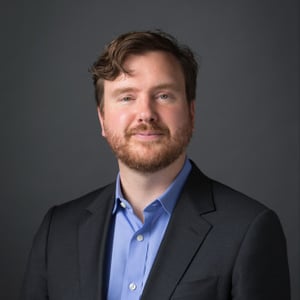
President and CEO, Foundation for Individual Rights in Education (FIRE)
Greg Lukianoff is an attorney, New York Times best-selling author, and the President and CEO of the Foundation for Individual Rights in Education (FIRE). He is the author of Unlearning Liberty: Campus Censorship and the End of American Debate, Freedom From Speech, and FIRE’s Guide to Free Speech on Campus. Most recently, he co-authored The Coddling of the American Mind: How Good Intentions and Bad Ideas Are Setting Up a Generation for Failure with Jonathan Haidt. This New York Times best-seller expands on their September 2015 Atlantic cover story of the same name. Greg is also an Executive Producer of Can We Take a Joke? (2015), a feature-length documentary that explores the collision between comedy, censorship, and outrage culture, both on and off campus, and of Mighty Ira: A Civil Liberties Story (2020), a feature-length film about the life and career of former ACLU Executive Director Ira Glasser.
Greg has been published in The New York Times, The Wall Street Journal, The Washington Post, Los Angeles Times, The Boston Globe, and numerous other publications. He frequently appears on TV shows and radio programs, including the CBS Evening News, The Today Show, and NPR’s Morning Edition. In 2008, he became the first-ever recipient of the Playboy Foundation’s Freedom of Expression Award, and he has testified before both the U.S. Senate and the House of Representatives about free speech issues on America’s college campuses.
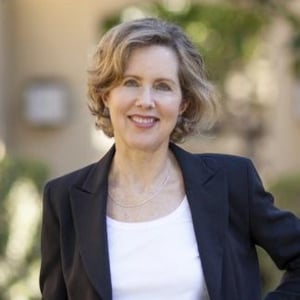
Thomas W. Smith Fellow; Contributing Editor, City Journal, Manhattan Institute
Heather Mac Donald is the Thomas W. Smith Fellow at the Manhattan Institute, a contributing editor of City Journal, and a New York Times bestselling author. She is a recipient of the 2005 Bradley Prize. Mac Donald’s work at City Journal has covered a range of topics, including higher education, immigration, policing, homelessness and homeless advocacy, criminal-justice reform, and race relations. Her writing has appeared in the Wall Street Journal, Washington Post, New York Times, Los Angeles Times, The New Republic, and The New Criterion. Mac Donald's newest book, The Diversity Delusion: How Race and Gender Pandering Corrupt the University and Undermine Our Culture (2018), argues that toxic ideas first spread by higher education have undermined humanistic values, fueled intolerance, and widened divisions in our larger culture.
Mac Donald’s The War on Cops (2016), a New York Times bestseller, warns that raced-based attacks on the criminal-justice system, from the White House on down, are eroding the authority of law and putting lives at risk. Other previous works include The Burden of Bad Ideas (2001), a collection of Mac Donald’s City Journal essays, details the effects of the 1960s counterculture’s destructive march through America’s institutions. In The Immigration Solution: A Better Plan than Today’s (2007), coauthored with Victor Davis Hanson and Steven Malanga, she chronicles the effects of broken immigration laws and proposes a practical solution to securing the country’s porous borders. In Are Cops Racist? (2010), another City Journal anthology, Mac Donald investigates the workings of the police, the controversy over so-called racial profiling, and the anti-profiling lobby’s harmful effects on black Americans.
A nonpracticing lawyer, Mac Donald clerked for the Honorable Stephen Reinhardt, U.S. Court of Appeals for the Ninth Circuit, and was an attorney-advisor in the Office of the General Counsel of the U.S. Environmental Protection Agency and a volunteer with the Natural Resources Defense Council. She has frequently testified before U.S. House and Senate Committees. In 1998, Mac Donald was appointed to Mayor Rudolph Giuliani’s task force on the City University of New York. She has received numerous awards for her writing:
A frequent guest on Fox News and other TV and radio programs, Mac Donald holds a B.A. in English from Yale University, graduating with a Mellon Fellowship to Cambridge University, where she earned an M.A. in English and studied in Italy through a Clare College study grant. She holds a J.D. from Stanford University Law School.
At the Criminal Justice Legal Foundation's 2018 annual meeting in downtown Los Angeles, U.S. Attorney General Jeff Sessions called Mac Donald, “the greatest thinker on criminal justice in America today.”

Judge, United States Court of Appeals, Seventh Circuit
Judge Sykes was nominated to the Seventh Circuit by President George W. Bush and confirmed by the Senate in 2004. Prior to her appointment to the federal bench, Judge Sykes served as a justice on the Wisconsin Supreme Court. Governor Tommy G. Thompson appointed her in September 1999 to fill a mid-term vacancy on the state supreme court, and she was elected to a full ten-year term in April 2000. From 1992-1999, Judge Sykes served on the state trial bench in Milwaukee County (elected in 1992 and re-elected in 1998). From 1985-1992, Judge Sykes practiced law with the Milwaukee firm of Whyte & Hirschboeck, S.C., and from 1984-1985, was a law clerk to Federal Judge Terence T. Evans.
Born and raised in the Milwaukee area, Judge Sykes earned a bachelor’s degree in journalism from Northwestern University in 1980 and a law degree from Marquette University Law School in 1984. Between college and law school, Judge Sykes worked as a reporter for The Milwaukee Journal.
Judge Sykes has two sons.

Daniel Webster Debate Series: Is the Trump Administration Taking the Right Approach to Civil Rights and Free Speech on Campus?
David D. Cole, Thomas M. Hardiman, Ilya Shapiro
The Federalist Society's Georgetown Law Chapter'sDaniel Webster Debate Series presents Daniel Webster Debate Series:Do...
Coronavirus & The Law
Lawrence Gostin, Jennifer Nuzzo
A coronavirus outbreak is raising attention and concern worldwide. Dr. Jennifer Nuzzo and Prof. Lawrence Gostin will...
The Student Right to Counsel
Mike S. Adams, KC Johnson, Adam Kissell
Note from the Editor: This article argues that a student right to counsel in quasi-criminal...
The First Amendment and Campus Speech
Harmeet K. Dhillon, Sandra Segal Ikuta, Michael W. McConnell, Joshua C. McDaniel, Elizabeth B. Wydra, Marieke Beck-Coon
Free speech on college campuses has been under attack in recent years, increasingly from students...
Debate: Statutory Authority and Sexual Assault
Renée Lettow Lerner, Wendy Murphy, Stuart S. Taylor
On Wednesday, October 4th at noon in the Moot Court Room the GW Federalist Society...
Sexual Assault on Campus
Seth Galanter, Gail L. Heriot, Lara S. Kaufmann, Greg Lukianoff, Heather Mac Donald, Diane S. Sykes
Sexual assault on campus is a serious issue—so serious that it is difficult for some...