
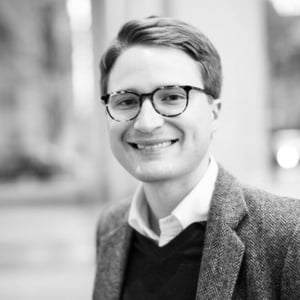
Senior Counsel, The Becket Fund for Religious Liberty
Joe Davis joined Becket in 2017 as Legal Counsel. His work at Becket has included appellate litigation in both federal and state courts, including representing religious entities and governments sued because of their openness to religious expression in precedent-setting victories before the Third, Fifth, Seventh, and Eleventh Circuits. Joe has appeared in national media to discuss religious liberty issues, including on Fox News and numerous radio and print outlets, and his academic work on topics related to religious liberty has been published at venues including the Yale Law Journal Forum and the Notre Dame Law Review Online.
Before joining Becket, Joe worked as a litigator at Jones Walker LLP in New Orleans, Louisiana, where he worked on a variety of matters from commercial and criminal litigation to bankruptcy. From 2014 to 2015, he clerked for the Honorable E. Grady Jolly of the U.S. Court of Appeals for the Fifth Circuit.
Joe graduated summa cum laude from the University of Virginia School of Law in 2014, where he served on the Virginia Law Review and was elected to the Order of the Coif. While in law school, Joe studied religious liberty law with one of the top religious liberty scholars and litigators in the nation. He also worked as a researcher for the law school’s Supreme Court Litigation Clinic. Before going to law school, Joe received his B.A. in Economics with a minor in Religion, summa cum laude, from Mississippi State University.
Joe is married to his high school sweetheart. When he’s not helping her corral their four young children, he tends to be reading the classics, watching college football, or listening to his vinyl collection.
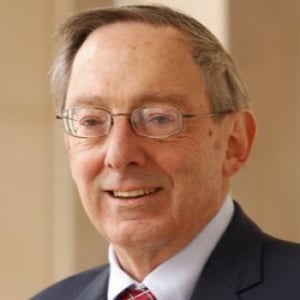
Robert E. Scott Distinguished Professor of Law Emeritus, University of Virginia School of Law; Alice McKean Young Regents Chair in Law Emeritus, University of Texas
Douglas Laycock is perhaps the nation’s leading authority on the law of religious liberty and also on the law of remedies. He has taught and written about these topics for more than four decades at the University of Chicago, the University of Texas, the University of Michigan and the University of Virginia. He retired from teaching at UVA Law School in May 2023.
Laycock has testified frequently before Congress and has argued many cases in the courts, including the U.S. Supreme Court, where he has served as lead counsel in six cases and has also filed influential amicus briefs. He is the author (co-author in the most recent edition) of the leading casebook Modern American Remedies, the award-winning monograph The Death of the Irreparable Injury Rule and many articles in leading law reviews. He co-edited a collection of essays, Same-Sex Marriage and Religious Liberty.
His many writings on religious liberty have been republished in a five-volume collection:
Laycock resigned from the council and as first vice president of the American Law Institute to become co-reporter for the Restatement (Third) of Torts: Remedies. He is a fellow of the American Academy of Arts and Sciences. He earned his B.A. from Michigan State University and his J.D. from the University of Chicago.

Richard and Frances Mallery Professor of Law and Faculty Director, Constitutional Law Center, Stanford Law School
Michael W. McConnell is the Richard and Frances Mallery Professor and Faculty Director of the Constitutional Law Center at Stanford Law School, and a Senior Fellow at the Hoover Institution. From 2002 to 2009, he served as a Circuit Judge on the United States Court of Appeals for the Tenth Circuit. He was nominated by President George W. Bush, a Republican, and confirmed by a Democratic Senate by unanimous consent. McConnell has previously held chaired professorships at the University of Chicago and the University of Utah, and visiting professorships at Harvard and NYU. He teaches courses on constitutional law, constitutional history, First Amendment, and interpretive theory. He has published widely in the fields of constitutional law and theory, especially church and state, equal protection, and separation of powers. His book, “The President Who Would Not Be King: Executive Power Under the Constitution,” was published by Princeton University Press in 2020, based on the Tanner Lectures in Human Values, which he delivered at Princeton in 2019. His latest book, co-authored with Nathan Chapman, “Agreeing to Disagree: How the Establishment Clause Protects Religious Diversity and Freedom of Conscience,” was published by Oxford University Press in mid-2023. McConnell has argued sixteen cases in the United States Supreme Court, most recently Carney v. Adams (2020). defending a provision of the Delaware Constitution requiring political balance on that state’s courts. More recently, he was co-counsel in Gonzalez v. Google. He earned his B.A. from Michigan State University and his J.D. from the University of Chicago, and has received honorary degrees from Notre Dame University and Michigan State. He served as law clerk to Supreme Court Justice William J. Brennan, Jr. and D.C. Circuit Chief Judge J. Skelly Wright. He has been Assistant General Counsel of the Office of Management & Budget, Assistant to the Solicitor General of the Department of Justice, and a member of the President’s Intelligence Oversight Board. He is Senior of Counsel to the law firm Wilson, Sonsini, Goodrich & Rosati, and is co-chair of Meta’s Oversight Review Board.
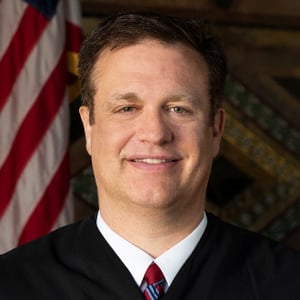
Judge, United States Court of Appeals, Ninth Circuit
Judge Nelson was confirmed to the Ninth Circuit in October 2018, as the youngest Circuit Judge to serve from Idaho and he has chambers in his hometown of Idaho Falls. Prior to his confirmation, Judge Nelson served for nine years as General Counsel of Idaho Falls-based Melaleuca, Inc., a consumer goods company. He previously worked in Washington, DC, where he served in all three branches of the federal government, including as Special Counsel for Supreme Court nominations to the Ranking Member of the Senate Judiciary Committee; Deputy General Counsel to the White House Office of Management and Budget; Deputy Assistant Attorney General in the Environment and Natural Resources Division of the United States Department of Justice; and a law clerk to Judge Henderson of the United States Court of Appeals for the D.C. Circuit. He has argued in most of the federal courts of appeals and worked on dozens of Supreme Court briefs. He started in the Washington, DC office of Sidley Austin as an appellate lawyer, after clerking for Judges Mosk and Brower of the Iran-U.S. Claims Tribunal at The Hague, and for now-Judge Tom Griffith, then-Senate Legal Counsel, during the impeachment trial of President Clinton. Judge Nelson earned his B.A. from Brigham Young University and his J.D., with honors, from BYU Law School. Judge Nelson has been a member of the Federalist Society since 1998.
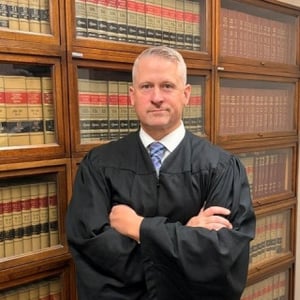
Judge, United States District Court, Northern District of Texas
Matthew J. Kacsmaryk serves as United States District Judge for the Northern District of Texas.
He previously served as (1) an Associate in the Dallas office of Baker Botts LLP, (2) an Assistant United States Attorney, and (3) Deputy General Counsel to FLI.
He is an Honors graduate of the University of Texas Law School.
In 2013, he earned the Attorney General’s Award for Excellence in Furthering the Interest of U.S. National Security.
In 2026, he was named Jurist of the Year by the Texas Review of Law & Politics, the conservative law review at the University of Texas.
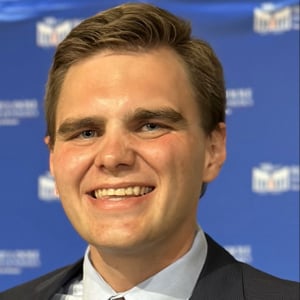
Assistant Solicitor General, Kansas Attorney General
Adam Steinhilber is an assistant solicitor general for the State of Kansas. He was previously a litigation associate in the Kansas City office of Bryan Cave Leighton Paisner LLP. Before entering private practice, Adam clerked for Chief Judge Timothy M. Tymkovich of the U.S. Court of Appeals for the Tenth Circuit and Justice Mark S. Massa of the Indiana Supreme Court.
Adam earned his J.D., magna cum laude, from the University of Michigan Law School, where he was elected to the Order of the Coif. He earned his B.A. in Political Science from the University of Kansas, where he was elected to Phi Beta Kappa.
Adam has held several leadership positions within the Federalist Society, and he currently serves on the Board of the Kansas City Lawyers Chapter.
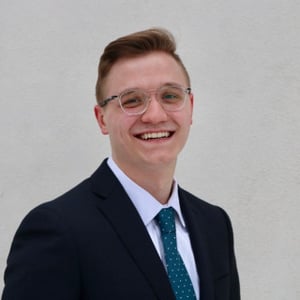
Law Clerk, U.S. District Court for the Northern District of Illinois
Tom Fogarty is currently a law clerk in the U.S. District Court for the Northern District of Illinois.
Tom received his J.D. from Duke University School of Law, where he was the VP of Internal Affairs of the Duke Law Federalist Society, the President of the Mock Trial Board, a member of the Moot Court Board, and an Online Editor of the Duke Law Journal. He also received his B.A. in History from the Ohio State University.
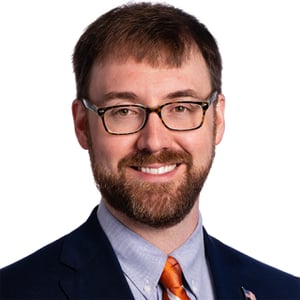
Senior Legal Fellow, Courts and the Constitution, Legal Policy Center, The Heritage Foundation
Zack is a Senior Legal Fellow of Courts and the Constitution at The Heritage Foundation.
He previously served for several years as an Assistant United States Attorney in the Northern District of Florida. Prior to that, he spent two years as an associate in the Washington, D.C. office of Cleary Gottlieb Steen & Hamilton, which he joined after clerking for the Hon. Emmett R. Cox on the United States Court of Appeals for the Eleventh Circuit.
Smith received his undergraduate, master’s, and law degrees from the University of Florida. During law school, Smith served as the Editor in Chief of the Florida Law Review and served on the executive boards of several student organizations, including the UF Chapter of the Federalist Society.
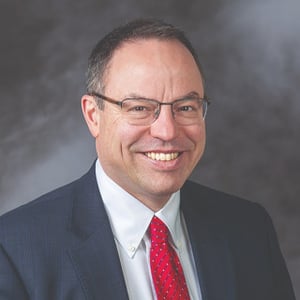
Professor of Law and J. Philip Johnson Faculty Fellow, University of North Dakota School of Law
Michael S. McGinniss is Professor of Law and J. Philip Johnson Faculty Fellow at the University of North Dakota School of Law, where he joined the faculty in 2010 and served as the Dean from 2019 to 2022. He chairs the executive committee for the Federalist Society's Practice Group on Professional Responsibility and Legal Education.
Before entering the legal academy, Professor McGinniss served for twelve years as a Disciplinary Counsel for the Supreme Court of Delaware. He currently teaches courses on Professional Responsibility, Advanced Legal Ethics, Civil Procedure, and Federal Courts. He also serves as Faculty Advisor for the North Dakota Law Review and the UND Law Federalist Society student chapter.
Professor McGinniss’ research and scholarship interests are wide-ranging and include lawyer and judicial ethics, lawyer discipline and regulation of the profession, constitutional law (especially First Amendment, separation of powers, and federalism), and cultural challenges faced by conservatives in the law schools and the legal profession. His most recent law review article, Declaring Independence to Secure Integrity: The Supreme Court Justices' Code of Conduct, was published in the Federalist Society Review. His article Expressing Conscience with Candor: Saint Thomas More and First Freedoms in the Legal Profession, was published in the Harvard Journal of Law & Public Policy.
Professor McGinniss has spoken to Federalist Society lawyer and student chapters across the country about judicial independence and ethics, especially relating to the federal courts and the United States Supreme Court Justices. In addition, he has spoken to several chapters about rising challenges to ideological diversity and targeting of conservative viewpoints in law schools and the legal profession. Although he is very pleased to speak on these and many other topics that may be of interest to lawyer and student chapters, in 2026-2027, he has particular interest in speaking on the topic “Lawyer Discipline as Political ‘Resistance’: Separation of Powers, Federalism, and the Rule of Law,” concerning his work-in-progress on the weaponization of professional disciplinary processes against conservative lawyers for political and ideological purposes.
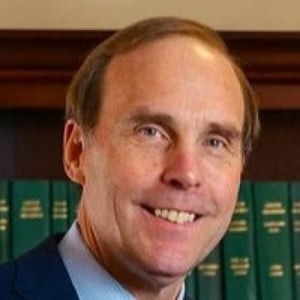
Distinguished Research Professor, Center for Citizenship and Constitutional Government, University of Notre Dame
Donald L. Drakeman is Distinguished Research Professor in the Center for Citizenship and Constitutional Government at the University of Notre Dame, and a Fellow of the Centre for Health Leadership and Enterprise at the University of Cambridge. His writings have been cited by the Supreme Courts of the United States and the Philippines. He has published seven books, including The Hollow Core of Constitutional Theory (Cambridge University Press, 2021), Why We Need the Humanities (Palgrave, 2016), and Church, State, and Original Intent (Cambridge University Press, 2010). He received an A.B. magna cum laude from Dartmouth College; a J.D. from Columbia Law School, where he was a Harlan Fiske Stone Scholar; and a Ph.D. from Princeton University. He is a Fellow of the Royal Historical Society, and he was the founding chair of the Advisory Council for the James Madison Program on American Ideals and Institutions at Princeton University.
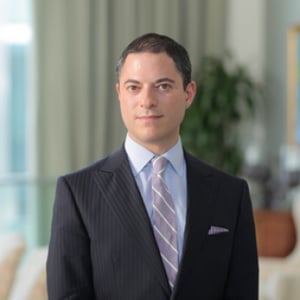
Partner, BakerHostetler, Adjunct Fellow, The Manhattan Institute
Andrew Grossman leads BakerHostetler’s Appellate and Major Motion team. He has appeared before the U.S. Supreme Court, nearly all the federal courts of appeals, as well as some state appellate courts, litigating high-profile and complex commercial, administrative and constitutional issues.
Andrew works with practice groups across BakerHostetler to identify and tackle complex issues, advise on administrative law and strategy, tee up issues for appeal and tackle appeals. He has developed and implemented litigation and administrative strategies for clients in several fields and industries.
In addition to his practice, Andrew advises members of Congress on matters of constitutional and administrative law, having testified more than a dozen times before the House and Senate Judiciary Committees. He has been a frequent legal commentator on radio and television, having appeared on Fox News, CNN, MSNBC, CNBC, NPR and its affiliates, CBN and elsewhere. His legal commentary has also appeared in dozens of magazines and newspapers, including The Wall Street Journal, USA Today, The Washington Post, The Washington Times and many others.
Andrew is a Senior Legal Fellow at the Buckeye Institute, an Adjunct Fellow the Manhattan Institute and a member of the leadership of the Federalist Society. He previously served as an adjunct scholar at the Cato Institute’s Robert A. Levy Center for Constitutional Studies and a legal fellow at the Heritage Foundation’s Meese Center for Legal and Judicial Studies. He clerked for Judge Edith H. Jones on the U.S. Court of Appeals for the Fifth Circuit.
Partner, BakerHostetler, Adjunct Fellow, The Manhattan Institute
Andrew Grossman leads BakerHostetler’s Appellate and Major Motion team. He has appeared before the U.S. Supreme Court, nearly all the federal courts of appeals, as well as some state appellate courts, litigating high-profile and complex commercial, administrative and constitutional issues.
Andrew works with practice groups across BakerHostetler to identify and tackle complex issues, advise on administrative law and strategy, tee up issues for appeal and tackle appeals. He has developed and implemented litigation and administrative strategies for clients in several fields and industries.
In addition to his practice, Andrew advises members of Congress on matters of constitutional and administrative law, having testified more than a dozen times before the House and Senate Judiciary Committees. He has been a frequent legal commentator on radio and television, having appeared on Fox News, CNN, MSNBC, CNBC, NPR and its affiliates, CBN and elsewhere. His legal commentary has also appeared in dozens of magazines and newspapers, including The Wall Street Journal, USA Today, The Washington Post, The Washington Times and many others.
Andrew is a Senior Legal Fellow at the Buckeye Institute, an Adjunct Fellow the Manhattan Institute and a member of the leadership of the Federalist Society. He previously served as an adjunct scholar at the Cato Institute’s Robert A. Levy Center for Constitutional Studies and a legal fellow at the Heritage Foundation’s Meese Center for Legal and Judicial Studies. He clerked for Judge Edith H. Jones on the U.S. Court of Appeals for the Fifth Circuit.

What Was an "Establishment of Religion" at the Founding?
The Founders Gave Us the Tools Series
The First Amendment During Days of Rage
Tyler Lawyer Chapter
Tyler, TXTexas Supreme Court Analyzes State Constitution’s Religious Services Protection
Adam Steinhilber
In 2021, Texas added a new protection to its state constitution that protects religious services...
Topics
A Supreme Court Decision That Should Be Re-Heard
Last May, the Supreme Court issued a surprising and controversial decision in a case called Consumer...
Pandemic Orders and the Right to Earn a Living in North Carolina
Tom M. Fogarty
In March of 2020—during the early stages of the COVID-19 pandemic—North Carolina Governor Roy Cooper...
Originalism, Ballot Initiatives, and Abortion in Florida
Zack Smith
With its June 2022 Dobbs v. Jackson Women’s Health Organization decision, the U.S. Supreme Court...
Declaring Independence to Secure Integrity: The Supreme Court Justices' Code of Conduct
Michael S. McGinniss
[T]he judiciary is beyond comparison the weakest of the three departments of power; that it...
Establishing an Agreement to Disagree About Church and State
Donald L. Drakeman
A review of Nathan Chapman & Michael McConnell, Agreeing to Disagree: How the Establishment Clause...
Courthouse Steps Decision: Moore v. Harper
Andrew Grossman
On Tuesday, June 27, 2023, the Supreme Court issued its decision in Moore v. Harper....
Courthouse Steps Decision: Moore v. Harper
Andrew Grossman
On Tuesday, June 27, 2023, the Supreme Court issued its decision in Moore v. Harper....