

Wade H. and Dores M. McCree Collegiate Professor of Law, The University of Michigan Law School
Professor Schlanger joined the Law School faculty in fall 2009. She teaches constitutional law, torts, and classes relating to civil rights (such as Civil Rights and Homeland Security) and to prisons (such as Prisons and the Law, and the Constitutional Law of Incarceration). She also founded and runs the Civil Rights Litigation Clearinghouse. Previously, she had been a professor at Washington University in St. Louis, and an assistant professor at Harvard University. She was voted the David M. Becker Professor of the Year in 2008 at Washington University School of Law.
Professor Schlanger is the court-appointed monitor for a statewide settlement dealing with deaf prisoners in Kentucky, and she serves on the Department of Homeland Security's Advisory Committee on Family Residential Centers. She took a two-year leave from the University in 2010 and 2011, serving as the presidentially appointed Officer for Civil Rights and Civil Liberties at the U.S. Department of Homeland Security. As the head of civil rights and civil liberties for DHS, she was the Secretary's lead advisor on civil rights and civil liberties issues; in that capacity, she testified before Congress; chaired the Privacy, Civil Rights, and Civil Liberties Subcommittee of the federal Information Sharing Environment's Information Sharing and Access Interagency Policy Committee; chaired the Interagency Coordinating Council on Emergency Preparedness and Individuals with Disabilities; served on the first U.S. Delegation to the U.N. Universal Periodic Review; and met with community leaders and groups across America to ensure that their perspectives regarding civil rights and homeland security were considered in the Department's policy process.
Professor Schlanger earned her J.D. from Yale in 1993. While there, she served as book reviews editor of the Yale Law Journal and received the Vinson Prize. She then served as law clerk for Justice Ruth Bader Ginsburg of the U.S. Supreme Court from 1993 to 1995. From 1995 to 1998, she was a trial attorney in the U.S. Department of Justice Civil Rights Division, where she worked to remedy civil rights abuses by prison and police departments and earned two Division Special Achievement awards. Schlanger, a leading authority on civil rights issues and civil and criminal detention, served on the Vera Institute’s blue ribbon Commission on Safety and Abuse in America's Prisons; she worked as an advisor on the development of proposed national standards implementing the Prison Rape Elimination Act, and testified before the Prison Rape Elimination Commission. She also served as the reporter for the American Bar Association’s revision of its Standards on the Treatment of Prisoners, and as chair of the Association of American Law Schools Section on Law and the Social Sciences.
Professor Schlanger also writes frequently for publications like the Democracy Journal, Politico Magazine, the American Prospect, and others. A full list of scholarly and non-scholarly publications, with links, is available on the publications page.
She is married to Law School Professor Samuel Bagenstos; they have two teenagers.
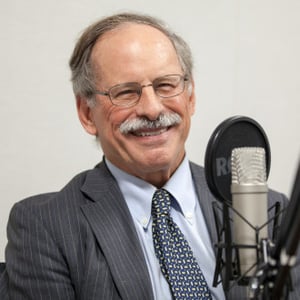
Freelance Journalist and Author
Stuart Taylor, Jr. is a Washington writer focusing on legal and policy issues and a National Journal contributing editor. He occasionally practices law.
Taylor has coauthored three books. All have been acclaimed by commentators across the ideological spectrum. In January 2017, KC Johnson and Taylor authored The Campus Rape Frenzy: The Attack on Due Process at America's Universities. In 2012, Richard Sander and Taylor authored Mismatch: How Affirmative Action Hurts Students It's Intended to Help, and Why Universities Won't Admit It. In 2007, Taylor and Johnson authored Until Proven Innocent: Political Correctness and the Shameful Injustices of the Duke Lacrosse Rape Fraud. Sander and Taylor have also filed amicus briefs in Supreme Court cases involving admissions preferences.
Since 1980, Taylor has done reporting and commentary about issues ranging from the biggest Supreme Court cases to race, voting rights, mindlessly excessive criminal penalties, guilt-presuming campus rape processes, journalistic bias, the death penalty, war powers, gerrymandering, guns, polarization, civil liberties, national security, torture, campaign finance, education, impeachment, and other issues. He has often been called one of the nation's best legal journalists and is known for challenging both liberal and conservative conventional wisdom.
Taylor was a reporter for The New York Times from 1980-1988, covering legal affairs and then the Supreme Court. He wrote commentaries and long features for The American Lawyer, Legal Times and their affiliates from 1989-1997, and for National Journal and Newsweek from 1998 through 2010. He has written (less often) on a freelance basis for numerous publications since 2010. He has written op-eds for The Washington Post, The New York Times, The Wall Street Journal, The Los Angeles Times, USA Today, and The New York Daily News and longer commentaries for RealClearPolitics, The Atlantic, The New Republic, the (late) Weekly Standard, National Review, Slate, The Daily Beast, Harper’s, Reader’s Digest, Time and other magazines. He has been interviewed on all major television and radio networks. He taught “Law and the News Media” at Stanford Law School in 2011 and 2012 and practices law on occasion.
Taylor graduated from Princeton University in 1970 with an A.B. in History. After working as a reporter for the Baltimore Evening Sun and Sun from 1971-1974, he moved to Harvard Law School, was a Harvard Law Review note editor, and graduated in 1977 at the top of his class, with high honors. He also won a Frederick Sheldon Traveling Fellowship and traveled around the world in 1977-1978 while studying freedom of the press in the United Kingdom and Kenya.
Taylor practiced law with Wilmer, Cutler & Pickering, in Washington, D.C., from 1977-1980 before returning to journalism in 1980 by joining the Washington Bureau of The New York Times.
Taylor's journalism honors include the 2009 Northern California Innocence Project Media Award for his work on the Duke lacrosse rape fraud; a 2002 National Headliner Award for best special magazine column on one subject; and a share of The American Lawyer’s National Magazine Award for a March 1990 special issue on the drug war. He was a National Magazine Award finalist in 1993 and 1997 and was nominated by The New York Times for a Pulitzer Prize in 1988.

Rethinking Policies on Campus Rape
Civil Rights Practice Group and Regulatory Transparency Project Teleforum
Teleforum